⚡ FLASH SALE: Get 60% OFF All Premium 3D & STL Models! ⚡

In the demanding world of 3D visualization, few subjects captivate and challenge artists quite like the automotive industry. Crafting a photorealistic 3D car model is an art in itself, but bringing that model to life through rendering, especially in complex scenes, introduces a whole new layer of technical mastery. The intricate reflections, nuanced material interactions, and detailed environments required for stunning automotive renders can push even high-end workstations to their limits, resulting in agonizingly long render times.
For professionals in automotive design, game development, architectural visualization, or marketing, time is a critical asset. Every minute spent waiting for a render is a minute lost on revisions, new projects, or client feedback. This comprehensive guide will equip you with the advanced technical knowledge and practical strategies needed to dramatically optimize render times for even the most complex 3D car scenes. We’ll dive deep into geometry, materials, lighting, renderer settings, and post-processing workflows across various software packages, ensuring you can achieve breathtaking visuals without sacrificing efficiency. Whether you’re working with models from platforms like 88cars3d.com or your own creations, mastering these techniques will elevate your workflow and empower you to deliver exceptional results on schedule.
The geometry of your 3D car model and its surrounding environment is the single most significant factor influencing render times. An inefficient mesh, overloaded with unnecessary polygons, can cripple your rendering engine before it even begins calculating light bounces. Optimizing your geometry is not just about reducing poly counts; it’s about intelligent mesh construction that provides visual fidelity where it’s needed most, while simplifying what isn’t.
Every vertex, edge, and face adds to the computational load during rendering. Modern renderers, particularly path tracers, must trace countless rays through your scene, and the more geometry these rays interact with, the longer the calculations take. This section will explore strategies for creating and managing efficient geometry to lay a solid foundation for faster renders.
Clean topology is paramount for both modeling flexibility and rendering efficiency. A mesh constructed primarily of quadrilateral polygons (quads) offers predictable subdivision, better deformation, and typically faster rendering than a mesh riddled with triangles (tris) or N-gons (polygons with more than four sides). While triangles are unavoidable in game engines and final exported meshes, they should be managed carefully in your modeling software. For high-quality automotive models, aim for a quad-dominant mesh that allows for smooth surface transitions and efficient UV mapping.
When working with subdivision surfaces (like OpenSubdiv in Blender or Meshsmooth in 3ds Max), the base mesh should be as low-poly as possible while still defining the major forms. Subdivision will then smoothly interpolate these forms, adding detail only where necessary. However, excessive subdivision can quickly balloon poly counts. For instance, a car body panel might look smooth with two iterations of subdivision, but three or four iterations could quadruple the polygon count without a noticeable visual improvement from a distance, drastically increasing render time and memory usage.
Always perform a mesh cleanup. Tools like ‘Clean Up’ in Blender (Mesh > Clean Up > Delete Loose, Merge by Distance) or similar functions in Maya or 3ds Max can remove stray vertices, edges, or faces that are invisible but still contribute to the scene’s data overhead. Pay attention to hidden geometry, such as inner engine parts that are entirely obscured by the car body, which might be overly detailed when a simpler proxy would suffice. Polygon counts for a high-quality, render-ready car model can range from 200,000 to 1,000,000 polygons for the base mesh (before subdivision), depending on the desired level of detail and intended use. Exceeding this without strong justification can lead to diminishing returns in visual quality versus exponential increases in render time.
Level of Detail (LOD) is a crucial optimization technique, particularly for scenes with large environments or where the car is not the sole focal point. LODs involve creating multiple versions of an object, each with varying levels of geometric complexity, and swapping them out based on their distance from the camera. Objects far from the camera require significantly fewer polygons than those close up, yet they can appear visually identical.
For a complex car scene, this means your hero car model, visible in close-up shots, will be the highest detail (LOD0). Background cars, distant buildings, or environmental props can use progressively lower LODs (LOD1, LOD2, etc.). For instance, a detailed car wheel might have 50,000 polygons for LOD0, but a distant version (LOD2) could be a simple cylinder with a texture, perhaps only 500 polygons. The cumulative savings across an entire scene can be enormous.
Many 3D software packages and game engines offer automated LOD generation tools, though manual optimization often yields better results. In Blender, for example, you can use the Decimate modifier or manually create separate LOD meshes. When creating LODs, focus on simplifying areas that won’t be perceived. For automotive models, intricate grilles or interior details can be greatly simplified or replaced with texture maps for lower LODs. The key is to find the balance where the visual drop-off is imperceptible at the given distance. Implement a system where objects smoothly transition between LODs to avoid popping artifacts during camera movement.
Repetitive geometry is common in automotive scenes—think tire treads, wheel nuts, rivets, or even multiple vehicles in a parking lot. Instead of duplicating the mesh data for each instance, instancing allows you to reference a single piece of geometry multiple times. This dramatically reduces memory consumption and can speed up scene parsing and rendering. Renderers only need to load the geometry data once, then transform and render its instances. For example, a single detailed wheel bolt can be instanced 20 times per wheel, saving massive amounts of memory compared to unique geometry for each bolt.
For extremely heavy objects or entire scenes that are part of the background, proxies are invaluable. A proxy is a lightweight representation of a complex object that is displayed in the viewport but replaced with the full-detail geometry only at render time. This keeps your viewport responsive and your scene file manageable. Many renderers, such as V-Ray and Corona, have their own proxy formats (e.g., .vrscene, .cproxy). For example, a highly detailed tree model with millions of polygons can be converted into a proxy, appearing as a simple bounding box or low-poly mesh in your viewport but rendering as the full tree. Even entire background cityscapes or dense forests can be managed efficiently using proxies, significantly reducing memory footprint and render preprocessing times.
Beyond geometry, materials and textures play a critical role in render performance. While high-quality PBR (Physically Based Rendering) materials are essential for realism, poorly optimized material setups and overly large textures can drastically increase render times and memory usage. Understanding how to streamline your material and texture workflows is crucial for achieving both visual fidelity and rendering efficiency.
Every texture map needs to be loaded into memory, and every shader calculation adds to the computational burden. This section focuses on best practices for PBR materials, texture resolution management, and optimizing shader networks to ensure your surfaces look stunning without bogging down your render engine.
The Physically Based Rendering (PBR) workflow is the industry standard for achieving realistic materials, but it requires careful implementation to be efficient. PBR materials rely on a set of texture maps (Albedo/Base Color, Metallic, Roughness, Normal, Height/Displacement, Ambient Occlusion) that define how light interacts with a surface. While these maps provide incredible detail, using them indiscriminately can be detrimental to performance.
Always ensure your PBR maps are correctly calibrated and only use the necessary channels. For instance, if a material is entirely dielectric (non-metallic), its Metallic map should be uniformly black (value 0). If it’s entirely metallic, the Metallic map should be uniformly white (value 1), and the Base Color map will then define its color. Avoid using complex node setups to simulate simple effects that can be achieved with standard PBR maps. For example, rather than using intricate procedural textures to simulate subtle scratches for a distant object, a well-authored roughness map will be far more efficient and often visually indistinguishable.
Furthermore, consolidate your materials where possible. If multiple small objects share similar visual characteristics (e.g., various small engine components with a generic metallic paint), consider using a single PBR material with shared textures and perhaps minor variations achieved through masks or vertex colors, rather than creating a unique material for each. This reduces the number of unique shaders the renderer needs to compile and process.
Texture resolution is a common culprit for long render times and excessive memory usage. While a 4K or 8K texture map might seem impressive, it’s often overkill for objects that won’t be seen in extreme close-ups. A 4K texture uses 4 times the memory of a 2K texture, and an 8K texture uses 16 times! Assess the visual impact versus memory cost for each asset. For the main car body, 4K or even 8K might be justified for hero shots, but for interiors, tires, or background elements, 2K or even 1K resolutions are often sufficient.
A crucial optimization technique is texture atlasing. Instead of having dozens of small, individual texture maps for various components (bolts, emblems, small interior buttons), you can combine multiple smaller textures into a single, larger texture atlas. Each component then references a specific region of this atlas using its UV coordinates. This reduces the number of draw calls (requests to the GPU to render an object) and can significantly improve cache efficiency, as the renderer doesn’t have to constantly swap between different texture files in memory.
When creating texture atlases, try to group textures that share similar properties or are part of the same physical object. For example, all textures for a car’s dashboard could be on one atlas. Ensure that the unused space within your atlas is minimized, and that the packing is efficient. Software like RizomUV, UVPackmaster, or even built-in tools in Blender (like the UV Pack Islands operator, see the official Blender 4.4 documentation on UV Editing for more details) can help with efficient packing. Remember, fewer, larger texture files are generally more efficient than many small ones.
The complexity of your shader networks directly impacts render time. Every node in your material graph represents a calculation that the renderer must perform for potentially millions of pixels. While procedural textures and complex blends offer immense artistic freedom, they can be computationally expensive.
Be mindful of nodes that are particularly render-intensive. Subsurface Scattering (SSS), for example, is fantastic for materials like rubber, car seats, or even some advanced paints, but it requires many light samples and deeper ray tracing, significantly increasing render times. Use SSS judiciously and only when its visual contribution is critical. Similarly, Displacement maps, while offering incredible geometric detail, generate actual geometry at render time, which can skyrocket polygon counts and memory usage. For subtle bumps or details that don’t require true silhouette changes, Normal maps are a much more efficient alternative.
Simplify your node networks whenever possible. Are there redundant nodes? Can multiple separate texture fetches be combined into one? Use texture baking to convert complex procedural textures or elaborate lighting effects into simple image maps. For instance, a complex dirt shader with multiple layers and procedural noise can be baked down to an Albedo, Roughness, and Normal map, making the real-time render calculation much simpler and faster. Baking ambient occlusion, curvature, or thickness maps can also significantly reduce runtime shader complexity. Always evaluate if a procedural effect truly warrants the render cost or if a pre-baked texture would suffice for the given camera distance and context.
Lighting is arguably the most crucial element for realism in any 3D scene, especially for automotive renders where reflections and specular highlights define the forms. However, poorly optimized lighting can quickly become the biggest bottleneck for render times. Understanding how different light types, global illumination (GI) methods, and environment setups impact performance is key to achieving stunning results efficiently.
Every light source adds complexity, every shadow calculation consumes resources, and every bounce of light contributes to the overall render time. This section will guide you through optimizing your lighting and environment setup to create visually rich scenes without unnecessarily long waits.
Global Illumination (GI) simulates the real-world bouncing of light, creating realistic indirect lighting and color bleeding. While essential for photorealism, GI is computationally expensive. Most modern renderers offer various GI algorithms, each with its own performance characteristics:
For architectural and product visualization (including cars in studio or exterior settings), a common and efficient setup in renderers like V-Ray and Corona is a combination of Irradiance Map for primary bounces and Light Cache for secondary bounces. This offers a good balance of speed and quality. For more direct and complex lighting scenarios, or for ultimate realism, a Brute Force primary GI combined with a faster secondary method might be preferred.
Key optimization tips for GI include:
The number and type of light sources significantly impact render times. Each light source requires calculations for its illumination and shadows. More lights mean more calculations.
Environment lighting is crucial for automotive renders, providing realistic reflections and overall scene illumination. The two primary methods are HDR (High Dynamic Range) image maps and Physical Sky models.
For ultimate flexibility and control, especially for studio renders, a combination of an HDRI for primary lighting and reflections, combined with additional targeted area lights for artistic highlights, is often ideal. For broad exterior scenes where the sky is prominent and editable, a physical sky paired with one or two supplemental light sources might be more efficient. Choose the method that best balances realism, artistic control, and render efficiency for your specific scene.
While general optimization principles apply across the board, each rendering engine (e.g., Corona, V-Ray, Cycles, Arnold) has its own unique architecture and settings that can be fine-tuned for significant performance gains. Understanding these renderer-specific nuances is crucial for squeezing every ounce of efficiency out of your hardware.
This section will delve into critical renderer settings, offering insights into sampling, noise thresholds, render regions, and memory management, providing actionable advice for some of the most popular renderers in the industry.
Sampling is the core process by which renderers calculate light bounces and surface properties. Insufficient sampling leads to noise (grainy artifacts), while excessive sampling wastes render time. The goal is to find the sweet spot where noise is imperceptible, but render time is minimized.
These workflow enhancements can significantly speed up your iteration process:
Large scenes, especially with high-resolution textures and complex geometry, can quickly exhaust your system’s RAM or VRAM. This leads to longer render times as the system swaps data between RAM and disk (out-of-core rendering), or even crashes.
The journey to a perfect render doesn’t end when the render button is pressed. Strategic use of post-processing and compositing techniques can significantly reduce overall project time by allowing you to make critical adjustments and add effects without re-rendering the entire scene. This approach not only saves render time but also provides greater artistic flexibility and efficiency in your workflow.
This final section focuses on leveraging render elements, compositing software, and establishing an iterative rendering process to achieve superior results faster, moving beyond raw render output to polished, client-ready imagery.
One of the most powerful techniques for optimizing your workflow and reducing re-render dependency is to render your scene into multiple render elements (also known as render passes or AOV – Arbitrary Output Variables). Instead of baking everything into a single image, renderers can output separate layers for diffuse color, reflections, refractions, specular highlights, global illumination, ambient occlusion, object IDs, depth, and more. This gives you unparalleled control in post-production.
For a complex car scene, key passes often include:
By splitting your render into these elements, you can, for example:
This modular approach means that if a client wants a slightly brighter reflection or a different background color, you often only need to make adjustments in compositing software (like Photoshop, Affinity Photo, Nuke, DaVinci Resolve, or Blender’s compositor) rather than re-rendering for hours.
Compositing is the process of combining multiple images or render passes into a single, final image. It’s where the magic of post-production truly happens, and it’s a critical step in accelerating your workflow for complex car renders.
Instead of relying solely on the renderer for every effect, use compositing to add:
Blender, for instance, has a robust built-in compositor that allows you to combine render layers, add effects nodes (like Glare for bloom, Defocus for depth of field), and perform color corrections, all within the same software. For more advanced workflows, dedicated compositing software provides even greater power and flexibility. The key takeaway is to render your core elements cleanly and then add layers of complexity and polish in post-production, where changes are instantaneous and non-destructive.
A common mistake is to attempt a full, high-quality render without thorough testing. This often leads to discovering errors late in the process, necessitating costly re-renders. A more efficient approach is to adopt an iterative rendering workflow:
By breaking down the rendering process into manageable, testable stages, you catch errors early, make informed decisions, and avoid wasting precious render time on full-quality renders that still need significant adjustments. Always analyze your test renders, looking for noise sources, problematic materials, or unexpected lighting interactions, and address them methodically before moving to the final output.
Optimizing render times for complex 3D car scenes is an intricate dance between artistic vision and technical efficiency. It requires a holistic approach, starting from the foundational geometry and extending through sophisticated lighting, material setups, renderer-specific fine-tuning, and intelligent post-production workflows. We’ve explored how meticulous geometry optimization with efficient topology, LODs, and instancing lays the groundwork for speed. We’ve delved into streamlining PBR materials, managing texture resolutions, and simplifying shader networks. Furthermore, we’ve dissected the nuances of GI, light source management, and environment lighting, demonstrating how smart choices can dramatically impact your render speed.
Ultimately, mastering render optimization is about working smarter, not harder. By understanding the underlying principles and leveraging the advanced tools available in modern 3D software and renderers, you can significantly reduce your render times without compromising on the stunning visual quality that high-end automotive renders demand. Applying these strategies will not only save you valuable time and resources but also enhance your ability to tackle even the most ambitious projects. Remember, high-quality starting assets, such as those found on 88cars3d.com, provide an excellent foundation for these optimizations, allowing you to focus on the fine-tuning rather than extensive re-modeling. Integrate these techniques into your daily workflow, and watch your efficiency soar, allowing you more creative freedom and faster delivery of exceptional results.

Texture: Yes
Material: Yes
Download the BMW 7 Series E38 3D Model featuring its iconic luxury sedan design and classic aesthetics. Includes .blend, .fbx, .obj, .glb, .stl, .ply, .unreal, and .max formats for rendering, simulation, and game development.
Price: $10.79

Texture: Yes
Material: Yes
Download the BMW 6 Series 640i F12 3D Model featuring a sleek design and detailed interior. Includes .blend, .fbx, .obj, .glb, .stl, .ply, .unreal, and .max formats for rendering, simulation, and game development.
Price: $10.79

Texture: Yes
Material: Yes
Download the BMW 6 Coupe E63 3D Model featuring a sleek design, detailed interior, and realistic exterior. Includes .blend, .fbx, .obj, .glb, .stl, .ply, .unreal, and .max formats for rendering, simulation, and game development.
Price: $10.79

Texture: Yes
Material: Yes
Download the BMW 5 Series Touring F11-007 3D Model featuring a detailed exterior and interior. Includes .blend, .fbx, .obj, .glb, .stl, .ply, .unreal, and .max formats for rendering, simulation, and game development.
Price: $10.79

Texture: Yes
Material: Yes
Download the BMW 5 Series Gran Turismo F07-003 3D Model featuring a detailed exterior and interior. Includes .blend, .fbx, .obj, .glb, .stl, .ply, .unreal, and .max formats for rendering, simulation, and game development.
Price: $10.79
Texture: Yes
Material: Yes
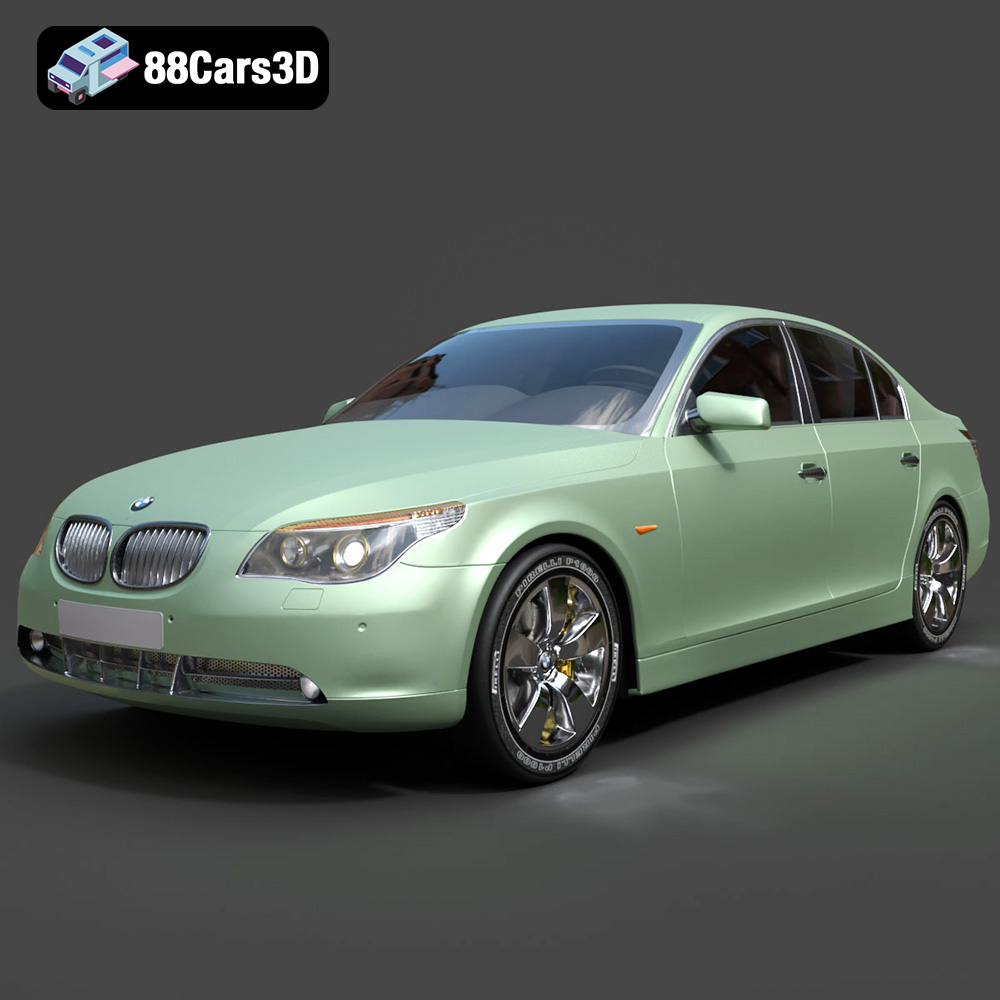
Download the BMW 5 Series E60 3D Model featuring its iconic sedan design, detailed exterior, and interior. Includes .blend, .fbx, .obj, .glb, .stl, .ply, .unreal, and .max formats for rendering, simulation, and game development.
Price: $10.79

Texture: Yes
Material: Yes
Download the BMW 5 E34-535i 3D Model featuring an iconic design, detailed exterior and interior, and accurate representation. Includes .blend, .fbx, .obj, .glb, .stl, .ply, .unreal, and .max formats for rendering, simulation, and game development.
Price: $10.79
Texture: Yes
Material: Yes
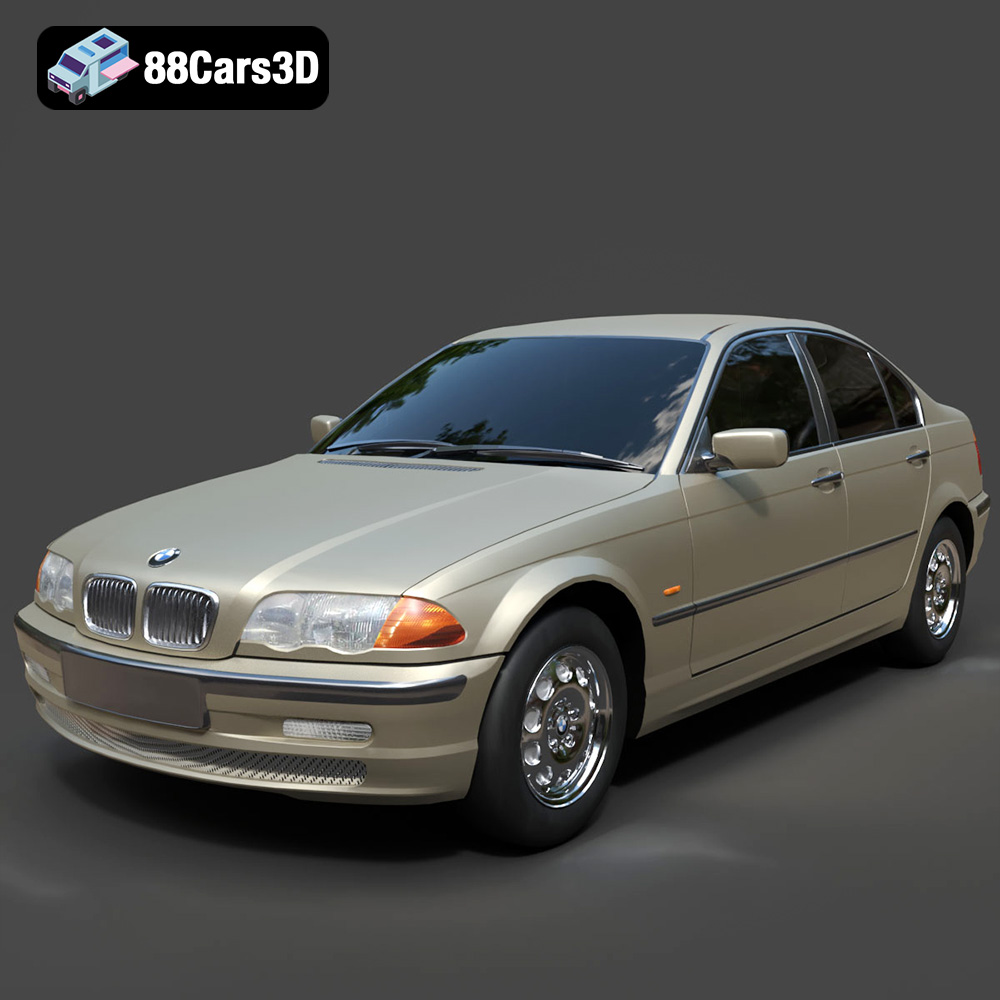
Download the BMW 3 Series E46 3D Model featuring authentic exterior lines, a detailed interior, and separated components for animation. Includes .blend, .fbx, .obj, .glb, .stl, .ply, .unreal, and .max formats for rendering, simulation, and game development.
Price: $10.79
Texture: Yes
Material: Yes
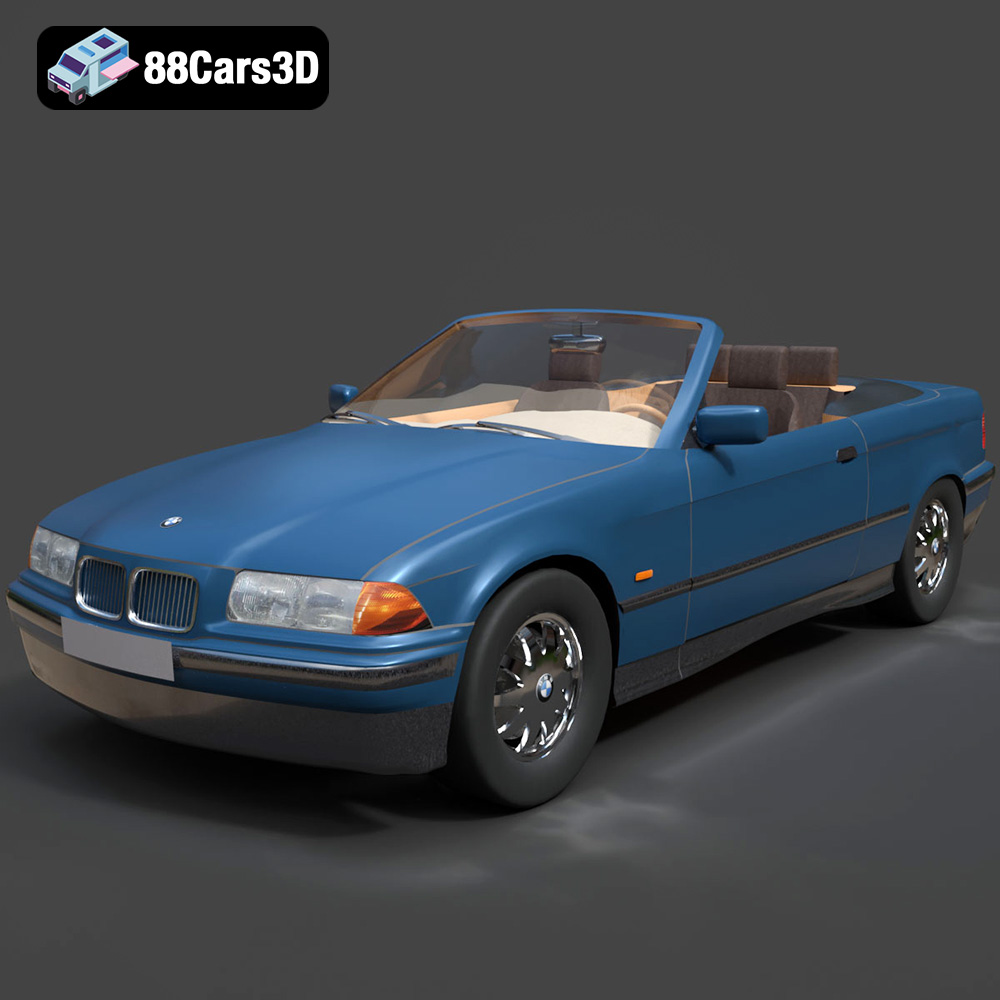
Download the BMW 3 Series E36 Cabrio 325i 1998 3D Model featuring a classic convertible design and detailed interior. Includes .blend, .fbx, .obj, .glb, .stl, .ply, .unreal, and .max formats for rendering, simulation, and game development.
Price: $10.79

Texture: Yes
Material: Yes
Download the BMW 3 F30 3D Model featuring a detailed exterior, realistic interior, and optimized mesh. Includes .blend, .fbx, .obj, .glb, .stl, .ply, .unreal, and .max formats for rendering, simulation, and game development.
Price: $10.79

