⚡ FLASH SALE: Get 60% OFF All Premium 3D & STL Models! ⚡

In the vibrant world of 3D visualization, the demand for exceptionally detailed and accurate digital assets continues to soar. From blockbuster films and cutting-edge video games to intricate automotive design visualizations and immersive AR/VR experiences, the quality of a 3D model dictates the realism and impact of the final output. Creating these assets from scratch is a monumental task, often requiring hundreds of hours of expert modeling, texturing, and optimization.
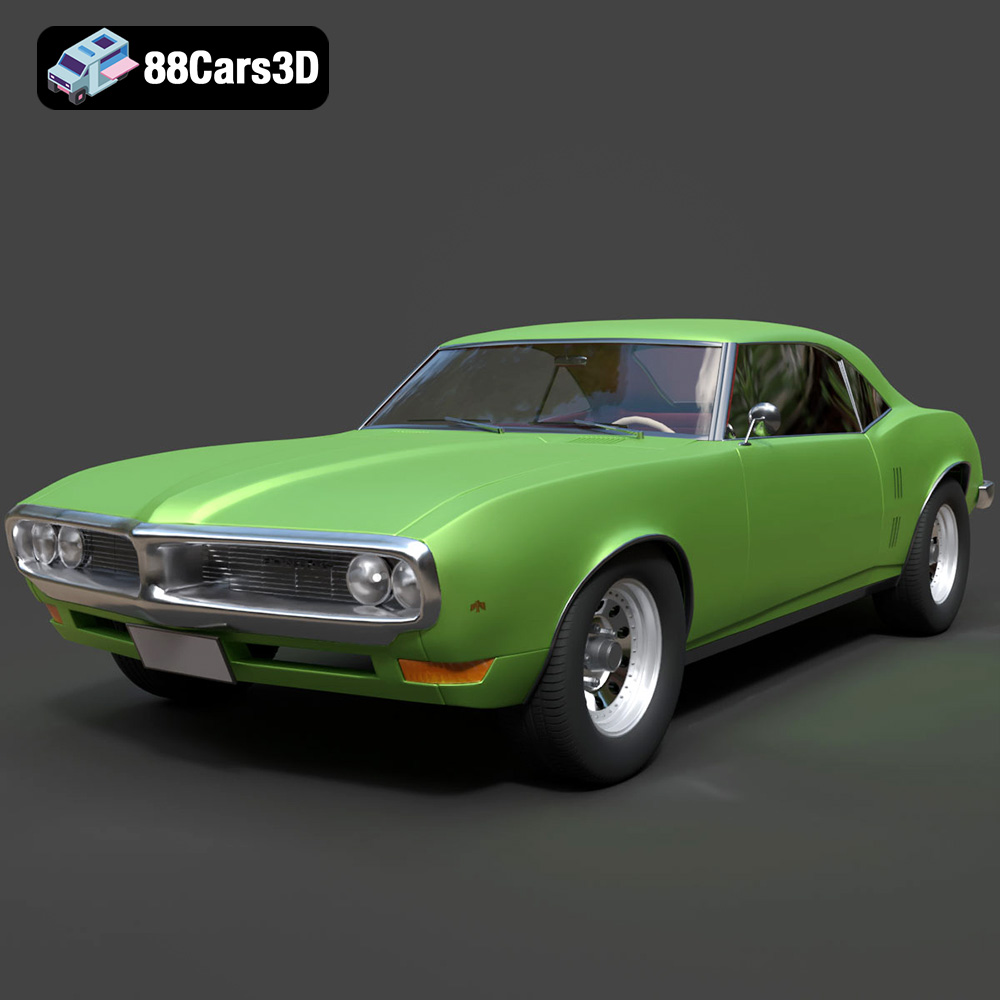
This is precisely where expertly crafted, production-ready 3D car models become indispensable tools for professionals across various industries. They serve as foundational elements, saving countless hours and ensuring a consistent standard of quality that would be challenging to achieve otherwise. Today, we’ll delve into the technical intricacies and versatile applications of such an asset, specifically focusing on the meticulously crafted Pontiac Firebird 1998 3D Model available on 88cars3d.com. This model encapsulates the aggressive styling and iconic lines of a classic American muscle car, offering unparalleled accuracy and seamless integration into professional pipelines, whether you’re focused on automotive rendering, game assets, or advanced simulations.
The choice of a 3D model file format is far from trivial; it directly impacts compatibility, functionality, and performance across different software and applications. A truly versatile 3D car model, like the Pontiac Firebird 1998, offers a comprehensive suite of formats, each serving distinct purposes. Understanding these formats is crucial for any professional working with digital assets.
The .blend format is native to Blender, the powerful open-source 3D creation suite. When you receive a .blend file, you’re not just getting a mesh; you’re often getting a fully editable Blender scene. This includes the model’s geometry, materials, textures, lighting setup, cameras, animations, modifiers, and even scene settings. For artists deeply integrated into the Blender ecosystem, this format offers maximum flexibility. You can easily modify the topology, adjust PBR materials, tweak the rendering environment, or integrate the model into a larger Blender project without any conversion artifacts. Its self-contained nature makes it incredibly convenient for iterative design and comprehensive scene development within Blender.
The .fbx (Filmbox) format, owned by Autodesk, has become the industry standard for exchanging 3D data between different software applications. It’s particularly ideal for real-time pipelines such as Unreal Engine and Unity. FBX files can store a vast array of data, including models, materials, textures, animations, skinning, and blend shapes, all while maintaining hierarchy and object transformations. Its robust support across professional applications like 3ds Max, Maya, Cinema 4D, and various game engines makes it an essential format for collaborative workflows. While it might not retain every native feature from the originating software, its widespread adoption ensures smooth asset transfer for game development and animation production where consistency across platforms is paramount.
The .obj (Wavefront Object) format is one of the oldest and most universally compatible 3D file formats. It primarily stores geometric data—vertices, normals, texture coordinates, and faces—making it excellent for cross-software compatibility. Nearly every 3D application can import and export OBJ files. While it’s superb for transferring raw mesh data, it’s important to note that OBJ files typically store material properties in an accompanying .mtl (Material Template Library) file, which might not always translate perfectly between software. It doesn’t natively support animations or complex scene data, but for straightforward mesh transfer, it remains a reliable choice, especially for arch-viz and product design where geometric accuracy is key.
The .glb (GL Transmission Format Binary) format is a relatively newer standard, specifically designed for efficient transmission and loading of 3D scenes and models on the web and in AR/VR applications. It’s a binary format that encapsulates geometry, materials, textures, and animations into a single file, making it incredibly streamlined for browser-based display and immersive experiences. GLB models are often optimized for smaller file sizes and quick loading, crucial for smooth real-time performance in web browsers or mobile AR/VR environments. Its growing adoption is making it a go-to format for showcasing 3D products online or integrating assets into augmented reality apps.
The .stl (Stereolithography) format is synonymous with 3D printing. It represents a 3D model as a series of connected triangles, describing only the surface geometry of an object without any color, texture, or material information. Its simplicity makes it universally compatible with 3D printers and slicing software. When a model like the Pontiac Firebird 1998 3D Model is provided in .stl, it means the geometry has been processed to be watertight and manifold, ensuring it’s ready for physical fabrication. This format is crucial for rapid prototyping, creating physical models for display, or for artists looking to bring their digital creations into the tangible world.
The .ply (Polygon File Format) is another format primarily used for storing 3D data, particularly from 3D scanners or for CAD (Computer-Aided Design) and scientific analysis. Like OBJ, it describes geometric properties, but it can also store additional data per vertex (like color, normal vectors, and transparency) and per face, making it suitable for representing complex surface properties captured from real-world objects. While less common for general animation or game development compared to FBX, PLY offers a high degree of precision, making it valuable for engineering, reverse engineering, and detailed visualization where exact surface representation is paramount.
The .unreal designation implies a model that has been specifically prepared or optimized for direct import and use within Unreal Engine. This often means the asset includes specific material setups (Unreal’s PBR system), correct scaling, collision meshes, LODs (Levels of Detail), and potentially even skeletal meshes or blueprints. While technically Unreal Engine primarily imports FBX, an “.unreal” file or designation from a marketplace suggests a pre-packaged asset designed to drop directly into an Unreal project with minimal setup, saving developers significant time in asset integration and optimization.
The .max format is the native file type for Autodesk 3ds Max, a leading 3D modeling, animation, and rendering software. Similar to .blend, a .max file contains the complete scene data, including geometry, materials (with 3ds Max’s extensive material libraries like V-Ray, Corona, or Arnold), lighting setups, animation data, cameras, and modifiers. For professionals working within the 3ds Max ecosystem, this format offers the highest level of editability and ensures all proprietary features and render settings are preserved. It’s the go-to for complex architectural visualizations, product renders, and high-end cinematic animations where 3ds Max’s robust toolset is leveraged.
The availability of the Pontiac Firebird 1998 3D Model in such a comprehensive array of formats underscores its versatility and suitability for a vast range of professional applications, from high-fidelity automotive rendering to performance-optimized game assets.
Automotive rendering is an art form that demands precision, realism, and an understanding of light and material interaction. Achieving photorealistic results hinges significantly on the quality of the 3D car model itself. The Pontiac Firebird 1998 3D Model exemplifies the foundational requirements for professional-grade automotive rendering, offering clean geometry and sophisticated PBR materials.
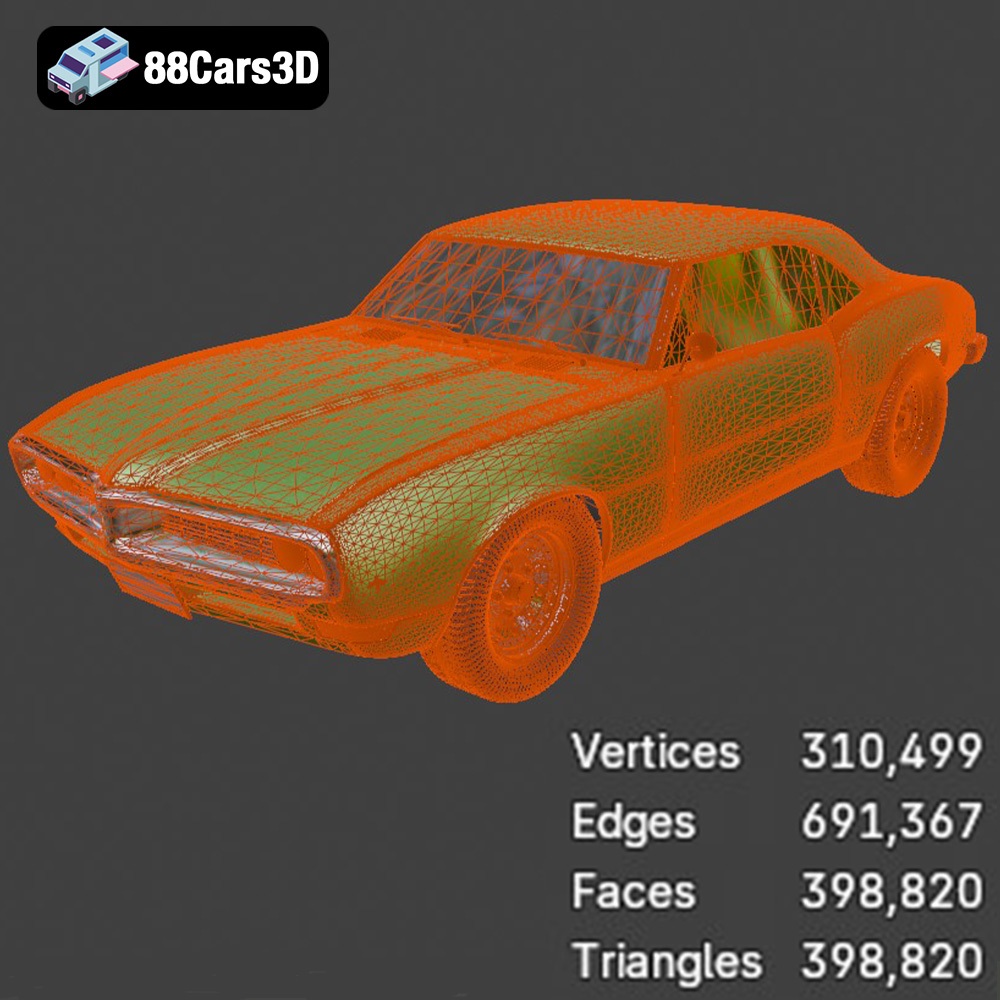
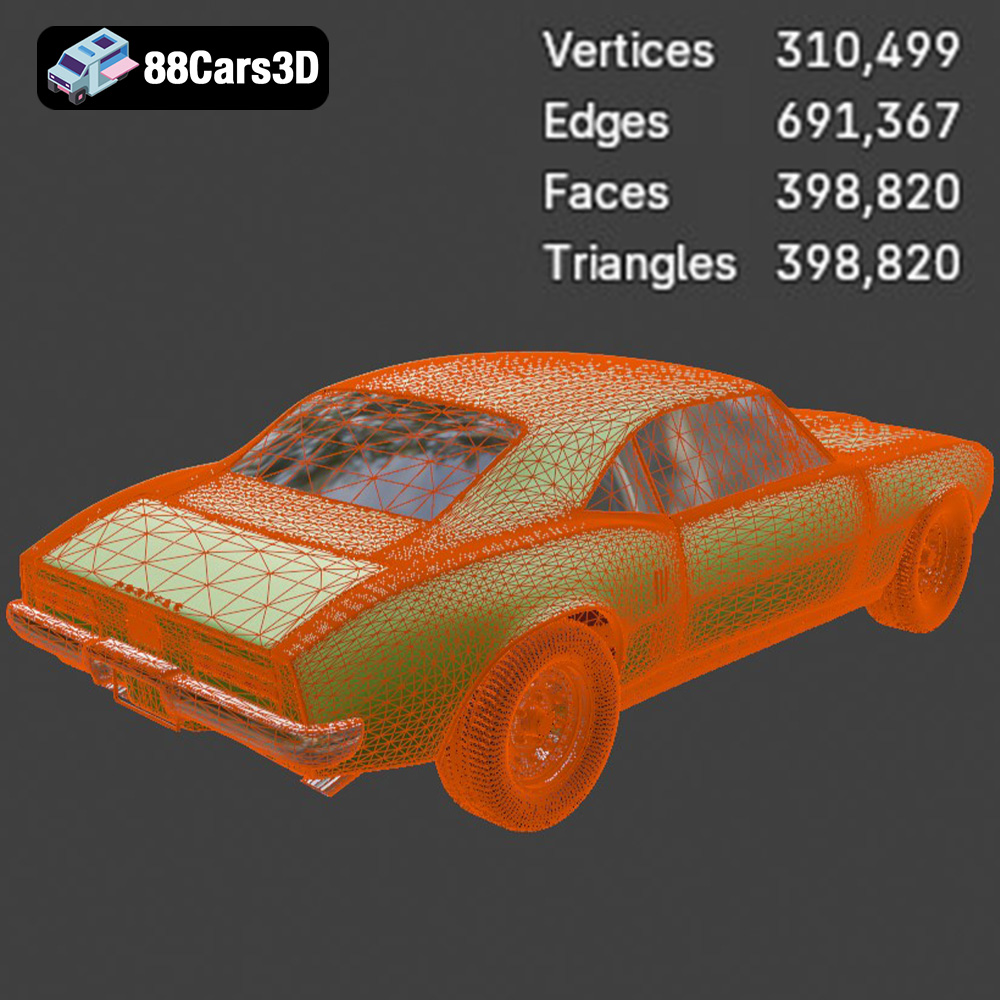
At the heart of any great render is clean, optimized geometry. Low-quality models can lead to shading artifacts, jagged edges, and difficulty in applying textures or sub-division surfaces. The Pontiac Firebird 1998 3D Model is built with professional standards in mind, featuring clean topology. This means the polygons are evenly distributed, avoiding excessive density in flat areas while providing enough detail in curved surfaces. Such topology ensures smooth deformations if animated and allows for efficient UV mapping. For close-up renders, a clean mesh is critical, as any imperfection becomes glaringly obvious. This model provides the underlying structure necessary for flawless visual fidelity, ensuring that the aggressive lines and iconic curves of the Firebird are reproduced without compromise.
Physical Based Rendering (PBR) materials are the cornerstone of modern photorealistic rendering. Unlike older, less accurate shading models, PBR mimics how light behaves in the real world, reacting physically to surfaces. The Pontiac Firebird 1998 3D Model features realistic PBR materials applied to all components. This includes the nuanced metallic flake of the paintwork, the subtle reflections and refractions of the glass, the intricate tread patterns and sidewall texturing of the tires, and the detailed surfaces of the interior controls. Each material is calibrated with properties like albedo, roughness, metallic, and normal maps, ensuring accurate light interaction across diverse rendering environments. Whether you’re using V-Ray in 3ds Max, Cycles in Blender, or Arnold in Maya, these PBR textures guarantee that the Firebird looks authentic under any lighting condition, from a sunny outdoor scene to a dramatic studio setup.
Integrating the Pontiac Firebird 1998 3D Model into rendering workflows is straightforward, thanks to the included .max and .blend formats. In 3ds Max, artists can open the .max file directly, finding pre-configured materials and potentially a basic lighting rig. From there, they can easily set up advanced studio lighting, add environmental effects, and utilize render engines like V-Ray or Corona to produce stunning high-resolution images or animations. Similarly, Blender users can open the .blend file, which often includes a Cycles or Eevee-ready setup. This allows for immediate rendering or further customization of the materials, lighting, and scene composition. The clean UV mapping on the model simplifies texture adjustments and the application of decals, ensuring a smooth and efficient rendering pipeline for both seasoned professionals and dedicated enthusiasts.
Developing immersive and visually compelling games requires not just stunning aesthetics but also meticulous optimization for real-time performance. The journey of transforming a high-detail 3D car model into a game-ready asset involves careful consideration of polygon count, material efficiency, and engine-specific configurations. The Pontiac Firebird 1998 3D Model, available on 88cars3d.com, is engineered to meet these demanding requirements, making it an excellent candidate for game development.
Game engines thrive on efficiency. High polygon counts can quickly bog down performance, especially in open-world environments or scenes with multiple vehicles. While the Pontiac Firebird 1998 3D Model is detailed, its optimized topology means it’s designed to be efficient. For further game integration, professional workflows often involve creating Levels of Detail (LODs). This means generating multiple versions of the model with varying poly counts – a high-detail version for close-ups, and progressively lower-poly versions for distant views. This technique ensures that players always see an appropriate level of detail without sacrificing frame rates. The clean geometry of the Firebird model makes the LOD generation process much simpler and more effective, ensuring smooth gameplay without visual compromises.
The inclusion of .fbx and a dedicated .unreal format for the Pontiac Firebird 1998 3D Model makes it particularly well-suited for integration into major game engines like Unreal Engine and Unity. For Unreal Engine, the .unreal asset signifies a model that is often pre-configured with Unreal-specific materials, collision meshes, and proper scaling, allowing for a drag-and-drop workflow. Developers can import the FBX (or the .unreal package), which typically includes the mesh, PBR textures, and sometimes even a basic skeletal rig for suspension or door animations. Materials can then be re-created using Unreal’s robust material editor, ensuring efficient shader compilation and optimal performance. Collision meshes, essential for realistic physics interactions, can be automatically generated or custom-built for precision. Similarly, in Unity, the .fbx file is the primary import method. Unity will recognize the embedded materials and textures, and developers can then adjust shaders, add rigidbodies for physics, and implement vehicle controllers. The clean UVs and well-structured geometry of the Firebird model simplify the application of custom shaders or unique visual effects within both engines, ensuring the iconic muscle car performs as good as it looks.
Imagine a realistic racing simulator set in the late 90s. The Pontiac Firebird 1998 3D Model becomes a prime candidate for a player-controlled or AI-driven vehicle. Leveraging its optimized geometry, developers can import the .fbx into Unreal Engine. They would then set up LODs, create accurate collision meshes, and fine-tune the vehicle’s physics based on its real-world specifications. The detailed PBR materials would ensure the car reacts realistically to different lighting conditions – the glint of the sun on its paintwork, the wet sheen on tires during rain. Furthermore, the meticulously modeled interior, visible through the windows or in first-person camera views, adds a layer of immersion. This type of high-quality asset significantly accelerates development time, allowing the team to focus on gameplay mechanics and track design rather than spending months modeling a single vehicle from scratch.
The utility of high-quality 3D car models extends far beyond traditional screens and game consoles. With the rise of augmented reality (AR), virtual reality (VR), and advanced 3D printing technologies, these digital assets are becoming vital tools for immersive experiences and physical prototyping. The Pontiac Firebird 1998 3D Model is designed with these diverse applications in mind, offering specialized formats to cater to these emerging fields.
AR and VR environments demand models that are both visually rich and highly optimized for real-time performance on a variety of devices, from powerful headsets to mobile phones. The .glb format included with the Pontiac Firebird 1998 3D Model is precisely tailored for this purpose. GLB files are highly efficient, bundling geometry, textures, and material data into a single, compact file. This makes them ideal for web-based AR experiences, where a user can view a virtual Firebird superimposed on their real-world environment through a smartphone camera, or for interactive VR showrooms where potential buyers can explore the car’s interior and exterior in a fully immersive, 360-degree digital space. The model’s optimized topology ensures smooth frame rates, preventing motion sickness in VR and providing a fluid experience in AR. Imagine an automotive dealership using this model to allow customers to “see” and customize a Firebird in their driveway before it’s even manufactured, a powerful visualization tool enabled by assets of this caliber.
For designers, engineers, or even passionate collectors, the ability to transition a digital design into a physical object is invaluable. This is where the .stl format comes into play. The Pontiac Firebird 1998 3D Model, when provided as an STL, is prepared for 3D printing. This means the mesh is “watertight” (no holes or gaps in the geometry) and manifold, ensuring that slicing software can correctly interpret the model’s volume for fabrication. While a full-scale Firebird might be out of reach, enthusiasts could print detailed scale models for display, creating physical representations of their favorite classic car. Beyond hobbyists, industrial designers might use the .stl or even the more detailed .ply format to create rapid prototypes of specific parts or design iterations for aerodynamic testing or fitment checks. This ability to physically manifest a digital asset bridges the gap between the virtual and real worlds, offering tangible benefits for design validation and creative expression.
In a crowded marketplace of digital assets, discerning professionals seek not just models, but solutions that integrate seamlessly into their workflows and elevate the quality of their projects. 88cars3d.com stands out by providing a curated selection of high-quality 3D car models that meet these stringent demands, exemplified by the Pontiac Firebird 1998 3D Model.
The hallmark of a premium asset, like the Pontiac Firebird 1998 3D Model from 88cars3d.com, lies in its adherence to professional standards. This isn’t merely about visual appeal; it encompasses rigorous technical considerations such as clean, optimized geometry, accurate real-world scaling, and meticulously crafted PBR materials. Developing such a model from scratch is a highly specialized and time-consuming endeavor, often requiring hundreds of hours for a single vehicle. By providing ready-to-use, high-fidelity assets, 88cars3d.com offers a significant time-saving solution. Artists and developers can bypass the laborious modeling phase and jump straight into rendering, animation, or game integration, drastically accelerating project timelines and reducing production costs without compromising on visual quality. This allows creative teams to focus their energy on storytelling, scene composition, and interactive elements, rather than the foundational asset creation.
The versatility of assets found on 88cars3d.com, particularly the Pontiac Firebird 1998 3D Model, makes them invaluable across a broad spectrum of industries. For architectural visualization firms, these models add realistic context to street scenes and parking lots. For advertising agencies, they become hero assets for product showcases and cinematic commercials. Game developers find them ideal for populating virtual worlds with authentic vehicles, while AR/VR creators leverage them for immersive experiences. Even forensic animation studios could use such accurate models to reconstruct accident scenes. The comprehensive file formats offered – from editable .max and .blend files to game-engine-ready .fbx and AR/VR-optimized .glb – ensure maximum compatibility and flexibility, making each purchase a robust investment for multiple project types. Expanding your digital garage with a diverse and reliable collection of 3D car models from 88cars3d.com ensures you are always prepared for the next creative challenge, equipped with assets that integrate effortlessly and deliver exceptional results.
The world of 3D visualization is in constant evolution, pushing the boundaries of realism and immersion. At the core of this progress lies the undeniable need for high-quality, technically sound 3D assets. The Pontiac Firebird 1998 3D Model stands as a testament to this principle, offering a meticulously crafted digital representation of an iconic vehicle that is ready for deployment across a myriad of professional applications.
From producing stunning automotive rendering sequences with its PBR materials and clean topology, to seamlessly integrating as optimized game assets in Unreal Engine and Unity, or enabling innovative AR/VR experiences and physical 3D prints, this model demonstrates exceptional versatility. Its comprehensive suite of file formats – including .blend, .fbx, .obj, .glb, .stl, .ply, .unreal, and .max – ensures that professionals across diverse disciplines can leverage its precision and detail without compatibility hurdles.
By choosing an asset like the Pontiac Firebird 1998 3D Model from 88cars3d.com, artists and developers gain a significant advantage. They acquire a foundation of quality that saves valuable time, accelerates production workflows, and ultimately elevates the visual fidelity of their projects. Investing in such a well-engineered 3D car model is not just acquiring a digital object; it’s empowering your creative vision with a tool built for excellence and designed for the future of digital content creation.
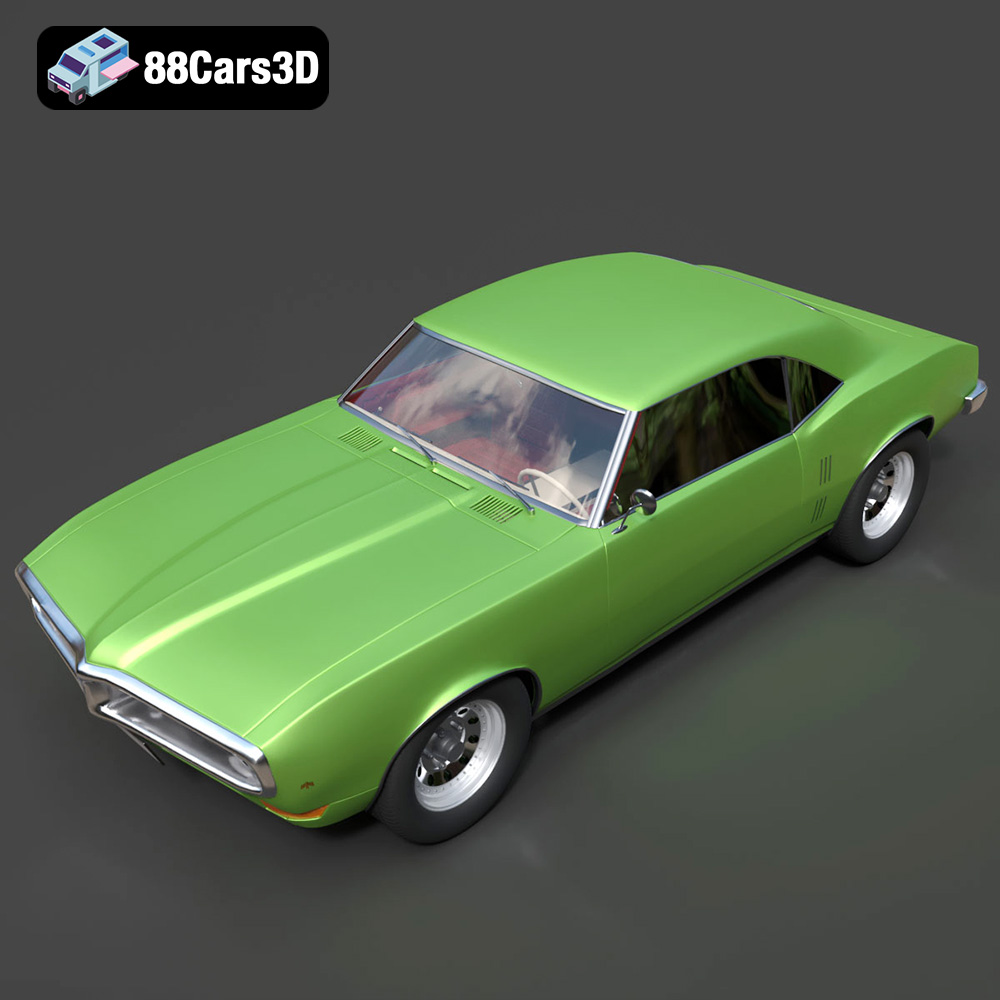
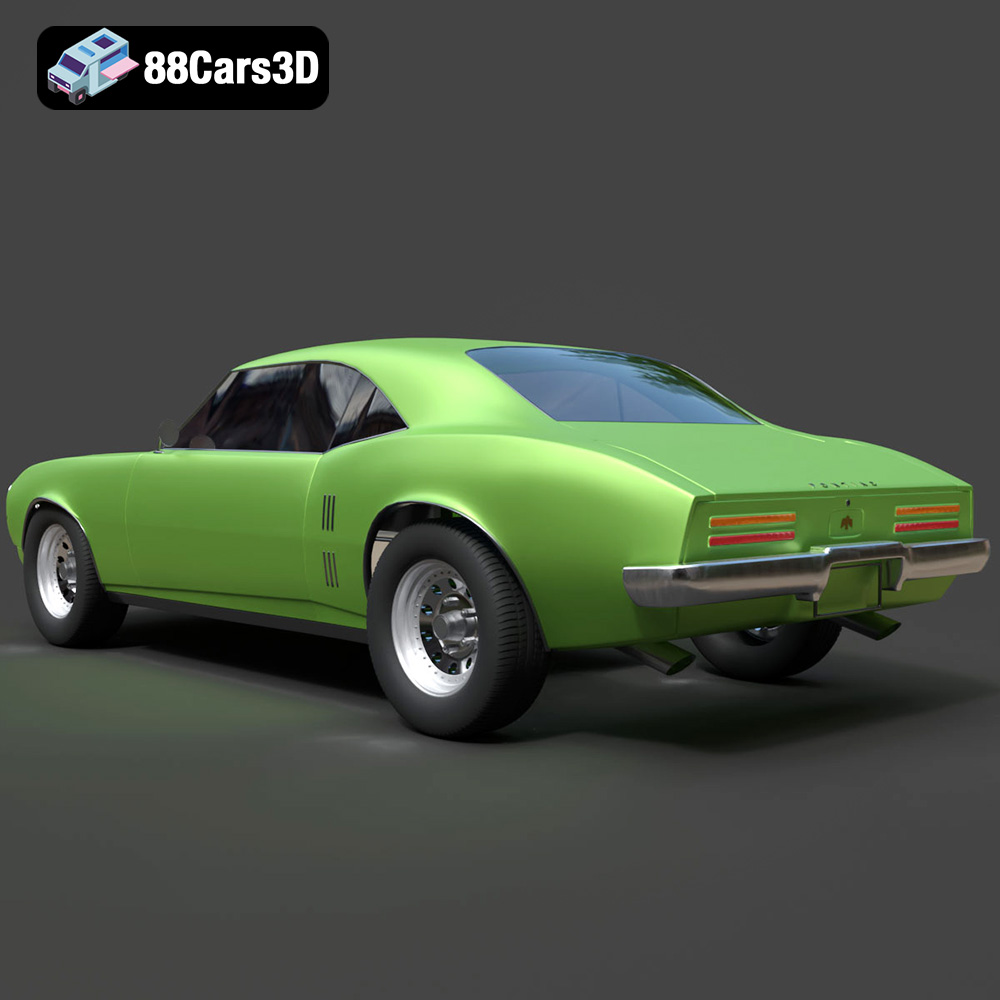
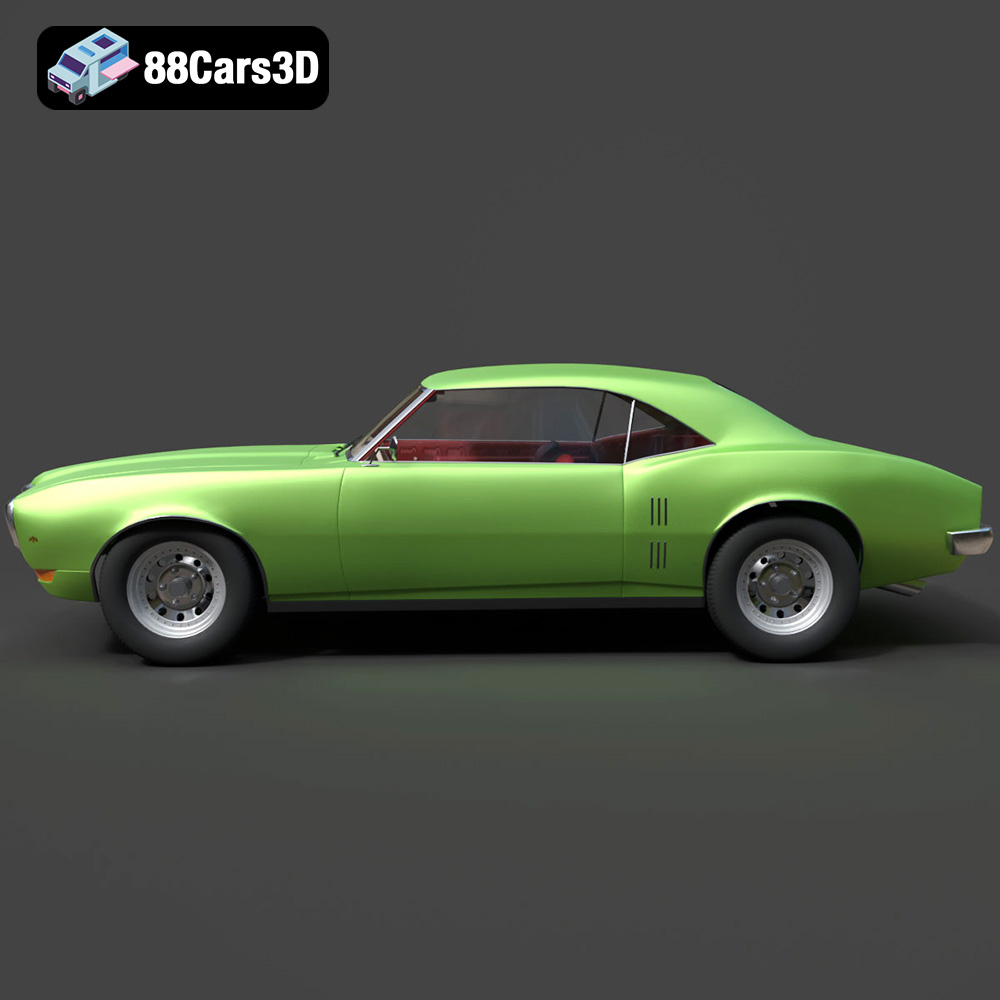
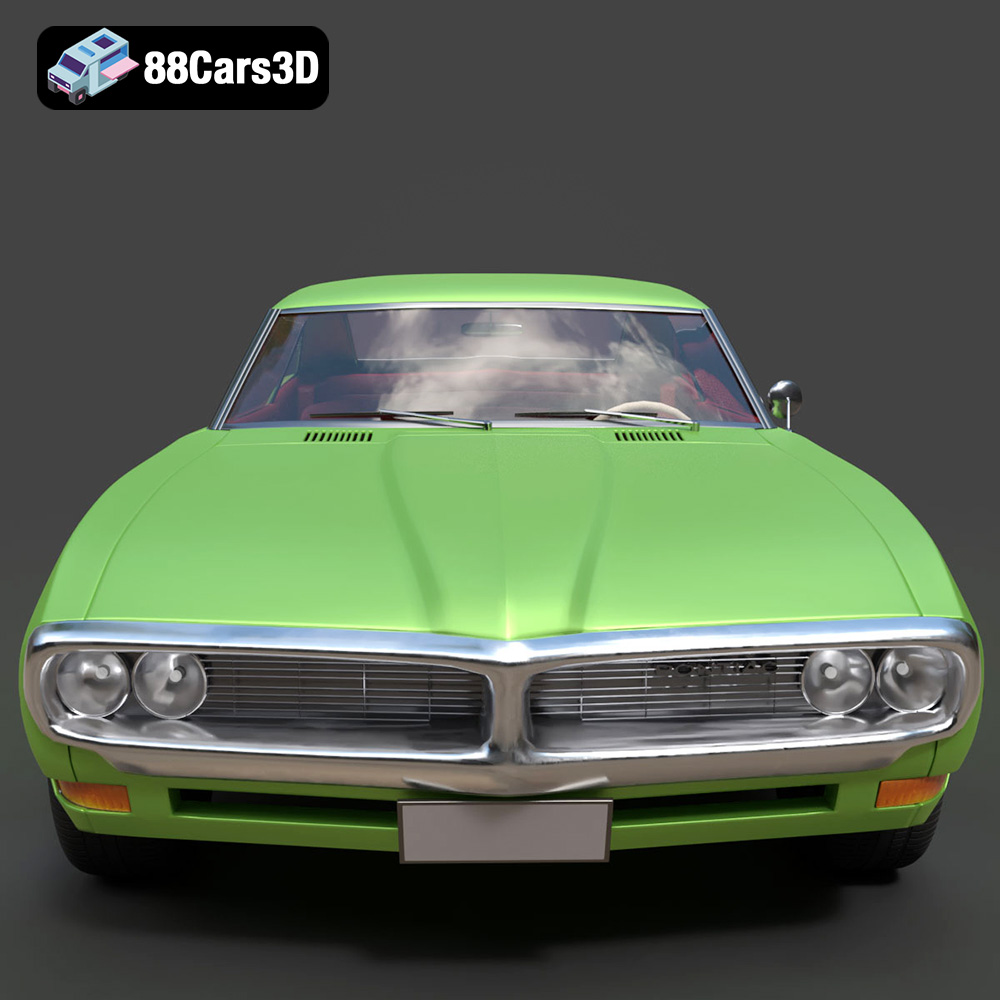
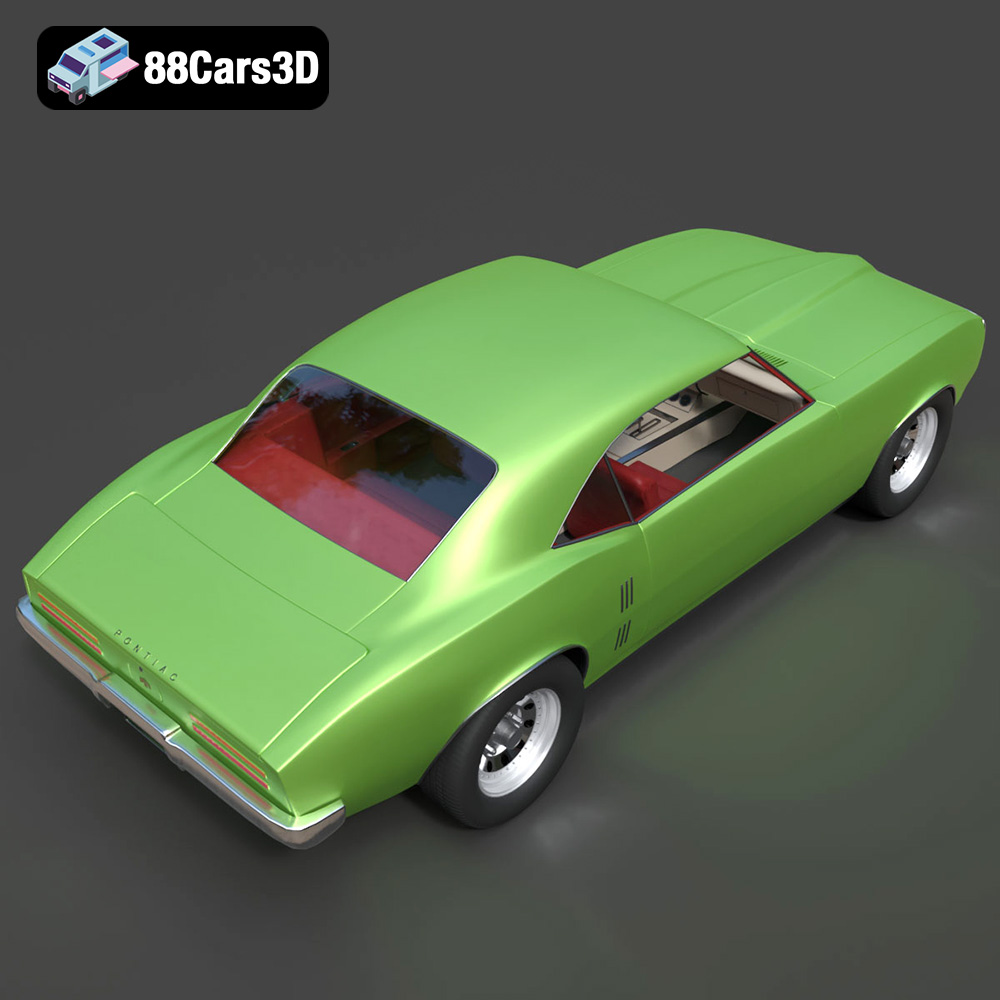
Capture the essence of American performance with this meticulously crafted 3D model of the Pontiac Firebird 1998. Developed by 88cars3d.com, this asset provides unparalleled accuracy, reproducing the aggressive styling and iconic lines of this classic muscle car with precision. The model is built to professional standards, ensuring it integrates seamlessly into any production pipeline requiring authentic automotive representation. This digital asset features clean, optimized geometry suitable for close-up renders and dynamic simulations. Realistic PBR materials are applied to all components, including the paintwork, glass, tires, and detailed interior surfaces, ensuring accurate light interaction across various rendering environments. Every detail, from the signature front fascia to the interior controls, has been modeled to enhance visual fidelity for visualization projects. The Pontiac Firebird 1998 3D Model is ready for diverse applications, including immersive AR/VR experiences, large-scale visualization projects, cinematic rendering sequences, and detailed vehicle simulation. Its optimized topology makes it an efficient asset for use as a game asset in platforms like Unreal Engine and Unity.
$10
.arvr
.blend
.car3dmodel
.classiccar
.coupe
.fbx
.firebird
.gameasset
.glb
.max
.musclecar
.obj
.ply
.pontiac
.rendering
.simulation
.stl
.unreal