⚡ FLASH SALE: Get 60% OFF All Premium 3D & STL Models! ⚡

The pursuit of photorealism in 3D visualization is a journey of meticulous detail, technical mastery, and artistic vision. For automotive enthusiasts, designers, and game developers, creating a 3D car render that is indistinguishable from a photograph is the ultimate goal. While the tools are powerful, achieving this level of realism requires a deep understanding of each stage of the rendering pipeline. This comprehensive guide will take you through the essential steps, focusing on leveraging the capabilities of Corona Renderer, a CPU-based physically-based renderer renowned for its ease of use and stunning results, to bring your 3D car models to life.
From the foundational aspects of 3D model topology and meticulous UV mapping to the intricacies of PBR material creation, sophisticated lighting setups, and final post-processing, we will dissect each element crucial for achieving truly photorealistic automotive renders. You’ll learn industry best practices, specific technical workflows, and optimization strategies that not only enhance visual fidelity but also improve efficiency. Whether you’re working on a high-fidelity visualization for an automotive manufacturer, developing compelling marketing assets, or preparing game assets that demand visual excellence, mastering these techniques with Corona Renderer will elevate your work to a professional standard. Prepare to unlock the full potential of your 3D car models and transform them into breathtaking digital masterpieces.
Every photorealistic render begins with an impeccable 3D model. For automotive subjects, the quality of the mesh topology is paramount, as cars are characterized by their smooth, reflective surfaces that unforgivingly expose any imperfections. Clean topology ensures that light reflects accurately, deformations are smooth, and subdivision surfaces behave predictably. A high-quality 3D car model, such as those found on platforms like 88cars3d.com, provides an excellent starting point, saving countless hours of modeling and allowing you to focus on the rendering process.
The core principle for automotive modeling is the adherence to quad-based topology. Quads (four-sided polygons) are ideal because they subdivide cleanly, producing smooth surfaces without artifacts. Triangles (three-sided polygons) should be avoided on curved or reflective surfaces, as they can lead to pinching, unwanted faceting, or unpredictable shading, especially when subdivision modifiers are applied. N-gons (polygons with more than four sides) are an absolute no-go for similar reasons, often causing severe shading issues and making mesh editing difficult.
Edge flow is another critical concept. It refers to the direction and distribution of edges across your model. For car bodies, edge loops should follow the natural curves and contours of the vehicle. This is particularly important around design lines, panel gaps, and areas that catch highlights. Good edge flow ensures that when a subdivision surface modifier (like Turbosmooth in 3ds Max or Subdivision Surface in Blender) is applied, the model maintains its intricate shapes and smooth transitions, resulting in perfectly flowing reflections. Aim for an even distribution of polygons, avoiding overly dense areas that don’t contribute to detail or overly sparse areas that lead to sharp angles after subdivision. A typical automotive model suitable for high-end rendering might range from 200,000 to 1,000,000 polygons before subdivision, reaching several million after, depending on the level of detail for components like the engine bay or interior.
Even with a well-modeled asset, some cleanup and optimization steps are often necessary before rendering. Begin by inspecting the mesh for any non-manifold geometry, such as interior faces, floating vertices, or open edges. These can cause rendering errors, especially with physically based renderers. Tools like “Mesh Cleanup” in 3ds Max or “Merge by Distance” and “Make Manifold” in Blender (refer to the Blender 4.4 documentation for specific tools and workflows) are invaluable for addressing these issues. Ensure all vertices are welded and there are no duplicate faces occupying the same space. Polygon counts should be managed; while high detail is desired for photorealism, excessively dense meshes can slow down rendering without adding perceptible detail. Consider using a retopology workflow if your initial mesh is overly complex or has poor topology, creating a cleaner, more efficient mesh that retains the original detail through normal maps or displacement.
Once your 3D car model is pristine, the next crucial step for photorealism is meticulous UV mapping. UV mapping is the process of unwrapping your 3D model’s surfaces into a 2D plane, allowing you to apply 2D textures (like paint, carbon fiber, or rubber) without distortion. Poor UVs lead to stretched, blurry, or misaligned textures, immediately breaking the illusion of realism. Achieving flawless textures requires strategic unwrapping and careful attention to detail.
For complex objects like cars, UV mapping needs to be approached systematically. Break down the car into logical components: body panels, windows, tires, wheels, interior elements, lights, and smaller details. Each of these components will likely require different unwrapping strategies to minimize distortion and maximize texture resolution. For instance, large, relatively flat body panels can often be unwrapped using planar mapping or simple projection, followed by careful seam placement. Curved surfaces, like fenders or bumpers, may benefit from cylindrical or spherical mapping, or a “peel” operation after strategically cutting seams along less visible edges, such as where panels meet or in natural crevices.
The goal is to achieve a consistent texel density across all surfaces. Texel density refers to the number of texture pixels per unit of 3D space. If one part of your model has a very high texel density and another a very low one, textures will appear crisp on the former and blurry on the latter. Most 3D software offers tools to visualize and unify texel density, ensuring uniform clarity across your model. When placing seams, aim for areas that are naturally hidden or follow sharp edges, like the underside of a bumper or along a body line. This minimizes the visibility of texture breaks.
While seams are unavoidable, good UV practice minimizes their visual impact. Utilizing tools like “Relax” or “Unfold” in your 3D software helps to evenly distribute UV islands and reduce stretching after initial unwrapping. For extremely high-resolution assets, especially for close-up shots, consider using UDIMs (multi-tile UVs). UDIMs allow you to spread your UV islands across multiple 0-1 UV spaces (tiles), each with its own texture map. This means a single car body can have several 4K or 8K texture maps dedicated to different sections, drastically increasing overall texture detail without sacrificing individual map resolution. This approach is common in film and high-end automotive visualization.
When packing UVs into a single 0-1 space (for simpler assets or optimized game assets), use a packing algorithm to maximize the use of UV space, but always leave a small margin (padding) between islands to prevent texture bleeding. For metallic surfaces, especially car paint, accurate UVs are critical for reflection maps, normal maps, and detailed metallic flakes to render without distortion. Ensuring the model has clean, well-optimized UVs, whether custom-unwrapped or provided with a high-quality asset from a marketplace, is fundamental before moving on to material creation.
With a perfectly modeled and UV-mapped car, the next step is to clothe it in realistic materials. Physically Based Rendering (PBR) is the industry standard for achieving photorealism, simulating how light interacts with surfaces in the real world based on physical properties. Corona Renderer, being a PBR renderer, excels at interpreting these material properties to produce accurate and lifelike results. Understanding PBR principles and how to build complex shader networks in Corona is key to truly believable automotive renders.
PBR materials rely on a set of texture maps that define a surface’s properties. The most common maps include:
For car paint, specific considerations apply. Modern car paint is complex, often consisting of a metallic base coat, a colored mid-coat, and a clear protective top coat. This layering needs to be simulated in your material. The metallic flakes within the paint also play a significant role in its appearance, creating subtle sparkle and color shift under different lighting angles.
Corona Renderer’s material system, primarily centered around the Corona Physical Material, simplifies the PBR workflow while offering immense flexibility for complex shaders. The Corona Physical Material integrates most PBR parameters into a single, intuitive interface. Here’s how to build typical automotive materials:
Remember that the quality of your texture maps is as important as the material settings. Use high-resolution, tileable textures where appropriate, and ensure they are linearized (non-sRGB) if they represent raw data like roughness, metalness, or normal maps. Platforms selling high-quality 3D models like 88cars3d.com often provide PBR-ready textures, significantly streamlining this process.
Lighting is the soul of any render. Without proper illumination, even the most detailed model with perfect materials will fall flat. For photorealistic automotive renders, understanding how light interacts with the car’s surfaces and its environment is paramount. Corona Renderer’s physically accurate lighting system makes it an excellent choice for achieving natural and captivating illumination.
Corona Renderer is an unbiased, physically-based renderer, meaning it accurately calculates global illumination (GI), which is the realistic simulation of light bouncing around a scene. This is fundamental for photorealism. The primary method for lighting exterior car scenes or studio setups in Corona is through High Dynamic Range Images (HDRIs).
An HDRI is a 360-degree panoramic image that captures both color and intensity information from a real-world location. When used as a light source in Corona (via a Corona Sky map in the Environment & Effects settings or applied directly to a Corona Dome Light), it provides realistic environmental illumination, reflections, and ambient light. The quality of your HDRI directly impacts the realism of your render. High-resolution, professionally captured HDRIs (e.g., 16K, 20K, or higher) offer superior lighting and reflections. When selecting an HDRI, consider:
In Corona, you can easily rotate the HDRI to adjust the sun’s direction or key light position, control its overall intensity, and fine-tune color balance. This flexibility allows for precise control over the mood and direction of light without needing to set up dozens of individual lights.
While HDRIs provide excellent overall illumination, complementary lights are often necessary to emphasize specific features, add accents, or simulate artificial light sources. Corona offers a range of light types:
One of Corona Renderer’s most powerful features for lighting is LightMix. This allows you to adjust the intensity, color, and even enable/disable individual lights or groups of lights after rendering is complete, directly within the Corona VFB (Virtual Frame Buffer) or in post-production software. LightMix dramatically speeds up lighting iteration, enabling you to experiment with various lighting moods and intensities without re-rendering the entire scene from scratch.
When setting up studio lighting, a classic three-point lighting setup (key light, fill light, back/rim light) often works wonders, combined with large area lights for soft, even reflections. For outdoor scenes, the HDRI serves as the primary light, with small, subtle Corona Lights potentially used to brighten specific details or add sparkle to chrome elements.
With your model, materials, and lighting in place, it’s time to delve into Corona Renderer’s settings to achieve the perfect balance between image quality and render speed. Corona is known for its intuitive interface, but understanding key parameters and optimization strategies is crucial for efficient, high-resolution photorealistic output.
Corona Renderer employs a progressive rendering approach. This means the image refines over time, becoming clearer and less noisy with each pass. You typically don’t set a fixed number of passes; instead, you define criteria for when the render should stop:
Denoising: Corona offers powerful denoising options that significantly reduce render times without compromising quality.
Denoising allows you to stop renders at a higher noise limit (e.g., 8-10%) and let the denoiser clean up the remaining noise, drastically cutting down render times for high-quality output.
Render Elements (Passes): For advanced post-production, enable various render elements. These are separate image layers that store specific information about the scene, such as Raw Global Illumination, Raw Reflection, Raw Refraction, Z-Depth, Alpha, Normals, and Wirecolor. These elements give you immense control in compositing software for fine-tuning highlights, reflections, depth of field, and masks.
Automotive scenes, especially those with detailed environments, can become heavy. Optimization is key to managing memory usage and render times:
By carefully configuring these settings and employing optimization techniques, you can achieve stunning photorealistic car renders efficiently, even with intricate details and expansive environments.
The rendering process doesn’t end when Corona finishes its calculations. Post-processing and compositing are crucial stages where you can elevate a good render to an exceptional one, adding the subtle nuances and artistic flair that mimic professional photography. This is where you polish your image, enhancing its visual impact and bringing out the finest details.
Corona Renderer includes a powerful suite of post-processing tools directly within its Virtual Frame Buffer (VFB), allowing for real-time adjustments without needing external software. These features are invaluable for quick iterations and initial color grading:
The ability to make these adjustments live in the VFB, often coupled with LightMix, significantly accelerates the creative process, allowing you to experiment with different looks rapidly.
For ultimate control and professional-grade results, exporting your render elements and compositing them in dedicated software like Adobe Photoshop or After Effects (or Nuke for high-end work) is essential. Render elements provide granular control over every aspect of your image:
The power of compositing lies in its non-destructive nature and the ability to combine various elements to achieve a final image that surpasses what a single render pass could provide. By mastering these post-processing techniques, your photorealistic car renders will possess a level of polish and artistry that truly stands out.
Creating photorealistic 3D car renders with Corona Renderer is a rewarding process that combines technical precision with artistic finesse. We’ve explored the journey from the foundational integrity of your 3D model’s topology and meticulous UV mapping to the intricate art of PBR material creation, precise lighting setups, and efficient rendering strategies. Understanding how to build robust material networks in Corona, leverage the power of HDRIs for natural illumination, optimize render settings for speed and quality, and finally, polish your output through sophisticated post-processing techniques are all indispensable skills.
The pursuit of photorealism demands attention to every detail, from the subtle reflections on a car’s clear coat to the nuanced interplay of light and shadow across its contours. By applying the principles and workflows outlined in this guide, you gain the knowledge to not only produce visually stunning renders but also to troubleshoot common challenges and continually refine your craft. Remember that high-quality input leads to high-quality output; sourcing meticulously crafted 3D models, such as those available on 88cars3d.com, provides an invaluable head start. Continuously experiment, observe real-world cars and lighting, and iterate on your designs. With practice and dedication, you will master the art of transforming your digital automotive visions into breathtakingly lifelike images that captivate and inspire.

Texture: Yes
Material: Yes
Download the BMW 7 Series E38 3D Model featuring its iconic luxury sedan design and classic aesthetics. Includes .blend, .fbx, .obj, .glb, .stl, .ply, .unreal, and .max formats for rendering, simulation, and game development.
Price: $10.79

Texture: Yes
Material: Yes
Download the BMW 6 Series 640i F12 3D Model featuring a sleek design and detailed interior. Includes .blend, .fbx, .obj, .glb, .stl, .ply, .unreal, and .max formats for rendering, simulation, and game development.
Price: $10.79

Texture: Yes
Material: Yes
Download the BMW 6 Coupe E63 3D Model featuring a sleek design, detailed interior, and realistic exterior. Includes .blend, .fbx, .obj, .glb, .stl, .ply, .unreal, and .max formats for rendering, simulation, and game development.
Price: $10.79
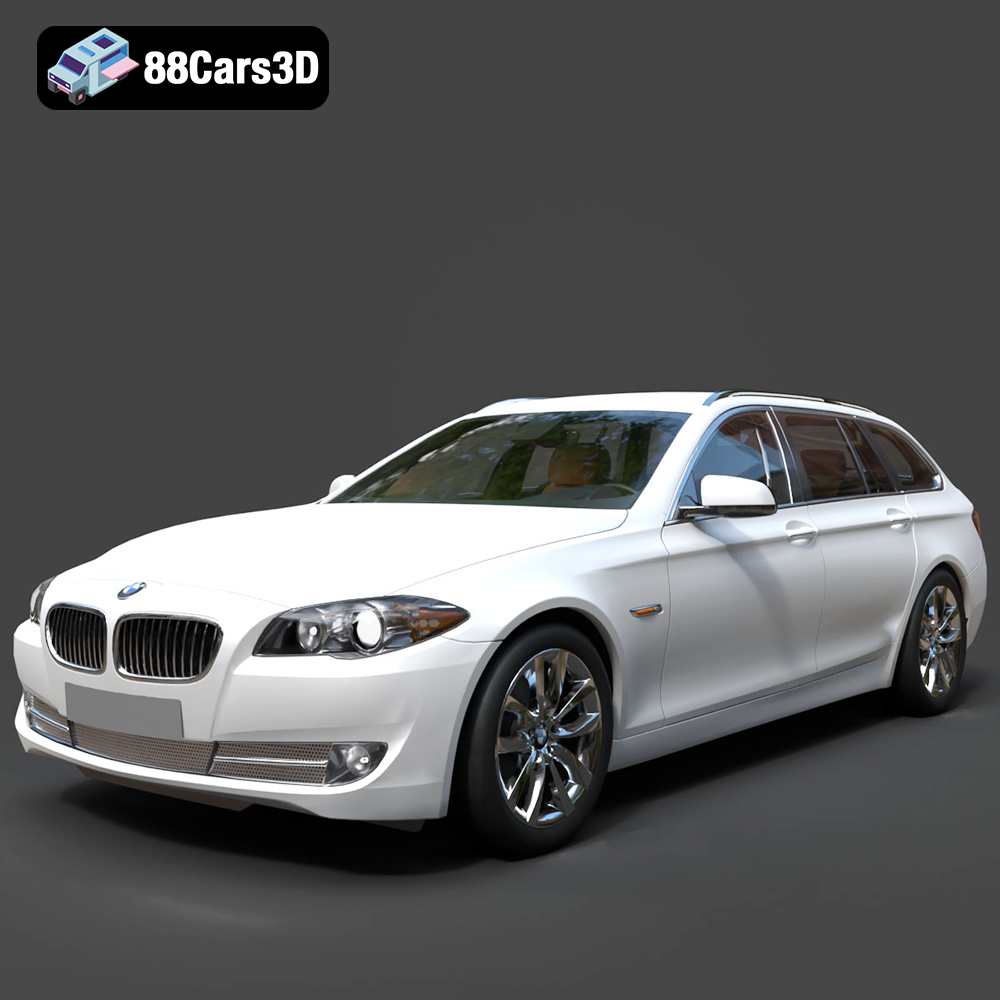
Texture: Yes
Material: Yes
Download the BMW 5 Series Touring F11-007 3D Model featuring a detailed exterior and interior. Includes .blend, .fbx, .obj, .glb, .stl, .ply, .unreal, and .max formats for rendering, simulation, and game development.
Price: $10.79
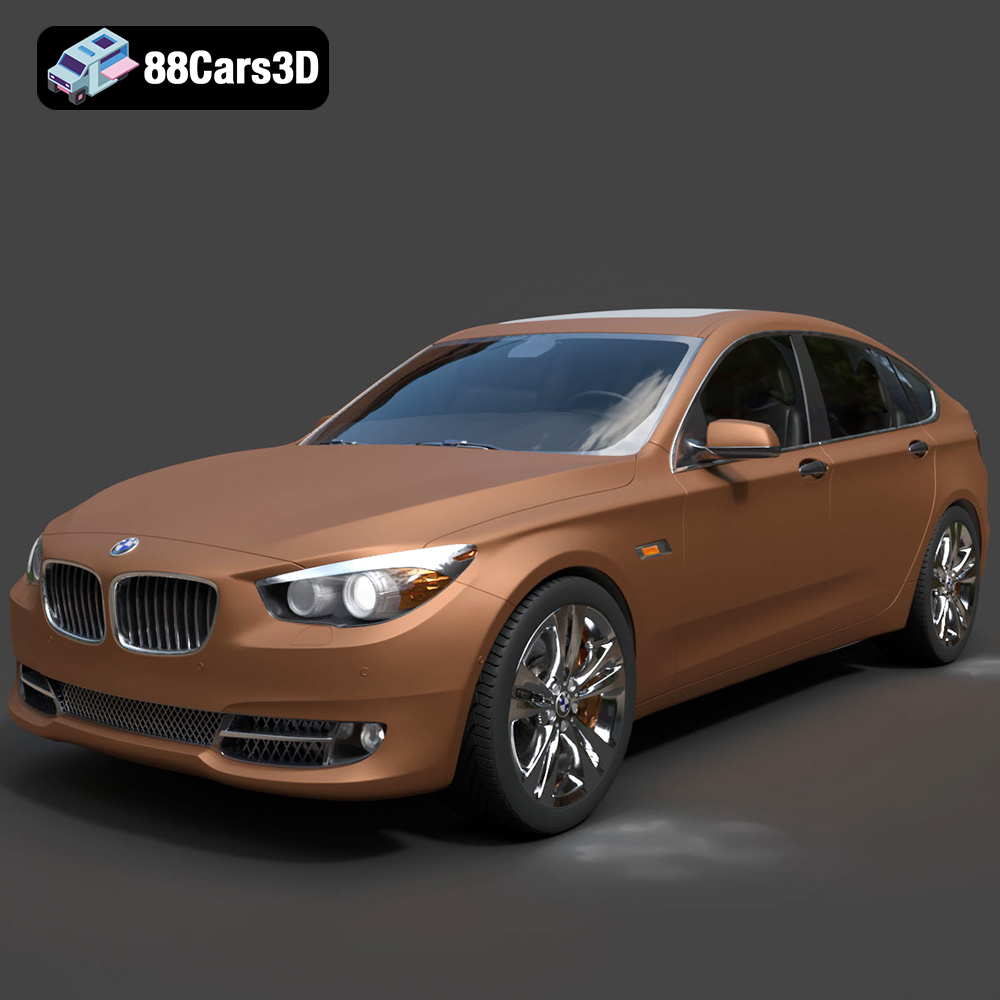
Texture: Yes
Material: Yes
Download the BMW 5 Series Gran Turismo F07-003 3D Model featuring a detailed exterior and interior. Includes .blend, .fbx, .obj, .glb, .stl, .ply, .unreal, and .max formats for rendering, simulation, and game development.
Price: $10.79
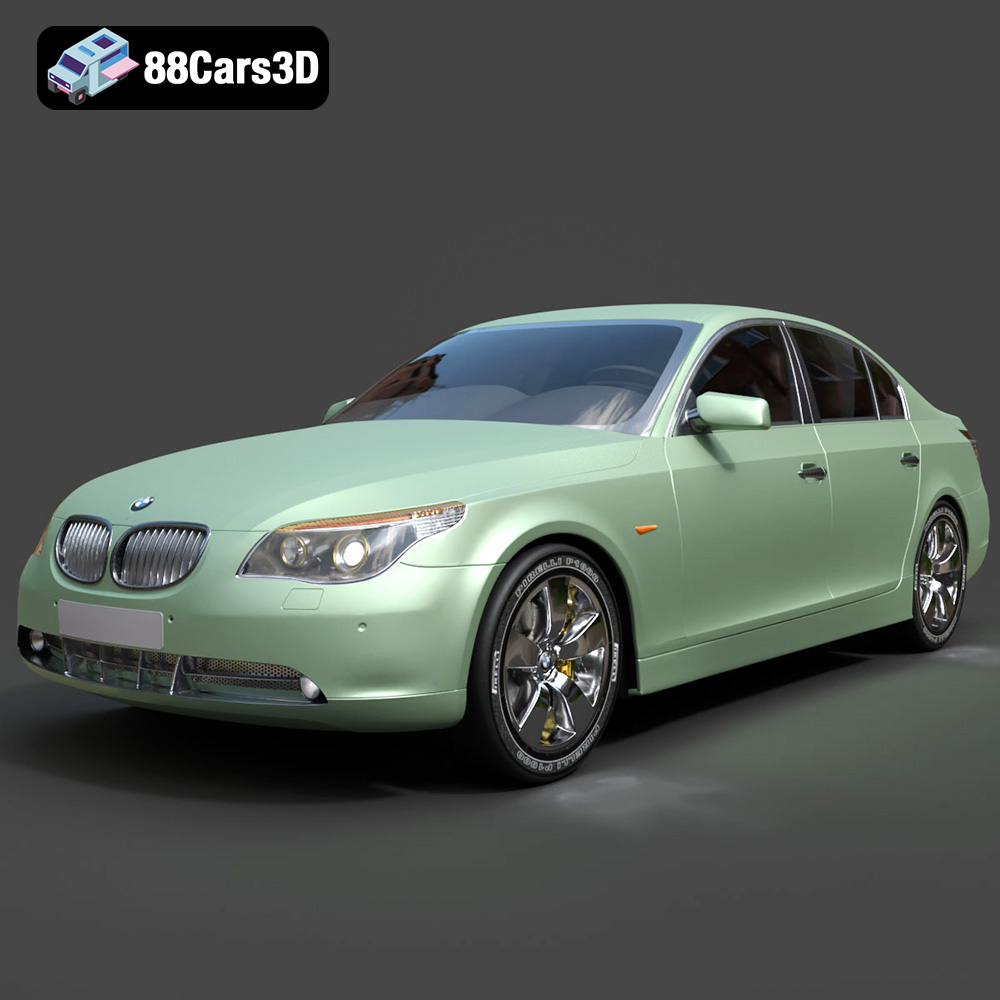
Texture: Yes
Material: Yes
Download the BMW 5 Series E60 3D Model featuring its iconic sedan design, detailed exterior, and interior. Includes .blend, .fbx, .obj, .glb, .stl, .ply, .unreal, and .max formats for rendering, simulation, and game development.
Price: $10.79

Texture: Yes
Material: Yes
Download the BMW 5 E34-535i 3D Model featuring an iconic design, detailed exterior and interior, and accurate representation. Includes .blend, .fbx, .obj, .glb, .stl, .ply, .unreal, and .max formats for rendering, simulation, and game development.
Price: $10.79
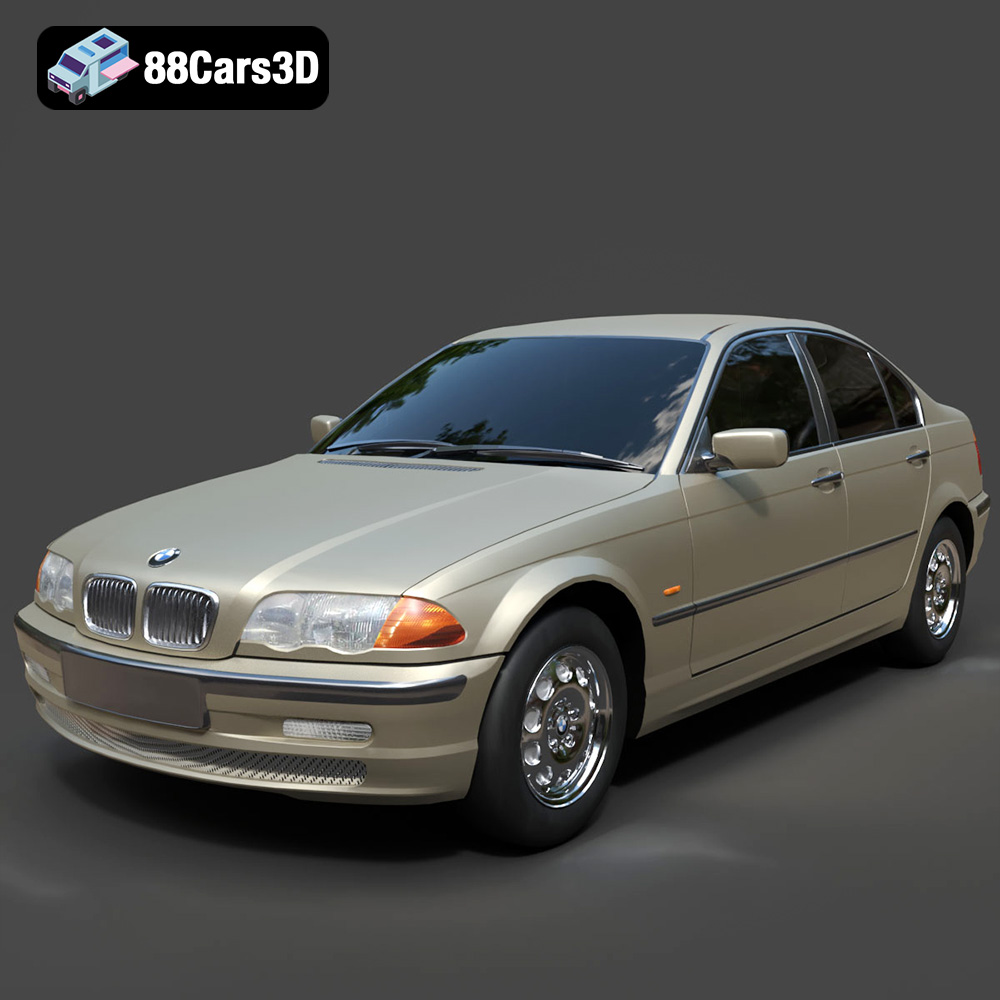
Texture: Yes
Material: Yes
Download the BMW 3 Series E46 3D Model featuring authentic exterior lines, a detailed interior, and separated components for animation. Includes .blend, .fbx, .obj, .glb, .stl, .ply, .unreal, and .max formats for rendering, simulation, and game development.
Price: $10.79
Texture: Yes
Material: Yes
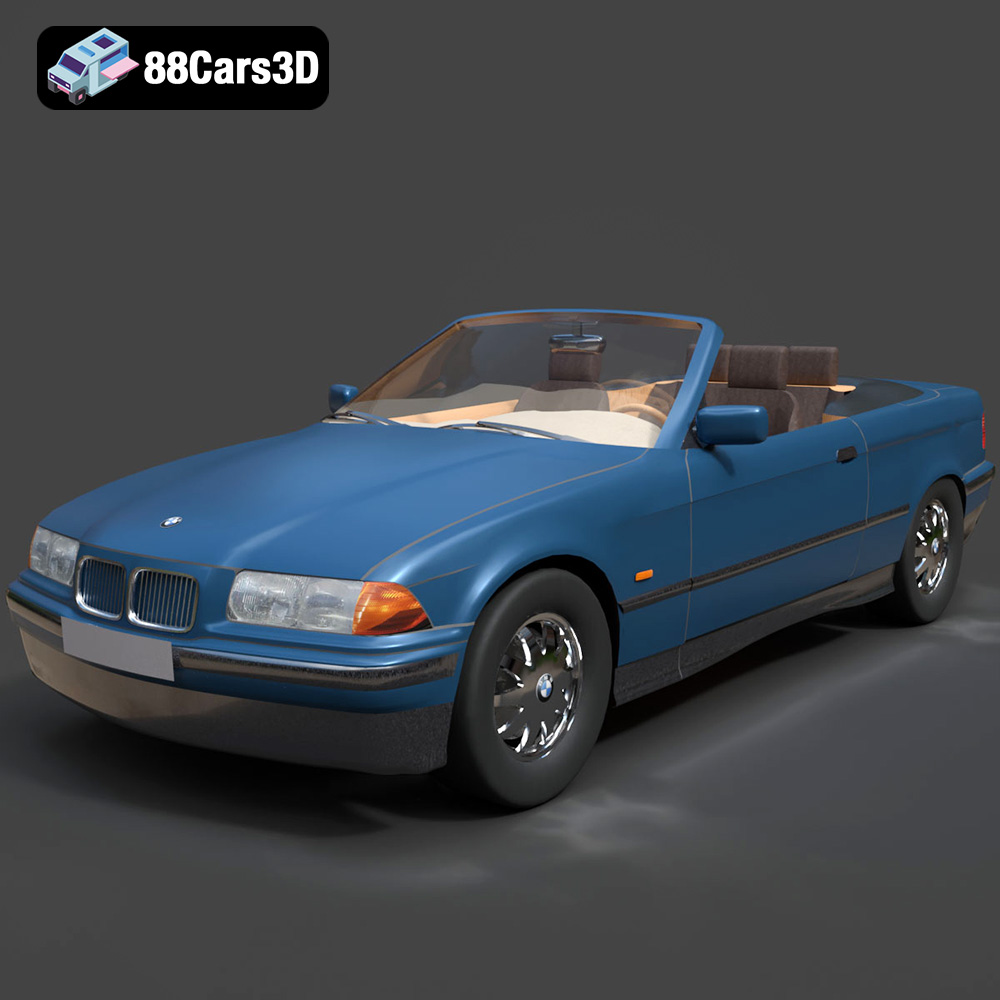
Download the BMW 3 Series E36 Cabrio 325i 1998 3D Model featuring a classic convertible design and detailed interior. Includes .blend, .fbx, .obj, .glb, .stl, .ply, .unreal, and .max formats for rendering, simulation, and game development.
Price: $10.79
Texture: Yes
Material: Yes
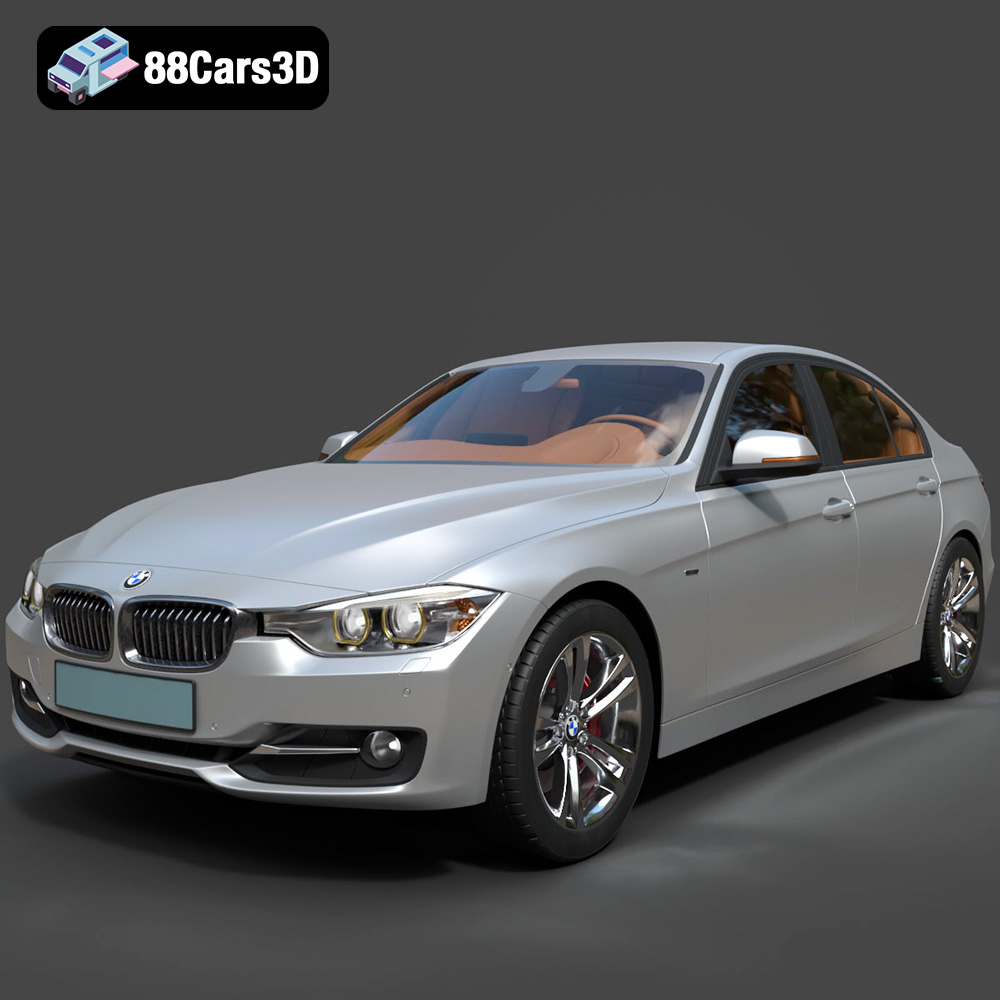
Download the BMW 3 F30 3D Model featuring a detailed exterior, realistic interior, and optimized mesh. Includes .blend, .fbx, .obj, .glb, .stl, .ply, .unreal, and .max formats for rendering, simulation, and game development.
Price: $10.79

