⚡ FLASH SALE: Get 60% OFF All Premium 3D & STL Models! ⚡

“`html
The world of 3D printing is a fascinating intersection of digital design and tangible creation. For enthusiasts and professionals alike, bringing intricate designs to life relies heavily on understanding the fundamental file formats involved. Among these, the STL (STereoLithography) file format stands out as the undisputed king of 3D printing. Whether you’re downloading a meticulously crafted printable car model from platforms like 88cars3d.com or designing your own, grasping the nuances of STL files is paramount to achieving flawless prints. This comprehensive guide will demystify the STL format, explore its structure, discuss crucial file preparation techniques, and delve into the slicing parameters that transform digital data into physical reality. Prepare to elevate your 3D printing game by mastering the essential skills needed to work with STL files, ensuring every layer, every detail, and every curve of your automotive models is reproduced with stunning accuracy.
In this article, we will cover:
The STL file format, originating from 3D Systems in the 1980s for their stereolithography apparatus, has become the de facto standard for transmitting 3D models to 3D printers. Its enduring popularity stems from its elegant simplicity and its direct representation of a 3D object’s surface geometry. Unlike more complex formats that store intricate details like color, texture, or material properties, STL focuses purely on the shape. It achieves this by approximating the surface of a 3D model using a collection of interconnected triangles. These triangles, mathematically defined by their three vertices (points in 3D space), form a tessellated mesh that outlines the object’s form. Each triangle also has a normal vector, a vector perpendicular to its surface, which indicates the outward-facing direction, crucial for defining the interior and exterior of the model.
There are two primary representations of STL files: ASCII and binary. ASCII STL files are human-readable and store data as text, listing each triangle’s normal vector and the coordinates of its three vertices. While easier to inspect, ASCII files tend to be larger in size. Binary STL files, on the other hand, are more compact and efficient, storing the same information in a binary format that is faster for software to parse. Regardless of the encoding, the underlying principle remains the same: a watertight, manifold mesh of triangles representing the object’s surface. This simplicity is its greatest strength, ensuring compatibility across a vast ecosystem of 3D modeling software, slicers, and printers.
When a 3D model is exported from Computer-Aided Design (CAD) or 3D modeling software as an STL file, the software undergoes a process called tessellation. This involves breaking down the smooth, curved surfaces of the original model into a series of flat triangles. The density of these triangles, or the resolution of the mesh, directly impacts the accuracy of the approximation. A higher resolution mesh with more triangles will capture finer details and smoother curves but will result in a larger file size. Conversely, a lower resolution mesh will be smaller and faster to process but may introduce visible facets or stair-stepping artifacts on curved surfaces. Finding the right balance is key, especially when dealing with intricate models like those found on 88cars3d.com, where preserving delicate features is critical.
The reason STL became so ubiquitous is its lack of complexity. It doesn’t need to store information about units (millimeters, inches), colors, materials, or internal structures beyond the outer shell. This makes it incredibly straightforward for any piece of software or hardware to interpret. When a 3D printer receives an STL file, its slicing software essentially reads the triangle data to determine how to build the object layer by layer. This universal interpretation means that an STL file exported from Blender can be opened by Cura, PrusaSlicer, or Simplify3D, and then sent to an Ender 3, Prusa i3, or a resin printer like the Elegoo Mars, with minimal fuss. This widespread compatibility has fostered a massive community and an incredible variety of available 3D models, including a rich selection of printable car models.
While the STL format is designed for simplicity, it’s not immune to issues that can lead to printing failures. The core requirement for a successful 3D print from an STL file is a **watertight** and **manifold** mesh. A watertight mesh means there are no holes or gaps in the surface; imagine it like a sealed container. A manifold mesh refers to a surface that has a consistent “inside” and “outside.” Problems arise when the tessellation process creates errors, or when models are scaled or manipulated incorrectly. These issues can manifest as missing sections, inverted faces, or non-manifold edges, all of which can confuse the slicing software and result in failed prints. Fortunately, several tools and techniques can help repair these common STL file problems.
Common errors include intersecting faces (where triangles overlap in unintended ways), holes (missing triangles creating gaps), and zero-thickness walls. These imperfections can cause the slicer to misinterpret the geometry, leading to errors in toolpath generation. For instance, a hole in the model might be interpreted as a void that the printer tries to fill, or it might cause the slicer to think the object isn’t solid, leading to incomplete extrusion. Similarly, non-manifold edges, where more than two triangles share an edge, can create ambiguity about the surface’s orientation.
Several powerful software tools are invaluable for preparing and repairing STL files. Autodesk Meshmixer is a free and versatile option known for its intuitive tools for mesh editing, sculpting, and repair. Its “Inspector” tool can automatically detect and fix many common errors like holes and non-manifold geometry. Blender, a free and open-source 3D creation suite, offers more advanced modeling and sculpting capabilities, allowing for detailed manual mesh correction. For professional-grade repairs and analysis, Autodesk Netfabb (formerly Netfabb Studio) is a highly regarded solution, offering sophisticated automated repair algorithms and simulation capabilities.
When using these tools, always start by importing your STL file and running an automated repair function. If the automated repair doesn’t fully resolve the issues, manually inspect the mesh, looking for visual cues like inverted faces (often appearing black or a different color in the software) or gaps. Use tools like “Fill Hole,” “Make Manifold,” or “Clean Up” to address specific problems. It’s also good practice to check the scale of your model after importing or repairing to ensure it matches your intended print size.
When exporting your own models or downloading from marketplaces, keep these export settings in mind:
When downloading print-ready STL files from platforms like 88cars3d.com, the files are typically pre-checked and optimized, but understanding these preparation steps will empower you to tackle any model.
Once you have a clean, watertight STL file, the next crucial step is using a slicer program. Slicers, such as Cura, PrusaSlicer, or Simplify3D, take your 3D model and “slice” it into hundreds or thousands of thin horizontal layers. For each layer, the slicer generates the precise toolpaths the 3D printer’s nozzle (for FDM) or laser/projector (for resin) will follow to deposit material. This process is where you define a multitude of parameters that directly influence the quality, strength, and print time of your final object. Choosing the right settings is an art and a science, especially for detailed models like cars.
The slicer essentially translates the 3D geometry of the STL file into G-code, the language that most 3D printers understand. This G-code contains commands for the printer’s movements (X, Y, Z axes), extrusion rates, temperatures, fan speeds, and more. The quality of this translation depends heavily on the settings you configure within the slicer software. For example, a higher layer height will mean fewer layers, resulting in a faster print but more visible layer lines. Conversely, a lower layer height will yield smoother surfaces and finer detail but significantly increase print time.
Layer height is arguably the most impactful setting for print quality and time. For FDM printers, common layer heights range from 0.1mm (fine detail) to 0.3mm (faster, less detail). For intricate car models where smooth curves and sharp details are desired, using a lower layer height, such as 0.1mm or 0.12mm, is often recommended. This significantly increases the number of layers and thus the print time. For example, a 100mm tall car model printed at 0.1mm layer height will have 1000 layers, while at 0.3mm, it will have only 333 layers. The choice depends on your priorities: display quality vs. rapid prototyping.
Resin printers typically operate with much finer layer heights, often between 0.025mm and 0.1mm, resulting in exceptionally smooth surfaces straight off the printer. This makes them ideal for highly detailed miniatures and complex models where FDM printing might struggle with visible layer lines on curved surfaces.
Infill refers to the internal pattern and density of material within your 3D print. While models are solid on the outside, they don’t need to be 100% solid inside unless extreme strength is required. Infill saves material, reduces print time, and can affect the model’s weight and durability. Common infill patterns include grid, cubic, gyroid, and honeycomb. For display models, a low infill density (e.g., 10-20%) is usually sufficient. This provides internal support without adding significant weight or print time. If the model needs to be more robust, such as for functional parts or if it’s a large, hollow structure, a higher infill percentage (e.g., 30-50%) and a denser pattern might be necessary.
The choice of infill pattern can also influence strength. For instance, a gyroid pattern offers good strength in all directions, making it a popular choice for functional prints. For static display models, simpler patterns like grid or cubic are perfectly adequate.
Wall thickness (also known as shell thickness or perimeter count) determines how many layers of material form the outer walls of your print. Increasing wall thickness generally increases the strength and rigidity of the model. For most car models, 2-3 walls are usually sufficient for FDM printing. Similarly, the number of top and bottom layers (solid layers at the top and bottom surfaces) affects the finish and integrity of those surfaces. 4-6 top and bottom layers are typically recommended to ensure a solid, smooth finish without gaps, especially on the roof or hood of a car model.
Many 3D printable car models feature complex geometries, overhangs, and bridges that cannot be printed in mid-air. This is where support structures become indispensable. Supports are temporary structures printed along with the model that provide a foundation for overhangs and difficult-to-print sections. The slicer software automatically generates these supports based on your settings, and they are designed to be removed after the print is complete. The quality and ease of support removal are critical for achieving a clean final product, especially on detailed car bodies where unwanted marks can ruin the finish.
The goal is to use supports strategically – only where absolutely necessary – to minimize the amount of material used, reduce print time, and make post-processing easier. Over-reliance on supports can lead to difficult removal and surface scarring.
Slicers offer different types of supports. Standard supports are typically generated as a grid or tree-like structure emanating from the build plate or the model itself. They are generally easy to generate but can be more difficult to remove from complex surfaces and may leave more marks. Tree supports, popularized by Cura and available in other slicers, branch out like trees, touching the model only at specific points. They tend to use less material, are often easier to remove, and leave fewer marks on the model’s surface, making them an excellent choice for detailed car models with intricate curves and overhangs (like spoilers or underbodies).
When configuring supports, pay attention to settings like:
Experimenting with tree supports and fine-tuning the Z distance and density can significantly improve the print quality and ease of post-processing.
The way you orient your 3D model on the build plate (the print orientation) has a profound impact on the need for supports, print quality, and structural integrity. For car models, this is particularly important. For example, printing a car body upright might require extensive supports for the wheel wells, undercarriage, and spoiler. However, printing it on its side might reduce the need for some supports but could introduce visible layer lines on the side panels.
Consider the most critical surfaces of your model. If you want the smoothest finish on the doors and roof, orient the model so these surfaces are as flat as possible relative to the build plate or minimize the overhangs they present. Often, a slight tilt or a specific orientation can dramatically reduce the support requirements. For example, orienting a car model at a 30-45 degree angle can sometimes help bridge the gap between the chassis and the wheels more effectively, reducing the need for supports in tight areas.
The choice of printing material significantly impacts the final look, feel, and durability of your 3D printed car models. For FDM printing, several common materials offer different properties:
For resin printing (SLA/DLP/MSLA), a wide variety of resins are available:
For display car models, PLA in a suitable color (like silver, red, or black) is often a great starting point for FDM. For resin printers, standard or high-detail resins will capture the nuances of models downloaded from services like 88cars3d.com exceptionally well.
When printing with FDM, fine-tuning specific settings is key:
Resin printing relies on photopolymerization, where UV light cures liquid resin. Key settings include:
Always calibrate your resin printer with test prints to dial in these exposure times, as they are critical for print success and detail fidelity.
The journey doesn’t end when the print is complete. Post-processing is essential for transforming a raw 3D print into a polished, display-worthy model. This stage involves cleaning, support removal, sanding, priming, painting, and assembly. The specific techniques will depend on the printing technology (FDM vs. resin) and the desired outcome.
For FDM prints, careful support removal is the first step. Pliers, hobby knives, and sometimes even small files are used to detach the supports. Depending on the support settings and model geometry, you might be left with small bumps or marks where the supports connected. Sanding is then crucial to smooth these areas and the overall surface. Starting with a coarse grit sandpaper (e.g., 150-220 grit) and progressively moving to finer grits (400, 800, 1000+) will yield the best results. For resin prints, after removing supports, a thorough wash in isopropyl alcohol (IPA) or a specialized resin cleaner is required to remove uncured resin, followed by a UV post-curing process to fully harden the print.
Achieving a smooth, paint-ready surface on FDM prints often requires diligent sanding. For PLA, wet sanding (using sandpaper with water or a lubricant) can help reduce dust and improve smoothness. For more stubborn layer lines or imperfections, fillers like wood filler, automotive body filler, or specialized 3D print fillers can be applied, sanded down, and then primed. Multiple layers of primer and sanding can help create a perfectly smooth canvas for painting. For resin prints, sanding is less about layer lines and more about smoothing connection points from supports and any minor surface imperfections. Finer grit sandpapers are typically used.
Painting is where your car model truly comes to life. A good primer coat is essential for paint adhesion and revealing any remaining surface imperfections. Hobby acrylic paints, spray paints, or airbrush paints can be used. For automotive models, using automotive-grade paints can achieve a realistic sheen. Techniques like masking tape can be used to create clean lines for different colored sections (e.g., racing stripes, trim). Decals and small details like headlights, grilles, and mirrors can be hand-painted or added as separate 3D printed components if designed that way.
If your car model is designed in multiple parts (e.g., chassis, body, wheels), assembly will be the final step. Cyanoacrylate (super glue), epoxy, or specialized plastic cements can be used, depending on the material. Ensure all parts are clean and fit together well before applying adhesive. The careful combination of precise printing, meticulous post-processing, and skillful painting will result in a stunning replica of your favorite vehicle.
The STL file format, with its straightforward geometric representation, remains the foundational element for much of the 3D printing world. Understanding its structure, the importance of watertight and manifold meshes, and the techniques for file repair is the first step towards unlocking high-quality prints. Transitioning from the digital STL file to a physical object involves the crucial process of slicing, where parameters like layer height, infill, and wall thickness are meticulously tuned to balance detail, strength, and print time. Furthermore, mastering the generation and removal of support structures, along with strategic print orientation, can dramatically improve print success rates and the final aesthetic of complex models.
From material selection that complements the desired properties of your car models to the intricate dance of FDM or resin printer settings, each decision plays a vital role. Finally, the art of post-processing – sanding, priming, and painting – transforms a raw print into a show-stopping piece. Whether you’re downloading a highly detailed classic car from 88cars3d.com or exporting your own creation, the principles discussed in this guide will empower you to achieve exceptional results. By embracing these technical aspects, you can confidently navigate the 3D printing workflow, producing impressive, detailed, and durable automotive models that you can be proud of.
“`

Texture: Yes
Material: Yes
Download the Bentley Continental Flying Spur 3D Model featuring clean geometry, realistic detailing, and a fully modeled interior. Includes .blend, .fbx, .obj, .glb, .stl, .ply, .unreal, and .max formats for rendering, simulation, and game development.
Price: $14.99
Texture: Yes
Material: Yes
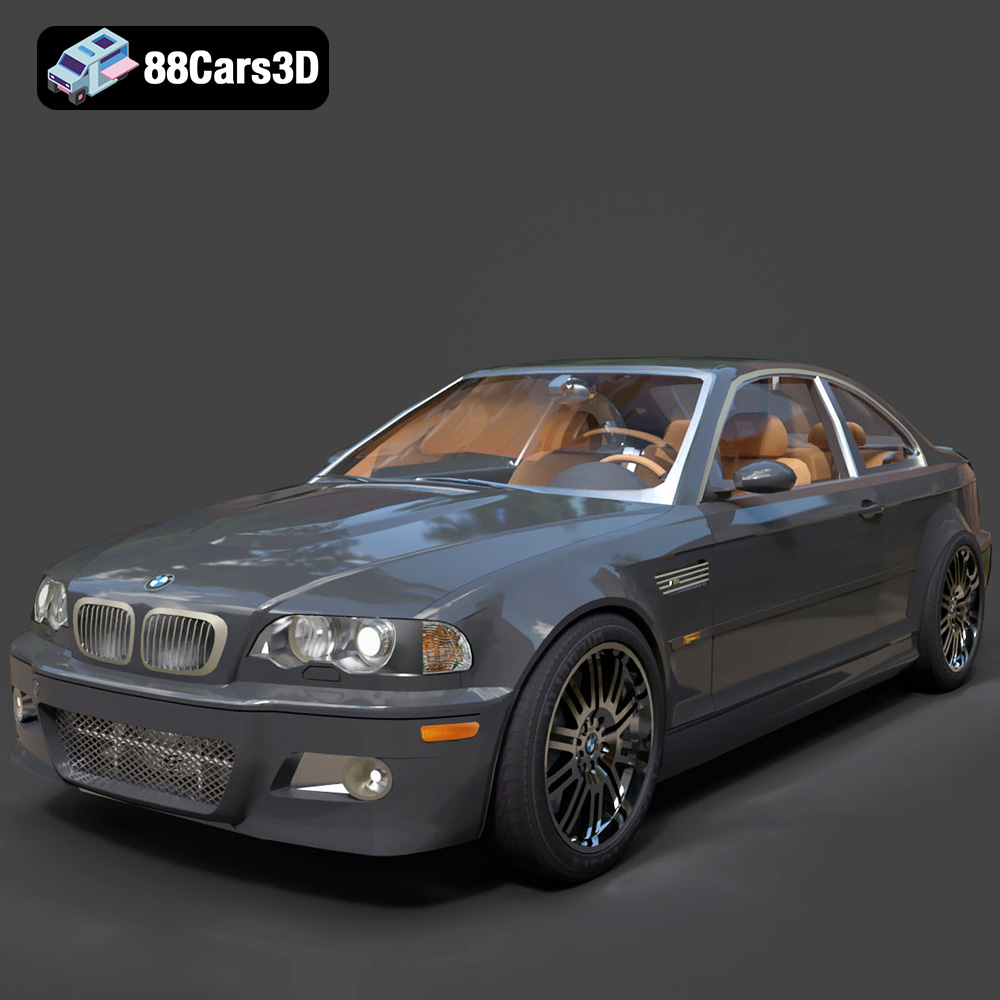
Download the BMW M3 E46 3D Model featuring iconic sports car design and detailed interior. Includes .blend, .fbx, .obj, .glb, .stl, .ply, .unreal, and .max formats for rendering, simulation, and game development.
Price: $16.99

Texture: Yes
Material: Yes
Download the BMW i3 Coupe 3D Model featuring its iconic electric design and compact urban styling. Includes .blend, .fbx, .obj, .glb, .stl, .ply, .unreal, and .max formats for rendering, simulation, and game development.
Price: $17.99

Texture: Yes
Material: Yes
Download the BMW 645ci 3D Model featuring a sleek, detailed exterior and optimized interior. Includes .blend, .fbx, .obj, .glb, .stl, .ply, .unreal, and .max formats for rendering, simulation, and game development.
Price: $10.79
Texture: Yes
Material: Yes
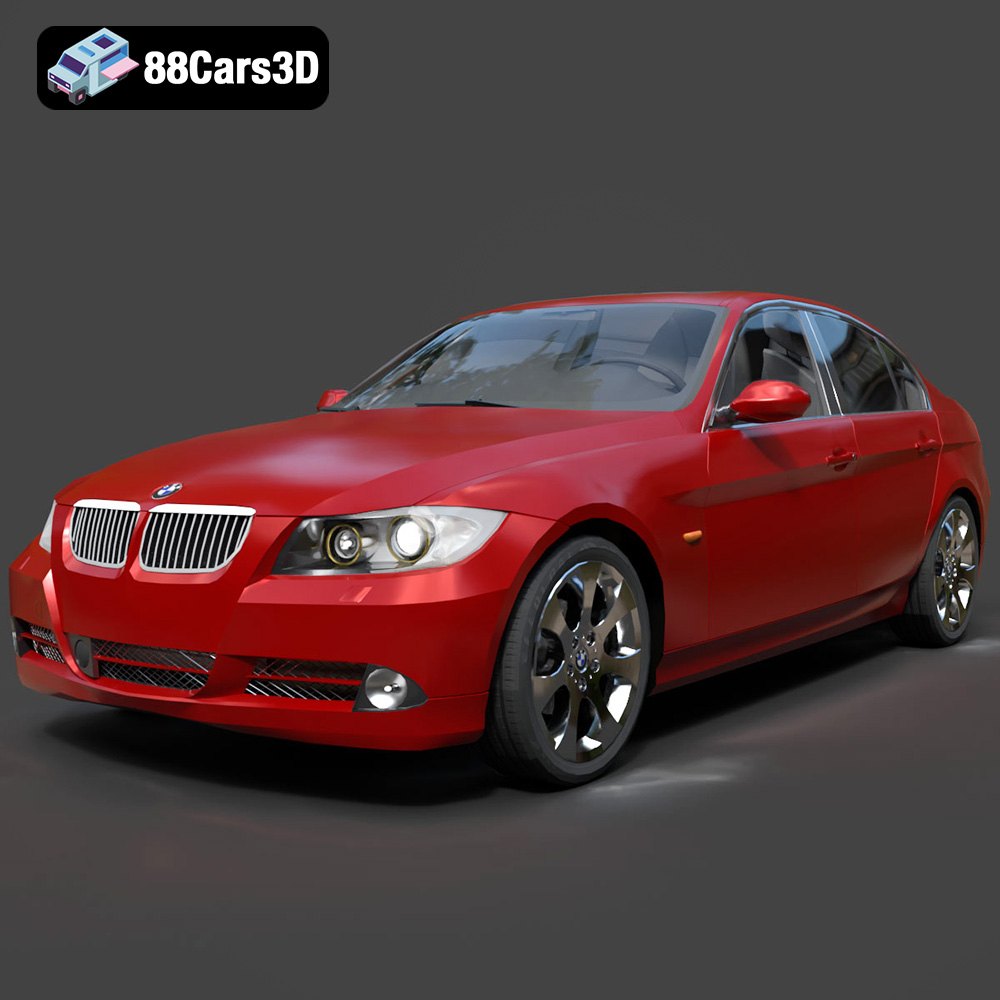
Download the BMW 330i E90 3D Model featuring a detailed exterior, an optimized interior, and accurate mechanical components. Includes .blend, .fbx, .obj, .glb, .stl, .ply, .unreal, and .max formats for rendering, simulation, and game development.
Price: $14.79
Texture: Yes
Material: Yes
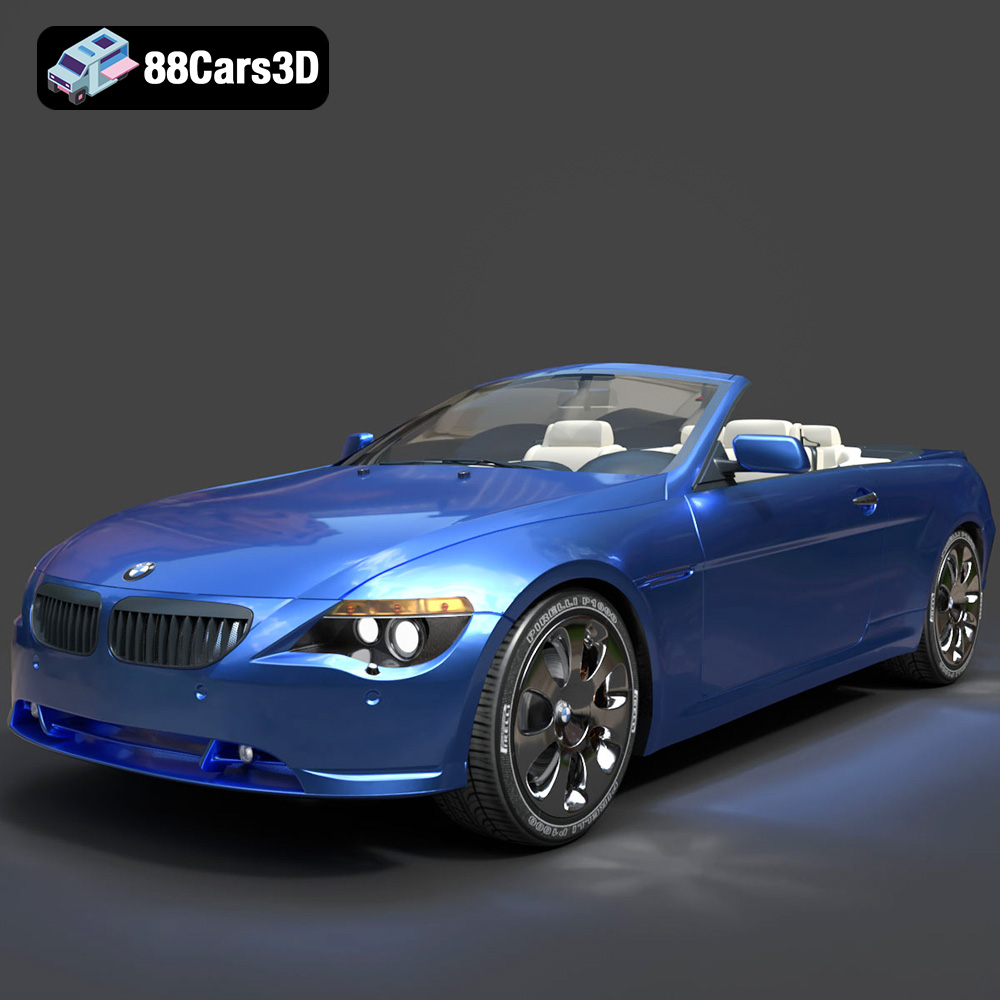
Download the BMW 6 Series Convertible 3D Model featuring clean geometry, realistic detailing, and a fully modeled interior. Includes .blend, .fbx, .obj, .glb, .stl, .ply, .unreal, and .max formats for rendering, simulation, and game development.
Price: $14.99
Texture: Yes
Material: Yes
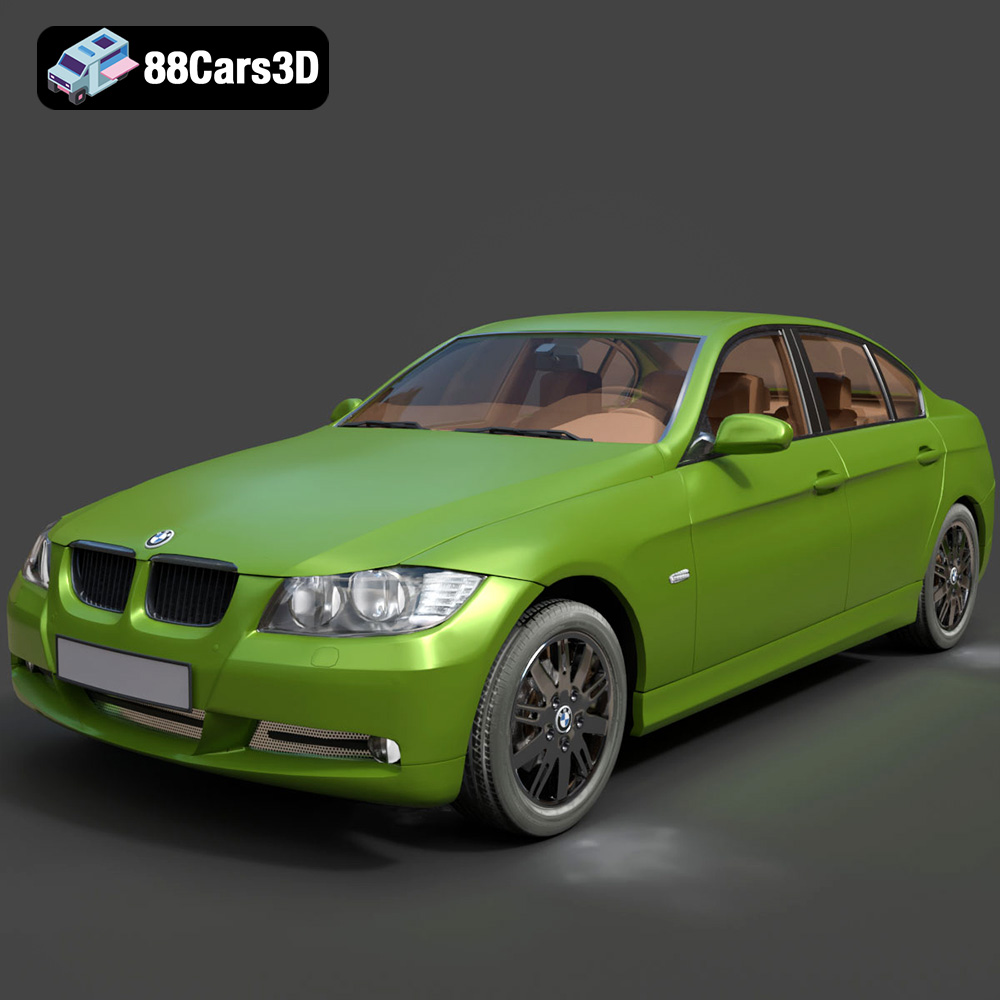
Download the BMW 3-005 3D Model featuring a sleek design, detailed exterior and interior. Includes .blend, .fbx, .obj, .glb, .stl, .ply, .unreal, and .max formats for rendering, simulation, and game development.
Price: $14.99

Texture: Yes
Material: Yes
Download the BMW Vision Effecient Dynamics-007 3D Model featuring a sleek, futuristic design and hybrid concept aesthetics. Includes .blend, .fbx, .obj, .glb, .stl, .ply, .unreal, and .max formats for rendering, simulation, and game development.
Price: $14.99

Texture: Yes
Material: Yes
Download the BMW i8 2015 3D Model featuring clean geometry, realistic detailing, and a fully modeled interior. Includes .blend, .fbx, .obj, .glb, .stl, .ply, .unreal, and .max formats for rendering, simulation, and game development.
Price: $12.99

Texture: Yes
Material: Yes
Download the BMW 4 Series F32 3D Model featuring clean geometry, realistic detailing, and a fully modeled interior. Includes .blend, .fbx, .obj, .glb, .stl, .ply, .unreal, and .max formats for rendering, simulation, and game development.
Price: $12.99

