⚡ FLASH SALE: Get 60% OFF All Premium 3D & STL Models! ⚡

The allure of a perfectly rendered 3D car model lies in its ability to deceive the eye, making it indistinguishable from a photograph. At the heart of this photorealistic illusion are reflections and refractions – the intricate dance of light interacting with various surfaces. From the glassy sheen of polished chrome to the subtle distortions through a curved windshield, these elements imbue a model with life, depth, and environmental context. For automotive designers, game developers, visualization specialists, and 3D artists alike, mastering the art and science behind rendering accurate light interactions is paramount.
This comprehensive guide will take you on a journey through the technical intricacies of achieving stunning reflections and refractions in your 3D car renders. We’ll explore the underlying physics, delve into advanced material creation using Physically Based Rendering (PBR) workflows, optimize lighting environments, and fine-tune rendering settings across popular software. Whether you’re working on high-fidelity cinematic visuals or performance-critical game assets, understanding these concepts is key to elevating your work. Prepare to unlock the secrets to truly breathtaking automotive visualization, where every glint and glimmer tells a story.
Before diving into software specifics, a foundational understanding of how light behaves is crucial. Reflections and refractions aren’t just artistic embellishments; they are governed by fundamental principles of physics. Light, when it encounters a surface, can either be absorbed, reflected, or transmitted (refracted). The balance of these interactions dictates how a material appears and how it reacts to its environment. For 3D car models, this means meticulously defining every surface, from the smooth, mirror-like chrome to the slightly textured car paint and the transparent yet distorting glass.
When light hits a surface, it can scatter in two primary ways: diffusely or specularly. **Diffuse reflection** occurs when light strikes a rough surface and scatters in many directions. This is what gives objects their color and allows us to see their general form, regardless of the viewing angle. Car paint, for instance, has a strong diffuse component, giving it its base color. **Specular reflection**, on the other hand, occurs when light hits a smooth, polished surface and reflects predictably in a single direction, like a mirror. This is responsible for the highlights and reflections you see on shiny car bodies, chrome trim, and glass. The *glossiness* or *roughness* parameter in your materials controls the sharpness and intensity of these specular reflections. A perfectly smooth surface (roughness = 0) produces sharp, clear reflections, while a rougher surface scatters the specular highlights, making them broader and softer. Balancing these two types of reflection is fundamental to creating convincing car materials.
**Refraction** is the bending of light as it passes from one medium to another (e.g., from air into glass). The degree to which light bends is quantified by the **Index of Refraction (IOR)**. Each transparent material has a unique IOR value – for example, typical glass has an IOR of around 1.5-1.6, water is about 1.33, and diamonds are much higher at 2.42. Accurately setting the IOR for car glass (windshields, windows, headlights) is vital for realistic light bending and distortion, which can dramatically impact the visual credibility of your render. If the IOR is incorrect, the glass will look flat or fake, failing to convey its thickness and material properties.
Closely related to IOR is the **Fresnel Effect**. This phenomenon describes how the reflectivity of a surface changes depending on the viewing angle. At grazing angles (when you look at a surface almost edge-on), even a transparent material becomes highly reflective. Think of looking at a car windshield from a distance: it acts almost like a mirror. But when you look directly through it, it’s largely transparent. The Fresnel effect is automatically calculated in most modern rendering engines and PBR shaders based on the material’s IOR and roughness, making it a critical component for realistic reflections and refractions on materials like car paint, glass, and chrome.
The concept of microfacets helps explain roughness at a microscopic level. Even seemingly smooth surfaces are composed of tiny, randomly oriented facets. When light hits these microfacets, it scatters in slightly different directions, creating the illusion of roughness. In 3D rendering, this is abstracted into a **roughness map** (or glossiness map, which is its inverse). A black value on a roughness map signifies a perfectly smooth, mirror-like surface, while a white value indicates a completely rough, diffuse surface. For a car body, using a subtle roughness map can introduce tiny imperfections, orange peel effects on the paint, or wear and tear, enhancing realism. For glass, a very slight amount of roughness can simulate dirt, dust, or microscopic scratches that are invisible to the naked eye but contribute to the overall photorealism.
The realism of your 3D car model heavily relies on the quality and accuracy of its materials. Physically Based Rendering (PBR) workflows are the industry standard, ensuring that your materials react to light in a consistent and physically plausible manner across different lighting conditions and rendering engines. For complex automotive surfaces, meticulous attention to detail in shader networks is paramount.
Car paint is one of the most challenging materials to replicate due to its multi-layered nature. A typical automotive paint shader involves several layers: a base diffuse color, a metallic flake layer, a clear coat, and sometimes even a pearlescent effect. In a PBR workflow, you’ll typically use a metallic/roughness or specular/glossiness setup. For car paint, this often means:
* **Base Color/Albedo Map:** Defines the primary color of the paint.
* **Metallic Map:** Usually a low value, indicating a non-metallic surface, but can be used for metallic flakes.
* **Roughness Map:** Defines the micro-surface detail, varying from glossy (clear coat) to slightly rough (orange peel effect or dust).
* **Normal Map:** Adds fine surface details without increasing polygon count, like subtle imperfections or texture.
* **Clear Coat Layer:** Most PBR shaders have a dedicated clear coat input, allowing you to simulate the transparent, highly reflective top layer of car paint. This layer has its own roughness, IOR (typically around 1.5-1.6), and color. It’s crucial for the characteristic “wet look” and sharp reflections on car bodies.
When developing complex shader networks, especially in Blender’s Cycles or Eevee, leveraging nodes is essential. You might combine a *Principled BSDF* shader for the base paint with a *Mix Shader* to layer a *Glossy BSDF* for additional reflections or specialized flakes. Referencing the official Blender 4.4 documentation (https://docs.blender.org/manual/en/4.4/) on PBR shaders and node setups can provide detailed guidance on building these intricate material graphs. Experiment with different clear coat values and subtle roughness variations to achieve that perfect automotive finish, remembering that even clean car paint isn’t perfectly smooth.
Creating realistic glass goes beyond simply setting transparency. It requires accurate IOR, proper thickness, and consideration for absorption and dispersion.
* **IOR:** As discussed, setting the correct IOR (around 1.5-1.6 for typical glass) is non-negotiable for realistic light bending.
* **Thickness:** Real-world glass has thickness. Modeling your car’s windows with actual geometry (even a thin shell) rather than just a single plane allows for accurate refraction and internal reflections, which are crucial for photorealism.
* **Absorption/Transmission Color:** Glass isn’t perfectly clear; it absorbs a small amount of light, giving it a subtle tint, especially for thicker pieces. Using a very subtle absorption color (e.g., a faint green or blue) in your material can enhance realism.
* **Dispersion:** For high-end renders, simulating dispersion (the separation of light into its spectral colors, like a prism effect) can add another layer of realism, especially on headlight lenses or highly curved glass elements. This is typically an advanced setting in renderers like V-Ray, Corona, or Cycles.
Headlights and taillights often involve complex multi-layered materials: an outer clear plastic/glass lens, an inner reflector dish, and the light source itself. Each component needs its own precise material definition, from highly reflective chrome for the reflector to clear, sometimes textured, plastic for the lens, complete with appropriate IOR and roughness values.
Metallic surfaces, such as chrome trim, wheels, or exhaust pipes, are defined by a high metallic value in PBR workflows.
* **Chrome:** This requires a near-perfect metallic value (close to 1.0) and very low roughness (close to 0) to achieve its mirror-like quality. The reflections on chrome should be sharp and pristine.
* **Brushed Metal:** For a brushed aluminum or stainless steel look, a metallic value close to 1.0 is still used, but the roughness is increased, often with an anisotropic texture map to simulate the directional brushing marks.
* **Carbon Fiber:** This material is a composite, featuring a distinct weave pattern. It’s typically rendered as a dielectric (non-metallic) material with a clear coat over it. The key is a detailed normal map to define the weave and a subtle roughness map under the clear coat. The clear coat itself will have its own IOR and roughness, similar to car paint, creating those signature glossy reflections. Platforms like 88cars3d.com offer meticulously crafted 3D car models where these complex materials are already optimized, saving significant development time for artists.
Reflections and refractions don’t exist in a vacuum; they are entirely dependent on the surrounding environment and lighting. A compelling lighting setup can transform a good model into an outstanding render, providing the visual cues that make a car feel grounded and integrated into its scene. The environment isn’t just background; it’s an active participant in defining the car’s surface aesthetics.
High Dynamic Range Images (HDRIs) are the backbone of modern automotive rendering, providing both realistic illumination and detailed reflection maps. An HDRI captures a full 360-degree panoramic view of a real-world environment, including light intensity and color information.
* **Selection:** Choose HDRIs that match the desired mood and setting for your car. For a studio look, use a studio HDRI. For an outdoor scene, select an HDRI from a similar location (e.g., a sunny street, a cloudy industrial area). The quality of the HDRI is paramount – look for high-resolution images with a wide dynamic range.
* **Orientation:** The orientation of the HDRI significantly impacts how light and reflections fall on the car. Rotate the HDRI around the Z-axis until the key light source (e.g., the sun) hits the car in an aesthetically pleasing way, creating dramatic highlights and shadows that emphasize the car’s form and curves. Experiment with slight tilts to introduce more interesting reflections on curved surfaces.
* **Scale:** While HDRIs are typically environmental maps, their scale can sometimes be adjusted to fine-tune the size of reflections if the HDRI itself is used for projection.
While HDRIs provide excellent ambient and general lighting, they often need to be augmented with additional lights to achieve cinematic quality.
* **Area Lights:** Placing large, soft area lights strategically can create beautiful, elongated reflections on the car body, mimicking studio softboxes. Use them to emphasize specific contours or to provide fill light in shadowed areas, ensuring details are not lost.
* **Spotlights:** Can be used to create sharp, dramatic highlights (kickers) or to focus attention on particular features like badges, wheel rims, or interior details. Spotlights can also simulate direct sunlight or streetlights.
* **Backlights:** A well-placed backlight can separate the car from the background, adding depth and a halo effect around its silhouette, which is especially effective on glossy surfaces.
The key is to use these additional lights subtly, ensuring they complement the HDRI rather than overpower it. Think about the “why” behind each light – what specific reflection or shadow are you trying to create or enhance?
For product shots or scenes where the car needs to interact more directly with its immediate environment, **reflection planes** and **backplates** are indispensable.
* **Reflection Planes:** These are simple, often invisible, geometric planes placed strategically around the car to catch and cast reflections. A large plane beneath the car can create a ground reflection, while vertical planes can simulate walls or nearby objects that contribute to the car’s reflections without needing to model the entire environment. This is particularly useful for studio renders where a minimalist background is desired but realistic reflections are still needed.
* **Backplates:** These are high-resolution photographs or rendered images used as backgrounds. When combining a 3D car with a backplate, it’s crucial that the lighting in your 3D scene matches the lighting conditions of the backplate. The HDRI should ideally be sourced from or closely match the environment of your backplate to ensure consistent reflections and ambient light, making the integration seamless. Many automotive visualization professionals carefully match HDRI lighting to photographic backplates to achieve perfect environmental integration.
Achieving ultimate photorealism requires delving into the advanced capabilities of modern rendering engines. The choice of renderer, coupled with meticulous setting adjustments, directly impacts the quality of reflections, refractions, and overall light transport.
Most modern renderers employ either **ray tracing** or **path tracing** algorithms, both of which are forms of global illumination.
* **Ray Tracing:** Historically, this method traces individual rays from the camera into the scene, calculating interactions (reflections, refractions, shadows) as they hit surfaces. It’s very good for direct reflections and refractions.
* **Path Tracing:** This is a more advanced form, tracing multiple “light paths” from the camera (or light sources) throughout the scene, allowing for more realistic and physically accurate simulation of complex light phenomena, including indirect lighting, caustics, and complex subsurface scattering. Renderers like Corona, V-Ray (GPU), Cycles, and Arnold are primarily path tracers. For highly realistic reflections and refractions, especially those involving multiple bounces of light (e.g., light reflecting off the car onto the ground and back onto the car), path tracing delivers superior results due to its comprehensive simulation of light transport. While computationally more intensive, the visual fidelity is unmatched.
* **Sampling:** This refers to the number of light paths or rays the renderer shoots into the scene to gather information. Higher sample counts reduce noise (grain) but increase render times. For reflections and refractions, insufficient samples will manifest as fireflies or speckles. Most modern renderers employ adaptive sampling, focusing more samples where needed (e.g., highly reflective or refractive areas).
* **Denoisers:** After rendering, denoisers use AI (within the rendering engine) or image processing algorithms to remove noise from the image without requiring excessively high sample counts, significantly speeding up render times. Tools like OptiX (NVIDIA), OpenImageDenoise (Intel, often used in Blender), and integrated denoisers in Corona/V-Ray are invaluable.
* **Software-Specific Settings:**
* **Corona Renderer:** Known for its ease of use and physically accurate results. Focus on increasing the “Passes” limit and using the built-in denoiser. Ensure “Max Ray Depth” is sufficient for complex reflections/refractions (e.g., 8-12 for general scenes, higher for glass).
* **V-Ray:** Offers extensive control. Key settings include “Max Subdivisions” for materials and lights, “Max Ray Intensity,” and “Global Illumination” settings (Brute Force/Light Cache). V-Ray’s GPU renderer is particularly fast for path tracing.
* **Blender Cycles:** In Blender, Cycles is the physically-based renderer. Maximize samples in “Render Properties > Sampling > Render” (use a sensible limit like 256-1024, combined with a denoiser). Critically, under “Light Paths,” increase “Total,” “Diffuse,” “Glossy,” and “Transmission” bounces to allow light to interact fully with complex reflective and refractive surfaces. The Blender 4.4 documentation provides comprehensive details on configuring Cycles for optimal performance and quality: https://docs.blender.org/manual/en/4.4/render/cycles/index.html. For transparent objects, specifically ensure “Transmission Bounces” is high enough.
* **Arnold:** Autodesk’s flagship renderer, also path-tracing based. Adjust “Camera (AA) Samples” for overall quality, and then “Transmission” and “Specular” samples under the renderer settings to resolve noise in reflective/refractive areas.
For the ultimate in glass realism, **caustics** and **dispersion** add dazzling effects.
* **Caustics:** These are the patterns of light created by reflection or refraction from a curved surface. Think of the shimmering light patterns at the bottom of a swimming pool or the bright spots cast by a magnifying glass. For car renders, caustics can appear from headlight lenses or a very curved windshield, projecting intricate light patterns onto nearby surfaces. Simulating caustics is very computationally expensive and often requires dedicated settings or specific light sources in renderers (e.g., photometric lights in some engines, or specific “caustic photons” settings in others). In Cycles, caustics are generated through path tracing but can be very noisy; increasing “Light Paths > Caustics Reflect/Refract” values helps.
* **Dispersion:** As mentioned earlier, dispersion is the separation of white light into its constituent colors as it passes through a refractive medium. This creates subtle rainbow fringes along the edges of glass objects, particularly noticeable on beveled edges or thick glass. While adding significant render time, dispersion can push glass realism to extreme levels. Many renderers offer a “Chromatic Aberration” or “Dispersion” parameter in their glass materials.
While cinematic renders allow for extensive render times, real-time applications like game engines, AR/VR experiences, and interactive configurators demand immediate feedback. Here, intelligent optimization of reflections and refractions is key to maintaining high frame rates without sacrificing visual quality. When sourcing models from marketplaces such as 88cars3d.com, ensure they are already optimized for these applications with proper LODs and efficient UV mapping.
Full ray-traced reflections are too costly for real-time. Game engines employ various approximation techniques:
* **Reflection Probes:** These are essentially 360-degree environment maps (cubemaps) captured at specific points in the scene. The engine then projects these cubemaps onto nearby objects, simulating reflections. For a car in a scene, you might place a large reflection probe encompassing the entire car and its immediate surroundings. Static objects can use baked reflection probes, while dynamic objects (like a moving car) often rely on real-time reflection probes, which update less frequently or are combined with other techniques.
* **Baked Reflections:** For static objects or parts of the environment, reflections can be pre-rendered (“baked”) into lightmaps or texture maps. This is highly efficient but doesn’t react to dynamic changes.
**Level of Detail (LODs)** are critical for managing performance. As a car moves further from the camera, lower polygon versions are swapped in. For reflections, this means that highly detailed reflection maps or complex PBR materials might be replaced with simpler ones at distance.
* **Texture Resolution:** While high-resolution textures are great for close-ups, using appropriately sized textures for different LODs and ensuring they are efficiently packed (e.g., using texture atlases) reduces draw calls and memory footprint.
* **Roughness Maps:** For real-time, roughness maps are often simplified or compressed to conserve memory. Subtle variations that are crucial for cinematic renders might be less impactful or even eliminated at lower LODs.
* **Normal Maps:** High-quality normal maps are essential for adding surface detail and influencing reflections without increasing polygon count. Ensure they are correctly authored and compressed for real-time engines.
These techniques offer more dynamic and localized reflections:
* **Screen Space Reflections (SSR):** This widely used technique generates reflections based *only* on what is currently visible on the screen. It’s efficient because it doesn’t need to re-render the entire scene for reflections. However, SSR has limitations: it cannot reflect objects that are off-screen or behind the reflecting surface. Despite this, for subtle reflections on car paint and nearby surfaces, it provides a convincing effect with minimal performance cost.
* **Planar Reflections:** These are highly accurate reflections for flat surfaces, typically implemented by rendering the scene twice – once normally, and once mirrored from the perspective of the reflecting plane. This is often used for perfect reflections on flat ground planes (like wet roads) or large glass surfaces. While more expensive than SSR, it offers superior quality for specific scenarios. In game engines like Unity and Unreal Engine, these techniques are integral to achieving dynamic automotive visuals.
The render button is not the end of the journey. Post-processing and compositing are powerful stages where you can refine, enhance, and ultimately elevate your car renders, adding a final layer of polish that pushes them toward photographic perfection. This is where subtle adjustments can make a significant difference, turning a good render into a masterpiece.
These atmospheric effects dramatically enhance the realism of light sources and reflections:
* **Glare/Bloom:** Bright areas and specular highlights on the car, especially on chrome and highly reflective paint, often exhibit a subtle glow or “bloom” in real life due to light scattering in the camera lens or eye. Adding a controlled amount of bloom or glare in post-processing can soften sharp highlights and make the image feel more integrated and natural.
* **Lens Flares:** For shots involving direct light sources (like the sun or headlights), adding subtle lens flares can mimic the optical effects of a real camera, further grounding the render in reality. Be careful not to overdo them, as excessive flares can quickly look artificial. Most compositing software (like Photoshop, Affinity Photo, or Nuke) and even render engines themselves offer tools for these effects.
* **Color Grading:** This involves adjusting the overall color palette, contrast, and mood of your image. For automotive renders, color grading can emphasize the car’s color, enhance the reflectivity, or create a specific atmosphere (e.g., warm sunset, cool urban night). Pay attention to white balance and ensure the colors feel natural and appealing.
* **Tone Mapping:** In rendering, tone mapping converts the high dynamic range of the rendered image into a low dynamic range suitable for display on standard monitors. Good tone mapping ensures that highlights aren’t blown out and shadows retain detail, preserving the integrity of your reflections and refractions. Many renderers have built-in tone mapping operators (e.g., Reinhard, ACES, Filmic in Blender Cycles), and further adjustments can be made in post-processing.
For maximum flexibility and control during post-processing, rendering your scene into multiple **render passes** (or AOV – Arbitrary Output Variables) is a professional workflow. Instead of a single final image, you get separate images for:
* **Diffuse:** Base color information.
* **Specular/Glossy:** Raw reflection data.
* **Transmission:** Refraction data for glass.
* **Direct/Indirect Lighting:** Separating direct light from bounced light.
* **Ambient Occlusion:** Enhances contact shadows.
* **Z-Depth:** Depth information for depth of field effects.
* **Masks/ID Passes:** For isolating specific parts of the car (e.g., paint, glass, wheels) for targeted adjustments.
By compositing these passes in software like Nuke, After Effects, or even Photoshop, you can adjust the intensity of reflections, change the color of the paint, refine refractions, and apply effects to specific elements of the car without re-rendering the entire scene. This iterative approach allows for unparalleled artistic control and efficiency in achieving the perfect final image.
The journey to creating hyper-realistic 3D car renders, particularly mastering reflections and refractions, is a blend of technical understanding and artistic finesse. From comprehending the physics of light interaction – the subtleties of IOR and the Fresnel effect – to meticulously crafting PBR materials for every surface, each step contributes to the final illusion. We’ve explored how strategic HDRI selection and supplementary lighting paint the environment onto your car, how advanced rendering techniques like path tracing capture the nuances of light, and how clever optimization ensures performance in real-time applications. Finally, the magic of post-processing and compositing adds that final layer of polish, transforming raw renders into breathtaking visualizations.
The pursuit of photorealism is an ongoing learning process, constantly evolving with new software features and techniques. By applying the principles discussed in this guide, you’ll be well-equipped to tackle the challenges of automotive visualization, whether you’re developing high-impact marketing imagery, immersive game assets, or cutting-edge AR/VR experiences. Continue to experiment, study reference photography, and pay close attention to the world around you – the best teacher is always observation. For those seeking a head start, remember that platforms like 88cars3d.com provide high-quality, pre-optimized 3D car models that serve as excellent foundations for your rendering projects, allowing you to focus on these advanced techniques right away. Embrace the challenge, and let your creativity reflect in every stunning detail.
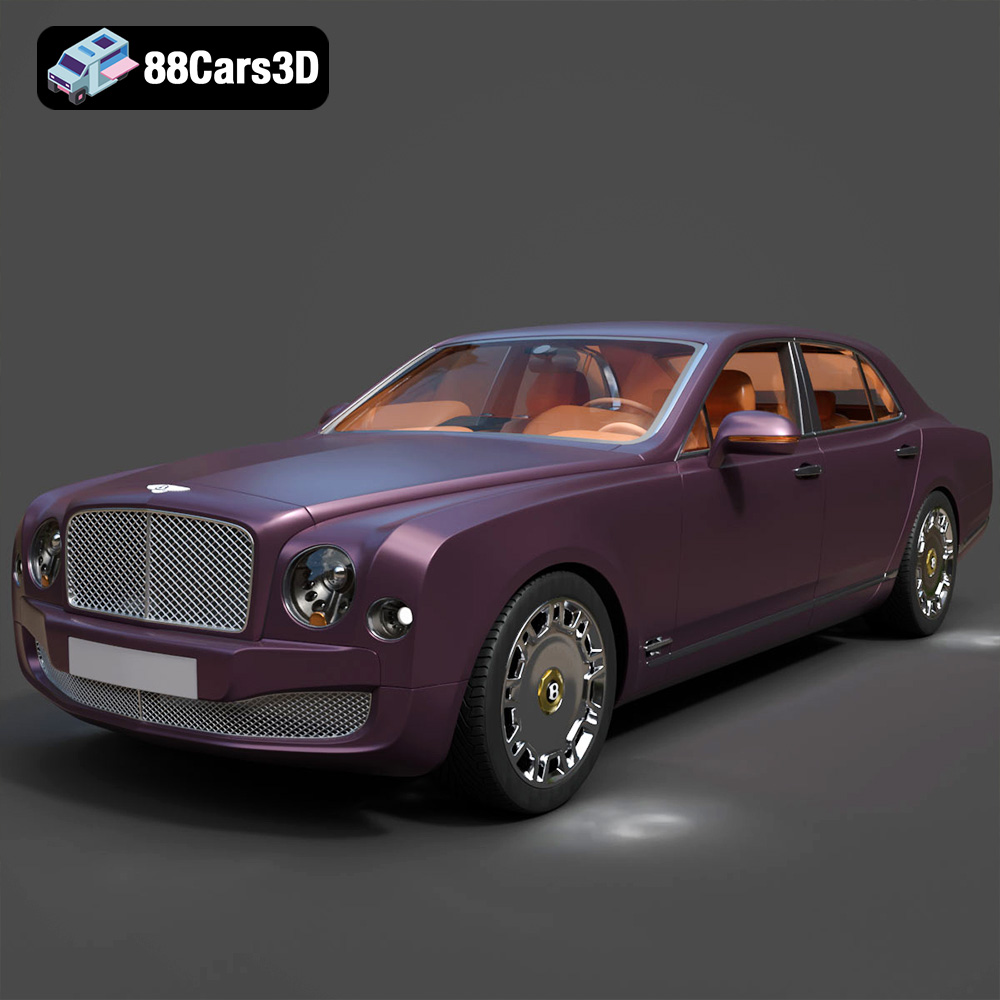
Texture: Yes
Material: Yes
Download the Bentley Mulsanne Luxury Sedan 3D Model featuring clean geometry, realistic detailing, and a fully modeled interior. Includes .blend, .fbx, .obj, .glb, .stl, .ply, .unreal, and .max formats for rendering, simulation, and game development.
Price: $14.99

Texture: Yes
Material: Yes
Download the Bentley Continental GT 2011 3D Model featuring clean geometry, realistic detailing, and a fully modeled interior. Includes .blend, .fbx, .obj, .glb, .stl, .ply, .unreal, and .max formats for rendering, simulation, and game development.
Price: $14.99

Texture: Yes
Material: Yes
Download the Bentley Continental Flying Spur 3D Model featuring clean geometry, realistic detailing, and a fully modeled interior. Includes .blend, .fbx, .obj, .glb, .stl, .ply, .unreal, and .max formats for rendering, simulation, and game development.
Price: $14.99
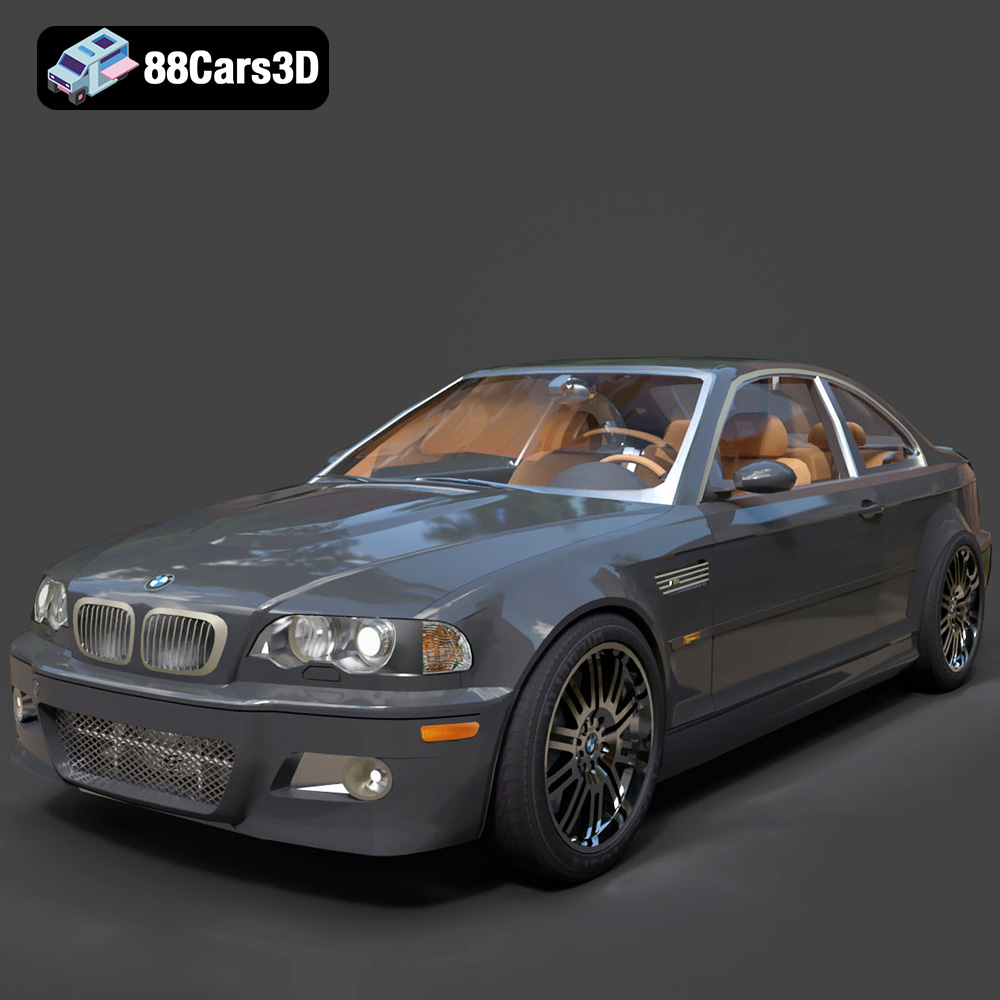
Texture: Yes
Material: Yes
Download the BMW M3 E46 3D Model featuring iconic sports car design and detailed interior. Includes .blend, .fbx, .obj, .glb, .stl, .ply, .unreal, and .max formats for rendering, simulation, and game development.
Price: $16.99
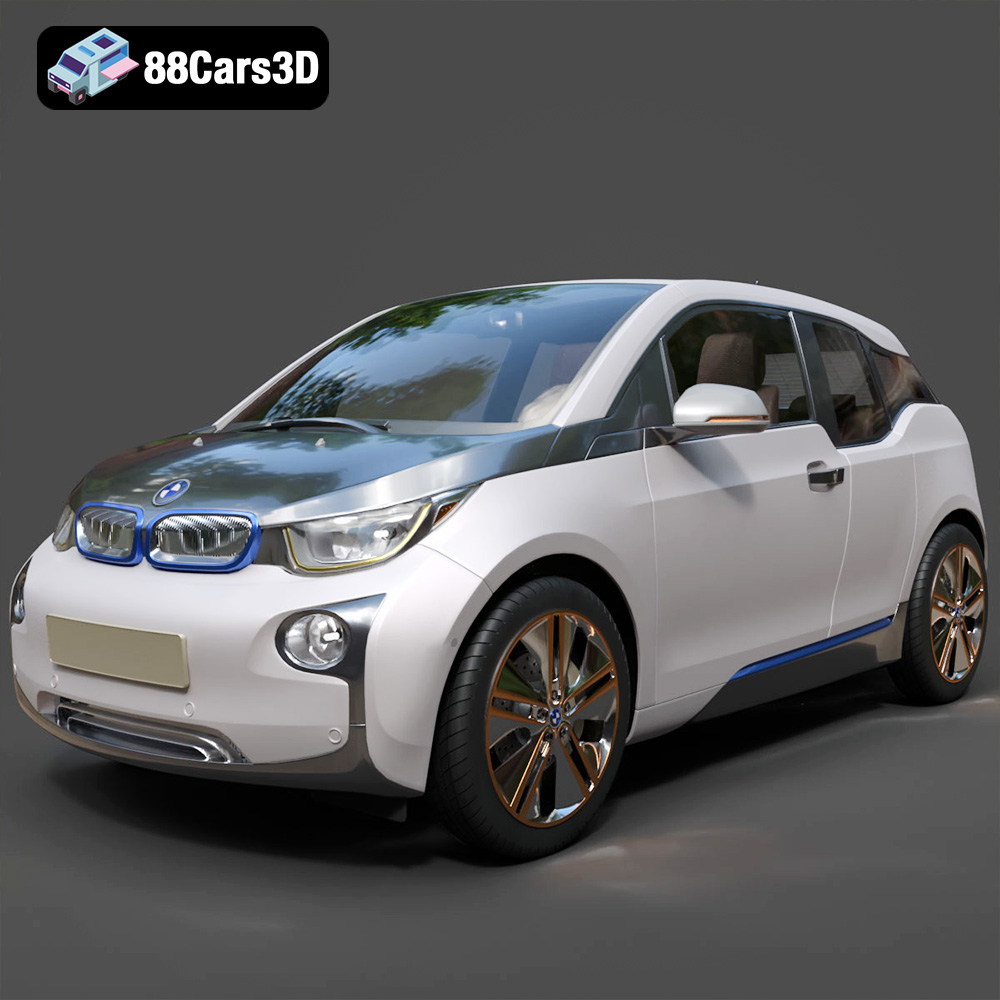
Texture: Yes
Material: Yes
Download the BMW i3 Coupe 3D Model featuring its iconic electric design and compact urban styling. Includes .blend, .fbx, .obj, .glb, .stl, .ply, .unreal, and .max formats for rendering, simulation, and game development.
Price: $17.99
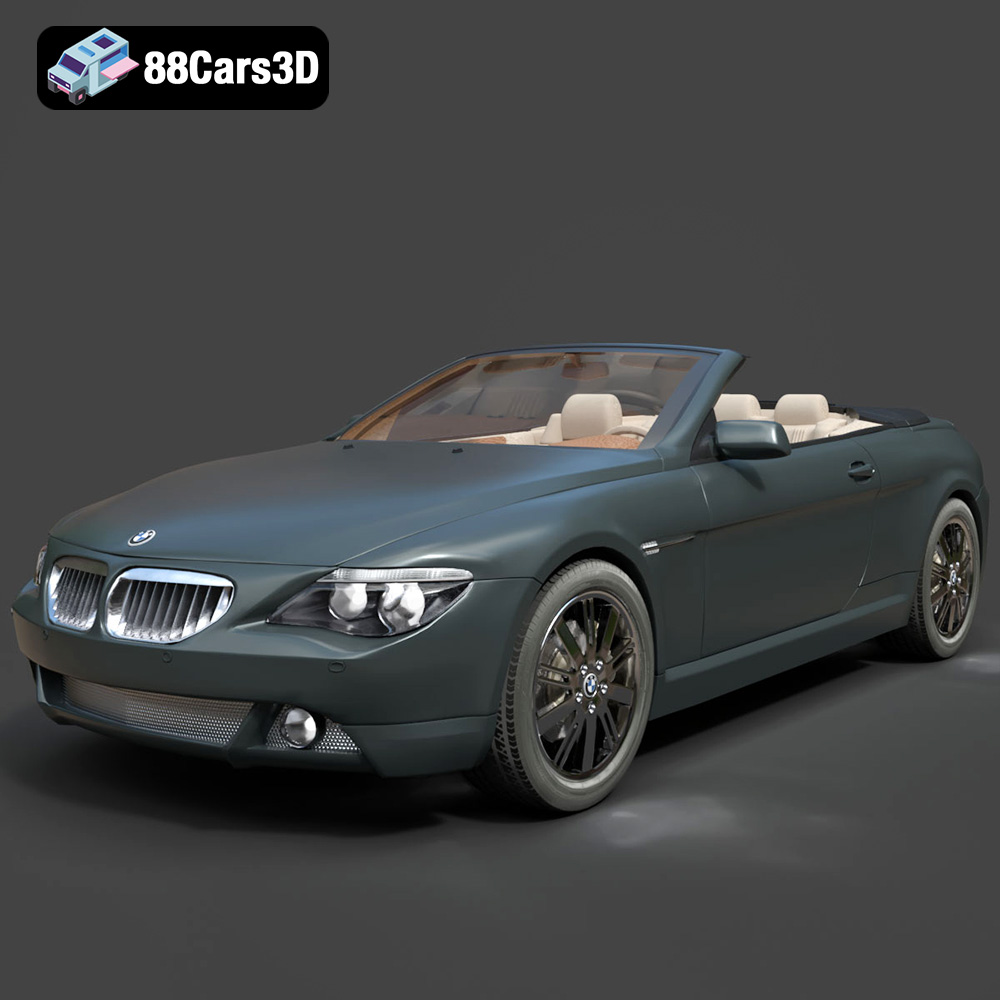
Texture: Yes
Material: Yes
Download the BMW 645ci 3D Model featuring a sleek, detailed exterior and optimized interior. Includes .blend, .fbx, .obj, .glb, .stl, .ply, .unreal, and .max formats for rendering, simulation, and game development.
Price: $10.79
Texture: Yes
Material: Yes
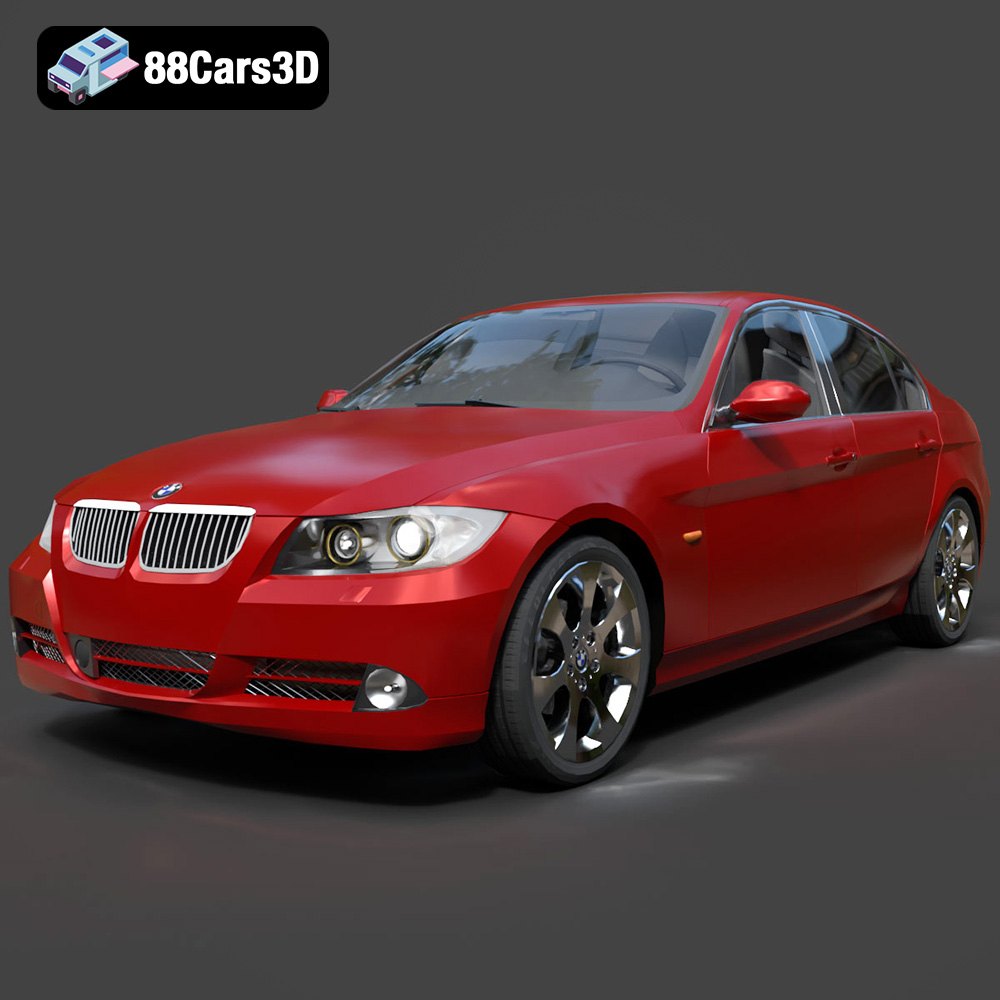
Download the BMW 330i E90 3D Model featuring a detailed exterior, an optimized interior, and accurate mechanical components. Includes .blend, .fbx, .obj, .glb, .stl, .ply, .unreal, and .max formats for rendering, simulation, and game development.
Price: $14.79
Texture: Yes
Material: Yes
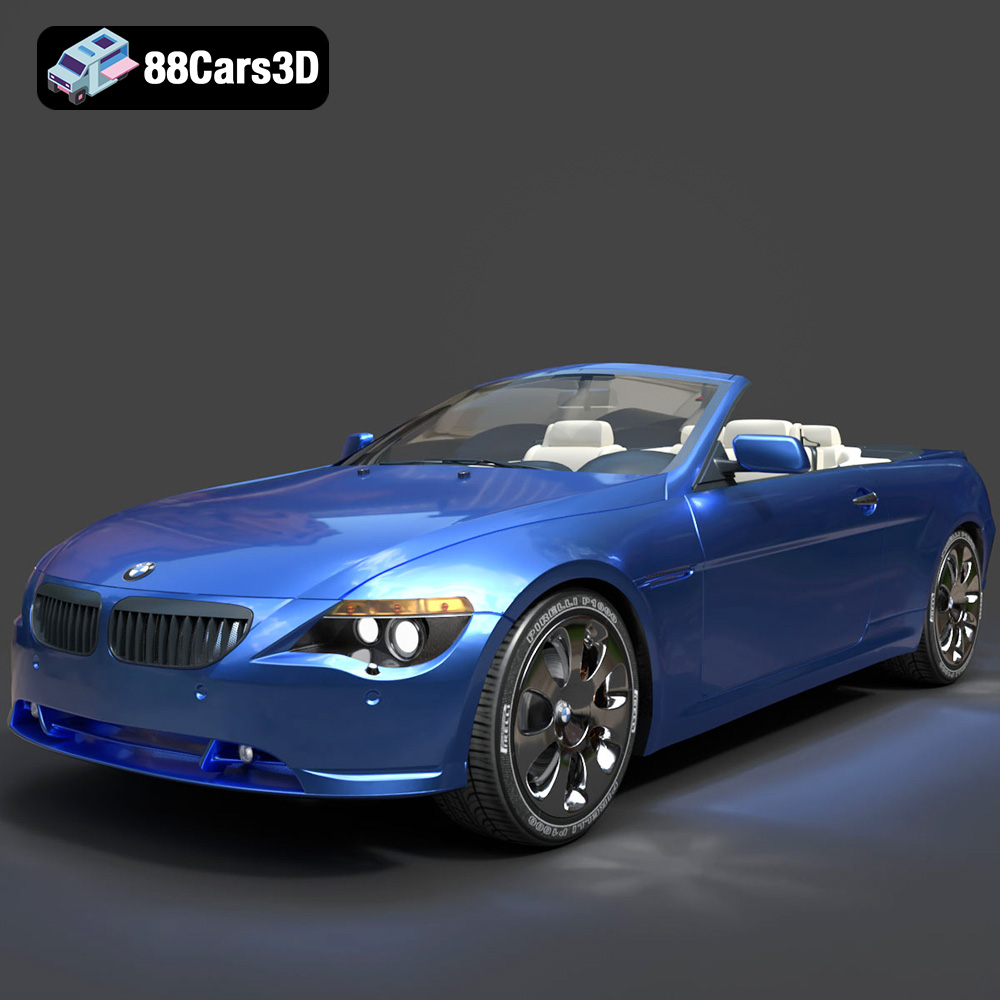
Download the BMW 6 Series Convertible 3D Model featuring clean geometry, realistic detailing, and a fully modeled interior. Includes .blend, .fbx, .obj, .glb, .stl, .ply, .unreal, and .max formats for rendering, simulation, and game development.
Price: $14.99
Texture: Yes
Material: Yes
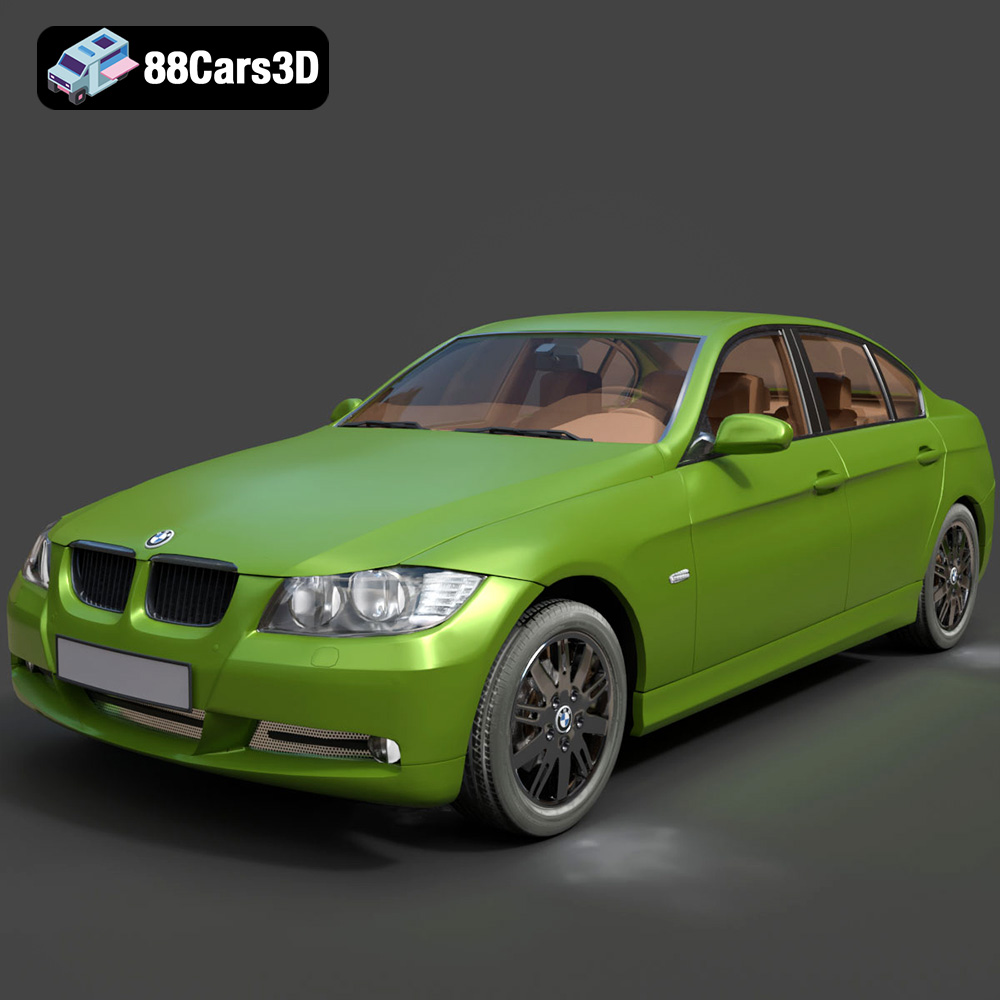
Download the BMW 3-005 3D Model featuring a sleek design, detailed exterior and interior. Includes .blend, .fbx, .obj, .glb, .stl, .ply, .unreal, and .max formats for rendering, simulation, and game development.
Price: $14.99
Texture: Yes
Material: Yes
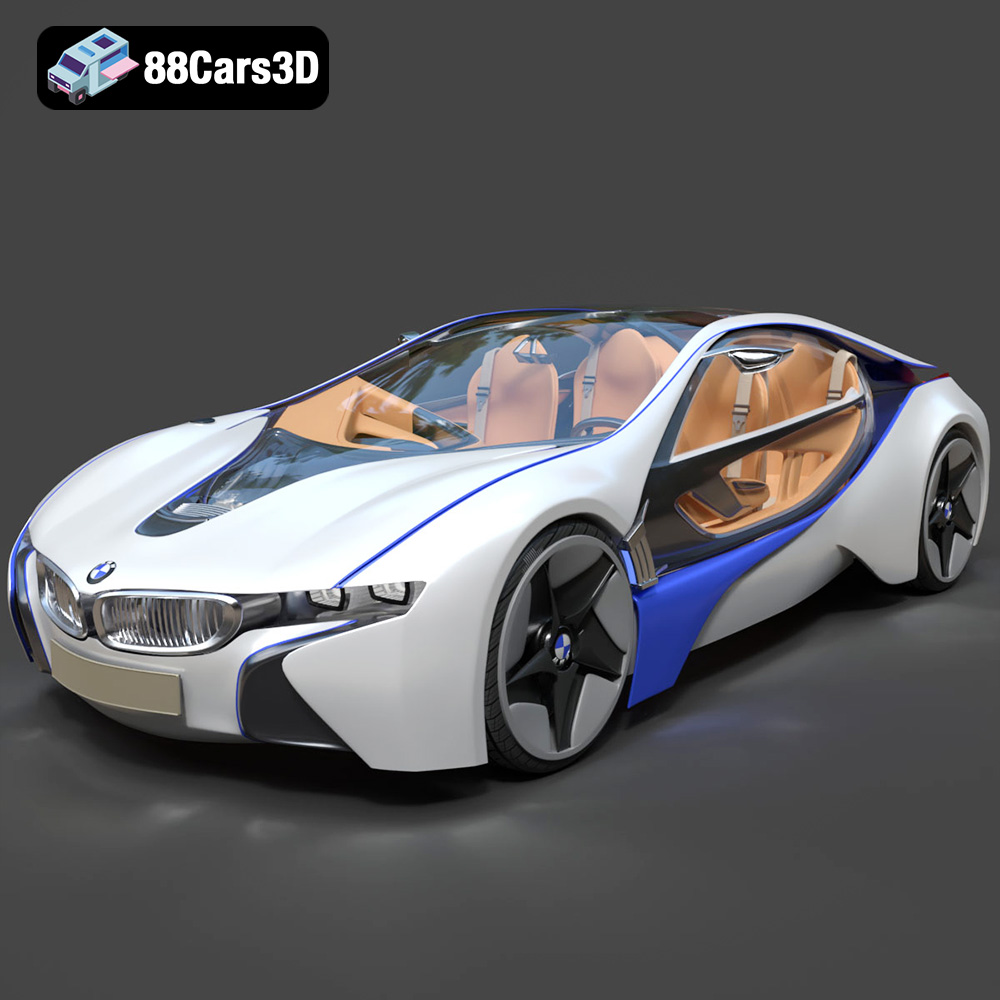
Download the BMW Vision Effecient Dynamics-007 3D Model featuring a sleek, futuristic design and hybrid concept aesthetics. Includes .blend, .fbx, .obj, .glb, .stl, .ply, .unreal, and .max formats for rendering, simulation, and game development.
Price: $14.99

