⚡ FLASH SALE: Get 60% OFF All Premium 3D & STL Models! ⚡

“`html
The world of 3D printing is built on digital models – the blueprints that guide our machines to create physical objects. While various file formats exist, one consistently dominates the landscape: the STL (STereoLithography) file. For anyone venturing into 3D printing, from hobbyists creating intricate car models to engineers prototyping parts, understanding why STL is so ubiquitous is crucial. This format, though seemingly simple, has been the bedrock of additive manufacturing for decades. In this comprehensive guide, we’ll delve deep into the technical underpinnings of the STL format, explore its advantages and limitations, and reveal how it remains the industry standard, even as new technologies emerge. We’ll cover everything from mesh topology and file preparation to slicing strategies and how readily available, high-quality STL files from sources like 88cars3d.com simplify your entire workflow.
Developed in the mid-1980s by 3D Systems, the STL file format was designed with a singular purpose: to provide a simple and effective way to represent 3D surfaces for stereolithography apparatus (SLA) 3D printers. Its genius lies in its unpretentious approach. Instead of storing complex geometric data like curves, NURBS, or precise mathematical definitions, STL represents a 3D object as a collection of interconnected triangles. This approach, known as a polygonal mesh, breaks down the most intricate shapes into a series of flat facets. Each triangle is defined by the XYZ coordinates of its three vertices and a normal vector, which indicates which side of the triangle is facing outward – crucial information for the slicer to understand the object’s orientation and volume.
The core of an STL file is its triangulation. Imagine taking a sphere and approximating its curved surface with hundreds, or even thousands, of tiny, flat triangles. The more triangles used, the smoother and more accurate the representation of the original curved surface. This is why STL files can vary significantly in size; a highly detailed model of a classic car with complex curves will require far more triangles than a simple cube. Within the STL file, these triangles are typically listed sequentially. For binary STL files (the more common and efficient format), this data is packed tightly. Each triangle is defined by:
This simple structure makes STL files incredibly easy for 3D printers and slicing software to parse and interpret. The printer’s firmware or the slicing software simply needs to “trace” these triangles to build up the object layer by layer.
There are two primary types of STL files: ASCII and binary. ASCII STLs are human-readable text files where each triangle’s data is written out explicitly. While easy to inspect with a text editor, they are verbose and result in significantly larger file sizes, which can slow down processing and increase transfer times. Binary STLs, on the other hand, store the same information using a more compact binary encoding. This drastically reduces file size (often by 75% or more compared to ASCII) and speeds up loading and processing. For any practical 3D printing application, especially with complex models like detailed car replicas, **binary STL files are the preferred choice**. Most 3D modeling software will export to binary STL by default, and platforms like 88cars3d.com provide their models in this optimized format.
Despite its widespread adoption, STL is not without its drawbacks. Its primary limitation is its inability to store color, texture, or material information. An STL file only defines the geometry of the surface. This means that if you want to 3D print a model with multiple colors or a specific surface finish, you’ll need to rely on the capabilities of your 3D printer and post-processing techniques. Furthermore, STL files can sometimes suffer from errors like non-manifold geometry (e.g., edges shared by more than two triangles, creating holes) or inverted normals, which can cause printing failures. Fortunately, mesh repair tools can often fix these issues.
The enduring popularity of the STL format is not accidental. It’s a testament to its early adoption, widespread software support, and the straightforward nature of its design, which perfectly aligned with the nascent stages of 3D printing technology. When 3D printing was emerging, hardware and software were still developing rapidly. A simple, universally understood file format was essential for cross-compatibility. STL provided that crucial common ground, allowing different 3D modeling software packages to export designs and different 3D printers to import them without complex conversion processes. This created a powerful network effect that solidified its position.
Virtually every 3D modeling software package, from professional CAD applications like SolidWorks and Fusion 360 to free options like Blender and Tinkercad, supports exporting to STL. Similarly, all slicing software – the programs that translate 3D models into printer instructions (G-code) – are built to handle STL files. This includes popular slicers like Cura, PrusaSlicer, Simplify3D, and even the built-in slicers for resin printers. This near-universal support means that users can design or download a model from almost anywhere and be confident that it will work with their chosen slicing software and 3D printer. For instance, when you download a printable car model from 88cars3d.com, you can be certain it will be compatible with your preferred slicer.
The triangulated mesh structure of STL files is inherently easy for slicing algorithms to process. Slicers work by “scanning” the model horizontally at different heights, defining the boundaries of each layer. The flat facets of an STL file make this process computationally efficient. The software can easily determine the perimeter of each layer by analyzing the intersections of the triangles with the slicing plane. This simplicity translates directly to faster slicing times and less demanding computational requirements, which was particularly important in the earlier days of 3D printing. For the printer itself, the path planning and extrusion commands (G-code) are derived from these layer outlines, making the entire workflow robust and reliable.
While other formats like OBJ and FBX offer richer data (including color and textures), they are often used more in animation, gaming, and rendering. When the primary goal is to create a physical object with mass, STL’s focus on pure geometry made it the de facto standard for 3D printing. Its limitations in storing other data types simply weren’t a barrier for many early applications, which focused on functional prototypes and basic geometric forms. Over time, this initial momentum became self-sustaining. The vast majority of readily available 3D printable models online, especially those focused on geometry rather than visual presentation, are shared as STL files.
While STL is simple, a “good” STL file is more than just a collection of triangles. For successful 3D printing, especially with detailed models like those found on 88cars3d.com, the quality of the STL mesh is paramount. Poorly constructed STL files can lead to a host of printing problems, including gaps, holes, incorrect dimensions, and even complete print failures. Therefore, understanding how to prepare and potentially repair STL files is a critical skill for any serious 3D printer user.
The most critical aspect of an STL file for 3D printing is that it must be “watertight” or “manifold.” This means the surface must form a closed volume with no holes. Imagine filling the 3D model with water; if it leaks, it’s not watertight. In STL terms, this typically means:
Many slicers will attempt to automatically repair minor issues, but significant problems often require manual intervention using specialized software. When downloading models from reputable sources, the likelihood of encountering watertight issues is significantly reduced. Marketplaces like 88cars3d.com pride themselves on providing clean, print-ready STL files, saving users considerable time and frustration.
If you encounter an STL file with errors, several software tools can help. For minor issues, your slicing software might have built-in repair functions. For more complex problems, dedicated mesh editing software is invaluable:
The general workflow involves importing the problematic STL, running an automatic repair function, and then manually inspecting the results. Look for visual artifacts, check for holes, and ensure all normals are pointing outwards before exporting a corrected STL.
Beyond just being watertight, an STL file can be optimized for better printing. This often involves considering the level of detail required. For very small prints or printers with lower resolutions, a highly detailed STL with millions of triangles might be overkill and could slow down slicing. Conversely, for large, intricate models, ensuring sufficient triangulation is key to capturing fine details. Some software allows you to “remesh” an STL, reducing or increasing the triangle count while trying to preserve the overall shape. Additionally, for FDM printing, ensuring that walls are thick enough to be printed is crucial. A mesh with extremely thin, paper-like features may not print reliably. Software like Netfabb or even CAD packages can help check wall thickness before exporting.
Once you have a clean, watertight STL file, the next critical step is slicing. Slicing software acts as the interpreter, converting the 3D geometry defined in the STL into a series of layer-by-layer instructions (G-code) that your 3D printer can understand and execute. The settings you choose during slicing have a profound impact on print quality, strength, print time, and the amount of support material needed. For complex models, such as detailed car miniatures, mastering slicing is key to achieving professional results.
Layer height is one of the most fundamental slicing parameters. It defines the thickness of each individual layer deposited by the printer. Common layer heights for FDM printers range from 0.1mm (fine detail) to 0.3mm (draft quality). For resin printers, layer heights are often even finer, ranging from 0.025mm to 0.1mm.
For automotive models, a layer height of 0.1mm to 0.15mm often provides a good balance between detail and print time on FDM printers. Resin printers excel at finer layer heights, delivering exceptional detail ideal for miniature car bodies.
Infill refers to the internal structure printed within the outer walls (perimeters) of your model. It provides support for upper layers and contributes to the model’s overall strength and rigidity. Slicing software allows you to control both the infill density (the percentage of the internal volume that is filled) and the infill pattern (the geometric arrangement of the infill).
Experimentation is key. You can often achieve sufficient strength for display models with relatively low infill densities by using a sufficient number of perimeters (walls).
The number of perimeters, also known as walls or shells, defines the thickness of the outer boundary of your model. Increasing the number of perimeters is often a more effective way to increase strength and improve surface quality than simply increasing infill density, especially for FDM prints. For smooth, opaque surfaces on models, printing 3-4 perimeters is a common practice. Similarly, the number of top and bottom solid layers affects the surface finish of the top and bottom faces of the model. Using 4-5 solid top and bottom layers typically ensures a smooth, closed surface without infill patterns showing through.
3D printing relies on depositing material layer by layer. When a layer needs to be printed in mid-air, without anything beneath it, it requires support structures. Automotive models, with their complex curves, overhangs, and undercuts (like wheel arches, spoilers, and chassis components), often necessitate careful consideration of support generation and print orientation to ensure successful and high-quality prints.
Slicing software offers various options for generating supports. The goal is to provide just enough support to enable printing without making removal overly difficult or damaging the model’s surface.
When printing a car model, pay close attention to areas like the underbody, wheel wells, and any integrated spoilers. You might need to manually paint or block supports in specific areas to optimize for printability and ease of removal.
The way you orient your model on the print bed (the virtual build plate in your slicer) has a massive impact on several factors:
For a car model, consider printing components separately if they have significantly different orientation requirements. For instance, the chassis might orient differently than the body shell to optimize for strength and minimize supports.
Removing supports cleanly is an art. After the print is complete and cooled:
If support interface layers were used, they should peel away relatively cleanly, leaving a better surface finish underneath.
The journey from a raw 3D print to a display-worthy model doesn’t end when the printer finishes. Post-processing is a crucial set of steps that transform a rough print into a polished masterpiece. This is where you can truly bring your 3D printed car models to life, achieving smooth finishes, vibrant colors, and intricate details that rival traditionally manufactured scale models.
Layer lines are an inherent characteristic of most 3D printing processes, especially FDM. Sanding is the primary method for removing these lines and achieving a smooth surface.
For resin prints, sanding is also important, but often requires less aggressive grits due to the finer layer heights.
This is where your 3D printed car model truly takes shape. A wide variety of paints and finishing techniques can be employed.
Many complex car models are designed to be printed in multiple parts for easier printing and better detail. Assembly is then required.
The post-processing stage is where creativity truly shines. With patience and the right techniques, your 3D printed STL car models can become stunning display pieces.
While STL has been the workhorse of 3D printing for decades, the industry is constantly evolving. Newer file formats are emerging, offering richer data and improved functionality. However, the fundamental advantages of STL – its simplicity, universality, and efficiency for representing pure geometry – ensure its continued relevance for the foreseeable future, especially within the vast ecosystem of 3D printable models.
Formats like 3MF (3D Manufacturing Format) and AMF (Additive Manufacturing File Format) were developed to address some of STL’s shortcomings. These formats can store more information, such as:
These formats offer significant advantages for complex multi-material or multi-color printing applications. However, they require broader adoption by software and hardware manufacturers to gain the same traction as STL.
Despite the potential of newer formats, STL’s legacy is deeply entrenched. For the majority of single-material, single-color prints – which still constitute a vast portion of the 3D printing market – STL remains perfectly adequate and often the most straightforward option. Its simplicity means it requires less computational power to process, making it ideal for direct integration into basic slicing workflows and embedded systems. The sheer volume of existing designs, tutorials, and community support built around STL means it will likely remain a primary format for hobbyists and many professional applications for years to come. The ease of finding high-quality, print-ready STL files for virtually any object, including intricate automotive models from specialized vendors, further solidifies its position.
As the 3D printing landscape matures, the focus is shifting not just on file formats but on the quality of the digital assets. Whether using STL or a newer format, ensuring the mesh is clean, manifold, and optimized for printing is paramount. The effort invested in creating well-prepared STL files, like those meticulously crafted by designers for platforms such as 88cars3d.com, directly translates to a smoother printing experience and superior final results. The future will likely see a coexistence of formats, with STL continuing to serve as the universal language for geometric data in 3D printing, while newer formats cater to more specialized, data-rich applications.
The STL file format’s journey from a niche solution for early stereolithography machines to the cornerstone of modern additive manufacturing is a testament to its elegant simplicity and fundamental utility. By representing 3D objects as collections of triangles, STL provided a universal language that bridged the gap between design software and 3D printers, fostering the growth and accessibility of the entire industry. Its widespread adoption by software and hardware manufacturers has created an unparalleled ecosystem, making it the go-to format for sharing and printing virtually any 3D model, from simple geometric shapes to the complex curves of a detailed car replica.
Understanding the technical nuances of STL – from its facet structure and the importance of watertight meshes to the critical role of slicing parameters like layer height, infill, and supports – is essential for unlocking the full potential of your 3D printer. While newer formats like 3MF offer expanded capabilities, STL’s legacy and continued relevance are undeniable. The focus for creators and users alike should remain on ensuring the quality and printability of the STL files themselves. Platforms like 88cars3d.com exemplify this by offering meticulously prepared, high-resolution STL files that minimize common printing pitfalls, allowing enthusiasts to dive straight into the exciting process of bringing detailed automotive models to life.
Whether you’re a seasoned maker or just beginning your 3D printing adventure, mastering the workflow centered around the STL format – from downloading and preparing files to slicing, printing, and post-processing – will equip you with the skills needed to produce stunning physical objects. Embrace the simplicity of STL, leverage the power of modern slicing software, and pay attention to the details in preparation and post-processing, and you’ll be well on your way to creating impressive 3D prints.
“`
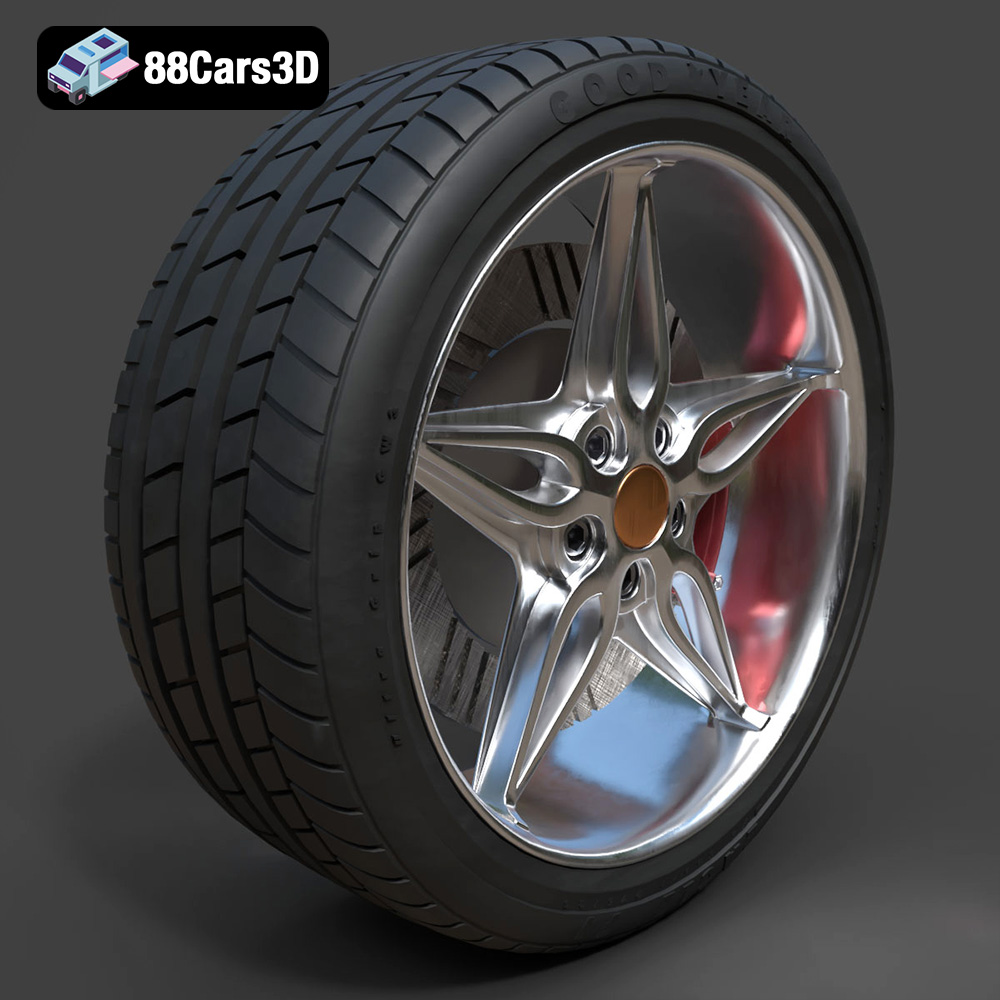
Texture: Yes
Material: Yes
Download the Wheel-001 Component 3D Model featuring clean geometry, realistic detailing, and a fully modeled interior. Includes .blend, .fbx, .obj, .glb, .stl, .ply, .unreal, and .max formats for rendering, simulation, and game development.
Price: $10.99

Texture: Yes
Material: Yes
Download the BMW 3 series Touring 335i (F31) 2013 3D Model featuring a highly detailed exterior, realistic interior, and modular design. Includes .blend, .fbx, .obj, .glb, .stl, .ply, .unreal, and .max formats for rendering, simulation, and game development.
Price: $30.79
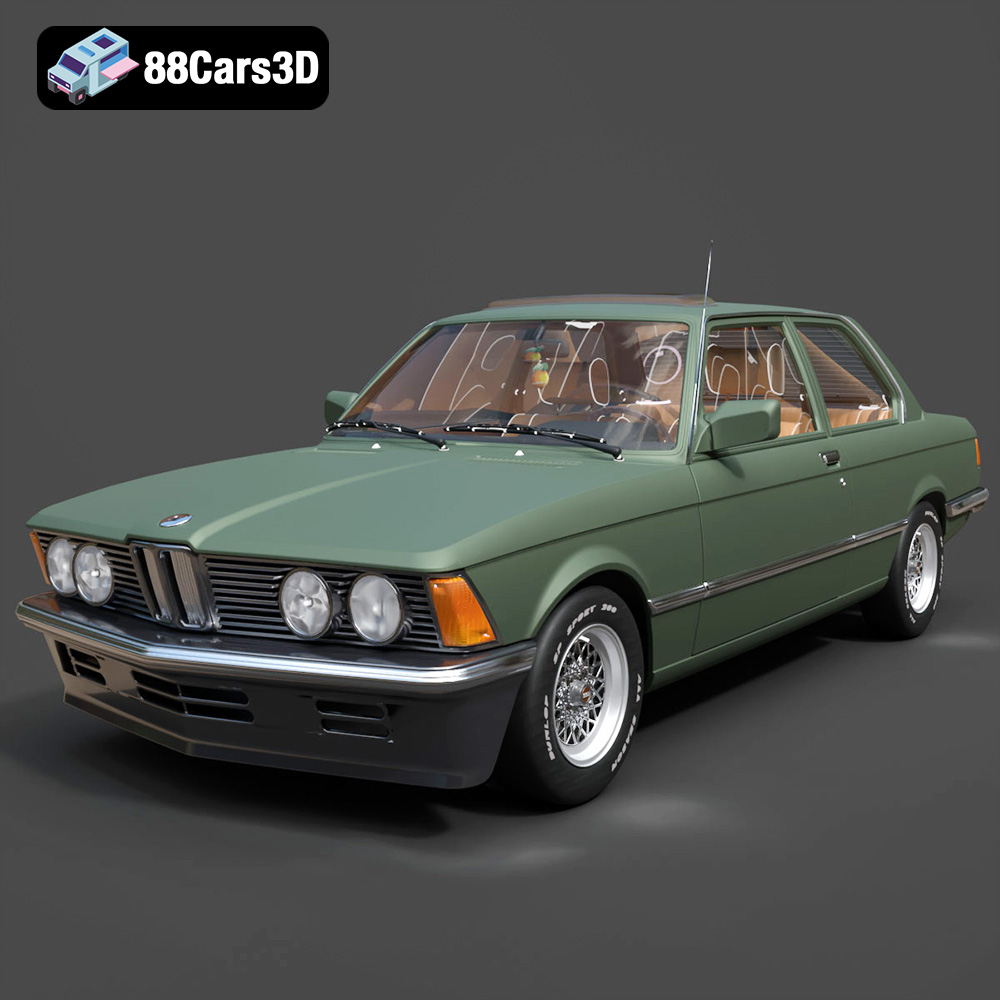
Texture: Yes
Material: Yes
Download the BMW 3 Series E21 3D Model featuring authentic exterior design, detailed interior, and accurate proportions. Includes .blend, .fbx, .obj, .glb, .stl, .ply, .unreal, and .max formats for rendering, simulation, and game development.
Price: $20.79

Texture: Yes
Material: Yes
Download the BMW 1 Series 3-Door E81 3D Model featuring a detailed exterior, functional interior elements, and clean geometry. Includes .blend, .fbx, .obj, .glb, .stl, .ply, .unreal, and .max formats for rendering, simulation, and game development.
Price: $14.79

Texture: Yes
Material: Yes
Download the Mercedes-Benz S500 2022 3D Model featuring clean geometry, realistic detailing, and a fully modeled interior. Includes .blend, .fbx, .obj, .glb, .stl, .ply, .unreal, and .max formats for rendering, simulation, and game development.
Price: $19.99

Texture: Yes
Material: Yes
Download the Jaguar S-Type Sedan 3D Model featuring clean geometry, realistic detailing, and a fully modeled interior. Includes .blend, .fbx, .obj, .glb, .stl, .ply, .unreal, and .max formats for rendering, simulation, and game development.
Price: $18.99

Texture: Yes
Material: Yes
Download the BMW 6 Series 1986 3D Model featuring clean geometry, realistic detailing, and a fully modeled interior. Includes .blend, .fbx, .obj, .glb, .stl, .ply, .unreal, and .max formats for rendering, simulation, and game development.
Price: $16.99
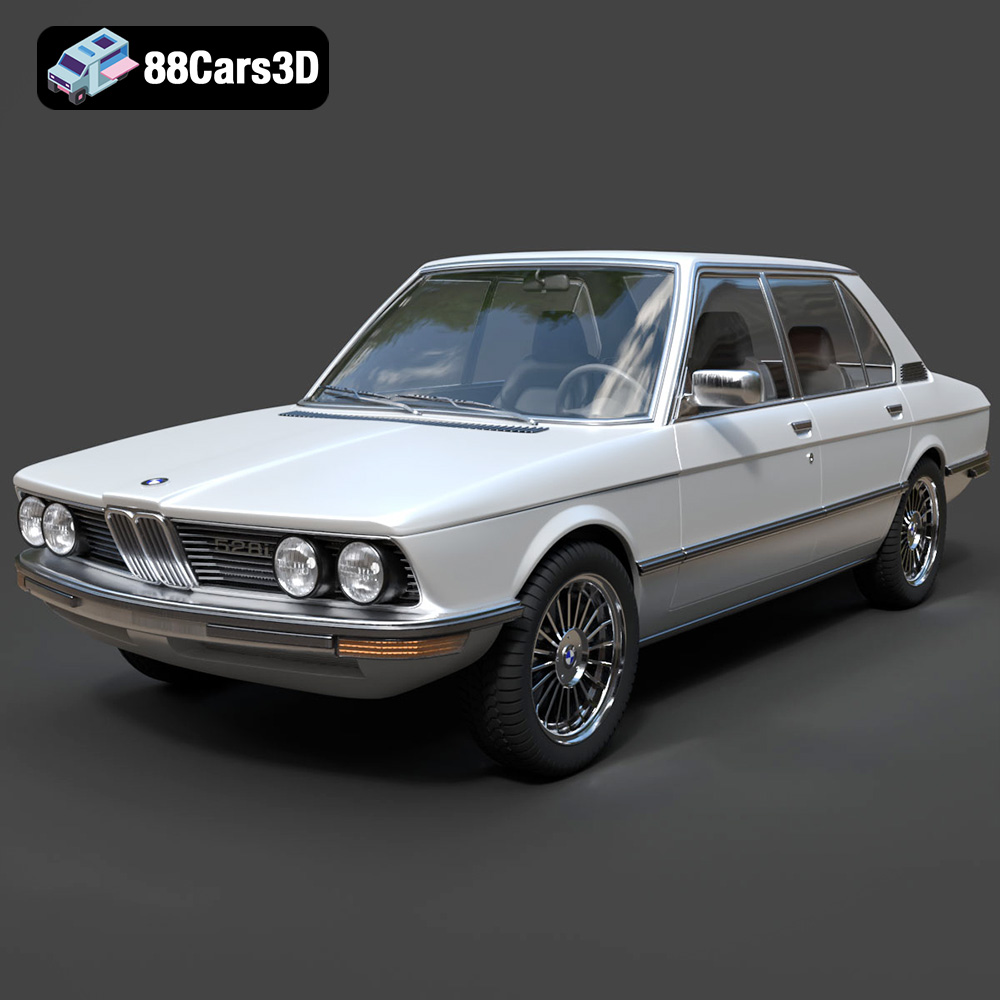
Texture: Yes
Material: Yes
Download the BMW 5 Series E12 528i 3D Model featuring clean geometry, realistic detailing, and a fully modeled interior. Includes .blend, .fbx, .obj, .glb, .stl, .ply, .unreal, and .max formats for rendering, simulation, and game development.
Price: $14.99

Texture: Yes
Material: Yes
Download the BMW 5 Series F10 3D Model featuring clean geometry, realistic detailing, and a fully modeled interior. Includes .blend, .fbx, .obj, .glb, .stl, .ply, .unreal, and .max formats for rendering, simulation, and game development.
Price: $14.99

Texture: Yes
Material: Yes
Download the BMW 4 Series Coupe M Sport 2014 3D Model featuring clean geometry, realistic detailing, and a fully modeled interior. Includes .blend, .fbx, .obj, .glb, .stl, .ply, .unreal, and .max formats for rendering, simulation, and game development.
Price: $14.99

