⚡ FLASH SALE: Get 60% OFF All Premium 3D & STL Models! ⚡

The automotive world thrives on precision and visual appeal, and in the realm of 3D, this translates to stunningly realistic car models. Whether destined for a breathtaking cinematic render, an immersive virtual reality experience, or a high-performance game, the journey from initial CAD (Computer-Aided Design) data to a polished 3D model is a meticulous process. This comprehensive guide will dissect the intricate workflows involved, offering a deep dive into the technical considerations, software-specific techniques, and industry best practices necessary to transform engineering-grade CAD files into versatile, production-ready 3D automotive assets. You’ll learn how to navigate the challenges of topology, master UV mapping and PBR materials, optimize for various rendering engines, and prepare models for everything from game engines to 3D printing. Embark on this journey to elevate your automotive visualization skills and understand the critical steps that make a truly exceptional 3D car model.
The genesis of many professional 3D car models begins not in a traditional 3D modeling package, but in CAD software. Engineers and designers use CAD applications like CATIA, SolidWorks, or Rhino to create precise, parametric representations of vehicles, typically relying on NURBS (Non-Uniform Rational B-Splines) surfaces. These surfaces are mathematical descriptions, allowing for infinite precision and smooth curves, which is perfect for manufacturing but poses distinct challenges for real-time rendering and subdivision surfacing common in visual effects and game development. The core issue lies in the fundamental difference: CAD data prioritizes engineering accuracy and editability of parameters, while traditional 3D modeling and rendering demand mesh-based geometry (polygons).
Directly importing CAD data into a 3D modeling package often results in meshes with extremely high polygon counts, non-manifold geometry (edges or vertices not connected correctly), excessive triangulation, and inconsistent face normals. These issues can lead to rendering artifacts, difficulties with UV mapping, and poor performance. The initial conversion, therefore, is not merely about file transfer but about intelligent tessellation and cleanup. Dedicated CAD import tools or specialized software are crucial here. For instance, tools like Datasmith for Unreal Engine, Fusion 360’s mesh export options, or plugins within 3ds Max or Maya allow for greater control over the tessellation process. Key settings to manage include chord height (the maximum distance between the NURBS surface and the tessellated polygon edge), angle tolerance (maximum angle deviation between adjacent faces), and surface tolerance, all of which directly impact the density and quality of the resulting mesh. A carefully managed tessellation can provide a denser mesh in areas of high curvature and sparser in flat regions, balancing detail and polygon count. After initial conversion, a critical cleanup phase involves identifying and removing hidden or duplicate geometry, correcting flipped normals, and merging stray vertices, setting the stage for more advanced retopology. Common CAD formats for initial transfer include STEP, IGES, and SAT, which carry the NURBS data efficiently, as well as DWG for architectural contexts.
Once the initial CAD data has been intelligently tessellated into a polygonal mesh, the most crucial step for creating a versatile and high-quality 3D car model begins: topology optimization and, often, full retopology. Clean topology is the backbone of any professional 3D model, especially for complex, curvaceous subjects like cars. It dictates how the mesh deforms during animation, how subdivision surfaces smooth out details, how UV maps are laid out, and ultimately, the quality of your renders and game performance. A poor topology, characterized by triangles in flat areas, irregular quad distribution, or poles with too many edges converging, will lead to pinching, artifacts, and headaches down the line.
For automotive models, the goal is primarily quad-based topology with uniform density across surfaces where possible. Edge loops should strategically follow the natural contours and creases of the vehicle—around wheel wells, door lines, panel gaps, and body folds. These loops are essential for controlling how subdivision surface modifiers (like TurboSmooth in 3ds Max or Subdivision Surface in Blender) smooth the mesh, ensuring crisp edges where needed and broad, flowing surfaces elsewhere. Retopology workflows vary depending on the target application. For high-end rendering and animation, manual retopology using tools like Quad Draw in Maya, the Retopology Tools in Blender (see the official Blender 4.4 documentation on modeling tools for detailed usage: https://docs.blender.org/manual/en/4.4/), or dedicated software like TopoGun is often preferred. This allows artists to meticulously craft an optimal mesh from scratch, tracing over the high-polygon CAD mesh as a reference. This process, while time-consuming, yields the most control and highest quality. Automated retopology tools like ZRemesher in ZBrush or the QuadRemesher plugin can provide a good starting point, but often require manual cleanup and optimization to achieve production-ready quality for complex vehicle surfaces. Polygon count considerations are paramount; a hero asset for a cinematic render might comfortably sit at several hundred thousand polygons (before subdivision), while a game-ready model might need to be optimized down to 50,000-100,000 polygons, complete with Level of Detail (LOD) meshes. The key is to project any high-resolution details from the original CAD mesh onto the retopologized mesh using normal maps or displacement maps, preserving visual fidelity without sacrificing performance.
Once a solid topological foundation is established, the next critical phase is UV mapping – the process of unwrapping the 3D surface of the car into a 2D space, much like flattening a cardboard box. This 2D representation, known as a UV map, serves as the canvas for applying textures and materials. For the complex, compound curves of automotive surfaces, meticulous UV mapping is essential for achieving photorealistic results, preventing texture stretching, and optimizing texture resolution. Poor UVs lead to blurry, distorted textures and can break the illusion of realism.
Strategies for unwrapping complex car surfaces involve a combination of projection types. Planar projections are ideal for relatively flat panels, cylindrical projections work well for wheel wells or side panels, and spherical projections can be useful for rounded mirrors or headlights. The challenge lies in creating seamless UVs, minimizing visible seams and strategically placing them in less prominent areas, such as along panel gaps or under the vehicle. For extremely high-resolution assets, UDIM workflows (UV Tile system) are invaluable. UDIMs allow artists to use multiple high-resolution texture maps across different UV tiles within a single material, overcoming the resolution limitations of a single 0-1 UV space and enabling incredibly detailed textures for large surfaces. This is particularly beneficial for car paint, which often requires fine details like metallic flakes or clear coat imperfections. PBR (Physically Based Rendering) material creation is at the heart of modern realism. Understanding PBR principles is paramount: textures like Albedo (base color), Metallic (how reflective and conductive a surface is), Roughness (micro-surface imperfections affecting reflection clarity), Normal (simulating surface detail without extra geometry), and Ambient Occlusion (simulating indirect shadows) work together in a shader network to accurately represent how light interacts with the material. For instance, car paint might involve a layered shader – a base metallic layer with a clear coat layer on top, each with its own roughness and normal maps. Texture resolutions are a vital consideration; 4K or even 8K textures might be necessary for hero assets and close-up renders to capture minute details like orange peel effect on paint or fine rubber textures. Software like Substance Painter and Mari are industry standards for creating and painting PBR textures, allowing for procedural generation and intricate detail painting, while Photoshop is often used for final adjustments and creating custom decals.
With a meticulously modeled and textured automotive asset, the focus shifts to bringing it to life through high-fidelity rendering. This phase is where all the prior work culminates in breathtaking, photorealistic images or animations. Achieving this involves a careful orchestration of environment, lighting, camera settings, and the chosen rendering engine. Each element plays a crucial role in creating the desired mood, realism, and visual impact.
The choice of rendering engine significantly impacts both the workflow and the final aesthetic. Offline renderers like Corona Renderer, V-Ray, Arnold, and Cycles (Blender) are built upon physically-based rendering principles, offering advanced global illumination algorithms that accurately simulate how light bounces and interacts within a scene. Corona and V-Ray, popular in architectural visualization and automotive rendering, are known for their ease of use, speed, and exceptional photorealism, particularly with complex materials and indirect lighting. Arnold excels in handling massive scenes and intricate shaders, often favored in visual effects. Blender’s Cycles, while sometimes slower than its commercial counterparts, offers highly realistic results and is fully integrated into the Blender ecosystem. Understanding render settings is key: adjusting sampling rates to balance render time with image quality, utilizing denoising algorithms to clean up noise, and rendering out various render elements or passes (e.g., diffuse, reflection, depth, normal) for greater control in post-production compositing. Lighting and environment setup are paramount for automotive rendering. High Dynamic Range Image (HDRI) lighting is the gold standard, providing realistic ambient light, reflections, and subtle environmental color casts. A well-chosen HDRI can instantly place the car in a believable context, whether it’s a studio, a sunlit street, or a moody industrial setting. Beyond HDRI, strategic placement of area lights, spot lights, and rim lights can further sculpt the car’s form, emphasize design lines, and create dramatic highlights. Camera setup is equally important, mirroring real-world photography principles. Adjusting focal length to control perspective distortion, setting aperture for depth of field effects (blurring the foreground or background to draw attention to the car), and carefully composing the shot are all vital for cinematic results. Finally, post-processing and compositing in software like Adobe Photoshop or Foundry Nuke are essential finishing touches. This stage involves color correction, adding subtle glares, lens flares, chromatic aberration, or film grain to enhance realism and achieve a polished, professional look.
While high-fidelity offline rendering targets visual perfection, real-time applications like video games, interactive configurators, and AR/VR experiences demand an entirely different set of optimizations. Performance is king, and every polygon, every texture, and every draw call must be meticulously managed to maintain smooth frame rates and a responsive user experience. Integrating automotive models into game engines like Unity or Unreal Engine requires a deep understanding of these optimization strategies.
One of the most critical techniques is the implementation of Levels of Detail (LODs). This involves creating multiple versions of the same car model, each with progressively fewer polygons. The highest detail mesh is used when the car is close to the camera, while lower detail meshes are swapped in as the car moves further away. This dramatically reduces the polygon count processed by the GPU without a noticeable loss in visual quality from a distance. A typical setup might include 3-5 LOD levels, with the lowest LOD potentially being just a few thousand polygons. Reducing draw calls—the number of instructions sent from the CPU to the GPU to render objects—is another key optimization. This can be achieved by merging meshes that share the same material and by using texture atlasing. Texture atlasing involves combining multiple smaller textures (e.g., for different car parts like headlights, grilles, and emblems) into a single, larger texture map. This reduces the number of material changes the GPU has to process, significantly improving performance. For example, a single 4K atlas could house textures for an entire car’s interior. Mesh decimation, a process of algorithmically reducing polygon count, needs to be applied carefully to avoid compromising visual integrity. Tools within game engines or dedicated software can intelligently remove polygons while preserving hard edges and major forms. For AR/VR optimization, the constraints are even stricter. Poly count budgets for mobile AR often fall below 50,000 triangles for an entire vehicle, making aggressive LODs and decimation indispensable. Batching and instancing are crucial for efficient rendering of duplicate objects (e.g., all four tires or multiple cars in a scene). Collision meshes, simplified proxy geometries, are also created for physics interactions, ensuring accurate collisions without the overhead of the high-detail visual mesh. File formats like GLB (GL Transmission Format) and USDZ (Universal Scene Description Zip) are becoming industry standards for AR/VR and web-based 3D due to their efficiency in packaging 3D models with materials and animations into a single, optimized file.
Beyond high-fidelity rendering and real-time visualization, 3D automotive models often serve specialized applications, notably 3D printing and diverse compatibility across various software ecosystems. Each of these uses introduces its own set of technical requirements and challenges, demanding specific preparation and understanding of file formats.
Preparing an automotive model for 3D printing requires a fundamental shift in perspective from visual fidelity to physical integrity. The primary goal is to ensure the mesh is “watertight”—meaning it has no gaps, holes, or non-manifold geometry that would prevent a successful print. CAD data, being mathematically precise, often translates well into watertight meshes, but models created or retopologized in traditional 3D software might require extensive mesh repair. Tools like Netfabb, Meshmixer, or Blender’s 3D Print Toolbox (see Blender 4.4 documentation for specifics) are invaluable for identifying and automatically (or manually) fixing issues like flipped normals, interior faces, or disconnected vertices. Another critical consideration is wall thickness; a model might look robust on screen but be too thin in certain areas to physically print without breaking. It’s often necessary to solidify thin panels or add structural supports. Supported file formats for 3D printing are primarily STL (Stereolithography), a de facto standard, and OBJ, which can carry color information. Newer formats like AMF (Additive Manufacturing File Format) offer more advanced capabilities but are not as widely adopted yet.
File format conversions and compatibility are perennial challenges in 3D production pipelines. The industry relies on a handful of universal formats, each with its strengths and limitations. FBX (Filmbox) is arguably the industry standard for animation, game development, and inter-software exchange, capable of carrying mesh data, UVs, PBR materials, bone weights, and animations. OBJ (Wavefront Object) remains a robust and widely supported format for static meshes and basic material information, offering excellent compatibility across almost all 3D software. For the rapidly expanding AR/VR and web 3D spaces, GLB and USDZ are gaining prominence. GLB is the binary version of glTF (Graphics Language Transmission Format), designed for efficient transmission and loading of 3D scenes and models. USDZ, developed by Apple, is optimized for AR experiences on iOS devices. The challenge with conversions often lies in maintaining data integrity—ensuring that UVs, material assignments, scene hierarchies, and scale/units are preserved accurately across different formats and software. For instance, PBR materials defined in one renderer might need to be re-interpreted or rebuilt in another. This often requires careful manual setup or dedicated conversion tools. Platforms like 88cars3d.com often provide models in multiple formats, pre-optimized for various uses, saving artists valuable time in conversion and cleanup. This ensures that whether you need a model for a high-end visualization or a game-ready asset, you have a reliable starting point.
The journey from a precise CAD blueprint to a captivating 3D automotive model is a testament to both technical prowess and artistic vision. We’ve traversed the intricate pipeline, from the intelligent tessellation of engineering data and the painstaking craft of topology optimization to the meticulous application of PBR materials and the strategic nuances of rendering. We’ve also explored the critical performance considerations for real-time applications and the unique demands of 3D printing.
The key takeaways from this comprehensive exploration are clear: clean, quad-based topology is fundamental for high-quality results; detailed UV mapping is essential for realistic texturing; and understanding PBR principles is non-negotiable for achieving photorealism. Furthermore, successful integration into various applications hinges on smart optimization strategies, including LODs, texture atlasing, and mindful polygon budgeting. This entire process demands a blend of technical expertise, patience, and a keen eye for detail. As the demands for realistic and interactive automotive content continue to grow, mastering these workflows becomes increasingly invaluable for 3D artists, game developers, automotive designers, and visualization professionals. By embracing industry best practices and continuously refining your skills, you can produce truly exceptional automotive 3D models that meet the highest standards. For those seeking a head start with high-quality, production-ready assets, platforms such as 88cars3d.com offer a curated selection of professionally modeled cars, often available in multiple optimized formats, providing a solid foundation for your next project and saving valuable production time. The world of automotive 3D is constantly evolving, and by continually honing these skills, you’ll be well-equipped to create stunning visualizations for any medium.
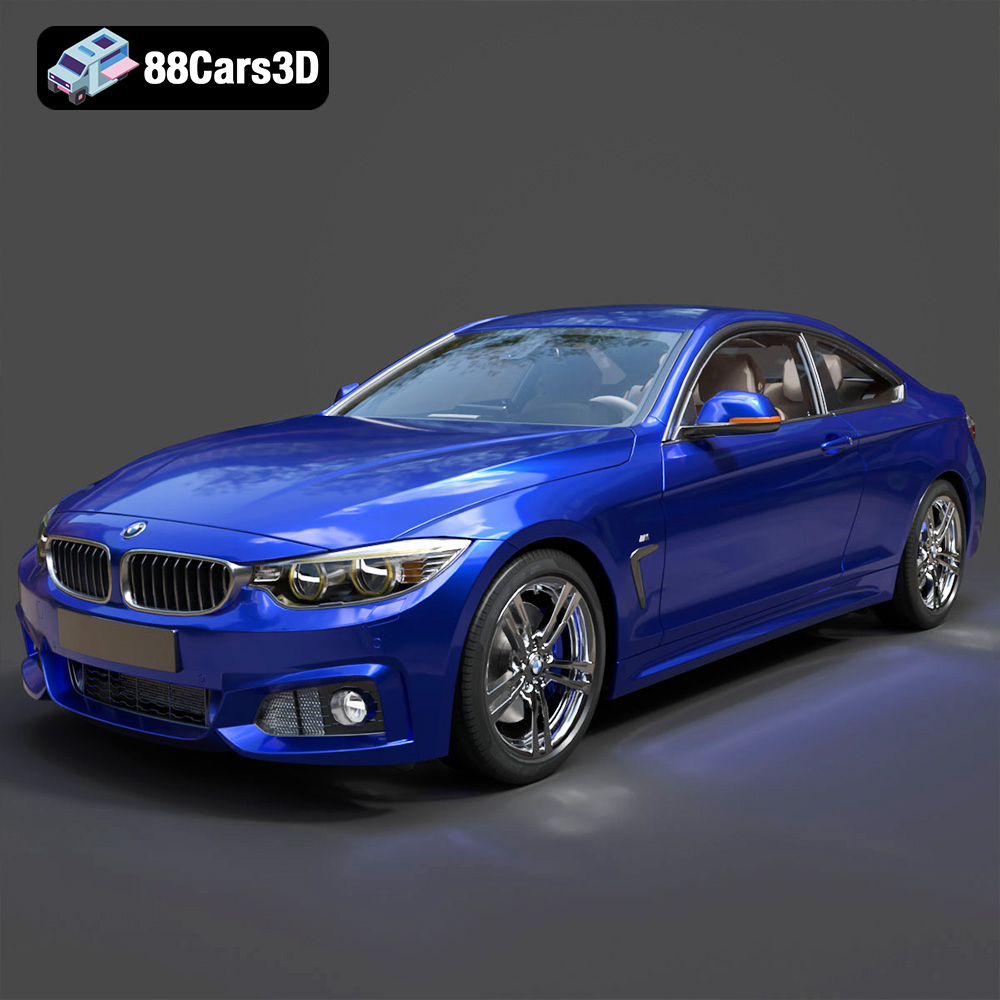
Texture: Yes
Material: Yes
Download the BMW 4 Series Coupe M Sport 2014 3D Model featuring clean geometry, realistic detailing, and a fully modeled interior. Includes .blend, .fbx, .obj, .glb, .stl, .ply, .unreal, and .max formats for rendering, simulation, and game development.
Price: $14.99

Texture: Yes
Material: Yes
Download the Bentley Brooklands 2008 3D Model featuring clean geometry, realistic detailing, and a fully modeled interior. Includes .blend, .fbx, .obj, .glb, .stl, .ply, .unreal, and .max formats for rendering, simulation, and game development.
Price: $14.99
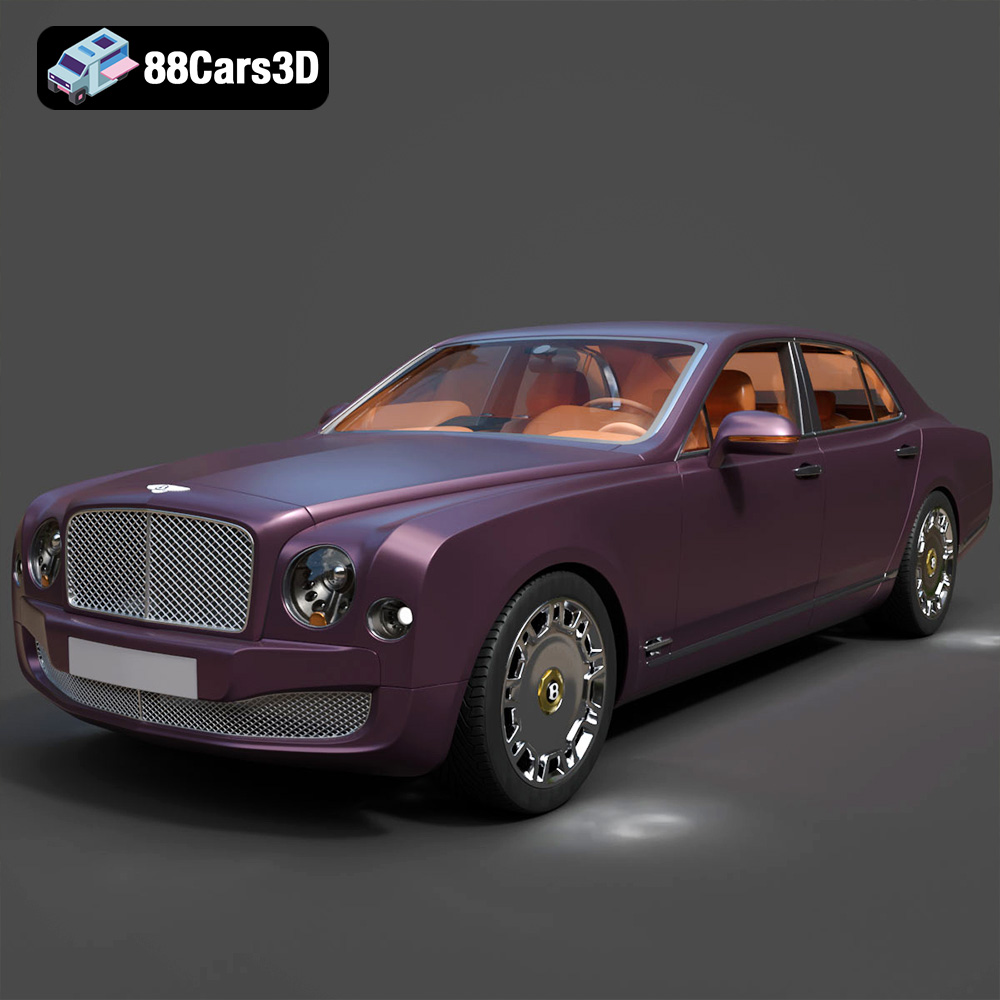
Texture: Yes
Material: Yes
Download the Bentley Mulsanne Luxury Sedan 3D Model featuring clean geometry, realistic detailing, and a fully modeled interior. Includes .blend, .fbx, .obj, .glb, .stl, .ply, .unreal, and .max formats for rendering, simulation, and game development.
Price: $14.99

Texture: Yes
Material: Yes
Download the Bentley Continental GT 2011 3D Model featuring clean geometry, realistic detailing, and a fully modeled interior. Includes .blend, .fbx, .obj, .glb, .stl, .ply, .unreal, and .max formats for rendering, simulation, and game development.
Price: $14.99

Texture: Yes
Material: Yes
Download the Bentley Continental Flying Spur 3D Model featuring clean geometry, realistic detailing, and a fully modeled interior. Includes .blend, .fbx, .obj, .glb, .stl, .ply, .unreal, and .max formats for rendering, simulation, and game development.
Price: $14.99
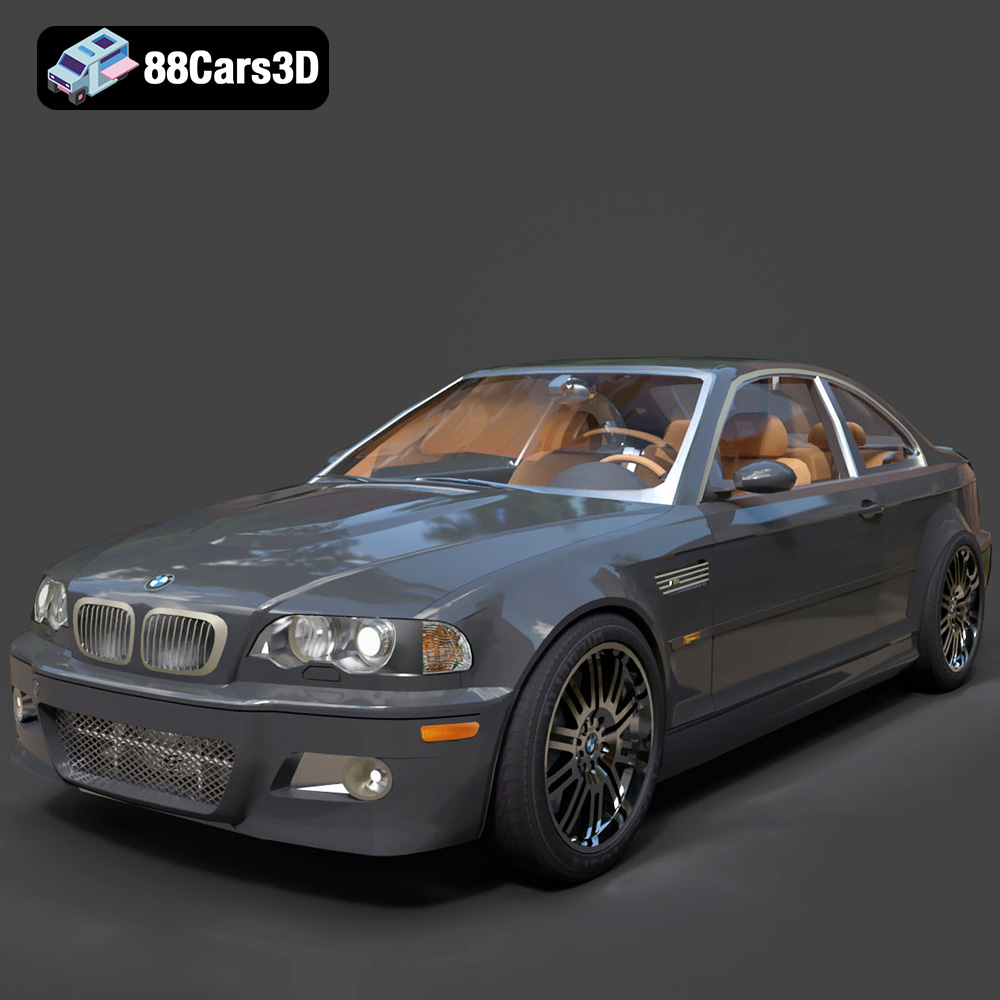
Texture: Yes
Material: Yes
Download the BMW M3 E46 3D Model featuring iconic sports car design and detailed interior. Includes .blend, .fbx, .obj, .glb, .stl, .ply, .unreal, and .max formats for rendering, simulation, and game development.
Price: $16.99
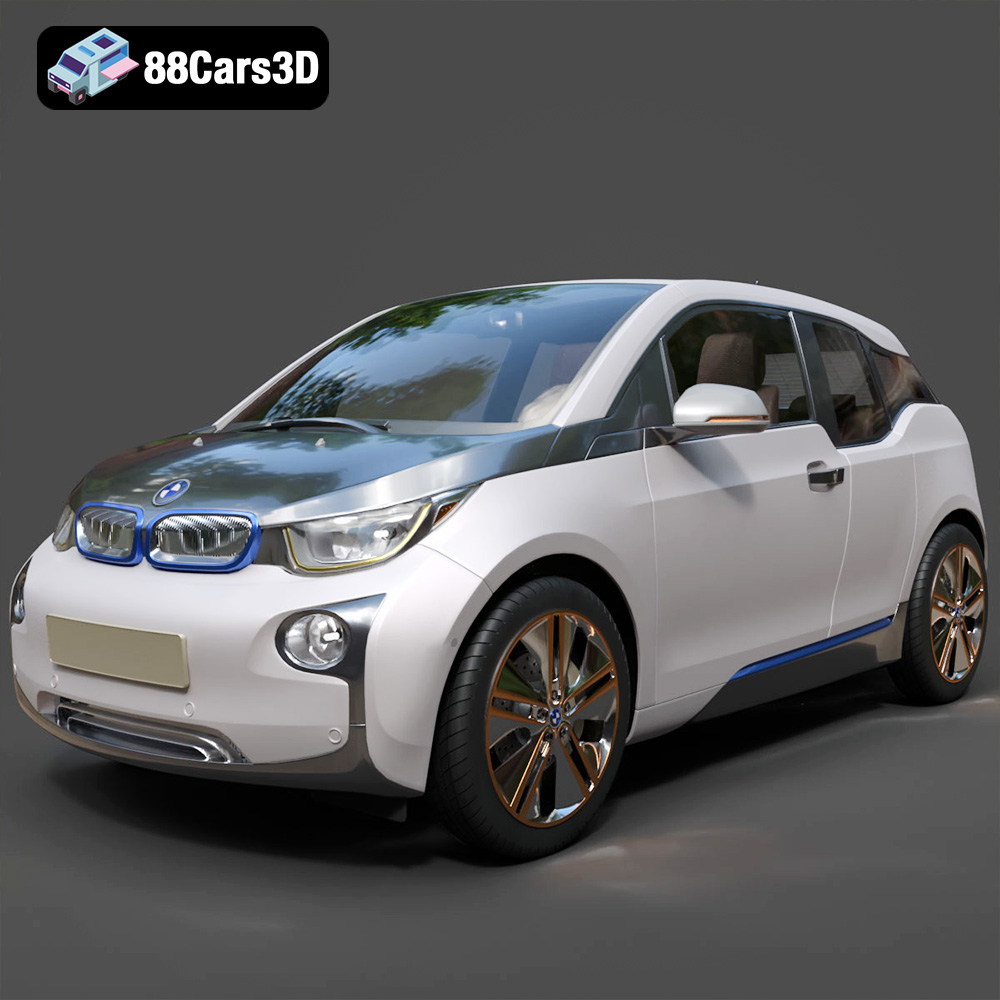
Texture: Yes
Material: Yes
Download the BMW i3 Coupe 3D Model featuring its iconic electric design and compact urban styling. Includes .blend, .fbx, .obj, .glb, .stl, .ply, .unreal, and .max formats for rendering, simulation, and game development.
Price: $17.99
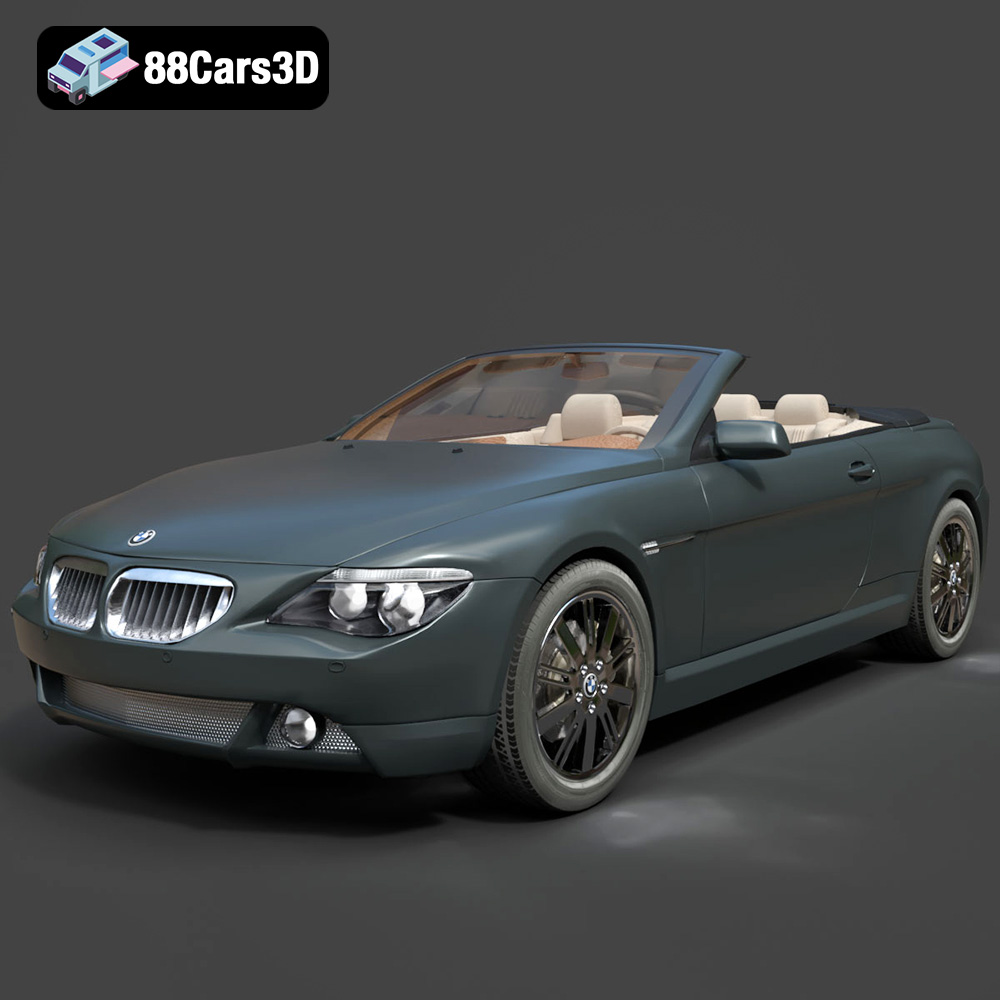
Texture: Yes
Material: Yes
Download the BMW 645ci 3D Model featuring a sleek, detailed exterior and optimized interior. Includes .blend, .fbx, .obj, .glb, .stl, .ply, .unreal, and .max formats for rendering, simulation, and game development.
Price: $10.79
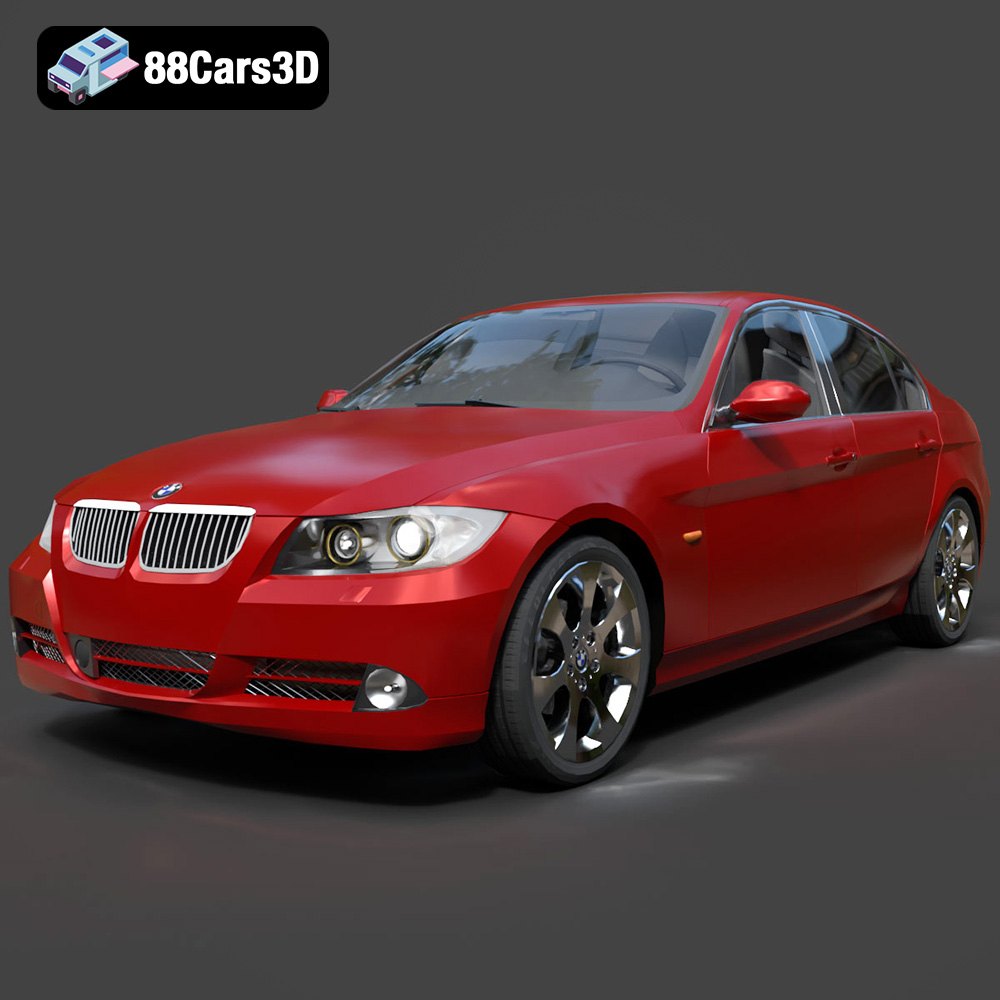
Texture: Yes
Material: Yes
Download the BMW 330i E90 3D Model featuring a detailed exterior, an optimized interior, and accurate mechanical components. Includes .blend, .fbx, .obj, .glb, .stl, .ply, .unreal, and .max formats for rendering, simulation, and game development.
Price: $14.79
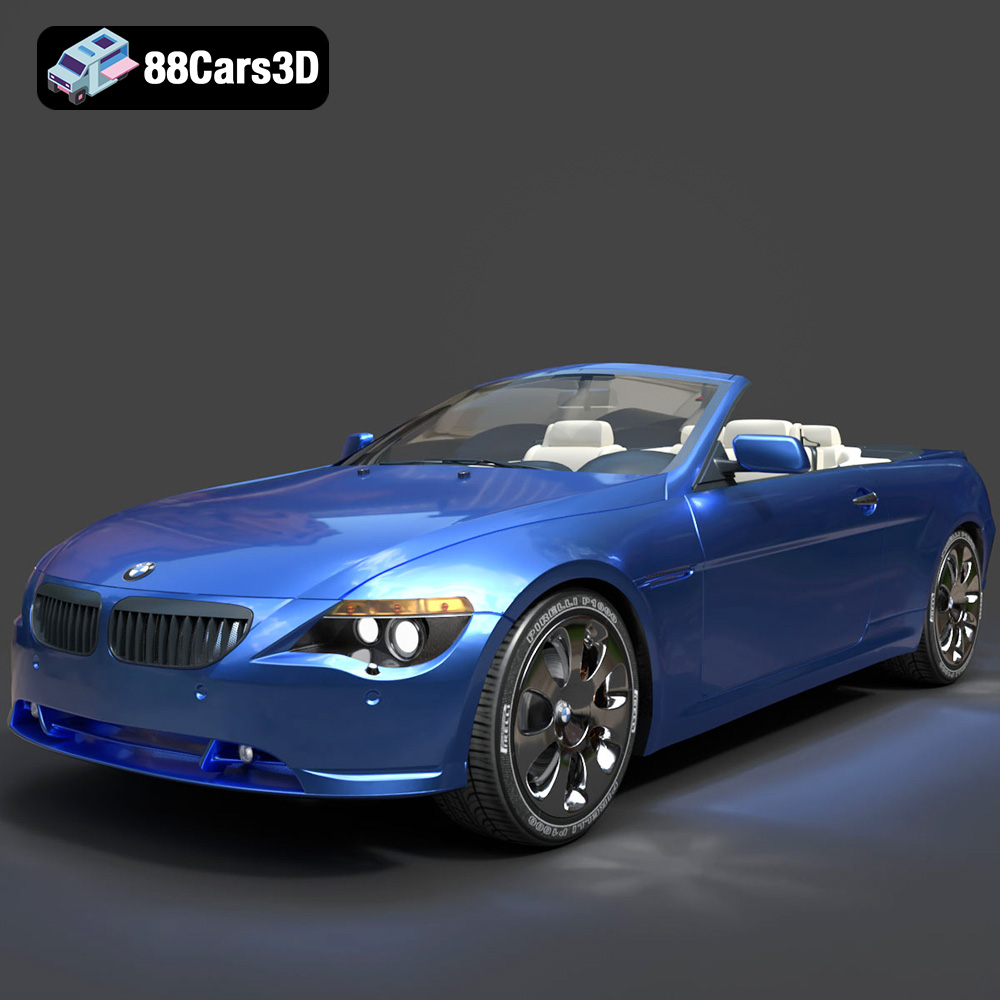
Texture: Yes
Material: Yes
Download the BMW 6 Series Convertible 3D Model featuring clean geometry, realistic detailing, and a fully modeled interior. Includes .blend, .fbx, .obj, .glb, .stl, .ply, .unreal, and .max formats for rendering, simulation, and game development.
Price: $14.99

