Mastering Manual Support Structures: Achieving Flawless 3D Prints for Your Car Models
The world of 3D printing is a fascinating blend of digital design and physical creation, allowing enthusiasts to bring intricate models to life. For fans of automotive design, platforms like 88cars3d.com offer a treasure trove of meticulously crafted printable car models in STL format. However, even the most perfectly designed STL file can falter during the printing process if critical overhangs and bridges aren’t adequately supported. While automatic support generation in slicers is a convenient starting point, it often falls short of perfection, leading to stringing, poor surface finish, or even complete print failures. This is where the art of manual support generation comes into play. This comprehensive guide will delve deep into the technical intricacies of manually adding support structures, empowering you to achieve superior print stability, detail, and overall success with your 3D printed car models. We’ll cover everything from understanding support mechanics to leveraging advanced software tools and printer-specific techniques.
Understanding the Science Behind Support Structures
Before we dive into the practicalities of manual support placement, it’s crucial to grasp *why* they are necessary and *how* they function. 3D printers build objects layer by layer, and gravity is an ever-present force. Any part of a model that extends horizontally or at an angle without direct material support from the layer below will likely droop, sag, or collapse. Support structures act as temporary scaffolding, providing a foundation for these overhanging sections. They are designed to be easily removable after the print is complete, leaving behind a clean surface.
The Physics of Overhangs and Bridges
The critical angle for unsupported plastic extrusion in FDM printing typically hovers around 45 degrees. Beyond this, the molten plastic begins to lose its integrity before the next layer can solidify and provide adequate support. This means any surface or feature that extends outwards at an angle steeper than approximately 45 degrees from the vertical will likely require support. Bridges are horizontal spans between two elevated points. If the distance is too great, the extruded filament will sag in the middle, creating a weak or incomplete connection.
Types of Support Structures and Their Applications
Slicing software offers various support types, each with its advantages:
- Normal/Grid Supports: These create a dense, grid-like structure that is generally strong but can be difficult to remove cleanly.
- Tree/Organic Supports: These branch out from the model like a tree, touching the overhanging surfaces at fewer points. They are often easier to remove and can save material, but might not be as structurally robust for very severe overhangs.
- Custom/Manual Supports: This is our focus – placing individual support points precisely where needed.
For intricate models, especially detailed car bodies with delicate spoilers, wheel arches, or undercarriages, manual support placement offers unparalleled control. It allows you to support only the absolutely necessary areas, minimizing contact points and reducing the risk of damaging fine details during removal.
Advanced STL File Preparation for Manual Supports
The foundation of successful manual support generation lies in a well-prepared STL file. Even the finest downloadable STL files, such as those found on 88cars3d.com, might benefit from minor adjustments before you start placing supports. This stage ensures that your model is “watertight” and free of geometrical errors that could confuse slicing software or the printing process itself.
Mesh Repair and Watertightness
An STL file represents a 3D model as a mesh of interconnected triangles. For a successful print, this mesh must be “watertight,” meaning it has no holes, inverted normals (triangles facing the wrong way), or non-manifold edges (where more than two triangles meet at an edge, or an edge is shared by only one triangle). Software like Meshmixer, Netfabb, or even Blender’s built-in tools can be invaluable here.
- Identifying Errors: Most mesh repair software has automatic analysis tools that highlight problematic areas. Look for “non-manifold geometry,” “holes,” and “inverted normals.”
- Automatic Repair: Tools like Meshmixer’s “Make Solid” or Netfabb’s repair functions can often fix these issues automatically. However, it’s crucial to review the results, as aggressive automatic repairs can sometimes simplify or distort fine details.
- Manual Correction: For specific holes or inverted normals, you can often manually bridge holes or flip individual triangle normals within the software. This is especially important for critical surfaces that you want to keep pristine.
Analyzing Overhangs and Planning Support Strategy
Once your mesh is clean, it’s time to visually inspect it for areas requiring support. This is where a good understanding of your chosen slicer’s overhang preview feature comes in handy.
- Overhang Visualisation: Most slicers (Cura, PrusaSlicer, Simplify3D) offer an “Overhangs” or “Layer” view mode. This mode allows you to color-code areas that exceed a specified overhang threshold (e.g., 45 degrees).
- Identifying Critical Zones: Pay close attention to areas like the underside of spoilers, rear diffusers, wheel wells, side skirts, and any protruding aerodynamic elements on your car models. These are prime candidates for support.
- Strategic Placement: Think about *where* a support point will have the least impact on the final surface finish. Can you place a support directly on a flatter underside surface rather than a detailed grille? Can you make a support connect to an existing edge or feature?
Leveraging Slicer Software for Manual Support Placement
Modern slicing software provides powerful tools that go beyond automatic support generation, enabling precise manual placement and customization. This is where you truly gain control over the printing process.
Manual Support Point Tools
Almost all major slicers offer some form of manual support control. These tools allow you to add individual support points or define areas where supports should or should not be generated.
- Adding Support Towers/Points: In Cura, you can enable “Support Overrides” which allows you to add support blockers and support enforcers. For manual points, some users find it easier to use “Support Blockers” to prevent unwanted auto-supports and then manually add individual support structures by placing small primitive shapes (like cylinders) and configuring them to act as supports. PrusaSlicer has a dedicated “Add Support” tool in its object manipulation mode.
- Configuring Support Properties: Crucially, you can often adjust the contact Z distance (the gap between the support and the model), the XY separation (horizontal distance from the model), the pattern, density, and even the interface layers for manually placed supports.
Support Interface Layers for Easier Removal
A game-changer for manual supports is the use of support interface layers. These are denser, more solid layers printed at the top and bottom of the support structure, directly touching the model.
- How They Work: The interface layers create a more uniform and solid surface for the support to adhere to, preventing filament ooze into the support structure. The gap between the support interface and the actual model (controlled by “Support Z Distance”) is often set to 0, while the gap between the *bulk* of the support and the model can be larger (e.g., 0.2mm or more).
- Benefits: This creates a distinct separation. When removing the support, you’re primarily breaking away the bulkier, less dense support material, leaving behind a cleaner interface layer attached to the model. This interface layer can then be more easily sanded or scraped off than a rough, directly extruded support surface.
- Slicer Settings: Look for settings like “Support Interface,” “Generate Support Interface,” and options to define the pattern and density of these layers within your slicer’s support settings. You can often enable interfaces only on the top or bottom of supports, or both.
FDM vs. Resin Printing: Support Strategies and Considerations
While the principles of support are similar, the specific implementation and challenges differ significantly between FDM (Fused Deposition Modeling) and resin (SLA/DLP) printing.
FDM Printing: Material, Temperature, and Adhesion
FDM printing involves extruding thermoplastic filament. Key considerations for manual supports include:
- Material Choice: PLA is generally the easiest material to print with supports due to its low printing temperature and minimal warping. PETG offers more strength and temperature resistance but can be stringier. ABS requires higher temperatures and enclosures to prevent warping, making support removal more challenging. For car models with intricate details, consider printing in PLA or a high-detail PETG.
- Nozzle Size and Layer Height: A smaller nozzle (e.g., 0.2mm or 0.4mm) allows for finer details and potentially easier support removal. Layer height significantly impacts print time and surface quality. For high detail, aim for 0.1mm to 0.15mm layer heights. For faster prints, 0.2mm is a good compromise.
- Support Density and Pattern: For FDM, denser supports (e.g., 15-25% infill) with a rectilinear or grid pattern often provide better stability. However, consider tree supports for less contact area if detail is paramount. Experiment with “Support Interface” layers using a grid pattern for optimal removability.
- Print Speed: Slower print speeds, especially for the initial layers and the support structure itself, can improve adhesion and reduce the chance of print failures. Try printing supports at 50-70% of your normal print speed.
- Bed Adhesion: Ensure your print bed is properly leveled and clean. For materials prone to warping like ABS, a brim or raft might be necessary, but can sometimes make support removal trickier. Manually placed supports can sometimes anchor the model more securely, reducing the need for extensive rafts.
Resin Printing: Support Density, Orientation, and Removal
Resin printing uses UV light to cure liquid photopolymer resin layer by layer. Supports are critical for preventing models from detaching from the build plate or collapsing under their own weight during the curing process.
- Lightweight Structure, Critical Placement: Resin prints are generally lighter than FDM prints, but the uncured liquid resin exerts hydrostatic pressure. Supports are needed to anchor the model to the build plate and to hold up overhangs against this pressure.
- Support Tip Size: Resin slicers allow precise control over the diameter of the “tip” of the support where it touches the model. Smaller tips (e.g., 0.2mm – 0.4mm) minimize scarring on the model’s surface, but larger tips are needed for heavier overhangs or less critical areas. Manual support placement involves adding these fine tips precisely.
- Support Density and Rakes: Resin supports often use a “rake” or branching structure. You’ll need sufficient density to prevent sagging, but avoid over-supporting, which makes removal incredibly difficult and can damage the model. Platforms like 88cars3d.com often provide models pre-oriented and with suggested support points for resin printing.
- Orientation is Key: The orientation of your resin print dramatically affects the number and placement of supports needed. Orienting the model to minimize the cross-sectional area exposed to the build plate at any given layer can reduce suction forces and the need for extensive supports, particularly on large, flat surfaces.
- Removal Techniques: Resin supports are typically removed with hobby knives, flush cutters, or specialized tools. Gentle pressure and careful cutting are essential. Post-curing often makes the supports more brittle and easier to snap off. Some advanced users even use a Dremel with a fine grinding bit for precise removal of nubs.
Troubleshooting Common Support-Related Print Failures
Even with meticulous manual support placement, challenges can arise. Understanding common failures and their solutions is key to a smooth printing workflow.
Print Not Sticking to Supports (FDM) / Model Detaching (Resin)
- FDM: This often indicates insufficient support density, incorrect Z-distance settings, or poor first-layer adhesion on the support itself. Ensure your support interface layers are properly configured and your slicer settings for support contact are optimized. Try reducing the “Support Z Distance” slightly (e.g., from 0.2mm to 0.15mm) or increasing support density.
- Resin: This is a critical failure. It usually points to insufficient anchoring to the build plate, incorrect orientation causing excessive peel forces, or supports that are too thin or too few in number for the overhangs. Double-check your build plate adhesion settings, consider adding more raft layers, and ensure your model is oriented to minimize suction. Manually add thicker supports to critical overhangs.
Supports Breaking Mid-Print (FDM)
- Cause: This can happen if the supports are too thin, printed too fast, or if the extruder nozzle “catches” on an imperfectly formed support layer.
- Solution: Increase support density, slow down the print speed specifically for supports, and ensure your printer’s retraction settings are dialed in to prevent stringing that could snag the nozzle. Check for any Z-wobble or inconsistent extrusion that might be affecting support layers.
Surface Imperfections and Scarring
- Cause: Poorly placed supports, overly aggressive support contact, or difficult support removal are common culprits. In resin printing, the support tip size is critical.
- Solution:
- FDM: Experiment with different support interface patterns and densities. Use a smaller Z-distance between the support interface and the model (e.g., 0.1mm) but ensure there’s a slightly larger gap between the main support body and the model. Consider using “Support on Build Plate Only” if possible, and manually add supports to overhangs that extend beyond the plate.
- Resin: Reduce the support tip diameter where it touches the model. Place supports on less visible areas or chamfered edges if possible. Carefully sand or use a hobby knife to smooth out any scarring after removal.
Difficulty Removing Supports
- Cause: Supports being too dense, fused too strongly to the model, or being printed with materials that are difficult to break or cut.
- Solution:
- FDM: Enable and tune support interface layers for easier separation. Increase the “Support X/Y Distance” to create more space between the support and the model wall. Print supports at a slightly lower temperature (if your material allows) to reduce adhesion. Consider using dissolvable supports if your printer has dual extrusion capabilities.
- Resin: Use the smallest possible support tip size. Reduce the density of supports slightly if the model is stable enough. Ensure adequate cleaning and post-curing, which can sometimes make supports brittle and easier to snap. If supports are extremely difficult, consider re-orienting the model or using a different slicing strategy.
The Art of Post-Processing Manual Supports
Once your print is complete and the manual supports are removed, the journey isn’t over. Post-processing is essential for achieving that professional, display-quality finish on your 3D printed car models.
Cleaning and Initial Inspection
After carefully removing supports, take time to clean the model. For FDM prints, this might involve brushing away any loose filament strands. For resin prints, ensure thorough washing in isopropyl alcohol (IPA) or an equivalent cleaning solution to remove all uncured resin. Inspect the areas where supports were attached for any remaining nubs, scarring, or surface imperfections.
Sanding and Filling
Sanding is crucial for smoothing out layer lines and any remnants of support contact points.
- FDM Sanding: Start with coarser grit sandpaper (e.g., 150-220 grit) to remove obvious imperfections and support marks. Gradually move to finer grits (e.g., 400, 800, 1200, and even higher) for a smooth finish. Wet sanding can be very effective for FDM prints, helping to reduce dust and achieve a smoother surface.
- Resin Sanding: Resin prints often require less aggressive sanding initially due to their smoother surface finish. Start with finer grits (e.g., 400 grit) and work your way up. Be cautious not to over-sand and lose fine details.
- Filling Imperfections: For any remaining small gaps or deep scarring, use modeling putty, filler primer, or automotive spot putty to fill the imperfections. Allow it to cure fully before sanding smooth.
Priming and Painting
A good primer coat is essential for revealing any remaining imperfections and creating a uniform surface for paint adhesion.
- Primer Application: Use a light, even coat of primer. Many automotive modelers prefer fillers primers, which add a slight thickness and help smooth out the surface even further. Inspect the model after priming and repeat filling and sanding if necessary.
- Painting Techniques: Use high-quality acrylic paints or automotive lacquers. Airbrushing can provide the smoothest finish for car bodies, mimicking factory paint jobs. Hand-brushing is also an option for smaller details. Consider using masking tape for two-tone paint schemes or detailing different parts of the car.
Assembly and Finishing Touches
Many car models, especially complex ones downloaded from sites like 88cars3d.com, might be designed to be printed in multiple parts for easier printing and assembly.
- Joining Parts: Use appropriate adhesives like super glue (cyanoacrylate), plastic cement, or epoxy, depending on the material. Ensure parts fit snugly before gluing. Clamps or rubber bands can help hold parts together while the adhesive cures.
- Adding Details: Don’t forget the small details that bring a model to life – clear parts for windows, photo-etched details, decals, and weathering effects can elevate your printed car model from a simple print to a stunning display piece.
By mastering the art of manual support generation and post-processing, you can unlock the full potential of 3D printable car models, transforming complex digital designs into highly detailed and impressive physical objects. It’s a skill that requires patience and practice, but the rewards of a flawless print are well worth the effort.
Featured 3D Car Models

Texture: Yes
Material: Yes
Download the Bentley Continental Flying Spur 3D Model featuring clean geometry, realistic detailing, and a fully modeled interior. Includes .blend, .fbx, .obj, .glb, .stl, .ply, .unreal, and .max formats for rendering, simulation, and game development.
Price: $14.99
View Product
Texture: Yes
Material: Yes
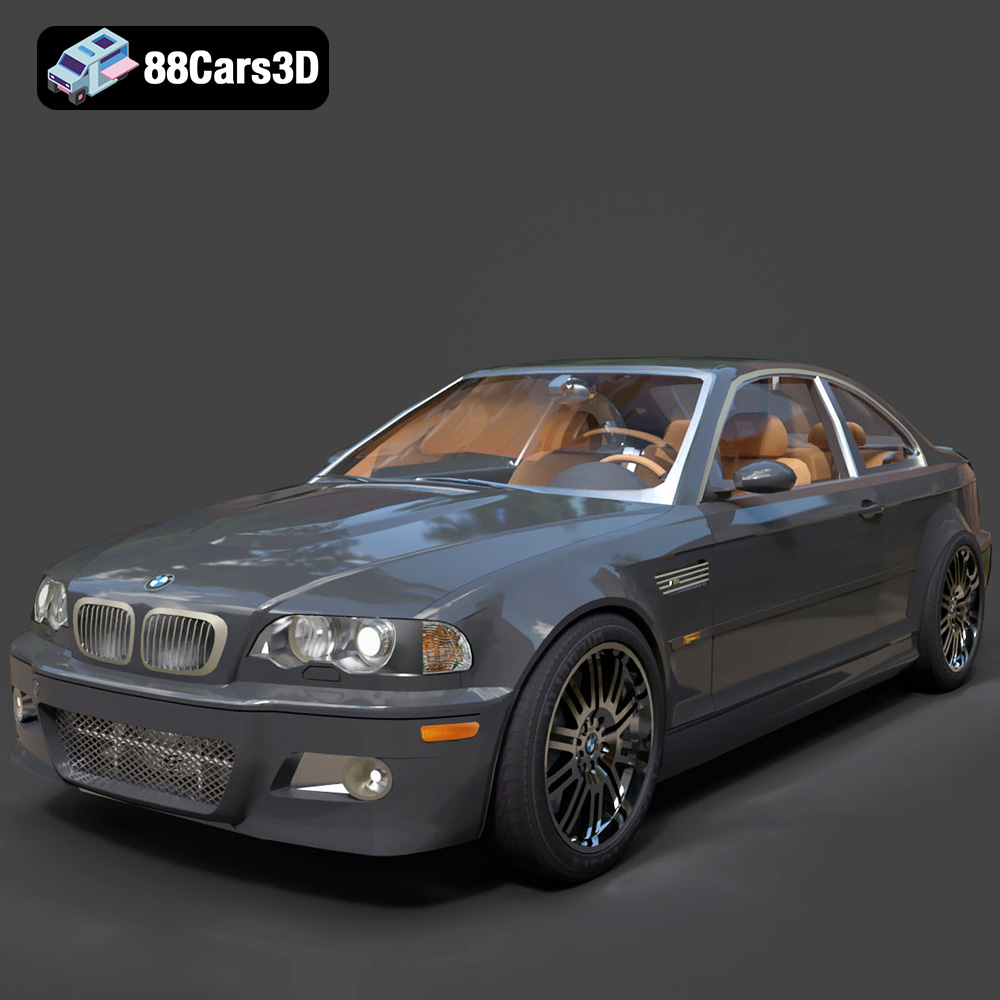
Download the BMW M3 E46 3D Model featuring iconic sports car design and detailed interior. Includes .blend, .fbx, .obj, .glb, .stl, .ply, .unreal, and .max formats for rendering, simulation, and game development.
Price: $16.99
View Product

Texture: Yes
Material: Yes
Download the BMW i3 Coupe 3D Model featuring its iconic electric design and compact urban styling. Includes .blend, .fbx, .obj, .glb, .stl, .ply, .unreal, and .max formats for rendering, simulation, and game development.
Price: $17.99
View Product

Texture: Yes
Material: Yes
Download the BMW 645ci 3D Model featuring a sleek, detailed exterior and optimized interior. Includes .blend, .fbx, .obj, .glb, .stl, .ply, .unreal, and .max formats for rendering, simulation, and game development.
Price: $10.79
View Product
Texture: Yes
Material: Yes
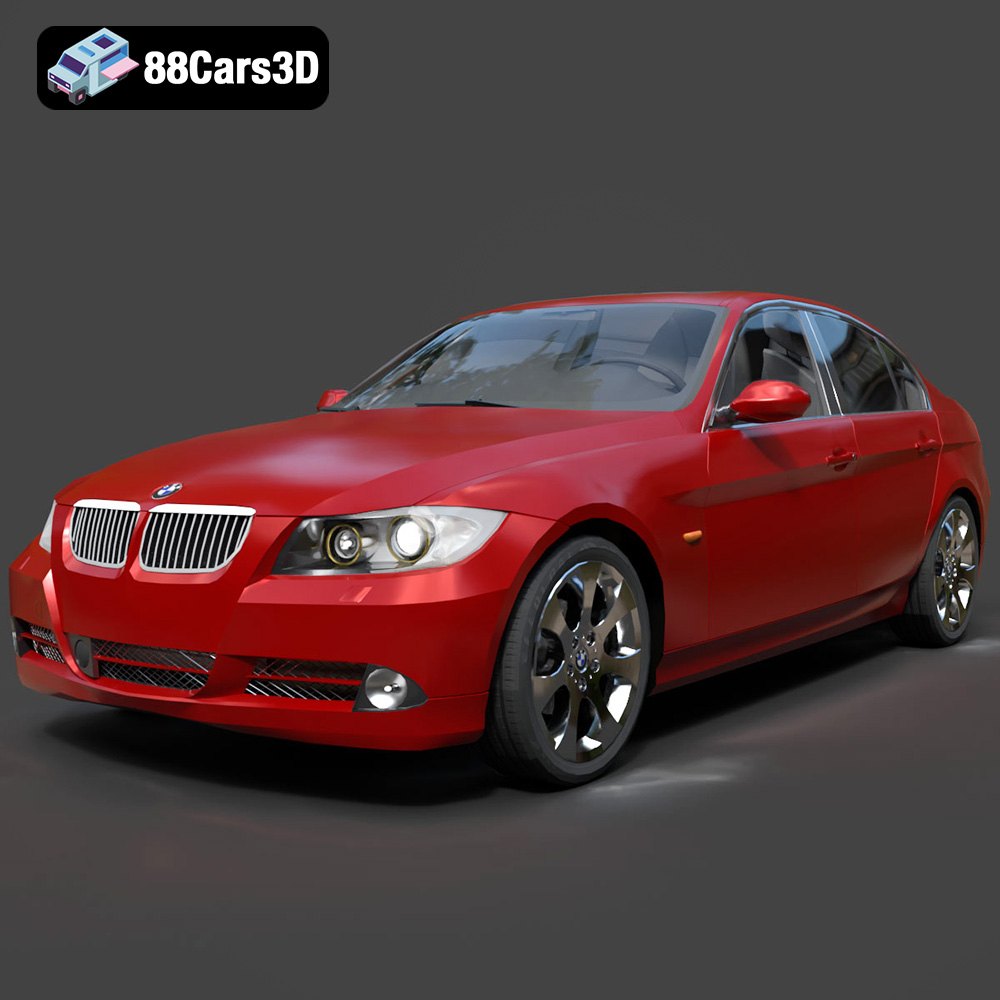
Download the BMW 330i E90 3D Model featuring a detailed exterior, an optimized interior, and accurate mechanical components. Includes .blend, .fbx, .obj, .glb, .stl, .ply, .unreal, and .max formats for rendering, simulation, and game development.
Price: $14.79
View Product
Texture: Yes
Material: Yes
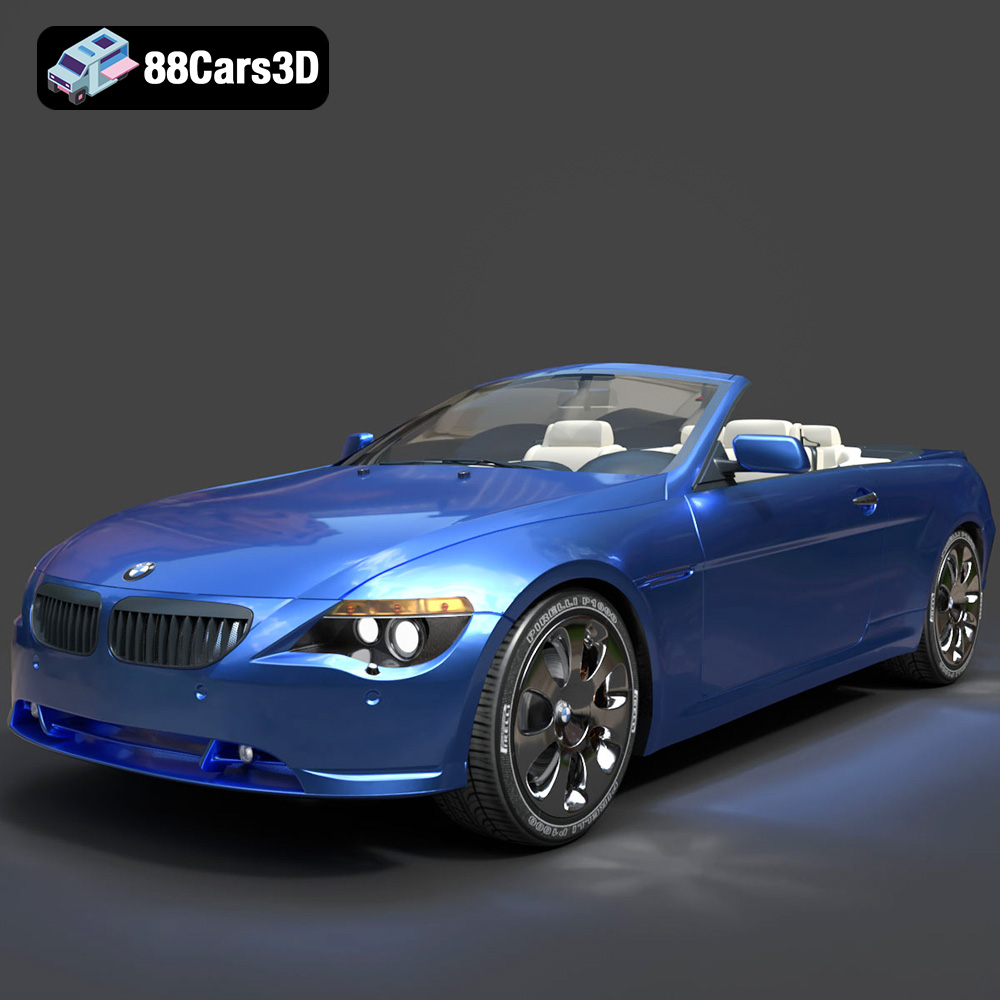
Download the BMW 6 Series Convertible 3D Model featuring clean geometry, realistic detailing, and a fully modeled interior. Includes .blend, .fbx, .obj, .glb, .stl, .ply, .unreal, and .max formats for rendering, simulation, and game development.
Price: $14.99
View Product
Texture: Yes
Material: Yes
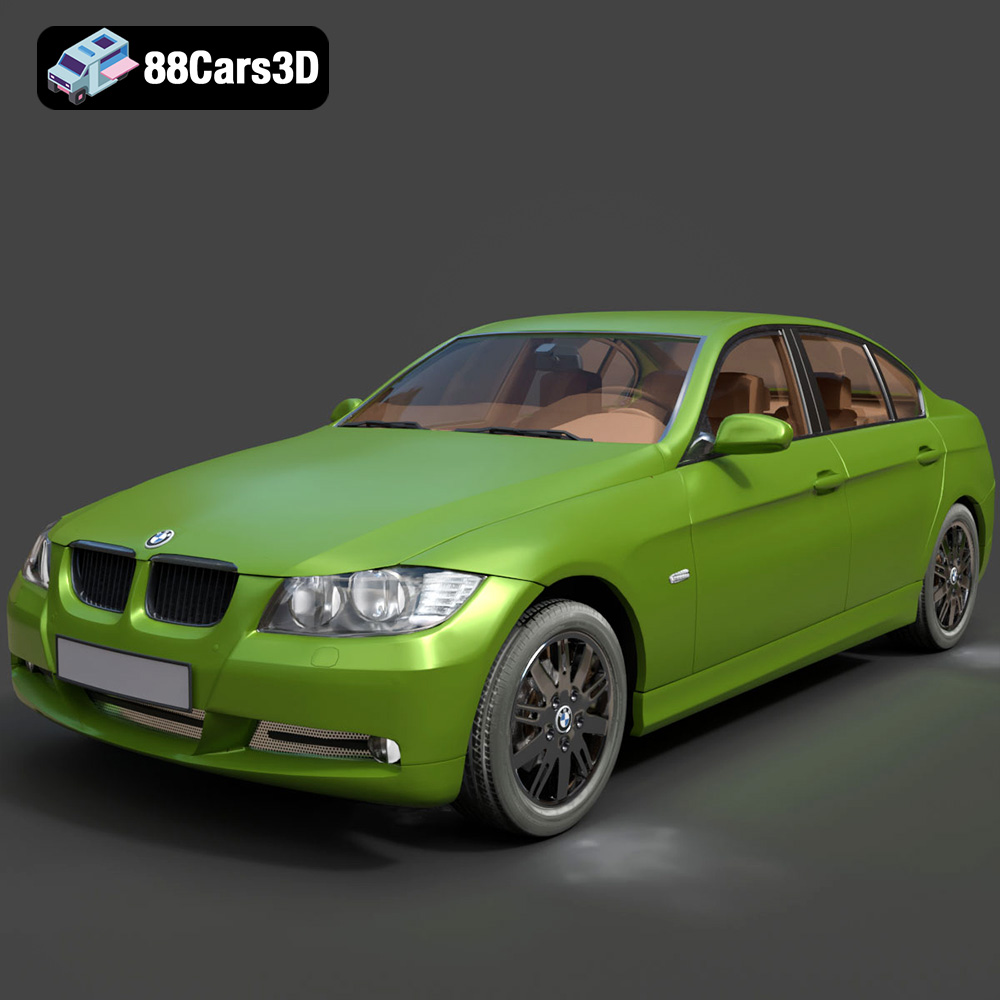
Download the BMW 3-005 3D Model featuring a sleek design, detailed exterior and interior. Includes .blend, .fbx, .obj, .glb, .stl, .ply, .unreal, and .max formats for rendering, simulation, and game development.
Price: $14.99
View Product

Texture: Yes
Material: Yes
Download the BMW Vision Effecient Dynamics-007 3D Model featuring a sleek, futuristic design and hybrid concept aesthetics. Includes .blend, .fbx, .obj, .glb, .stl, .ply, .unreal, and .max formats for rendering, simulation, and game development.
Price: $14.99
View Product

Texture: Yes
Material: Yes
Download the BMW i8 2015 3D Model featuring clean geometry, realistic detailing, and a fully modeled interior. Includes .blend, .fbx, .obj, .glb, .stl, .ply, .unreal, and .max formats for rendering, simulation, and game development.
Price: $12.99
View Product

Texture: Yes
Material: Yes
Download the BMW 4 Series F32 3D Model featuring clean geometry, realistic detailing, and a fully modeled interior. Includes .blend, .fbx, .obj, .glb, .stl, .ply, .unreal, and .max formats for rendering, simulation, and game development.
Price: $12.99
View Product


