⚡ FLASH SALE: Get 60% OFF All Premium 3D & STL Models! ⚡

The world of 3D printing has opened up incredible avenues for automotive enthusiasts and model makers. From creating detailed replicas of classic cars to prototyping custom parts, the possibilities are vast. At 88cars3d.com, we understand that true authenticity and personalization lie in the intricate details. This is where adding specific elements like car logos, emblems, and unique custom touches to your 3D printable car models in STL format becomes paramount. But how do you achieve this with precision and quality, ensuring your final prints are a true representation of your vision? This guide will delve deep into the technical workflows, software techniques, and best practices for seamlessly integrating these critical details into your STL files, transforming a good model into a spectacular one. We’ll explore mesh manipulation, texture mapping concepts, and preparation strategies to ensure your customized models are not just visually appealing but also 3D print-ready.
Before we dive into adding details, it’s crucial to understand the nature of the STL (STereoLithography) file format. STL is the de facto standard for 3D printing, representing a 3D object’s surface geometry as a collection of triangular facets. Each facet is defined by its three vertices and a normal vector, indicating the outward direction of the surface. This triangulation is fundamental to how 3D printers interpret and build objects layer by layer. However, STL files inherently lack color, texture, or material information. This means that logos and emblems must be physically modeled into the geometry of the STL itself.
The resolution of an STL file directly impacts the smoothness of curves and the ability to represent fine details. A low-polygon STL might struggle to capture the subtle curves of a brand emblem, resulting in a jagged or blocky appearance after printing. Conversely, an excessively high-polygon model can lead to enormous file sizes, making slicing and printing cumbersome. The key is finding the right balance. When preparing to add details, it’s often beneficial to start with an STL file that already possesses a reasonable level of detail, especially in areas where emblems will be placed. Platforms like 88cars3d.com strive to provide models with clean, well-structured meshes that are optimized for 3D printing, making the process of adding further details significantly easier.
For successful 3D printing, an STL file must be “manifold,” meaning it represents a watertight, solid object with no holes or self-intersections. When you add new geometry, such as a raised logo, it’s imperative to ensure the resulting mesh remains manifold. This involves careful merging and cleanup of vertices and edges where the new geometry interfaces with the existing model. Non-manifold geometry is a common cause of printing failures, leading to slicing errors and incomplete prints. Understanding basic mesh topology – how vertices, edges, and faces connect – is therefore essential for successful model modification.
The most robust and common method for adding logos and emblems to STL files is to model them directly into the 3D geometry. This ensures they are a permanent part of the model and will print as solid features. This technique is ideal for raised or debossed elements.
Begin by importing your chosen car model’s STL file into a 3D modeling software. Popular choices for this task include Blender (free and powerful), Autodesk Meshmixer (excellent for mesh editing and repair), or professional CAD software like Fusion 360 or SolidWorks, though these often require converting the STL to a surface or solid body first.
* **Initial Inspection:** Before making any changes, perform a thorough inspection of the base model’s mesh. Check for any existing imperfections or non-manifold geometry that could complicate the addition of new elements. Software like Meshmixer has built-in tools to detect and often repair these issues.
* **Defining Placement Areas:** Identify the precise locations where logos or emblems will be applied. For instance, a grille emblem might sit on a slightly curved surface. You may need to subtly flatten or sculpt this area to provide a clean surface for your new geometry.
There are several approaches to creating the geometry for your emblems:
* **Vector-Based Extrusion:** If you have a vector graphic (SVG) of the logo, you can import it into software like Blender. Convert the SVG to a mesh and then extrude it to give it depth. This creates clean, precise shapes. You can then position this extruded logo onto your car model.
* **Manual Sculpting/Modeling:** For more complex or irregular shapes, you might model the emblem from scratch. Use basic modeling tools (extrusion, beveling, sculpting) to build the logo’s form. You can often use reference images as blueprints within your modeling software.
* **Boolean Operations:** In some cases, you can use Boolean operations (union, difference, intersection) to merge pre-modeled emblem geometry with the car model. However, Boolean operations can sometimes create messy topology, so careful mesh cleanup is always required afterward.
Once your emblem geometry is created, the critical step is to seamlessly attach it to the car model.
* **Positioning and Scaling:** Accurately position and scale the emblem geometry to fit its designated location on the car. Ensure it aligns correctly with any curvature.
* **Merging Vertices:** The most crucial part of ensuring a watertight mesh is merging the vertices of the emblem geometry with the vertices of the car model where they meet. In Blender, this is done using the “Merge Vertices” command (often ‘M’ key) after selecting the overlapping vertices. In Meshmixer, tools like “Combine” followed by “Auto Repair” can help.
* **Checking for Manifold Errors:** After merging, re-run mesh analysis tools to confirm the combined object is still manifold. Look for any new holes or internal faces that may have been created.
This method ensures that the logo is physically part of the print, offering excellent detail and durability. It’s the preferred approach for creating raised badges or deeply etched emblems.
While not directly modeling geometry, techniques involving textures and displacement maps can simulate highly detailed logos and emblems, particularly for smoother, recessed, or finely engraved details. This method is more akin to how game assets are created and can be effective for adding logos that don’t require significant physical relief.
For workflows involving painting or adding decals after printing, high-resolution textures can be invaluable. You can UV unwrap your car model and apply a texture map containing the logos. While this doesn’t embed the logo into the STL geometry, it provides a perfect guide for post-processing.
Displacement mapping uses a grayscale image (a displacement map) to tell the renderer or slicer how much to move the surface along its normals. A white pixel represents maximum displacement, black represents no displacement, and grays represent intermediate values.
* **Creating Displacement Maps:** You can create displacement maps in image editing software (like Photoshop or GIMP) or 3D sculpting software. Black areas will remain at the surface level, while white areas will be pushed outwards (or inwards for a debossed effect).
* **Applying to the Model:** In some advanced slicers or modeling software, you can apply a displacement map to your mesh. The software then modifies the geometry based on the map’s values. This is more computationally intensive and requires careful parameter tuning.
* **Slicer Support for Displacement:** Not all slicers directly support displacement mapping for STL generation. However, software like Blender can use displacement modifiers to actually alter the mesh geometry based on a texture map, creating a new, detailed STL file. This effectively turns a texture into actual geometry, albeit potentially with a very high polygon count.
**Important Note:** For direct 3D printing, using displacement maps that *modify the mesh* (as in Blender’s displacement modifier) is key. Relying solely on texture maps without geometry modification means the logo will only appear if painted on later.
* **Advantages:** Can achieve incredibly fine detail that might be difficult to model manually. Excellent for subtle surface details like etching or very shallow reliefs.
* **Disadvantages:** Can dramatically increase polygon count, leading to larger files and longer processing times. Requires software capable of applying and baking displacement effects into the mesh. Not all slicers handle highly detailed meshes from displacement well.
Regardless of the modeling method chosen, proper preparation of the logo/emblem geometry is crucial for a successful print. This involves ensuring the detail is printable and that the file remains optimized.
3D printers have inherent limitations regarding the smallest detail they can reproduce.
* **Nozzle Diameter (FDM):** For FDM printing, the minimum feature size is often related to the nozzle diameter. A typical 0.4mm nozzle struggles with details smaller than this. Raised elements should ideally be at least 0.4mm wide and have a thickness of at least 0.4mm to be reliably printed.
* **Layer Height:** The layer height also plays a role. A 0.1mm layer height can capture more vertical detail than a 0.2mm layer height.
* **Resin Printers:** Resin printers (SLA/DLP) offer much higher resolution, capable of reproducing very fine details. However, extremely thin or delicate features can still be prone to failure during printing or curing. Always check the manufacturer’s recommended minimum feature size.
Ensure that any extruded or embossed logo has sufficient wall thickness. Thin walls can break off easily during printing, support removal, or handling. Aim for a minimum wall thickness that is at least 2-3 times your nozzle diameter for FDM, or a few pixels/layers for resin printers, depending on the resin’s properties.
* **Overhangs:** If your logo design involves significant overhangs (e.g., the top of a raised letter), you will need to consider how supports will interact with it. Sometimes, orienting the model differently or splitting the emblem from the car can simplify support generation.
* **Support Interface:** Fine details like emblems can be difficult to remove supports from without damaging them. Using slicer settings that create easily breakable supports (e.g., tree supports, or adjusting support density and Z-distance) is important. Experimentation is key here.
Once your model is complete and repaired, export it as an STL file.
* **ASCII vs. Binary:** Binary STL files are significantly smaller and generally preferred.
* **Resolution Settings:** When exporting, most software allows you to control the tessellation (how finely the mesh is triangulated). Higher values yield smoother curves but larger files. Find a balance that represents your details accurately without creating an unmanageably large file. Aim for a polygon count that captures the detail without excessive file size. For example, a typical car model might range from 500,000 to 2 million polygons.
The slicer software is your final gatekeeper before the printer. Correct slicing parameters are crucial for translating your detailed STL into a successful physical print.
* **Layer Height:** For models with intricate logos and emblems, a smaller layer height (e.g., 0.1mm or 0.12mm for FDM) will significantly improve the vertical resolution and the definition of your details. However, this comes at the cost of increased print time.
* **Print Speed:** Printing small details, like the initial layers of an emblem or fine lettering, often requires slower print speeds. Reducing the outer wall speed and potentially the overall print speed can help the printer accurately lay down the material and capture sharp edges.
* **Support Placement:** Decide whether supports are needed for the emblems themselves or just for the car body. Sometimes, strategically rotating the model can eliminate the need for supports on delicate emblems.
* **Support Type:** Experiment with different support types. “Tree” supports (available in Cura and PrusaSlicer) often offer better accessibility for removal around fine details compared to standard grid supports.
* **Support Settings:** Fine-tune support density, Z-distance (gap between support and model), and interface layers. A slightly larger Z-distance can make removal easier but may reduce surface quality on the underside of the detail.
* **Wall Count (Perimeters):** For small, raised details like emblems, increasing the number of walls (perimeters) can significantly improve their strength and definition. Using 3-4 walls instead of the standard 2 can make a big difference.
* **Infill Density:** While infill is primarily for internal structure, very low infill densities (e.g., <10%) can sometimes lead to surface imperfections or "zits" on the outer layer, especially around detailed areas. A moderate infill (15-20%) usually provides a good balance.
* **Ironing (Cura):** This feature can help smooth the top surfaces of layers, which can be beneficial for the flat tops of embossed elements or the surface around a debossed logo.
* **Micro-Layering/Variable Layer Height:** Some slicers allow for variable layer heights, where the printer automatically uses smaller layer heights for highly detailed sections and larger ones for less critical areas. This can save considerable print time while preserving detail.
Once your print is complete, post-processing is where you truly bring your customized car model to life, especially when dealing with added logos and emblems.
This is often the most delicate stage.
* **Tools:** Use sharp hobby knives, flush cutters, needle-nose pliers, and sometimes dental picks for careful removal.
* **Technique:** Remove supports slowly and methodically. For FDM prints, gently breaking away larger sections first before tackling smaller, attached pieces can prevent damage. For resin prints, supports are typically removed after washing and before final curing, often with cutters or by carefully snapping them off.
* **Cleaning Up Marks:** Small nubs or marks left by supports can usually be sanded down.
* **Graduated Sanding:** Start with coarser grit sandpaper (e.g., 220-400 grit) to remove support marks and layer lines, then move to finer grits (e.g., 600, 1000, 2000+) for a smooth finish. Wet sanding can be very effective for achieving ultra-smooth surfaces.
* **Filling Imperfections:** Small gaps or blemishes can be filled with modeling putty, epoxy putty, or even a slurry of sanding fluid mixed with filler.
* **Priming:** Applying a primer coat is essential before painting. It reveals any remaining imperfections and provides a uniform surface for paint adhesion.
This is where your meticulously modeled details shine.
* **Masking:** Use high-quality masking tape (e.g., Tamiya tape) to carefully mask off surrounding areas. This is crucial for achieving crisp lines between different colored emblems or between the emblem and the car body.
* **Paint Application:** Use acrylic model paints, spray paints, or an airbrush for application. Apply thin, even coats rather than one thick one to avoid obscuring fine details.
* **Hand Painting:** For very small or intricate logos where masking is impractical, careful hand-painting with fine brushes can be the best approach.
For certain effects, especially replicating manufacturer decals, custom water-slide decals can be printed and applied. This requires a very smooth surface finish on the model and the logo area.
* **Creating Decals:** Design your logo in graphic software, print it onto special water-slide decal paper (available from hobby suppliers), and seal it with a clear coat.
* **Application:** Submerge the decal in water, slide it onto the prepared surface, position it, and gently wick away excess water. Seal with another clear coat.
By combining precise 3D modeling with careful slicing and dedicated post-processing, you can add authentic and stunning logos, emblems, and custom details to your 3D printed car models. Whether you’re downloading high-quality, print-ready STL files from marketplaces like 88cars3d.com or customizing existing models, mastering these techniques will elevate your creations from simple prints to museum-quality replicas. The pursuit of detail is what separates a good model from an exceptional one, and with these workflows, your 3D printed automotive masterpieces will truly stand out.
Adding custom logos, emblems, and intricate details transforms a standard 3D printed car model into a personalized work of art. We’ve explored the foundational understanding of STL files and mesh topology, walked through direct modeling techniques using software like Blender and Meshmixer, touched upon displacement mapping for simulated detail, and highlighted crucial preparation steps like checking wall thickness and feature size. Furthermore, we’ve detailed the critical slicing parameters and post-processing workflows, from support removal to painting, that ensure these fine details are not only present but are also visually striking and durable.
Remember, the key lies in meticulous planning and execution. Start with clean, well-structured STL files, such as those found on 88cars3d.com, which are already optimized for printing. When adding your own details, prioritize manifold integrity and printable feature sizes. Experiment with your slicer settings, particularly layer height, speed, and support structures, to achieve the best results for your chosen printer and material. Finally, invest time in post-processing – sanding, priming, and painting are where your detailed emblems truly come to life. By applying these technical insights and practical workflows, you can confidently tackle the challenge of adding intricate details, ensuring your 3D printed car models boast an unparalleled level of authenticity and craftsmanship. Happy printing!

Texture: Yes
Material: Yes
Download the BMW 4 Series Coupe M Sport 2014 3D Model featuring clean geometry, realistic detailing, and a fully modeled interior. Includes .blend, .fbx, .obj, .glb, .stl, .ply, .unreal, and .max formats for rendering, simulation, and game development.
Price: $14.99

Texture: Yes
Material: Yes
Download the Bentley Brooklands 2008 3D Model featuring clean geometry, realistic detailing, and a fully modeled interior. Includes .blend, .fbx, .obj, .glb, .stl, .ply, .unreal, and .max formats for rendering, simulation, and game development.
Price: $14.99
Texture: Yes
Material: Yes
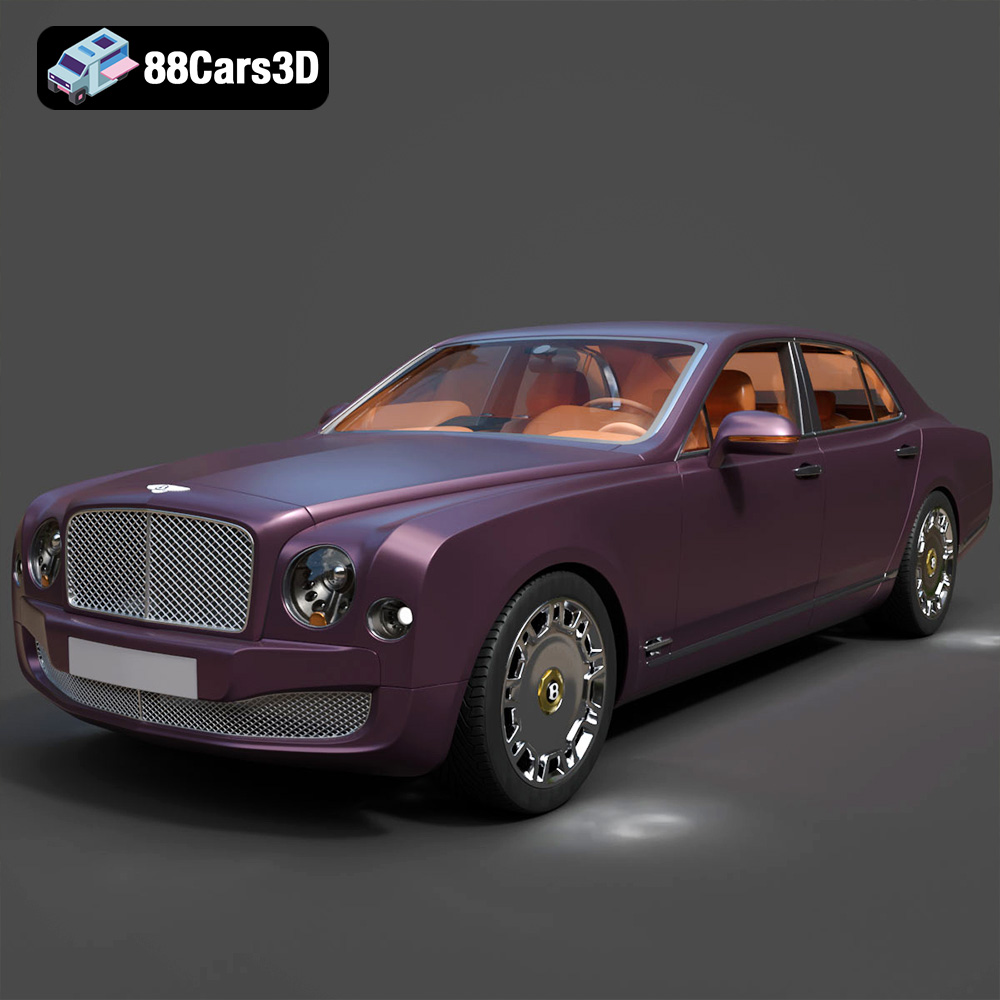
Download the Bentley Mulsanne Luxury Sedan 3D Model featuring clean geometry, realistic detailing, and a fully modeled interior. Includes .blend, .fbx, .obj, .glb, .stl, .ply, .unreal, and .max formats for rendering, simulation, and game development.
Price: $14.99

Texture: Yes
Material: Yes
Download the Bentley Continental GT 2011 3D Model featuring clean geometry, realistic detailing, and a fully modeled interior. Includes .blend, .fbx, .obj, .glb, .stl, .ply, .unreal, and .max formats for rendering, simulation, and game development.
Price: $14.99

Texture: Yes
Material: Yes
Download the Bentley Continental Flying Spur 3D Model featuring clean geometry, realistic detailing, and a fully modeled interior. Includes .blend, .fbx, .obj, .glb, .stl, .ply, .unreal, and .max formats for rendering, simulation, and game development.
Price: $14.99
Texture: Yes
Material: Yes
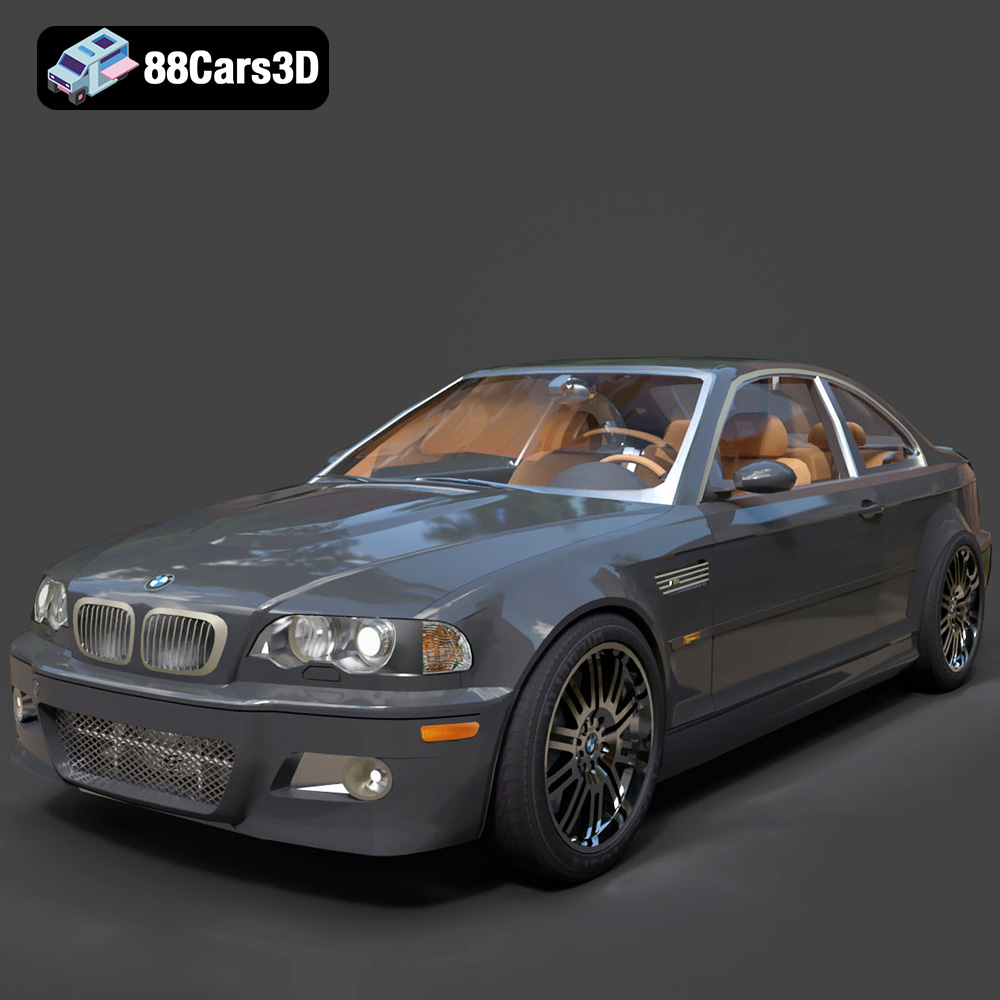
Download the BMW M3 E46 3D Model featuring iconic sports car design and detailed interior. Includes .blend, .fbx, .obj, .glb, .stl, .ply, .unreal, and .max formats for rendering, simulation, and game development.
Price: $16.99

Texture: Yes
Material: Yes
Download the BMW i3 Coupe 3D Model featuring its iconic electric design and compact urban styling. Includes .blend, .fbx, .obj, .glb, .stl, .ply, .unreal, and .max formats for rendering, simulation, and game development.
Price: $17.99

Texture: Yes
Material: Yes
Download the BMW 645ci 3D Model featuring a sleek, detailed exterior and optimized interior. Includes .blend, .fbx, .obj, .glb, .stl, .ply, .unreal, and .max formats for rendering, simulation, and game development.
Price: $10.79
Texture: Yes
Material: Yes
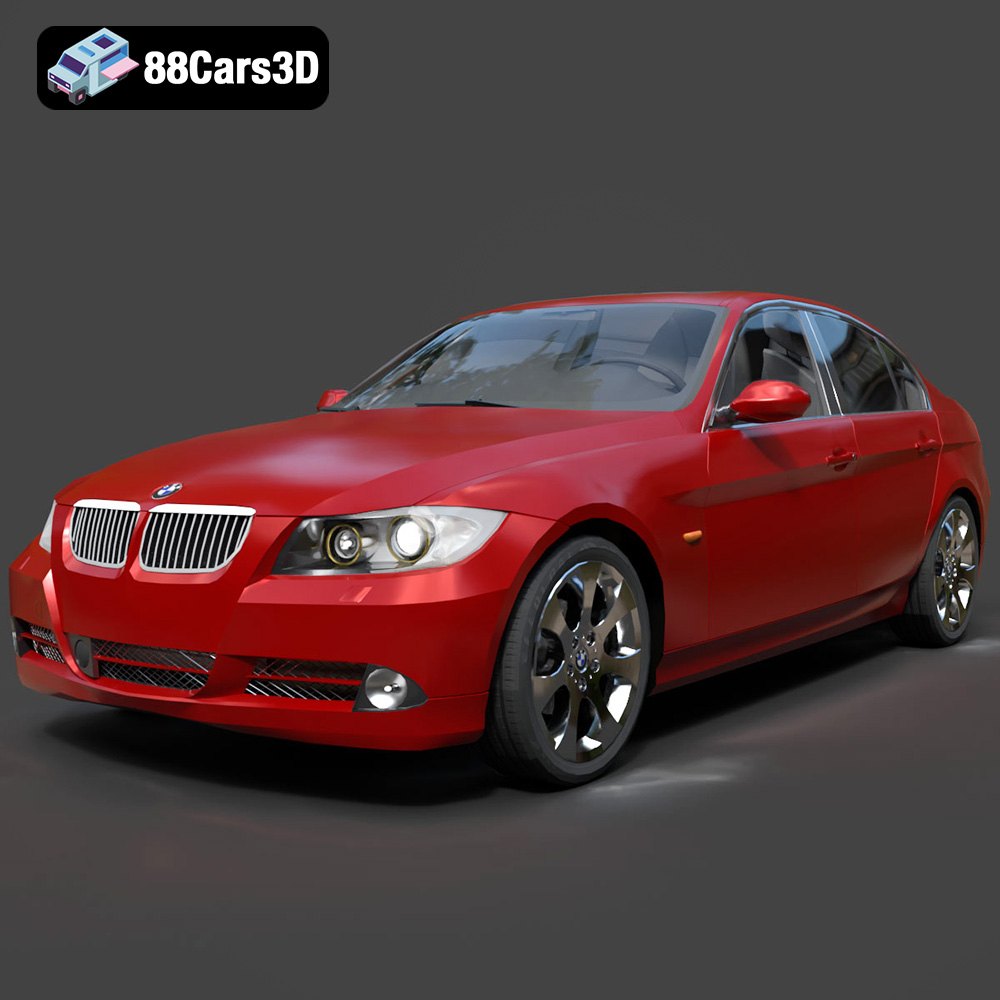
Download the BMW 330i E90 3D Model featuring a detailed exterior, an optimized interior, and accurate mechanical components. Includes .blend, .fbx, .obj, .glb, .stl, .ply, .unreal, and .max formats for rendering, simulation, and game development.
Price: $14.79
Texture: Yes
Material: Yes
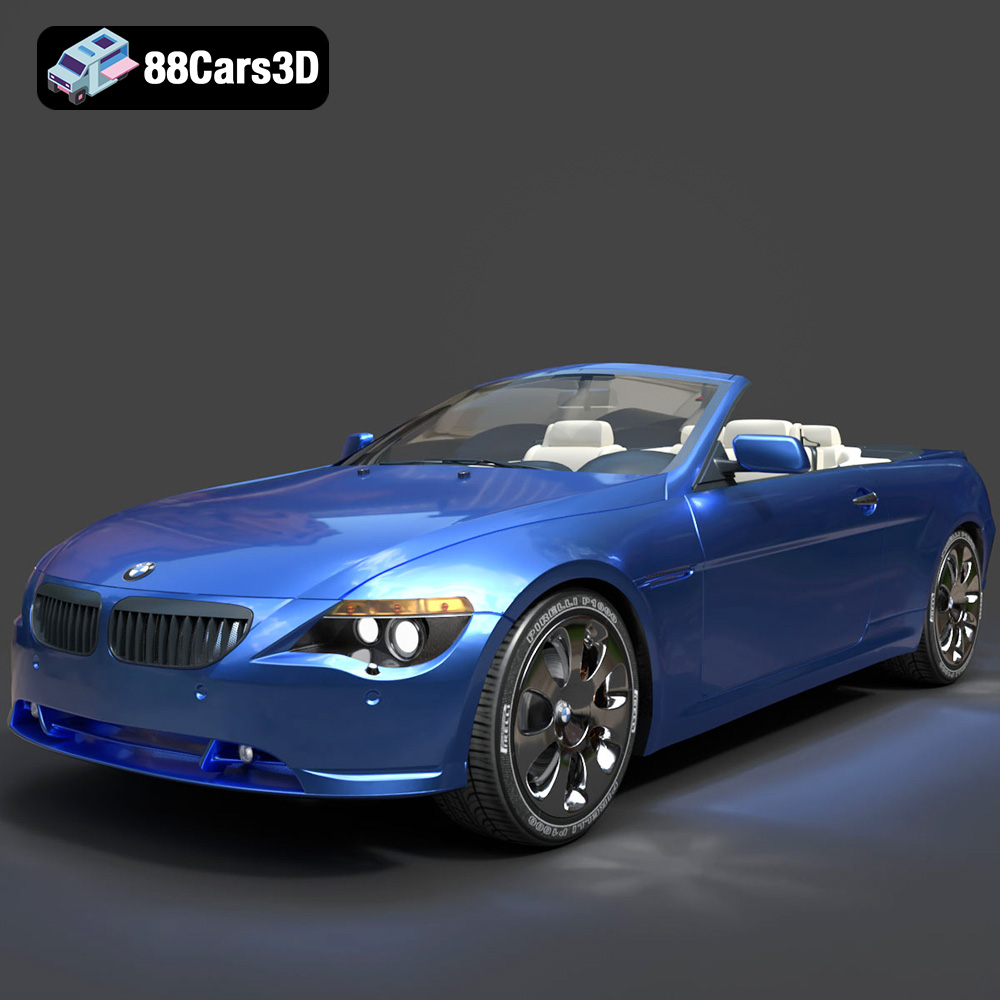
Download the BMW 6 Series Convertible 3D Model featuring clean geometry, realistic detailing, and a fully modeled interior. Includes .blend, .fbx, .obj, .glb, .stl, .ply, .unreal, and .max formats for rendering, simulation, and game development.
Price: $14.99

