⚡ FLASH SALE: Get 60% OFF All Premium 3D & STL Models! ⚡

Bringing a static 3D car model to life with dynamic animation is one of the most rewarding challenges in the world of 3D artistry. However, simply having a stunning model isn’t enough; it requires a robust, flexible, and efficient rigging system. Rigging is the crucial process of creating a digital skeletal structure (bones or joints) and control mechanisms that allow animators to manipulate the model in a realistic and intuitive way. Whether you’re aiming for a high-fidelity cinematic car chase, a responsive vehicle in a game engine, or an interactive AR/VR experience, the quality of your rig will directly impact the believability and fluidity of your animation. This comprehensive guide will delve deep into the best practices for rigging automotive models, covering everything from foundational mesh preparation to advanced control systems and optimization techniques. We’ll explore software-specific approaches, industry tips, and common pitfalls to ensure your 3D car models are not just visually impressive but also animation-ready and production-friendly.
Before even thinking about bones and constraints, a successful rig begins with a meticulously prepared 3D model. Neglecting this crucial initial phase can lead to frustrating issues down the line, such as incorrect deformations, broken hierarchies, or difficulties in exporting to different platforms. A clean, well-structured model provides a stable canvas for the rigging process, ensuring that every component behaves as expected.
The underlying geometry of your car model is paramount. Ideal automotive models, especially those sourced from platforms like 88cars3d.com, should exhibit clean, all-quad topology with efficient edge flow. Quads (four-sided polygons) are preferred over tris (three-sided) or n-gons (more than four-sided) because they deform more predictably and are easier to work with in subdivision surfacing workflows. For rigging purposes, consistent polygon density is key, particularly around areas that will articulate, such as door seams, wheel wells, and suspension components. Ensure your mesh is manifold, meaning it has no holes, non-planar faces, or overlapping geometry, as these can cause errors during skinning or when exporting to game engines. It’s also wise to check for duplicate vertices or faces and merge them to simplify the mesh.
For example, in Blender 4.4 (as detailed in the official documentation at https://docs.blender.org/manual/en/4.4/), tools like ‘Merge by Distance’ (found under Mesh > Clean Up) are invaluable for removing duplicate vertices. Regularly performing mesh integrity checks using tools available in most 3D software (e.g., ‘Cleanup’ in 3ds Max or ‘Mesh Cleanup’ in Maya) can save significant headaches. Aim for a sensible polygon count; while high-res models are great for rendering, game assets might require retopology or optimized versions with lower polygon counts that still maintain the car’s silhouette.
Each individual component of your car model (e.g., each wheel, door, hood, trunk, steering wheel) needs its pivot point precisely located at its natural rotation axis. An incorrectly placed pivot means your door will swing from its center instead of its hinge, or your wheel will wobble instead of rotating cleanly. For a wheel, the pivot should be at its exact center, aligned with the axle. For a car door, it should be along the hinge line. In most 3D software:
Beyond individual pivots, establishing a logical object hierarchy is critical. A common hierarchy for a car rig starts with a master null or group object at the car’s center. The main body (chassis) is parented to this master. Then, components like doors, hood, trunk, and the entire wheel assemblies (including brake calipers, disks, and tires) are parented to the chassis. This setup ensures that when the master control moves, the entire car moves, and when the chassis moves, all its children move along, maintaining their relative positions. Properly scaling and freezing transformations (applying scale/rotation) on all mesh objects before rigging also prevents unexpected scaling issues later.
These three elements are the heart of a believable car rig. Their intricate movements define the vehicle’s interaction with its environment and convey a sense of weight and realism. Getting these right is paramount for any automotive animation.
A basic wheel rig involves a bone or null object for each wheel, placed at its rotational center. The tire, rim, and brake assembly are parented to this wheel bone. When animating, the wheel bone rotates, and its children follow. However, for a more advanced rig, you’ll want to implement steering and automatic rotation based on the car’s movement. For steering, the front wheels need to rotate around a vertical axis. This can be achieved by parenting the wheel bone to another “steering” bone or null that rotates on its local Y-axis (or corresponding vertical axis). A master steering control can then drive the rotation of both front steering bones, often with a driver or expression to link them correctly, ensuring they turn in unison but in opposite directions from a central pivot if simulating a basic Ackermann steering.
For automatic wheel rotation, a common technique involves using drivers or expressions to link the wheel’s rotation to the car’s forward motion. If the car moves forward by 1 unit, the wheels rotate by a calculated amount (e.g., 360 degrees / (Pi * wheel_diameter)). This requires knowing the wheel’s diameter and linking the car’s global translation to the wheel’s local rotation. Many setups also include a ‘ground contact’ bone that sits beneath each wheel. This bone can be constrained to the ground plane, allowing the suspension system to react dynamically to terrain changes.
Beyond simply rotating the front wheels, a realistic steering rig often involves replicating the mechanical action of a rack and pinion system. This is where drivers and constraints become powerful. A main steering bone or control object, typically represented by a stylized curve at the car’s center, can be set up to rotate along a global Z-axis (or corresponding axis). This control then drives other elements:
For greater realism, consider implementing an Ackermann steering geometry approximation, where the inner wheel turns at a sharper angle than the outer wheel during a turn. This can be achieved with more complex drivers or custom scripts, ensuring the wheels maintain proper contact with the ground throughout the turn. It’s a subtle detail, but one that significantly enhances the realism of the animation.
Car suspension rigs range from simple piston-based setups to complex, multi-link systems. For most applications, a simplified but effective approach involves an Inverse Kinematics (IK) chain. Each wheel assembly can have an IK chain connecting its ‘ground contact’ bone to the chassis. This allows the wheel to move up and down independently, with the IK solver calculating the necessary joint rotations for the suspension arms.
A typical independent suspension rig might involve:
The ‘ground contact’ point for each wheel can be controlled by an empty or a locator that the animator can move up and down, simulating bumps or uneven terrain. This movement then drives the IK chain, causing the suspension components to compress and extend. For more advanced setups, springs can be simulated using physics constraints or even dynamic systems if the software supports it, although for purely animation purposes, IK with carefully tuned limits and drivers often suffices. Ensure all suspension components have their pivots correctly aligned and their local axes oriented for easy manipulation.
Beyond the fundamental movements of the wheels and steering, a car rig needs to account for all its articulated parts. These smaller, often overlooked details contribute immensely to the overall interactive experience, whether it’s opening a car door in a virtual showroom or showcasing the engine in a promotional video.
Doors, hoods, and trunks typically operate on a simple hinge mechanism. The key to rigging these effectively lies in accurate pivot placement and the judicious use of constraints. Each hinged component should have its own bone or control object (often a Null or Empty) positioned precisely along its hinge axis. This axis should correspond to the real-world hinge of the car part. For a car door, this means the pivot will be at the edge where the door connects to the chassis, running vertically. For a hood, it will be along the cowl line, allowing it to pivot upwards and forwards.
Once the pivot is correctly set, the mesh of the door, hood, or trunk is parented directly to its respective bone/control. To prevent unrealistic over-rotation, ‘Limit Rotation’ constraints are essential. These constraints allow you to define minimum and maximum angles for rotation along specific axes. For instance, a car door might be limited to rotate only on its Y-axis (local to the door) from 0 degrees (closed) to approximately 90 degrees (fully open). This ensures that animators can only move the parts within their physically plausible range, simplifying the animation process and preventing broken-looking motions.
For more complex hinge designs, such as those found on modern luxury car doors with multiple pivot points, consider using a short IK chain or a ‘look-at’ constraint setup to simulate the multi-axis movement. However, for most automotive models, a single, correctly placed pivot with rotation limits is sufficient.
Some car designs feature more elaborate opening mechanisms than simple hinges. For example, many hoods and trunks are supported by hydraulic struts. To rig these:
Similarly, certain vehicles might have sliding doors (e.g., vans) or complex transforming elements. Sliding doors can be rigged with a ‘Path Constraint’ or a combination of ‘Limit Location’ and ‘Track To’ constraints, ensuring the door follows a specific linear or slightly curved path while maintaining its orientation. For highly intricate transforming elements, a combination of multiple pivot points, driven keys, and carefully orchestrated constraints will be necessary. In such cases, breaking down the complex movement into smaller, manageable stages and rigging each stage independently before linking them with drivers is a robust approach.
Don’t overlook the interior details that can enhance realism in close-up shots or first-person views. The steering wheel, of course, needs to rotate in sync with the front wheels (or a main steering control), as discussed previously. This is a straightforward parenting or driver-based relationship. Pedals (accelerator, brake, clutch) require simple hinged rotations at their base, often with ‘Limit Rotation’ constraints to define their range of motion. The gear shifter can be rigged with a bone at its pivot point, allowing for rotational and sometimes translational movement (e.g., for H-pattern shifters). Custom attributes can be set up on a master control to drive the position of the gear shifter through different gears.
Even smaller details like dashboard buttons or indicators can be given simple controls for animation, perhaps by changing their material visibility or texture via drivers. The level of detail here depends entirely on the intended use case and how much of the interior will be visible or interactive in the final animation or game.
A well-rigged car is only as good as its controls. Intuitive and robust control systems empower animators to work efficiently and produce high-quality movements. Beyond the skeletal structure, the way an animator interacts with the rig defines its usability.
For complex rigs like an automotive model, direct manipulation of bones can be cumbersome and prone to errors. Instead, animators prefer to use custom control objects. These are typically simple curve shapes (circles, squares, arrows) that are easy to select and don’t render. These control objects don’t directly influence the mesh; instead, they are linked to the bones via constraints or drivers. For example, a large circle around the car can act as the main global mover, controlling the master bone. Smaller circles around the wheels can control their steering and suspension. Sliders and custom attributes can be added to a central control object (often a ‘Main_Car_Control’ null) to adjust parameters like:
In software like Blender, custom properties can be added to any object (e.g., the main car control empty) and then linked to bone transformations or constraints using drivers. This creates a clean interface in the N-panel (Transform properties) or even a custom UI panel (via Python scripting for advanced users) that simplifies the animation process significantly. The goal is to minimize direct bone manipulation and maximize control through intuitive, non-rendering objects and numerical inputs.
While rigging provides the mechanics, animation breathes life into the model. Animating a car isn’t just about moving it from point A to point B; it’s about conveying its weight, speed, and interaction with the environment. Key animation principles to consider:
Using a well-structured rig with independent controls for the body, suspension, and individual wheels makes it much easier to implement these nuanced animation principles, elevating the final result from mere movement to compelling performance.
When animating cars, several scenarios are frequently encountered, each benefiting from specific rigging considerations:
Always animate on the control objects, never directly on the bones themselves, unless you are working on very specific constraints or drivers. This keeps the animation layers clean and easy to modify. Test your rig frequently throughout the animation process to catch any issues early.
While cinematic renders can afford more complex rigs, game engines and real-time applications like AR/VR demand efficiency above all else. A well-optimized rig is essential for maintaining high frame rates and ensuring smooth performance in interactive environments.
Game engines have performance budgets, and excessive bone counts can quickly consume resources, leading to reduced frame rates. For a game-ready car, aim for the absolute minimum number of bones necessary to achieve the desired level of articulation. A typical optimized car rig might include:
This could sum up to around 20-30 bones for a reasonably complex game car, depending on the required articulation. For comparison, a high-fidelity cinematic car rig might have hundreds of bones. The hierarchy should be simple and direct. Avoid deep nesting of bones where possible, as this can increase calculation overhead. Each bone’s local axis orientation is crucial here as well, ensuring that transformations are performed efficiently by the engine.
In game engines like Unity and Unreal Engine, skeletal meshes are processed differently than static meshes, so an efficient skeleton directly impacts performance. Less complex skeletons mean faster matrix palette calculations during rendering.
Level of Detail (LOD) systems are critical for game optimization, allowing models to swap between different resolutions based on their distance from the camera. When rigging for LODs, it’s essential that the rig itself is compatible across all LOD levels. Ideally, all LOD meshes should share the same underlying skeletal structure. This means that while the polygon count of the meshes changes dramatically, the bone hierarchy and bone names remain consistent. This allows the engine to apply the same animations and transformations to all LOD levels without needing separate rigging data for each.
If a highly detailed component (e.g., a complex multi-link suspension) is only present in LOD0 and simplified significantly in LOD1 and beyond, ensure that the bones associated with those detailed parts still exist in the lower LODs (even if they don’t influence any geometry) or that their influence is appropriately transferred. A common strategy is to simplify the bone hierarchy itself for lower LODs if the animation fidelity allows, but this requires careful planning during the export process. Tools like FBX allow for embedding skeletal information alongside different mesh LODs, facilitating this process.
The FBX file format is the industry standard for transferring rigged and animated models between 3D software and game engines. Correct export settings are vital:
A common pitfall is forgetting to freeze transformations or apply scale to objects before exporting. This can lead to distorted models or incorrect pivot points in the game engine. Always double-check your model’s scale and rotations before hitting that export button. Regularly test exports to your target engine throughout the rigging and animation process to catch and fix issues early.
While the core rigging principles cover most needs, advanced scenarios or persistent issues require a deeper understanding of rigging mechanics and debugging techniques. Pushing the boundaries of what a car rig can do often means delving into more complex setups.
For truly dynamic and interactive car behaviors in games, rigs often need to interact seamlessly with physics engines (e.g., PhysX in Unreal Engine, Unity’s physics engine). Instead of purely animating the suspension, a common approach is to use the engine’s built-in vehicle physics system. Here, your rig serves as the visual representation, while the engine’s physics system calculates the actual wheel positions, suspension compression, and car body rotations based on forces, collisions, and user input.
The rigging needs to support this integration. For example, instead of animating the ‘ground contact’ bone for the suspension, the engine will determine the wheel’s vertical position. Your IK chain for the suspension will then need to be driven by the actual physics-calculated wheel position. This means the engine’s physics simulation dictates the bone transformations, which are then applied to your visual rig. This can involve creating ‘physics bones’ or colliders in your 3D software that correspond to the engine’s physics assets, ensuring proper alignment and scaling. The visual rig then follows these physics-driven bones, allowing for realistic bouncing, swaying, and collision responses without manual animation.
Even the most meticulously crafted rig can develop issues. Debugging is an essential part of the rigging workflow. Common problems include:
Validation tools are also invaluable. Many 3D software packages offer scripting capabilities (e.g., Python in Blender/Maya, MaxScript in 3ds Max) to write custom validation scripts that check for common rigging errors, such as un-weighted vertices, duplicate bone names, or bones outside their hierarchical limits. A simple test animation where the car performs extreme movements (full turns, maximum suspension compression, door openings) can quickly reveal weak points in the rig.
As projects grow, maintaining a single, monolithic car rig becomes challenging. Modular rigging approaches, where different parts of the car (e.g., the chassis, each wheel, each door) are rigged independently and then assembled, offer greater flexibility. This allows for easier updates, variations, and potential reuse of rig components across different car models sharing similar parts.
Furthermore, consider your asset pipeline. How will the rigged car be passed from the rigger to the animator, then to the game engine or renderer? Establishing clear naming conventions for bones, controls, and materials is vital for a smooth workflow. Using a consistent export preset in FBX is also a must. The ability to quickly iterate and update parts of the rig without breaking existing animations or requiring a full re-export is a sign of a robust and future-proof rigging strategy. Always document your rig clearly, detailing what each control does, its limits, and any specific animation instructions.
The journey of transforming a static 3D car model into an animated, interactive vehicle is a complex yet deeply rewarding process. From the meticulous preparation of your mesh to the creation of intuitive control systems and the careful optimization for real-time performance, every step plays a vital role in the final quality of your animation. By adhering to best practices in topology, pivot placement, constraint usage, and export settings, you equip your 3D car models with the skeletal and control infrastructure needed to perform realistically and efficiently.
Whether you’re crafting high-end cinematic sequences, developing immersive game experiences, or creating stunning visualizations, a robust and well-thought-out rig is the backbone of believable automotive animation. Remember to focus on clean hierarchies, optimized bone counts, and user-friendly controls to empower animators. For those looking to start with exceptionally detailed and animation-ready base models, platforms like 88cars3d.com offer high-quality 3D car models that provide an excellent foundation, allowing you to focus on the intricate and rewarding aspects of rigging and bringing these machines to life. Invest the time and effort into your rigging process, and you’ll unlock the full potential of your automotive creations, captivating audiences with dynamic and believable motion.

Texture: Yes
Material: Yes
Download the BMW 5 Series F10 3D Model featuring clean geometry, realistic detailing, and a fully modeled interior. Includes .blend, .fbx, .obj, .glb, .stl, .ply, .unreal, and .max formats for rendering, simulation, and game development.
Price: $14.99
Texture: Yes
Material: Yes
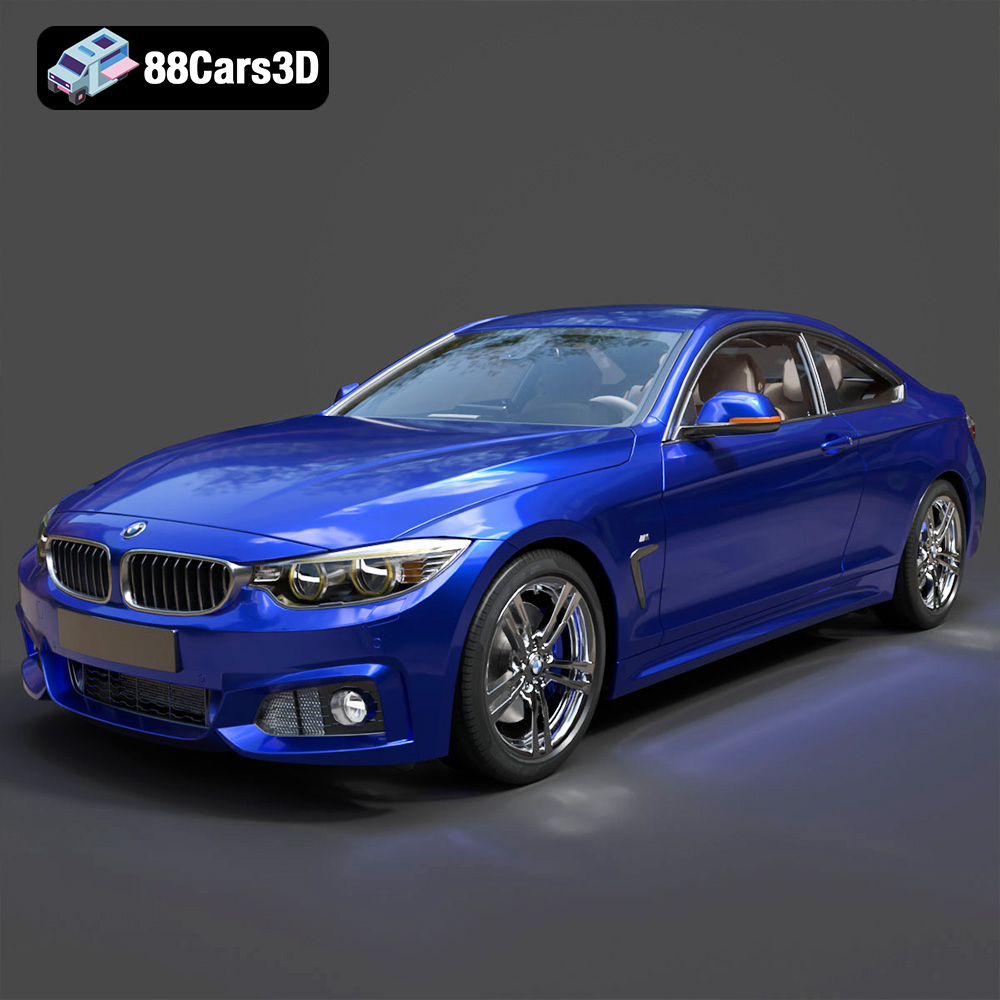
Download the BMW 4 Series Coupe M Sport 2014 3D Model featuring clean geometry, realistic detailing, and a fully modeled interior. Includes .blend, .fbx, .obj, .glb, .stl, .ply, .unreal, and .max formats for rendering, simulation, and game development.
Price: $14.99

Texture: Yes
Material: Yes
Download the Bentley Brooklands 2008 3D Model featuring clean geometry, realistic detailing, and a fully modeled interior. Includes .blend, .fbx, .obj, .glb, .stl, .ply, .unreal, and .max formats for rendering, simulation, and game development.
Price: $14.99
Texture: Yes
Material: Yes
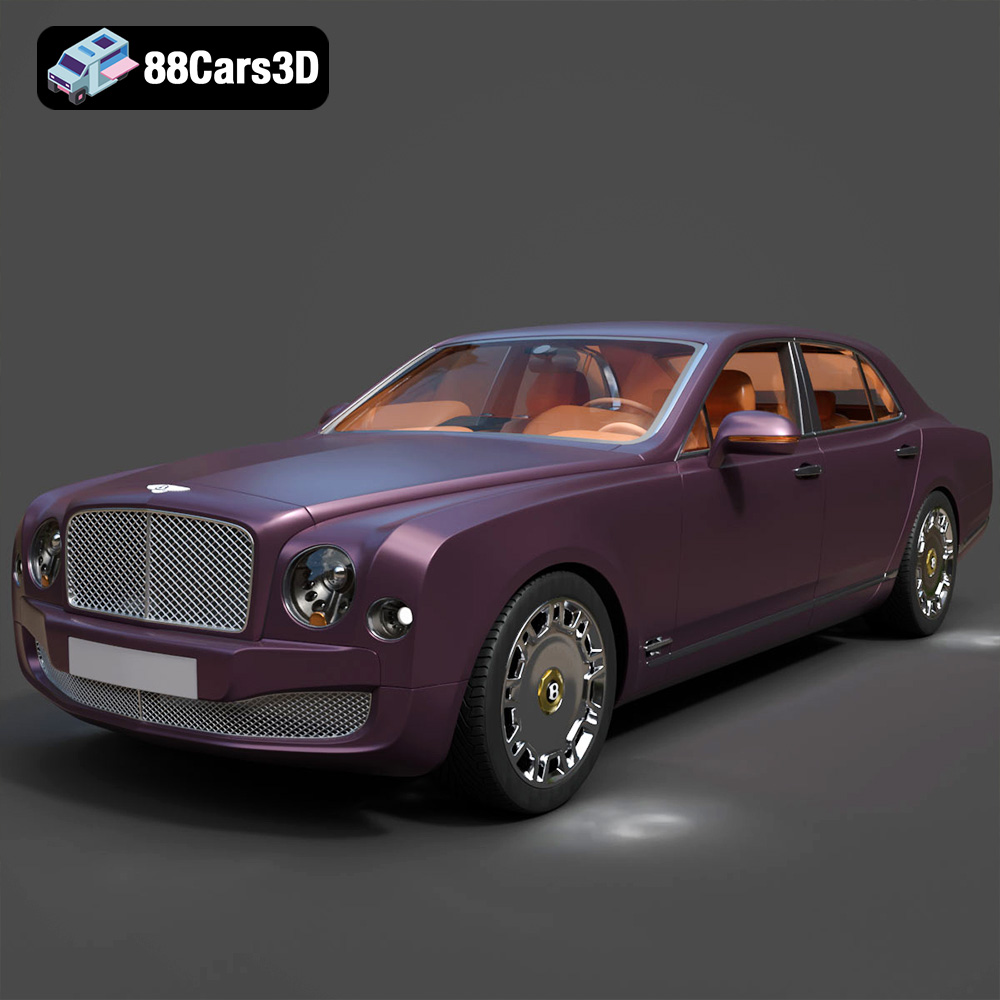
Download the Bentley Mulsanne Luxury Sedan 3D Model featuring clean geometry, realistic detailing, and a fully modeled interior. Includes .blend, .fbx, .obj, .glb, .stl, .ply, .unreal, and .max formats for rendering, simulation, and game development.
Price: $14.99

Texture: Yes
Material: Yes
Download the Bentley Continental GT 2011 3D Model featuring clean geometry, realistic detailing, and a fully modeled interior. Includes .blend, .fbx, .obj, .glb, .stl, .ply, .unreal, and .max formats for rendering, simulation, and game development.
Price: $14.99

Texture: Yes
Material: Yes
Download the Bentley Continental Flying Spur 3D Model featuring clean geometry, realistic detailing, and a fully modeled interior. Includes .blend, .fbx, .obj, .glb, .stl, .ply, .unreal, and .max formats for rendering, simulation, and game development.
Price: $14.99
Texture: Yes
Material: Yes
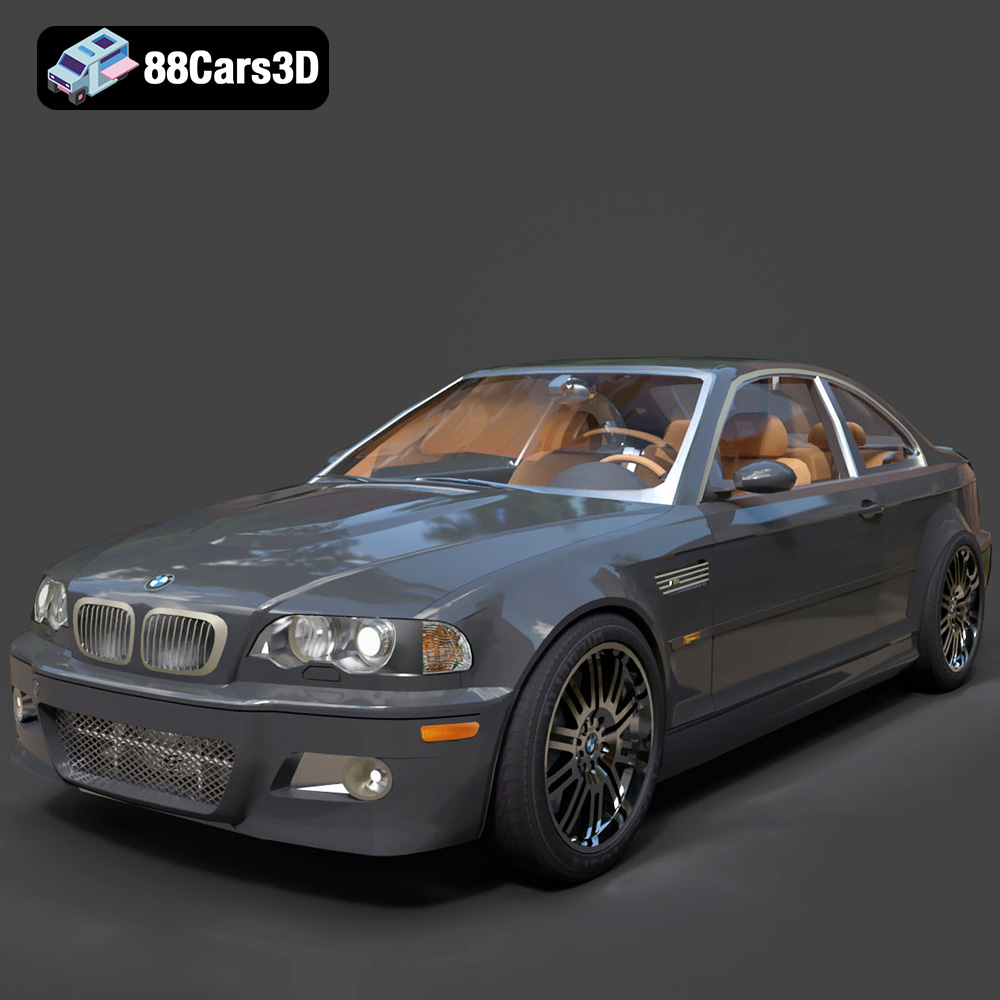
Download the BMW M3 E46 3D Model featuring iconic sports car design and detailed interior. Includes .blend, .fbx, .obj, .glb, .stl, .ply, .unreal, and .max formats for rendering, simulation, and game development.
Price: $16.99
Texture: Yes
Material: Yes
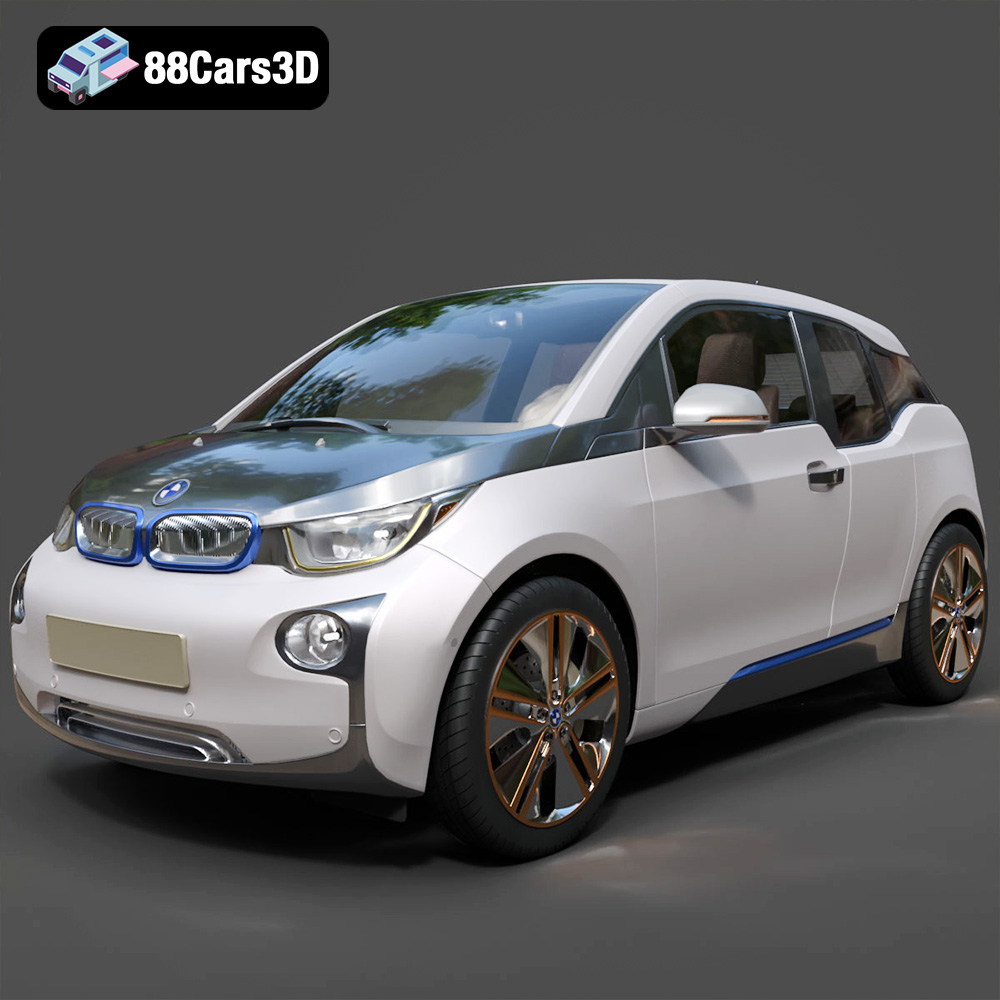
Download the BMW i3 Coupe 3D Model featuring its iconic electric design and compact urban styling. Includes .blend, .fbx, .obj, .glb, .stl, .ply, .unreal, and .max formats for rendering, simulation, and game development.
Price: $17.99
Texture: Yes
Material: Yes
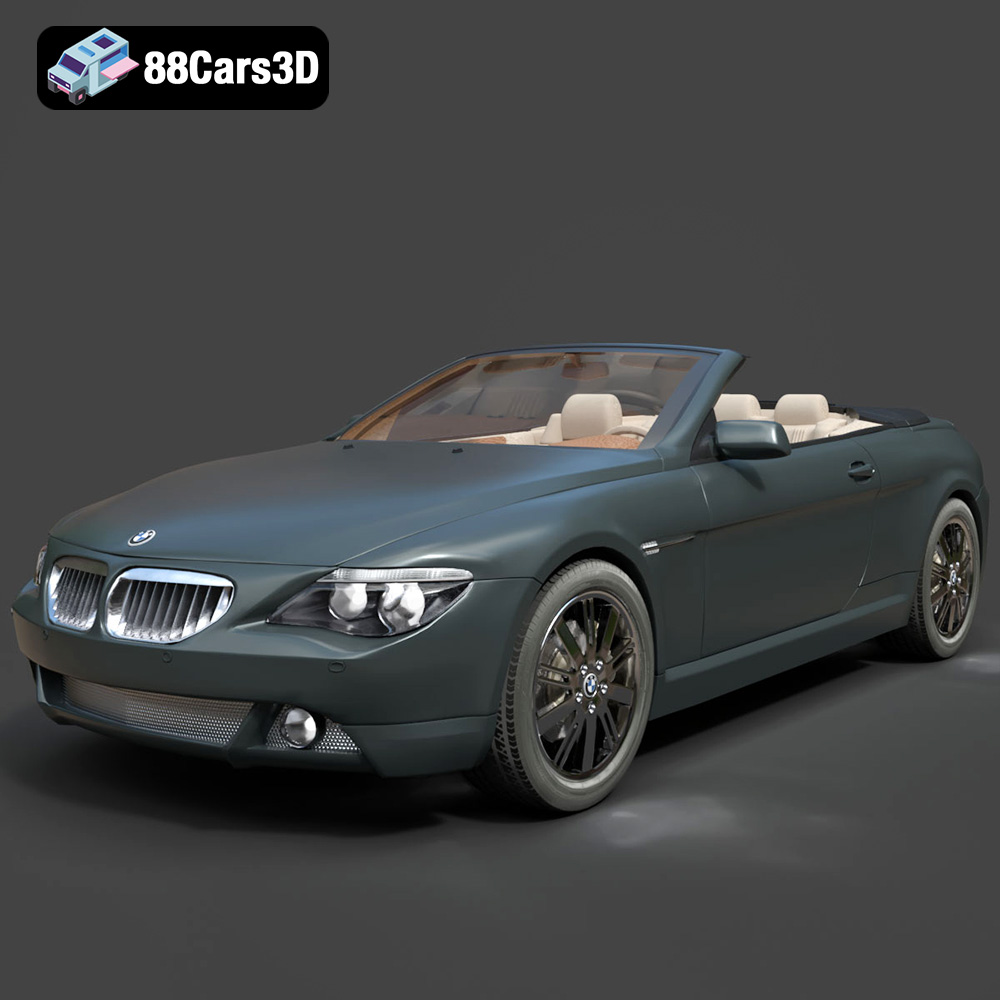
Download the BMW 645ci 3D Model featuring a sleek, detailed exterior and optimized interior. Includes .blend, .fbx, .obj, .glb, .stl, .ply, .unreal, and .max formats for rendering, simulation, and game development.
Price: $10.79
Texture: Yes
Material: Yes
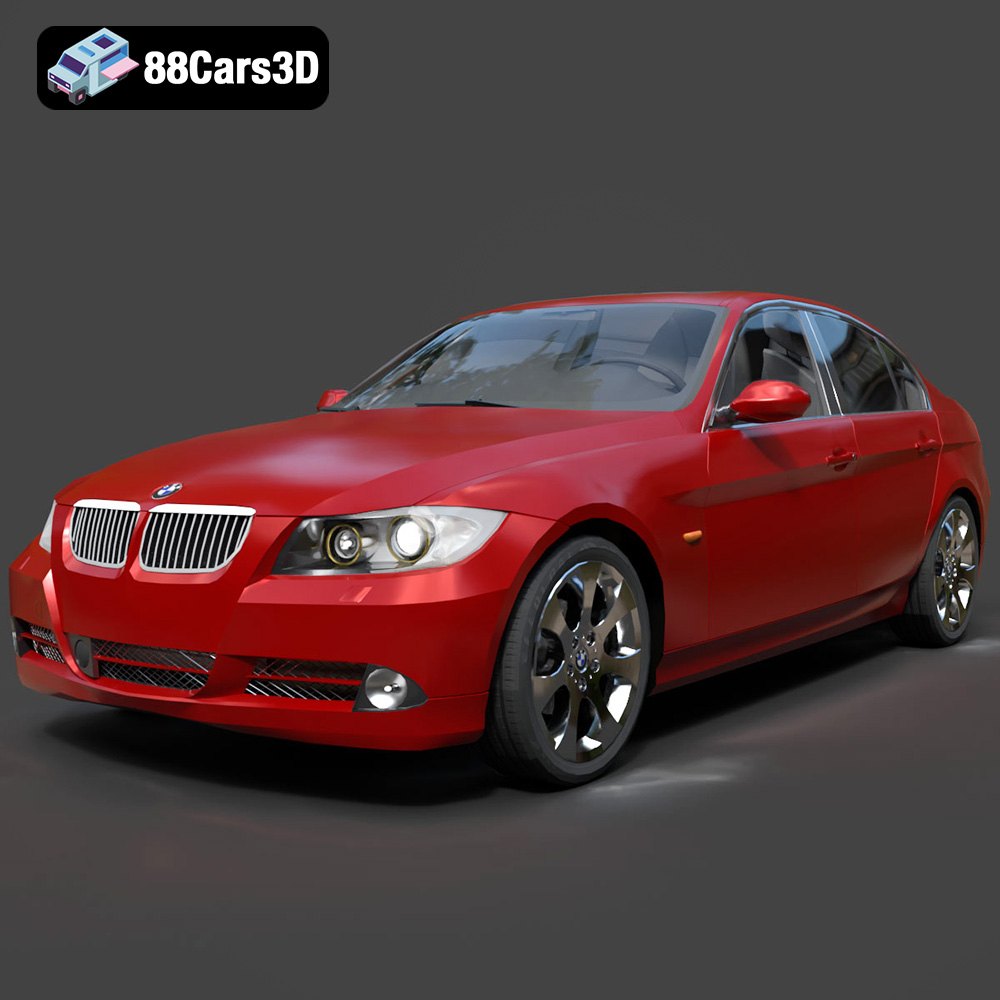
Download the BMW 330i E90 3D Model featuring a detailed exterior, an optimized interior, and accurate mechanical components. Includes .blend, .fbx, .obj, .glb, .stl, .ply, .unreal, and .max formats for rendering, simulation, and game development.
Price: $14.79

