⚡ FLASH SALE: Get 60% OFF All Premium 3D & STL Models! ⚡

The dream of crafting expansive, breathtaking open worlds has captivated creators for decades. From sprawling urban centers to vast natural landscapes, the ability to immerse users in environments of unprecedented scale and detail is a cornerstone of modern game development, cinematic virtual production, and high-fidelity automotive visualization. However, bringing these colossal visions to life has traditionally presented immense technical hurdles, particularly when dealing with the sheer volume of assets and data required for such endeavors.
Enter Unreal Engine’s revolutionary World Partition system. Designed to tackle the complexities of truly massive environments, World Partition reimagines how we build, manage, and render sprawling digital worlds. It’s a game-changer for anyone pushing the boundaries of real-time rendering, especially for scenarios like open-world driving simulations featuring stunning 3D car models, interactive automotive configurators set against realistic backdrops, or intricate urban planning visualizations.
In this comprehensive guide, we’ll delve deep into the mechanics of Unreal Engine’s World Partition. We’ll explore its core principles, demonstrate how to set up and manage your projects, integrate high-quality assets like those found on 88cars3d.com, and leverage advanced features like Nanite and Lumen. By the end, you’ll have a clear understanding of how this powerful system empowers you to construct vast, detailed, and performant open worlds, unlocking new possibilities for your Unreal Engine projects.
For years, creating large worlds in Unreal Engine relied heavily on World Composition, a system that manually tiled levels into a larger world and managed their streaming. While effective for moderately sized environments, World Composition introduced significant overhead for truly massive projects. Manual level management, potential data duplication, and complex multi-user workflows often became bottlenecks. This is where World Partition steps in, offering a more elegant and scalable solution.
World Partition transforms a single, persistent level into a dynamically streamed environment. Instead of explicit sub-levels, it automatically divides the entire world into a seamless grid of cells. As a player or camera moves through the world, only the relevant cells — and the actors contained within them — are loaded into memory and rendered. This on-demand streaming is handled entirely by the engine, eliminating the need for manual level management and significantly improving editor performance for large scenes.
The core benefit of World Partition lies in its ability to support worlds of virtually infinite size without sacrificing performance or workflow efficiency. It drastically reduces memory footprint at runtime by only loading necessary data, and it simplifies collaboration by allowing multiple users to work on different areas of the same large world concurrently without conflicting file saves. For automotive visualization, this means you can place a highly detailed 3D car model into an expansive, photorealistic environment and drive it seamlessly for miles, without encountering loading screens or performance hitches due to excessive loaded geometry.
World Composition required developers to manually break down their large worlds into numerous smaller UMAP files, each representing a streamed sub-level. Managing dependencies, ensuring smooth transitions, and especially collaborating on these separate files could become a significant logistical challenge. World Partition, by contrast, operates on a single UMAP file for the entire world. This fundamental change streamlines project management considerably. All actors, regardless of their location in the world, reside within this single file. The engine then intelligently partitions and streams them based on their physical coordinates and the defined streaming grids. This unified approach eliminates the need for manual level tiling and the associated overhead, making the workflow much more intuitive and efficient for truly massive open worlds.
At the heart of World Partition’s runtime efficiency are its streaming grids. When you enable World Partition, Unreal Engine automatically creates a default grid structure. These grids define the boundaries and rules for how the world is divided and streamed. Actors (meshes, lights, Blueprints, etc.) are associated with specific cells within these grids based on their location. As the player or camera moves, the World Partition system determines which cells are within the ‘streaming distance’ and automatically loads or unloads the actors within them. This dynamic loading ensures that only a small, relevant portion of the vast world is ever active in memory, leading to optimal performance. You can customize grid settings, including cell size, to fine-tune the streaming behavior, balancing loading frequency with visual continuity. Understanding these grids is crucial for predicting and optimizing runtime performance in your expansive environments.
Embarking on a new open-world project with World Partition begins with proper setup. For new projects in Unreal Engine 5 and later, World Partition is often enabled by default for new open-world templates. If you’re starting from scratch or converting an existing project, the process is straightforward but requires careful consideration of your existing assets and workflows. The goal is to establish a robust foundation that leverages World Partition’s benefits while ensuring optimal performance and manageability for your large-scale environment, whether it’s for an automotive driving simulator or a complex game map.
To enable World Partition for an existing map, you can navigate to Window > World Partition > Convert Level. For a new map, simply create a new level and select the “Open World” template, or check the “Enable World Partition” option when creating a blank level. Once enabled, your world becomes a single, vast canvas. The World Partition Editor (accessible via Window > World Partition > World Partition Editor) becomes your primary interface for visualizing and managing the partitioned cells. Here, you can see the entire grid, select specific cells to load into the editor, and even filter actors based on their cell location. This tool is invaluable for navigating and working on your massive environment without overwhelming your system. Remember, the quality of your base assets, like the meticulously crafted 3D vehicle models from 88cars3d.com, forms the visual cornerstone of your expansive world.
Converting a legacy project (e.g., from World Composition or a single monolithic level) to World Partition requires a specific workflow. Unreal Engine provides tools to aid in this migration, but thorough planning is essential. First, backup your project! Then, use the “Convert Level” utility. The engine will automatically analyze your existing world and re-partition all actors into the new World Partition system. Any manually streamed levels will be flattened into the single World Partition map. While this process is largely automated, you may need to address issues with relative paths, actor references, or custom streaming volumes that might not translate perfectly. Always test thoroughly after conversion, ensuring all assets load correctly and that any custom Blueprint logic related to level streaming functions as expected. Pay close attention to persistent level actors that need to be re-evaluated for their role in the new system.
Beyond the initial setup, mastering the dedicated tools for World Partition is key to efficient large-world development. The World Partition Editor is your command center, displaying an overview of your entire world grid. You can visually select and load specific cells into the editor, allowing you to focus on a particular area without loading the entire immense map. This is crucial for maintaining editor performance. Complementing this is the Data Layers panel. Data Layers are a powerful organizational feature within World Partition that allow you to logically group actors, enabling selective loading and unloading of content based on specific scenarios. For instance, you could have a ‘Day’ Data Layer and a ‘Night’ Data Layer, or separate layers for AR/VR specific content, or even different versions of the same automotive scene (e.g., a city traffic layer vs. an empty highway layer). By activating and deactivating Data Layers, you can modify the composition of your world at runtime, offering incredible flexibility for interactive experiences and collaborative workflows.
Once your World Partition project is established, the exciting work of populating it with rich detail begins. For automotive visualization and driving experiences, this means seamlessly integrating high-fidelity 3D car models and other essential environment assets into your vast landscape. The scale and complexity of a World Partitioned environment demand careful asset management and the strategic use of Unreal Engine’s advanced rendering features to ensure both visual stunningness and optimal performance.
When sourcing your 3D car models and environmental props, quality and optimization are paramount. Platforms like 88cars3d.com offer meticulously crafted assets with clean topology, PBR materials, and efficient UV mapping, which are crucial for performance in large-scale projects. Importing these via FBX, USD, or USDZ formats is straightforward. Once imported, placing these assets efficiently across your world requires a methodical approach. For large-scale natural environments, leverage Unreal Engine’s procedural tools like the Foliage Editor and Procedural Foliage Volumes. These tools can automatically populate vast areas with trees, grass, and other vegetation, respecting your terrain and density rules, all while integrating seamlessly with World Partition’s streaming. For structured elements like roads and buildings, careful manual placement or the use of spline tools ensures accurate alignment and realistic layouts. The key is to distribute detail intelligently, ensuring that areas of focus (like a detailed car showroom or a specific driving route) receive the highest fidelity, while distant areas benefit from efficient rendering techniques.
One of Unreal Engine’s most transformative features for large-scale environments is Nanite Virtualized Geometry. Nanite fundamentally changes how high-polygon meshes are rendered, allowing artists to import film-quality assets with millions of polygons directly into their scenes without performance concerns. In a World Partitioned environment, Nanite is a game-changer. Imagine dropping a highly detailed 3D car model from 88cars3d.com, complete with intricate interior details and realistic reflections, into a vast city or natural landscape. Before Nanite, this would necessitate extensive LOD (Level of Detail) work to optimize the model for varying distances. With Nanite, the engine automatically handles the level of detail on a per-pixel basis, streaming only the necessary micro-polygon data. This not only dramatically reduces development time but also ensures consistent visual quality regardless of distance, which is crucial for cinematic automotive visualization and vast open-world games. Nanite meshes integrate seamlessly with World Partition’s streaming system, contributing to efficient memory usage and smooth performance.
As your open world grows, managing its myriad actors can become challenging. This is where World Partition’s Data Layers become indispensable. Data Layers provide a powerful mechanism to logically organize and control the visibility and streaming of actors within your single persistent world. Instead of creating separate levels for different variants of your world (e.g., a “day” version and a “night” version, or a “traffic” version and a “clean” version for automotive scenes), you can assign actors to different Data Layers. For instance, all streetlights and neon signs could be assigned to a “Night_Lighting” Data Layer, while ambient city sounds go into an “Urban_Audio” layer. At runtime, you can activate or deactivate these layers via Blueprint scripting or the World Partition Editor, dynamically changing the content and atmosphere of your world without needing to load entirely separate maps. This is incredibly powerful for interactive automotive configurators where users might switch between different environment settings, or for virtual production pipelines where specific elements need to be toggled for different takes. Data Layers also greatly enhance collaborative workflows, allowing different teams to work on distinct aspects of the world without interfering with each other’s content.
Creating a truly immersive open world with high-fidelity automotive assets demands more than just well-placed geometry; it requires dynamic, realistic lighting and interactive elements, all while maintaining robust performance. Unreal Engine’s suite of real-time rendering features, particularly Lumen and Blueprint, are pivotal in achieving this balance within a World Partitioned environment. Effective optimization strategies are also crucial to ensure a smooth user experience across vast distances and complex scenes.
Lumen Global Illumination and Reflections, another cornerstone of Unreal Engine 5, works hand-in-hand with World Partition to deliver breathtaking real-time lighting. Lumen dynamically calculates indirect lighting and reflections, creating incredibly lifelike scenes, from the subtle bounce light under a vehicle in a showroom to the expansive reflections of a sprawling city on a car’s polished surface. In a World Partitioned world, Lumen intelligently adapts to the streamed geometry, ensuring consistent and realistic lighting across vast distances as cells load and unload. This eliminates the need for complex, baked lighting solutions for dynamic environments, allowing for fully dynamic time-of-day changes and interactive lighting scenarios. Pairing Lumen with high-quality PBR materials for your 3D car models ensures that every surface reacts realistically to light, enhancing the overall visual fidelity of your automotive visualization. While Lumen is powerful, careful consideration of its settings and scene complexity is essential for maintaining target frame rates in massive environments.
Lumen provides exceptional visual fidelity, but its computational demands can be significant in vast open worlds, especially when interacting with highly reflective automotive surfaces. To optimize Lumen for large-scale World Partition projects, consider adjusting its quality settings in the Post Process Volume or Project Settings. Lowering the Lumen Scene Capture Resolution or the Global Illumination samples can yield substantial performance gains with minimal perceived quality loss, particularly for distant objects. For automotive scenes, focus on optimizing the fidelity around the vehicles themselves. Ensure that your PBR materials are correctly configured for reflectivity and roughness to prevent unnecessarily intense Lumen calculations. Utilizing Nanite for most of your environment geometry can also indirectly help Lumen, as Nanite provides a more efficient geometric representation for Lumen to process. Experiment with distance fields and mesh distance field generation settings, as Lumen heavily relies on them for global illumination. Regular profiling with tools like the GPU Visualizer and Stat commands will help pinpoint performance bottlenecks related to Lumen and guide your optimization efforts.
Blueprint visual scripting offers unparalleled flexibility for adding interactivity and dynamic behaviors to your World Partitioned world, especially for automotive applications. You can use Blueprints to create custom streaming triggers, allowing specific areas or Data Layers to load when a player vehicle enters a defined volume. Imagine a Blueprint that detects when your 3D car model approaches a custom car dealership, dynamically loading detailed interior assets or activating unique lighting scenarios via Data Layers. Beyond streaming, Blueprints are essential for vehicle physics and dynamics, creating interactive configurators, managing pedestrian AI, or even triggering environmental effects like weather changes across vast distances. For instance, a complex Blueprint could manage the spawning and despawning of traffic vehicles based on the player’s location within the World Partition grid, ensuring a lively but performant city experience. Leveraging the World Partition subsystem in Blueprint allows you to query active cells, control Data Layer visibility, and create truly responsive, interactive open-world experiences.
The scale of open-world development often necessitates large teams working in concert. World Partition significantly enhances collaborative workflows, making it a powerful foundation for large game studios and virtual production environments. Its unique approach to managing world data directly addresses many challenges previously encountered in multi-user development, making it an ideal choice for ambitious automotive visualization projects and cinematic endeavors.
One of World Partition’s standout features is its native support for Multi-User Editing. This allows multiple artists and designers to work simultaneously on different areas of the same World Partitioned level without worrying about overwriting each other’s changes. The system intelligently merges actor modifications, streamlining the development process for vast environments. For instance, one artist could be detailing a specific section of a virtual city street with road signs and streetlights, while another is painting foliage in a distant park, all within the same persistent level. When working with 3D car models in a large environment, this means a team can simultaneously refine vehicle placement, lighting, and environmental context, accelerating iteration and reducing the friction often associated with concurrent development.
Beyond traditional game development, World Partition is a phenomenal enabler for Virtual Production and In-Camera VFX. Imagine shooting a live-action automotive commercial where a real car drives through a virtual city rendered on an LED wall. With World Partition, that virtual city can be immense and incredibly detailed, with only the relevant sections streaming onto the LED panels as the car moves. This allows for unparalleled realism and flexibility in virtual sets, enabling filmmakers to create dynamic, seamless transitions through vast environments without traditional set limitations. Sequencer, Unreal Engine’s non-linear editor, works perfectly with World Partition, ensuring that all necessary assets and lighting are loaded for cinematic takes as the camera traverses the expansive virtual world, facilitating the creation of stunning automotive reels and immersive narrative experiences.
For teams leveraging World Partition, robust source control (e.g., Perforce, Git LFS) is more critical than ever, even with Multi-User Editing. While Multi-User Editing handles real-time merges, committing changes to source control requires a clear strategy. World Partition generates numerous small asset files (actor UMAPs) for each streamed actor, which can lead to a large number of files needing to be managed. Ensure your source control system is configured to handle many small files efficiently. Encourage frequent, small commits and clear communication among team members about which areas of the world they are actively working on. Utilizing Data Layers to isolate specific features or work-in-progress content can also help prevent conflicts. Best practice involves setting up dedicated workspaces for different team members or features, and regularly syncing and resolving any potential merge conflicts before they escalate. With proper discipline, World Partition’s single-level approach actually simplifies source control compared to managing hundreds of individual sub-levels.
World Partition unlocks unprecedented possibilities for cinematic storytelling, especially in automotive contexts and virtual production. When crafting a thrilling chase scene or a serene drive for a commercial, Sequencer needs access to all the visual information, regardless of the scene’s scale. World Partition ensures that the relevant sections of your vast environment, including the high-fidelity 3D car models and dynamic lighting, are streamed and rendered precisely when the camera needs them. This means directors and cinematographers can block out complex camera moves across an entire continent without worrying about loading boundaries. For virtual production LED walls, World Partition handles the seamless loading of background environments, providing continuous parallax and depth as the physical camera moves. The combination of World Partition, Nanite, Lumen, and Sequencer allows for real-time pre-visualization, in-camera VFX, and final pixel rendering of automotive content in truly massive, photorealistic environments, pushing the boundaries of what’s creatively possible.
While World Partition offers unparalleled capabilities for building massive open worlds, mastering it also involves understanding its intricacies and leveraging advanced techniques to overcome common challenges. Even with an incredibly robust system, large-scale development always presents unique hurdles, from managing performance across vast distances to debugging complex streaming behaviors. Proactive problem-solving and a deep dive into the system’s more advanced features will ensure your projects run smoothly and deliver the intended immersive experience.
One of the most common challenges in World Partitioned worlds is managing performance, particularly preventing streaming hitches or maintaining consistent frame rates. This often boils down to aggressive optimization and a thorough understanding of how the engine streams content. Unreal Engine provides several debugging tools that are invaluable here: the World Partition Minimap (accessible in the World Partition Editor) offers a visual representation of loaded cells, helping you identify areas with excessive loaded geometry. Console commands like `stat WorldPartition` provide real-time metrics on streaming performance, actor counts, and memory usage. Additionally, leveraging Hierarchical Level of Detail (HLODs) is crucial. While Nanite handles individual mesh LODs, HLODs generate simplified proxy meshes for entire groups of actors (e.g., a distant city block or a forest section) when they are far from the camera. These HLOD clusters are then streamed by World Partition, dramatically reducing draw calls and vertex counts for distant views. This layered approach to optimization, combining Nanite’s per-mesh efficiency with HLODs’ spatial culling, is vital for maintaining performance in truly vast environments, especially when showcasing detailed 3D car models in expansive landscapes.
Encountering streaming hitches or unexplained performance drops in a World Partition project can be frustrating, but several troubleshooting steps can help. First, utilize Unreal Engine’s profiling tools: the Stat Commands (e.g., `stat unit`, `stat WorldPartition`, `stat streaming`), the GPU Visualizer, and the Session Frontend’s profiler. These tools can pinpoint whether the bottleneck is CPU-bound (e.g., streaming logic, Blueprint updates) or GPU-bound (e.g., overdraw, complex materials, unoptimized Lumen settings). Check your streaming grid settings; overly small cell sizes can cause frequent loading/unloading, leading to hitches. Ensure that “Loading Range” and “Unloading Range” values in your World Partition settings are appropriate for your project’s scale. Debugging visualization modes, such as “Shader Complexity” and “Nanite Overview,” can help identify overly complex areas. Finally, test thoroughly on target hardware, as editor performance often differs significantly from a packaged build.
World Partition’s default streaming behavior is robust, but for specific scenarios, you may need more granular control. You can place custom streaming volumes to force specific cells or Data Layers to load or unload outside the automatic grid-based system, useful for pre-loading areas or creating custom transition points. HLODs (Hierarchical Level of Detail) are a critical optimization layer on top of World Partition. They are generated for clusters of actors, effectively creating simplified representations of distant geometry that stream more efficiently than individual high-poly meshes. World Partition supports different HLOD layers, allowing you to fine-tune the transition distances and complexity of these generated proxies. Configuring HLODs involves defining the clusters, generating the proxy meshes, and ensuring they blend seamlessly with the fully detailed geometry. This process requires balancing visual quality with performance, as overly aggressive HLODs can lead to noticeable pop-in, while insufficient HLODs will hinder performance at distance. Regularly rebuild HLODs after significant world changes, and visualize them using the HLOD debug view to ensure optimal configuration.
Unreal Engine’s World Partition system marks a pivotal moment in the evolution of real-time open-world development. By intelligently partitioning and dynamically streaming vast environments, it frees creators from the traditional constraints of manual level management, empowering them to build worlds of unprecedented scale and detail. From sprawling landscapes for an open-world driving game to meticulously rendered virtual cities for automotive visualization, World Partition provides the robust framework necessary to bring these ambitious visions to life.
We’ve explored how World Partition streamlines project setup, facilitates multi-user collaboration, and integrates seamlessly with cutting-edge Unreal Engine features like Nanite and Lumen to deliver stunning visual fidelity. The ability to manage immense asset libraries – including high-quality 3D car models and expansive environmental props – within a single, coherent system is a true game-changer for efficiency and creative freedom. While challenges in optimization and debugging will always exist in large-scale projects, the tools and techniques available within Unreal Engine provide clear pathways to overcome them.
Embrace World Partition, experiment with its powerful features, and leverage the high-quality assets available from marketplaces like 88cars3d.com to unlock the full potential of your next Unreal Engine project. The future of real-time open-world development is here, and with World Partition, the only limit is your imagination.

Texture: Yes
Material: Yes
Download the Bentley Continental Flying Spur 3D Model featuring clean geometry, realistic detailing, and a fully modeled interior. Includes .blend, .fbx, .obj, .glb, .stl, .ply, .unreal, and .max formats for rendering, simulation, and game development.
Price: $14.99
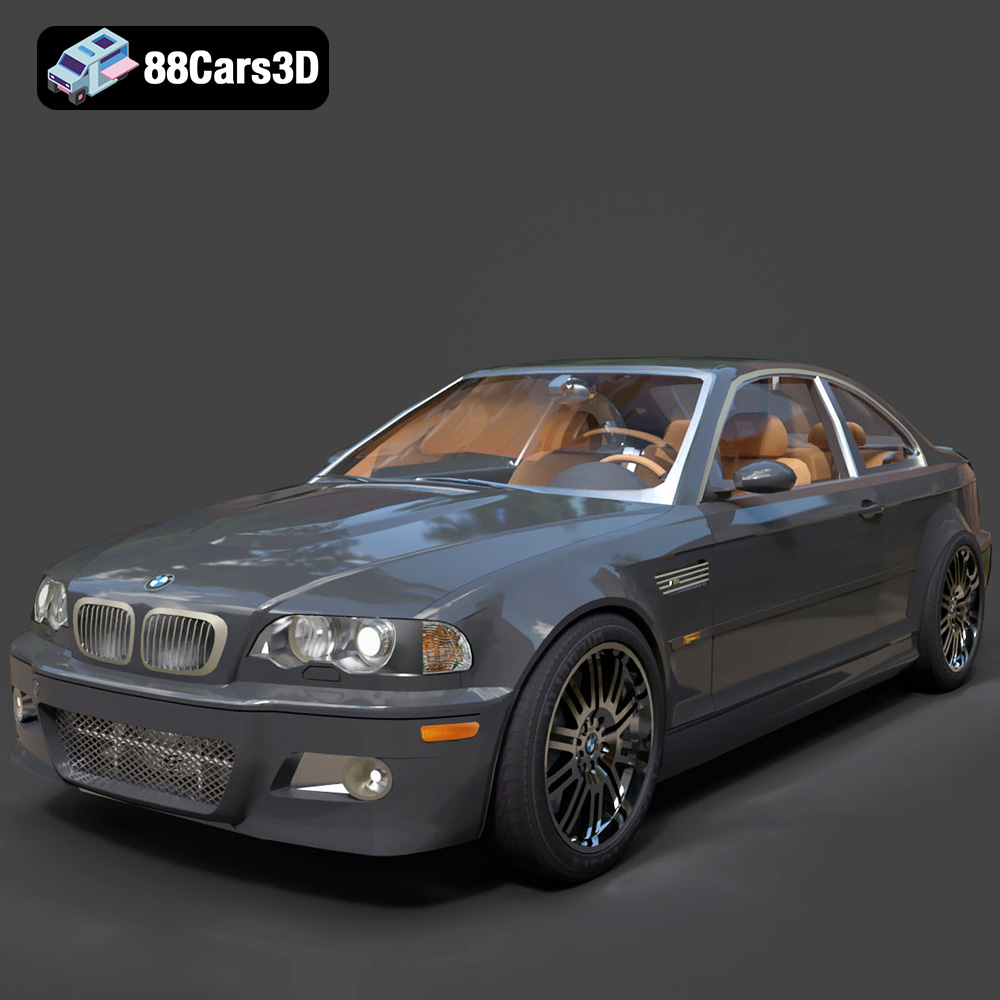
Texture: Yes
Material: Yes
Download the BMW M3 E46 3D Model featuring iconic sports car design and detailed interior. Includes .blend, .fbx, .obj, .glb, .stl, .ply, .unreal, and .max formats for rendering, simulation, and game development.
Price: $16.99

Texture: Yes
Material: Yes
Download the BMW i3 Coupe 3D Model featuring its iconic electric design and compact urban styling. Includes .blend, .fbx, .obj, .glb, .stl, .ply, .unreal, and .max formats for rendering, simulation, and game development.
Price: $17.99

Texture: Yes
Material: Yes
Download the BMW 645ci 3D Model featuring a sleek, detailed exterior and optimized interior. Includes .blend, .fbx, .obj, .glb, .stl, .ply, .unreal, and .max formats for rendering, simulation, and game development.
Price: $10.79
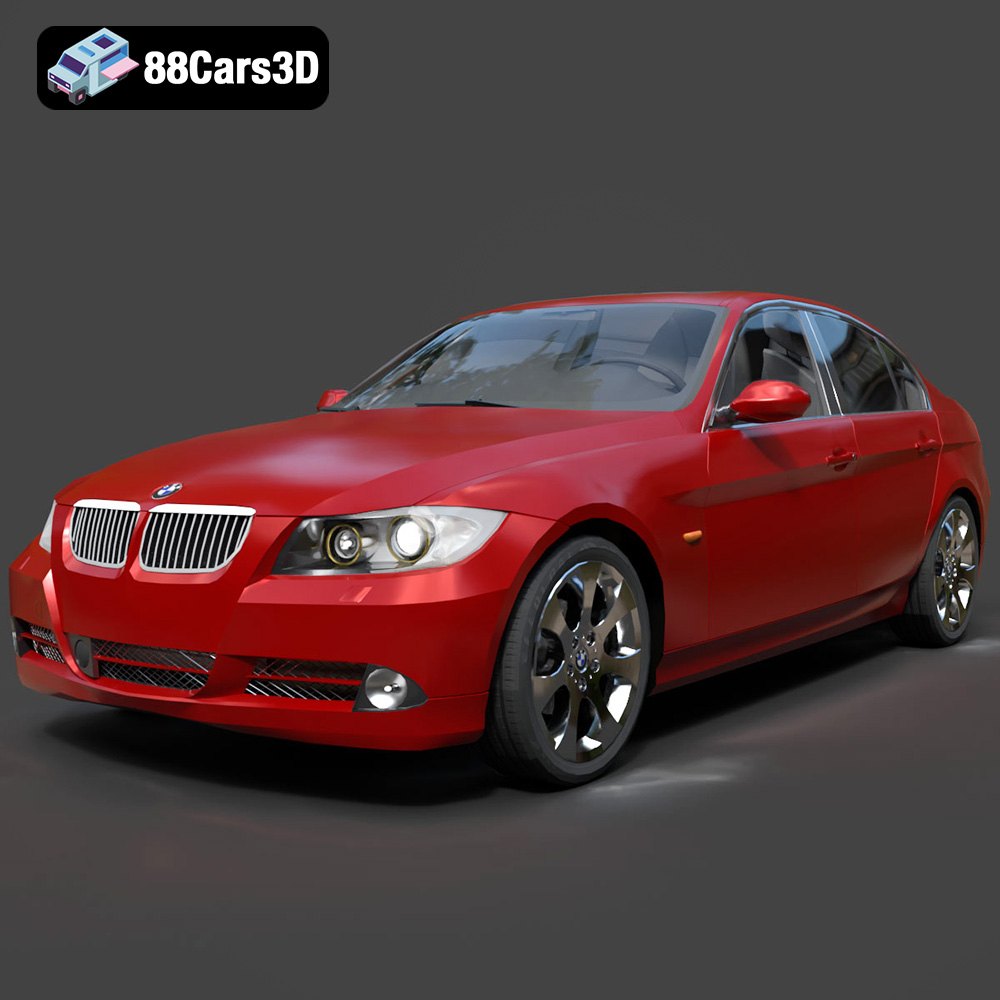
Texture: Yes
Material: Yes
Download the BMW 330i E90 3D Model featuring a detailed exterior, an optimized interior, and accurate mechanical components. Includes .blend, .fbx, .obj, .glb, .stl, .ply, .unreal, and .max formats for rendering, simulation, and game development.
Price: $14.79
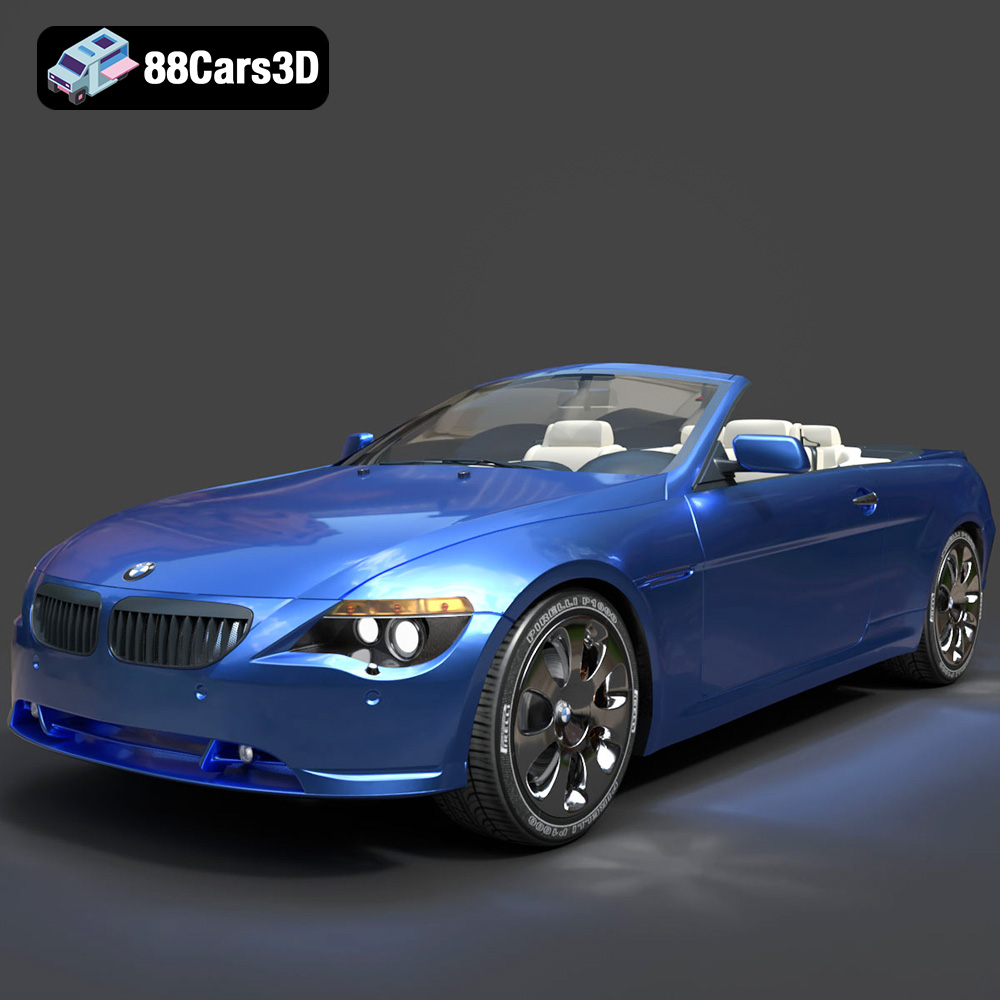
Texture: Yes
Material: Yes
Download the BMW 6 Series Convertible 3D Model featuring clean geometry, realistic detailing, and a fully modeled interior. Includes .blend, .fbx, .obj, .glb, .stl, .ply, .unreal, and .max formats for rendering, simulation, and game development.
Price: $14.99
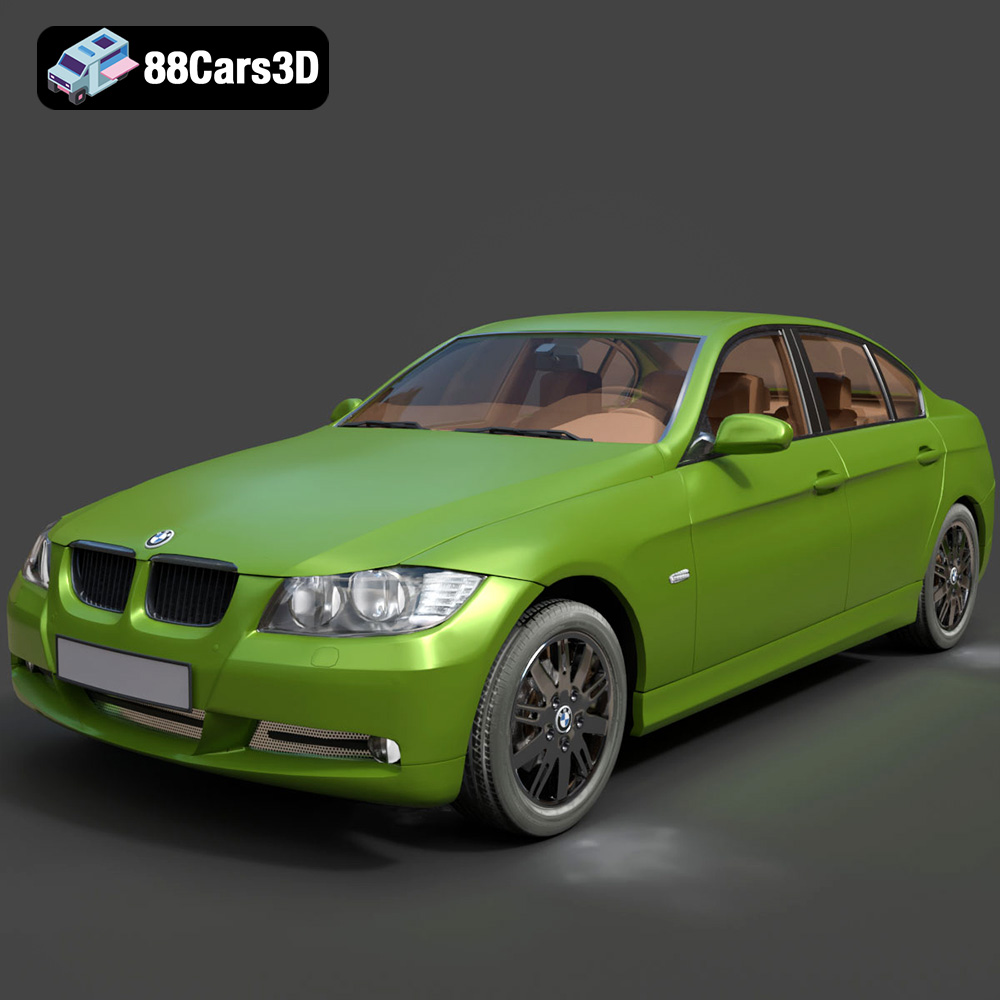
Texture: Yes
Material: Yes
Download the BMW 3-005 3D Model featuring a sleek design, detailed exterior and interior. Includes .blend, .fbx, .obj, .glb, .stl, .ply, .unreal, and .max formats for rendering, simulation, and game development.
Price: $14.99
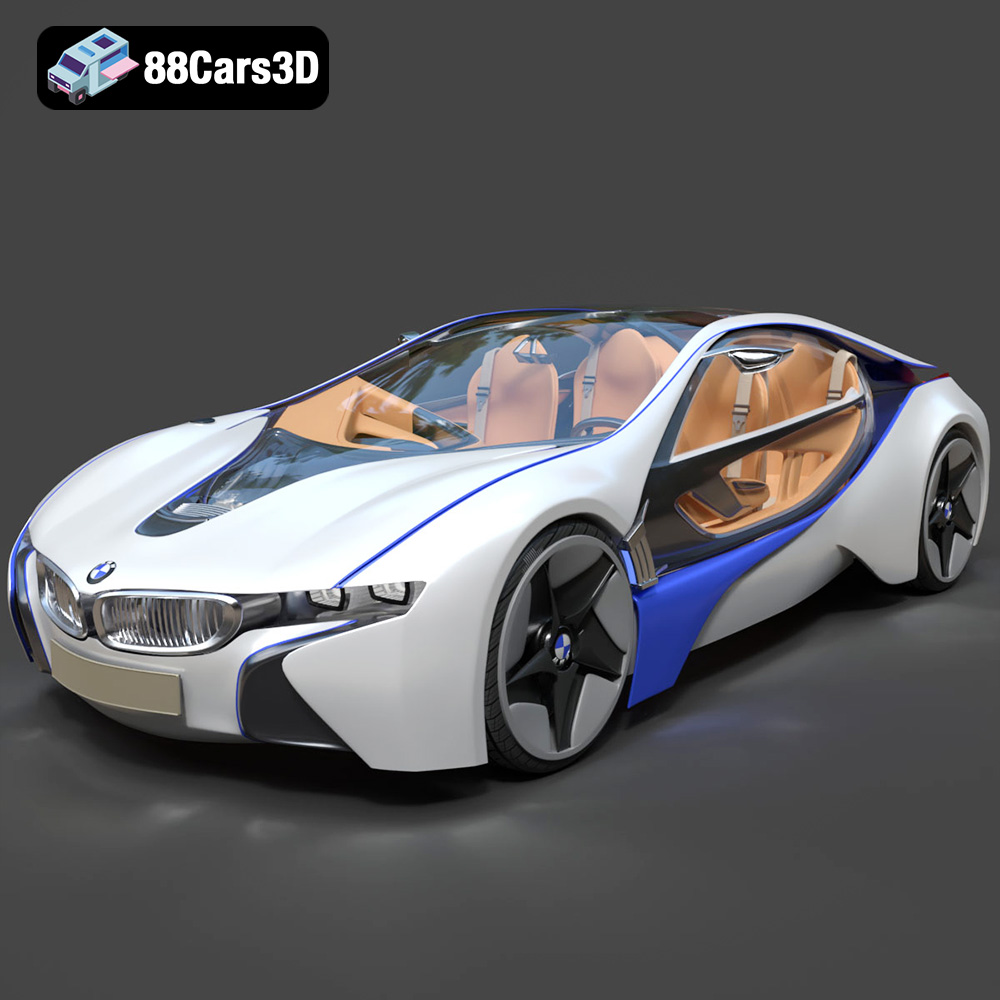
Texture: Yes
Material: Yes
Download the BMW Vision Effecient Dynamics-007 3D Model featuring a sleek, futuristic design and hybrid concept aesthetics. Includes .blend, .fbx, .obj, .glb, .stl, .ply, .unreal, and .max formats for rendering, simulation, and game development.
Price: $14.99
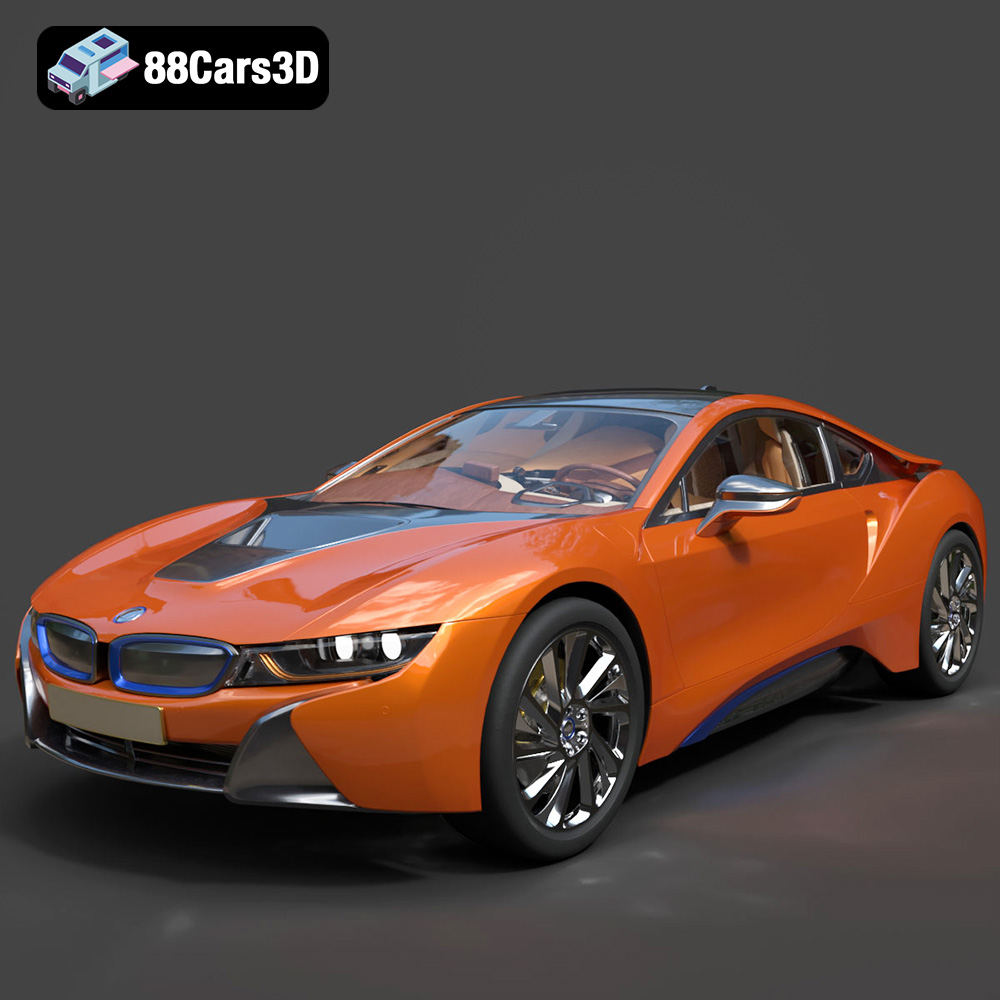
Texture: Yes
Material: Yes
Download the BMW i8 2015 3D Model featuring clean geometry, realistic detailing, and a fully modeled interior. Includes .blend, .fbx, .obj, .glb, .stl, .ply, .unreal, and .max formats for rendering, simulation, and game development.
Price: $12.99

Texture: Yes
Material: Yes
Download the BMW 4 Series F32 3D Model featuring clean geometry, realistic detailing, and a fully modeled interior. Includes .blend, .fbx, .obj, .glb, .stl, .ply, .unreal, and .max formats for rendering, simulation, and game development.
Price: $12.99

