⚡ FLASH SALE: Get 60% OFF All Premium 3D & STL Models! ⚡

In the realm of real-time rendering, be it for immersive game worlds or hyper-realistic automotive visualizations, the difference between a good scene and a truly exceptional one often lies in the details. While a stunning 3D car model – like those found on marketplaces such as 88cars3d.com – is undoubtedly the star, the environment it inhabits plays a crucial supporting role. Sparse, unconvincing vegetation can shatter immersion, detracting from even the most meticulously crafted vehicle. Conversely, lush, dynamic, and realistic foliage elevates a scene, grounding your automotive masterpieces in believable, breathing worlds.
Unreal Engine, with its powerful rendering capabilities and intuitive toolset, provides everything you need to populate your scenes with breathtaking natural environments. From towering trees to swaying grass and intricate bushes, mastering its foliage system is indispensable for any Unreal Engine developer, 3D artist, or visualization professional aiming for visual fidelity. This comprehensive guide will take you on a deep dive into Unreal Engine’s foliage tools, PBR material workflows, optimization strategies, and advanced techniques, ensuring your automotive renders and game levels are not just visually appealing, but also performant and truly captivating. Get ready to transform barren landscapes into vibrant ecosystems that perfectly complement your high-quality 3D car models.
For an automotive render to truly shine, it needs context. A beautifully modeled car placed on a featureless plane, while showcasing the vehicle itself, lacks the emotional resonance and visual storytelling that a well-designed environment provides. Realistic vegetation adds depth, scale, and atmosphere, allowing the viewer to imagine the car in a natural setting – cruising through a forest, parked in a scenic meadow, or even showcased in a meticulously designed virtual showroom with botanical accents. In game development, foliage is fundamental to world-building, defining biomes, creating cover, and influencing gameplay mechanics. It’s not just about aesthetics; it’s about immersion and narrative.
The challenges in rendering believable foliage are numerous, ranging from the intricate geometry of leaves and branches to the complex ways light interacts with them. Historically, real-time foliage has been a notorious performance killer due to high polygon counts and overdraw. However, with advancements in Unreal Engine 5’s rendering pipeline, including Nanite and Lumen, artists now have unprecedented power to create incredibly dense and detailed environments without crippling performance. Understanding how to leverage these tools, along with traditional optimization techniques, is key to achieving both visual splendor and smooth frame rates, especially when presenting high-fidelity 3D car models.
Imagine showcasing a luxury vehicle in a virtual environment. The car’s sleek lines and reflective surfaces are stunning, but if the surrounding trees look flat or jaggy, the entire presentation suffers. High-quality foliage, with realistic wind effects, subtle shadow casting, and accurate light interaction, can dramatically enhance the perception of quality and realism for the vehicle itself. It creates a sense of place, allowing potential buyers or enthusiasts to envision the car in a lifestyle context. This is particularly crucial for interactive configurators or virtual showrooms, where users expect a fully immersive experience. When sourcing automotive assets from marketplaces such as 88cars3d.com, remember that the environment you build around them completes the visual story.
In game development, foliage is more than just visual dressing. It dictates traversable paths, provides cover for players, and is often interactive. A dense forest can slow down vehicles, while tall grass can conceal a sniper. The realism and diversity of foliage directly contribute to a game’s replayability and player engagement. However, the sheer volume of foliage typically required for open-world games demands stringent optimization. Every tree, bush, and blade of grass must be considered for its impact on performance, especially when combined with complex vehicle physics and AI. Achieving a balance between visual fidelity and optimal performance is the ultimate goal, and Unreal Engine’s tools are designed to help you strike that balance.
Before you can paint your world green, you need high-quality foliage assets. These typically come in two forms: static meshes (for trees, bushes, rocks) and billboard/card meshes (for grass, distant trees, or small shrubs where detailed geometry isn’t necessary). Whether you’re creating assets from scratch using tools like SpeedTree or buying them from asset stores, proper preparation is vital for optimal performance and visual quality in Unreal Engine. This involves ensuring clean geometry, correct UV mapping, and a well-thought-out PBR texture set.
For tree models, consider polycounts carefully. A hero tree might have upwards of 50,000-100,000 triangles, while a background tree might be closer to 10,000-20,000. Grass cards, on the other hand, should be extremely low poly, often just two quads forming a cross. UV mapping is critical for textures and lightmaps; ensure you have at least two UV channels: one for textures (diffuse, normal, roughness, etc.) and another for lightmap baking (though Lumen often reduces the need for baked lightmaps). Proper naming conventions for meshes and textures will save you countless headaches during import and material creation.
Importing assets into Unreal Engine is straightforward, but a few best practices ensure a smooth workflow. Drag and drop your FBX or USD files directly into the Content Browser, or use the Import button. During import, ensure you select appropriate settings. For static meshes, make sure “Combine Meshes” is unchecked if you want individual control over parts (e.g., trunk and leaves). For textures, Unreal Engine automatically detects common texture types (Normal, Roughness, Albedo) based on naming conventions, but always double-check the compression and sRGB settings. Albedo/Base Color and Emissive textures should have sRGB enabled, while Normal, Roughness, Metallic, Ambient Occlusion (RMAO packed textures), and height maps should have sRGB disabled.
When importing, consider the scale of your assets. Unreal Engine uses centimeters as its default unit. If your modeling software uses a different scale, adjust the import scale factor to ensure consistency. A common pitfall is incorrect pivot points for trees and plants; ensure the pivot is at the base of the model for easy placement and correct interaction with physics and the ground. If you use SpeedTree, leverage its direct integration with Unreal Engine, which streamlines the import process and often includes pre-configured materials and wind animations, saving significant time and effort. Remember to consult the official Unreal Engine documentation at https://dev.epicgames.com/community/unreal-engine/learning for the latest best practices on asset pipelines.
Level of Detail (LOD) is paramount for foliage optimization. It involves creating simplified versions of your mesh that are swapped in at increasing distances from the camera. Without LODs, a dense forest would render every single polygon of every tree, regardless of its distance, leading to massive performance drops. Unreal Engine has a powerful automatic LOD generation system, but manual LODs (created in your 3D software or SpeedTree) often yield better results, especially for complex trees. Aim for 3-5 LODs per asset, with the lowest LOD often being a simple billboard or impostor for very distant views.
To set up LODs in Unreal Engine, open your static mesh asset and navigate to the LOD settings. You can automatically generate LODs by specifying the number of LODs and the triangle percentage for each. Alternatively, you can import pre-made LOD meshes. For foliage, pay close attention to the screen size values, which dictate when each LOD transition occurs. For instance, a screen size of 1.0 means the highest LOD is used when the mesh occupies 100% of the screen, while 0.01 might be a billboard used when it occupies only 1% of the screen. Smooth transitions are crucial to avoid popping artifacts, and Unreal Engine provides options like Dithered LOD Transition to mitigate this, fading between LODs rather than snapping.
Once your foliage assets are imported and prepared, Unreal Engine’s dedicated Foliage Tool becomes your best friend. Located in the Modes panel, this powerful tool allows you to paint instances of your static meshes directly onto your landscape or any other static mesh. Unlike simply dragging and dropping individual meshes, the Foliage Tool creates instanced meshes, which are significantly more performant as the engine can draw many copies of the same mesh with a single draw call. This instancing capability is the cornerstone of efficient foliage rendering in Unreal Engine.
The Foliage Tool offers a robust set of features for precise and artistic placement. You can define brush size, density, and paint with various modes (paint, erase, fill, select). It provides options for randomizing scale, rotation, and even tint to break up repetition and add natural variation. Beyond manual painting, you can use the Lasso tool for more controlled selections or the Fill tool to quickly cover large areas. Understanding these options and experimenting with them is key to achieving natural-looking distribution patterns that enhance your environments and complement your high-quality 3D car models.
To begin, select the meshes you want to paint in the Foliage Tool panel by dragging them from your Content Browser. Then, adjust your brush settings: the Radius controls the size of your painting area, and Density determines how many instances are painted within that area. The Paint mode is your primary tool for manual placement. For finer control, you can enable Align to Normal to make plants conform to the surface angle, and adjust Random Yaw to prevent all plants from facing the same direction, which can look artificial. For quick coverage, especially for grass or sprawling ground cover, the Fill mode is invaluable; it places instances across the entire selected area based on your density settings.
Consider using multiple foliage types simultaneously for richer ecosystems. For example, paint a base layer of grass, then add patches of wildflowers, and finally sprinkle in some larger bushes and trees. The Erase tool allows you to remove specific foliage types or all foliage in an area, while the Select tool lets you pick individual instances for fine-tuning. For dynamic environments, you might even consider using Grass Output nodes with your landscape materials, which automatically spawn grass meshes based on material layers. This is excellent for covering vast terrains efficiently, although it offers less precise control than the Foliage Tool.
Beyond basic painting, the Foliage Tool offers crucial settings for optimization and artistic control. The Cull Distance settings are critical for performance. For each foliage type, you can specify a Start Cull Distance and an End Cull Distance. Instances beyond the end cull distance will not be rendered, significantly reducing draw calls for distant foliage. Experiment with these values: distant trees might have a large end cull distance, while small grass blades should have a much smaller one to avoid rendering thousands of unseen polygons. Unreal Engine 5’s Nanite can handle extremely high polygon counts, but even with Nanite, culling distant, tiny objects remains a powerful optimization for overall scene complexity and overdraw.
The Collision settings allow you to define how foliage interacts with physics. For most decorative foliage, setting collision to “No Collision” is ideal to save performance. However, for larger trees or dense bushes that players or vehicles might interact with, you might need “Block All” or “Overlap All” collision settings. For vehicle visualization, this means your high-fidelity car models can accurately collide with or brush against environmental elements. Furthermore, the Translucency Sort Priority can help resolve sorting issues with translucent foliage (like leaves) appearing incorrectly when overlapping, especially important for cinematic shots with realistic light interactions.
The visual quality of your foliage hinges not just on geometry, but fundamentally on its materials. Physically Based Rendering (PBR) materials are essential for achieving photorealism, accurately simulating how light interacts with different surfaces. For foliage, this means creating convincing leaf materials that allow light to pass through (subsurface scattering), bark materials with rough textures, and grass that subtly sways and reflects light. Unreal Engine’s Material Editor is a node-based system that offers immense flexibility for creating these complex shaders.
A typical foliage material will utilize multiple texture maps: Base Color (albedo), Normal Map (for surface detail), Roughness (for shininess), and Ambient Occlusion (for subtle self-shadowing). Additionally, foliage often requires a Subsurface Color map (to simulate light passing through thin leaves) and an Opacity Mask (for cutting out leaf shapes from a flat plane). Understanding how to combine these elements within the Material Editor, and leveraging Unreal Engine’s built-in nodes for features like wind animation and randomized variation, is key to bringing your vegetation to life.
For leaf materials, the core components are the Base Color, Normal, Roughness, and an Opacity Mask. The Opacity Mask is crucial for defining the shape of the leaf on a quad, allowing the engine to discard pixels outside the leaf’s outline. Set the material’s Blend Mode to “Masked” and connect your alpha texture to the Opacity Mask pin. For added realism, use the Subsurface Color input. This simulates how light penetrates thin surfaces like leaves, giving them a soft, glowing quality when backlit. Connect a desaturated, slightly lighter version of your Base Color to this input, or a dedicated subsurface texture if available. The Subsurface Scattering Profile asset can provide even more advanced control over this effect.
Bark materials are generally simpler, focusing on accurate Base Color, Normal, and Roughness maps to capture the coarse, textured nature of tree trunks and branches. Ensure your texture resolution is high enough to hold detail up close (e.g., 2K or 4K textures). Utilize the Tiling settings in your material to adjust how textures repeat across larger surfaces, and blend multiple textures if necessary to break up repetition. For both leaf and bark materials, it’s good practice to create a Material Function for common calculations (like wind or color variation) that can be reused across different foliage assets, streamlining your workflow and ensuring consistency.
Static foliage looks dead. To make your environments feel alive, implementing convincing wind effects is essential. Unreal Engine provides built-in tools and nodes for this. The SimpleGrassWind node is incredibly powerful and efficient for general foliage movement. Simply plug its output into the World Position Offset input of your material. You can adjust its parameters like Wind Speed, Bend Amount, and Weight to control the intensity and style of the sway. For more advanced or specific wind effects (e.g., a specific tree reacting strongly while others are subtle), you might integrate custom vertex animation data baked into your mesh or use more complex material-based solutions.
Beyond simple swaying, consider adding other dynamic effects. For instance, you could use a Blueprint script to detect vehicle proximity and cause grass to bend away from the car, or use Niagara particle systems for falling leaves during autumn scenes. Randomizing the Base Color of your foliage instances slightly (using a per-instance random node in your material) can also break up monotony and create more natural variation across a dense forest, making each tree feel unique even if they share the same base mesh. These subtle dynamic touches greatly enhance immersion, especially when showcasing the intricate details of a high-quality 3D car model from 88cars3d.com.
Foliage is inherently dense and complex, making it a primary target for optimization. Poorly optimized foliage can cripple frame rates, even on powerful hardware. Achieving visual density without sacrificing performance requires a multi-faceted approach, combining strategic use of Level of Detail (LODs), aggressive culling, efficient instancing, and leveraging Unreal Engine 5’s cutting-edge technologies like Nanite. The goal is to render only what is absolutely necessary and visible to the player or camera, at the appropriate level of detail.
LODs, as discussed, are foundational. Beyond that, the density of your foliage painting, the complexity of your materials (especially shader instruction count), and the number of visible instances all contribute to performance. Understanding how each of these factors impacts your scene and applying best practices will allow you to populate vast landscapes without a significant hit to your frame rate, ensuring a smooth experience for automotive visualizations or high-fidelity game projects.
Unreal Engine 5’s Nanite virtualized geometry system has been a game-changer for rendering incredibly detailed meshes at unprecedented scales. While initially designed for static, solid objects, Nanite can be applied to certain types of foliage. For very high-detail hero trees, large rocks covered in moss, or intricate bushes, Nanite allows you to import models with millions of polygons without worrying about traditional LOD constraints or draw calls. Nanite automatically handles the streaming and culling of geometry at a sub-pixel level, only drawing the necessary detail. This means you can have incredibly dense geometry up close, and Nanite efficiently simplifies it for distant views, often surpassing the quality of traditional manually created LODs.
However, Nanite is not a magic bullet for *all* foliage. Transparent or masked materials (like individual leaves or grass blades) still have some limitations with Nanite, as traditional opaque geometry is where it truly shines. For dense grass fields or entire forests composed of millions of individual leaf planes, traditional instanced static meshes with aggressive LODs and culling might still be more performant due to Nanite’s current overheads with masked geometry and potential overdraw. It’s crucial to profile your scene and strategically decide where Nanite offers the most benefit for foliage: typically for large, opaque elements like tree trunks, branches, and dense, complex bushes, while simpler masked elements might still benefit from traditional instanced static meshes with well-defined LODs. As Unreal Engine evolves, Nanite’s capabilities for masked geometry continue to improve, so always check the latest documentation for updates.
Effective culling is paramount for foliage. Beyond the Cull Distance settings in the Foliage Tool, Unreal Engine automatically performs Frustum Culling (not rendering objects outside the camera’s view) and Occlusion Culling (not rendering objects hidden behind others). However, for foliage, you often need to be more proactive. Reduce the density of distant foliage when using the paint tool, or utilize landscape material grass outputs with their own culling settings. For individual foliage types, reducing the End Cull Distance aggressively for small, numerous items like grass will have a significant performance impact. For larger trees, balance visual continuity with performance. If using Nanite, it provides its own highly optimized culling, but for traditional meshes, manual culling remains vital.
Draw calls are another major performance factor. Each unique mesh, material, and light source contributes to draw calls. The Foliage Tool creates instanced meshes, which significantly reduces draw calls because the engine can render many copies of the same mesh with a single command. To further optimize, combine similar foliage types into fewer unique meshes where appropriate (e.g., different types of small rocks using a single combined mesh with varying material instances). Reduce the number of unique materials used for foliage; instead, use material instances based on a master foliage material, allowing you to tweak parameters without creating new, costly shaders. Keeping shader complexity (visible via the Shader Complexity viewmode) low for foliage materials is also crucial, especially for translucent elements which can be very expensive.
Beyond static placement, advanced techniques elevate foliage from mere background elements to interactive, living components of your environment. Incorporating realistic wind, enabling physical interaction with vehicles or characters, and creating dynamic elements like growing plants or falling leaves can dramatically enhance immersion and the overall quality of your Unreal Engine projects, particularly when paired with the detailed 3D car models from 88cars3d.com.
These techniques often involve a combination of material editor wizardry, Blueprint scripting, and Unreal Engine’s powerful particle system, Niagara. The key is to add subtle, believable motion and responsiveness without overwhelming system resources. This section explores how to bring your foliage to life, making your environments feel truly dynamic and interconnected with the automotive content within them.
While the SimpleGrassWind node provides a good baseline, for more sophisticated and localized wind effects, Niagara is the tool of choice. You can create Niagara systems that simulate gusts, swirling leaves, or even dynamic dust kicked up by a passing vehicle. A common approach for advanced wind is to combine a global wind direction/strength (driven by a Blueprint or a Material Parameter Collection) with localized Niagara effects. For instance, a Blueprint could drive the parameters of a SimpleGrassWind node in your foliage materials, varying the wind intensity over time or based on weather conditions. Simultaneously, a Niagara system could generate falling leaves or pollen that react to the same global wind parameters, creating a cohesive atmospheric effect.
For even greater control, you can use Blueprints to simulate wind volumes. Imagine a Blueprint that, when a car enters its trigger, increases the wind intensity specifically for foliage within that volume, simulating the turbulence caused by the vehicle’s movement. This level of interaction adds a layer of polish and realism that makes the environment feel truly responsive to the player’s or viewer’s actions. Consult the official Unreal Engine documentation on Niagara and Blueprints for detailed setup instructions and best practices.
Making foliage interact dynamically with other objects is a powerful way to enhance realism. For automotive visualizations, this could mean tall grass bending as a vehicle drives through it, or small branches breaking when a car collides with a tree. This is typically achieved using a combination of physics, Material World Position Offset (WPO), and Blueprints. For grass bending, you can use a Material Parameter Collection (MPC) to pass a “pushing” location (e.g., the car’s position) to your grass material. The material then calculates the distance from each grass vertex to this location and applies a WPO to push the grass away, creating a convincing ripple effect.
For more robust collision and destruction, particularly with larger foliage elements like trees or dense bushes, you would leverage Unreal Engine’s physics system. Static meshes can have collision meshes (often convex hulls for performance) that interact with vehicle physics. For destruction, consider using Instanced Static Mesh components in Blueprint that replace specific instances with a pre-fractured version when a collision force threshold is met, making branches snap or trees fall. This level of physical feedback significantly enhances the believability of vehicle interactions within your world, making the high-quality 3D car models from 88cars3d.com feel grounded and impactful.
The final step in creating truly realistic foliage is ensuring it interacts correctly with your scene’s lighting and post-processing. Unreal Engine 5’s Lumen global illumination system, along with traditional lighting methods, can bring out incredible depth and realism in your vegetation. Post-processing effects then add the final layer of polish, unifying the look of your environment and enhancing the mood of your automotive renders or game levels.
Proper lighting ensures that light filters through leaves, creates realistic shadows, and highlights the textures of bark and grass. Post-processing can then refine colors, add atmospheric effects like fog, and introduce visual treatments like bloom or depth of field to draw attention to your magnificent 3D car models.
Lumen provides fully dynamic global illumination and reflections, meaning your foliage will accurately react to light from all sources, including bounced light from the ground, buildings, and even your vehicle. Leaves will be softly lit by indirect sunlight, and the undersides of branches will receive subtle ambient light, contributing immensely to realism. Ensure your foliage materials are set up correctly for Lumen, especially concerning emissive values and subsurface scattering, as these properties heavily influence how light bounces and propagates through the scene. For masked materials like leaves, ensure that “Affect Indirect Lighting While Hidden” is disabled if you want precise control over how the masked portions contribute to GI, or enabled for a rougher but often acceptable result.
Dynamic shadows are crucial for foliage depth. Use directional lights for sunlight, and ensure your foliage meshes have appropriate shadow settings. For very dense foliage, “Contact Shadows” can add fine-detail shadows without the performance cost of full shadow maps. However, be mindful of overdraw with transparent/masked shadows, as rendering complex shadows for thousands of leaf cards can be expensive. Experiment with shadow map resolutions and cascade settings to find a balance between visual quality and performance. For foliage, you often need to adjust the “Shadow Bias” and “Shadow Normal Bias” settings on your light sources to prevent “peter-panning” (shadows detaching from objects) or self-shadowing artifacts on thin leaves.
Post-processing is the final layer that unifies your scene and enhances the visual impact of your foliage. In the Post Process Volume, you can adjust various settings to fine-tune the look.
Properly configured post-processing can elevate your environment from merely functional to truly cinematic, allowing your automotive visualizations to tell a more compelling visual story.
Mastering Unreal Engine’s foliage system is a journey that integrates artistic vision with technical precision. From meticulously preparing your 3D assets and efficiently painting them across vast landscapes to crafting intricate PBR materials and leveraging cutting-edge rendering features like Nanite and Lumen, every step contributes to building truly immersive and believable environments. The goal is always to strike that delicate balance between breathtaking visual fidelity and uncompromising real-time performance, ensuring your projects run smoothly while looking stunning.
By applying the techniques discussed in this guide – optimizing LODs and culling, embracing dynamic wind and interaction, and refining your scenes with sophisticated lighting and post-processing – you can transform a simple backdrop into a living, breathing world. This level of environmental realism doesn’t just complement your high-quality 3D car models; it elevates them, allowing them to shine within rich, contextual narratives. Whether you’re developing the next open-world driving game or creating a photorealistic configurator for luxury vehicles, the power to craft verdant, dynamic worlds is now at your fingertips within Unreal Engine. Continue to experiment, learn, and push the boundaries of real-time rendering, and your automotive visions will undoubtedly thrive in these exquisitely rendered environments. For top-tier 3D car models to populate your next project, remember to visit 88cars3d.com.
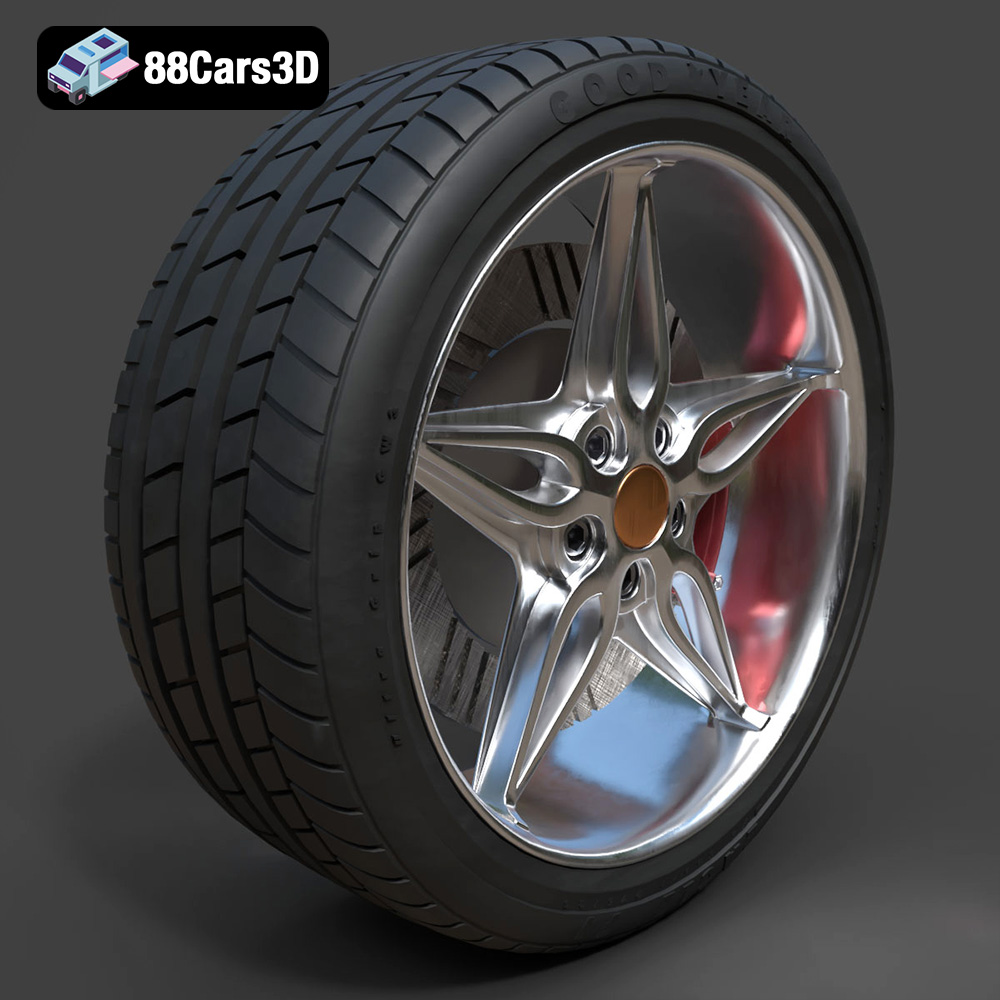
Texture: Yes
Material: Yes
Download the Wheel-001 Component 3D Model featuring clean geometry, realistic detailing, and a fully modeled interior. Includes .blend, .fbx, .obj, .glb, .stl, .ply, .unreal, and .max formats for rendering, simulation, and game development.
Price: $10.99

Texture: Yes
Material: Yes
Download the Carrier 006 3D Model featuring a robust design and detailed components. Includes .blend, .fbx, .obj, .glb, .stl, .ply, .unreal, and .max formats for rendering, simulation, and game development.
Price: $10.79

Texture: Yes
Material: Yes
Download the BMW 3 series Touring 335i (F31) 2013 3D Model featuring a highly detailed exterior, realistic interior, and modular design. Includes .blend, .fbx, .obj, .glb, .stl, .ply, .unreal, and .max formats for rendering, simulation, and game development.
Price: $30.79

Texture: Yes
Material: Yes
Download the BMW 3 Series E21 3D Model featuring authentic exterior design, detailed interior, and accurate proportions. Includes .blend, .fbx, .obj, .glb, .stl, .ply, .unreal, and .max formats for rendering, simulation, and game development.
Price: $20.79

Texture: Yes
Material: Yes
Download the BMW 1 Series 3-Door E81 3D Model featuring a detailed exterior, functional interior elements, and clean geometry. Includes .blend, .fbx, .obj, .glb, .stl, .ply, .unreal, and .max formats for rendering, simulation, and game development.
Price: $14.79

Texture: Yes
Material: Yes
Download the Mercedes-Benz S500 2022 3D Model featuring clean geometry, realistic detailing, and a fully modeled interior. Includes .blend, .fbx, .obj, .glb, .stl, .ply, .unreal, and .max formats for rendering, simulation, and game development.
Price: $19.99
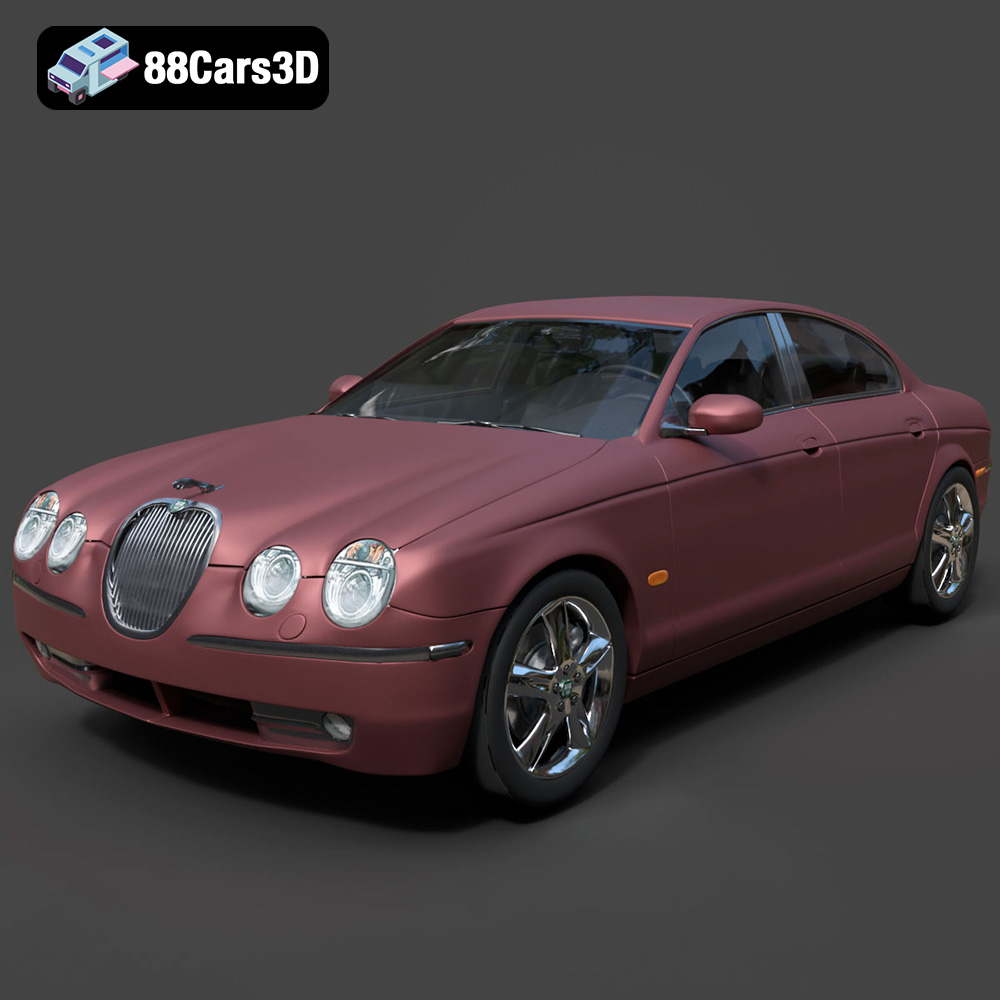
Texture: Yes
Material: Yes
Download the Jaguar S-Type Sedan 3D Model featuring clean geometry, realistic detailing, and a fully modeled interior. Includes .blend, .fbx, .obj, .glb, .stl, .ply, .unreal, and .max formats for rendering, simulation, and game development.
Price: $18.99
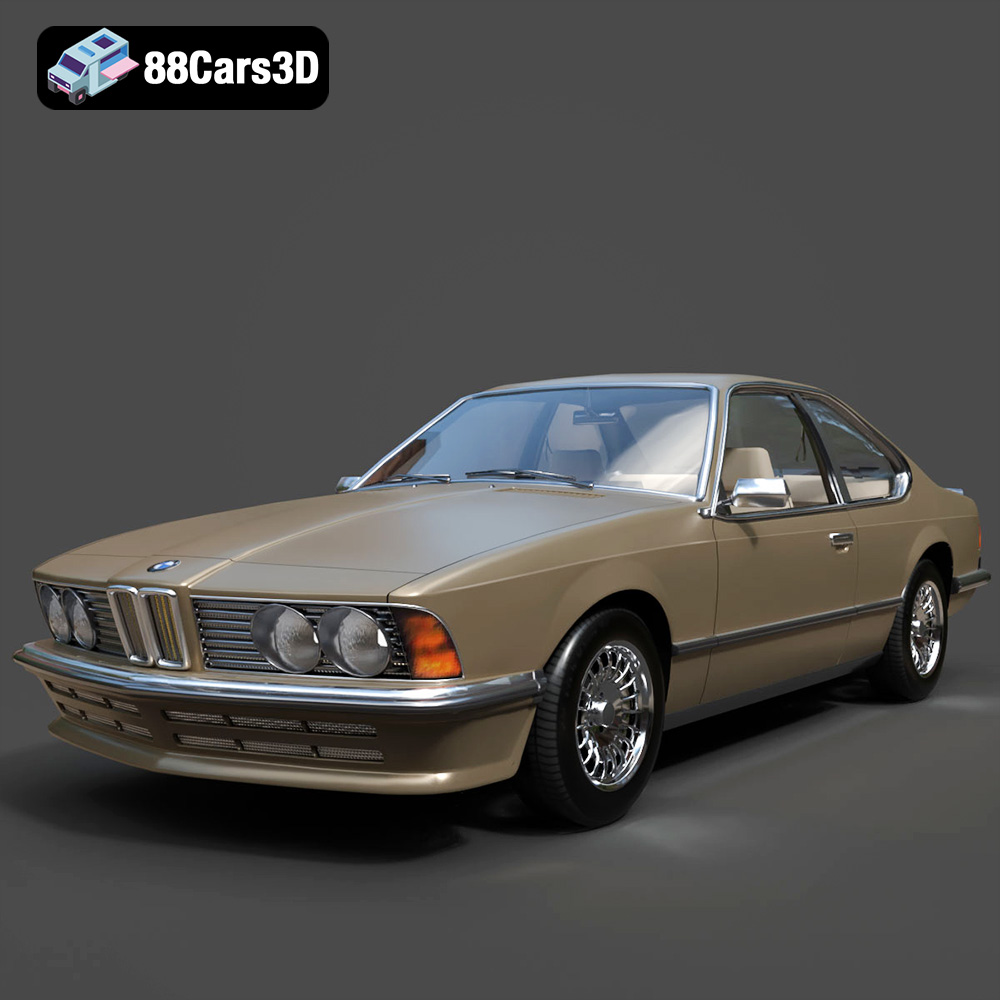
Texture: Yes
Material: Yes
Download the BMW 6 Series 1986 3D Model featuring clean geometry, realistic detailing, and a fully modeled interior. Includes .blend, .fbx, .obj, .glb, .stl, .ply, .unreal, and .max formats for rendering, simulation, and game development.
Price: $16.99
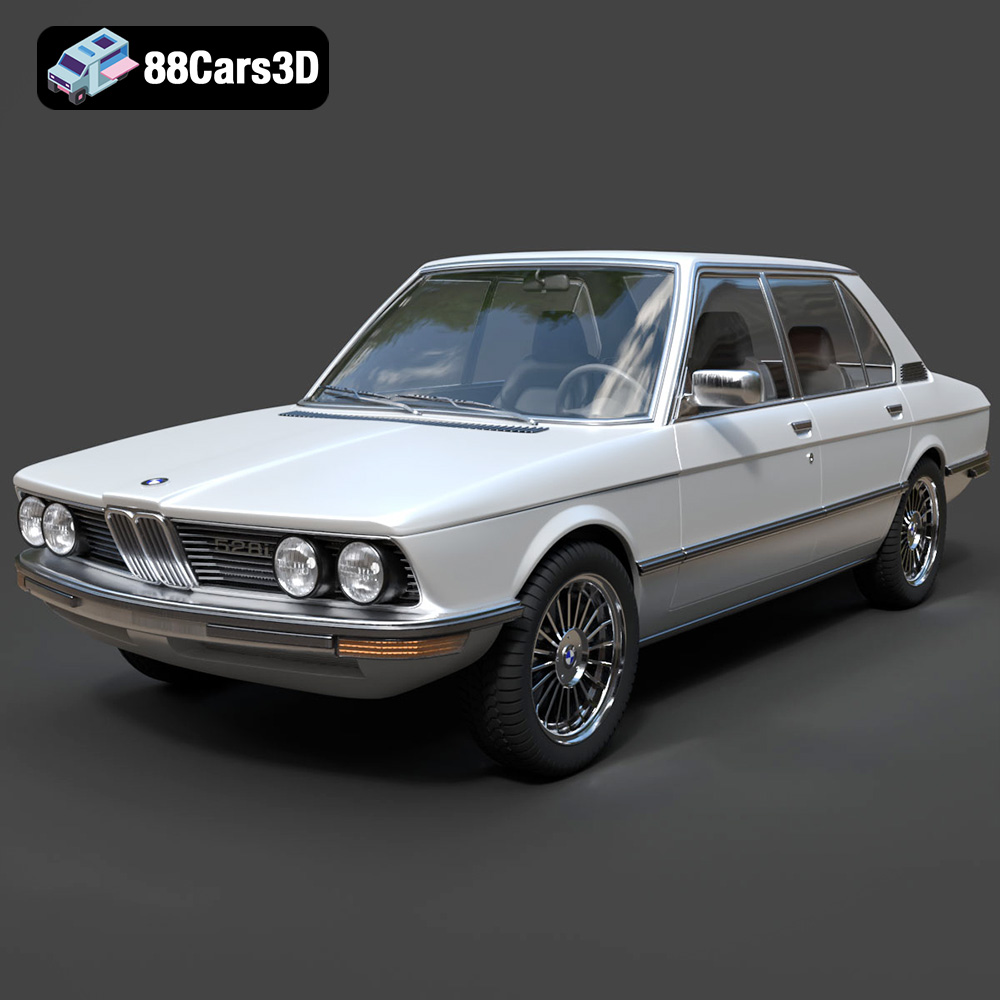
Texture: Yes
Material: Yes
Download the BMW 5 Series E12 528i 3D Model featuring clean geometry, realistic detailing, and a fully modeled interior. Includes .blend, .fbx, .obj, .glb, .stl, .ply, .unreal, and .max formats for rendering, simulation, and game development.
Price: $14.99

Texture: Yes
Material: Yes
Download the BMW 5 Series F10 3D Model featuring clean geometry, realistic detailing, and a fully modeled interior. Includes .blend, .fbx, .obj, .glb, .stl, .ply, .unreal, and .max formats for rendering, simulation, and game development.
Price: $14.99

