⚡ FLASH SALE: Get 60% OFF All Premium 3D & STL Models! ⚡

In the vast and dynamic world of real-time 3D, compelling visuals are paramount, but it’s the seamless, lifelike motion that truly brings digital worlds to life. Whether you’re crafting an immersive game experience, a detailed automotive visualization, or an interactive architectural walkthrough, the characters and objects within your scene must move with believable fluidity. This is where Unreal Engine’s Animation Blueprint system steps in, serving as the powerful central nervous system for all animated actors in your project.
Animation Blueprints provide a robust visual scripting environment that allows developers and artists to define complex animation logic, blending, and transitions without writing a single line of C++ code. From simple idle animations to intricate locomotion systems, dynamic facial expressions, and advanced inverse kinematics, mastering Animation Blueprints is crucial for elevating the realism and interactivity of your Unreal Engine projects. This comprehensive guide will delve deep into the essentials of Animation Blueprints, equipping you with the knowledge and best practices to animate your creations with professional polish and efficiency, ensuring your projects stand out in the competitive landscape of real-time rendering and interactive experiences.
Before diving into the intricacies of Animation Blueprints, it’s essential to understand the foundational assets they orchestrate: Skeletal Meshes and the various forms of animation data. A Skeletal Mesh is a special type of 3D model designed for animation, featuring a hierarchy of bones (the skeleton) that can be manipulated to deform the mesh. Unlike static meshes, skeletal meshes are the canvas upon which all character and complex object animation in Unreal Engine is painted.
When you acquire 3D assets, whether you’ve created them in a DCC tool like Maya or Blender or sourced them from high-quality marketplaces like 88cars3d.com for exceptional vehicle models, ensuring they are properly set up as skeletal meshes with a clean skeleton is the first critical step for animation. While 88cars3d.com specializes in automotive models often used for static scenes or physics-driven vehicles, understanding skeletal mesh principles is vital should you integrate characters or other complex animated elements into your automotive visualizations or game environments. A well-constructed skeletal mesh will have a logical bone hierarchy, correctly weighted vertices (skinning), and an origin point aligned with its root bone. These foundations directly impact the quality and flexibility of your animation pipelines.
The import process for skeletal meshes into Unreal Engine is straightforward but requires attention to detail. Typically, you’ll import an FBX file containing both the mesh and its associated skeleton. Unreal Engine will prompt you to specify if you’re importing a Skeletal Mesh, and you’ll often need to assign an existing Skeleton asset or create a new one. It’s crucial to be consistent with your skeleton assignments, especially when dealing with multiple characters that share a similar rig, as this enables powerful features like animation retargeting.
During import, pay close attention to settings such as ‘Import Mesh,’ ‘Import Materials,’ ‘Import Textures,’ and ‘Import Animations.’ For Skeletal Meshes, ensure ‘Import Mesh’ is checked and ‘Skeletal Mesh’ is selected. If your FBX contains animations, make sure ‘Import Animations’ is also enabled. Post-import, always verify the mesh’s appearance, material assignments, and the integrity of the skeleton in the Persona editor. Minor issues here can cascade into major headaches down the line when trying to animate or implement physics interactions. For detailed guidance on importing assets, refer to the official Unreal Engine documentation on importing FBX files at https://dev.epicgames.com/community/unreal-engine/learning.
Once your skeletal mesh and skeleton are in place, you’ll begin populating your project with animation data. The primary forms are Animation Sequences and Blend Spaces:
Creating effective Blend Spaces involves careful consideration of the constituent animation sequences, ensuring they loop seamlessly and share similar root motion characteristics to prevent pops or jarring transitions. The grid in the Blend Space editor allows you to visually define where each animation sits and how blending occurs across the parameter space, offering a powerful tool for crafting nuanced movement systems.
At the heart of every Animation Blueprint lies a sophisticated interplay between the Event Graph and the Anim Graph, where the latter prominently features State Machines. These two components work in concert to define when and how animations play, transition, and blend, creating a dynamic and responsive animation system for any Skeletal Mesh.
The Animation Blueprint itself is an asset created specifically for a given Skeleton. When you open an Animation Blueprint, you’ll be presented with several tabs, most notably the ‘Event Graph’ and the ‘Anim Graph.’ The ‘Event Graph’ functions much like a standard Blueprint Event Graph, allowing you to define logic using variables, events, and functions. This is where you calculate parameters (like character speed, direction, or health) that will drive the animation logic. The ‘Anim Graph,’ on the other hand, is dedicated solely to constructing the animation pose. It contains nodes like State Machines, Blend Spaces, Sequence Players, and various modifiers that ultimately output the final pose for the Skeletal Mesh.
State Machines are arguably the most powerful feature within the Anim Graph for managing complex animation logic. They allow you to define a finite set of states (e.g., ‘Idle,’ ‘Walk,’ ‘Run,’ ‘Jump,’ ‘Attack’) and the rules (transition rules) that govern how the animation system moves from one state to another. This approach makes it incredibly intuitive to visualize and manage intricate animation flows, ensuring animations play at the correct times and blend smoothly.
Each state within a State Machine can contain its own animation logic, which might be a simple Animation Sequence Player, a complex Blend Space, or even another nested State Machine for hierarchical control. For example, a ‘Locomotion’ state might contain a Blend Space that blends between Idle, Walk, and Run animations based on a ‘Speed’ variable calculated in the Event Graph. When setting up transition rules between states, you define conditions that must be met for a transition to occur (e.g., ‘Speed > 0.1’ to transition from Idle to Walk). You can also specify blend durations for these transitions, ensuring a seamless visual change rather than an abrupt cut. Proper use of State Machines leads to highly maintainable and scalable animation systems, which is crucial for projects with a large number of animations or complex character behaviors.
While the Anim Graph focuses on pose generation, the Event Graph is where you connect your Animation Blueprint to the wider game logic. Here, you define and update the variables that the Anim Graph’s State Machines and other nodes will use to make decisions. Common variables include:
These variables are typically updated using the ‘Event Blueprint Update Animation’ node, which executes every frame. Within this event, you can cast to the owning actor (e.g., your Character Blueprint) to retrieve relevant information like current velocity, health, or input states. You then set the corresponding Animation Blueprint variables, which are then exposed and used in the Anim Graph.
Furthermore, the Event Graph handles animation notifies and events. Animation Notifies are custom events triggered at specific points within an Animation Sequence. For instance, a ‘Footstep’ notify could be placed on a walk animation to play a sound effect or spawn a particle effect precisely when the foot hits the ground. Similarly, ‘Animation Montage’ events can be handled here to respond to completed montage sections or blend-out notifications. This synergy between the Event Graph’s data processing and the Anim Graph’s pose generation forms the backbone of responsive and dynamic animation in Unreal Engine, allowing for intricate control over character behaviors and reactions.
To move beyond basic locomotion and achieve truly professional-grade animation, Unreal Engine provides a suite of advanced tools for blending, prioritizing, and layering animations. These tools allow artists and developers to create nuanced and reactive character movements that adapt seamlessly to various game states, player inputs, and environmental interactions. Leveraging these features effectively is key to delivering a polished and immersive user experience.
We touched upon Blend Spaces earlier, but their true power lies in their versatility for creating smooth, data-driven animation. Blend Spaces (both 1D and 2D) are fundamental for any character with varying movement states. A 1D Blend Space is perfect for interpolating along a single parameter. For instance, blending an Idle animation at 0 speed, a Walk animation at 200 units/second, and a Run animation at 600 units/second based on the character’s current speed. The editor allows you to visualize the blending, ensuring that transitions are fluid and free of hitches. You can also assign different ‘interpolation times’ to the blend parameters, dictating how quickly the system reacts to changes in input, which can be crucial for responsive yet natural-feeling control.
2D Blend Spaces extend this concept to two parameters, opening up possibilities for more complex movement. Imagine a character’s locomotion system where ‘Speed’ is one axis and ‘Direction’ (e.g., -180 to 180 degrees) is the other. This allows you to blend between Idle, Forward Walk/Run, Backward Walk/Run, and various strafing animations all within a single asset. This drastically reduces the number of state machine states needed for directional movement and provides incredibly smooth transitions between all permutations. When constructing these, it’s vital to use animation clips that are consistent in their root motion and timing to ensure seamless blending across the entire parameter space. Proper setup avoids the uncanny valley effect often associated with poor animation blending.
While State Machines handle continuous locomotion, there are often situations where you need to play a specific, non-looping animation that should temporarily override or layer on top of the current locomotion state. This is precisely the role of Animation Montages. Montages are composite animation assets that allow you to segment, sequence, and blend multiple animation sequences, often with different play rates, sections, and even custom blend-in/blend-out times. They are perfect for actions like attacks, dodges, reloads, specific emotes, or even character reactions to damage.
A key feature of Montages is their ability to specify different ‘slots’ (or layers) onto which they can play. For instance, an attack montage might play on the ‘DefaultSlot’ to fully override the lower body locomotion, while a hand gesture montage might play on a ‘UpperBodySlot’ to layer on top of the existing locomotion. Montages are typically triggered from the character’s C++ code or Blueprint Event Graph using the ‘Play Montage’ node, allowing for precise control over when and how these high-priority animations execute. They offer powerful event handling through ‘Montage Notifies,’ enabling you to trigger gameplay events (like dealing damage) at precise points within the montage’s timeline, making them indispensable for interactive gameplay.
Achieving truly nuanced animation often requires blending animations not just horizontally (e.g., Idle to Run) but also vertically (e.g., an upper body gesture over a lower body walk). Unreal Engine facilitates this through Layered Blending. Within the Anim Graph, nodes like ‘Layered Blend Per Bone’ allow you to specify a bone and blend a secondary animation graph (or a single sequence) on top of the primary animation, starting from that bone and extending down its hierarchy. This is invaluable for combining a character’s walking animation with a separate arm waving animation, or a character aiming a weapon while still moving. By meticulously defining the blend depth and bone exclusion/inclusion, you can create complex, believable composite movements without needing individual animations for every combination.
Furthermore, managing multiple characters or elements that need to animate in perfect synchrony can be challenging. Sync Groups address this by ensuring that related animation assets (like an “Idle” animation for multiple characters in a scene) play at the exact same point in their respective timelines, even if their play rates differ slightly or they start at different times. This is particularly useful for character groups or when animating intricate environmental interactions where timing is critical. You assign a Sync Group name to relevant animation nodes within the Anim Graph, and Unreal Engine automatically handles the synchronization, ensuring a cohesive and professional presentation for your animated scenes.
While forward kinematics (FK), where you directly animate each bone in the hierarchy, is fundamental, real-world interactions often demand a more intuitive and physically-driven approach. This is where Inverse Kinematics (IK) shines, allowing you to manipulate effectors (like hands or feet) and have the system calculate the required joint rotations. Complementing this, Animation Modifiers provide powerful tools for batch processing and transforming animation data, streamlining complex production workflows.
Inverse Kinematics is a technique that calculates the joint angles required to reach a specific target position for an end effector. Unreal Engine offers two primary types of IK solvers for character animation:
Implementing IK effectively requires careful planning of your skeleton hierarchy and understanding the limits of the solver. Over-extending a limb or placing the target in an unreachable position can lead to visual artifacts. IK is a powerful tool for achieving dynamic character interactions and adding a layer of realism that pre-animated sequences alone cannot provide.
Animation Modifiers are a relatively new but incredibly powerful feature in Unreal Engine designed to streamline animation pipelines. They are assets that contain Blueprint logic to perform transformations, calculations, or data extractions on animation sequences in a non-destructive, batch-oriented manner. Instead of manually editing individual animation clips, you can create an Animation Modifier to apply a change across many animations simultaneously.
Common uses for Animation Modifiers include:
Another essential aspect of managing animation across different characters is Animation Retargeting. Unreal Engine’s Retarget Manager (accessed through the Skeleton asset) allows you to map bones between different skeletons, enabling you to reuse animation sequences across characters that might have different proportions or bone names but share a similar structure. This is a massive time-saver for projects with multiple characters, as you don’t need to create unique animation sets for each one. The system works by analyzing the reference pose (A-pose or T-pose) of each skeleton and then transforming the animation data to fit the target skeleton. Proper setup of the retargeting source and target, along with careful adjustment of bone translations and rotations, ensures high-quality retargeted animations. This often involves creating an ‘IK Rig’ and ‘IK Retargeter’ asset to precisely control how bones translate and rotate from one skeleton to another, offering advanced options for solving common retargeting issues and ensuring consistent results across diverse character models.
While Animation Blueprints offer incredible flexibility and power, complex setups can quickly become performance bottlenecks if not managed carefully. In real-time environments, especially for games or high-fidelity visualizations that might run on various hardware, maintaining optimal animation performance is crucial. Equally important is the ability to effectively debug your Animation Blueprint logic when things don’t behave as expected.
Optimizing your Animation Blueprints involves several key strategies:
For large-scale projects, or even for high-quality single-character interactions, maintaining an efficient animation pipeline ensures that your project runs smoothly across target platforms, whether it’s for game development or highly detailed automotive visualization where every frame counts.
Unreal Engine offers a robust set of tools for debugging and profiling Animation Blueprints:
Regularly debugging and profiling your Animation Blueprints throughout development is a professional best practice. It not only helps you fix issues quickly but also guides you toward more performant and scalable animation system designs. With these tools, you can ensure that your meticulously crafted animations deliver maximum visual impact with minimal performance cost, contributing to a smooth and immersive experience for your audience.
The journey through Unreal Engine’s Animation Blueprint Essentials reveals a powerful and sophisticated system designed to bring static 3D models to vibrant life. From the foundational understanding of Skeletal Meshes and Animation Sequences to the intricate logic of State Machines, the versatility of Blend Spaces, the precision of Animation Montages, and the realism offered by Inverse Kinematics, each component plays a critical role in crafting believable and engaging character animations.
Mastering these tools is not merely about making a character move; it’s about imbuing them with personality, responsiveness, and a sense of physical presence within your digital world. Whether you’re a game developer striving for fluid player controls, an automotive visualization artist integrating animated figures into your scenes, or an AR/VR creator building immersive interactive experiences, the principles of Animation Blueprints are universally applicable and profoundly impactful. Remember, high-quality assets, like the meticulously crafted 3D car models available on platforms such as 88cars3d.com, form the visual backbone of your projects. Complementing these with equally high-fidelity animation workflows ensures a seamless and professional presentation across the board.
As you continue your Unreal Engine development, always prioritize performance optimization through smart graph design, efficient use of LODs, and proper animation compression. Leverage Unreal Engine’s robust debugging and profiling tools to identify and resolve issues early, ensuring your animated characters run smoothly across all target platforms. The path to truly immersive real-time experiences is paved with attention to detail, and a deep understanding of Animation Blueprints is an indispensable asset on that journey. Keep experimenting, keep learning, and watch your creations move with unparalleled realism and engagement.
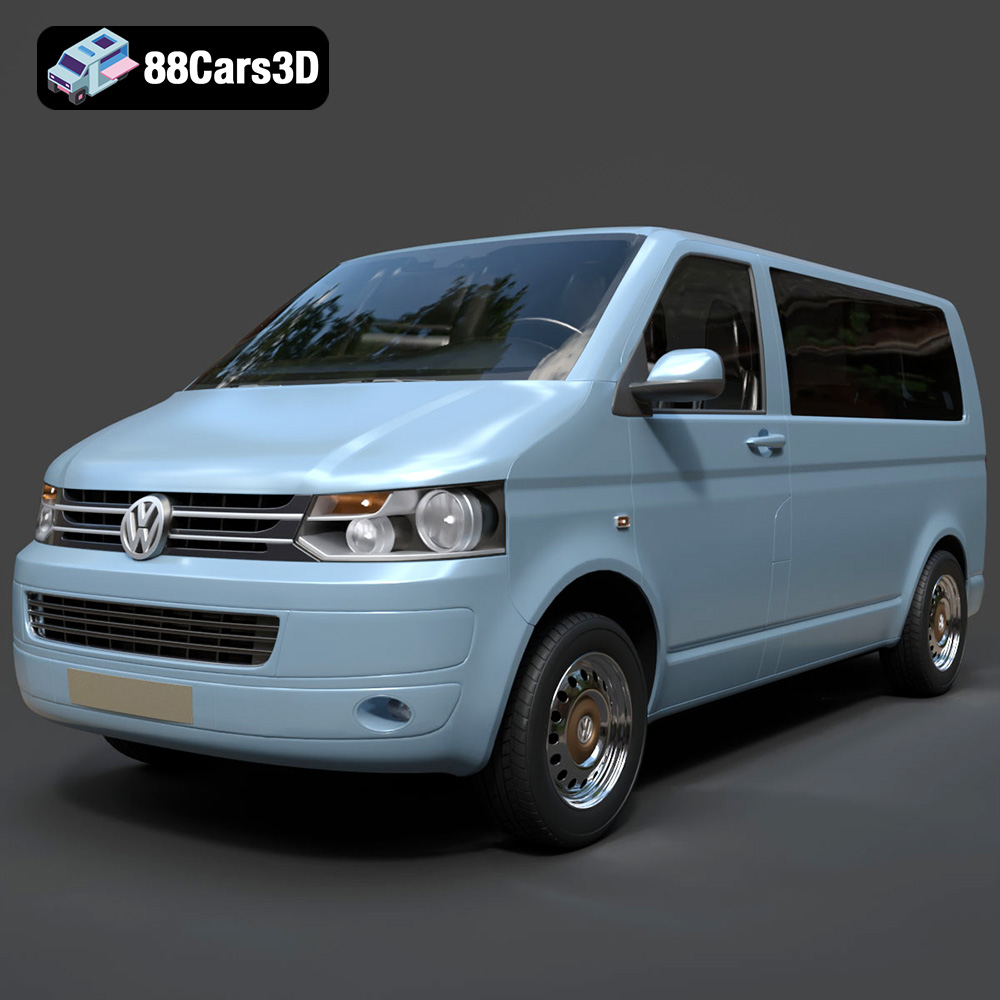
Texture: Yes
Material: Yes
Download the Volkswagen Transporter T5 FL 2010 3D Model featuring clean geometry, realistic detailing, and a fully modeled interior. Includes .blend, .fbx, .obj, .glb, .stl, .ply, .unreal, and .max formats for rendering, simulation, and game development.
Price: $22.99
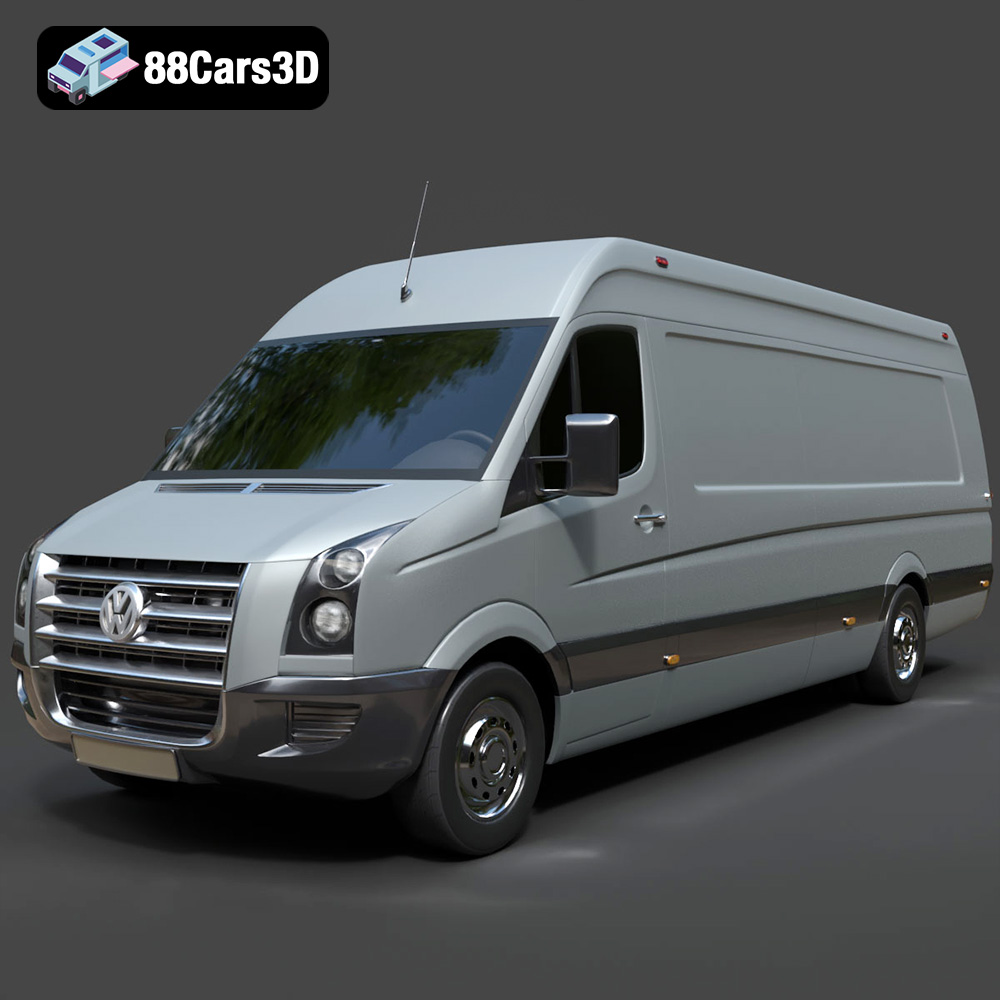
Texture: Yes
Material: Yes
Download the Volkswagen Crafter 2020 3D Model featuring clean geometry, realistic detailing, and a fully modeled interior. Includes .blend, .fbx, .obj, .glb, .stl, .ply, .unreal, and .max formats for rendering, simulation, and game development.
Price: $22.99
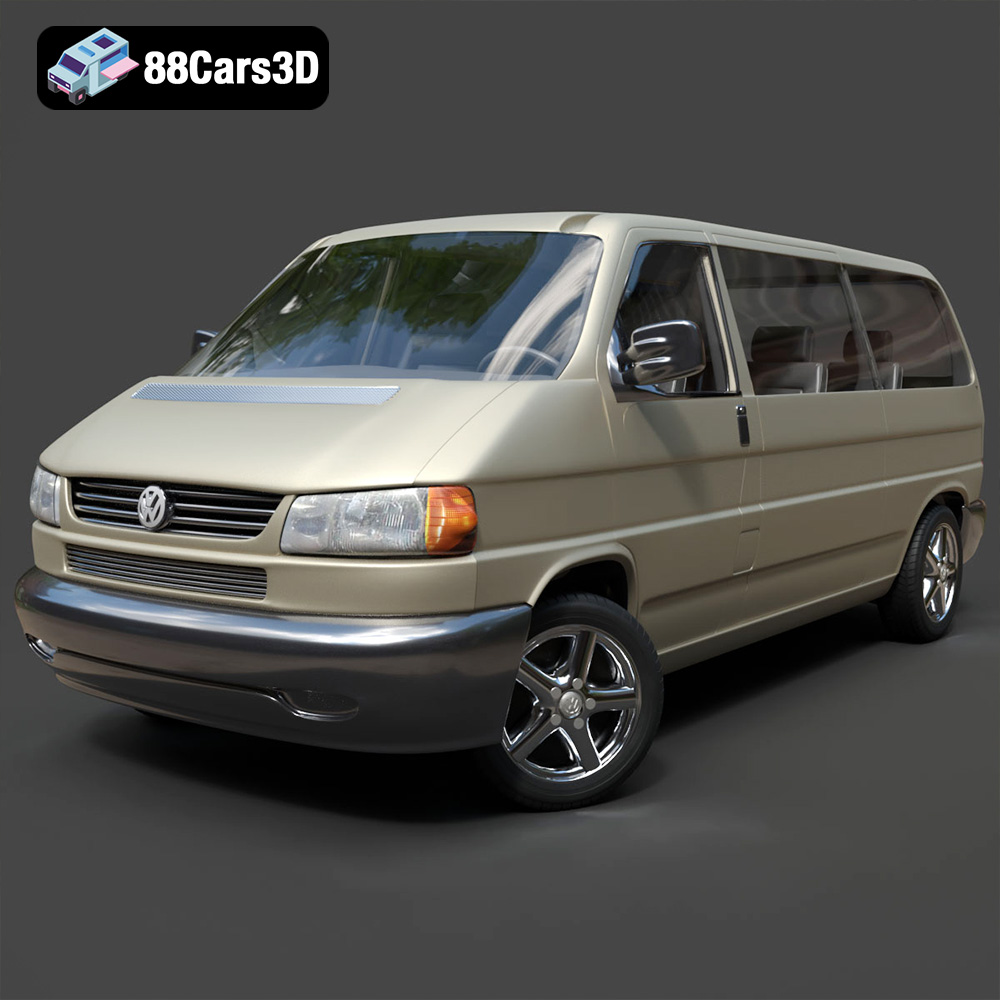
Texture: Yes
Material: Yes
Download the Volkswagen Caravelle 3D Model featuring a detailed exterior, functional interior, and optimized topology. Includes .blend, .fbx, .obj, .glb, .stl, .ply, .unreal, and .max formats for rendering, simulation, and game development.
Price: $23.99
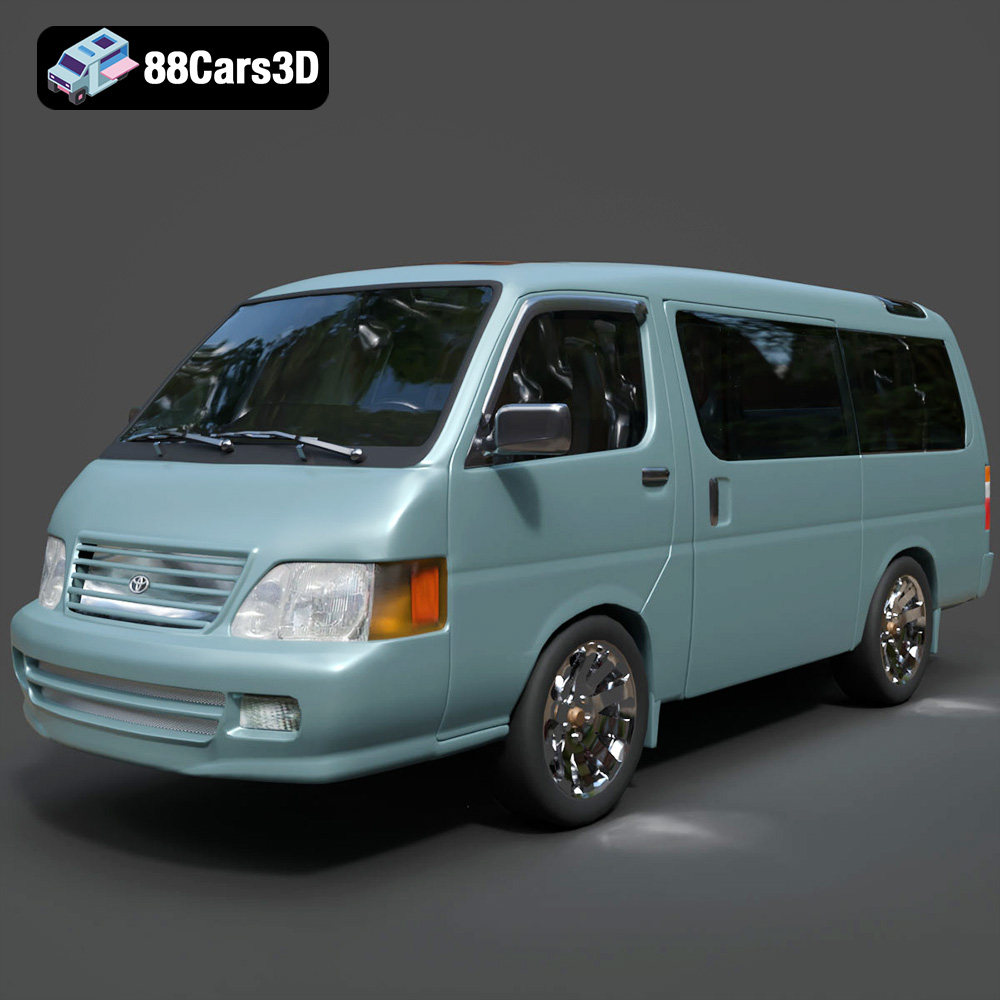
Texture: Yes
Material: Yes
Download the Toyota Hiace 3D Model featuring versatile design and detailed exterior. Includes .blend, .fbx, .obj, .glb, .stl, .ply, .unreal, and .max formats for rendering, simulation, and game development.
Price: $21.99
Texture: Yes
Material: Yes
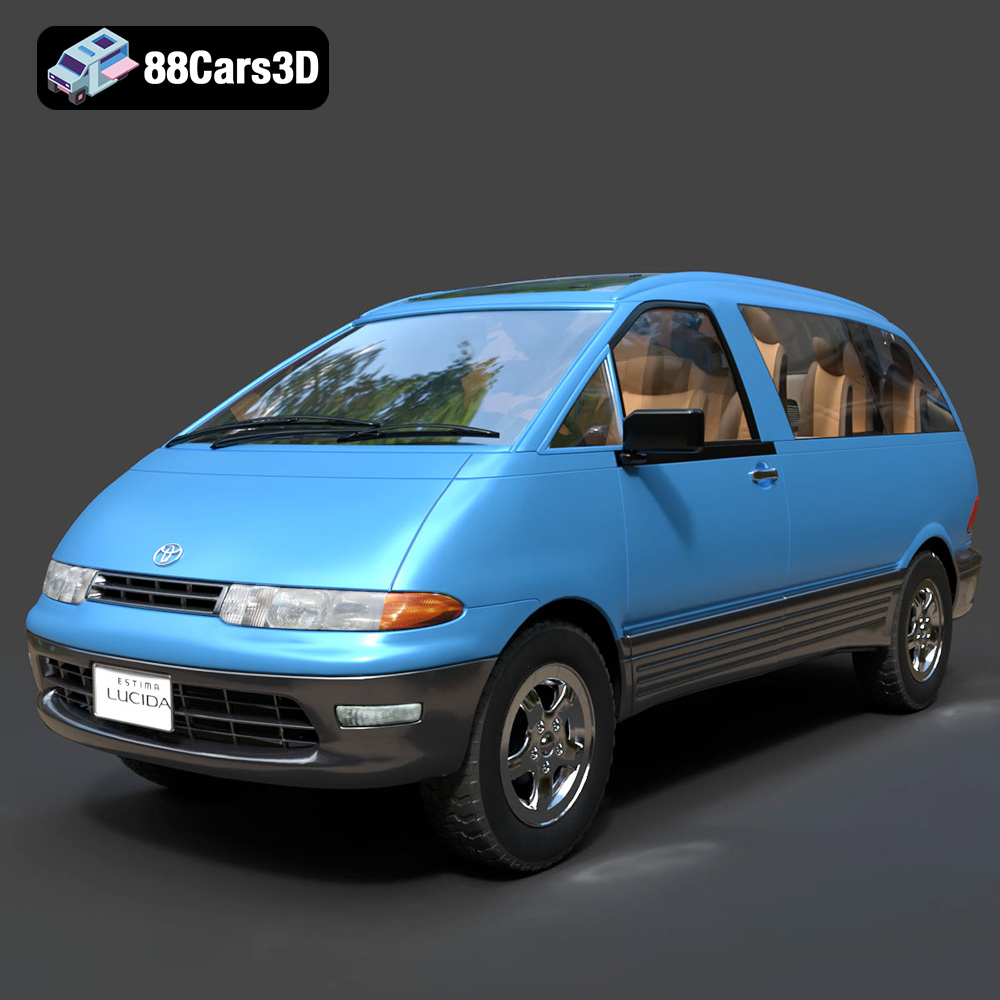
Download the Toyota Estima Lucida 3D Model featuring its iconic compact MPV design, versatile interior, and accurate exterior details. Includes .blend, .fbx, .obj, .glb, .stl, .ply, .unreal, and .max formats for rendering, simulation, and game development.
Price: $24.99

Texture: Yes
Material: Yes
Download the Toyota Alphard 3D Model featuring a detailed luxury minivan design with an accurate exterior and interior. Includes .blend, .fbx, .obj, .glb, .stl, .ply, .unreal, and .max formats for rendering, simulation, and game development.
Price: $21.99
Texture: Yes
Material: Yes
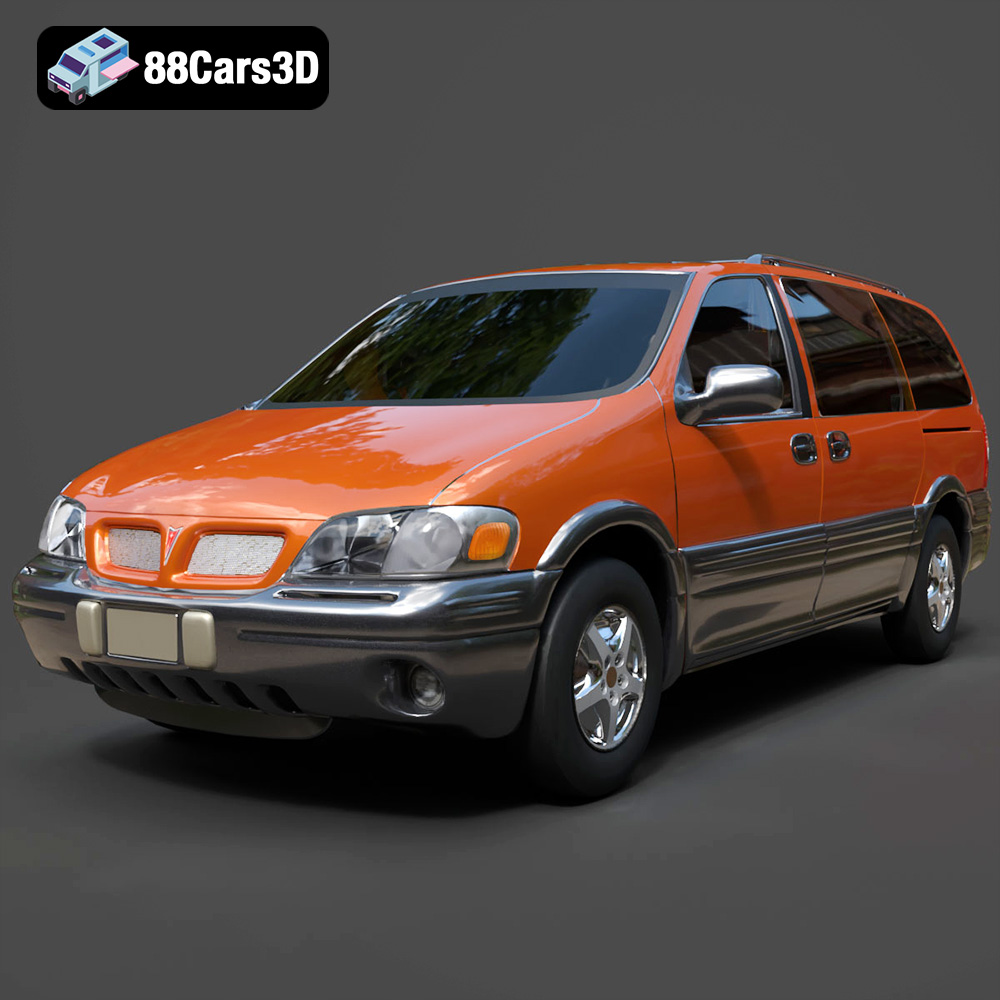
Download the Pontiac Montana 1998 3D Model featuring a detailed exterior, functional interior, and optimized mesh. Includes .blend, .fbx, .obj, .glb, .stl, .ply, .unreal, and .max formats for rendering, simulation, and game development.
Price: $21.99
Texture: Yes
Material: Yes
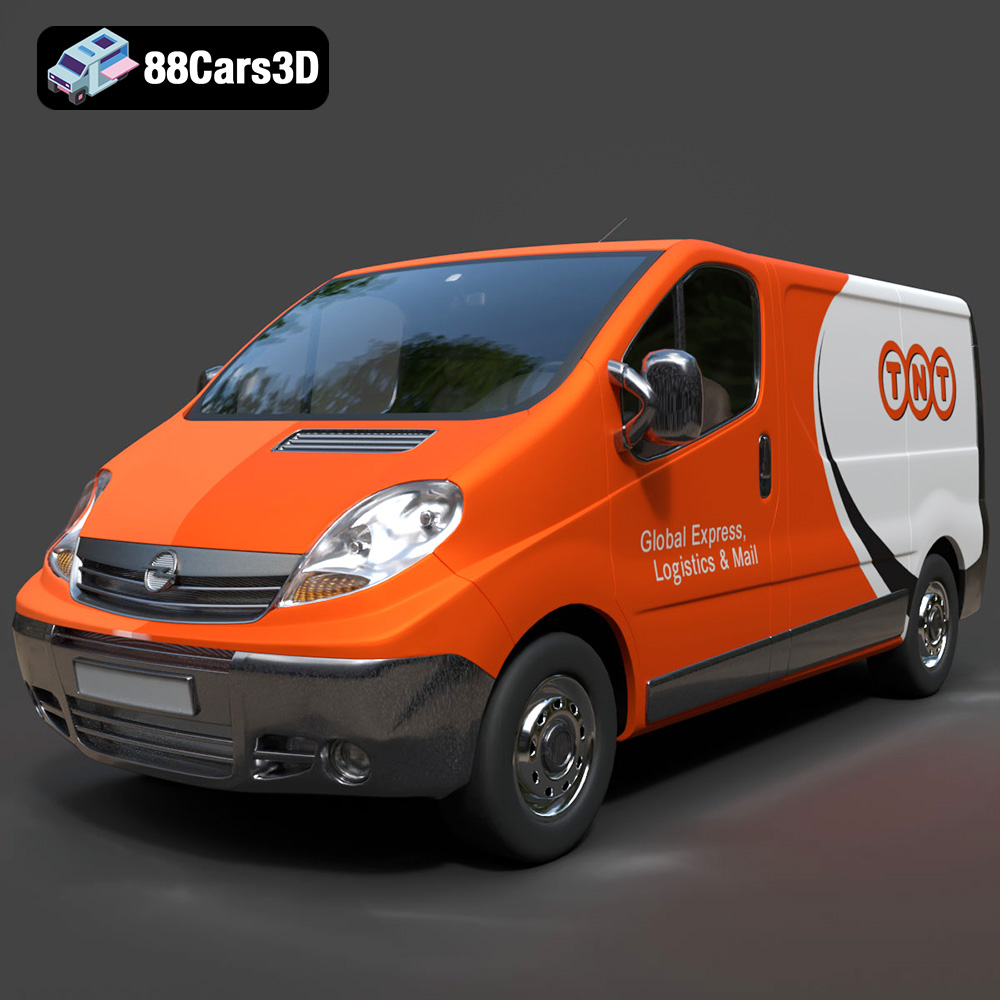
Download the Opel Vivaro 3D Model featuring a versatile commercial van design with balanced detailing. Includes .blend, .fbx, .obj, .glb, .stl, .ply, .unreal, and .max formats for rendering, simulation, and game development.
Price: $21.99
Texture: Yes
Material: Yes
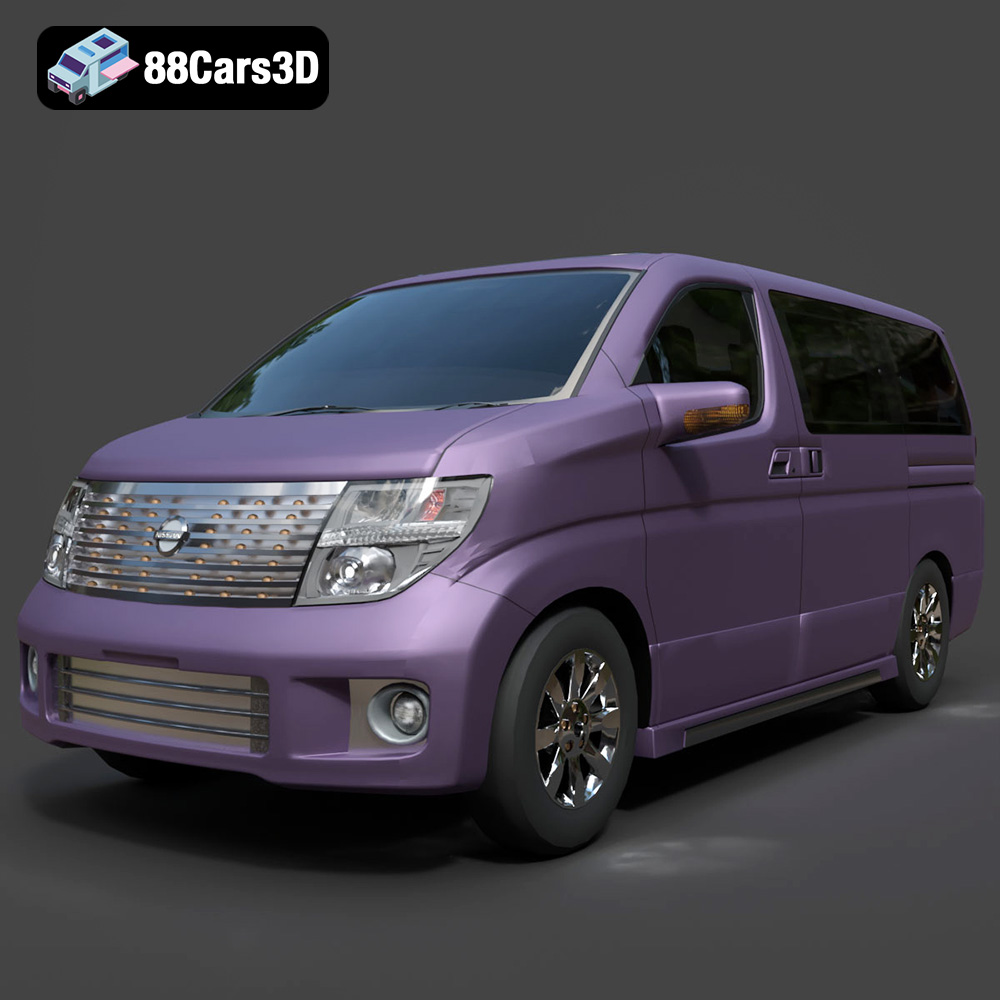
Download the Nissan Elgrand 3D Model featuring a versatile minivan design. Includes .blend, .fbx, .obj, .glb, .stl, .ply, .unreal, and .max formats for rendering, simulation, and game development.
Price: $21.99
Texture: Yes
Material: Yes
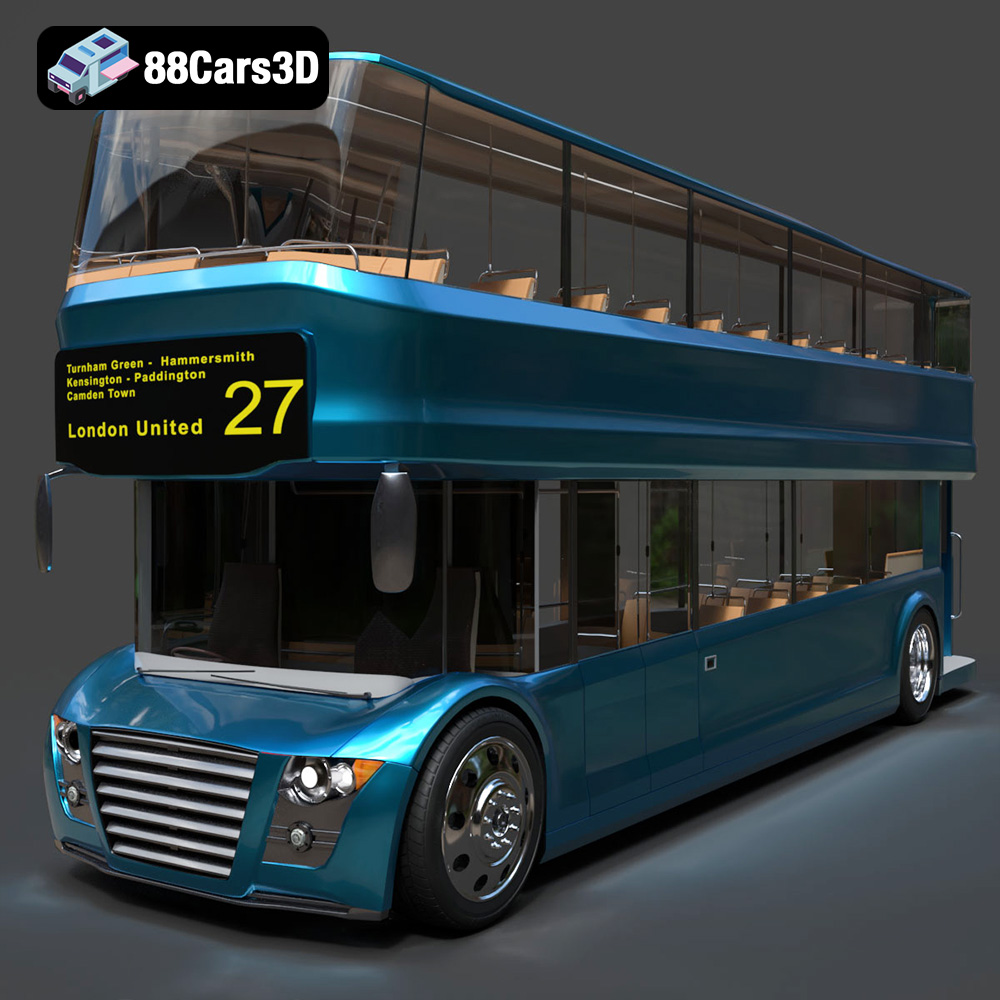
Download the New Bus For London 3D Model featuring a detailed exterior and interior, optimized for rendering and animation. Includes .blend, .fbx, .obj, .glb, .stl, .ply, .unreal, and .max formats for rendering, simulation, and game development.
Price: $21.99

