⚡ FLASH SALE: Get 60% OFF All Premium 3D & STL Models! ⚡

“`html
Embarking on a 3D printing journey, especially when diving into the intricate world of automotive models, often means navigating a sea of file formats. You’ve downloaded a stunning printable car model from a marketplace like 88cars3d.com, ready to bring it to life on your 3D printer. But before you hit ‘slice,’ a crucial question arises: which file format will yield the best results? While many might assume all 3D models are created equal, the underlying file format significantly impacts print quality, workflow efficiency, and the very integrity of your model. This comprehensive guide will demystify the common 3D file formats – STL, OBJ, and FBX – dissecting their strengths, weaknesses, and ideal use cases, particularly within the context of 3D printing detailed automotive replicas. We’ll explore their structure, how they handle geometry and color, and provide actionable advice to ensure your next print is a resounding success. Prepare to gain a deeper understanding of the digital building blocks that form your physical creations.
At its core, a 3D file format is a digital blueprint that describes the shape, appearance, and sometimes even the internal structure of a three-dimensional object. When you’re working with 3D printing, these formats are the bridge between the digital design world and the physical reality produced by your printer. They essentially tell the printer’s software (the slicer) how to construct the object layer by layer. The choice of format can influence everything from how smoothly curves are rendered to whether color information is preserved, and crucially, how easily the model can be processed for printing. Each format has its own history, design philosophy, and technical specifications, making some inherently better suited for specific tasks than others. For enthusiasts and professionals alike, understanding these nuances is key to maximizing the potential of 3D printing, especially when dealing with complex geometries found in detailed car models.
The most fundamental aspect of any 3D file format is how it represents the object’s geometry. This refers to the vertices (points in 3D space), edges (lines connecting vertices), and faces (surfaces bounded by edges) that form the ‘skin’ of the 3D model. The way these components are structured and organized is known as the topology. For 3D printing, a ‘manifold’ or ‘watertight’ mesh is paramount. This means the model has no holes, no internal faces, and no non-manifold edges (edges shared by more than two faces). If a mesh isn’t manifold, the slicer software will struggle to determine where the ‘inside’ and ‘outside’ of the object are, leading to errors during slicing, incomplete prints, or models that fail during assembly. Formats differ in how strictly they enforce or how easily they can represent manifold geometry.
While 3D printing is primarily concerned with shape, some formats go beyond basic geometry. They can store information about an object’s color, surface textures (UV mapping and texture files), and even metadata like units of measurement or author information. For hobbyists and collectors who plan to paint their 3D prints, especially detailed car models, the ability to preserve UV coordinates or vertex colors can be beneficial, although most standard FDM and resin printers primarily print in a single color per material. However, for advanced multi-material or full-color printing technologies, these additional data points become critical. Understanding which formats support these features, and how they are interpreted by slicing software, is important for achieving the desired visual outcome.
When you hear ‘3D printing file format,’ STL is almost certainly the first one that comes to mind, and for good reason. Developed by 3D Systems in the 1980s, STL has become the de facto standard for additive manufacturing. Its simplicity is its greatest strength: it describes a 3D model as a collection of interconnected triangles. Every surface of the object is broken down into a mesh of these triangles, defined by the coordinates of their vertices. This triangulation approach is universally understood by nearly all 3D printing slicer software and hardware. For the vast majority of 3D printing applications, especially when downloading print-ready files from platforms like 88cars3d.com, STL is the format you’ll encounter and likely use. Its ubiquity means excellent compatibility and minimal processing hurdles for standard prints.
The core of an STL file is its tessellation – the process of approximating a smooth surface with flat polygons, specifically triangles. The file can be either ASCII (text-based, human-readable, larger file size) or binary (more compact, faster to parse). A binary STL file defines each triangle by a normal vector (indicating the direction the triangle’s surface faces, crucial for determining inside/outside) and the 3D coordinates of its three vertices. The key limitation here is that STL only stores geometric information. It has no concept of colors, textures, units, or even which side is the ‘inside’ or ‘outside’ inherently, relying solely on the orientation of the normal vectors. Complex curves and intricate details are represented by a large number of small triangles; the more triangles, the higher the resolution and file size, but also potentially the smoother the final print.
Advantages:
Disadvantages:
For printing detailed car models from 88cars3d.com, STL is often the best choice because the models are specifically prepared for this format, ensuring manifold geometry and optimized triangulation for clean prints.
The OBJ file format, developed by Autodesk, offers a more versatile approach than STL. While it also represents geometry using polygons (though it can support quads and n-gons in addition to triangles), its major advantage lies in its ability to store additional data. OBJ files can include vertex colors, UV coordinates for texture mapping, and material definitions (often referencing an accompanying .MTL file). This makes OBJ a popular choice for 3D modeling, animation, and game development, where visual fidelity is crucial. For 3D printing, OBJ can be advantageous if you intend to utilize multi-color printing or apply complex textures, though standard slicers still primarily interpret the geometric data. The ability to store UV coordinates can sometimes help in orienting complex models for optimal printing or understanding how textures would wrap around the object.
OBJ files represent geometry using vertices (v), texture coordinates (vt), and vertex normals (vn). Faces are then defined referencing these components (f). This structure allows for more complex representations of surfaces compared to STL’s exclusive reliance on triangles. For example, an OBJ face can be defined as a quad (four vertices) or even an n-gon (many vertices), which can lead to cleaner geometry in the source software. Crucially, OBJ files can also define material properties and link to texture image files via an associated .MTL (Material Template Library) file. This .MTL file specifies color, reflectivity, transparency, and the texture maps to be applied. While most standard 3D printers can’t directly use this color information to print in multiple colors (unless specifically designed for it), the UV coordinates can be invaluable for post-processing, such as knowing where to paint details on a complex model.
OBJ files offer a middle ground, providing more data than STL without the complexity of formats like FBX.
However, for direct slicing on standard FDM or resin printers, the slicer will typically convert the OBJ geometry into a triangle mesh, similar to STL. The extra information might be ignored or require specific plugins or advanced slicer settings to interpret. If a model is provided in both STL and OBJ, and you’re not using advanced multi-color features, the STL is usually the safer, more direct choice for compatibility. If the OBJ has cleaner base geometry (e.g., using fewer, larger polygons before triangulation), it *might* offer a slight advantage.
While OBJ is versatile, it’s not without its challenges for direct 3D printing:
For standard single-color prints, using an STL file that has been properly exported from the source software is generally more straightforward and less prone to unexpected interpretation errors.
FBX, developed by Autodesk, is a highly sophisticated file format designed primarily for the exchange of 3D assets between different software applications in the animation, game development, and visual effects industries. It’s a powerhouse of features, capable of storing not only complex geometry (including NURBS, subdivision surfaces, and polygonal meshes) but also animation data (skeletal animation, morph targets), camera information, lighting, and sophisticated material and texture setups. While FBX is incredibly powerful for digital content creation, its complexity makes it less directly suitable for the fundamental needs of most 3D printing workflows. Most standard 3D printers and slicers are not equipped to interpret the full range of data contained within an FBX file, requiring significant conversion steps.
The strength of FBX lies in its comprehensive nature. It can store:
This extensive data set makes FBX ideal for inter-application workflows but presents challenges for direct 3D printing, which typically only requires the static geometric representation of an object.
Directly importing an FBX file into most slicer software is often problematic. The slicer might:
If you obtain a model in FBX format that you intend to 3D print, the recommended workflow is to open the FBX in a capable 3D modeling application, ensure the geometry is clean, watertight, and appropriately scaled, and then export it as an STL or OBJ file. The animation and complex scene data will be irrelevant for a static 3D print.
While not directly printable, FBX files can be relevant in the 3D printing pipeline in specific scenarios:
For typical users downloading car models for printing, FBX is usually overkill and requires extra steps. Focus on models provided in STL or optimized OBJ formats from reputable sources like 88cars3d.com.
When the rubber meets the road – or rather, when the filament meets the build plate – the choice of file format significantly impacts your 3D printing success. Let’s directly compare STL, OBJ, and FBX across key criteria relevant to hobbyists and professionals alike.
STL’s strength is its directness. It *is* a mesh of triangles, which is exactly what slicers need. Its quality depends entirely on the density of these triangles. Too few, and curves appear blocky. Too many, and file sizes become unwieldy. OBJ can offer cleaner source geometry if exported from software using quads or n-gons, potentially leading to a better-quality triangulation during conversion to STL. However, the final print quality still hinges on the slicer’s triangulation process and the printer’s resolution. FBX, while capable of representing smooth NURBS surfaces, requires conversion to a polygonal mesh for printing, meaning its inherent smoothness is lost unless the conversion is exceptionally well-handled. For standard prints, a well-prepared STL often outperforms a poorly converted OBJ or FBX.
This is where STL falls short. It has no native support for color or texture. OBJ can store UV coordinates and link to material files (.MTL), which is useful for guiding painting or for multi-material printers that can interpret this data. However, most standard FDM/resin printers only print in one color per object. FBX is the most capable, supporting complex shaders and textures, but again, this is largely wasted on single-extruder printers. For multi-color or full-color 3D printing technologies, formats like 3MF or AMF are often preferred over OBJ, though OBJ’s UV data can still be beneficial.
Binary STL files are generally more compact than ASCII STLs and often smaller than equivalent OBJ files, especially for models with complex curvature represented by many small triangles. FBX files can be significantly larger due to the extensive data they contain (animations, scene info, etc.). Slicing speed is also impacted; simpler STL files are typically processed faster by slicers than OBJ or FBX files that require more complex geometric interpretation or conversion.
STL wins hands down for ease of use and compatibility. It’s plug-and-play with virtually every slicer and 3D printer. OBJ is widely supported but may require more careful handling and occasional conversion. FBX is the least compatible for direct printing and almost always requires an intermediate conversion step using dedicated 3D modeling software.
Regardless of the source file format, proper preparation is key to achieving high-quality 3D prints, especially for detailed automotive models. This involves ensuring the digital model is ‘watertight,’ correctly scaled, and optimized for the printing process.
The most common failure point in 3D printing stems from non-manifold geometry – holes, inverted faces, internal walls, or edges shared by more than two faces. These ‘errors’ prevent the slicer from understanding the solid volume of the object. Software like Meshmixer, Netfabb, or Blender have powerful tools for detecting and repairing these issues.
Platforms like 88cars3d.com typically provide models that are already repaired and manifold, saving you significant preprocessing time.
Before slicing, ensure your model is at the desired real-world scale. STL files often lack unit information, so double-check the dimensions in your slicer. Proper orientation on the build plate is crucial for print success and minimizing support structures. Consider:
For intricate car models, orienting them to showcase details while minimizing support scarring is a balancing act.
The slicer software translates your 3D model into layer-by-layer instructions (G-code). Key settings to optimize for car models include:
Experimentation with these settings on test prints is highly recommended.
Navigating the world of 3D file formats can seem daunting, but understanding the core differences between STL, OBJ, and FBX empowers you to make informed decisions for your 3D printing projects. For the vast majority of 3D printing applications, especially when working with pre-made models like the incredible car collections found on 88cars3d.com, STL remains the undisputed king. Its universal compatibility, simplicity, and direct representation of the triangular mesh required by slicers make it the most reliable and straightforward choice. OBJ offers added benefits like UV mapping and potential for cleaner geometry, making it a strong contender if you plan on complex texturing or painting, or if the source geometry is particularly well-defined. FBX, while powerful for digital asset exchange, is generally too complex and not directly suited for typical 3D printing workflows, almost always requiring conversion.
Ultimately, the ‘best’ format depends on your specific workflow and end goal. If you’re downloading a print-ready car model, opt for the STL provided. If you’re creating your own models or working with complex textured assets, OBJ might offer advantages. Always prioritize models that have been prepared with 3D printing in mind – clean, manifold geometry is far more critical than the file format itself. By understanding these formats and focusing on meticulous preparation within your slicer software, you’ll be well on your way to printing flawless, detailed automotive replicas and bringing your digital creations to tangible life.
“`
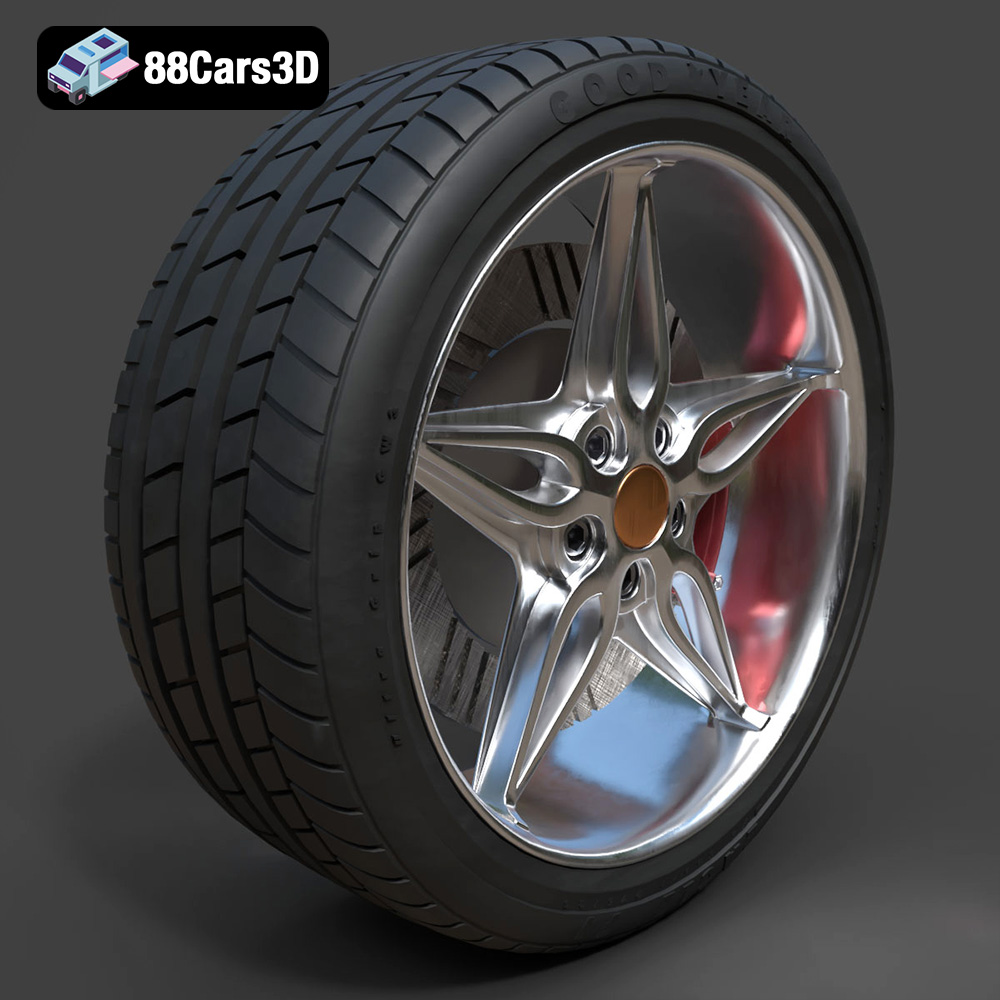
Texture: Yes
Material: Yes
Download the Wheel-001 Component 3D Model featuring clean geometry, realistic detailing, and a fully modeled interior. Includes .blend, .fbx, .obj, .glb, .stl, .ply, .unreal, and .max formats for rendering, simulation, and game development.
Price: $10.99
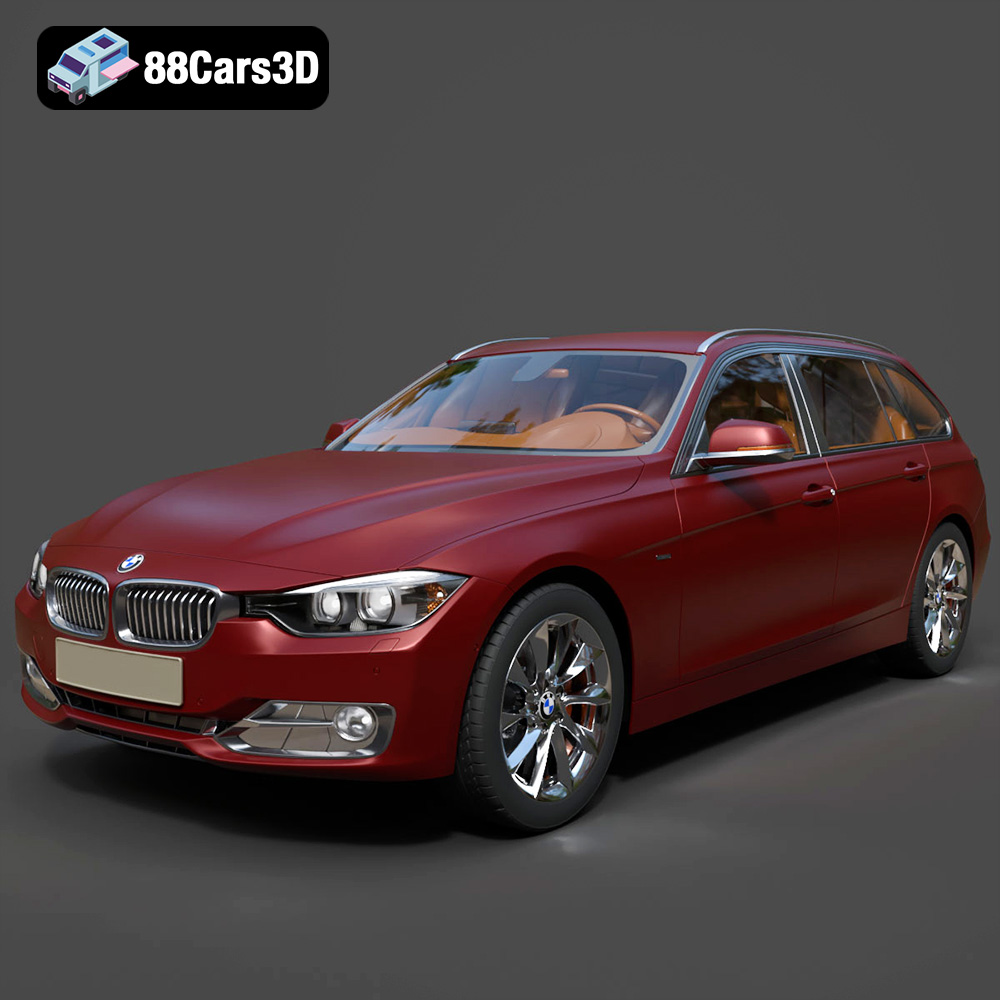
Texture: Yes
Material: Yes
Download the BMW 3 series Touring 335i (F31) 2013 3D Model featuring a highly detailed exterior, realistic interior, and modular design. Includes .blend, .fbx, .obj, .glb, .stl, .ply, .unreal, and .max formats for rendering, simulation, and game development.
Price: $30.79
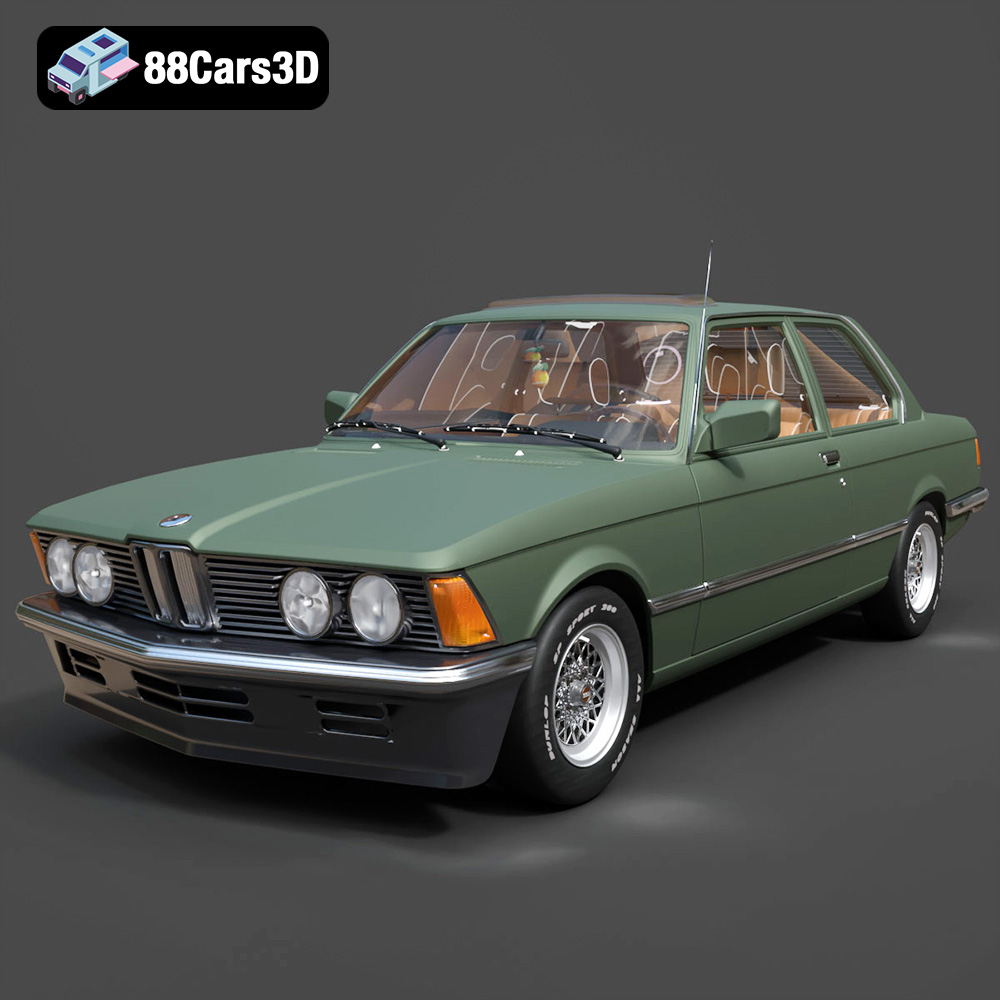
Texture: Yes
Material: Yes
Download the BMW 3 Series E21 3D Model featuring authentic exterior design, detailed interior, and accurate proportions. Includes .blend, .fbx, .obj, .glb, .stl, .ply, .unreal, and .max formats for rendering, simulation, and game development.
Price: $20.79

Texture: Yes
Material: Yes
Download the BMW 1 Series 3-Door E81 3D Model featuring a detailed exterior, functional interior elements, and clean geometry. Includes .blend, .fbx, .obj, .glb, .stl, .ply, .unreal, and .max formats for rendering, simulation, and game development.
Price: $14.79
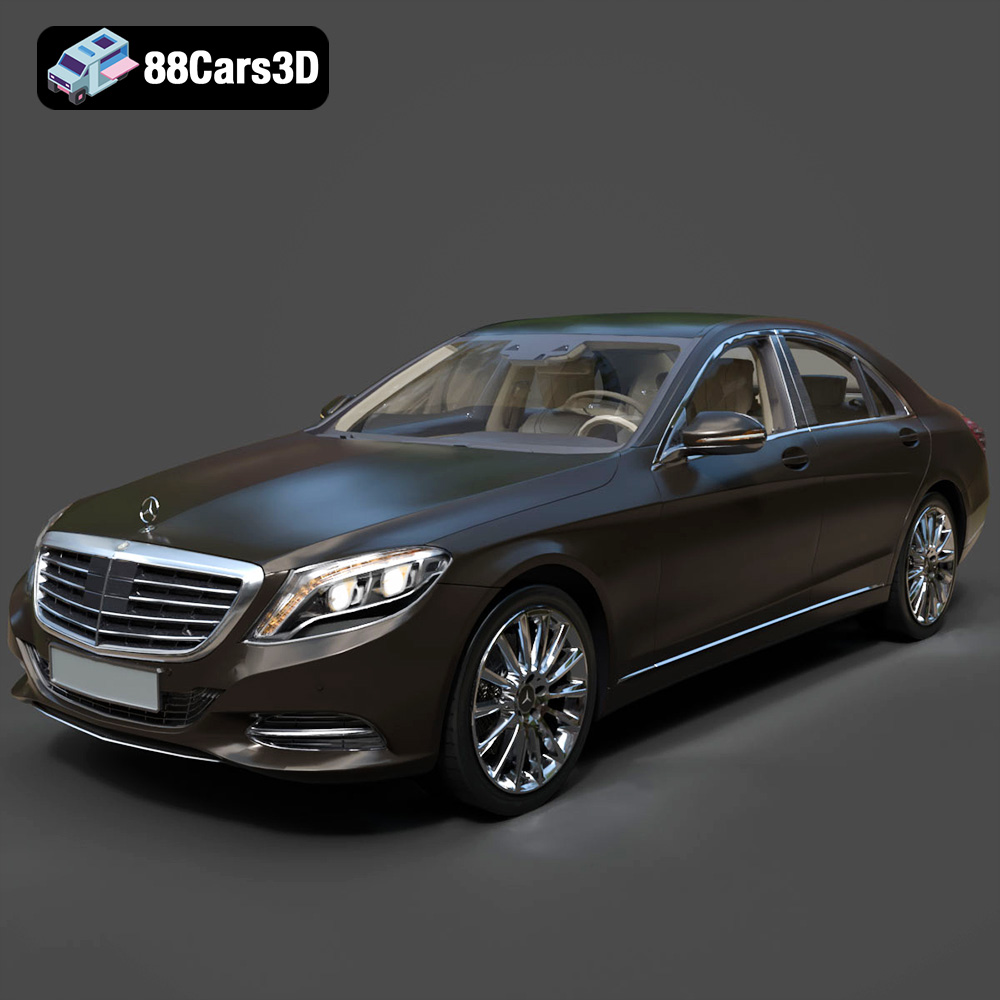
Texture: Yes
Material: Yes
Download the Mercedes-Benz S500 2022 3D Model featuring clean geometry, realistic detailing, and a fully modeled interior. Includes .blend, .fbx, .obj, .glb, .stl, .ply, .unreal, and .max formats for rendering, simulation, and game development.
Price: $19.99
Texture: Yes
Material: Yes
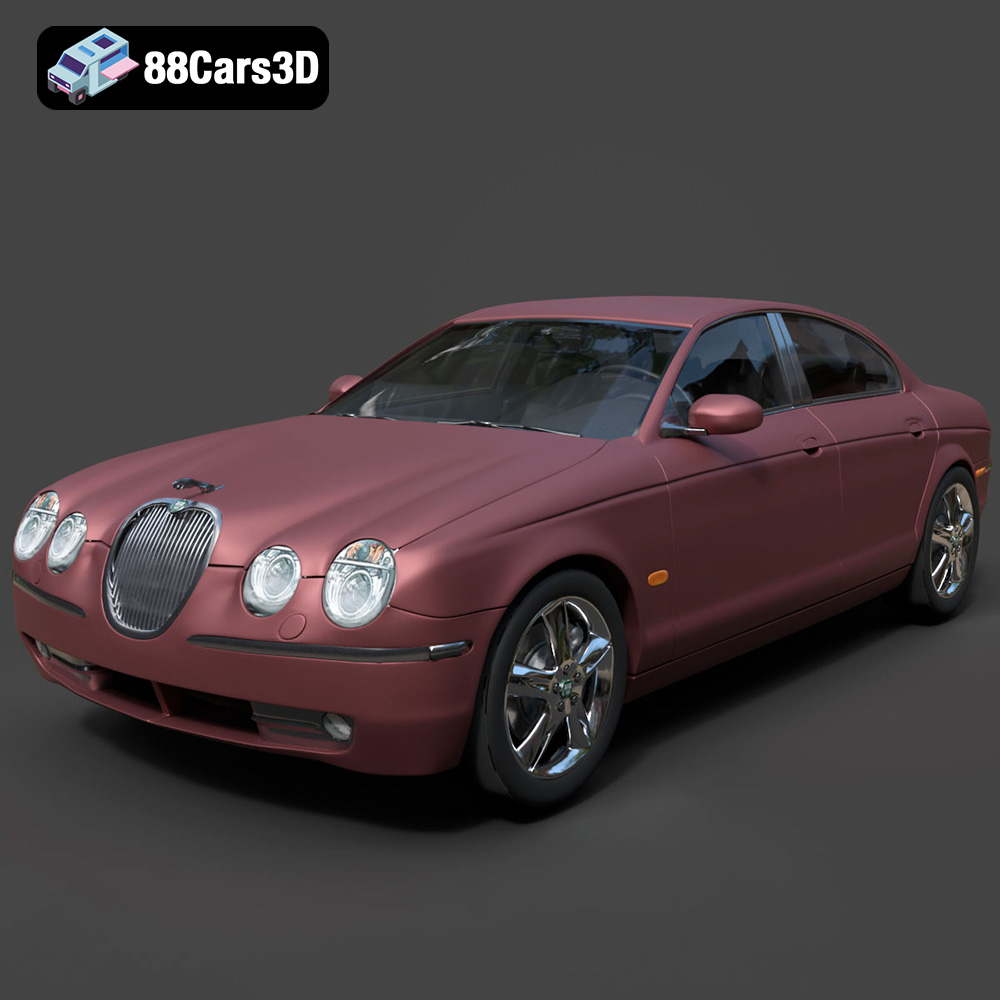
Download the Jaguar S-Type Sedan 3D Model featuring clean geometry, realistic detailing, and a fully modeled interior. Includes .blend, .fbx, .obj, .glb, .stl, .ply, .unreal, and .max formats for rendering, simulation, and game development.
Price: $18.99
Texture: Yes
Material: Yes
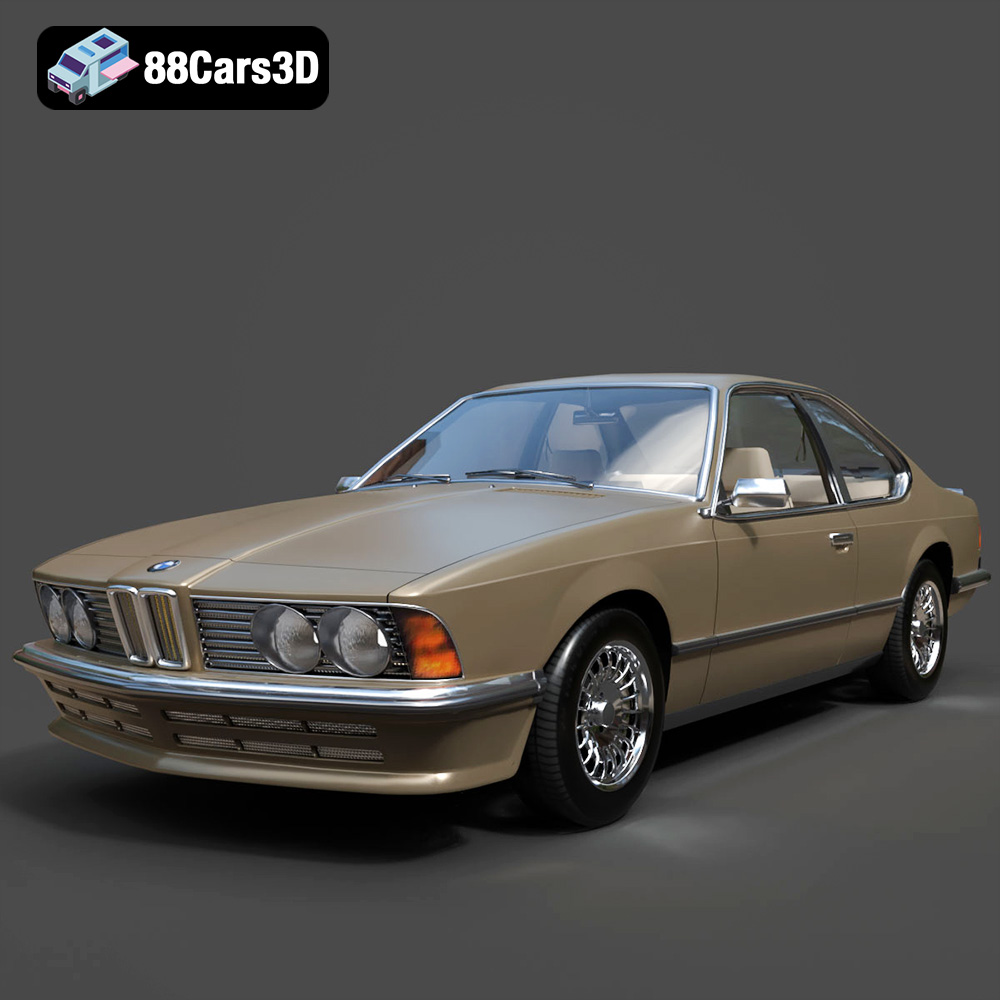
Download the BMW 6 Series 1986 3D Model featuring clean geometry, realistic detailing, and a fully modeled interior. Includes .blend, .fbx, .obj, .glb, .stl, .ply, .unreal, and .max formats for rendering, simulation, and game development.
Price: $16.99
Texture: Yes
Material: Yes
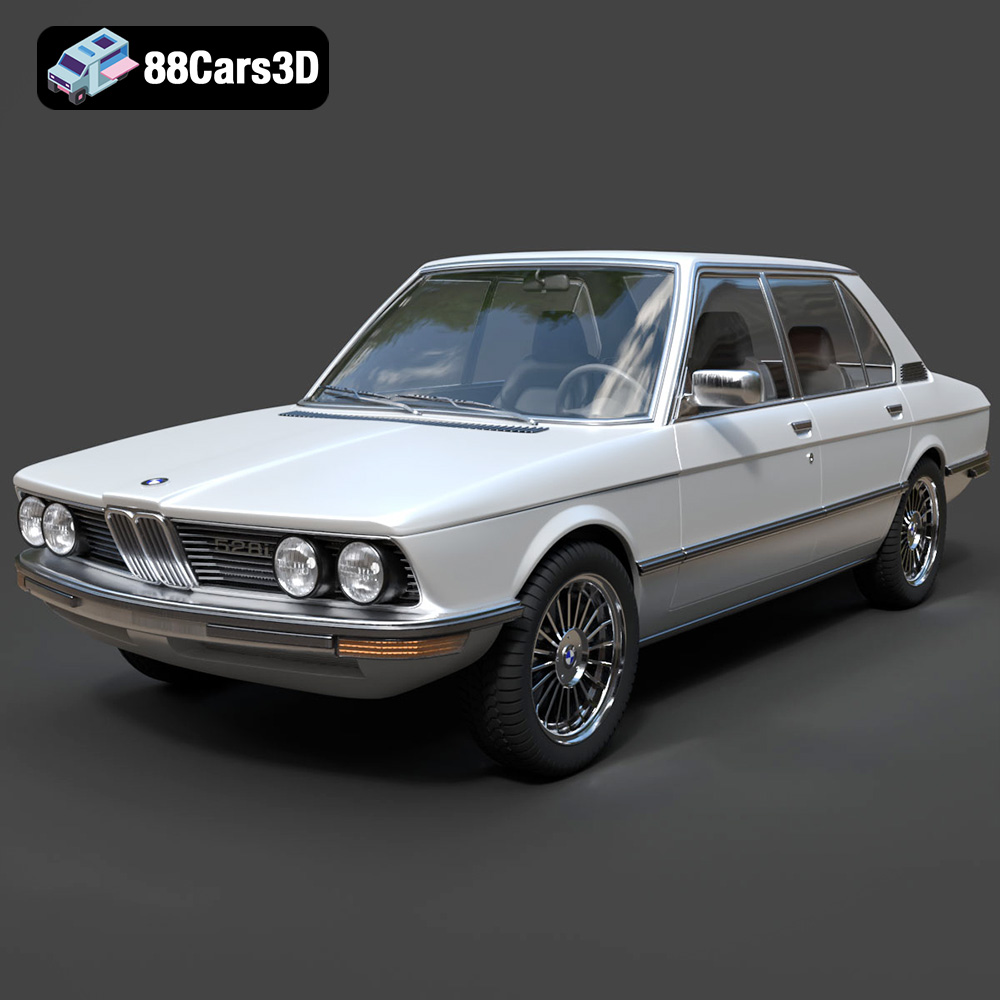
Download the BMW 5 Series E12 528i 3D Model featuring clean geometry, realistic detailing, and a fully modeled interior. Includes .blend, .fbx, .obj, .glb, .stl, .ply, .unreal, and .max formats for rendering, simulation, and game development.
Price: $14.99

Texture: Yes
Material: Yes
Download the BMW 5 Series F10 3D Model featuring clean geometry, realistic detailing, and a fully modeled interior. Includes .blend, .fbx, .obj, .glb, .stl, .ply, .unreal, and .max formats for rendering, simulation, and game development.
Price: $14.99
Texture: Yes
Material: Yes
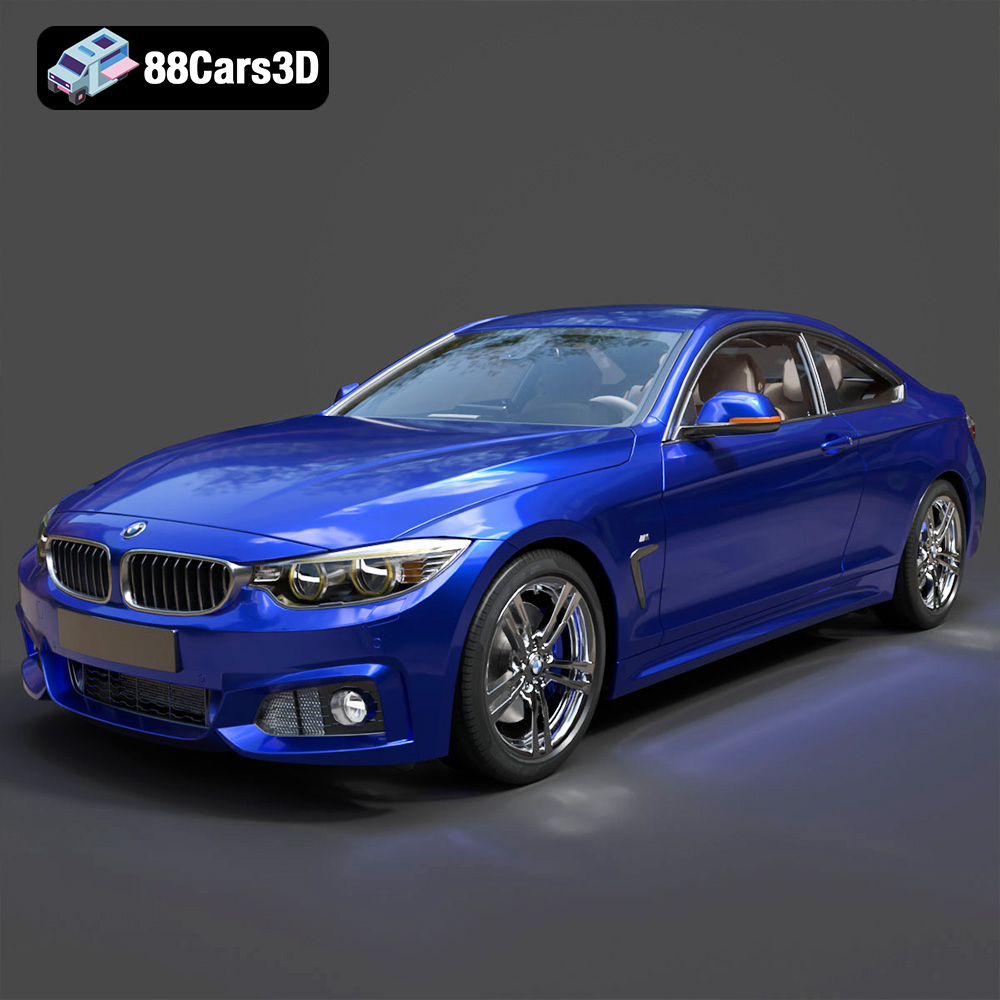
Download the BMW 4 Series Coupe M Sport 2014 3D Model featuring clean geometry, realistic detailing, and a fully modeled interior. Includes .blend, .fbx, .obj, .glb, .stl, .ply, .unreal, and .max formats for rendering, simulation, and game development.
Price: $14.99

