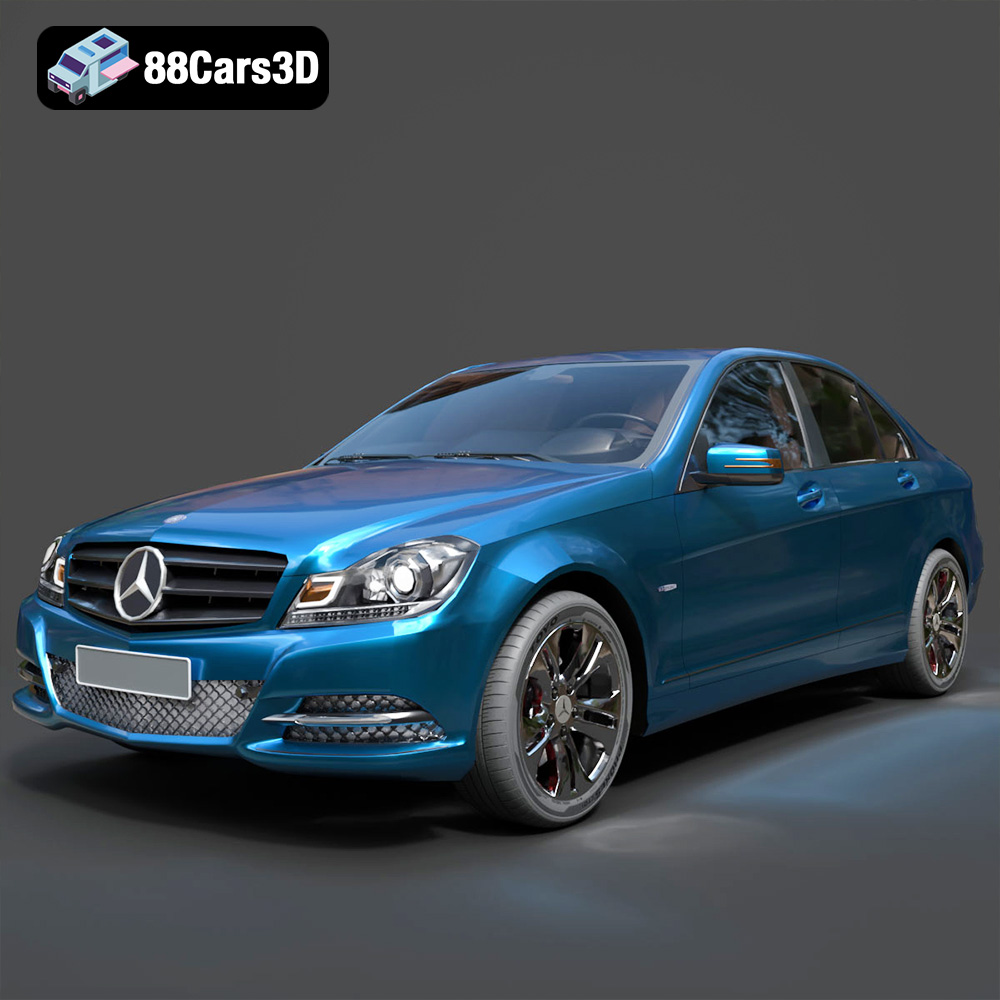
The Precision and Artistry of 3D Car Models: Driving Innovation Across Industries
In today’s visually driven world, high-quality 3D car models are no longer a luxury but a fundamental necessity across a myriad of industries. From groundbreaking automotive design and photorealistic advertising campaigns to immersive video games and cutting-edge virtual reality experiences, the demand for meticulously crafted digital vehicles continues to skyrocket. These sophisticated assets serve as the backbone for visualization, simulation, and interaction, pushing the boundaries of what’s possible in digital creation.
The journey from a designer’s sketch to a fully realized 3D car model is a complex interplay of technical expertise, artistic vision, and an intimate understanding of automotive aesthetics. Whether the goal is to create an exact replica of a classic car, envision a futuristic concept vehicle, or produce a fleet of game-ready assets, the underlying principles of modeling, texturing, and optimization remain critical. This comprehensive guide delves into the intricate world of 3D car models, exploring their creation, versatile applications, and the essential technical considerations that define their quality and utility. At 88cars3d.com, we understand these nuances intimately, providing professionals with the assets they need to bring their most ambitious projects to life.
Understanding 3D Model File Formats
Choosing the correct 3D model file format is a critical decision that impacts workflow, compatibility, and the ultimate utility of your digital assets. Each format is designed with specific strengths and use cases, making it imperative for artists, developers, and designers to understand their distinctions. The right format ensures seamless integration, preserves data integrity, and optimizes performance across different software and platforms.
Here’s a detailed look at the most prevalent 3D car model file formats:
- .blend (Blender): This is Blender’s native file format, a comprehensive package that stores an entire Blender scene. It’s ideal if your primary workflow is within Blender, as it retains all scene data, including geometry, materials (with node setups), textures, lights, cameras, animations, rigging, modifiers, and custom properties. .blend files are fully editable, allowing for extensive modifications and ensuring that every aspect of the model and its environment is preserved for future adjustments or rendering within Blender’s powerful cycles or Eevee engines.
- .fbx (Filmbox): Developed by Autodesk, FBX is arguably the most widely adopted interchange format in the 3D industry, especially for real-time applications like game development (Unreal Engine, Unity) and animation pipelines. Its strength lies in its ability to store not just geometry but also complex data like skeletal animations, blend shapes, skinning, PBR (Physically Based Rendering) materials, and camera data. FBX provides excellent compatibility between various 3D applications such as 3ds Max, Maya, Cinema 4D, and Blender, making it the go-to choice for transferring animated 3D car models with all their associated properties intact.
- .obj (Wavefront OBJ): As one of the oldest and most universal 3D file formats, OBJ is renowned for its simplicity and broad compatibility across virtually all 3D software. It primarily stores geometric data – vertices, normals, UV coordinates, and faces – and can reference external material (.mtl) files for basic color and texture mapping. While it lacks support for advanced features like animation, rigging, or PBR materials, .obj remains a reliable choice for transferring static 3D car models, particularly when maximum compatibility is required for simple geometry transfer or rapid prototyping.
- .glb (GLB/glTF Binary): glTF (Graphics Language Transmission Format) is an open standard designed for efficient transmission and loading of 3D scenes and models by engines and applications. .glb is the binary version of glTF, meaning it bundles all assets (geometry, textures, animations, PBR materials) into a single, compact file. This makes .glb exceptionally well-suited for web-based 3D viewers, AR (Augmented Reality), VR (Virtual Reality), and mobile applications where file size and quick loading times are paramount. Its optimization for real-time rendering pipelines makes it a modern and increasingly popular choice.
- .stl (Stereolithography): STL is the standard file format for 3D printing. It represents a 3D model as a series of connected triangles, forming the surface geometry of an object without any color, texture, or material information. For 3D car models intended for physical output, .stl is the indispensable format. It’s focused solely on the solid geometry required for manufacturing processes, ensuring the model is watertight and ready for slicing software.
- .ply (Polygon File Format): PLY is a polygon file format primarily used to store 3D data from 3D scanners or CAD applications. It can store a wider range of properties than OBJ, including color per vertex, normal vectors, transparency, and sometimes even texture coordinates. While less common for general animation or rendering pipelines, .ply is valuable when working with highly detailed scan data of real cars or when precise geometric and attribute data is crucial for scientific visualization, reverse engineering, or specific analysis tasks.
- .unreal (Unreal Engine Asset): While not a standalone file extension in the traditional sense, “Unreal” refers to the native asset format (.uasset) within Unreal Engine. When you import an FBX, OBJ, or other compatible format into Unreal, the engine processes and compiles it into its internal .uasset format for optimal performance within the engine’s real-time environment. This “engine-ready asset” encapsulates all relevant data – mesh, materials, textures, animations – in a highly optimized structure specifically tailored for the Unreal Engine’s rendering and gameplay systems. It is the final, optimized state of a 3D car model within an Unreal project.
- .max (3ds Max): This is Autodesk 3ds Max’s native scene file format. Similar to .blend, a .max file stores an entire 3ds Max project, including geometry, modifiers stack, sophisticated material setups (e.g., V-Ray, Corona), lights, cameras, animation timelines, and plugin data. It’s the preferred format for studios and artists working within the 3ds Max ecosystem, offering complete editability and retaining all advanced features and rendering configurations for high-fidelity visualization and complex animation productions.
Understanding these formats empowers you to make informed decisions, ensuring your 3D car models are not only visually stunning but also technically robust and perfectly suited for their intended purpose. At 88cars3d.com, many of our high-quality models are available in multiple formats to cater to diverse professional workflows.
Crafting Perfection: The Art and Science Behind High-Quality 3D Car Models
Creating a truly high-quality 3D car model is a demanding process that merges artistic skill with meticulous technical execution. It requires an unwavering attention to detail, deep understanding of surface topology, and mastery of specialized 3D software. The goal is always to achieve photorealism and functional accuracy, whether for a pristine showroom render or a dynamic game environment.
Precision Modeling and Topology
The foundation of any exceptional 3D car model lies in its geometry. Artists begin by gathering extensive reference materials, including blueprints, photographs, and even real-world measurements. Using software like 3ds Max or Blender, they sculpt the car’s body, paying close attention to every curve, panel gap, and subtle surface variation. The challenge is to create clean, optimized topology – the arrangement of polygons (quads, primarily) that define the model’s surface. Good topology ensures smooth subdivisions, accurate reflections, and ease of deformation for animation. For high-resolution renders, models might contain millions of polygons to capture every nuance, while game-ready assets demand carefully optimized low-poly meshes that retain visual fidelity through normal mapping.
- NURBS vs. Polygons: While CAD software often utilizes NURBS (Non-Uniform Rational B-Splines) for their mathematical precision, most 3D artists convert these into polygons for rendering and real-time applications. The conversion process must be carefully managed to maintain the original design intent and surface smoothness.
- Panel Gaps and Hard Edges: Achieving realistic panel gaps, sharp creases, and clean fillets requires precise edge modeling and often involves floating geometry or sophisticated chamfering techniques. These subtle details are crucial for a convincing final render.
UV Mapping and Texturing for Realism
Once the geometry is finalized, the model needs to be textured. This process begins with UV mapping, where the 3D surface is “unwrapped” into a 2D layout, much like flattening a cardboard box. This 2D map, or UV layout, dictates how textures are applied to the 3D model. Expert UV mapping minimizes stretching and maximizes texture resolution, crucial for showcasing intricate details like paint imperfections, carbon fiber weave, or dashboard textures.
Texturing then breathes life into the model. Using industry-standard PBR (Physically Based Rendering) workflows, artists create a suite of texture maps:
- Albedo/Base Color: Defines the base color of the surface, stripped of lighting information.
- Metallic: Specifies which parts of the surface are metallic and which are dielectric.
- Roughness/Glossiness: Controls how light scatters and reflects from the surface, dictating shininess or matte finish.
- Normal Map: Adds fine surface detail (like subtle bumps or scratches) without increasing polygon count, essential for low-poly game assets.
- Ambient Occlusion: Simulates soft shadows where surfaces are close together, adding depth.
These textures are often painted in software like Substance Painter or Photoshop, layering details from subtle dust and fingerprints to elaborate graphics and wear patterns. The combination of high-resolution textures and accurate PBR material setup is what gives 3D car models their photorealistic appearance.
Bringing Vehicles to Life: Advanced Automotive Rendering Techniques
Once a 3D car model is meticulously crafted and textured, the next crucial step is rendering – transforming the 3D data into a compelling 2D image or animation. Automotive rendering is a specialized field, demanding sophisticated techniques to achieve the photorealism expected in marketing, design visualization, and cinematic presentations.
Lighting and Environment Setup
Effective lighting is the single most important factor in achieving a realistic render. Just as in real-world photography, the right lighting setup can highlight a car’s form, emphasize its reflections, and create a specific mood. Professional automotive renders often utilize:
- HDRI (High Dynamic Range Image) Lighting: A single HDRI panorama can provide complex, real-world lighting and reflections, simulating everything from an overcast sky to a bustling city street. This is often combined with targeted 3D lights to add highlights and emphasize specific features.
- Studio Lighting: Replicating real-world photography studios with softboxes, strip lights, and reflectors allows for precise control over reflections and shadows, perfect for showcasing design details in a controlled environment.
- Physical Light Sources: Accurate modeling of real-world light fixtures (headlights, tail lights, interior cabin lights) with physically accurate light properties (IES profiles) enhances realism.
The environment in which the car is placed – whether a 3D backdrop or a backplate photograph – also plays a significant role, providing context and realistic reflections.
Material Shading and Post-Processing
Beyond the texture maps, the material shaders themselves are paramount. Modern renderers like V-Ray, Corona Renderer (for 3ds Max), or Cycles (for Blender) use advanced algorithms to simulate how light interacts with different surfaces. Car paint shaders, for instance, are incredibly complex, often involving multiple layers: a metallic base, a clear coat with specific roughness and falloff, and even flake layers to simulate metallic paint particles. Interior materials like leather, carbon fiber, chrome, and glass each require precise shader settings to react realistically to light.
Post-processing, the final stage of rendering, is where an image is polished to perfection. This includes:
- Color Grading: Adjusting the overall color balance, saturation, and contrast to enhance mood and realism.
- Depth of Field: Simulating camera lens blur to draw attention to specific areas of the car.
- Motion Blur: Adding realism to animated sequences, simulating the blur caused by camera or object movement.
- Lens Effects: Incorporating flares, glow, or chromatic aberration to mimic real camera optics.
These steps, often performed in software like Adobe Photoshop or Nuke, elevate a raw render into a production-ready image, suitable for high-end advertising or cinematic visualization.
Integrating 3D Car Models into Game Engines and Real-Time Applications
The evolution of real-time rendering has transformed the landscape for 3D car models, making them indispensable for interactive experiences. Game engines like Unreal Engine and Unity have become powerful platforms for not just games, but also architectural visualization, product configurators, and virtual training simulations. Integrating high-quality 3D car models into these environments requires a specialized approach, balancing visual fidelity with performance optimization.
Optimization for Real-Time Performance
Unlike offline rendering, where computation time is less critical, real-time applications demand instant feedback and smooth frame rates. This necessitates rigorous optimization of 3D car models:
- Polygon Reduction: High-poly models suitable for cinematic renders must be intelligently reduced to a manageable poly count for real-time. This often involves creating multiple Levels of Detail (LODs), where simpler meshes are swapped in when the car is further from the camera.
- Texture Atlasing and Mipmaps: Combining multiple small textures into a single, larger atlas reduces draw calls, improving performance. Mipmaps, pre-generated lower-resolution versions of textures, prevent aliasing and optimize memory usage at different viewing distances.
- Collision Meshes: Simple, invisible proxy meshes are created around the car for physics calculations and collision detection, rather than using the complex visual mesh.
These optimizations ensure that even in demanding real-time scenarios, 3D car models run smoothly without compromising visual quality significantly.
Material Setup and Blueprint Integration in Unreal Engine
Once optimized 3D car models (typically in .fbx format) are imported into Unreal Engine, the focus shifts to material setup and interactive functionality. Unreal’s powerful material editor allows artists to recreate PBR materials with extreme fidelity, harnessing its advanced rendering capabilities.
- Master Materials: Creating versatile “master materials” allows for efficient creation of various car paints, interiors, and tire textures, with parameters exposed for easy customization.
- Blueprint Scripting: Unreal Engine’s visual scripting system, Blueprints, is used to bring the car to life. This includes setting up vehicle physics (suspension, engine, transmission), interactive elements (opening doors, turning on lights), and user customization options (changing paint color, rim styles). Advanced setups can involve simulating realistic damage or even full driving mechanics.
- Sequencer for Cinematics: For in-engine cinematics or virtual production, Unreal’s Sequencer tool enables precise animation of car movements, camera paths, and lighting changes, leveraging the game-ready assets to create stunning real-time visualizations.
The combination of optimized assets and powerful engine features allows developers to create truly immersive and interactive automotive experiences. 88cars3d.com provides models often prepared with these considerations in mind, facilitating quicker integration into engine pipelines.
Beyond Visualization: Innovative Applications of 3D Car Models
The utility of high-quality 3D car models extends far beyond traditional rendering and game development. They are increasingly becoming foundational assets for innovative applications that are reshaping industries and user experiences alike.
Automotive Design and Engineering Prototyping
For automotive manufacturers, 3D car models are integral to the entire design and engineering process. Designers can rapidly iterate on concepts, evaluate aesthetics from every angle, and test various configurations long before a physical prototype is ever built.
- Virtual Showrooms and Configurator: Companies use real-time 3D models to create interactive online configurators, allowing potential buyers to customize vehicles in stunning detail, choosing colors, trims, and options from the comfort of their homes. Virtual showrooms offer immersive experiences, enabling users to explore cars in 360 degrees, open doors, and even “sit inside.”
- Aerodynamic Simulation: High-fidelity 3D models can be imported into Computational Fluid Dynamics (CFD) software to simulate airflow, analyze aerodynamic performance, and optimize vehicle designs for efficiency and stability.
- Crash Testing and Safety Analysis: Virtual crash tests using precise 3D models can identify structural weaknesses and evaluate safety features, significantly reducing the need for costly physical prototypes.
AR/VR Experiences and Training Simulations
Augmented Reality (AR) and Virtual Reality (VR) are transforming how we interact with products, and 3D car models are at the forefront of this revolution.
- AR Car Previews: Imagine projecting a full-scale 3D model of a new car onto your driveway using a smartphone. AR applications allow users to visualize vehicles in their real-world environment, rotate them, and even peek inside, offering an unparalleled pre-purchase experience. Optimized .glb models are particularly well-suited for this.
- VR Driving Simulators: From professional driver training for motorsports or heavy machinery to virtual test drives for consumers, VR simulators offer highly immersive and realistic experiences powered by detailed 3D car models and advanced physics engines.
- Maintenance and Repair Training: VR can be used to train technicians on complex assembly, maintenance, and repair procedures for specific car models, providing hands-on experience without risking damage to actual vehicles.
3D Printing and Scale Model Production
With advancements in 3D printing technology, 3D car models (often in .stl format) are now being used to create highly detailed physical scale models or custom parts.
- Rapid Prototyping: Designers can quickly print physical models of new components or entire car designs for tactile evaluation.
- Custom Parts and Accessories: Enthusiasts and aftermarket companies can design and 3D print custom interior components, body kits, or intricate engine parts.
- Collectible Scale Models: High-resolution 3D models can be translated into stunning physical collectibles, allowing for production of highly accurate and unique models that might not be available commercially.
These diverse applications underscore the versatility and critical importance of accurately designed and expertly optimized 3D car models in today’s technological landscape.
Choosing the Right Assets for Your Project: A Guide from 88cars3d.com
Selecting the perfect 3D car models for your project is paramount to its success. It involves more than just aesthetics; it requires a deep understanding of technical specifications, intended use, and budget. Making an informed decision ensures your assets integrate seamlessly into your workflow and meet the demands of your final output.
Evaluating Model Quality and Detail
When searching for 3D car models, consider the level of detail provided. This directly correlates with the model’s intended use:
- High-Polygon Models for Photorealism: For cinematic renders, advertising, or high-fidelity visualization, you’ll need models with extremely dense mesh topology, accurately modeled interiors, undercarriages, and engine bays. These models typically feature complex PBR material setups for lifelike reflections and refractions. Pay attention to the smoothness of curves, accuracy of panel gaps, and the detail in small components like tire treads and brake calipers.
- Optimized Models for Real-Time: For game development, AR/VR, or interactive applications, while detail is still important, polygon count and draw calls are critical. Look for models with clean, optimized topology, efficient UV layouts, and well-baked normal maps. Multiple Levels of Detail (LODs) are a strong indicator of a game-ready asset, ensuring performance across various distances without sacrificing visual quality up close.
Always scrutinize wireframes and material breakdowns if available. A clean wireframe indicates a professionally crafted model, easier to edit and optimize.
Licensing, Compatibility, and Support
Beyond the model itself, practical considerations are vital:
- Licensing: Understand the licensing terms associated with the model. Is it for commercial use? Are there restrictions on redistribution or modification? Ensure the license aligns with your project’s scope and legal requirements.
- Software Compatibility: Verify that the model’s file format is compatible with your primary 3D software and render engine (e.g., .max for 3ds Max, .blend for Blender, .fbx for Unreal/Unity). Check if textures are included and if material setups are standard PBR or specific to a renderer.
- Customer Support: A reputable marketplace or artist will offer support. What if you encounter issues with the model? Are updates provided? Good support can save valuable time and resources.
At 88cars3d.com, we prioritize offering transparent licensing, diverse file formats, and high-quality assets to ensure you find exactly what your project needs, backed by professional standards.
Conclusion: The Enduring Value of Expertly Crafted 3D Car Models
The world of 3D car models is a vibrant intersection of art, engineering, and digital innovation. From the meticulous precision required in their creation to their versatile applications across advertising, gaming, automotive design, and beyond, these digital assets are indispensable tools for creative professionals. The technical considerations, from choosing the right file format like .fbx for game integration or .max for high-fidelity renders, to mastering complex rendering techniques and optimizing for real-time performance, all underscore the expertise needed to excel in this field.
As industries continue to embrace digital transformation, the demand for high-quality, accurately detailed, and expertly optimized 3D car models will only grow. They empower designers to visualize concepts with unprecedented realism, enable developers to build immersive interactive experiences, and allow marketers to showcase products in captivating new ways. By understanding the intricate processes and technical specifications involved, professionals can harness the full potential of these powerful assets. For those seeking a reliable source for premium 3D car models that meet the highest industry standards, 88cars3d.com stands as a dedicated marketplace committed to fueling your creative endeavors with excellence.
Featured 3D Car Models