⚡ FLASH SALE: Get 60% OFF All Premium 3D & STL Models! ⚡

In today’s visually driven market, automotive advertising demands more than just a fleeting glance; it requires an immersive experience that ignites desire and showcases engineering marvels with breathtaking realism. Animated car commercials, powered by sophisticated 3D models, have become the gold standard for achieving this. Far beyond traditional photography or even live-action shoots, 3D animation offers unparalleled creative freedom, allowing designers to visualize concepts that defy physical limitations, explore extreme environments, and present vehicles in their purest, most idealized form. This comprehensive guide will take you on a technical journey through the intricate process of creating stunning animated car commercials, from selecting the perfect 3D asset to final post-production. We’ll delve into essential workflows, discuss industry-standard software, highlight crucial optimization techniques, and provide actionable insights to elevate your automotive visualizations. Whether you’re a seasoned 3D artist, a game developer venturing into cinematic renders, or an automotive designer seeking to push the boundaries of presentation, understanding these methodologies is key to producing commercials that resonate and captivate.
The foundation of any spectacular animated car commercial is a meticulously crafted 3D model. Just as a sculptor begins with high-quality clay, a 3D artist starts with a model possessing clean topology, precise details, and a structure designed for animation. Sourcing these high-fidelity assets from platforms like 88cars3d.com ensures you begin with a professional-grade base, saving countless hours of initial modeling and allowing you to focus on the creative aspects of your commercial. However, even with premium models, understanding the underlying principles of preparation is vital for flawless animation and rendering.
Topology, or the arrangement of polygons and edges on a 3D model, is paramount, especially for subdivision surfaces and animation. For automotive models, this means ensuring that surfaces are represented by efficient quads (four-sided polygons) rather than triangles or n-gons, which can cause pinching or undesirable deformation during rigging and animation. A clean edge flow is critical for maintaining the car’s intricate curves and sharp lines when smoothed or subjected to deformations like opening doors or suspension compression. Consider areas like door seams, wheel arches, and panel gaps – these require precise edge loops to articulate the shape and allow for subtle mechanical movements. Polygon counts for high-end rendering often range from 200,000 to over 1,000,000 for a detailed vehicle, including interiors and undercarriage, ensuring every detail is captured without compromise. When selecting a model, inspect its wireframe for evenly distributed polygons, consistent edge loops around critical features, and minimal poles (vertices where more than five edges meet). This attention to detail in the mesh structure prevents artifacts and ensures smooth, appealing results in every frame of your commercial.
UV mapping is the process of unfolding a 3D model’s surface into a 2D space, allowing textures to be accurately painted and applied. For complex automotive surfaces, this is a highly strategic task. Poor UVs lead to distorted textures, visible seams, and inefficient material application. The goal is to create UV islands that are as un-stretched as possible, neatly packed within the 0-1 UV space, and with consistent texel density across all parts. For a car body, this often involves projecting large, continuous surfaces (like the hood, roof, and side panels) into single UV islands to minimize seams. Smaller, separate parts like brake calipers, emblems, or interior components will have their own dedicated UV islands. Many professional models come with pre-existing UV maps, but it’s essential to verify their quality. For game engine integration or real-time AR/VR experiences, optimizing UV space by layering non-overlapping islands and utilizing texture atlases can significantly improve performance by reducing draw calls. A common approach for high-resolution renders is to use UDIMs (multi-tile UVs), allowing artists to assign multiple high-resolution texture maps to different parts of the model (e.g., one UDIM for the main body, another for wheels, another for interior), pushing detail without compromising overall texture resolution.
The realism of your animated car commercial hinges on the quality of its materials and shaders. Physically Based Rendering (PBR) has revolutionized this aspect, providing a workflow that accurately simulates how light interacts with surfaces, resulting in predictable and incredibly lifelike results across various lighting conditions and render engines.
PBR materials rely on a set of texture maps that define the surface properties based on real-world physics. Key maps include:
* **Albedo/Base Color:** Defines the color of the surface without any lighting information. For car paint, this is the base color of the pigment.
* **Metallic:** A grayscale map indicating whether a surface is a metal (white, value 1) or a dielectric (black, value 0). Car bodies are typically metallic, while tires, plastic trim, and glass are dielectrics.
* **Roughness/Glossiness:** Determines how rough or smooth a surface is, directly impacting how light reflects. A low roughness value (high glossiness) creates sharp reflections, characteristic of polished car paint, while high roughness (low glossiness) scatters light, like a matte finish or rubber.
* **Normal/Bump Map:** Adds surface detail without increasing polygon count, simulating bumps, scratches, or subtle textures.
* **Ambient Occlusion (AO):** Simulates self-shadowing in crevices and corners, adding depth and realism.
For car paint, creating a multi-layered material is common, often combining a metallic base with a clear coat layer. The clear coat would have its own roughness and normal maps to simulate micro-scratches and a subtle orange peel effect, common on real car finishes. Understanding the interaction of these maps is crucial for achieving convincing automotive materials, from the deep gloss of a showroom vehicle to the weathered texture of an off-road beast.
Beyond the basic PBR setup, advanced shader networks allow for highly specific and intricate material behaviors. For car paint, this often involves layering multiple reflective components: a primary metallic reflection for the body color and a secondary, more diffuse reflection for the clear coat. Flakes in metallic paint can be simulated using procedural noise textures or custom flake maps, combined with anisotropic reflections that change based on viewing angle. For headlights and taillights, complex shaders are required to mimic refractive lenses, internal reflectors, and light sources. Glass materials often use refractive properties, sometimes combined with subtle normal maps to simulate dirt or water streaks. Tire shaders, for instance, might incorporate multiple roughness maps to simulate wear patterns, a subtle normal map for tread detail, and a velvet shader component for the “bloom” effect seen on fresh rubber. In software like Blender’s Cycles or Eevee render engines (see Blender 4.4 documentation on Shading: https://docs.blender.org/manual/en/4.4/render/shader_nodes/index.html), these networks are built using node-based editors, allowing for immense flexibility and creative control over every aspect of the material’s interaction with light.
Lighting is the soul of any visual presentation, and for an animated car commercial, it dictates the mood, highlights design features, and creates compelling visual narratives. Coupled with powerful render engines, proper lighting transforms 3D models into cinematic masterpieces.
Two primary approaches to lighting dominate automotive rendering: studio lighting and environmental lighting (HDRI).
* **Studio Lighting:** Emulates a controlled studio environment, using virtual light sources (e.g., area lights, spot lights) to precisely sculpt the car’s form. A common setup involves a large key light to define the primary contours, a fill light to soften shadows, and rim lights to accentuate edges and separate the car from the background. Reflective cards or light planes are often strategically placed to create elegant reflections on the car’s highly polished surfaces, enhancing its luxurious appeal. This method offers maximum control, allowing artists to meticulously highlight specific design elements.
* **Environmental Lighting (HDRI):** High Dynamic Range Images (HDRIs) capture real-world lighting information, providing a highly realistic and efficient way to light a scene. By using an HDRI of a studio, a cityscape, or a natural landscape, the car will automatically pick up accurate reflections and diffuse lighting from that environment. Often, a combination of both is used: an HDRI provides the overall ambient light and reflections, while targeted studio lights are added to emphasize specific details or create dramatic highlights that the HDRI alone might miss. Careful attention to light color temperature, intensity, and shadow sharpness is crucial for achieving photorealism.
Each render engine offers unique strengths and workflows:
* **Corona Renderer:** Known for its ease of use, speed, and photorealistic results, Corona is a popular choice for architectural and automotive visualization. Its unbiased rendering approach provides naturally soft shadows and realistic light bounces with minimal setup, making it ideal for artists who prioritize speed and quality.
* **V-Ray:** A industry staple, V-Ray offers immense flexibility and a vast array of features, from CPU to GPU rendering. Its powerful toolset for global illumination, volumetric effects, and robust material system makes it suitable for complex production pipelines and highly customized renders.
* **Blender Cycles:** Blender’s integrated path-tracing renderer, Cycles, is celebrated for its physically accurate results and tight integration with Blender’s modeling and animation tools. With features like adaptive sampling, denoising, and strong GPU rendering capabilities, Cycles is a powerful and accessible choice for high-quality automotive renders. Blender’s node-based material system and comprehensive lighting options provide extensive control over the final look, as detailed in the official Blender 4.4 documentation on rendering: https://docs.blender.org/manual/en/4.4/render/index.html.
* **Arnold Renderer:** Widely used in film and television production, Arnold is known for its robust production-ready features, exceptional handling of complex scenes, and photorealistic output. It excels in rendering intricate details, complex shaders, and massive polygon counts, making it a go-to for top-tier cinematic automotive work, especially when paired with Maya.
Choosing the right render engine depends on your project’s specific needs, your team’s expertise, and the desired quality versus rendering time balance. Regardless of the engine, optimizing render settings (e.g., sample rates, ray depth, denoising thresholds) is crucial for efficient production.
The essence of an animated commercial lies in motion. Bringing a static 3D car model to life requires careful planning, robust rigging, and an understanding of animation principles that convey speed, power, and elegance.
For realistic car animation, simply rotating the wheels isn’t enough. A proper car rig simulates the complex interplay of wheels, suspension, and steering.
* **Wheel Rotation:** The primary function, linked to the car’s forward motion, often driven by expressions or constraints based on the car’s speed and wheel radius.
* **Steering:** Controlled by a steering wheel or a master control, rotating the front wheels and adjusting the car’s path.
* **Suspension System:** This is where realism truly shines. A dynamic suspension rig, often achieved with inverse kinematics (IK) chains or constraint systems, allows the wheels to react to uneven terrain or sudden movements. As the car goes over a bump, the suspension compresses and extends, giving the vehicle a sense of weight and realism. This can be further enhanced by incorporating simple spring physics into the rig, where the suspension elements have a degree of bounce and settle. For high-fidelity commercials, you might also rig individual components like disc brakes and calipers to remain stationary relative to the wheel hub while the wheel rotates around them, maintaining visual integrity. Advanced rigs might even include sway bars and shock absorber compressions for micro-level detail.
Camera work in an animated commercial is as crucial as in live-action film. It dictates pacing, emphasizes features, and evokes emotion.
* **Dynamic Motion:** Instead of static shots, utilize sweeping crane shots, rapid tracking shots, and dramatic pull-backs to showcase the car from various angles. The camera should always be in motion, even subtly, to maintain visual interest.
* **Pacing and Rhythm:** Match the camera’s speed and movements to the car’s action. A slow, elegant reveal for a luxury sedan, or a quick, agile follow-through for a sports car.
* **Composition:** Apply cinematic principles like the rule of thirds, leading lines, and negative space to create visually appealing frames. Pay attention to how the car fills the frame and interacts with the background.
* **Staging:** Place the car in environments that complement its design and intended use. A winding mountain road for a performance car, a futuristic cityscape for an electric vehicle, or a rugged landscape for an SUV. Consider the interaction of the car with its environment – dust kicked up by tires, water spray, or dynamic light changes. Storyboarding is an indispensable tool here, allowing you to plan every shot, camera movement, and visual transition before diving into animation software, ensuring a cohesive and impactful narrative.
Even after rendering, the commercial isn’t complete. Post-processing and compositing are critical final stages that elevate raw renders to polished, broadcast-ready content, adding polish, mood, and visual flair.
Color grading is the art of manipulating the colors and tones of your footage to achieve a specific aesthetic and emotional impact. For car commercials, this can involve:
* **Enhancing Car Paint:** Making the reds pop, deepening the blues, or giving metallics a richer sheen.
* **Establishing Mood:** A cool, desaturated look for a sophisticated luxury car; warm, vibrant tones for an adventurous SUV.
* **Consistency:** Ensuring that colors are consistent across all shots and seamlessly integrate any live-action elements.
Visual effects (VFX) can further enhance the realism and spectacle:
* **Motion Blur:** Adding realistic blur to fast-moving wheels and the car itself, which can be rendered directly by the 3D software or added in compositing.
* **Depth of Field:** Blurring the foreground and background to draw attention to the car, mimicking how a real camera lens works.
* **Lens Flares and Glares:** Subtly adding these effects can make the scene feel more cinematic and grounded in reality, especially for headlights or reflections.
* **Particulate Effects:** Dust, smoke, water splashes, or even subtle fog can add a layer of realism and dynamic interaction with the environment. These are often rendered as separate passes or created directly in compositing software.
Many animated car commercials are hybrid productions, seamlessly blending fully rendered 3D cars with live-action backplates or foreground elements. This process requires meticulous attention to detail:
* **Camera Tracking (Matchmoving):** This is the fundamental step, involving analyzing live-action footage to extract camera movement data. This data is then imported into 3D software, allowing the virtual camera to precisely match the real one. Without accurate tracking, the 3D car will appear to slide or float unnaturally.
* **Lighting Match:** The 3D car’s lighting must perfectly match the live-action environment. This involves analyzing the direction, color, and intensity of lights in the backplate and replicating them with virtual lights or HDRIs. Reflective spheres or gray spheres shot on set can assist in this process.
* **Shadow Catching:** The 3D car needs to cast realistic shadows onto the live-action ground. This is achieved using a “shadow catcher” plane in the 3D scene, which is invisible in the final render but collects shadows, ambient occlusion, and reflections from the 3D car, making it appear grounded.
* **Color Matching and Blending:** The rendered 3D car must be color-corrected and graded to perfectly integrate with the live-action footage, adjusting saturation, contrast, and white balance. Adding subtle atmospheric haze, grain, or lens aberrations can further help blend the elements, making it impossible to distinguish between the real and the virtual.
A stunning animated car commercial is only effective if it can be delivered and viewed seamlessly across its intended platforms. This requires careful consideration of file formats, performance optimization, and platform-specific requirements.
While primary renders are often done in dedicated renderers, integrating car models into game engines like Unity or Unreal Engine opens doors for interactive experiences, real-time visualization, and even game-engine-rendered cinematics.
* **Level of Detail (LODs):** For performance in real-time environments, create multiple versions of your car model with decreasing polygon counts. LOD0 is the high-poly version, used when the car is close to the camera; LOD1, LOD2, etc., are progressively lower-poly versions that swap in as the car moves further away. This significantly reduces the computational load.
* **Texture Atlasing:** Combining multiple small texture maps into a single, larger one (an atlas) reduces the number of draw calls, improving rendering performance. This is particularly useful for parts like the interior dashboard components or engine details.
* **Material Instancing:** In game engines, use material instances to create variations of a base material (e.g., different car paint colors) without duplicating the entire shader network, saving memory and processing power.
* **Collision Meshes:** Create simplified collision meshes (often convex hulls) for accurate physics interactions without the overhead of high-poly render meshes.
* **Efficient Rigging:** Game engine rigs should be optimized for real-time performance, using fewer bones and simpler constraint systems where possible, while still allowing for necessary animations. When sourcing game-ready assets from places like 88cars3d.com, look for models specifically designed with these optimizations in mind.
Extending your 3D car model beyond traditional screens involves unique technical challenges.
* **AR/VR Optimization:** For Augmented Reality (AR) and Virtual Reality (VR) applications, performance is paramount to maintain high frame rates and prevent motion sickness. This means aggressive polygon reduction (often target below 100k polygons for the entire vehicle), highly optimized PBR textures (lower resolutions like 2K or 1K where possible), and carefully managed draw calls. File formats like GLB (for web-based AR/VR) and USDZ (for Apple AR Quick Look) are crucial for deployment. The focus shifts to lightweight models and efficient real-time rendering.
* **3D Printing Preparation and Mesh Repair:** For physical models, your 3D asset needs to be watertight (no holes in the mesh) and manifold (no self-intersecting geometry). This often requires mesh repair tools to identify and fix non-manifold edges, open boundaries, or inverted normals. Polygon count is less of a concern than mesh integrity. Wall thickness must be sufficient for the chosen printing material, and internal components might need to be removed or simplified. File formats like STL or OBJ are commonly used for 3D printing, but ensuring the scale is correct is critical for accurate physical output.
Creating animated car commercials with 3D models is a highly technical yet incredibly rewarding endeavor, blending artistic vision with precise engineering. From selecting high-quality 3D car models – readily available on platforms like 88cars3d.com – to meticulously crafting PBR materials, setting up dynamic lighting, and perfecting complex animations, every stage demands expertise and attention to detail. We’ve explored the critical role of clean topology and efficient UV mapping, delved into the physics of PBR shaders, and highlighted the nuances of various render engines. Furthermore, understanding advanced animation rigging, cinematic camera work, and the power of post-processing is essential for transforming raw renders into captivating stories. Finally, adapting your workflow for game engine integration, AR/VR experiences, and even 3D printing ensures your stunning automotive visualizations can reach diverse audiences across multiple platforms. By mastering these techniques and embracing industry best practices, you are well-equipped to produce animated car commercials that not only showcase breathtaking realism but also leave a lasting impression, driving engagement and igniting passion for the automotive world. The journey is intricate, but the results are undeniably powerful.
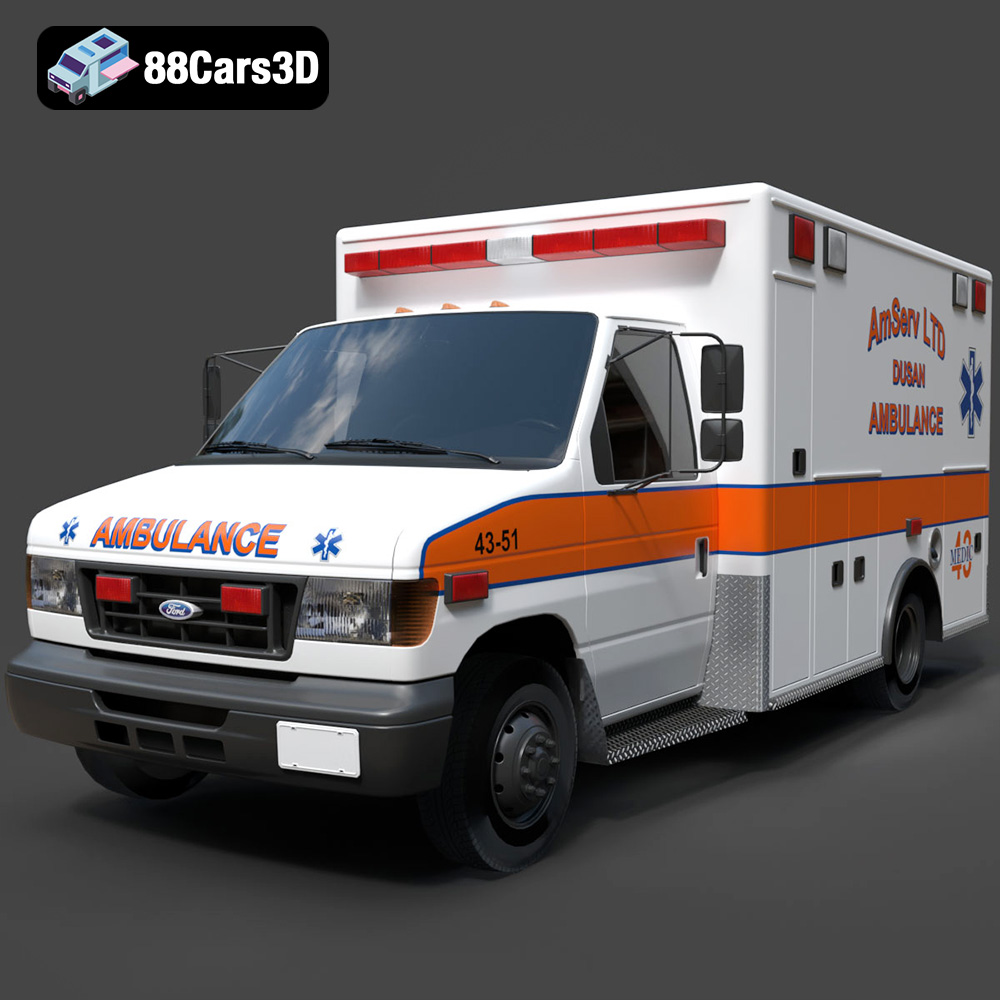
Texture: Yes
Material: Yes
Download the Ford Ambulance AmServ LTD Dusan-002 3D Model featuring a high-detail exterior and interior, realistic textures, and emergency lighting. Includes .blend, .fbx, .obj, .glb, .stl, .ply, .unreal, and .max formats for rendering, simulation, and game development.
Price: $19.99
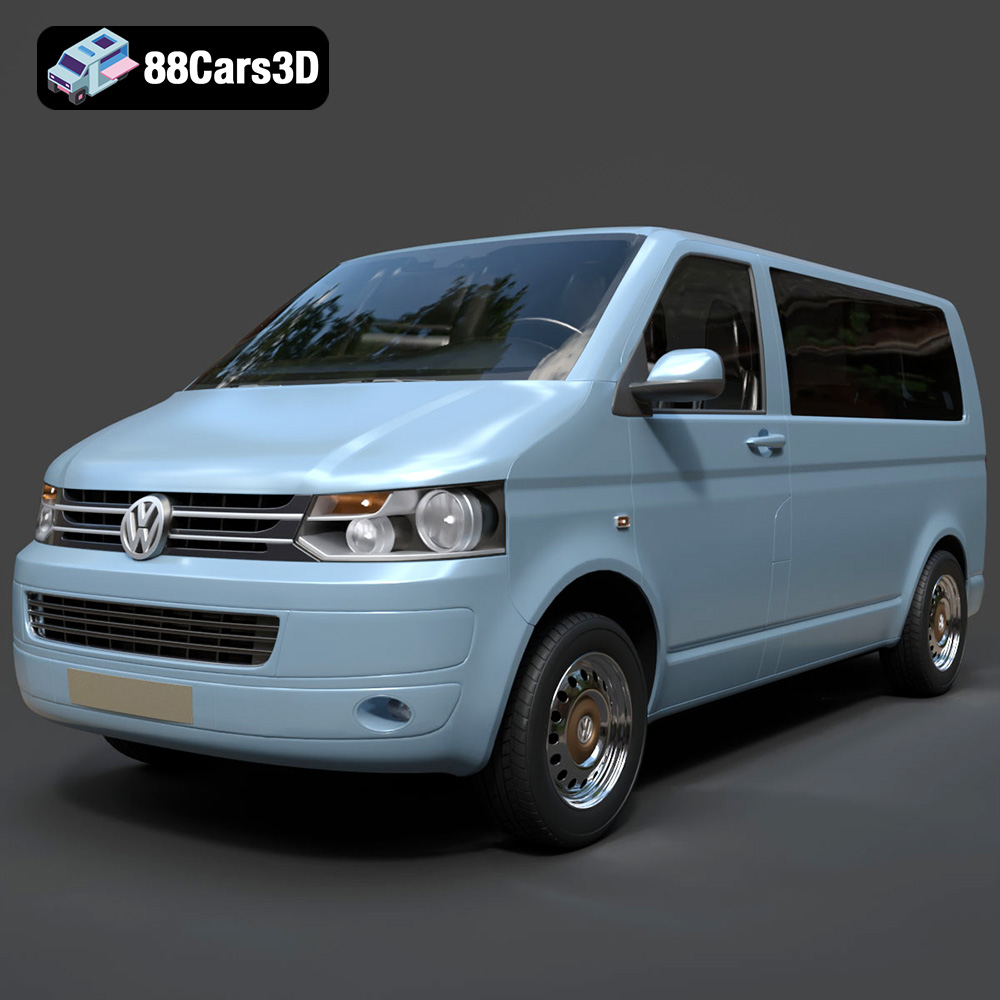
Texture: Yes
Material: Yes
Download the Volkswagen Transporter T5 FL 2010 3D Model featuring clean geometry, realistic detailing, and a fully modeled interior. Includes .blend, .fbx, .obj, .glb, .stl, .ply, .unreal, and .max formats for rendering, simulation, and game development.
Price: $22.99
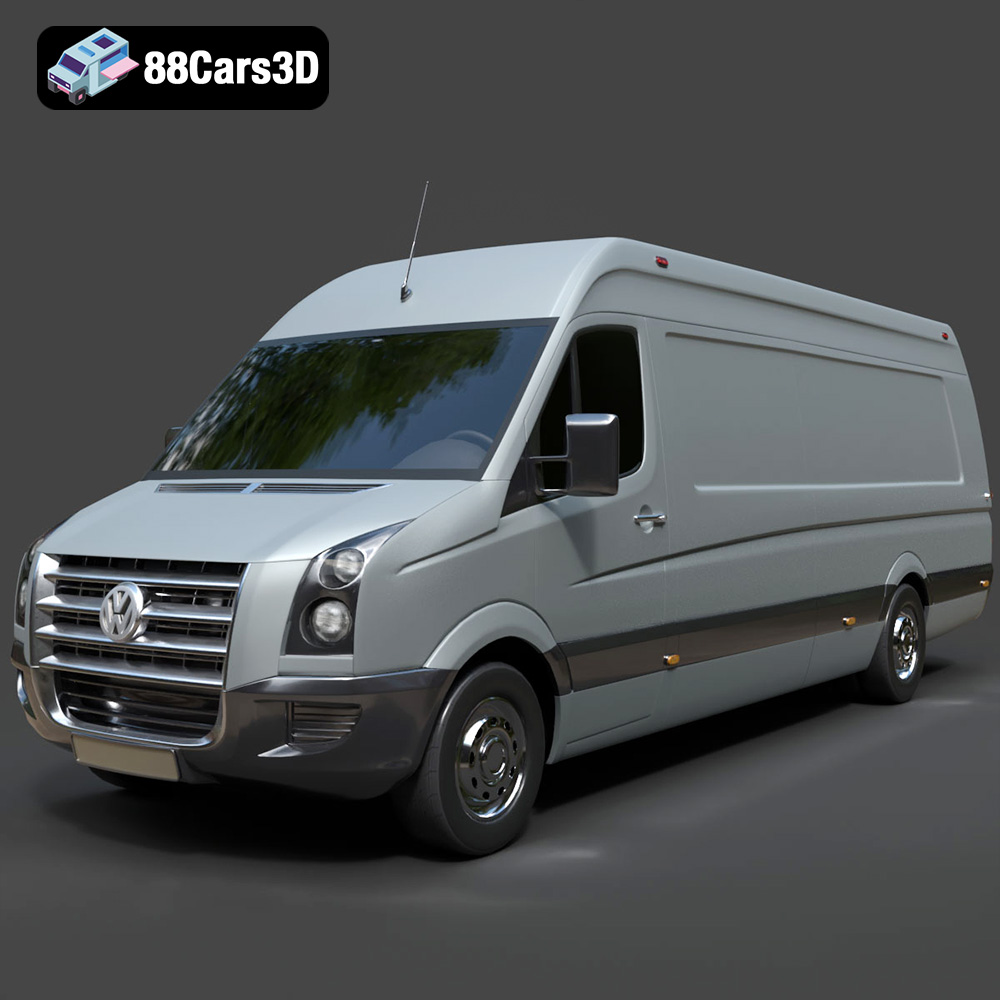
Texture: Yes
Material: Yes
Download the Volkswagen Crafter 2020 3D Model featuring clean geometry, realistic detailing, and a fully modeled interior. Includes .blend, .fbx, .obj, .glb, .stl, .ply, .unreal, and .max formats for rendering, simulation, and game development.
Price: $22.99
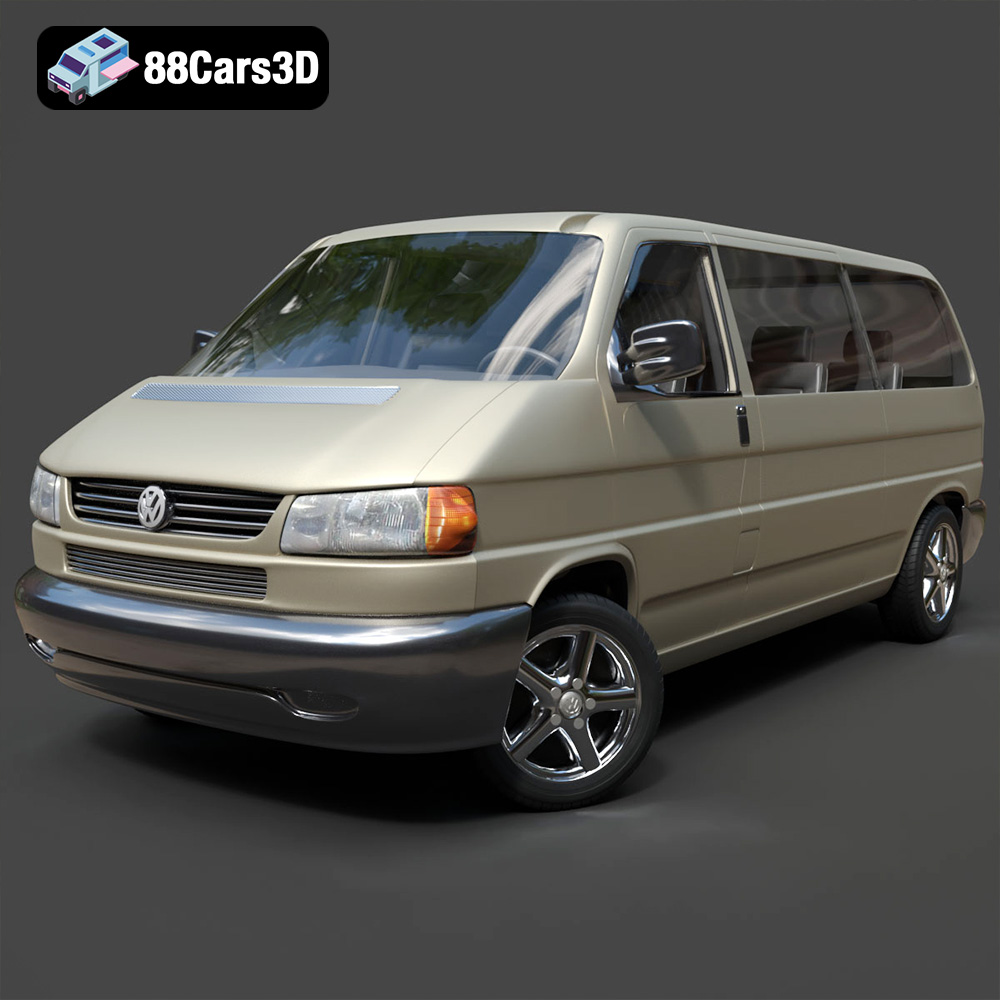
Texture: Yes
Material: Yes
Download the Volkswagen Caravelle 3D Model featuring a detailed exterior, functional interior, and optimized topology. Includes .blend, .fbx, .obj, .glb, .stl, .ply, .unreal, and .max formats for rendering, simulation, and game development.
Price: $23.99
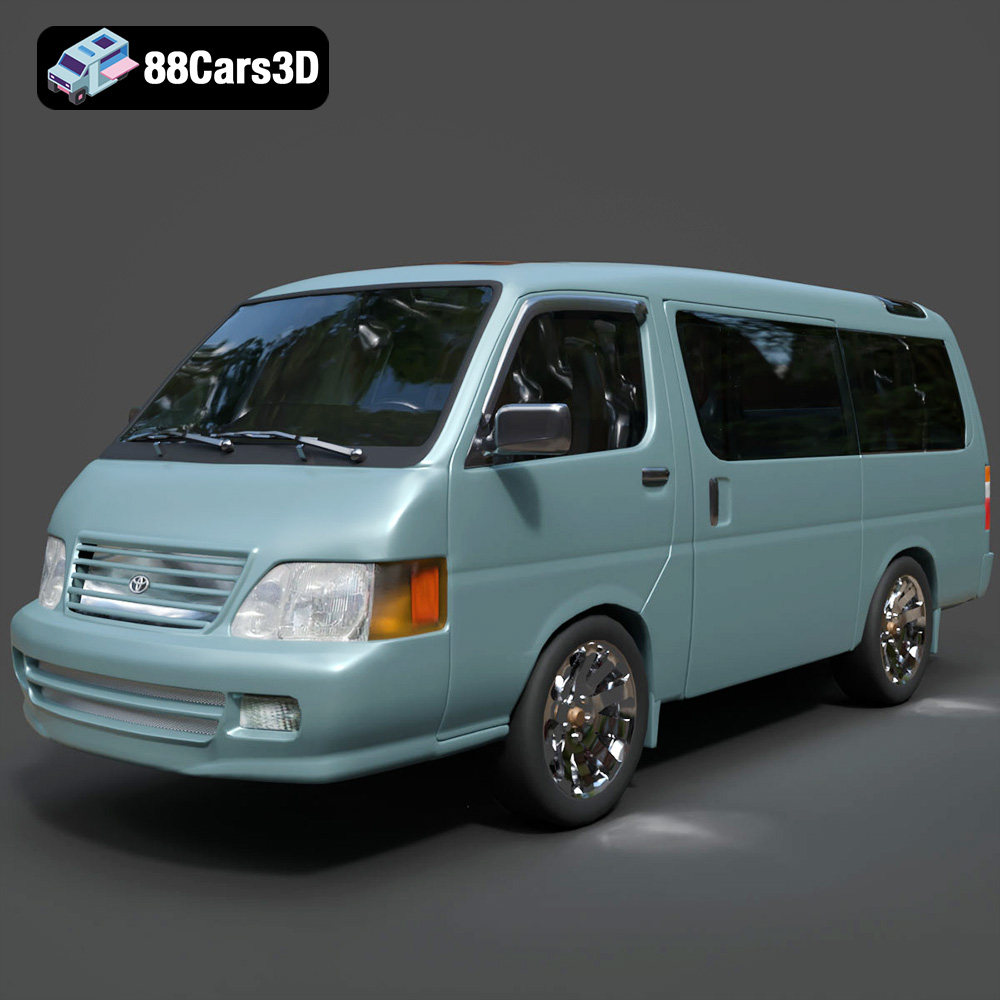
Texture: Yes
Material: Yes
Download the Toyota Hiace 3D Model featuring versatile design and detailed exterior. Includes .blend, .fbx, .obj, .glb, .stl, .ply, .unreal, and .max formats for rendering, simulation, and game development.
Price: $21.99
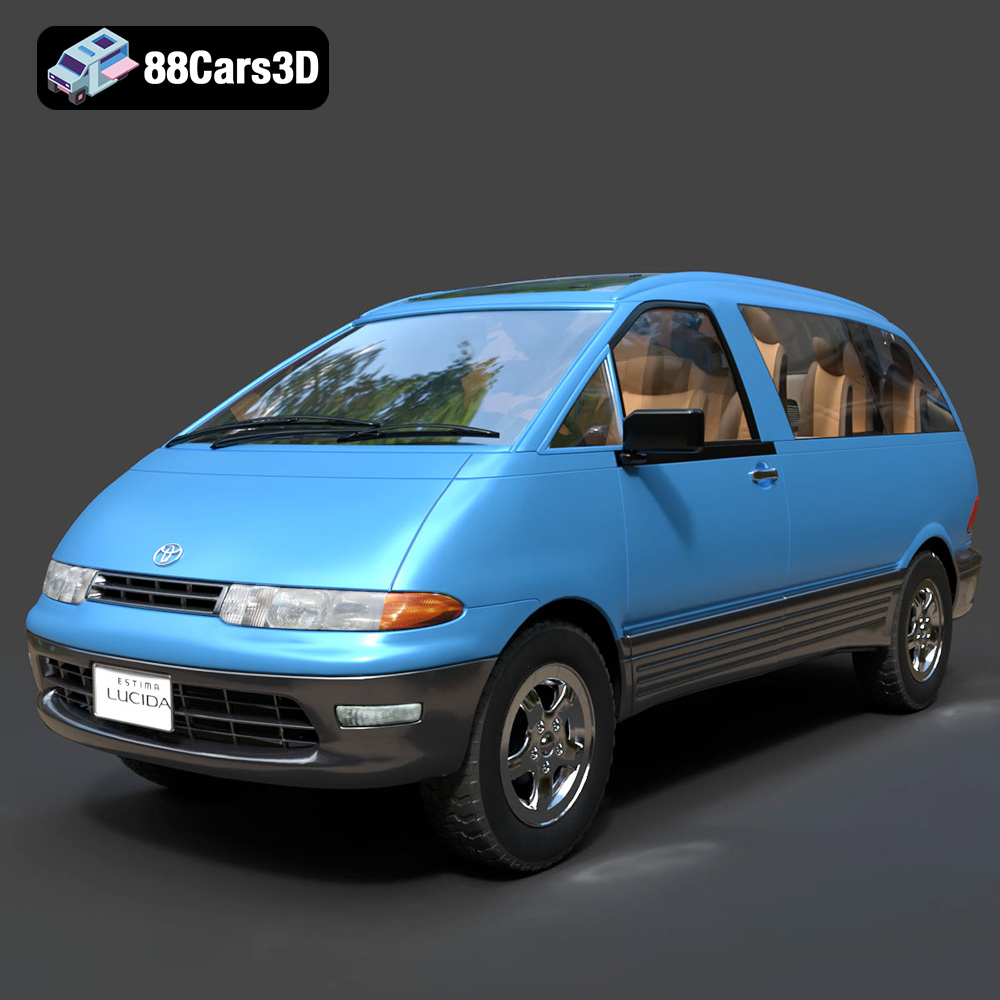
Texture: Yes
Material: Yes
Download the Toyota Estima Lucida 3D Model featuring its iconic compact MPV design, versatile interior, and accurate exterior details. Includes .blend, .fbx, .obj, .glb, .stl, .ply, .unreal, and .max formats for rendering, simulation, and game development.
Price: $24.99

Texture: Yes
Material: Yes
Download the Toyota Alphard 3D Model featuring a detailed luxury minivan design with an accurate exterior and interior. Includes .blend, .fbx, .obj, .glb, .stl, .ply, .unreal, and .max formats for rendering, simulation, and game development.
Price: $21.99
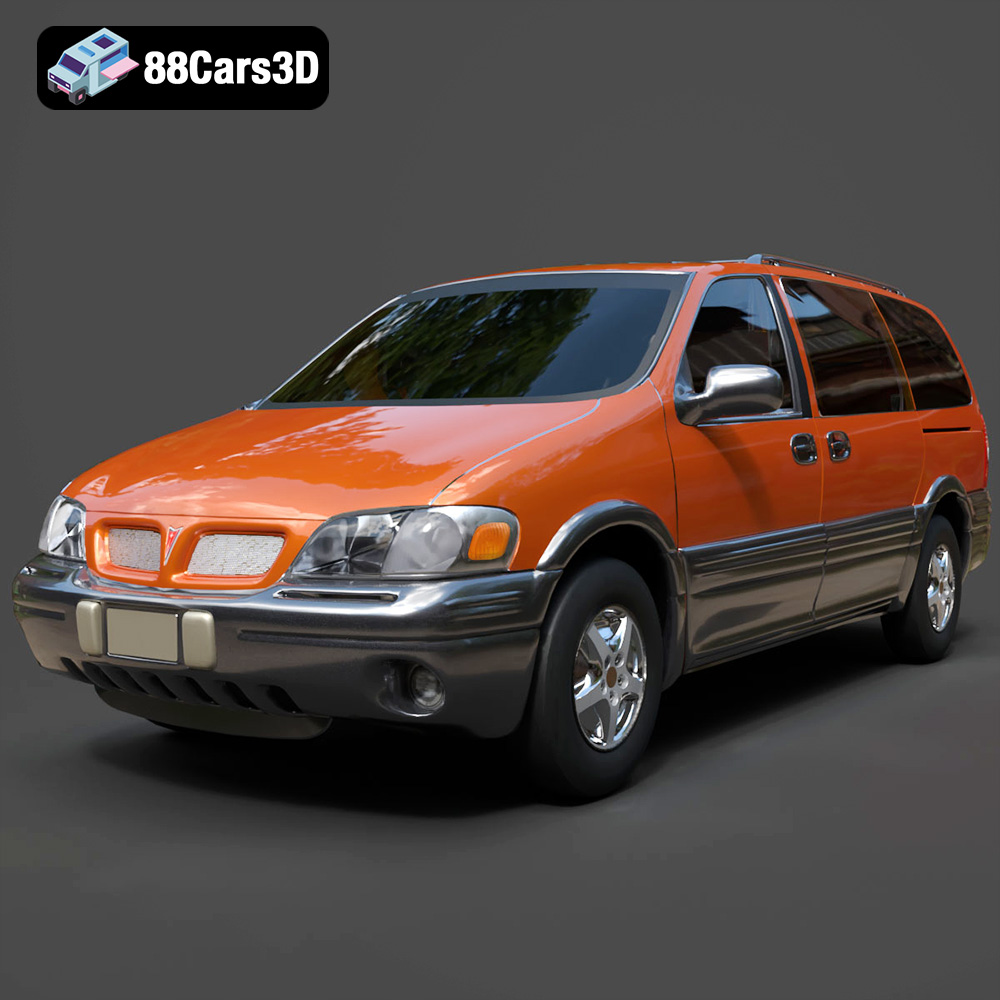
Texture: Yes
Material: Yes
Download the Pontiac Montana 1998 3D Model featuring a detailed exterior, functional interior, and optimized mesh. Includes .blend, .fbx, .obj, .glb, .stl, .ply, .unreal, and .max formats for rendering, simulation, and game development.
Price: $21.99
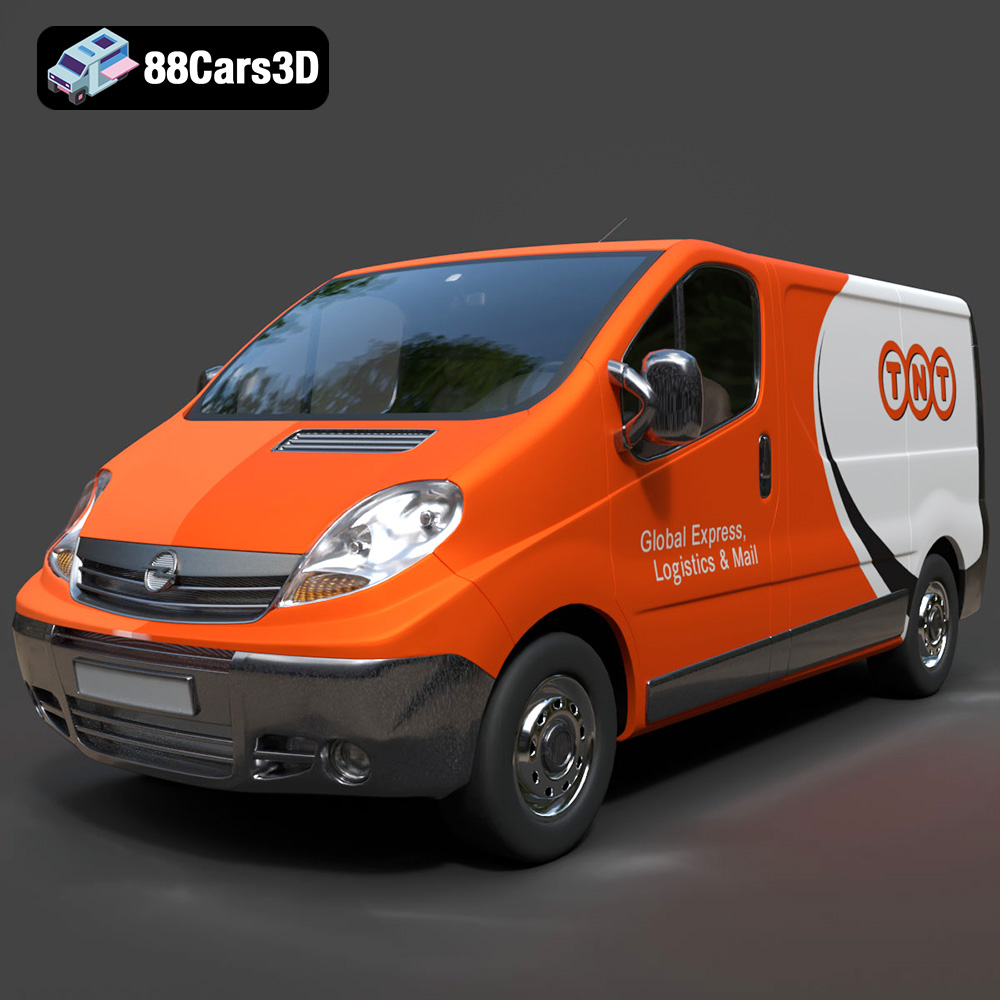
Texture: Yes
Material: Yes
Download the Opel Vivaro 3D Model featuring a versatile commercial van design with balanced detailing. Includes .blend, .fbx, .obj, .glb, .stl, .ply, .unreal, and .max formats for rendering, simulation, and game development.
Price: $21.99
Texture: Yes
Material: Yes
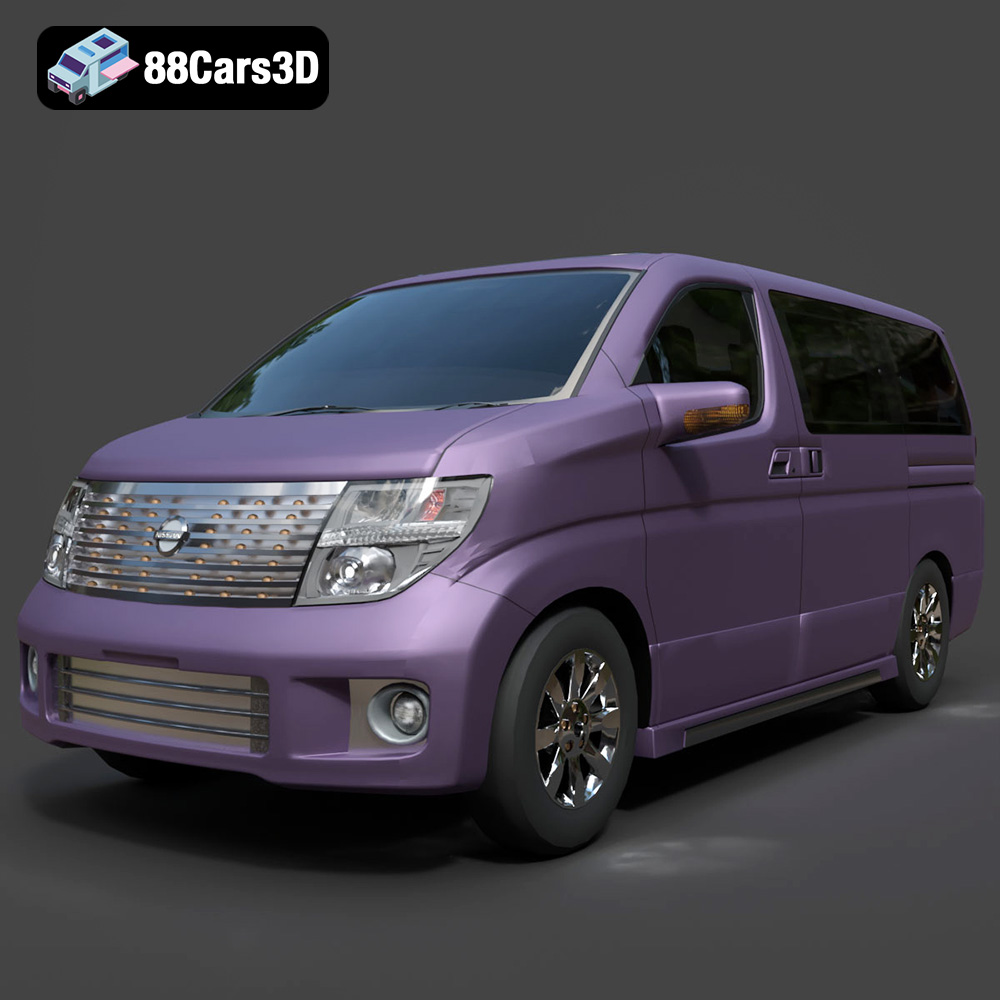
Download the Nissan Elgrand 3D Model featuring a versatile minivan design. Includes .blend, .fbx, .obj, .glb, .stl, .ply, .unreal, and .max formats for rendering, simulation, and game development.
Price: $21.99

