⚡ FLASH SALE: Get 60% OFF All Premium 3D & STL Models! ⚡

In the vibrant tapestry of modern 3D visualization, from breathtaking architectural renders to expansive open-world game environments, the details truly define the experience. While sports cars and luxury vehicles often grab the spotlight, the unsung heroes of urban landscapes are undoubtedly public transport. City buses, in particular, serve as dynamic elements, bringing realism and life to virtual street scenes. They are not merely props but critical components for conveying the flow of a metropolis, the rhythm of daily life, and the efficiency of an urban infrastructure. For designers, developers, and animators aiming for unparalleled authenticity, a high-quality 3D bus model is an indispensable asset.
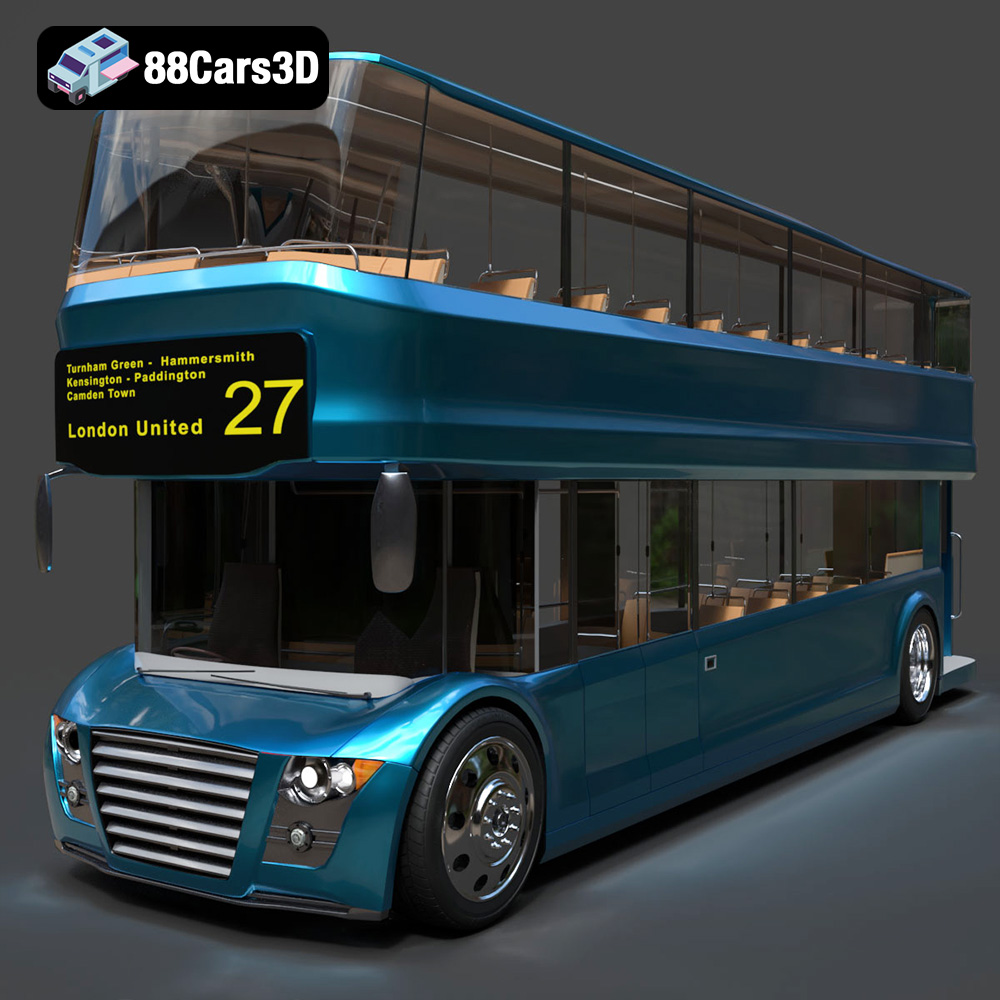
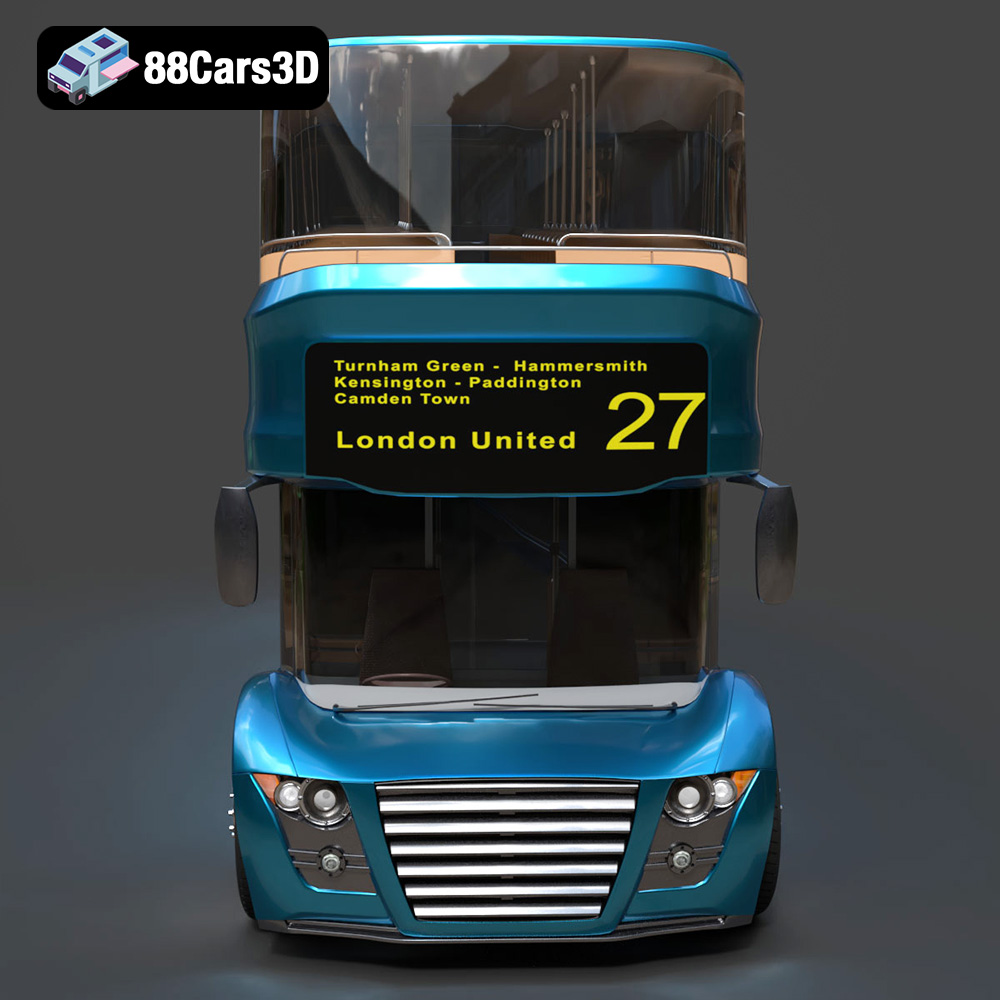
Imagine a meticulously crafted street scene: towering skyscrapers, bustling sidewalks, and intricate road networks. What truly grounds this scene in reality? The sight of a familiar public transport vehicle, like the iconic New Bus For London, gracefully navigating its route. This isn’t just about aesthetics; it’s about context, narrative, and establishing a tangible connection with the audience. Professional-grade 3D car models, especially those representing public transport, elevate projects from generic to genuinely immersive. The New Bus For London 3D model, available on 88cars3d.com, epitomizes this level of detail and utility, offering an exceptional foundation for any project demanding urban realism.
When procuring or working with 3D assets, understanding the various file formats is paramount. Each format is designed with specific use cases and compatibilities in mind, directly impacting your workflow, software choice, and the final output quality. The New Bus For London 3D model, for instance, comes with a comprehensive suite of formats, ensuring maximum versatility across different professional pipelines. Let’s delve into the technical nuances of these essential file types.
The .blend format is the native project file for Blender, the powerful open-source 3D creation suite. When you receive a .blend file, you’re not just getting the mesh; you’re getting a complete Blender scene. This includes all materials, textures (often packed within the file or referenced externally), lighting setups, cameras, animation data, and even modifiers. For users entrenched in the Blender ecosystem, this format offers the highest degree of editability and flexibility. You can dissect the model, modify its topology, tweak materials, adjust UVs, and animate components directly within the environment it was likely created in. Its comprehensive nature makes it ideal for artists who need to deeply customize or integrate the model into a larger Blender project without any data loss from conversion.
.fbx (Filmbox) stands as one of the most widely adopted interchange formats in the 3D industry. Developed by Autodesk, it excels at transferring 3D data between different software applications and game engines, making it a cornerstone for pipelines involving Unreal Engine, Unity, 3ds Max, Maya, and Cinema 4D. An .fbx file can encapsulate geometry, materials (with basic properties), textures (referenced), animations, rigging, cameras, and lights. Its strength lies in its ability to preserve complex hierarchical data and animation curves, making it the go-to choice for game development where animated assets are crucial. When importing an .fbx, it often brings over PBR material setups, though specific shader graphs might need recreation in the target engine or software.
The .obj (Wavefront OBJ) format is a venerable and universally supported file type, known for its simplicity and robustness in storing 3D geometry. Primarily, .obj files contain vertex positions, UV coordinates, normals, and face information. They typically reference an accompanying .mtl (material) file for basic material properties like color and texture maps. While .obj is excellent for transferring static mesh data between virtually any 3D software without compatibility issues, it generally does not support animations, rigging, or complex material networks. It’s the perfect format when you need a clean mesh to start with, especially for traditional modeling, texturing, or even for direct import into CAD applications where complex scene data is not required.
.glb (GL Transmission Format Binary) is the binary version of glTF, specifically designed for efficient transmission and loading of 3D scenes and models by applications. It’s quickly becoming the standard for 3D content on the web, in AR (Augmented Reality), and VR (Virtual Reality) experiences. A .glb file is self-contained, embedding all geometry, textures, animations, and PBR material data into a single binary file. This makes it incredibly streamlined for quick display in browsers, mobile AR apps, and immersive platforms, minimizing file sizes and loading times. Its optimization for real-time engines and web-based interactivity makes it invaluable for showcasing 3D models in an accessible, high-performance manner.
.stl (Stereolithography) is the de facto standard file format for 3D printing. Unlike other formats that store color, texture, or animation, .stl files represent a 3D model as a collection of unconnected triangular facets, defining only the surface geometry of the object. It’s a “dumb” format in the sense that it doesn’t carry design intent or advanced data, but its simplicity is its strength for manufacturing. Most 3D printers and slicing software accept .stl files directly. When preparing a model for 3D printing, ensuring it’s a “watertight” mesh (no holes or non-manifold geometry) is crucial, and the .stl format is perfect for this final output stage.
The .ply (Polygon File Format, or Stanford Triangle Format) is a versatile format often used for storing 3D data from 3D scanners, CAD applications, and scientific analysis. Like .obj, it stores geometric data, but it can also store a wider range of properties, including color, transparency, surface normals, texture coordinates, and even reliability information for each vertex and face. It’s particularly favored in fields requiring precise mesh data and often supports both ASCII and binary encodings. For projects requiring high-fidelity geometric analysis or direct integration into CAD environments, .ply offers a robust solution for preserving detailed mesh attributes.
The presence of an .unreal file type typically implies a project or asset specifically prepared and optimized for Unreal Engine. This isn’t a single file extension in the same way .fbx or .obj are, but rather denotes an asset (or a collection of assets) pre-imported, configured, and often set up within an Unreal Engine project structure. This might mean a specific folder containing the imported FBX, textures, materials, and Blueprints, all ready to be dropped into an existing Unreal project. This level of preparation saves immense development time, as materials are likely PBR-ready, meshes are scaled correctly, and collision models may already be generated, streamlining the process of getting the New Bus For London directly into a real-time simulation or game environment.
Finally, the .max format is the native scene file for Autodesk 3ds Max, another industry-leading 3D modeling, animation, and rendering software. Similar to .blend files for Blender, a .max file contains the entire scene data, including geometry, complex material setups (V-Ray, Corona, Arnold), lighting, cameras, animation, and any modifiers or procedural effects applied. For professionals working in architectural visualization or high-fidelity cinematic rendering with 3ds Max, having the model in its native .max format ensures complete control and access to all the original scene features and parameters. This allows for deep customization, re-texturing with specific renderers, and integrating the bus into complex animated sequences with ease.
The availability of such a diverse array of formats for the New Bus For London 3D model underscores its professional-grade quality and adaptability. Whether you’re an architect, a game developer, or a simulation engineer, having these options ensures a smooth transition into your preferred software or engine, saving valuable time and effort.
What sets a professional 3D car model apart from a generic one? It’s a combination of meticulous detail, clean technical execution, and thoughtful optimization. The New Bus For London 3D model exemplifies these principles, making it an ideal asset for demanding projects. Let’s break down its core components.
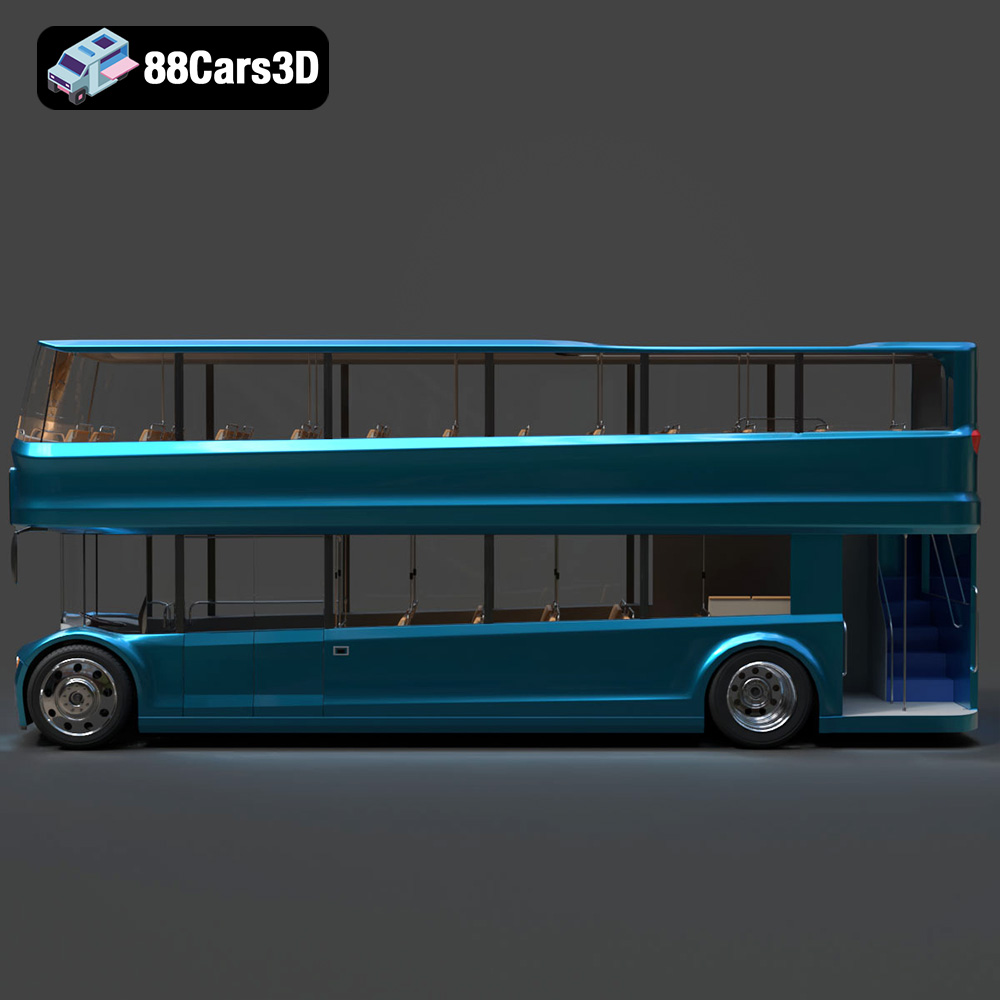
The first impression of any 3D vehicle comes from its exterior. For a recognized public transport vehicle like the New Bus For London, accurate representation is crucial. This model achieves high fidelity through:
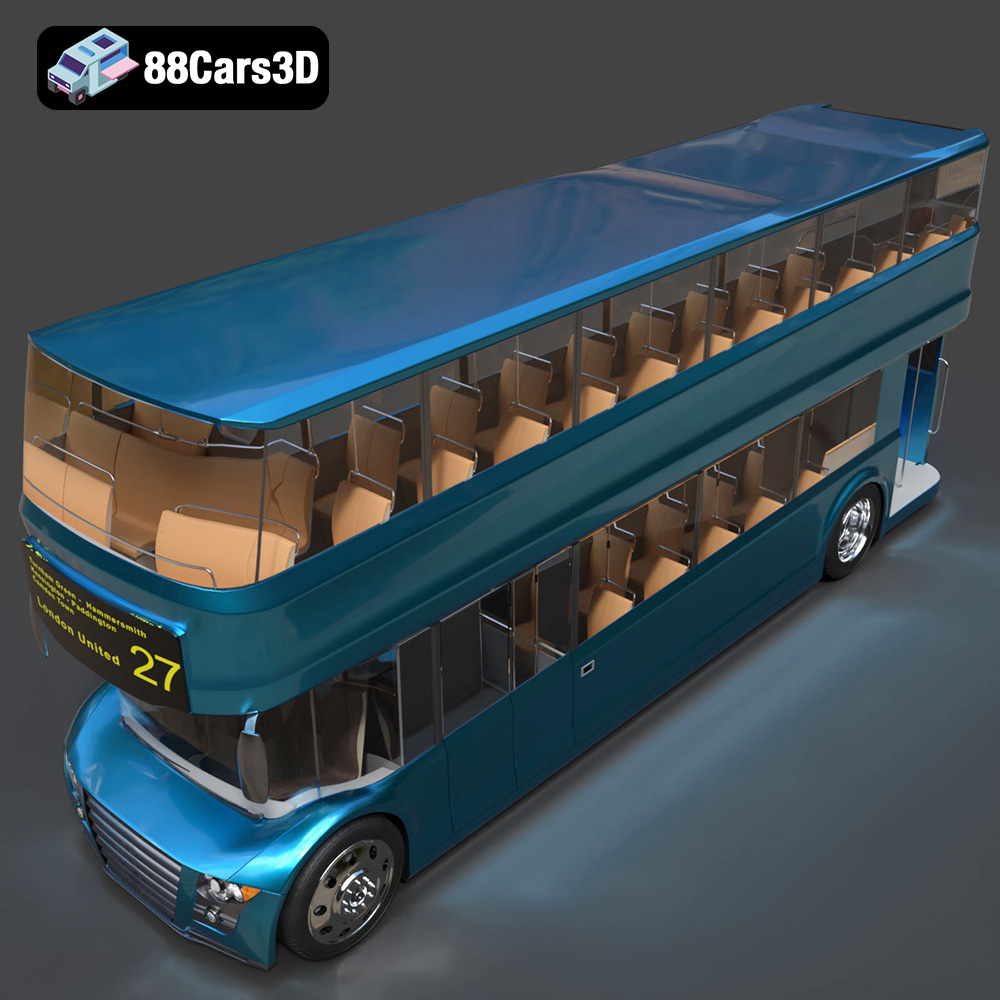
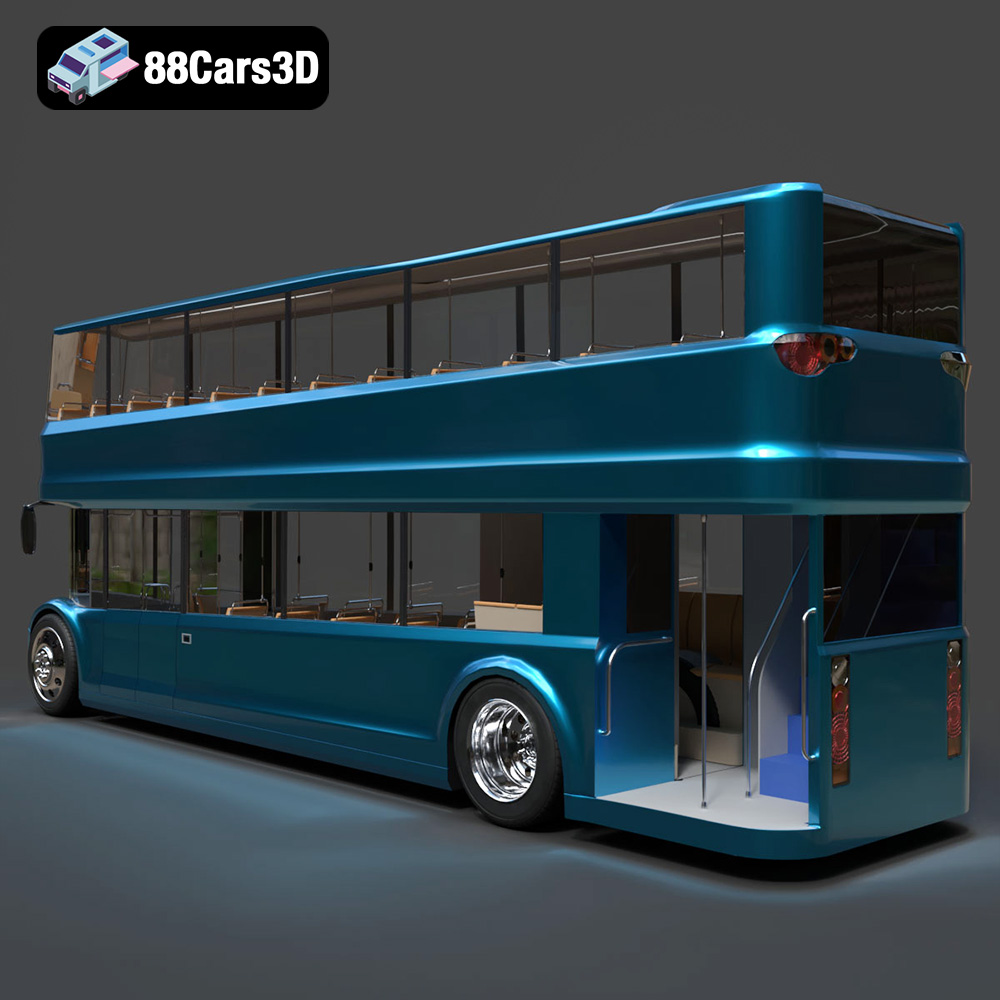
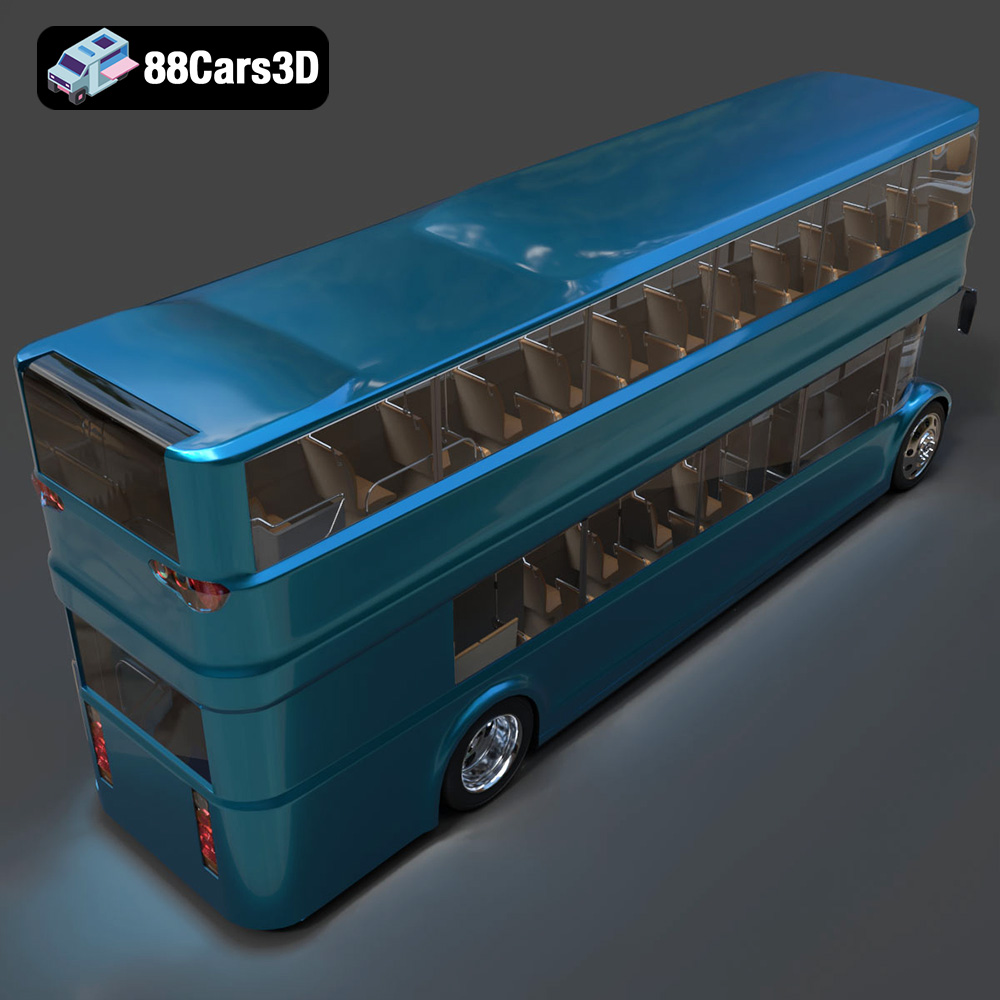
While the exterior catches the eye, the interior and underlying mechanical structure provide depth and versatility. The New Bus For London model doesn’t stop at a shell:
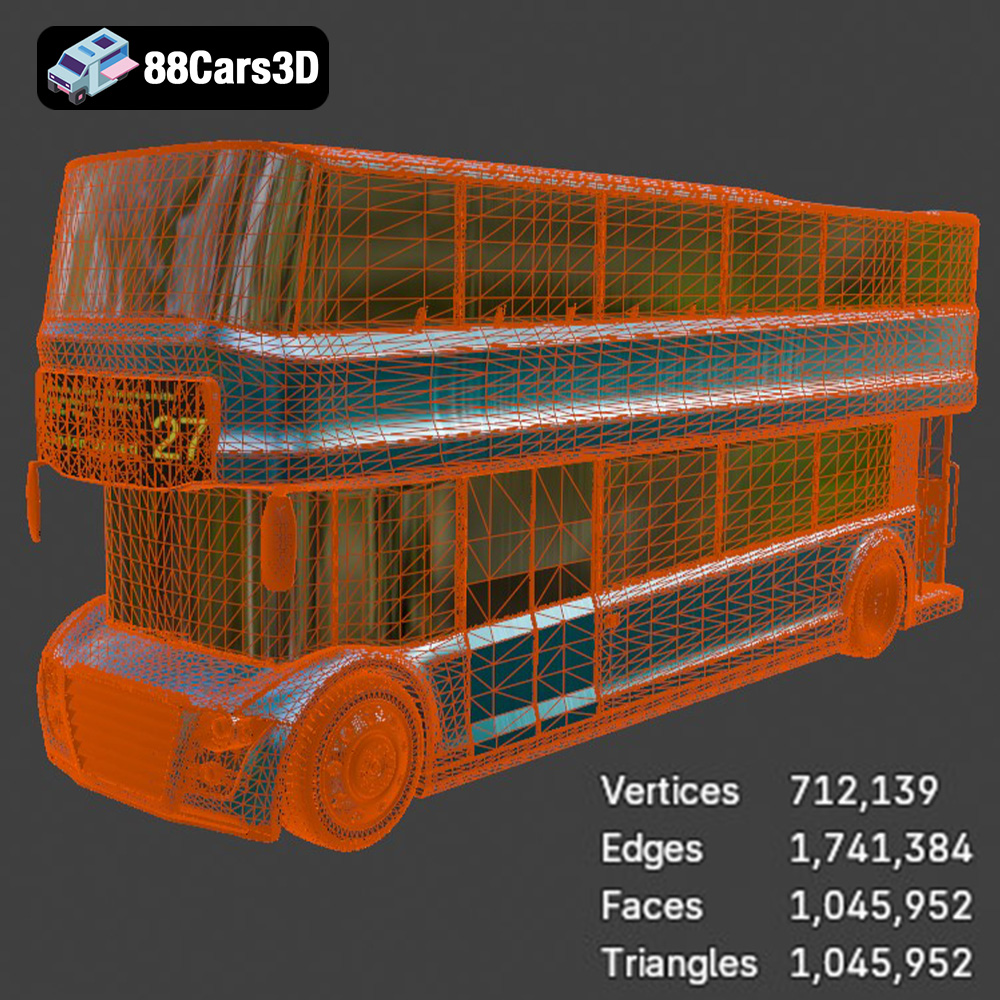
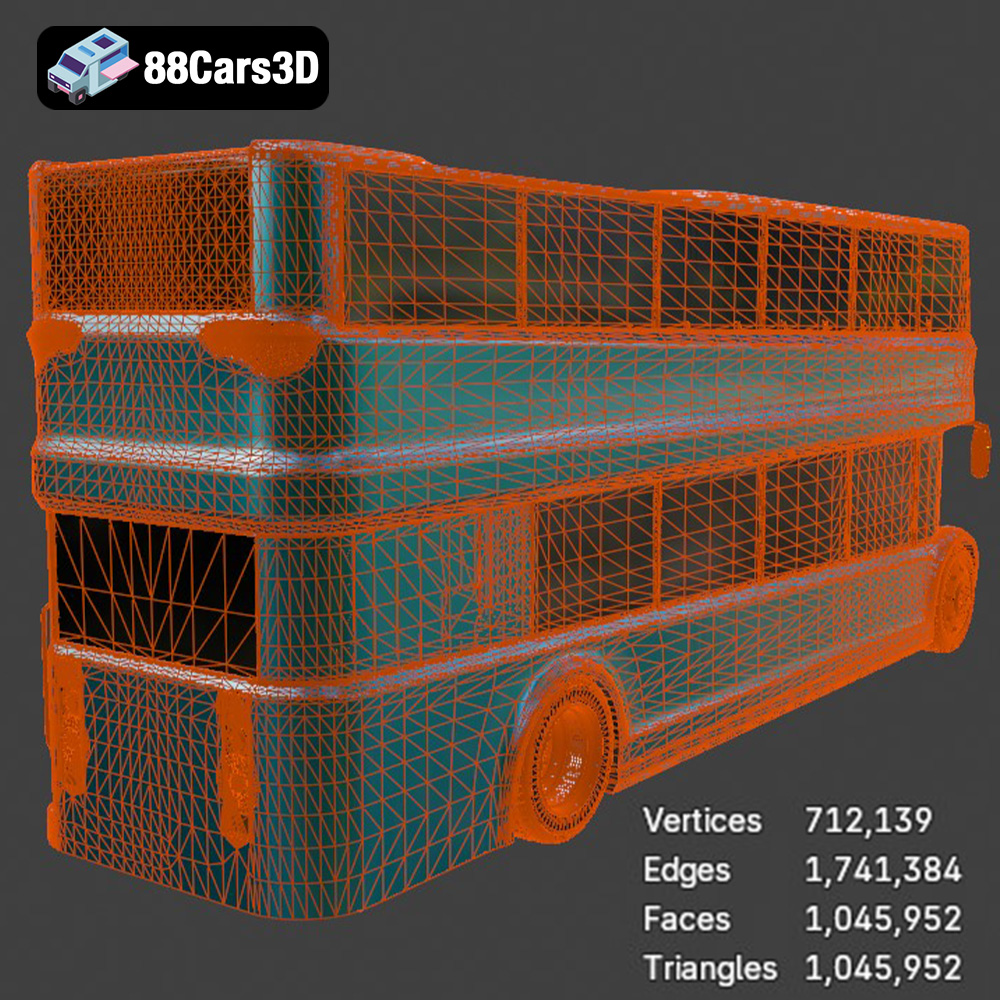
Beyond visual detail, the true mark of a professional 3D asset lies in its technical underpinnings. This model boasts:
The real value of a high-quality 3D asset like the New Bus For London 3D model lies in its adaptability across diverse professional workflows. Thanks to its comprehensive file format support, integrating this model into various software packages and game engines is a streamlined process.
For professionals in architectural visualization, automotive rendering, or cinematic animation, 3ds Max remains a powerhouse. The inclusion of the native .max file means immediate readiness:
Blender users benefit immensely from the dedicated .blend file. This isn’t just an import; it’s a fully editable project:
Game developers and simulation specialists rely on game engines for interactive experiences. The New Bus For London model is excellently suited for this through its .fbx and dedicated .unreal assets:
Regardless of your chosen platform, the professional preparation of the New Bus For London 3D model from 88cars3d.com ensures that you can spend less time on asset preparation and more time on creative development, animation, or scene composition.
The versatility of the New Bus For London 3D model extends far beyond static renders. Its technical design makes it suitable for a multitude of professional applications, serving as a dynamic and functional asset in diverse industries.
Case Study: Redefining Cityscapes with Dynamic Elements
An architectural firm is presenting a proposal for a new urban development, featuring a sprawling city square surrounded by high-rises. A static image, no matter how detailed, often lacks the vitality of a living city. By integrating the New Bus For London 3D model into their visualizations, the firm can achieve:
The model’s accurate real-world scale and animatable components are crucial here, allowing architects to present not just buildings, but functioning urban ecosystems.
Case Study: Immersive Urban Simulators and Interactive Gameplay
A game studio is developing an open-world city simulation where players can experience life as a public transport driver. The New Bus For London 3D model is a perfect fit:
The model’s clean topology and optimized UVs simplify the process of applying different liveries or damage states, further enhancing game variability.
Case Study: Virtual City Tours and Training Modules
A travel company wants to offer immersive AR/VR tours of London, or a public transport authority seeks to create a virtual training environment for new drivers. The New Bus For London model proves invaluable:
The model’s real-world scale and professional materials ensure a convincing and consistent experience across different AR/VR platforms.
Case Study: From Digital Model to Physical Object
A design enthusiast or a transport museum might want a physical miniature of the New Bus For London. The inclusion of the .stl format makes this straightforward:
The inherent quality of the digital mesh, particularly its clean geometry, translates into a higher quality physical print, free from common printing artifacts.
These diverse applications highlight how a single, well-crafted 3D asset like the New Bus For London can serve as a cornerstone across multiple creative and technical industries. Its robust design and varied file formats ensure it’s not just a beautiful render, but a truly functional tool for innovation.
In the demanding world of 3D production, time is a precious commodity. Sourcing high-quality 3D assets, particularly complex ones like 3D car models or public transport vehicles, can be a game-changer for optimizing your workflow and achieving superior results. The New Bus For London 3D model is a prime example of how pre-made, professional assets streamline development.
Creating a detailed 3D vehicle from scratch is an incredibly time-consuming and labor-intensive process. It requires expertise in modeling, texturing, UV mapping, rigging, and material setup. For a large project, diverting resources to build every prop and asset can quickly inflate budgets and extend deadlines. By acquiring a ready-to-use model like the New Bus For London from a reputable marketplace like 88cars3d.com, studios and individual artists can:
This efficiency allows artists to focus on higher-level creative tasks, such as scene composition, animation, or interactive logic, rather than foundational asset creation.
Maintaining a consistent level of quality across all assets in a large-scale project can be challenging. By integrating professionally made assets, you establish a benchmark of quality that elevates the entire project:
The investment in a premium asset like the New Bus For London 3D model translates directly into a more robust and visually compelling final product.
A professional 3D model doesn’t just offer an off-the-shelf solution; it provides a flexible foundation for boundless creative exploration. The New Bus For London model is designed with customization in mind, ensuring it remains a valuable asset for years to come.
The ability to easily modify and adapt an asset is crucial for diverse project requirements:
This inherent flexibility transforms the New Bus For London from a mere static object into a dynamic and adaptable component of your creative toolkit.
In a rapidly evolving technological landscape, investing in assets that endure is key. The New Bus For London 3D model is built with longevity in mind:
By investing in such a versatile and technically sound 3D model, you’re not just acquiring an asset for your current project, but a reliable, adaptable tool that will continue to serve your creative needs for years to come.
The journey through the intricate world of 3D modeling reveals that truly exceptional assets are defined by a fusion of aesthetic accuracy, technical excellence, and practical versatility. The New Bus For London 3D model embodies these qualities, standing out as an indispensable asset for anyone seeking to inject unparalleled realism and dynamic energy into their urban-themed projects.
From the meticulous replication of its iconic exterior and comprehensive interior detailing to its clean topology, optimized UVs, and multiple industry-standard file formats, every aspect of this model is crafted for professional-grade utility. Whether you are an architectural visualizer crafting a compelling urban proposal, a game developer building an immersive city simulator, an AR/VR innovator creating interactive experiences, or a simulation engineer developing training modules, this model provides the robust foundation you need.
It’s more than just a bus; it’s a testament to the power of high-quality 3D assets in streamlining workflows, reducing development costs, and ultimately, unlocking new creative possibilities. By choosing assets of this caliber, available through marketplaces like 88cars3d.com, you are investing in efficiency, quality, and the capacity to bring your virtual worlds to life with authentic detail. Elevate your next project and let the New Bus For London 3D model drive your creative vision forward.
Experience the essence of modern public transport with this highly detailed 3D model of the New Bus For London. This professional-grade model captures the iconic design and functional elegance of the contemporary city bus, built with clean geometry and a balanced level of detail. It is perfectly suited for a wide range of applications, including high-fidelity rendering, realistic animations, complex simulations, and immersive game development projects.
$21.99