⚡ FLASH SALE: Get 60% OFF All Premium 3D & STL Models! ⚡

The sleek lines, the reflective gleam of the paint, the intricate details of the interior – creating a truly convincing 3D car model goes far beyond meticulous modeling. It’s in the texturing where these digital vehicles truly come to life, transforming a wireframe into a photorealistic masterpiece. For automotive designers, game developers, and visualization artists, achieving this level of realism is paramount. And in the realm of advanced texturing, one tool stands out: Substance Painter. This powerful software has become an industry standard for its intuitive workflow, non-destructive approach, and ability to generate breathtaking PBR (Physically Based Rendering) materials. At 88cars3d.com, we understand the demand for high-quality 3D car models, and mastering tools like Substance Painter is key to unlocking their full potential, whether for cinematic renders, immersive AR/VR experiences, or optimized game assets.
This comprehensive guide will take you on a deep dive into using Substance Painter specifically for car texturing. We’ll explore everything from preparing your high-detail 3D car model – like those found on 88cars3d.com – to crafting advanced PBR materials, simulating realistic wear and tear, and optimizing your final textures for diverse platforms. By the end of this article, you’ll possess the knowledge and techniques to elevate your automotive rendering and game asset development to a professional standard, ensuring your 3D car models captivate audiences with their unparalleled realism.
Before even launching Substance Painter, the quality of your 3D car model and its accompanying UV maps is critical. A well-prepared mesh ensures a smooth texturing process and optimal results. This initial stage dictates how effectively textures will be applied and how the final asset will perform in various rendering environments, from high-end visualization to real-time game engines.
For automotive models, clean topology is non-negotiable. Smooth, flowing surfaces are essential to capture the elegant curves and reflections of a car. Aim for an all-quad mesh where possible, especially on visible exterior panels. Tris are generally acceptable in areas of flat detail or where deformation is minimal, but quads provide superior deformation and subdivision smoothness. Avoid n-gons (faces with more than four edges) as they can cause shading artifacts and issues during subdivision or baking.
Consider the polygon count based on your target platform. For high-fidelity renders, a model might range from 200,000 to over 1 million polygons, often utilizing subdivision surfaces. For game assets, the goal is efficiency, so you might aim for 50,000 to 150,000 triangles for a hero vehicle, with lower poly versions for distant shots (LODs). Regardless of the target, ensure your mesh is free of overlapping faces, non-manifold geometry, and isolated vertices, as these can lead to baking errors and visual glitches in Substance Painter.
UV mapping is the bridge between your 3D model and its 2D textures. For complex objects like cars, thoughtful UV layout is crucial. The goal is to maximize texture space utilization, minimize distortion, and create logical islands that make texturing easier. Automotive UVs are typically broken down into distinct sections:
When unwrapping, strive for consistent texel density across all UV islands. This ensures that textures appear uniformly sharp regardless of the object’s size or position on the UV map. Tools like Blender’s UV Editor (as detailed in the Blender 4.4 Manual on UVs) or Maya’s UV Toolkit offer powerful functionalities for efficient unwrapping and packing. Utilize techniques like cylindrical or planar projections for appropriate parts, and manually adjust seams in less visible areas to hide potential stretching or texture breaks.
Before importing into Substance Painter, assign distinct Material IDs to different parts of your car model in your 3D software (e.g., 3ds Max, Blender, Maya). This allows Substance Painter to automatically create texture sets based on these IDs, making it much easier to isolate and texture individual components like the car body, tires, windows, calipers, or interior elements. This non-destructive workflow allows for quick iteration and modification of specific material zones.
Once your model is clean, UV-mapped, and has appropriate Material IDs, export it as an FBX or OBJ file. FBX is generally preferred as it retains more scene information, including multiple UV sets and smoothing groups.
Physically Based Rendering (PBR) is the cornerstone of modern 3D realism. It ensures that materials interact with light in a physically accurate way, leading to incredibly believable results. For automotive rendering, understanding and correctly implementing PBR principles in Substance Painter is crucial.
Substance Painter primarily uses the Metalness/Roughness PBR workflow, which is widely adopted across game engines and rendering software. This workflow relies on a few core texture maps:
The interplay of these maps, especially Metalness and Roughness, is what gives car paint its distinctive look, from a highly polished clear coat to a textured plastic bumper.
Car paint is notoriously complex, often consisting of multiple layers: a base coat (color), metallic flakes (optional), and a clear coat (glossy, reflective). Substance Painter excels at replicating this layered complexity using its powerful shader and layer system.
A typical car paint shader in Substance Painter might involve:
Utilize Substance Painter’s built-in materials and smart materials as a starting point. Experiment with parameters like IOR (Index of Refraction) for glass and transparent plastics, anisotropy for brushed metals, and subsurface scattering for subtle material effects on headlights or taillights (though this is more challenging to achieve accurately in real-time within Substance Painter’s viewport, it can be set up in a target renderer like Cycles or V-Ray).
Beyond the main car paint, other materials demand specific attention:
For rendering in external software like 3ds Max (Corona, V-Ray) or Blender (Cycles, Eevee), you will export specific PBR maps (Base Color, Metalness, Roughness, Normal, Height, etc.) and connect them to a universal PBR shader. Blender’s Principled BSDF shader, for example, directly accepts these inputs, allowing for seamless integration. The Principled BSDF shader in Blender 4.4 is designed for PBR workflows, making it easy to plug in your exported Substance Painter textures for physically accurate results.
Substance Painter offers a highly flexible and non-destructive workflow, making it ideal for the iterative nature of automotive design and game asset creation. Its layer-based system, smart materials, and powerful generators allow for quick experimentation and detailed refinement.
The core of Substance Painter is its layer stack. Each material property (color, roughness, metalness, normal, height) has its own channel, and you paint across all of them simultaneously. Think of layers as transparent sheets stacked on top of each other, each adding or modifying aspects of your material. The non-destructive nature means you can always go back and adjust any parameter without repainting.
Smart Materials are pre-made material setups with intelligent masks and generators that react to your model’s geometry (e.g., curvature, ambient occlusion, thickness). This is a massive time-saver for automotive texturing. You can drag and drop a “Car Paint” smart material, and it will instantly apply a base color, clear coat, and even some subtle wear based on your baked maps. Customize these smart materials to achieve unique finishes: adjust flake size, metallic intensity, clear coat glossiness, and color variations. You can also create your own smart materials from scratch, saving frequently used car paint setups, rubber types, or chrome finishes for future projects.
Substance Painter’s power lies in its procedural approach. Generators create complex patterns and details based on your mesh’s baked information. For example, a “Dirt” generator can automatically accumulate grime in crevices, while a “Metal Edge Wear” generator can simulate paint chipping on sharp edges. These are driven by baked maps like Ambient Occlusion, Curvature, and World Space Normals. Adjust their parameters to control intensity, scale, and distribution.
Masks are essential for controlling where generators and fill layers are applied. Use black masks to hide areas and then paint in white to reveal, or use smart masks that procedurally apply effects based on geometry. For car texturing, masks allow you to isolate paint chipping to specific areas, apply dust to horizontal surfaces, or create subtle grime streaks along body panels. Combine generators with painted masks for precise control over complex details.
While procedural tools are powerful, manual painting is indispensable for adding unique details that generators can’t replicate. Use brush tools to:
Leverage Substance Painter’s projection tools to align texture maps or images directly onto your 3D model for specific branding or detailing. For fine details, ensure your texture resolutions are high enough (e.g., 4096×4096 for main car body panels) to avoid pixelation.
A brand-new, pristine car model can look artificial. The secret to realism lies in subtle imperfections that tell a story. Substance Painter provides an extensive toolkit to simulate the effects of time and environment on your automotive surfaces.
Paint chipping adds a touch of authenticity, revealing the underlying metal or primer. This is often achieved using a combination of generators and masks:
Pay attention to the scale and distribution of these imperfections. A new car might have only tiny scuffs, while an older, rally-worn vehicle would show significant damage.
Environmental effects are crucial for grounding your vehicle in a scene. Substance Painter’s procedural approach makes this efficient:
Experiment with blending modes and opacities to integrate these effects seamlessly. Remember, subtlety is often key; even a small amount of wear can dramatically increase realism. Understanding how dirt and grime collect on real car surfaces will guide your artistic decisions.
While Substance Painter isn’t a modeling tool, it can effectively simulate minor dents and deformations using height and normal maps.
For more significant deformations, it’s best to address these in your primary 3D modeling software before importing to Substance Painter. However, for minor surface imperfections, Substance Painter provides a powerful and iterative solution.
High-quality textures are essential, but efficient textures are critical for performance, especially in real-time applications like game development, AR/VR, and interactive visualizations. Optimizing your Substance Painter outputs ensures your 3D car models run smoothly on their target platforms.
Choosing the right texture resolution is a balance between visual fidelity and performance. Common resolutions include 1024×1024, 2048×2048, and 4096×4096. For a hero car model in a high-end visualization, 4K (4096×4096) or even 8K textures might be used for large panels, while smaller details might use 2K or 1K. For game assets, main body textures are often 2K, with interior elements or specific parts at 1K, and highly detailed components potentially at 4K if budgets allow. Always maintain a consistent texel density across your model to prevent noticeable blurring or pixelation when viewed up close.
Substance Painter allows you to change the resolution of your texture sets on the fly, making it easy to test different quality settings during development. However, perform your initial texturing at a higher resolution (e.g., 4K) to capture maximum detail, and then scale down for export if needed.
Texture atlasing involves combining multiple smaller textures into one larger texture sheet. This reduces the number of draw calls in game engines, significantly improving performance. For car models, instead of having separate texture sets for every single bolt or interior button, you would ideally atlas them onto a few larger sheets.
When creating your UV maps, consider grouping similar materials or small parts together on a single UV sheet (or multiple sheets, e.g., one for the exterior, one for the interior, one for wheels). This is where your initial UV layout and Material ID assignments become very important. Substance Painter can handle multiple texture sets (which effectively become atlases upon export if properly packed), and you can bake maps for each set independently.
For game development, Levels of Detail (LODs) are essential. These are simplified versions of your 3D model and its textures that are swapped in when the object is further from the camera. This drastically reduces the computational load without sacrificing perceived visual quality. You’ll typically have 3-5 LODs for a car model.
While Substance Painter primarily focuses on the LOD0 textures, you can often reuse or downscale these high-resolution maps for lower LODs. Some pipelines involve baking details from LOD0 to lower LOD meshes directly in Substance Painter, ensuring consistency across detail levels.
AR/VR applications have even stricter performance budgets than traditional games. Key optimization techniques for 3D car models in AR/VR include:
When sourcing models for AR/VR, consider platforms like 88cars3d.com which often provide optimized versions or clearly state polygon counts and texture resolutions, simplifying your integration process.
Once your car model is beautifully textured in Substance Painter, the next crucial step is exporting those textures and integrating them into your chosen rendering engine or game engine. Substance Painter offers streamlined export capabilities to ensure compatibility and optimal performance.
Substance Painter provides a wide array of export presets tailored for different software and engines (e.g., Unity, Unreal Engine, V-Ray, Corona, Arnold, Cycles, glTF). These presets automatically configure the output maps and channel packing to match the requirements of the target platform.
This significantly reduces file size and memory footprint. Ensure you understand the specific channel packing requirements of your target engine and select the appropriate preset or create a custom one in Substance Painter.
For high-quality cinematic automotive rendering, you’ll typically integrate your Substance Painter textures into renderers like Corona, V-Ray (3ds Max, Maya), Cycles (Blender), or Arnold (Maya, 3ds Max).
Each renderer has its nuances, but the core PBR principles remain consistent. The Blender 4.4 Manual provides extensive details on shader nodes, which will be invaluable for connecting your PBR textures correctly within Cycles or Eevee.
Game engines have their own specific PBR material setups, often leveraging channel-packed textures for efficiency.
For AR/VR applications, ensure your materials are optimized for mobile or constrained hardware, often involving simpler shaders and fewer texture samples.
To truly master car texturing in Substance Painter, consider incorporating these advanced techniques and best practices into your workflow:
For extremely high-detail 3D car models, especially those used in film or high-end advertising, the UDIM workflow is invaluable. UDIM (UV Dimension) allows you to use multiple UV tiles (each with its own texture set) across a single model, overcoming the resolution limitations of a single UV space. This means large panels like the hood or side of a car can have their own 4K or 8K textures without sacrificing resolution on other parts.
To implement UDIMs: in your 3D modeling software, lay out your UV islands across multiple 0-1 UV spaces (e.g., 1001, 1002, 1003). Import this model into Substance Painter, and it will automatically create a separate texture set for each UDIM tile. This is particularly useful for achieving incredibly crisp detail on every part of a complex automotive model.
Car models often feature numerous decals, logos, and intricate graphics. Substance Painter offers several ways to integrate these:
For crisp results, ensure your decal textures are high resolution and have clean alpha channels. You can also use Substance Designer to create parametric decals that can be customized on the fly within Painter.
If you have a very high-polygon car model (e.g., a CAD model or a sculpted version) and need an optimized low-poly version for games or real-time, baking maps in Substance Painter is essential. This process transfers surface details from the high-poly mesh to the low-poly mesh via texture maps.
Key baked maps include:
Ensure your high-poly and low-poly meshes are properly aligned and have distinct naming conventions (e.g., “_high” and “_low” suffixes) for Substance Painter’s baking tools to work effectively. Good UVs on the low-poly mesh are paramount for clean bakes.
The non-destructive nature of Substance Painter’s layer stack encourages experimentation. Save frequent iterations of your Substance Painter project files (.spp) and consider using version control systems like Git LFS for large project files. This allows you to revert to previous states, try different design ideas, and collaborate effectively without fear of losing work.
Texturing a 3D car model is an intricate art form, demanding both technical prowess and a keen artistic eye. Substance Painter, with its robust PBR workflow, intuitive layering system, and powerful procedural tools, has revolutionized how artists approach this challenge. From meticulously unwrapping UVs and assigning Material IDs to crafting complex car paint shaders, simulating realistic wear and tear, and optimizing your outputs for diverse platforms, every step plays a vital role in achieving visual excellence.
Whether you’re aiming for photorealistic renders in V-Ray or Cycles, or striving for high performance in Unity or Unreal Engine for game development and AR/VR, the principles and techniques outlined in this guide provide a solid foundation. Remember to prioritize clean topology and efficient UV mapping as your starting point. Embrace the non-destructive workflow of Substance Painter, leveraging smart materials and generators, but don’t shy away from manual painting to add that unique, personalized touch. And finally, always consider your target platform’s requirements when exporting textures, optimizing for resolution, channel packing, and LODs.
High-quality 3D car models, like those available on 88cars3d.com, become truly exceptional when paired with expert texturing. By mastering Substance Painter, you equip yourself with the skills to transform raw geometry into stunning, believable automotive visualizations that will captivate any audience. Dive in, experiment, and enjoy the journey of bringing your automotive creations to life!
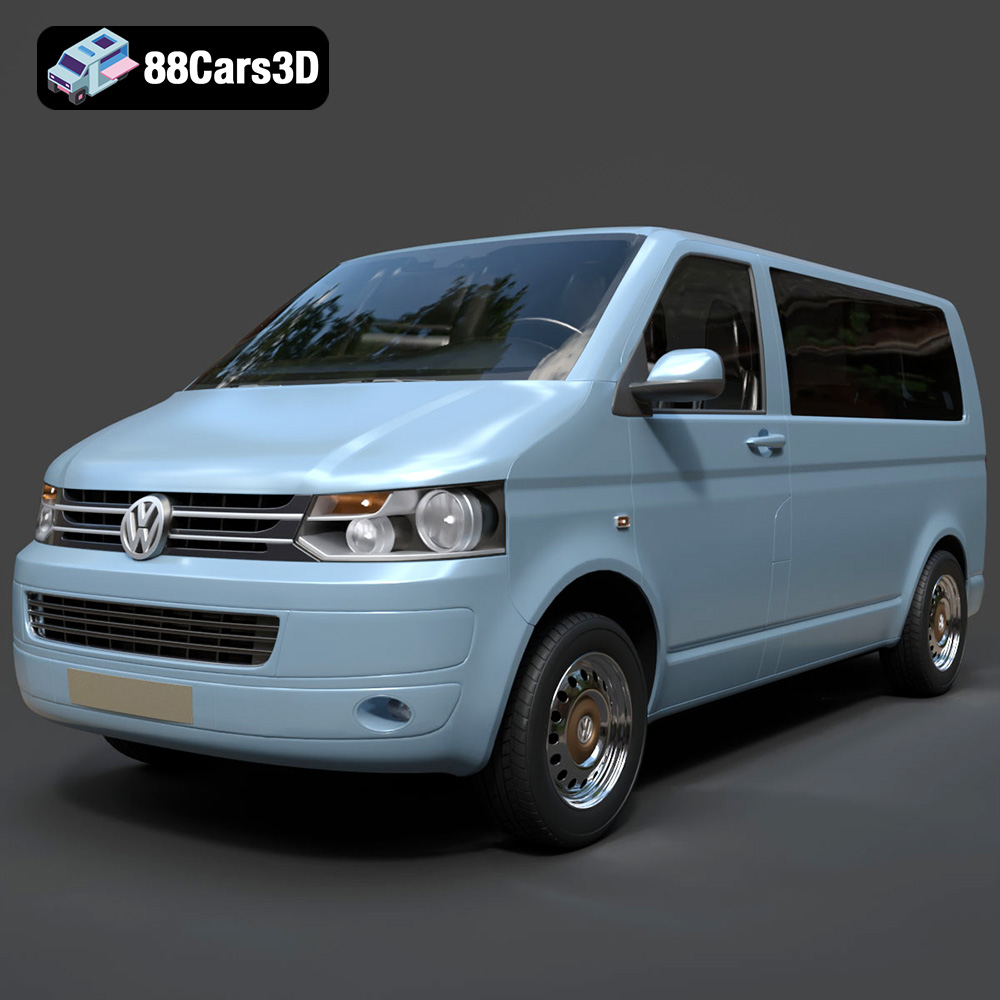
Texture: Yes
Material: Yes
Download the Volkswagen Transporter T5 FL 2010 3D Model featuring clean geometry, realistic detailing, and a fully modeled interior. Includes .blend, .fbx, .obj, .glb, .stl, .ply, .unreal, and .max formats for rendering, simulation, and game development.
Price: $22.99
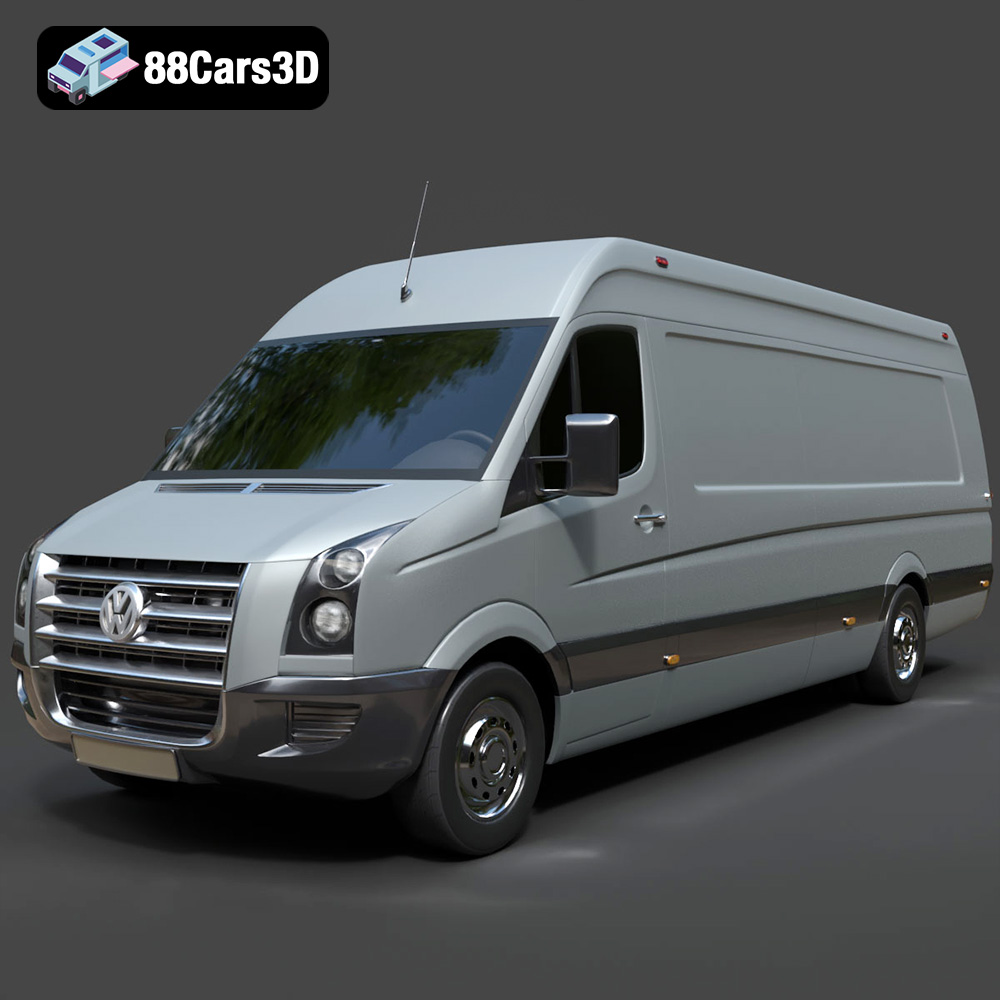
Texture: Yes
Material: Yes
Download the Volkswagen Crafter 2020 3D Model featuring clean geometry, realistic detailing, and a fully modeled interior. Includes .blend, .fbx, .obj, .glb, .stl, .ply, .unreal, and .max formats for rendering, simulation, and game development.
Price: $22.99
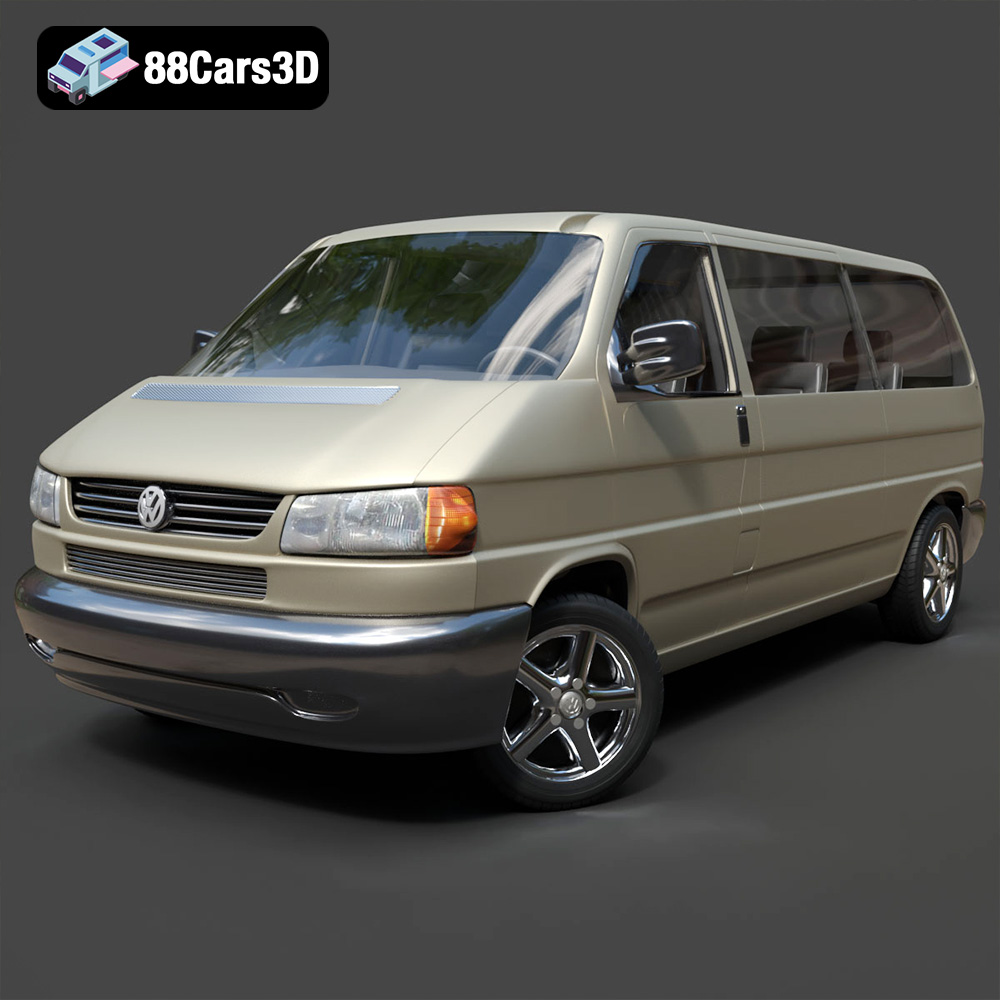
Texture: Yes
Material: Yes
Download the Volkswagen Caravelle 3D Model featuring a detailed exterior, functional interior, and optimized topology. Includes .blend, .fbx, .obj, .glb, .stl, .ply, .unreal, and .max formats for rendering, simulation, and game development.
Price: $23.99
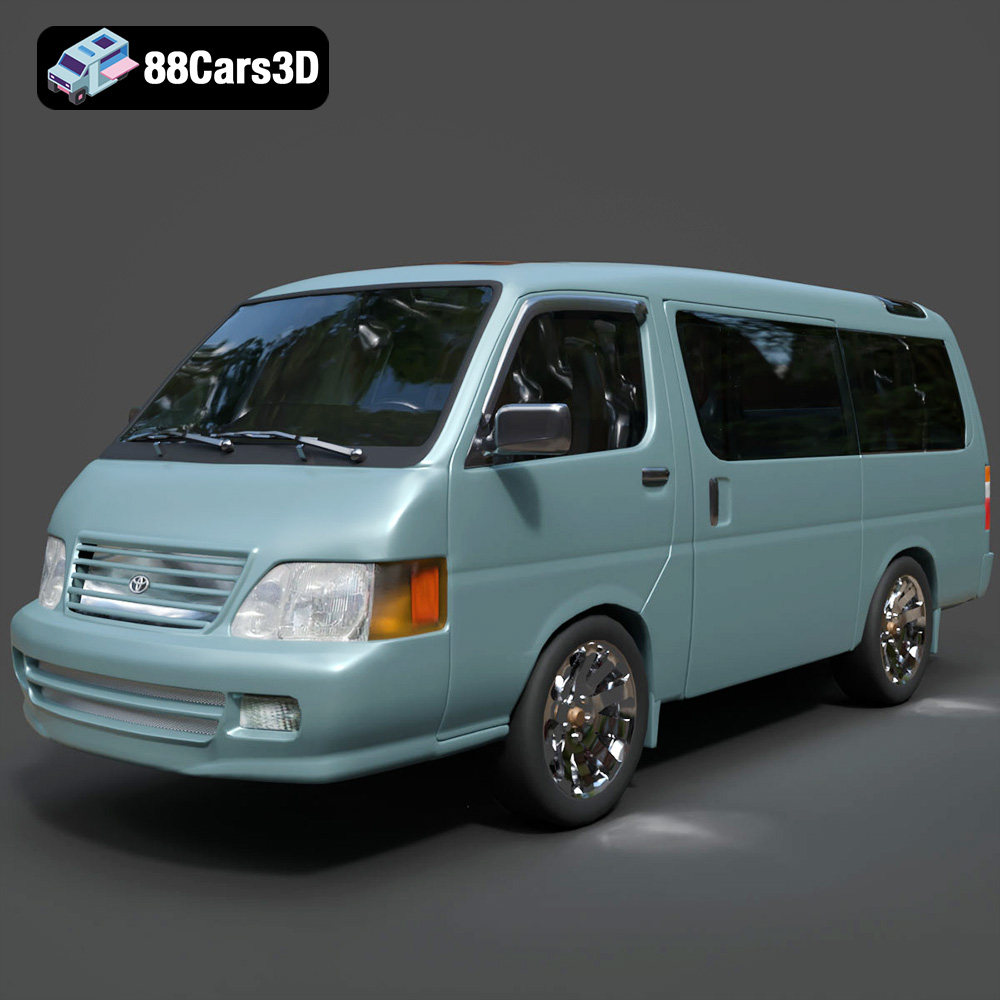
Texture: Yes
Material: Yes
Download the Toyota Hiace 3D Model featuring versatile design and detailed exterior. Includes .blend, .fbx, .obj, .glb, .stl, .ply, .unreal, and .max formats for rendering, simulation, and game development.
Price: $21.99
Texture: Yes
Material: Yes
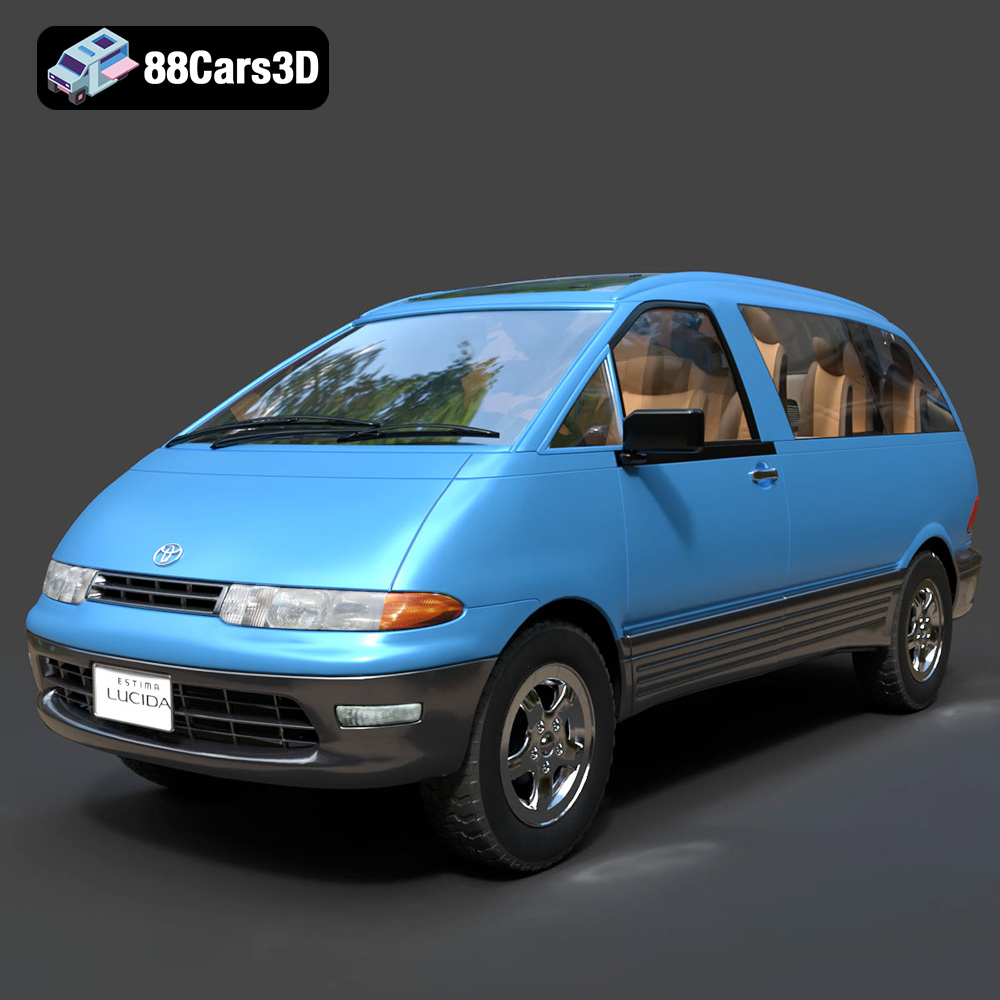
Download the Toyota Estima Lucida 3D Model featuring its iconic compact MPV design, versatile interior, and accurate exterior details. Includes .blend, .fbx, .obj, .glb, .stl, .ply, .unreal, and .max formats for rendering, simulation, and game development.
Price: $24.99

Texture: Yes
Material: Yes
Download the Toyota Alphard 3D Model featuring a detailed luxury minivan design with an accurate exterior and interior. Includes .blend, .fbx, .obj, .glb, .stl, .ply, .unreal, and .max formats for rendering, simulation, and game development.
Price: $21.99
Texture: Yes
Material: Yes
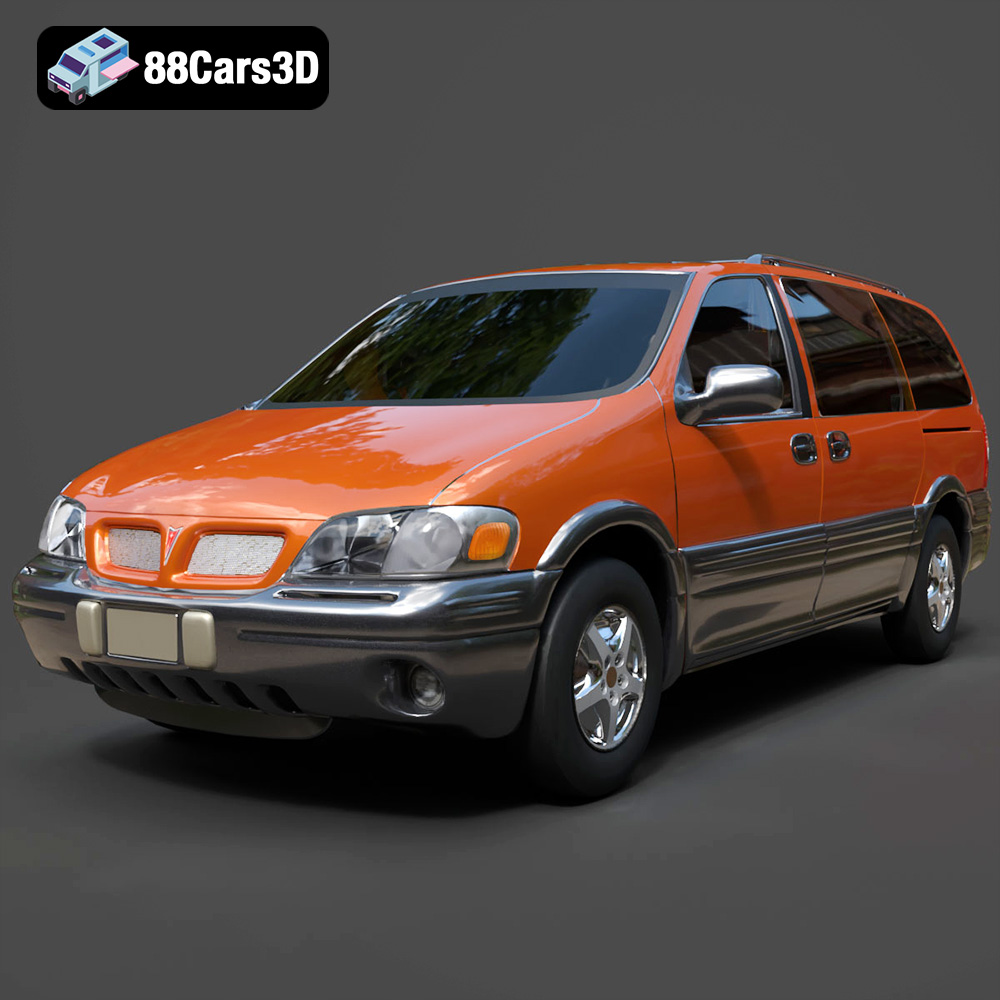
Download the Pontiac Montana 1998 3D Model featuring a detailed exterior, functional interior, and optimized mesh. Includes .blend, .fbx, .obj, .glb, .stl, .ply, .unreal, and .max formats for rendering, simulation, and game development.
Price: $21.99
Texture: Yes
Material: Yes
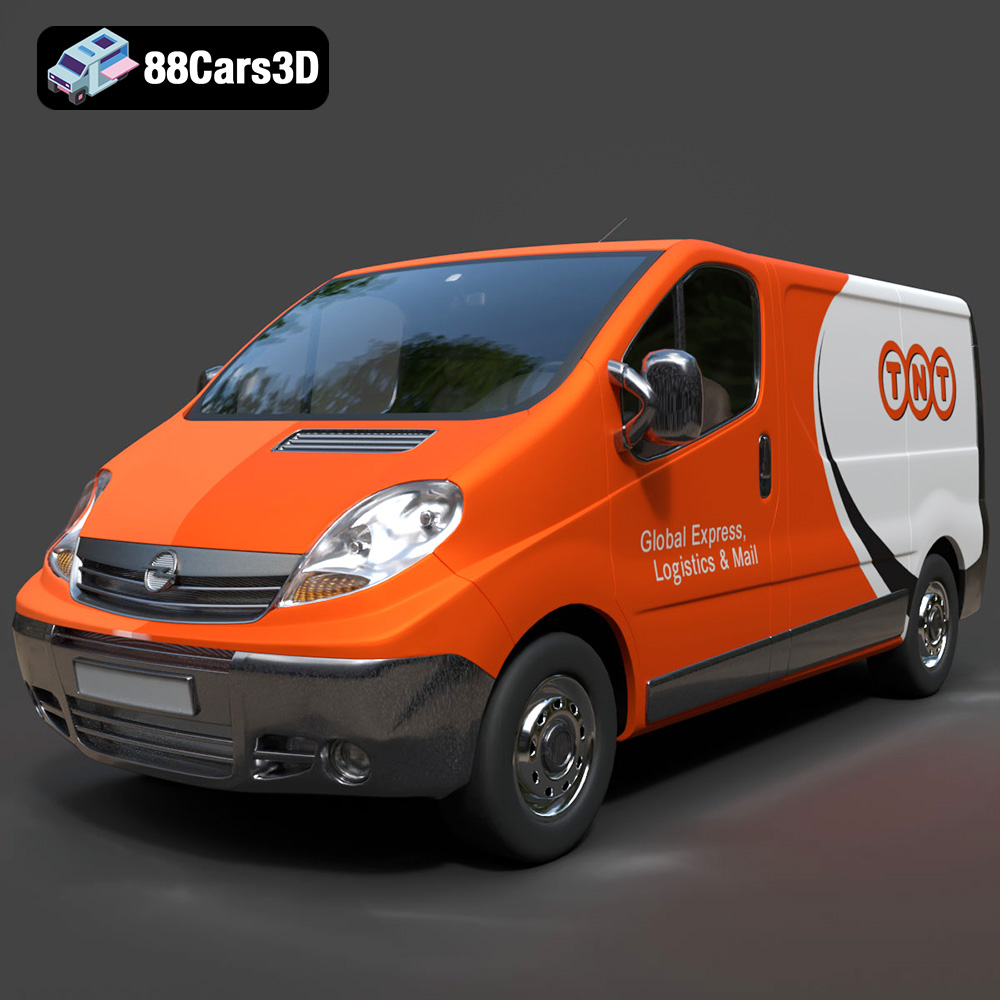
Download the Opel Vivaro 3D Model featuring a versatile commercial van design with balanced detailing. Includes .blend, .fbx, .obj, .glb, .stl, .ply, .unreal, and .max formats for rendering, simulation, and game development.
Price: $21.99
Texture: Yes
Material: Yes
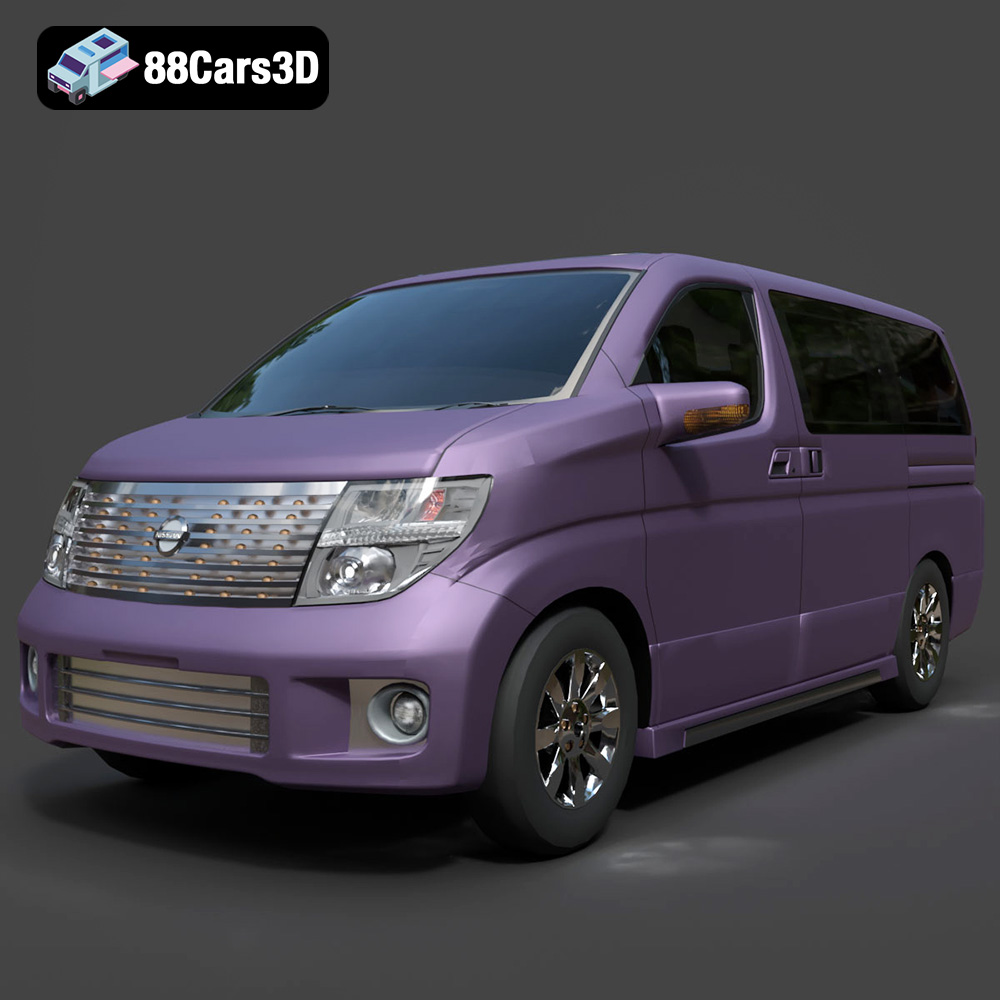
Download the Nissan Elgrand 3D Model featuring a versatile minivan design. Includes .blend, .fbx, .obj, .glb, .stl, .ply, .unreal, and .max formats for rendering, simulation, and game development.
Price: $21.99
Texture: Yes
Material: Yes
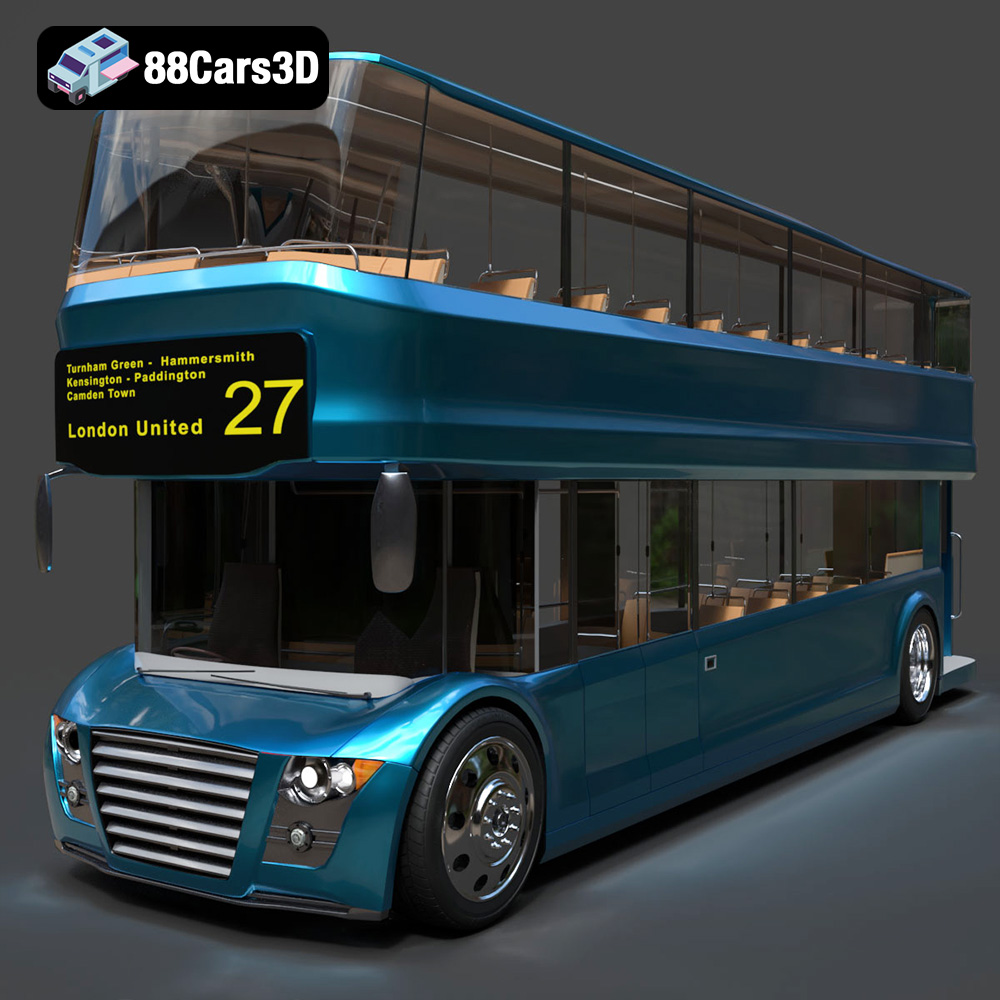
Download the New Bus For London 3D Model featuring a detailed exterior and interior, optimized for rendering and animation. Includes .blend, .fbx, .obj, .glb, .stl, .ply, .unreal, and .max formats for rendering, simulation, and game development.
Price: $21.99

