⚡ FLASH SALE: Get 60% OFF All Premium 3D & STL Models! ⚡

In the highly competitive world of automotive marketing, standing out requires more than just showcasing a vehicle; it demands an experience. Animated car commercials, powered by high-quality 3D models, offer an unparalleled avenue for creativity, precision, and visual spectacle. Gone are the days when a physical car shoot was the only option; today, artists and marketers can craft cinematic narratives, highlight intricate design details, and simulate impossible scenarios—all within the digital realm.
This comprehensive guide delves deep into the technical workflows, artistic considerations, and industry best practices required to produce stunning animated car commercials using 3D models. From selecting the perfect base model to the final post-production polish, we’ll navigate each critical stage, equipping you with the knowledge to transform static assets into dynamic, engaging advertisements. Whether you’re an aspiring 3D artist, an experienced animator, or a marketing professional looking to elevate your campaigns, prepare to unlock the full potential of automotive visualization and create truly unforgettable commercials.
The success of any animated car commercial begins with the quality of your 3D model. A meticulously crafted model serves as the canvas for your animation and rendering, dictating the level of realism and detail you can achieve. Investing time in acquiring and preparing a robust model will save countless hours down the line, ensuring smooth animations and flawless renders. Platforms like 88cars3d.com specialize in providing high-fidelity automotive models, often optimized for various industry applications.
When sourcing 3D car models, look beyond just aesthetics. While a model might appear visually impressive, its underlying mesh structure and UV mapping are crucial for animation and rendering. Prioritize models with clean, quad-based topology, as this ensures smooth deformation during animation (e.g., suspension compression, door opening) and prevents rendering artifacts. Models from reputable marketplaces such as 88cars3d.com typically provide detailed specifications regarding polygon counts, material setups, and file formats (FBX, OBJ, GLB, USDZ), making the evaluation process more straightforward.
A good starting point for a hero vehicle in a commercial might be a model ranging from 200,000 to 1 million polygons, offering a balance of detail and manageability. For background vehicles or distant shots, lower-polygon versions (LODs) are acceptable, but the hero model needs to hold up to extreme close-ups. Always scrutinize the UV maps; ideally, they should be clean, non-overlapping (unless for specific tiling textures), and offer sufficient texel density across all major surfaces to support high-resolution PBR textures without stretching or blurriness.
Even with high-quality purchased models, a thorough mesh cleanup is often necessary. Animation requires geometry that deforms predictably. This means eliminating common issues like N-gons (polygons with more than four sides), non-manifold geometry (edges or vertices shared by more than two faces), and isolated vertices or edges. Tools like Blender’s ‘Clean Up’ menu (accessed via Edit Mode > Mesh > Clean Up) or 3ds Max’s ‘Quadify Mesh’ modifier can help automate some of these processes, but manual inspection is always recommended.
Focus on maintaining good edge flow, especially around areas that will be animated or are critical for reflections (e.g., wheel arches, door seams, hood lines). Proper edge loops allow for precise selections and ensure that subdivisions (like those from a Subdivision Surface modifier in Blender or Turbosmooth in 3ds Max) maintain the car’s intended form without pinching or distorting. For example, ensuring a consistent number of edge loops around a wheel arch will make animating suspension travel much smoother and more predictable. Remember that for robust animation, models should often be separated into distinct, pivot-ready objects (e.g., body, wheels, doors, hood, trunk, steering wheel), each with its pivot point correctly positioned.
UV mapping is the process of flattening your 3D model’s surface into 2D space, allowing you to apply 2D textures. For automotive models, meticulous UVs are paramount for realistic materials like car paint, decals, and carbon fiber. Ensure that UV islands are well-organized, with minimal stretching, and appropriately scaled according to their visual importance. For the main body, a large, dedicated UV space is often preferred, possibly utilizing UDIMs (multi-tile UVs) for extremely high-resolution textures (e.g., 8K or 16K) without sacrificing quality or breaking down the main body mesh.
Avoid overlapping UVs for unique details like decals or paint effects that require specific placement. However, for tiling textures (like tire tread or interior fabric), overlapping UVs can be used to save texture space. Tools like Blender’s UV Editor provide robust functionalities for unwrapping, packing, and checking for distortion. Always aim for a uniform texel density across the model to prevent textures from appearing blurry in some areas and sharp in others. A well-executed UV map forms the backbone of a convincing PBR material setup, which we’ll explore next.
Once your 3D car model is meticulously prepared, the next crucial step is to endow it with materials that convincingly mimic real-world surfaces. This is where Physically Based Rendering (PBR) workflows come into play, providing a scientific approach to material definition that ensures your car looks realistic under any lighting condition. Understanding PBR principles and crafting complex shader networks are essential for automotive rendering excellence.
Car paint is arguably the most challenging and visually critical material to recreate accurately. Real car paint consists of multiple layers: a primer, a base coat (color), metallic flakes, and a clear coat. A typical PBR car paint shader will often involve a layered material approach. The base layer will define the diffuse color (Albedo), with a relatively low roughness. Over this, a metallic flake layer can be simulated using a noise texture or procedural pattern plugged into the normal map input or by adjusting metallic/roughness values with a fine-tuned texture to mimic the microscopic flakes. The top layer is a highly reflective, often very smooth clear coat, which dictates the primary reflections and highlights. This clear coat should have a high Fresnel IOR (Index of Refraction), typically around 1.4-1.6 for automotive clear coats, to simulate its increasing reflectivity at glancing angles.
Anisotropic reflections are also vital for car paint, especially on curved surfaces. Anisotropy refers to reflections that stretch or deform based on the surface’s orientation and the direction of brushed metal or paint particles. Many renderers offer anisotropic controls within their materials, often driven by a tangent map or simply by rotating a tangent vector. Experimentation with subtle metallic flake sizes, clear coat roughness variations, and accurate Fresnel curves will elevate your car paint from good to photorealistic.
Beyond car paint, other materials contribute significantly to overall realism. For glass (windshields, windows, headlights), a physically accurate shader requires transmission (refraction) and reflection. The IOR for standard glass is around 1.5-1.55. For headlights, consider adding subtle internal geometries for refractors and reflectors, which can then be given their own emissive properties or subsurface scattering for a more realistic light-dispersing effect. Don’t forget realistic tinting for windows and subtle dirt/smudges to break up perfect reflections.
Chrome and other polished metals are characterized by high metallic values (close to 1) and very low roughness values (close to 0). The key to convincing chrome is its environment reflections; a rich, detailed environment map (HDRI) is crucial. For rubber, particularly tires, focus on a low metallic value, higher roughness, and a detailed normal map derived from the tire tread geometry. Subtle variations in roughness maps can simulate wear and tear, while a slight subsurface scattering can add depth to thick rubber components. For plastic elements, adjust roughness and metallic values to match the specific type of plastic (e.g., matte, semi-gloss).
To support these complex PBR materials, high-resolution textures are indispensable. For a hero car, aim for a minimum of 4K (4096×4096 pixels) for major components like the body and wheels, with smaller parts potentially using 2K or 1K textures. Texture atlasing, where multiple smaller textures are combined into a single larger texture sheet, can help optimize draw calls and memory usage, although this is more critical for game engines than for offline rendering.
For models with extremely high detail or complex UV layouts, UDIMs (U-Dimension) are a powerful solution. UDIMs allow you to use multiple UV tiles, each with its own texture, effectively bypassing the 0-1 UV space limitation. This means you can have a single mesh with, for example, ten 8K texture maps, providing immense detail without requiring a single gargantuan texture or multiple material assignments. Software like Substance Painter excels at painting across UDIM tiles, and most modern renderers (V-Ray, Corona, Cycles, Arnold) fully support them. When using UDIMs, ensure your UVs are laid out efficiently to maximize texture space and minimize wasted pixels. This attention to detail in texturing and material creation is what truly brings a 3D car model to life on screen.
An animated car commercial isn’t just about showcasing a beautiful vehicle; it’s about telling a story, evoking emotion, and highlighting key features through dynamic cinematography. The camera is your primary storytelling tool, and mastering its movement is as crucial as modeling and texturing the car itself.
Before any animation begins, a detailed storyboard is essential. This visual blueprint outlines each shot, its duration, camera angle, character/vehicle action, and key dialogue or voiceover. For car commercials, storyboards often focus on showcasing the car’s lines, performance, and features in a compelling sequence. Translate your storyboard into a basic pre-visualization (previz) using low-fidelity models and rough camera animations. Previz allows you to test camera paths, timing, and pacing without committing to full-detail rendering. It’s a cost-effective way to iterate on creative ideas and secure client approval early in the production pipeline.
In previz, focus on the ‘rule of thirds,’ leading lines, and negative space to compose aesthetically pleasing shots. Consider how each shot transitions to the next, aiming for fluidity and rhythm. Will it be a hard cut, a whip pan, or a seamless match cut? Prevailing industry standards often lean towards rapid, energetic cuts for performance-focused commercials and slower, more deliberate movements for luxury or design-focused ads. Pay close attention to the visual rhythm and ensure the camera movements complement the car’s motion and the overall narrative.
To achieve cinematic quality, move beyond simple linear camera movements. Implement complex camera rigs that simulate real-world crane shots, dolly movements, and tracking shots. Using splines or motion paths for camera targets and positions provides smooth, controllable trajectories. Keyframe interpolation is critical; employ ‘ease in’ and ‘ease out’ curves in your animation editor to ensure accelerations and decelerations feel natural and fluid, avoiding robotic starts and stops. For example, a camera tracking a car accelerating away should smoothly ramp up its speed rather than instantly matching it.
Consider techniques like “camera shake” for impact moments (e.g., hard braking or acceleration), but use it sparingly and subtly to avoid motion sickness. “Follow through” and “overlapping action” principles apply to camera work as well; a camera might slightly overshoot its target before settling, adding a touch of organic realism. Use constraints to link the camera to the car or its components, allowing for complex parent-child relationships that maintain focus while the car moves dynamically.
Just like in live-action filmmaking, focal length plays a vital role in shaping the perception of your car. Wide-angle lenses (e.g., 20-35mm) can exaggerate speed and space, making the car appear larger or emphasizing its environment. Telephoto lenses (e.g., 85mm-200mm) compress perspective, flattening the scene and making the car stand out against a blurred background, often used for dramatic close-ups or to emphasize sleek lines. Experiment with various focal lengths to find what best communicates the desired mood and message for each shot.
Depth of Field (DOF) is another powerful cinematic tool. By blurring the foreground and background elements, you can draw the viewer’s eye directly to the car or a specific detail. Control the amount of blur using the camera’s f-stop (aperture) setting, which directly influences the depth of field. A lower f-stop (e.g., f/2.8) results in a shallower depth of field, with more dramatic background blur, while a higher f-stop (e.g., f/11) keeps more of the scene in focus. Careful use of DOF can add a professional, filmic quality to your renders, enhancing realism and guiding the viewer’s attention precisely where you want it.
Lighting is the single most important factor in making your 3D car model look realistic and appealing. It defines form, highlights surface details, and sets the mood of your commercial. A well-lit scene can make even a moderately detailed model shine, while poor lighting can flatten even the best geometry and textures. The environment around the car also plays a crucial role, influencing reflections, ambient light, and the overall context of the vehicle.
For pristine reveals and showcasing design details, virtual studio lighting setups are indispensable. The classic three-point lighting system (key light, fill light, back/rim light) is a fantastic starting point. The key light is your primary light source, illuminating the main subject and casting prominent shadows. For cars, this is often a large softbox or area light, positioned to highlight the car’s curves and reflections. The fill light softens shadows created by the key light, reducing contrast. The rim light (or back light) creates a bright outline around the car, separating it from the background and emphasizing its silhouette.
Beyond this, utilize additional light planes or mesh lights strategically placed to create elegant reflections on the car body. These “reflection cards” mimic large softboxes in a physical studio and are crucial for defining the curvature and glossiness of car paint. Experiment with varying their size, intensity, and position to sculpt the light and dark areas on the car’s surface. Pay particular attention to the ‘specular highlights’ and how they travel across the car’s body as the camera or car moves, using them to guide the viewer’s eye along the vehicle’s design lines. Techniques like using gradient textures on light sources can create subtle fall-offs in reflections, mimicking real studio equipment. For specific details on creating and manipulating lights in Blender, refer to the official Blender 4.4 documentation on Lighting in Cycles, which covers various light types and their parameters.
For environmental realism, High Dynamic Range Images (HDRIs) are invaluable. An HDRI is a 360-degree panoramic image that captures both color and luminosity information from a real-world location. When used as an environment map in your renderer, it provides incredibly accurate global illumination and reflections, making your car look like it’s genuinely placed within that scene. For outdoor shots, combine HDRIs with a physical sky system (if your renderer supports it, like V-Ray’s V-Ray Sun and Sky or Corona’s Corona Sky) to generate dynamic sun and sky lighting that matches the HDRI’s mood.
When using HDRIs, ensure the chosen image’s resolution is high enough (at least 8K-16K) to provide sharp reflections, especially for highly reflective surfaces like chrome and car paint. Rotate the HDRI to find the most flattering lighting and reflection angles for your vehicle. You can also blend HDRIs with your custom studio lights; use the HDRI for ambient light and reflections, and then use targeted area lights to create specific highlights and shadows that enhance the car’s form and direct attention.
The environment around your car can range from a minimalist backdrop to a fully detailed cityscape. For studio-style commercials, simple backdrops like seamless cycloramas or gradient planes are effective, often blurring them in post-production. For dynamic outdoor scenes, consider building a simplified environment that provides accurate reflections and shadows without unnecessary geometric complexity. For instance, a basic ground plane, a few abstract buildings, and some background trees might be sufficient, especially if they are out of focus. Use instances of objects to populate large areas without heavy performance costs.
Alternatively, for ultra-realistic outdoor scenes, you might render your car against a green screen or alpha channel and composite it onto real-world backplates or video footage. This technique requires careful matching of lighting, perspective, and camera motion between your 3D render and the live-action plate. When integrating, pay close attention to shadow fidelity and ambient occlusion to ensure the car feels grounded in the scene rather than floating. Even a subtle environment provides crucial context and depth, making the car feel like part of a larger, believable world.
A static 3D model, however beautiful, is just a picture. To create an animated commercial, you must infuse it with life through movement. This involves not only animating the car’s overall trajectory but also its individual components, from spinning wheels to opening doors and subtle suspension dynamics. Each animation needs to be smooth, believable, and consistent with the commercial’s narrative.
Animating wheels is more complex than simply rotating them. The rotation speed must accurately correspond to the car’s forward motion. This is typically achieved by calculating the wheel’s circumference and linking its rotation to the car’s speed via an expression or a driver. For example, if a wheel has a radius of 0.35 meters, its circumference is 2 * pi * 0.35 = 2.199 meters. If the car moves 2.199 meters in one second, the wheel should complete one full rotation (360 degrees) in that second. You can use this ratio to connect the global movement of the car to the local rotation of the wheels.
Beyond rotation, realistic suspension dynamics are crucial. As the car accelerates, brakes, or turns, its body should subtly pitch, roll, and dive, and the suspension should compress and extend. This requires a basic rig for the wheels and suspension, allowing them to move independently relative to the car body. Often, an empty or a bone is parented to each wheel, and the wheel mesh itself is parented to this empty. The empty can then be animated for up-and-down suspension movement, while the wheel mesh handles rotation. Inverse Kinematics (IK) can also be utilized for more complex suspension setups, allowing you to control the wheels’ position and have the suspension components react automatically. Even subtle movements add immense realism.
Showcasing interior details or revealing engine compartments often requires animating opening and closing parts like doors, hoods, and trunks. The key here is to establish correct pivot points for each object. For a door, the pivot should be precisely at the hinge location. Animating these components involves simple rotation keyframes, but the timing and easing are paramount. Doors shouldn’t snap open or closed; they should have a gentle acceleration and deceleration, perhaps with a slight “bounce” at the end of their travel, mimicking the dampening effect of real-world hinges.
For complex mechanisms like a convertible roof or a sliding door, consider more advanced rigging techniques involving multiple bones, constraints, and potentially drivers to control synchronized movements from a single master control. Inside the car, elements like the steering wheel, gear shift, and even dashboard lights can be animated to further enhance realism and tell a story of interaction. Even if the commercial doesn’t feature characters, the subtle animation of interior elements can imply a driver’s presence and interaction.
To truly elevate an animated commercial, consider integrating subtle special effects and dynamics simulations. For instance, a puff of exhaust smoke as the car starts or accelerates can add a visceral element. This can be achieved with particle systems or volumetric simulations (e.g., Blender’s Mantaflow for smoke and fire). Kicking up a subtle trail of dust or gravel as the car drives off-road or performs a drift adds to the sense of speed and environment interaction. These particle effects should be carefully integrated and rendered, often on separate passes, to allow for maximum control in compositing.
For more dramatic scenes, water splashes or tire deformation on rough terrain can be simulated using fluid dynamics or soft body simulations. While these can be render-intensive, they offer unparalleled realism. Even subtle effects, like a slight vibration of the car body at idle or a gentle sway in the suspension over bumps, can significantly enhance believability. Remember that often, less is more; subtle, well-executed effects are far more impactful than over-the-top, unrealistic ones. When working with Blender’s animation tools, consulting the Blender 4.4 Animation Manual can provide detailed guidance on keyframing, f-curves, and constraints.
After meticulously modeling, texturing, and animating your 3D car commercial, the final hurdle is rendering – transforming your 3D scenes into a sequence of high-resolution images that form your final video. This stage is computationally intensive, requiring careful attention to renderer settings, optimization strategies, and often, the utilization of render farms.
The choice of render engine significantly impacts the visual style, realism, and render times. Popular choices for automotive rendering include V-Ray, Corona Renderer, Cycles (Blender), and Arnold. Each offers distinct advantages. For instance, V-Ray and Corona are renowned for their physically accurate light transport and ease of use for photorealistic results, especially on CPU. Cycles in Blender (especially with GPU rendering) offers excellent integration within a free and open-source ecosystem, providing powerful node-based materials and versatile lighting. Arnold is highly regarded in the film industry for its robustness and quality with complex scenes.
Regardless of your chosen engine, key settings to optimize include sampling rates, noise thresholds, and ray depth. For a final commercial, you’ll want high sample counts (e.g., 2000-4000 samples per pixel for unbiased renderers like Cycles or Corona) and a low noise threshold (e.g., 0.005-0.01) to ensure a clean, noise-free image. Maximize ray depth for reflections and refractions to capture intricate bounces of light within glass and highly reflective materials; typical values might be 8-12 for reflections and 6-8 for refractions. Be cautious with excessive ray depth, as it can drastically increase render times without a perceptible visual improvement beyond a certain point.
Rendering out a single “beauty pass” (the final composite image) severely limits your flexibility in post-production. Instead, render your animation into multiple “render passes” or “AOV’s” (Arbitrary Output Variables). These passes isolate different components of the render, such as diffuse color, reflections, refractions, specular highlights, shadows, ambient occlusion, normals, and most importantly, an alpha channel and Z-depth pass. Outputting to an OpenEXR multi-channel file format is highly recommended, as it stores all these passes in a single file with 32-bit floating-point precision, providing maximum dynamic range for compositing.
With separate passes, you gain immense control during compositing. You can individually adjust the intensity of reflections, fine-tune color corrections on specific elements, add targeted effects to shadows, or adjust the depth of field in post, saving countless re-renders. The alpha channel is crucial for isolating the car, while the Z-depth pass allows for post-process depth of field and volumetric effects, which are often faster and more flexible than doing them directly in the 3D renderer.
Render times for high-quality animated car commercials can be excruciatingly long, sometimes minutes or even hours per frame for complex scenes. Optimization is paramount. Strategies include:
For large projects, a dedicated render farm is almost a necessity. This can be a local farm of your own workstations or, more commonly, a cloud-based render farm service. Cloud farms allow you to harness hundreds or thousands of CPU/GPU cores, dramatically reducing render times from weeks to days or even hours. Prepare your scenes carefully for farm submission, ensuring all assets (textures, caches) are properly packed and paths are relative or absolute. A small test render of a few frames is always recommended to check for missing assets or rendering errors before submitting the entire sequence.
The rendering phase delivers a sequence of raw image frames, but the magic truly happens in post-production. This is where all the individual render passes are brought together, enhanced, corrected, and polished to create the final, impactful animated commercial. Software like Adobe After Effects, Blackmagic DaVinci Resolve, and Foundry Nuke are industry standards for this crucial stage.
Using a node-based or layer-based compositing application, you’ll combine your various render passes. The alpha channel isolates the car from its background. The diffuse pass provides the base color, reflections and specular passes add the shine, and the shadow pass grounds the car in the scene. Ambient occlusion adds subtle contact shadows, enhancing depth. Each pass is a separate layer or node, allowing for independent adjustments. For instance, you can increase the intensity of reflections without affecting the car’s base color, or selectively color-correct specific elements.
Tools like the Z-depth pass are incredibly powerful. They allow you to add realistic depth of field in post, giving you complete control over the focus pull and blur intensity without re-rendering. You can also use Z-depth for volumetric fog or atmospheric hazing, adding environmental depth. Normal passes can be used for relighting subtle surface details or applying filters that react to surface orientation. A clean, organized compositing project will save immense time and allow for precise control over every visual element.
Color grading is paramount for setting the mood and visual tone of your commercial. This involves adjusting hue, saturation, contrast, and brightness to achieve a desired cinematic look. Will your commercial have a cool, sleek aesthetic, or a warm, inviting feel? DaVinci Resolve is particularly strong in this area, offering powerful color correction and grading tools. Subtle vignettes (darkening the edges of the frame) can draw the viewer’s eye towards the center, where your car resides.
Accurate motion blur is essential for realistic animation. While some motion blur can be rendered in 3D, it’s often more flexible and faster to apply it in post-production, especially if you have velocity or motion vector passes from your renderer. Post-process motion blur allows you to fine-tune the amount and direction of blur for different elements, simulating camera shutter speed and object velocity more precisely. This smooths out fast movements and adds a sense of speed and dynamism to the animation, making the car feel truly in motion.
Beyond the core composite, subtle visual effects can significantly enhance the commercial. Realistic lens flares can add a filmic quality, especially when rendered with physically accurate settings. Dust motes, subtle light rays, or atmospheric haze can create a sense of environment and depth. These effects should be used judiciously; they should enhance, not distract. If the scene demands it, more complex VFX like simulated rain, snow, or environmental particles can be integrated, often requiring specialized particle simulation tools and careful compositing.
Finally, do not underestimate the power of sound design. While not directly a 3D rendering task, sound is integral to the commercial’s impact. High-quality engine sounds, tire squeals, the gentle thud of a door closing, ambient environmental sounds, and a compelling musical score elevate the visual experience exponentially. Work closely with a sound designer to ensure the audio perfectly complements the visuals, creating a cohesive and immersive animated commercial. A beautifully rendered car commercial with weak sound will always fall flat; the synergy between sight and sound is what truly captivates an audience.
Creating an animated car commercial with 3D models is a journey that seamlessly blends technical prowess with artistic vision. From the meticulous selection and preparation of a high-quality 3D asset from platforms like 88cars3d.com, through the intricate crafting of PBR materials and dynamic camera movements, to the complex stages of lighting, animation, rendering, and post-production, each step demands precision and creativity. The ultimate goal is to not just showcase a car, but to tell a compelling story that resonates with the audience, highlighting the vehicle’s unique character and features in an unforgettable way.
By understanding the nuances of topology, mastering advanced shading techniques, orchestrating cinematic camera paths, and optimizing your rendering and compositing workflows, you gain the power to bring any automotive concept to vivid life. Embrace the iterative process, constantly refine your techniques, and leverage the powerful tools at your disposal. The digital canvas offers boundless possibilities to create commercials that are not only visually stunning but also deeply engaging and effective. Continue to experiment, learn from industry best practices, and push the boundaries of what’s possible in automotive visualization. Your next masterpiece awaits.
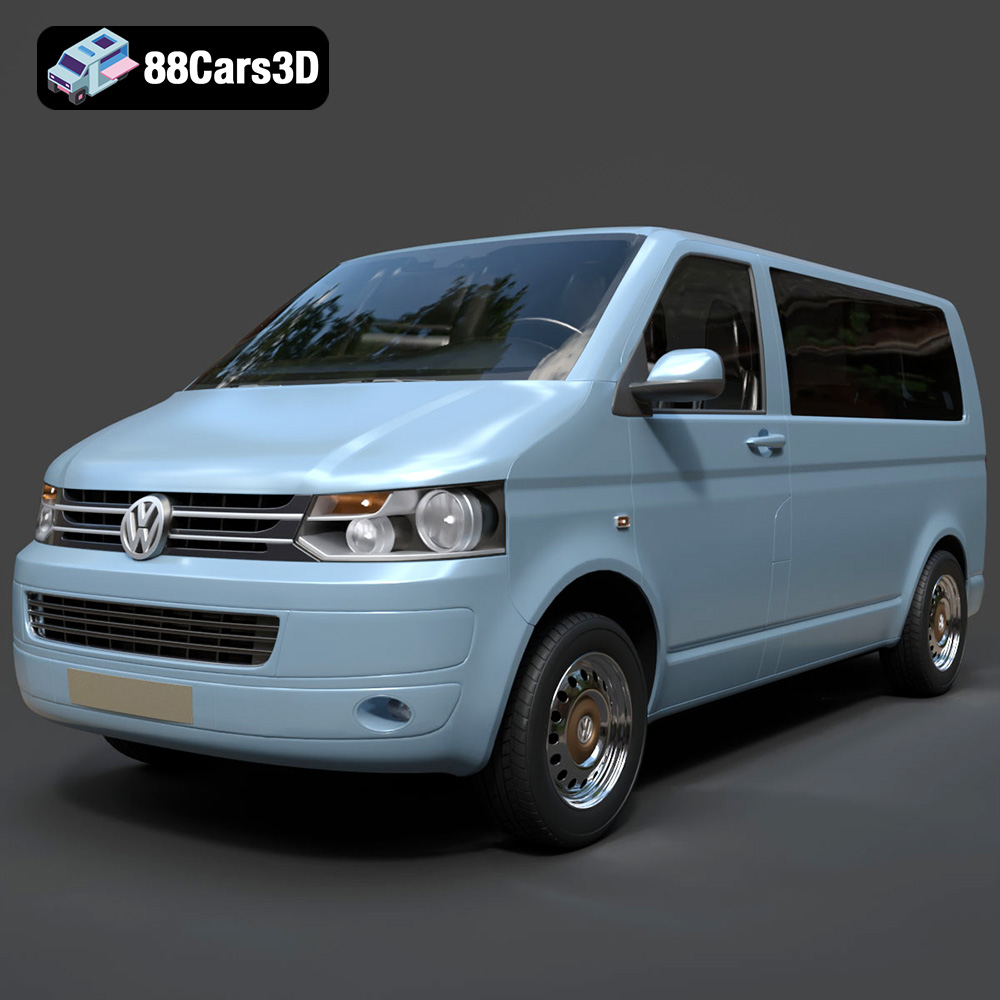
Texture: Yes
Material: Yes
Download the Volkswagen Transporter T5 FL 2010 3D Model featuring clean geometry, realistic detailing, and a fully modeled interior. Includes .blend, .fbx, .obj, .glb, .stl, .ply, .unreal, and .max formats for rendering, simulation, and game development.
Price: $22.99
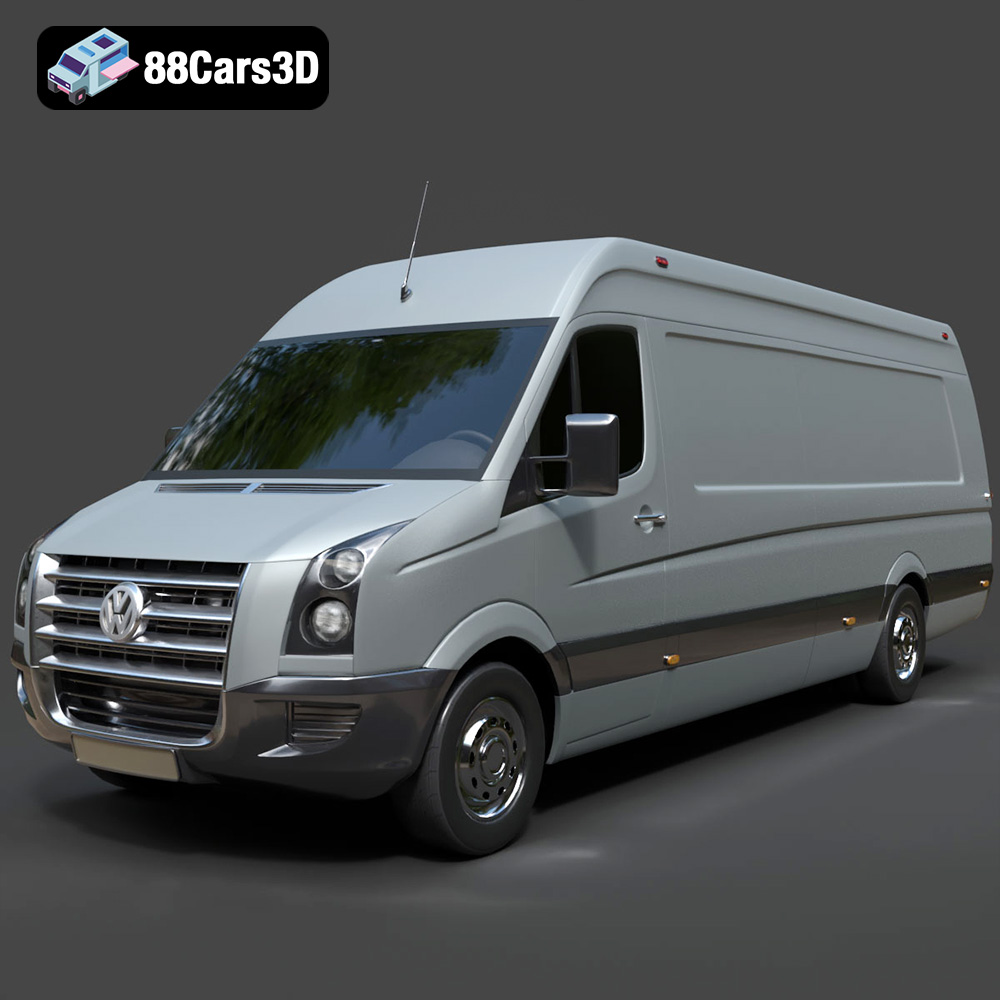
Texture: Yes
Material: Yes
Download the Volkswagen Crafter 2020 3D Model featuring clean geometry, realistic detailing, and a fully modeled interior. Includes .blend, .fbx, .obj, .glb, .stl, .ply, .unreal, and .max formats for rendering, simulation, and game development.
Price: $22.99
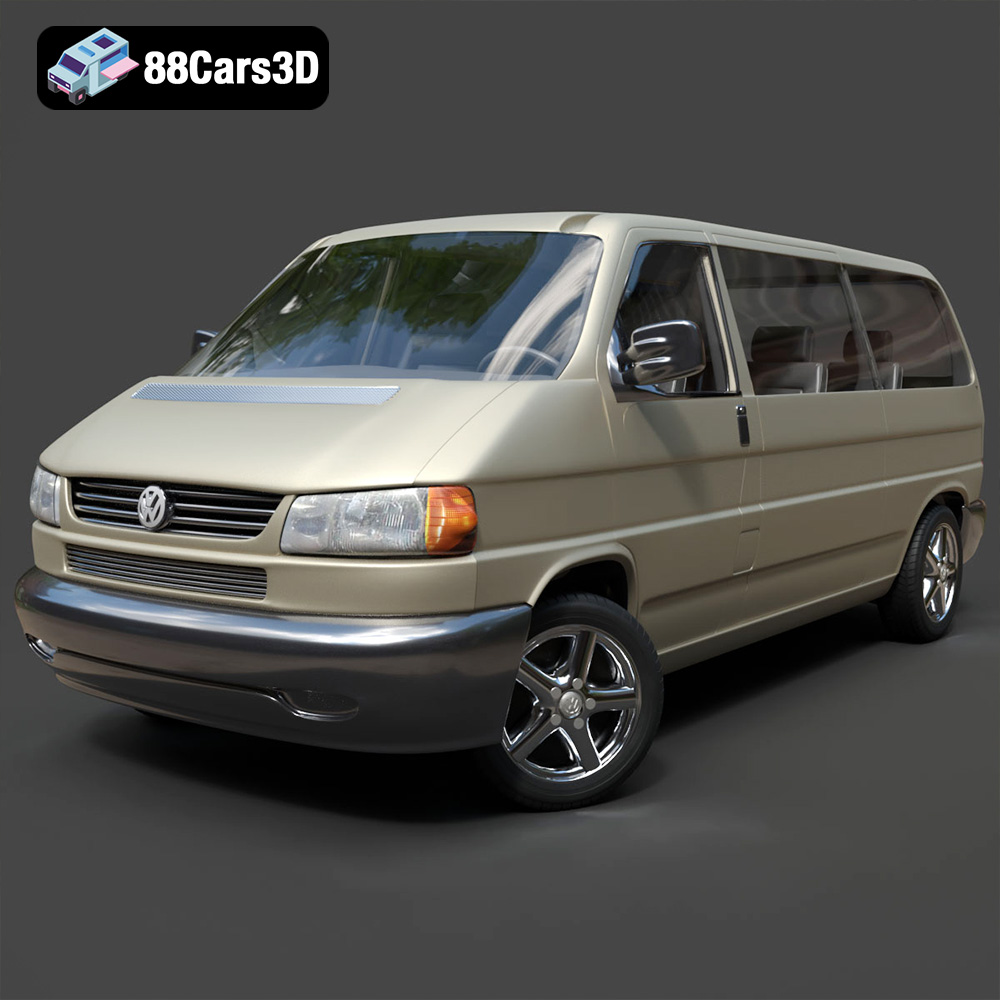
Texture: Yes
Material: Yes
Download the Volkswagen Caravelle 3D Model featuring a detailed exterior, functional interior, and optimized topology. Includes .blend, .fbx, .obj, .glb, .stl, .ply, .unreal, and .max formats for rendering, simulation, and game development.
Price: $23.99
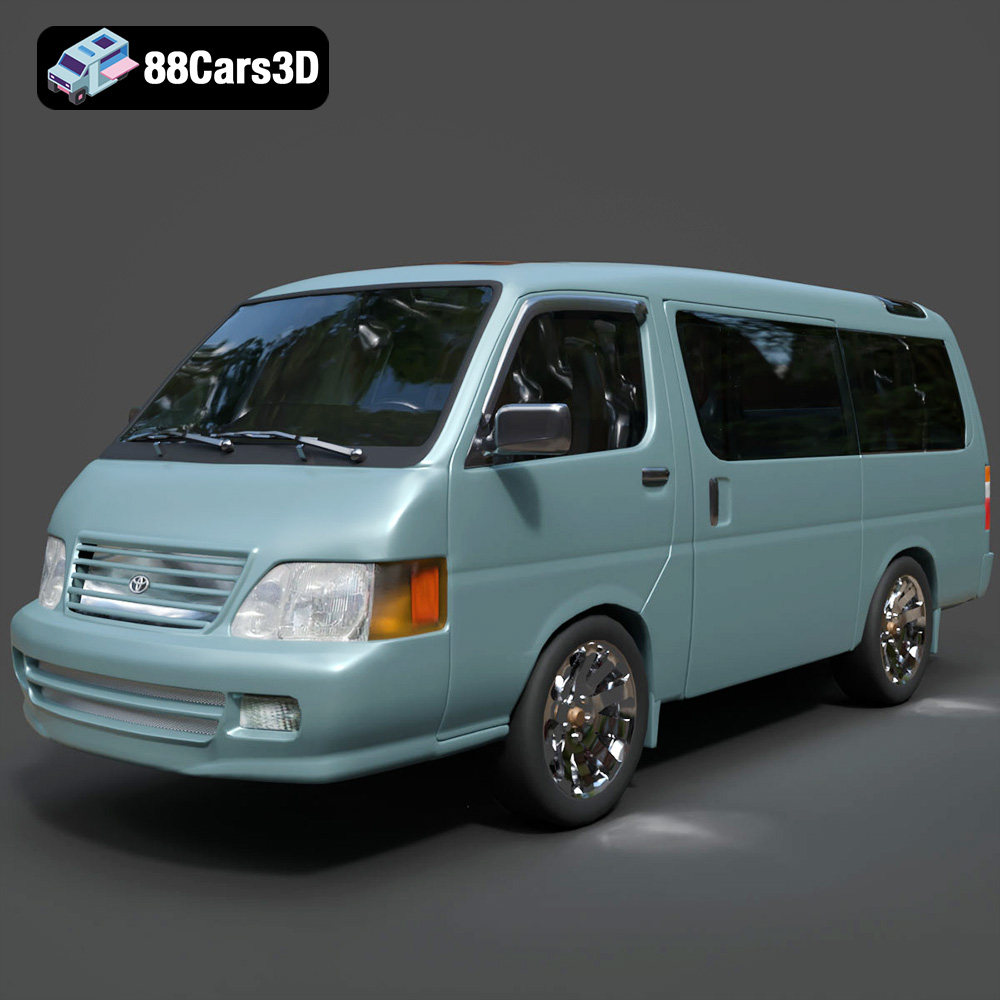
Texture: Yes
Material: Yes
Download the Toyota Hiace 3D Model featuring versatile design and detailed exterior. Includes .blend, .fbx, .obj, .glb, .stl, .ply, .unreal, and .max formats for rendering, simulation, and game development.
Price: $21.99
Texture: Yes
Material: Yes
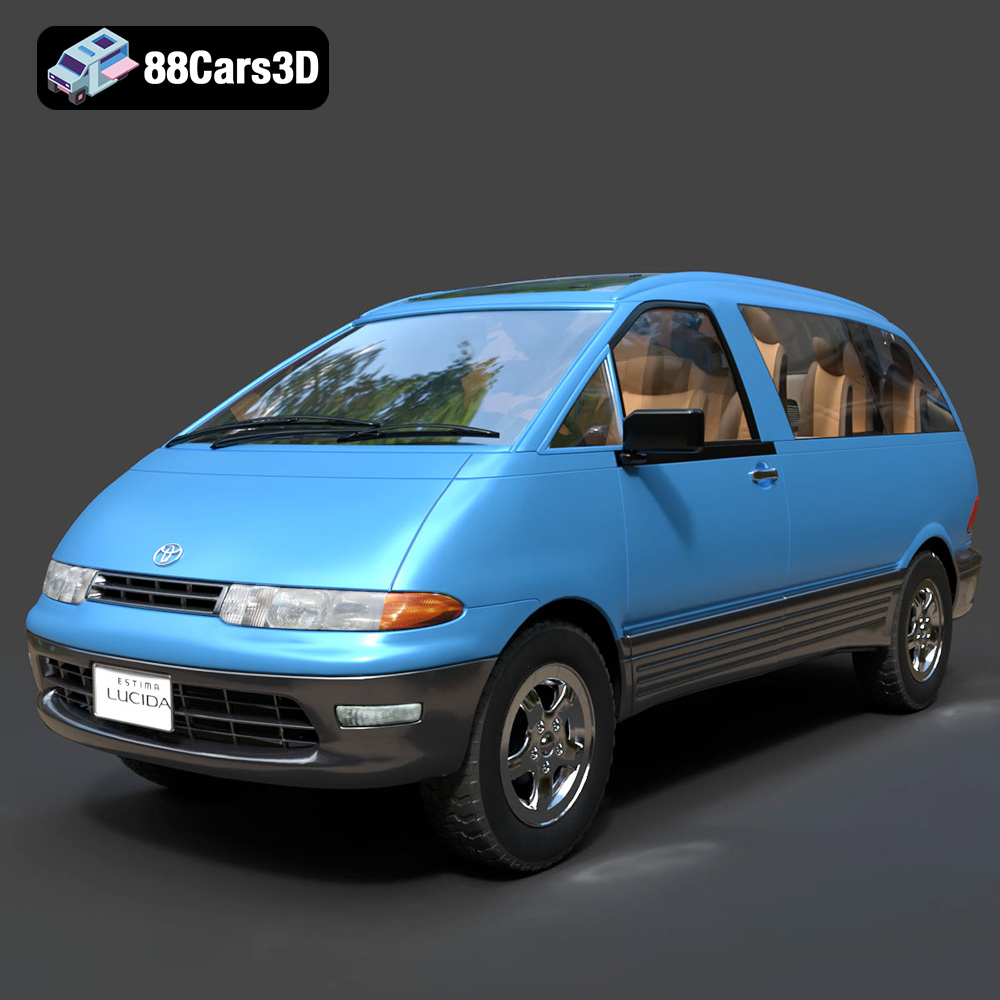
Download the Toyota Estima Lucida 3D Model featuring its iconic compact MPV design, versatile interior, and accurate exterior details. Includes .blend, .fbx, .obj, .glb, .stl, .ply, .unreal, and .max formats for rendering, simulation, and game development.
Price: $24.99

Texture: Yes
Material: Yes
Download the Toyota Alphard 3D Model featuring a detailed luxury minivan design with an accurate exterior and interior. Includes .blend, .fbx, .obj, .glb, .stl, .ply, .unreal, and .max formats for rendering, simulation, and game development.
Price: $21.99
Texture: Yes
Material: Yes
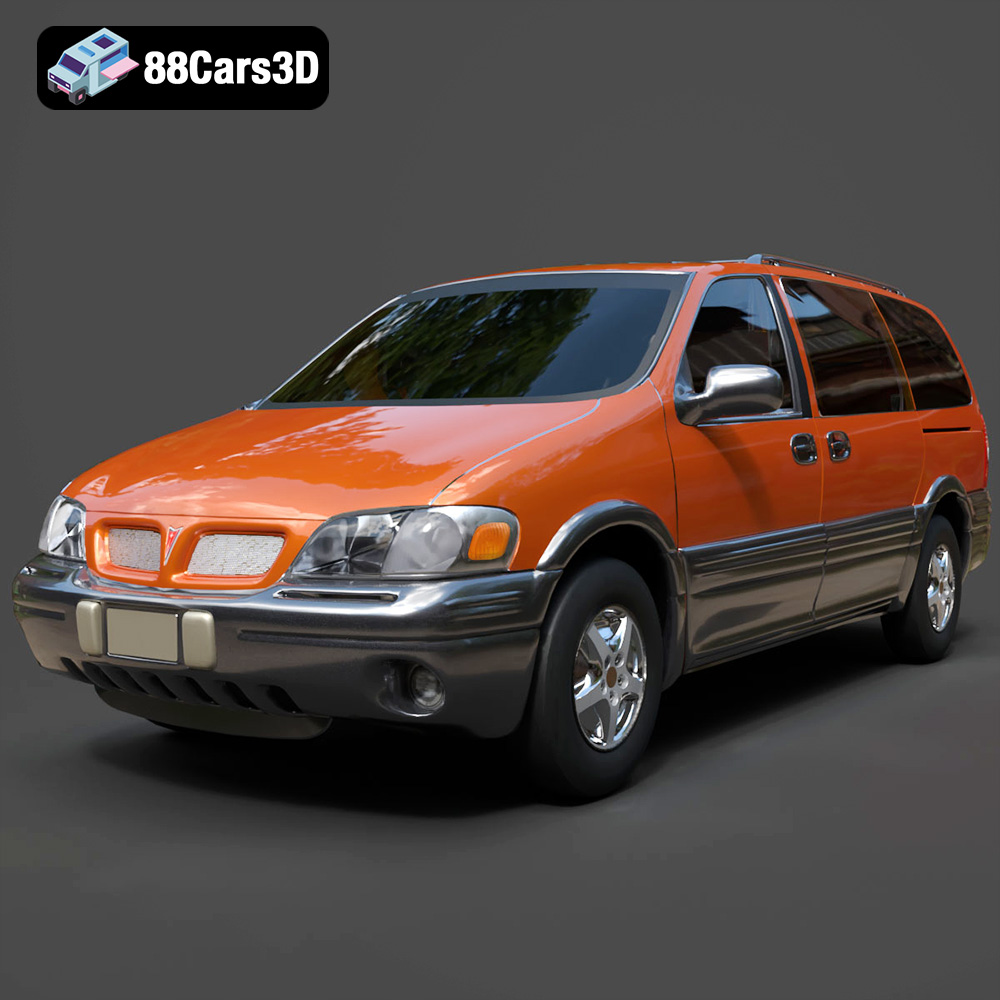
Download the Pontiac Montana 1998 3D Model featuring a detailed exterior, functional interior, and optimized mesh. Includes .blend, .fbx, .obj, .glb, .stl, .ply, .unreal, and .max formats for rendering, simulation, and game development.
Price: $21.99
Texture: Yes
Material: Yes
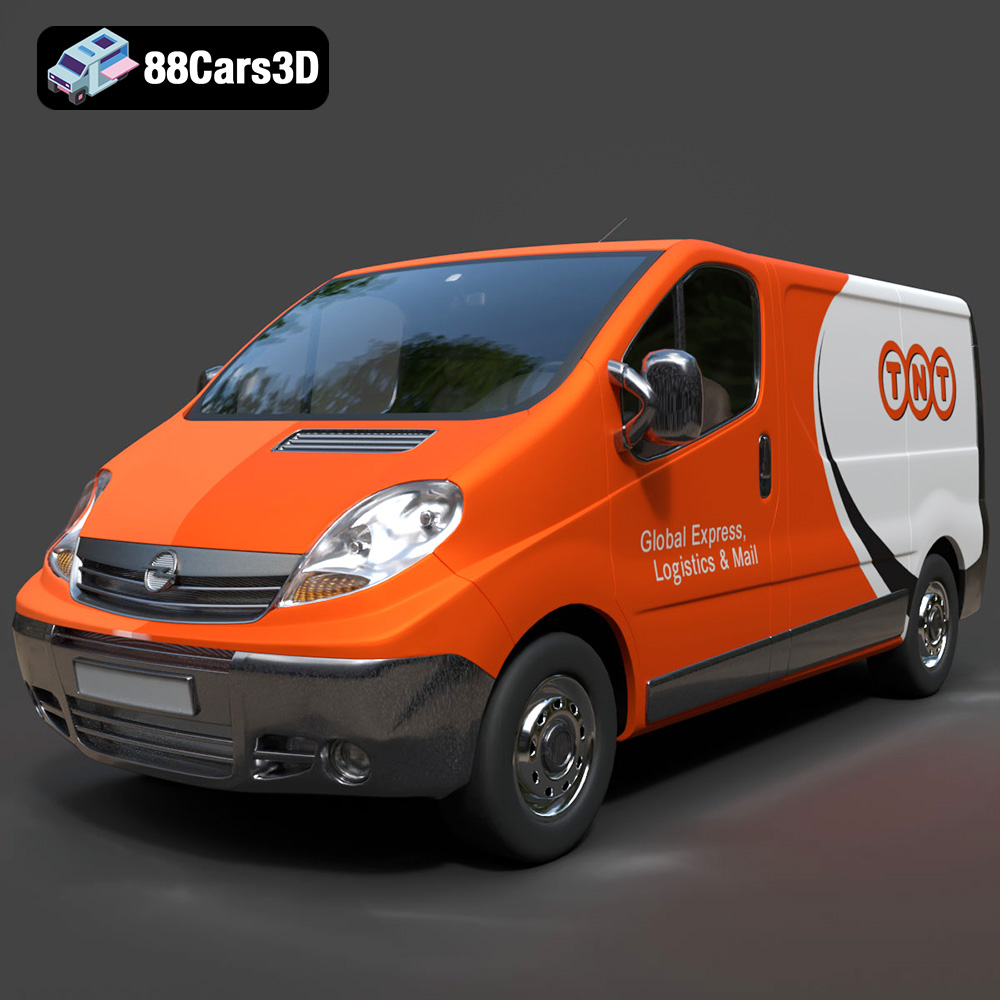
Download the Opel Vivaro 3D Model featuring a versatile commercial van design with balanced detailing. Includes .blend, .fbx, .obj, .glb, .stl, .ply, .unreal, and .max formats for rendering, simulation, and game development.
Price: $21.99
Texture: Yes
Material: Yes
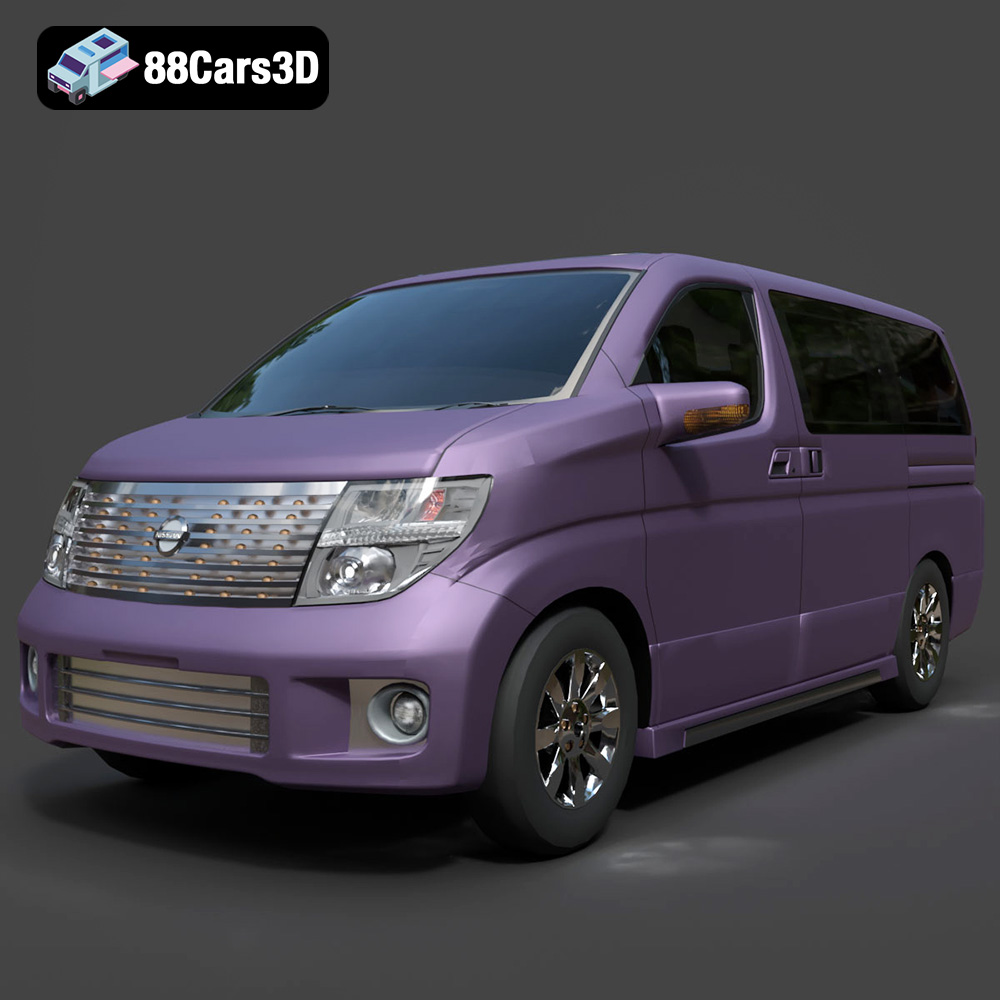
Download the Nissan Elgrand 3D Model featuring a versatile minivan design. Includes .blend, .fbx, .obj, .glb, .stl, .ply, .unreal, and .max formats for rendering, simulation, and game development.
Price: $21.99
Texture: Yes
Material: Yes
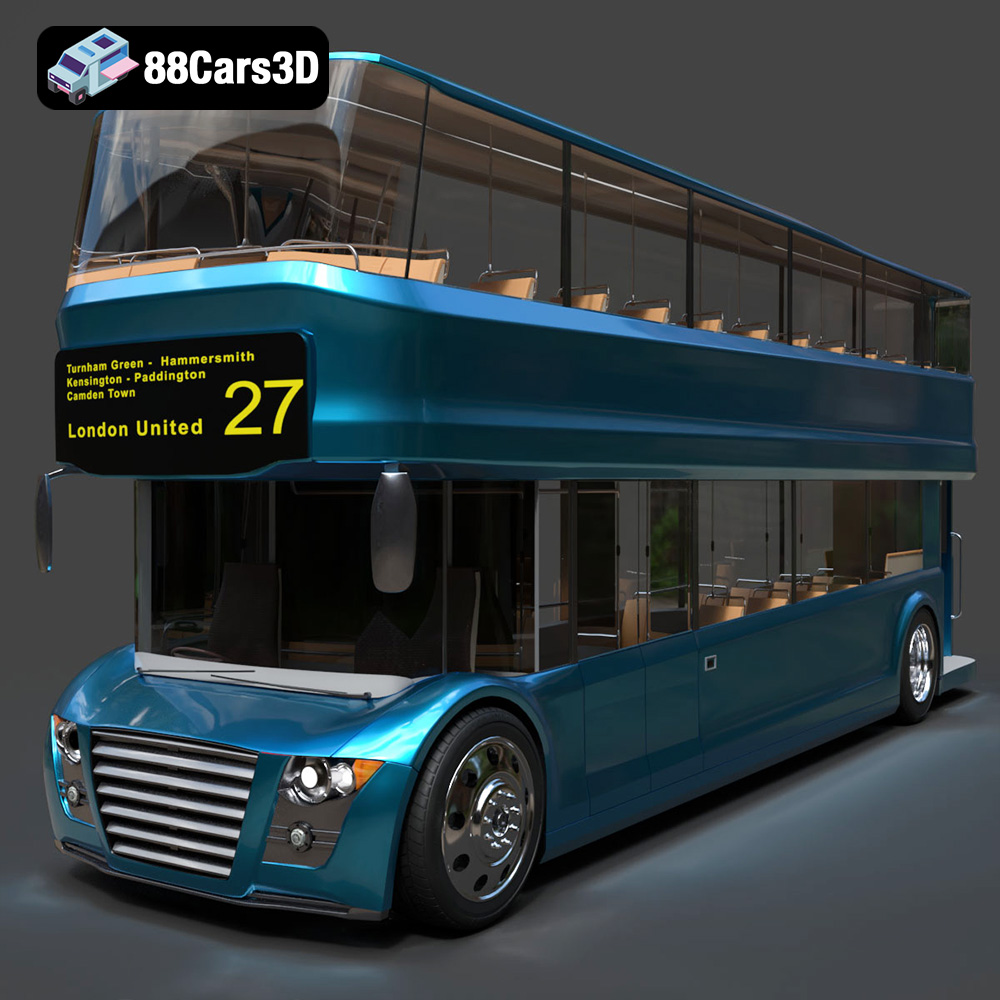
Download the New Bus For London 3D Model featuring a detailed exterior and interior, optimized for rendering and animation. Includes .blend, .fbx, .obj, .glb, .stl, .ply, .unreal, and .max formats for rendering, simulation, and game development.
Price: $21.99

