⚡ FLASH SALE: Get 60% OFF All Premium 3D & STL Models! ⚡

“`html
The allure of a perfectly rendered 3D printed car model goes beyond just its shape and proportions. True automotive artistry lies in the meticulous details – the iconic badges, the subtle emblems, and the personalized touches that bring a miniature vehicle to life. For enthusiasts and hobbyists aiming for unparalleled realism, understanding how to integrate these fine elements into your STL files for 3D printing is paramount. Whether you’re recreating a classic muscle car or designing a futuristic concept, these small additions can elevate your print from a mere replica to a stunning display piece. This comprehensive guide will delve into the technical intricacies of preparing and integrating logos, emblems, and custom details into your 3D models, ensuring your 3D printing projects achieve a new level of authenticity and visual impact. We’ll explore file preparation, modeling techniques, slicing strategies, and post-processing, providing you with the actionable insights needed to master this advanced aspect of automotive model making.
Before diving into the technical workflow, it’s crucial to grasp the fundamental concepts behind integrating logos and emblems into 3D printable car models. These details are typically very small and often require high levels of geometric precision. The challenge lies in translating a 2D design or a complex 3D sculpted detail into a format that your 3D printer can accurately reproduce. This involves careful consideration of scale, resolution, and potential printing limitations. For instance, a finely detailed badge designed for a real car might translate to a few millimeters in a scale model, pushing the boundaries of what many standard 3D printer settings can achieve without specialized techniques or equipment.
Logos and emblems often originate from vector graphics (like .AI or .SVG) or raster images (.JPG, .PNG). For 3D printing, vector data is generally preferred as it defines shapes using mathematical equations, allowing for infinite scalability without loss of quality. Raster images, on the other hand, are pixel-based and can become jagged or pixelated when enlarged. When converting these to a 3D model, you’ll essentially be “extruding” the 2D shape or using it as a heightmap. Understanding the topology of your resulting 3D mesh is vital. Clean, manifold geometry with consistent wall thicknesses is essential for successful slicing and printing. Overlapping geometry or non-manifold edges can lead to slicing errors and failed prints.
The scale of your car model dictates the achievable detail for logos and emblems. A 1:18 scale model offers more room for detail than a 1:64 scale model. When sourcing or creating these elements, always consider the target print size. If a logo is too intricate for the intended scale and your printer’s resolution, it might appear as a blob or a featureless raised surface. You may need to simplify the design, increase the model scale, or opt for a different printing technology (like resin printing for finer details). Conversely, excessively complex geometry for small details can bloat file sizes and complicate slicing.
Once you understand the principles, the next step is the actual modeling or preparation of your logos and emblems. This can be done either by modeling them directly within your primary 3D modeling software, importing existing 3D assets, or using specialized mesh editing tools. The goal is to create a clean, printable 3D object that can be seamlessly integrated with your main car model.
For custom emblems or less common logos, you might need to model them from scratch. This can involve tracing vector outlines in software like Blender or Fusion 360 and then extruding them to a desired thickness. Alternatively, many common car manufacturer logos are available as 3D models online. When downloading these, always check their quality. Look for models with clean topology, reasonable polygon counts, and proper scaling. If the logo is intended to be an embossed or debossed surface detail, you might import it as a separate object and use boolean operations (union, subtract) or mesh sculpting techniques to merge it with the car body. Ensure the final merged mesh is manifold and has no intersecting geometry. For platforms like 88cars3d.com, many detailed car models are already designed with integrated or easily attachable emblem points.
There are several ways to represent logos and emblems on a 3D print:
When using boolean operations, ensure both the car body and the logo object are manifold. Tools like Meshmixer or Netfabb are invaluable for repairing and checking mesh integrity before and after merging. For debossing, ensure the depth is sufficient for your chosen printing technology to resolve without becoming a hole.
Tiny details like lettering within a logo can easily fail to print if the walls are too thin. A general rule of thumb for FDM printing is to ensure all features are at least 2-3 times your nozzle diameter (e.g., 0.8mm to 1.2mm for a 0.4mm nozzle). For resin printing, even finer details can be resolved, but overhanging elements might require more robust support structures. Always check the exported STL file for non-manifold geometry or internal faces, which can cause significant issues during slicing.
Once your STL files for the car model and its details are prepared, the next critical stage is slicing. The slicer software translates your 3D model into layer-by-layer instructions for the 3D printer. For small, intricate details like logos, specific slicing parameters can make a world of difference in print quality and success rate.
The most impactful setting for detail resolution is layer height. A smaller layer height (e.g., 0.08mm to 0.12mm for FDM, or even 0.025mm to 0.05mm for resin) will result in smoother curves and finer surface features. However, this comes at the cost of increased print time. For logos, you might consider using a variable layer height feature in your slicer (like Cura’s “Adaptive Layers” or PrusaSlicer’s “Variable Layer Height”) to use smaller layer heights only on the detailed areas of the emblem or logo, optimizing print time without sacrificing quality where it matters most.
Printing logos and emblems too quickly can lead to under-extrusion, poor layer adhesion, and loss of detail. It’s advisable to reduce the print speed significantly for these fine features. Many slicers allow you to set specific speeds for different features, such as outer walls, inner walls, or small perimeters. Consider dropping the speed for small perimeters or details down to 20-30 mm/s. Equally important is ensuring your material flow (extrusion multiplier) is accurately calibrated. Fine details require precise filament deposition, so an over- or under-extruded line can ruin the logo’s legibility. Consider performing a “drought test” or “flow calibration” on your filament if you’re experiencing issues.
While logos are often printed as solid features or with very thin walls, the internal structure can still play a role, especially if they are raised elements. For standard infill, a density of 15-25% is often sufficient for structural support. However, for extremely fine, raised logos, printing them with 100% infill (effectively making them solid) can ensure they are robust enough not to break off during handling or post-processing. If the logo is part of a larger, hollow structure, ensuring the walls connecting it are thick enough to support it is crucial.
The way your model is oriented on the print bed and how support structures are generated are critical for successful printing of intricate details like car logos and emblems. Improper supports or orientation can lead to stringing, overhang failures, or unsightly marks on the detail itself.
The orientation of your car model on the print bed can significantly impact the quality of logos and emblems. Generally, it’s best to orient the model so that details like embossed logos face upwards or are on surfaces that require minimal support. If a logo is on a side panel, orienting that panel to be as flat as possible against the build plate might seem intuitive, but it could lead to support marks directly on the logo. Sometimes, orienting the entire car at a slight angle (e.g., 5-10 degrees) can help break up suction and reduce the need for supports on complex surfaces, while still allowing details to resolve well.
When generating support structures, especially for overhangs or bridges within a logo (e.g., the inner loop of an ‘O’ or ‘R’), you’ll need to use specific settings.
Always preview your supports in the slicer to ensure they are appropriately placed and don’t intersect with critical details.
Removing supports from delicate logos requires patience and the right tools. For FDM prints, needle-nose pliers, tweezers, flush cutters, and hobby knives are essential. Carefully break away larger sections first, then use finer tools to remove smaller support nubs. For resin prints, supports are typically thinner but more numerous. They can often be carefully snipped off with flush cutters or sometimes dissolved with isopropyl alcohol after initial cleaning. If a support leaves a small blemish, it can often be fixed during post-processing.
The journey doesn’t end when the print is complete. Post-processing is where you truly bring your logos and emblems to life, transforming a raw 3D print into a polished, professional-looking miniature. This stage requires careful execution to preserve the intricate details you’ve worked so hard to achieve.
For FDM prints, sanding is crucial for removing layer lines and support marks. Start with coarser grit sandpaper (e.g., 220-400 grit) to remove major imperfections and then progressively move to finer grits (e.g., 800, 1200, 2000+). For extremely small details, specialized needle files or even sanding sticks designed for scale modeling can be very effective. If you’re using ABS, vapor smoothing can provide an incredibly smooth finish, but it requires careful ventilation and handling of acetone vapors.
Painting is where logos and emblems truly stand out.
For resin prints, the smoother surface often requires less sanding, making them ideal for highly detailed painting right out of the gate. Ensure all residual resin and alcohol are thoroughly cleaned before painting.
If your logos and emblems were printed as separate parts (especially for multi-color applications), this is when you’ll carefully attach them using model glue or super glue. Ensure precise alignment before the adhesive sets. Once painted and assembled, a clear coat (matte, satin, or gloss, depending on the original car’s finish) can protect the paint job and unify the look. For models downloaded from marketplaces like 88cars3d.com, many are designed with clear lines where separate emblem parts can be precisely glued, ensuring a perfect fit.
Even with meticulous preparation and slicing, challenges can arise. Understanding these common issues and how to address them will save you time and frustration, ensuring your detailed car models are a success.
The choice of printing technology significantly impacts detail resolution. Resin printing (SLA/DLP/MSLA) generally offers superior detail fidelity compared to standard FDM printing. If your logos and emblems are incredibly intricate, with very fine lines or small text, a resin printer is often the best choice. However, resin prints can be more brittle and require more post-processing (washing, curing). For FDM, using smaller nozzle sizes (e.g., 0.2mm or 0.25mm) can improve detail resolution but will drastically increase print times and require more careful calibration. Materials like PLA are generally easier to print with for fine details due to their low shrinkage and good adhesion, while ABS might require an enclosure for optimal results.
Before even getting to the slicer, ensure your STL files are manifold and watertight. Tools like Meshmixer, Blender’s 3D-Print Toolbox addon, or Autodesk Netfabb have features to check for and repair common issues such as holes, non-manifold edges, flipped normals, and intersecting faces. Errors in the mesh will directly translate to errors in the sliced file, leading to missing features, gaps, or failed prints. Always inspect your merged models thoroughly after performing boolean operations.
The key to overcoming these issues is systematic troubleshooting and careful observation of each print.
By mastering the techniques of integrating logos, emblems, and custom details, you can imbue your 3D printed car models with a level of realism that captivates and impresses. From the initial modeling stages and meticulous file preparation to precise slicing and careful post-processing, each step plays a crucial role. Whether you’re enhancing a downloadable model from platforms like 88cars3d.com or creating something entirely unique, these advanced detailing skills will elevate your hobby to a new dimension. Remember that patience, practice, and attention to detail are your most valuable tools. Experiment with different settings, materials, and techniques to discover what works best for your specific projects and printer setup. The pursuit of automotive perfection in miniature is a rewarding journey, and with these insights, you’re well-equipped to add that final, signature touch that makes your models truly stand out.
“`
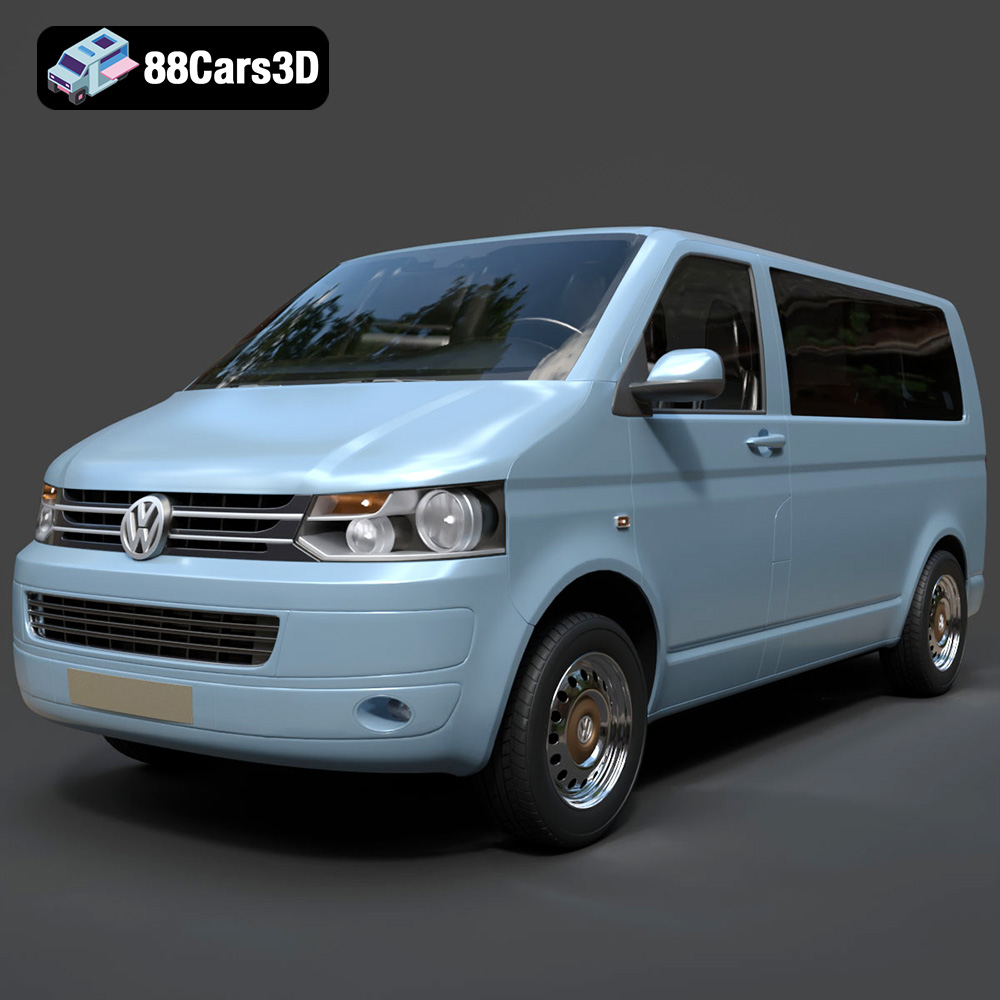
Texture: Yes
Material: Yes
Download the Volkswagen Transporter T5 FL 2010 3D Model featuring clean geometry, realistic detailing, and a fully modeled interior. Includes .blend, .fbx, .obj, .glb, .stl, .ply, .unreal, and .max formats for rendering, simulation, and game development.
Price: $22.99
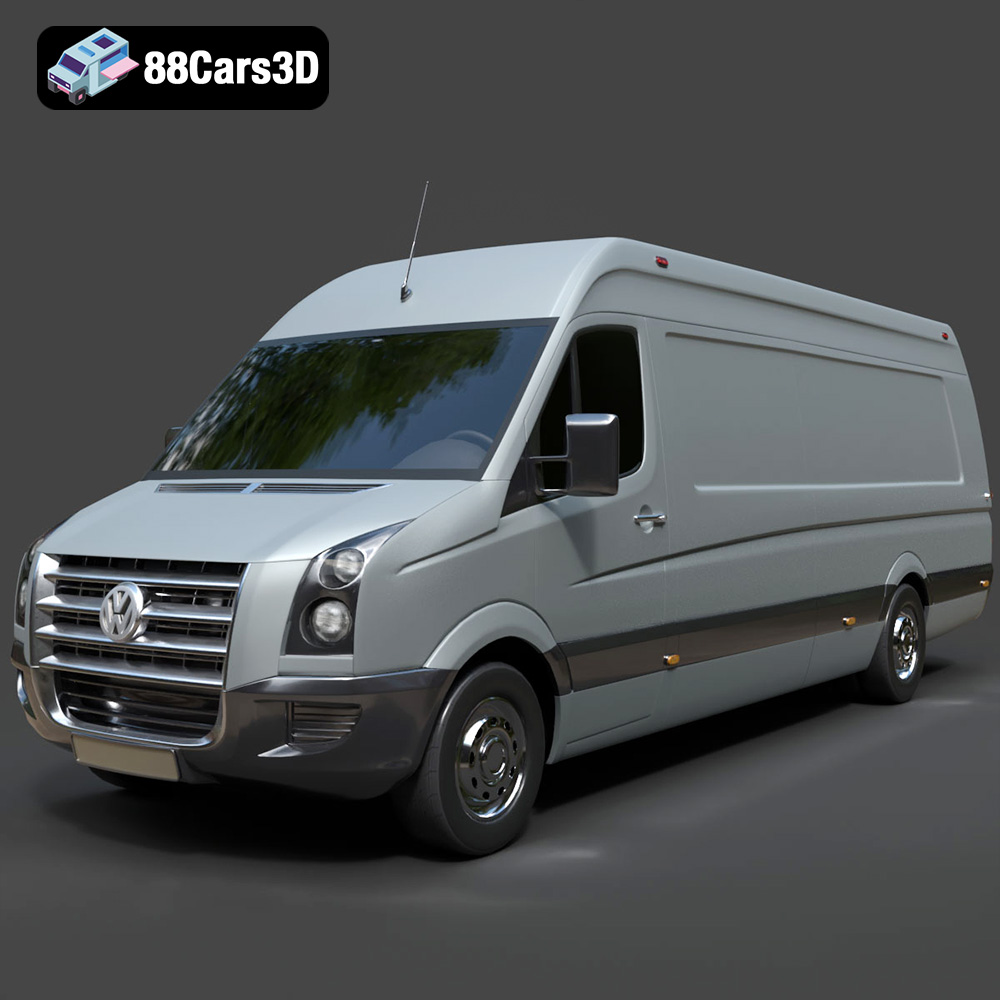
Texture: Yes
Material: Yes
Download the Volkswagen Crafter 2020 3D Model featuring clean geometry, realistic detailing, and a fully modeled interior. Includes .blend, .fbx, .obj, .glb, .stl, .ply, .unreal, and .max formats for rendering, simulation, and game development.
Price: $22.99
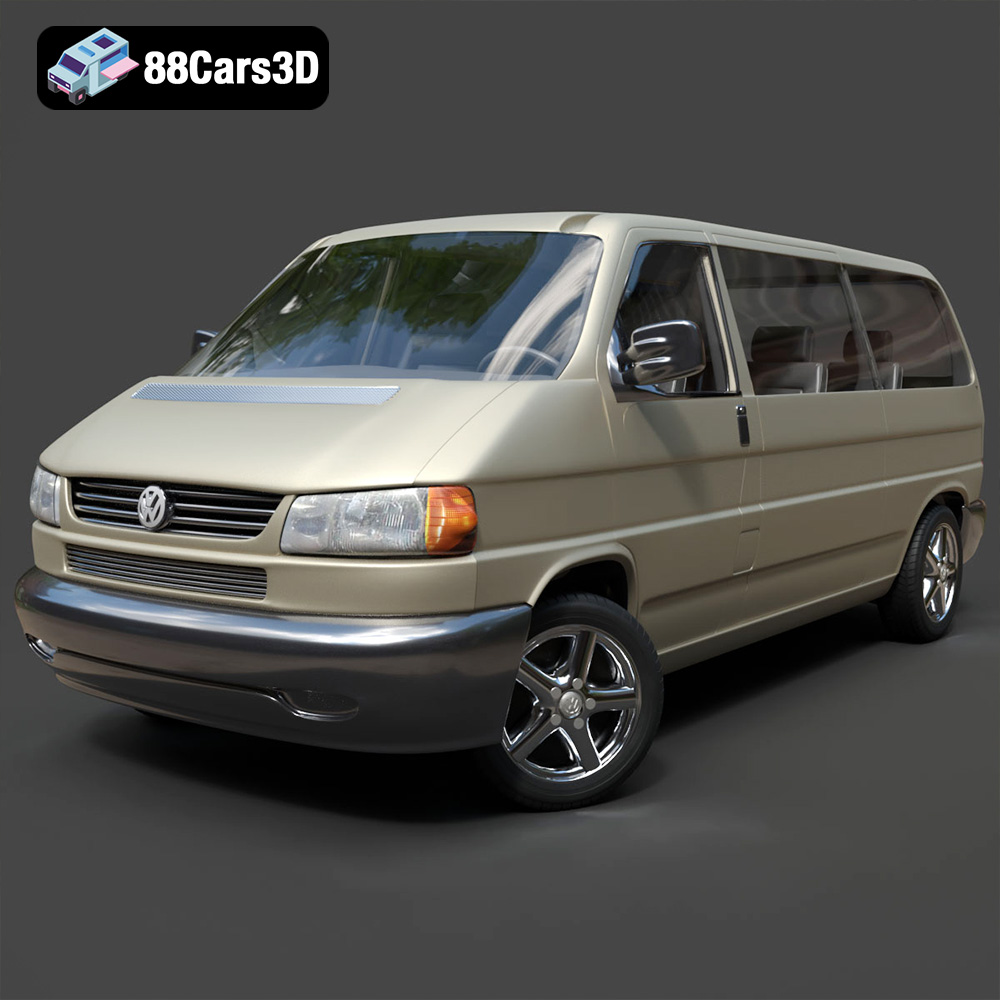
Texture: Yes
Material: Yes
Download the Volkswagen Caravelle 3D Model featuring a detailed exterior, functional interior, and optimized topology. Includes .blend, .fbx, .obj, .glb, .stl, .ply, .unreal, and .max formats for rendering, simulation, and game development.
Price: $23.99
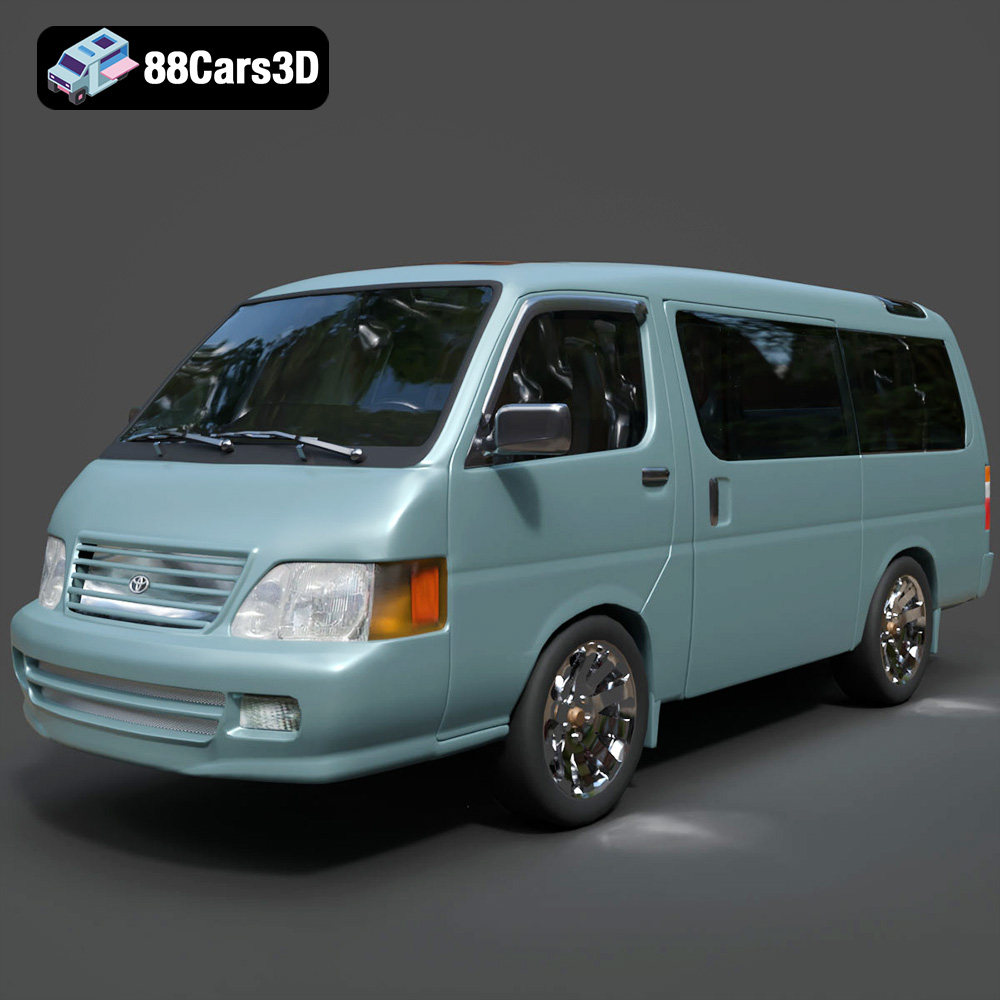
Texture: Yes
Material: Yes
Download the Toyota Hiace 3D Model featuring versatile design and detailed exterior. Includes .blend, .fbx, .obj, .glb, .stl, .ply, .unreal, and .max formats for rendering, simulation, and game development.
Price: $21.99
Texture: Yes
Material: Yes
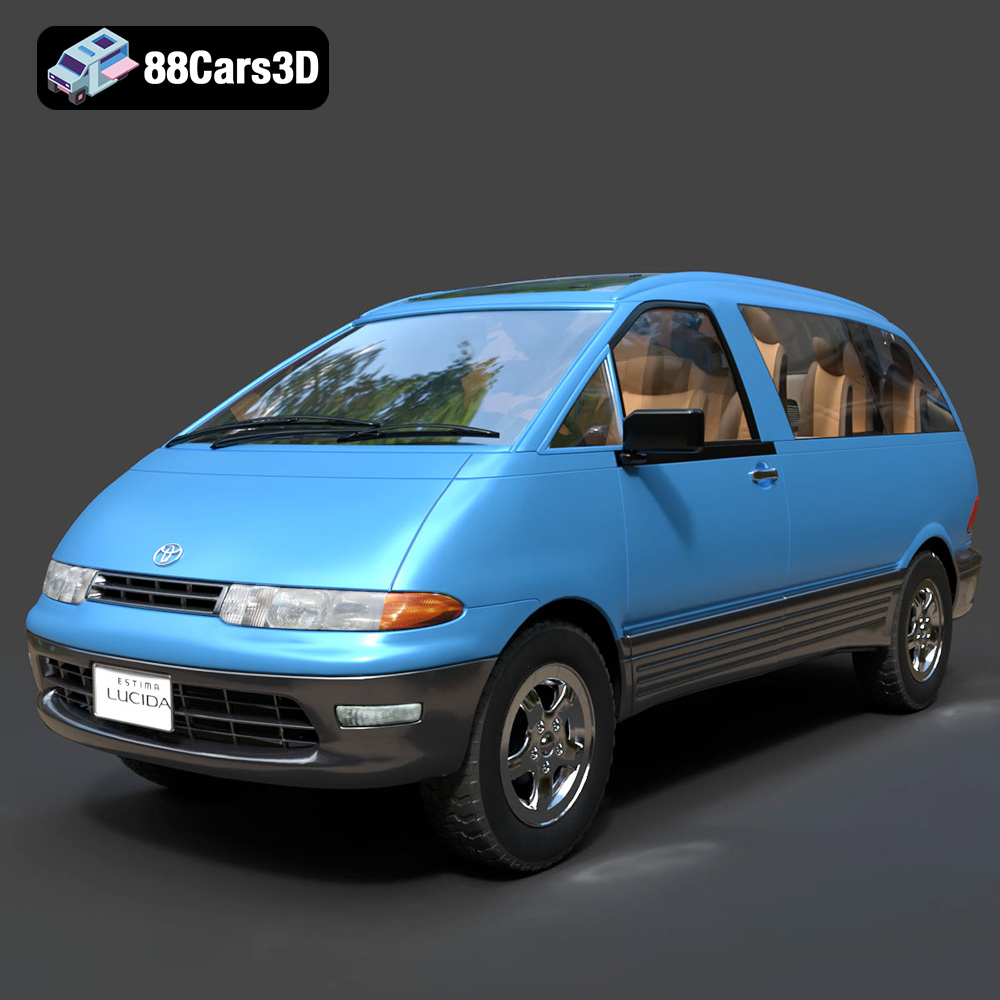
Download the Toyota Estima Lucida 3D Model featuring its iconic compact MPV design, versatile interior, and accurate exterior details. Includes .blend, .fbx, .obj, .glb, .stl, .ply, .unreal, and .max formats for rendering, simulation, and game development.
Price: $24.99

Texture: Yes
Material: Yes
Download the Toyota Alphard 3D Model featuring a detailed luxury minivan design with an accurate exterior and interior. Includes .blend, .fbx, .obj, .glb, .stl, .ply, .unreal, and .max formats for rendering, simulation, and game development.
Price: $21.99
Texture: Yes
Material: Yes
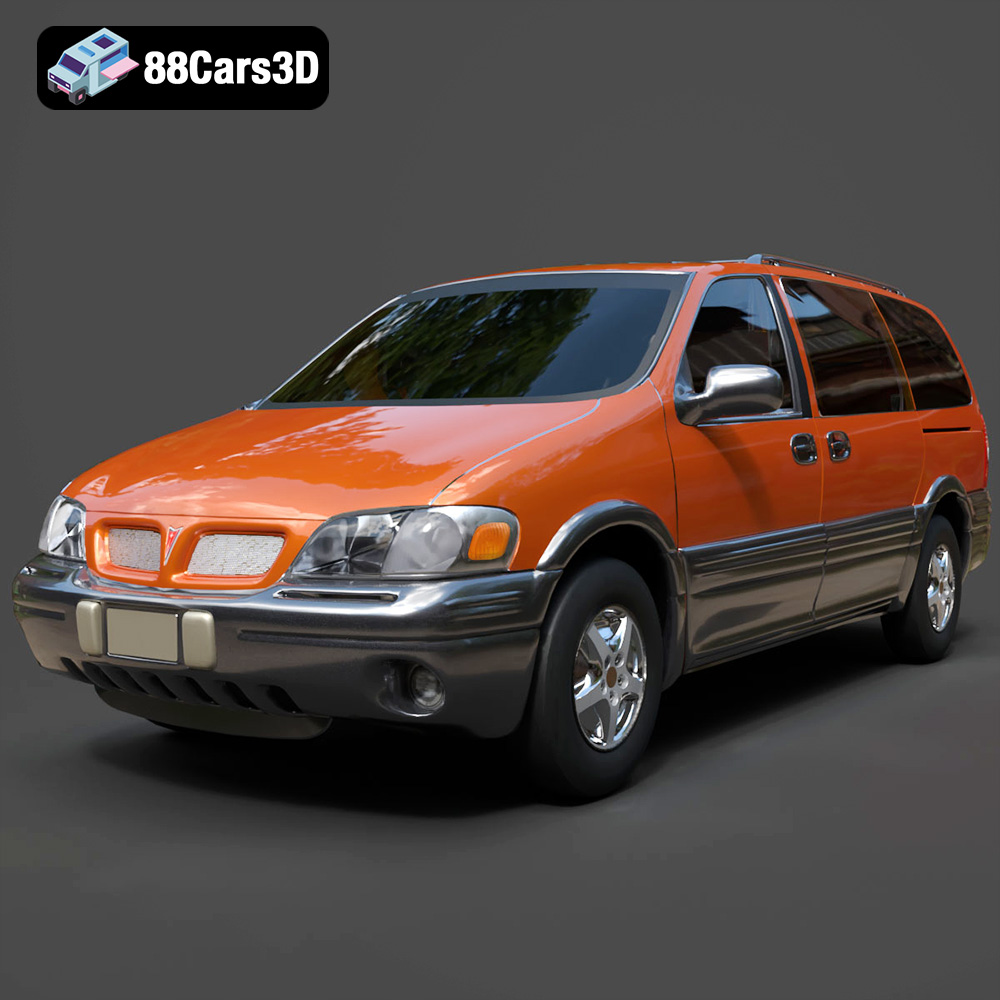
Download the Pontiac Montana 1998 3D Model featuring a detailed exterior, functional interior, and optimized mesh. Includes .blend, .fbx, .obj, .glb, .stl, .ply, .unreal, and .max formats for rendering, simulation, and game development.
Price: $21.99
Texture: Yes
Material: Yes
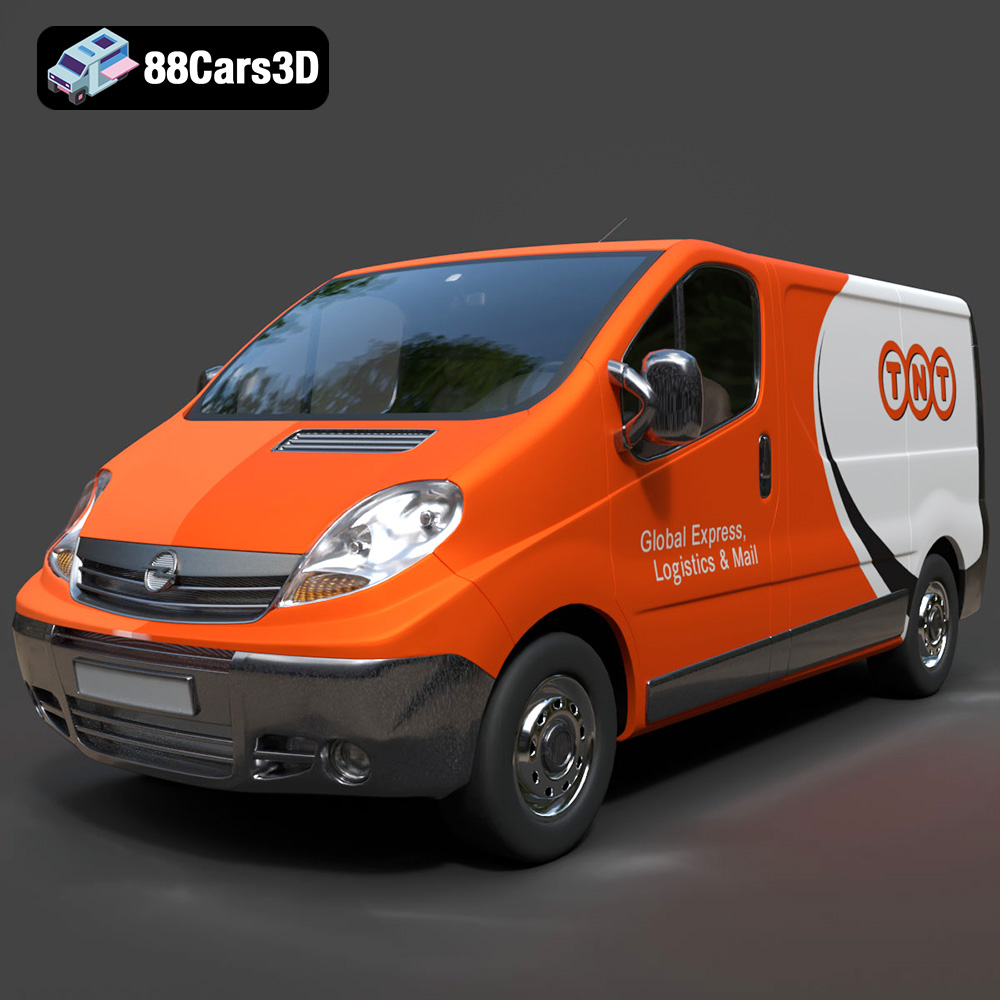
Download the Opel Vivaro 3D Model featuring a versatile commercial van design with balanced detailing. Includes .blend, .fbx, .obj, .glb, .stl, .ply, .unreal, and .max formats for rendering, simulation, and game development.
Price: $21.99
Texture: Yes
Material: Yes
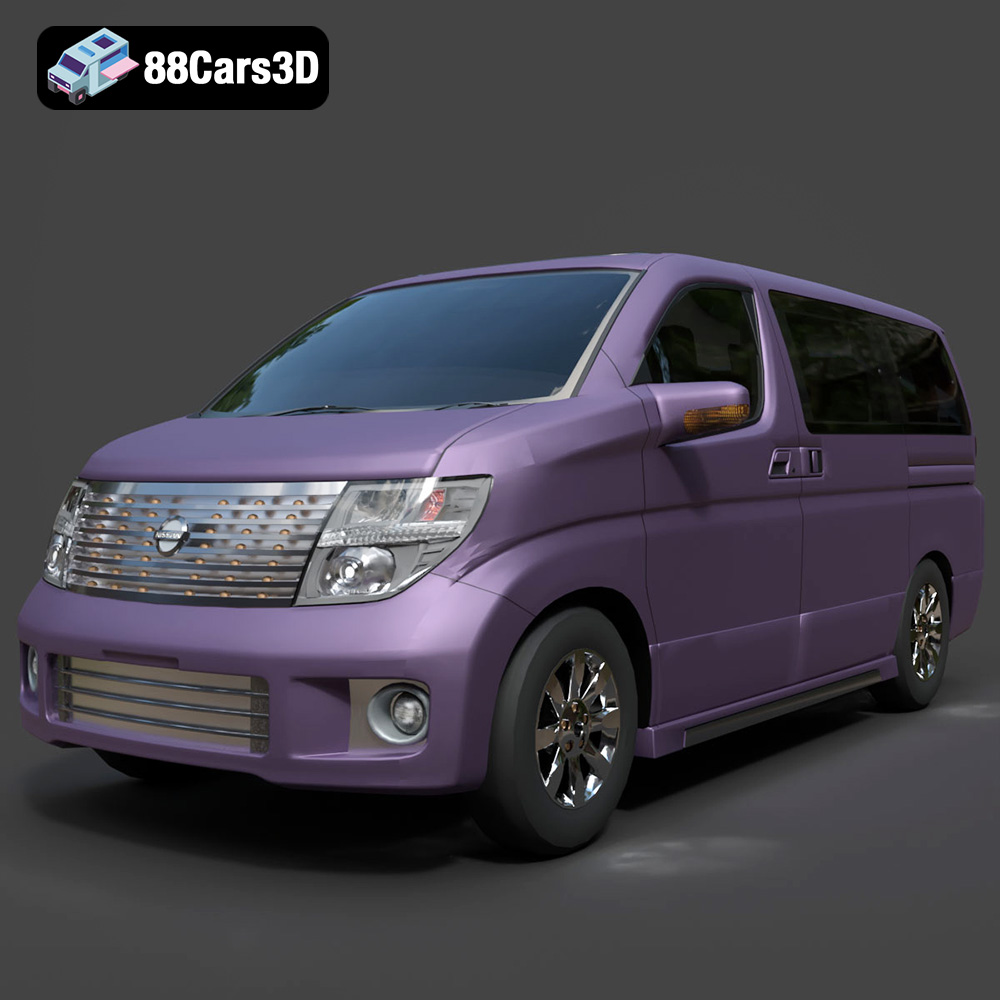
Download the Nissan Elgrand 3D Model featuring a versatile minivan design. Includes .blend, .fbx, .obj, .glb, .stl, .ply, .unreal, and .max formats for rendering, simulation, and game development.
Price: $21.99
Texture: Yes
Material: Yes
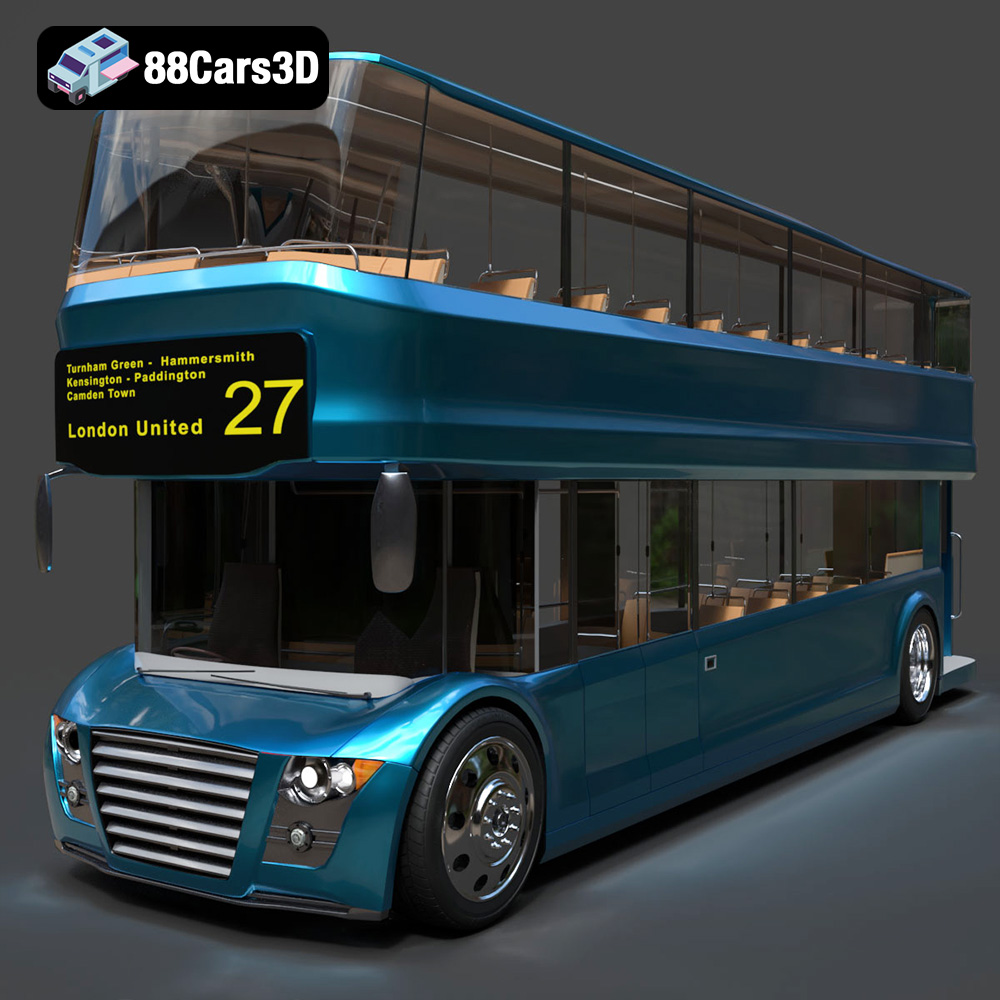
Download the New Bus For London 3D Model featuring a detailed exterior and interior, optimized for rendering and animation. Includes .blend, .fbx, .obj, .glb, .stl, .ply, .unreal, and .max formats for rendering, simulation, and game development.
Price: $21.99

