⚡ FLASH SALE: Get 60% OFF All Premium 3D & STL Models! ⚡

There are few vehicles that command attention quite like a classic American car from the golden age of automotive design. The late 1950s, in particular, presented an era of unparalleled flamboyance, innovation, and sheer luxury on wheels. At the pinnacle of this era stood the 1959 Cadillac Eldorado Convertible, a true icon defined by its dramatic tailfins, gleaming chrome, and an aura of unmistakable opulence. For designers, animators, game developers, and visualization artists, recreating such a masterpiece in the digital realm presents both a challenge and an immense opportunity.
Today, the demand for high-fidelity 3D car models is soaring across industries. From cinematic automotive rendering to realistic game assets and immersive AR/VR experiences, the accuracy and quality of digital vehicles are paramount. This article delves into the intricate world of bringing such iconic machines to life in 3D, using the exceptional 1959 Cadillac Eldorado Convertible 3D model as our prime example. We’ll explore technical workflows, essential file formats, and the myriad applications where a meticulously crafted 3D model can truly elevate a project, showcasing why a premium asset like the one available at 88cars3d.com is an invaluable investment for any professional.
Recreating a vehicle as distinctive as the 1959 Cadillac Eldorado Convertible in 3D is a testament to precision modeling and a deep understanding of automotive aesthetics. This isn’t merely about replicating shapes; it’s about capturing the soul of the machine, its historical context, and the subtle nuances that define its grandeur. A high-quality 3D car model, such as the Eldorado, embodies this philosophy, providing a foundation for breathtaking visualizations and interactive experiences.
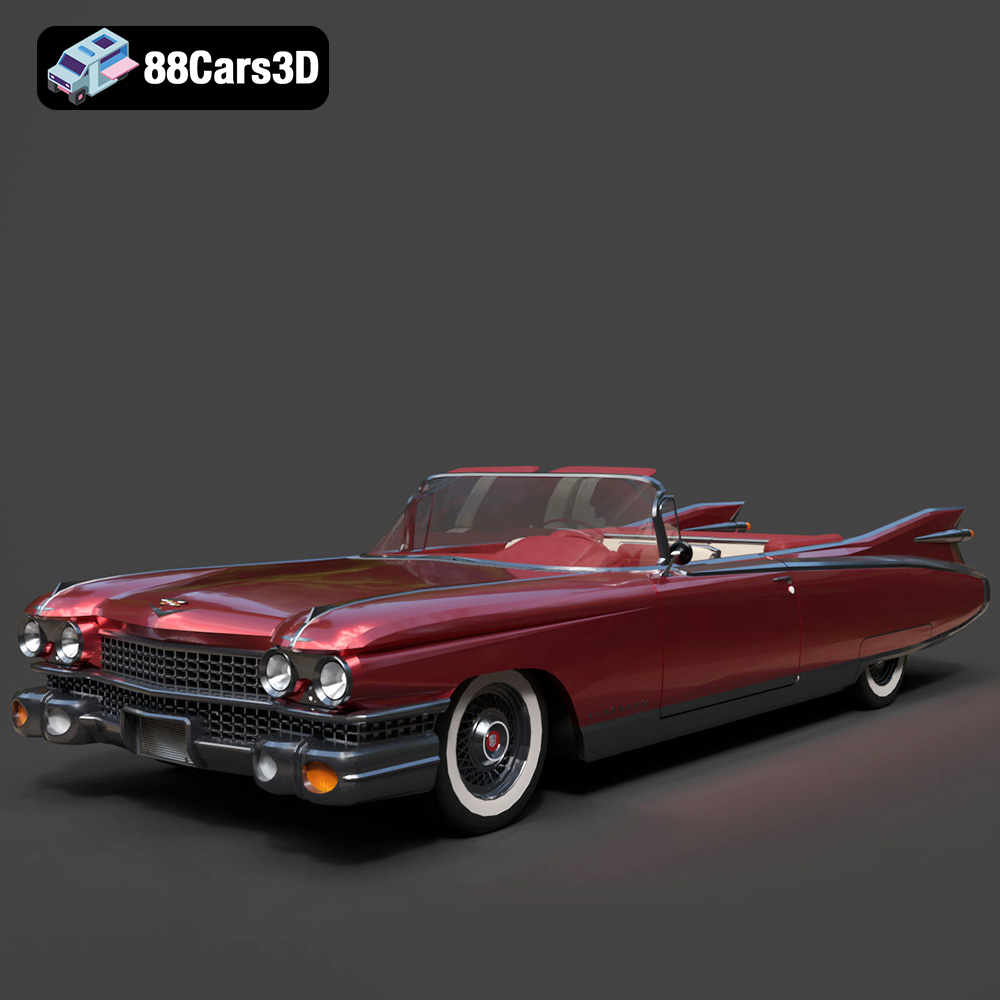
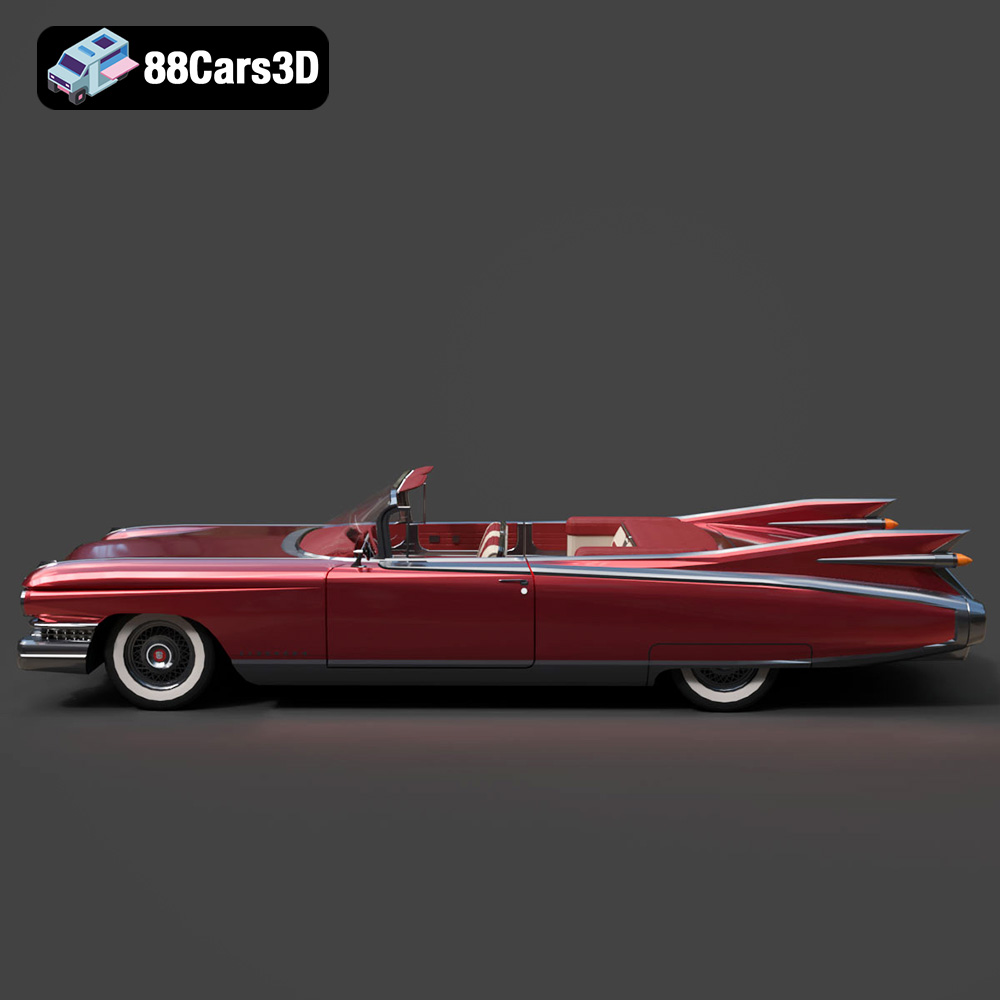
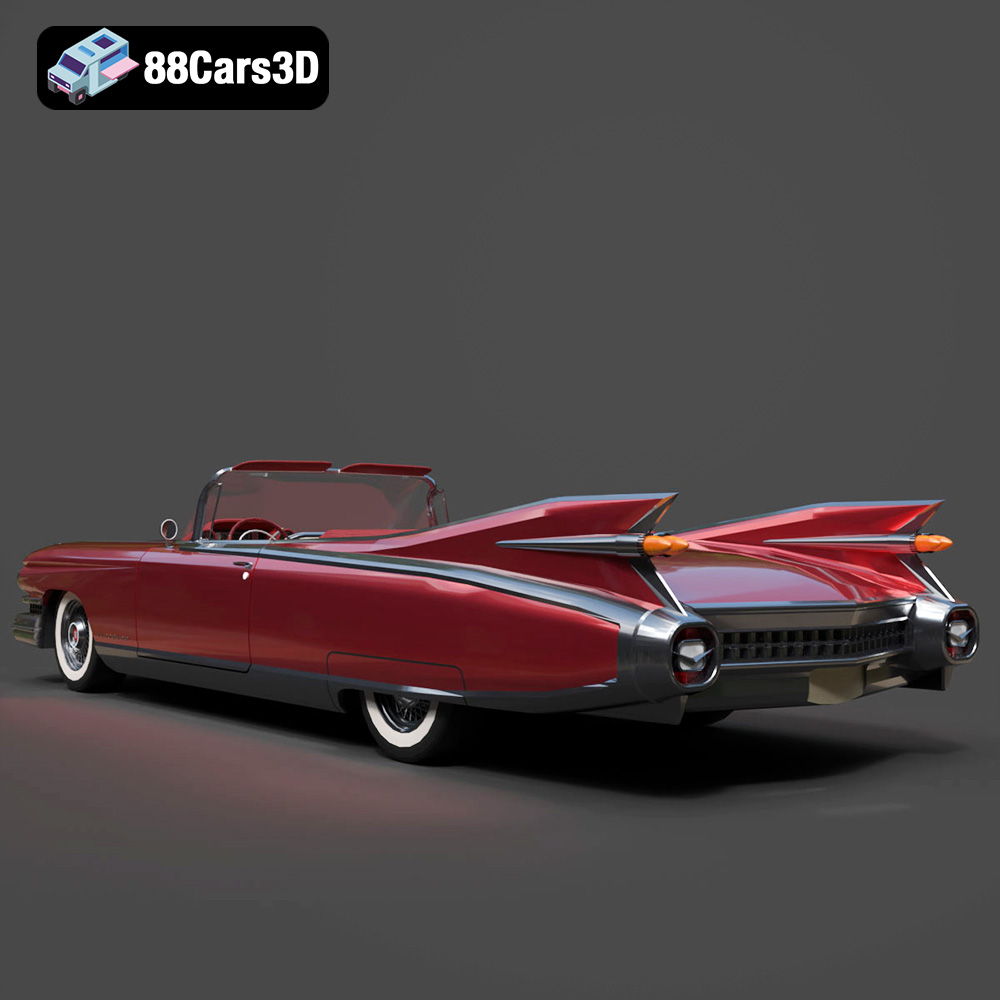
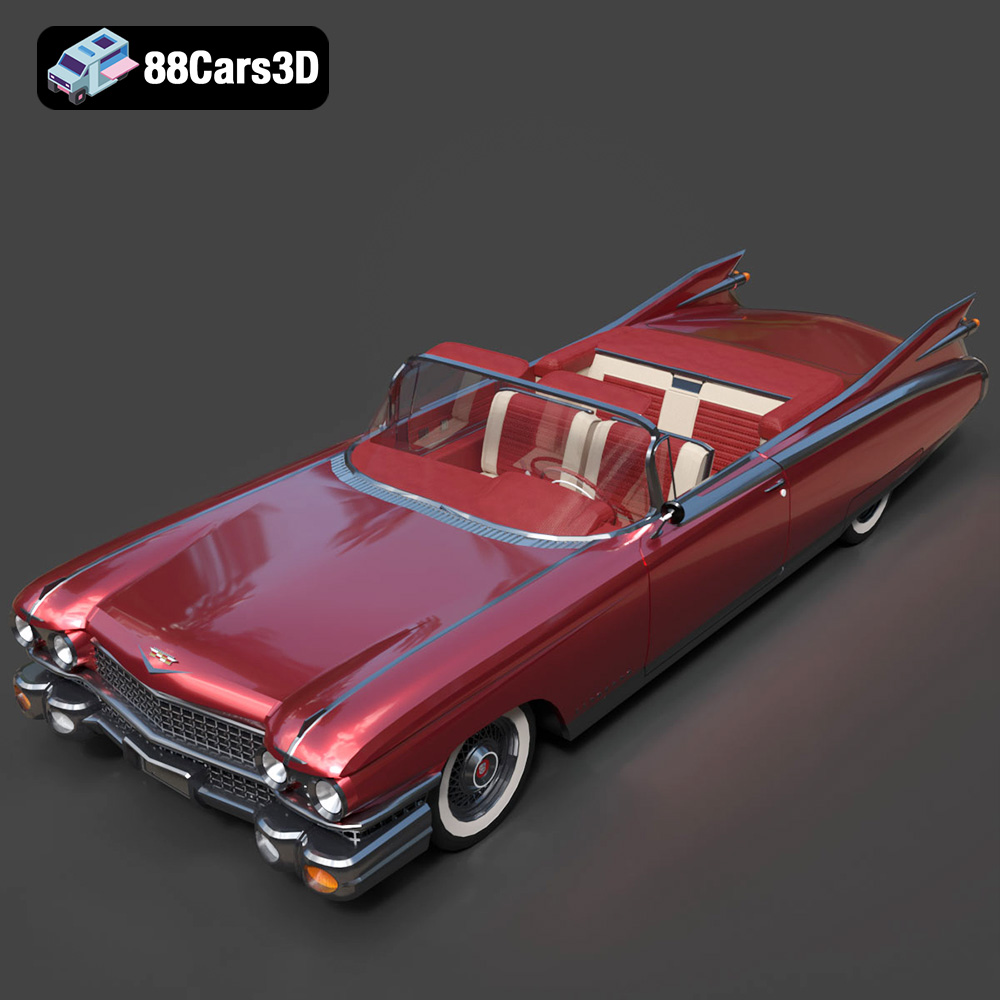
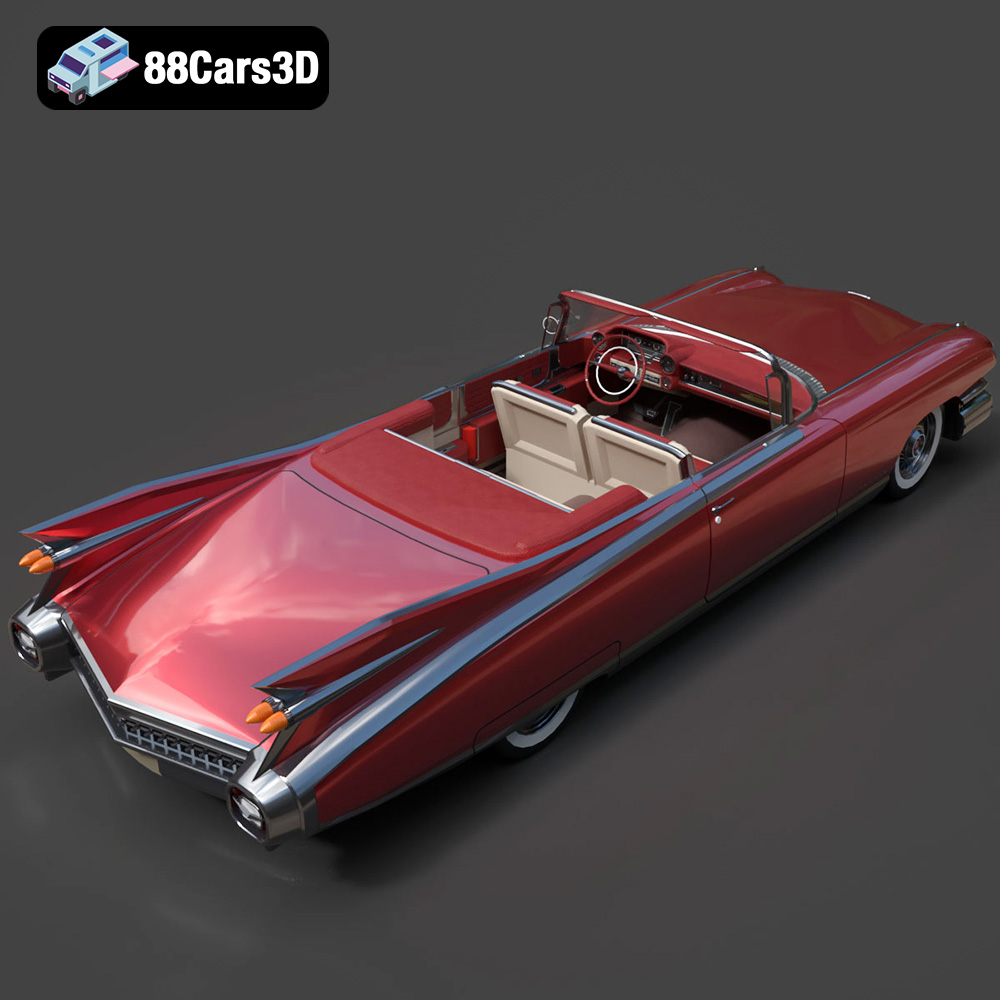
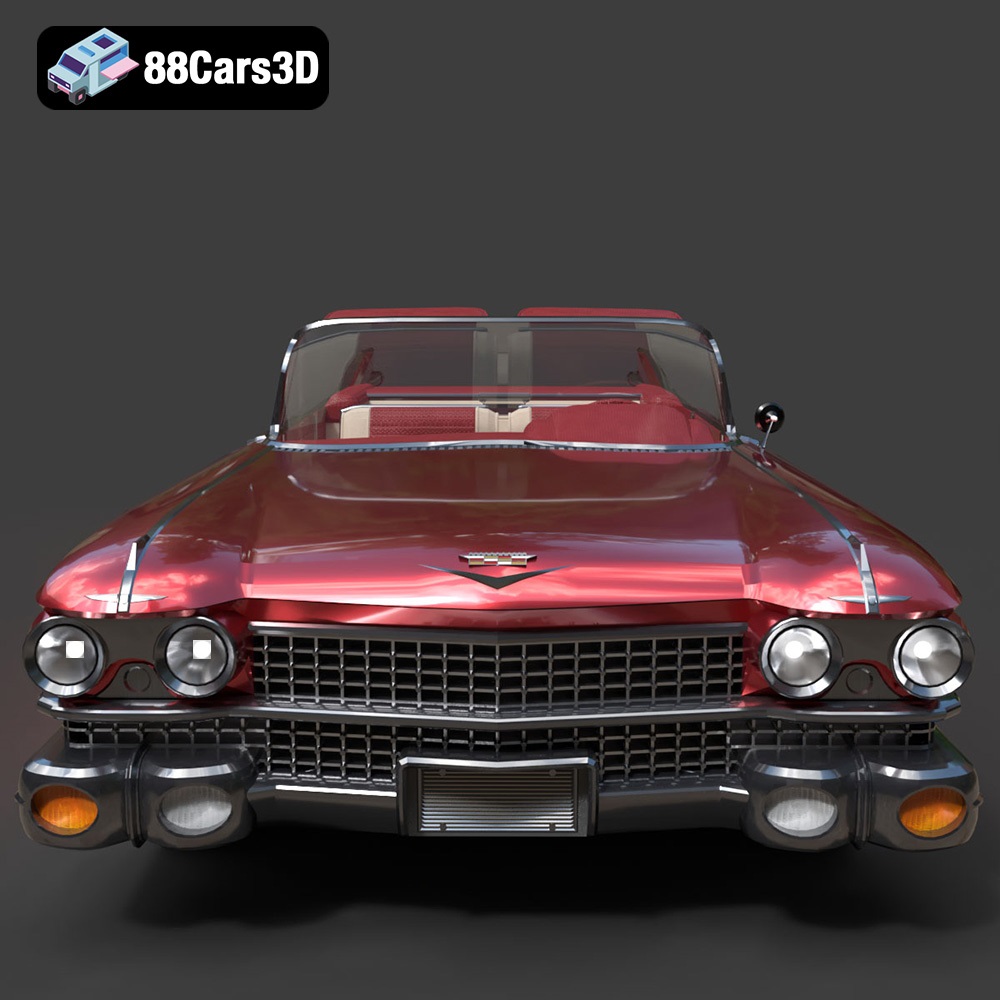
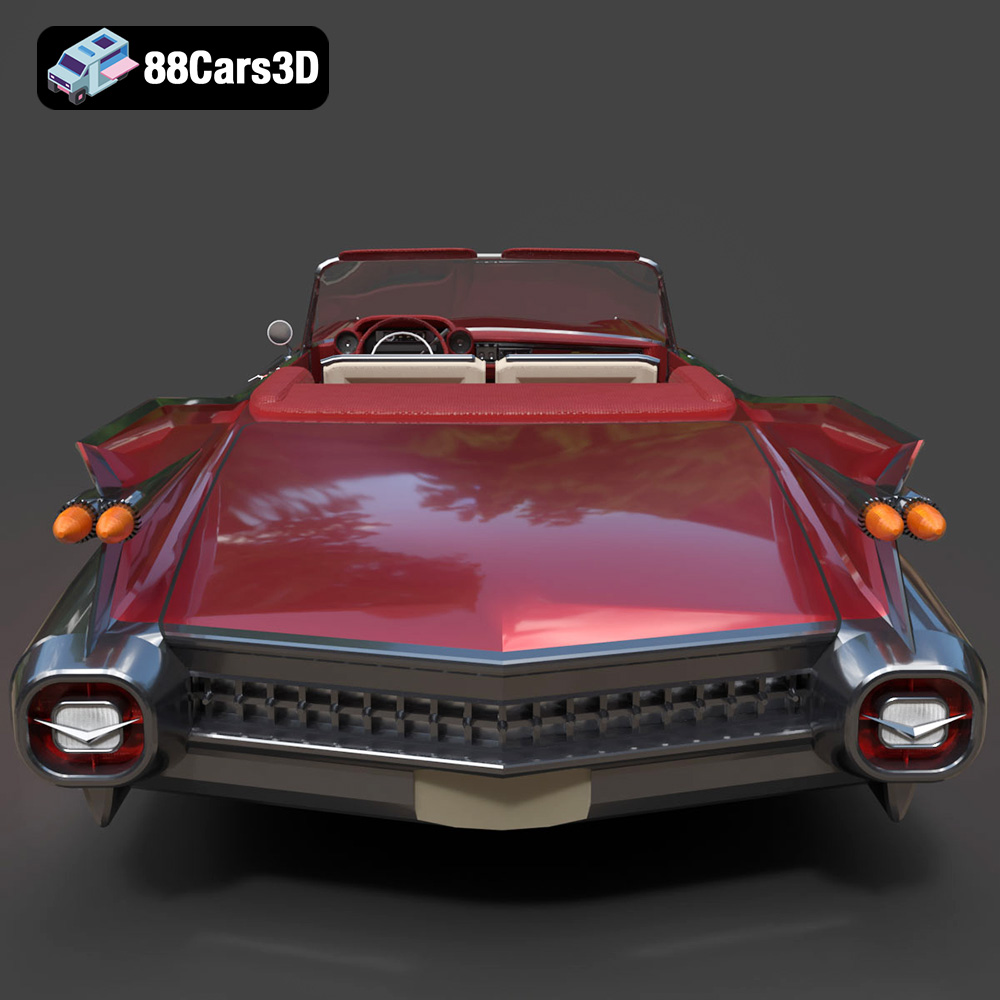
The exterior of the 1959 Cadillac Eldorado is instantly recognizable, largely due to its soaring tailfins. In a professional 3D model, these features are not just present, but accurately proportioned and smoothly integrated into the body panels. The model’s design carefully replicates the distinctive curves, character lines, and panel gaps that define the original vehicle. Crucially, details like the iconic bullet-style taillights, the intricate grille, and the extensive chrome trim are not merely textured, but geometrically modeled to provide true reflections and depth, essential for realistic automotive rendering. Even the wheels, with their period-correct hubcaps and whitewall tires, are faithfully recreated, adding to the overall authenticity. The ability to separate elements like doors, the hood, and trunk allows for dynamic animation possibilities, expanding its utility far beyond static renders.
While often overlooked in quick renders, a detailed interior is vital for immersive experiences and close-up shots. The Cadillac Eldorado model excels here, featuring a faithful representation of the classic dashboard, complete with accurately modeled gauges and radio. The steering wheel and column, luxurious bench seats with authentic upholstery textures, and even the floor pedals and door panels are all meticulously recreated. This attention to internal components ensures that the model holds up under scrutiny, whether viewed through an open door in an architectural visualization or from a first-person perspective in a driving simulator. For game development, this level of detail offers flexibility, allowing developers to decide which elements to include based on performance targets, while still retaining the option for high-fidelity cutscenes or vehicle customization menus.
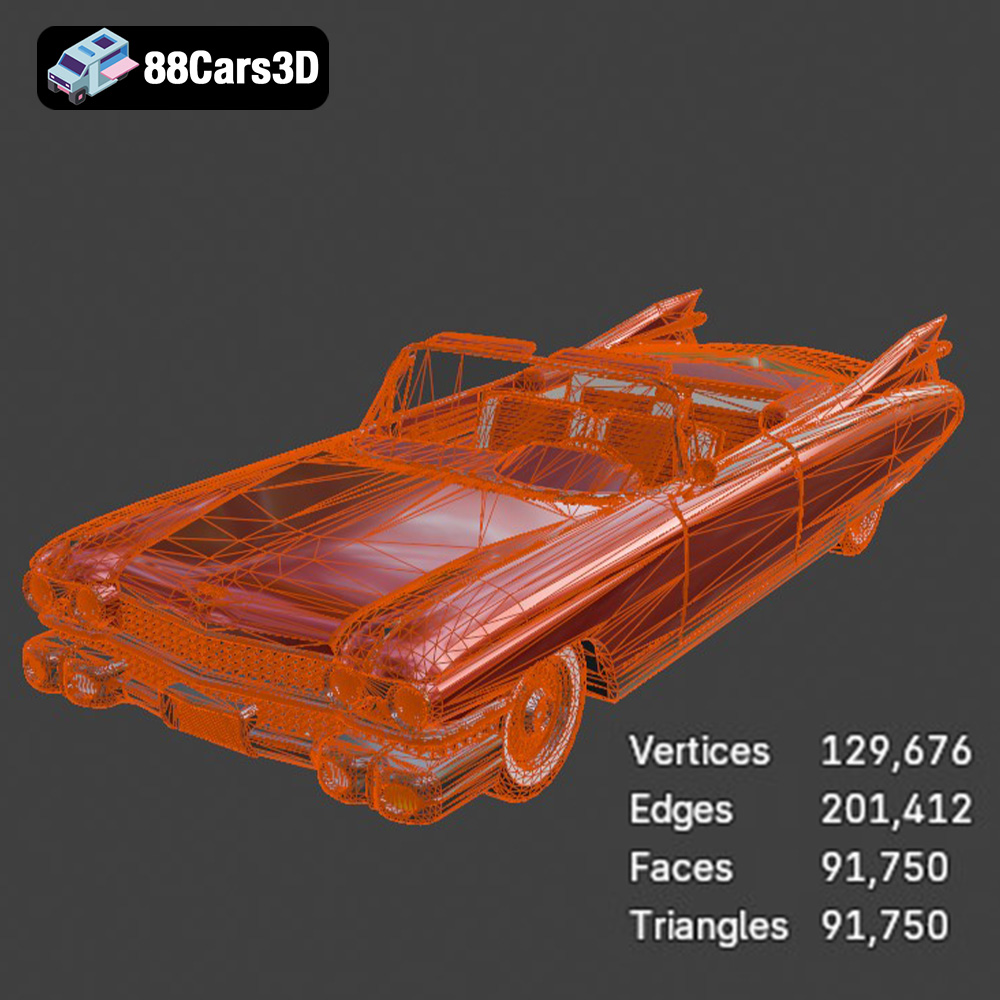
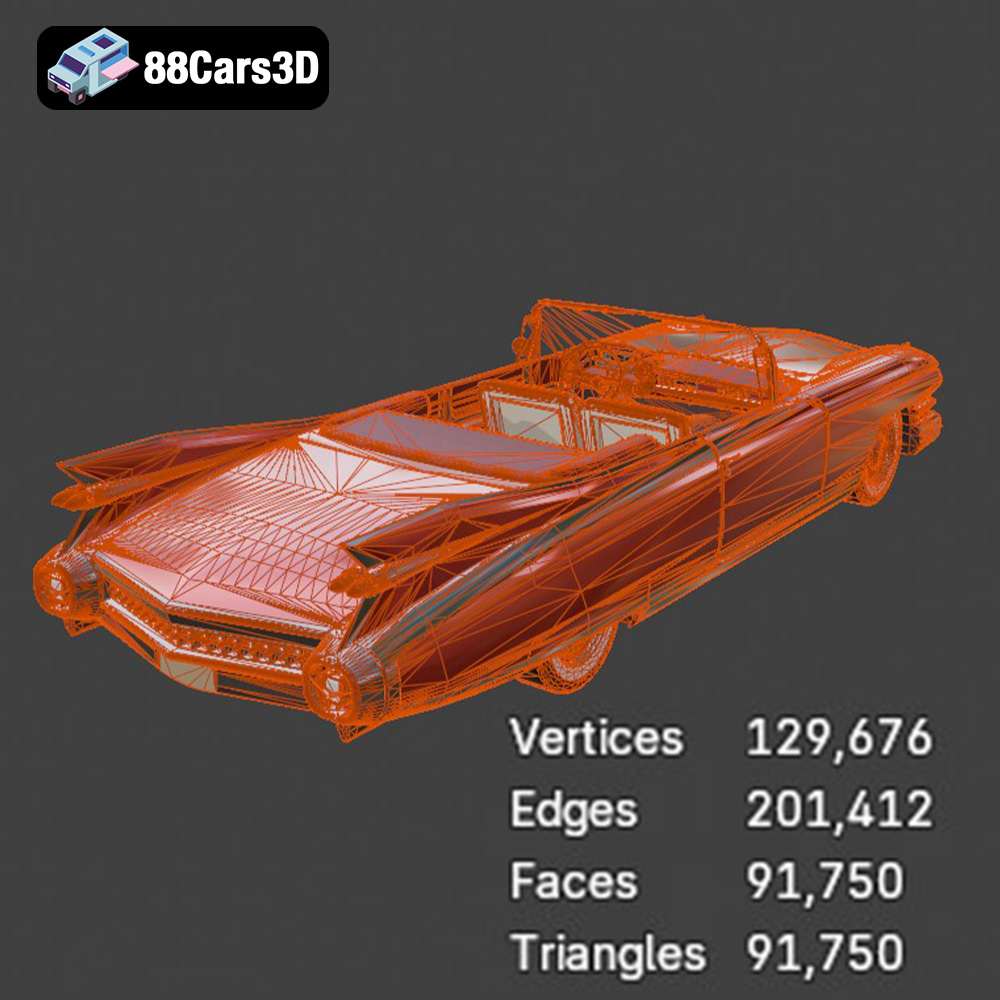
The true value of a professional 3D car model lies not just in its visual fidelity but also in its underlying technical construction. The Eldorado model boasts clean quad-dominant topology, which is a gold standard for digital assets. This ensures smooth subdivision, artifact-free deformation, and ease of modification for artists. Modeled to real-world scale, it integrates seamlessly into any scene without requiring manual adjustments, saving valuable production time. A logically organized hierarchy with proper pivot points for animated parts (doors, wheels, steering) is crucial for efficient rigging and animation workflows. Furthermore, the model is UV-unwrapped, providing an optimal foundation for texture application and PBR (Physically Based Rendering) material setup. These technical advantages ensure the model isn’t just beautiful but also highly functional and versatile across various professional pipelines.
Navigating the world of 3D modeling often means grappling with a multitude of file formats, each with its own strengths, weaknesses, and intended applications. Understanding these formats is critical for ensuring compatibility, preserving data, and optimizing workflows. The 1959 Cadillac Eldorado Convertible 3D model, like many premium assets from 88cars3d.com, is offered in a comprehensive range of formats to cater to diverse professional needs.
The `.blend` file format is Blender’s native project file. It’s a complete package, containing not only the mesh geometry but also materials, textures (packed within the file or linked), lighting setups, cameras, animations, and even scripts. For users deeply integrated into the Blender ecosystem, this is the most convenient and powerful format. It offers full editability of every component, allowing artists to tweak topology, modify materials, adjust lighting, or even add custom animations directly within the software. It’s ideal for artists who want to render directly in Cycles or Eevee, or use Blender for further asset development before export to other platforms.
Developed by Autodesk, the `.fbx` (Filmbox) format has become an industry standard for data exchange between different 3D applications and game engines. It’s renowned for its ability to store not just geometry, but also materials (with PBR extensions), textures, animations (including skeletal animation), cameras, and lights in a single package. This makes it ideal for pipelines involving Unreal Engine, Unity, 3ds Max, Maya, Cinema 4D, and more. When exporting an FBX for game development, ensuring proper scaling, axis orientation, and material setup is key for a smooth import into engines.
The `.obj` (Wavefront OBJ) format is one of the oldest and most widely supported 3D formats. It excels at storing raw mesh data, including vertices, normals, UV coordinates, and faces. While it can reference external material files (`.mtl`), it doesn’t embed them or support animation. Its universality is its greatest strength, making it a reliable choice for cross-software compatibility when you primarily need to transfer geometry. If you’re moving the Cadillac model between disparate 3D packages where FBX might have conversion quirks, OBJ offers a solid geometric foundation to start from.
`.glb` (GL Transmission Format Binary) is a relatively newer format gaining significant traction, particularly for its efficiency and suitability for web, AR, and VR applications. It’s a binary version of the `.gltf` format, packing all necessary data (geometry, materials, textures, animations) into a single, compact file. This “all-in-one” characteristic minimizes HTTP requests, making it fast to load and ideal for real-time web viewers, augmented reality experiences on mobile devices, or virtual reality environments where performance is paramount. Its PBR material support ensures consistent visual fidelity across platforms.
The `.stl` (Stereolithography) format is the de facto standard for 3D printing. It describes only the surface geometry of a 3D object using a collection of triangular facets. It doesn’t store color, texture, or material information. When converting a complex model like the Cadillac Eldorado for 3D printing, careful consideration of mesh density, wall thickness, and manifold geometry is essential to ensure a successful print. The provided .stl for the Eldorado is designed to be ready for physical production, offering a tangible representation of this digital asset.
The `.ply` (Polygon File Format, or Stanford Triangle Format) is a versatile format for storing 3D data, particularly useful for scanned data, scientific applications, and CAD workflows. It can store various properties beyond just geometry, including color, transparency, surface normals, and even data from laser scanners. It’s often used where precise mesh data is required for analysis, reverse engineering, or integration into engineering software, offering more data flexibility than OBJ for certain applications.
While not a universal file extension in the traditional sense, “unreal” typically refers to an asset or project package specifically configured and optimized for direct import or integration into Unreal Engine. This often implies an FBX model that has already been properly scaled, has collision meshes generated, and includes a basic material setup with corresponding textures ready to be assigned in the engine. For the Eldorado model, the `.unreal` offering means a significantly streamlined workflow for Unreal Engine developers, saving hours of setup and optimization time.
The `.max` file is the native scene format for Autodesk 3ds Max. Similar to a Blender `.blend` file, it encapsulates the entire 3ds Max scene, including geometry, materials (especially V-Ray or Corona materials), lighting, cameras, animations, and modifiers. For 3ds Max users, this format offers full editability and access to all of 3ds Max’s powerful modeling, animation, and rendering tools. It’s the optimal choice for architects, product visualizers, and animators who rely on 3ds Max for their primary production pipeline.
Achieving photorealistic automotive rendering is a highly specialized skill, combining technical expertise with an artistic eye. A high-quality 3D car model, such as the 1959 Cadillac Eldorado Convertible, significantly streamlines this process, providing artists with a robust foundation to build upon. We’ll explore typical workflows in two industry-standard applications: 3ds Max and Blender.
For decades, 3ds Max has been a powerhouse in architectural visualization and product rendering, and automotive rendering is no exception. Paired with render engines like V-Ray or Corona Renderer, it offers unparalleled control and realism.
Blender has rapidly evolved into a professional-grade 3D suite, with its Cycles and Eevee renderers offering incredible results. The `.blend` file format of the 1959 Cadillac Eldorado provides a direct entry point for Blender artists.
The demand for high-quality 3D car models extends significantly into real-time applications, particularly game development and interactive visualizations. Engines like Unreal Engine and Unity have revolutionized how digital assets are experienced, and a well-optimized model like the 1959 Cadillac Eldorado Convertible is crucial for achieving immersive results.
Unreal Engine is at the forefront of real-time rendering, delivering stunning visuals previously only achievable offline. The provided `.fbx` and `.unreal` formats for the Cadillac model offer distinct advantages for Unreal developers.
Unity is another widely adopted real-time engine, known for its flexibility across various platforms, from mobile to desktop and console. The `.fbx` format is the primary gateway for bringing the Cadillac Eldorado into Unity.
The utility of a high-quality 3D car model like the 1959 Cadillac Eldorado Convertible extends far beyond traditional rendering and game development. Its robust construction and detailed features make it suitable for a variety of emerging and specialized applications, pushing the boundaries of digital interaction.
Augmented Reality (AR) and Virtual Reality (VR) are transforming how we interact with digital content. For automotive enthusiasts and professionals, these technologies offer unprecedented opportunities to engage with vehicles. The Cadillac Eldorado model, especially in its optimized `.glb` format, is perfectly suited for these environments.
Beyond entertainment, 3D car models play a vital role in various simulation and training scenarios. The realism and accurate scale of the Eldorado model make it valuable for practical applications.
The ability to convert a digital model into a physical object via 3D printing opens up a world of possibilities for collectors, model makers, and designers. The included `.stl` file for the Cadillac Eldorado makes this process straightforward.
In today’s fast-paced digital production environment, time is a critical commodity. Building a highly detailed, topologically clean, and production-ready 3D car model from scratch can take hundreds, if not thousands, of hours of skilled labor. This is where investing in premium 3D car models like the 1959 Cadillac Eldorado Convertible provides an unparalleled professional edge.
The most immediate benefit of using a pre-made, high-quality asset is the massive saving in production time and cost. Instead of dedicating valuable artist hours to modeling, UV mapping, and initial texturing, teams can instantly integrate the Cadillac Eldorado model into their scenes. This allows artists to focus on creative tasks such as lighting, animation, material refinement, and scene composition, accelerating project timelines and reducing overall expenses. For small studios or freelance artists, this can be the difference between winning a project and missing a deadline.
Professional projects demand uncompromised quality. A model built by experienced 3D artists ensures clean geometry, proper scale, and an optimized mesh for various applications. This consistency in quality means less troubleshooting down the line and more reliable results across different rendering engines and real-time platforms. The 1959 Cadillac Eldorado model, with its clean quad-dominant topology and logical hierarchy, is a prime example of an asset engineered for professional use, minimizing polygon count where possible without sacrificing visual fidelity.
A well-constructed 3D model is a versatile asset. Its ability to be used for photorealistic rendering, game development, AR/VR, and even 3D printing means it can serve multiple purposes across different projects and client needs. The comprehensive suite of file formats (from `.blend` and `.max` for full editability to `.fbx`, `.glb`, and `.unreal` for engine integration, and `.stl` for manufacturing) ensures that the Cadillac Eldorado model is adaptable to almost any workflow imaginable. This future-proofs your investment, allowing the asset to evolve with technology and project demands.
Ultimately, premium 3D assets empower artists to be more creative. When the foundational technical work is already expertly handled, artists are free to explore diverse lighting scenarios, experiment with unique compositions, and tell compelling visual stories. They can focus on the artistic interpretation of the 1959 Cadillac Eldorado, whether it’s portraying it as a pristine show car, a battle-scarred street machine in a game, or a historical artifact in a virtual museum. This shift from technical preoccupation to creative exploration is the true advantage of leveraging high-quality 3D car models.
The world of 3D modeling for automotive design, rendering, and game development is complex and demanding, yet incredibly rewarding. The ability to bring iconic vehicles like the 1959 Cadillac Eldorado Convertible to life in the digital realm requires not only artistic vision but also a profound understanding of technical specifications, workflows, and file formats. As we’ve explored, a premium 3D model is far more than just a collection of polygons; it’s a meticulously crafted digital artifact, engineered for professional pipelines across a multitude of industries.
From achieving breathtaking photorealistic renders in 3ds Max and Blender to integrating seamlessly into real-time environments like Unreal Engine and Unity, and even venturing into the immersive frontiers of AR/VR and the tangible world of 3D printing, the versatility of such an asset is immense. The 1959 Cadillac Eldorado Convertible 3D model stands as a prime example of how attention to detail, clean topology, and comprehensive file format support translate into an invaluable tool for any digital artist or developer. By investing in high-quality 3D car models from reputable sources like 88cars3d.com, professionals can save countless hours, maintain uncompromised quality, and ultimately focus their energy on the creative execution that truly sets their projects apart.
Whether you’re crafting a cinematic masterpiece, developing a next-gen game, or building an interactive visualization, the right 3D asset provides the foundation for success. The grandeur of the 1959 Cadillac Eldorado awaits its next digital journey, ready to captivate audiences and elevate your projects to new heights of realism and engagement.
Experience the timeless grandeur of American automotive design with this meticulously crafted 3D model of the 1959 Cadillac Eldorado Convertible. This iconic luxury vehicle, renowned for its dramatic tailfins and opulent styling, is brought to life with clean geometry and a balanced level of detail. Perfect for capturing the essence of the late 1950s, this model is ideal for high-quality rendering, realistic animation sequences, immersive simulations, and sophisticated game development projects.
$20.79
.cadillac.eldorado.convertible.1959.classiccar.vintagecar.luxurycar.americancar.rendering.simulation.gameasset.arvr.blend.fbx.obj.glb.stl.ply.unreal.max