⚡ FLASH SALE: Get 60% OFF All Premium 3D & STL Models! ⚡

The automotive world is undergoing a profound transformation, moving beyond static presentations to embrace dynamic, interactive, and collaborative experiences. From virtual showrooms and collaborative design reviews to real-time test drives and competitive racing simulations, the demand for shared, immersive environments is skyrocketing. Unreal Engine stands at the forefront of this revolution, offering robust networking capabilities that empower developers and artists to build stunning multiplayer automotive applications.
At 88cars3d.com, we provide the high-quality 3D car models that form the visual foundation of these experiences. But bringing these meticulously crafted assets to life in a shared virtual space requires a deep understanding of Unreal Engine’s multiplayer networking fundamentals. This comprehensive guide will take you through the core concepts, implementation techniques, and optimization strategies necessary to build compelling real-time multiplayer automotive projects. We’ll delve into the intricacies of server authority, data replication, remote procedure calls (RPCs), and performance considerations, equipping you with the knowledge to create seamless and engaging collaborative automotive visualizations, games, and training scenarios. Get ready to transform your single-player automotive visions into interactive multiplayer realities.
Unreal Engine’s networking framework is primarily built around a client-server architecture, a robust and scalable model preferred for most professional game development and interactive applications. In this setup, a central “server” maintains the authoritative state of the world, while “clients” connect to it, sending their inputs and receiving updates. This model helps prevent cheating and ensures a consistent experience for all connected players, a critical factor when dealing with precise vehicle physics and synchronized visual fidelity. While peer-to-peer setups exist, their complexity in managing diverse connections and ensuring fair play makes client-server the go-to choice for the vast majority of projects. Understanding this fundamental relationship is the first step toward building any multiplayer experience in Unreal Engine.
Replication, then, is the core mechanism by which the server communicates its authoritative game state to all connected clients. It’s the process of synchronizing data – such as an automotive asset’s position, rotation, color, or even specific material parameters – across the network, ensuring that what one player sees and interacts with is consistent with what other players perceive. Not every piece of data needs to be replicated; efficiency dictates that only game-critical information should travel over the network. Unreal Engine provides powerful tools to specify exactly which actors, components, and properties should be replicated, allowing you to fine-tune network traffic for optimal performance. Mastering replication is key to crafting responsive and believable multiplayer automotive environments where every participant experiences the same high-quality visual and interactive fidelity.
To effectively manage replication and interaction in a multiplayer environment, Unreal Engine assigns specific network roles to actors. These roles define an actor’s authority and how it behaves across the network. The primary roles are `ROLE_None`, `ROLE_SimulatedProxy`, `ROLE_AutonomousProxy`, and `ROLE_Authority`. An actor on the server always holds `ROLE_Authority`, meaning it dictates the true state. On clients, an actor will be an `ROLE_SimulatedProxy` if it’s owned by another player or the server, or an `ROLE_AutonomousProxy` if it’s the player’s own character or vehicle. An `Autonomous Proxy` has special privileges, such as being able to send RPCs (Remote Procedure Calls) to its authoritative server counterpart, allowing for client-driven input.
Ownership is a crucial concept closely tied to network roles. Every actor in a networked game has an “owner,” which is typically another actor or a player controller. The server always “owns” all actors in the world in an ultimate sense. However, a client’s Player Controller can “own” specific actors, such as their player character or the vehicle they are driving. This ownership determines who has the authority to issue certain commands and how replication is handled. For instance, only the owning client for an `Autonomous Proxy` vehicle can reliably send movement input to the server via an RPC. Understanding these roles and ownership dynamics is fundamental to designing reliable and secure multiplayer interactions for your automotive assets, preventing unauthorized client manipulation and maintaining server authority.
When a client first connects to an Unreal Engine server or joins a new level, a significant amount of data needs to be synchronized to bring them up to speed with the current game state. This initial data transfer is handled efficiently by Unreal Engine. Actors flagged with `bReplicates` and `bAlwaysRelevant` will have their current state replicated to the newly connected client, including their position, rotation, and any replicated properties. Special consideration is given to `NetStartupActors`, which are actors spawned during level loading that require their initial state to be perfectly synchronized for all clients. This ensures that every client sees the same scene composition from the moment they load into the level, a critical aspect for ensuring consistent visual context in a collaborative automotive design review or a competitive race start.
Seamless travel is another vital feature for maintaining persistent connections and smooth transitions between different levels or maps in a multiplayer game. Instead of completely disconnecting and reconnecting when moving from, say, a car configurator scene to a virtual test track, seamless travel allows the client to remain connected to the server while the new level loads. During this process, the server manages the transfer, potentially carrying over player-specific data like selected car configurations, materials, or even custom performance settings. This is invaluable for multi-stage automotive experiences, ensuring that users can transition smoothly without jarring disconnections or having to re-establish their connection, creating a more professional and integrated user experience.
In Unreal Engine, the core philosophy for networking is to replicate only what is absolutely necessary. Over-replicating data is a primary cause of bandwidth issues and network lag. When working with complex 3D car models from resources like 88cars3d.com, which often feature intricate details, multiple material slots, and potentially animated components, discerning what to replicate becomes paramount. At its simplest, if an `Actor` needs to exist on clients, its `bReplicates` flag must be set to true. Beyond that, individual `Properties` within an Actor or its `Components` can be marked for replication using the `UPROPERTY(Replicated)` specifier in C++ or by checking the “Replicate” box in Blueprint for variables. This selective replication allows for granular control, ensuring that only changes essential for gameplay or visual consistency are sent over the network, such as the car’s current speed, its headlight state, or which doors are open.
It’s equally important to consider the frequency of these updates. A car’s current position and rotation might need to update very frequently for smooth movement, while a car’s color might only need to be replicated once when it’s initially set. Unreal Engine’s replication system is optimized to send only “dirty” (changed) properties, utilizing delta compression to minimize payload size. However, even with these optimizations, a thoughtful approach to what and when you replicate is crucial for maintaining a responsive and lag-free multiplayer experience, especially when multiple high-fidelity automotive models are present in a shared environment.
While `Actors` are the primary units of replication, `Components` within an actor can also contain critical data that needs to be synchronized across the network. It’s important to understand that components themselves are not replicated independently; rather, their owning actor handles their replication. This means that if an `Actor` is replicated, its `Components` can have their properties marked for replication, and these properties will be synchronized as part of the owning actor’s replication stream. For instance, a `ChaosVehicleMovementComponent` handles a car’s physics simulation. While the component itself isn’t standalone replicated, its internal state variables (like engine RPM, gear, or wheel contact points) are designed to be replicated to ensure consistent vehicle behavior across clients.
When developing custom components, you can mark specific `UPROPERTY` variables with `Replicated` metadata or use Blueprint’s replication settings for variables. Additionally, components can contain their own `ReplicatedUsing` functions (RepNotify) to trigger specific client-side logic when a replicated property changes. This is incredibly powerful for effects like updating a car’s dashboard display based on a replicated engine state, or synchronizing an exhaust particle system’s activation. Carefully considering which component properties are replicated, and how frequently, is vital for managing network traffic without sacrificing the realism and responsiveness of your automotive assets.
`RepNotify` functions (often implemented as `OnRep_` functions in C++ or by ticking the “RepNotify” box for a replicated variable in Blueprint) are an incredibly powerful feature in Unreal Engine for handling client-side reactions to replicated property changes. When a replicated property’s value changes on the server and that change is sent to a client, the associated `RepNotify` function is automatically executed on the client. This provides an elegant way to trigger visual updates, play sounds, or initiate local effects without requiring additional RPCs or complex event handling.
For automotive applications, `RepNotify` is indispensable. Imagine a car’s headlight switch being flipped by a player. The `bHeadlightsOn` boolean property would be replicated. When this property changes on a client, its `OnRep_bHeadlightsOn` function can be called, which then locally toggles the visibility of the headlight meshes and activates the associated light source. Similarly, if a car’s material changes (e.g., paint color), the replicated material ID can trigger a `RepNotify` that updates the car’s material on the client, ensuring all players see the correct color without the server having to send constant updates. The key is to keep `RepNotify` functions focused on local visual or audio updates rather than complex game logic, as the core game state should remain server-authoritative. This pattern significantly enhances the responsiveness and visual consistency of networked automotive experiences.
While property replication handles the synchronization of data, Remote Procedure Calls (RPCs) are the primary mechanism for sending commands and triggering actions across the network in Unreal Engine. Think of RPCs as functions that can be executed on a remote machine – either a client instructing the server, or the server broadcasting an event to clients. They are essential for interactive elements where a player’s action needs to affect the game state for others, or when the server needs to command specific client-side behavior. For instance, when a player presses the “start engine” button on their car, an RPC is sent from the client to the server to request this action. The server then validates the request, updates the authoritative game state, and potentially uses another RPC to notify all clients that the engine has started, triggering engine sounds and visual effects locally.
Unreal Engine provides three main types of RPCs, each serving a distinct purpose:
1. **Server RPCs (`Run on Server` in Blueprint):** These are called by a client and executed on the server. They are typically used for client input, requesting actions, or submitting validated information.
2. **Client RPCs (`Run on Owning Client` in Blueprint):** These are called by the server and executed on the specific owning client. They are used for server-driven feedback or to update client-specific UI.
3. **NetMulticast RPCs (`Multicast` in Blueprint):** These are called by the server and executed on the server itself and all connected clients. They are perfect for broadcasting events that should affect all players, such as a car crash sound effect, an explosion, or a general announcement.
Implementing RPCs in Unreal Engine is straightforward in both Blueprint and C++. In **Blueprint**, you create a Custom Event and in its Details panel, under “Replication,” you set “Replicates” to `Run on Server`, `Run on Owning Client`, or `Multicast`. For `Run on Server` events, you also typically check “Reliable” if the event is critical and should always arrive, or leave it unchecked for less critical, high-frequency updates where some packet loss is acceptable. For example, a “Honk Horn” event on a car model from 88cars3d.com might be a `Run on Server` RPC. The client calls it, the server validates, and then the server can call a `Multicast` RPC to play the horn sound for everyone.
In **C++**, you declare RPC functions using the `UFUNCTION` macro with specific specifiers:
* `UFUNCTION(Server, Reliable, WithValidation)`: For server RPCs. `Reliable` guarantees delivery, `WithValidation` generates a corresponding `_Validate` function for security checks.
* `UFUNCTION(Client, Reliable)`: For client RPCs.
* `UFUNCTION(NetMulticast, Reliable)`: For multicast RPCs.
For performance-critical systems like vehicle input, you might often use `Unreliable` RPCs for frequent updates (e.g., sending current steering angle or throttle input) to minimize latency, accepting that occasional packets might be dropped. This is where the choice between `Reliable` and `Unreliable` becomes critical, directly impacting bandwidth and gameplay responsiveness.
The choice between `Reliable` and `Unreliable` RPCs is a fundamental networking decision with significant implications for performance and gameplay. `Reliable` RPCs guarantee delivery, even if it means retransmitting packets that were lost. This overhead consumes more bandwidth and can introduce latency if many reliable RPCs are being processed simultaneously. Therefore, `Reliable` RPCs should be reserved for critical, infrequent events where data integrity is paramount: spawning a new vehicle, opening a car door, purchasing an upgrade in a configurator, or initiating a cinematic sequence.
Conversely, `Unreliable` RPCs prioritize speed over guaranteed delivery. If a packet is lost, it’s not retransmitted. This makes them ideal for high-frequency, non-critical updates where the most recent information is more important than ensuring every single update arrives. Vehicle movement input (e.g., continuous throttle and steering values), character animation state updates, or quick-chat messages are common candidates for `Unreliable` RPCs. The loss of an occasional input packet will likely be smoothed over by client-side prediction and interpolation, resulting in a negligible impact on the user experience. Misusing `Reliable` RPCs for high-frequency updates can quickly saturate a user’s network connection, leading to severe lag and desynchronization, so a thoughtful balance is crucial for a smooth multiplayer automotive experience.
Networking realistic vehicle dynamics in Unreal Engine presents unique challenges due to the high-frequency nature of physics simulations and the desire for responsive, low-latency controls. Unlike simpler actor movement, car physics involve continuous calculation of forces, collisions, and tire-ground interactions. Simply replicating the car’s exact position and rotation from the server to clients at every tick would lead to noticeable lag and a “laggy” feeling for the driver, as their input would always be delayed by network latency. This is where client-side prediction and server reconciliation become absolutely critical to provide a smooth and responsive driving experience.
Client-side prediction allows the player’s client to immediately simulate their own vehicle’s movement based on their inputs, even before the server has processed those inputs. This makes the driving feel instantaneous and local. In parallel, the client sends its inputs to the server via `Unreliable` RPCs. The server then performs its own authoritative physics simulation using these inputs and periodically sends back its authoritative state (position, velocity, etc.) to the clients. When the client receives this authoritative state, it compares it to its own predicted state. If there’s a discrepancy, the client “reconciles” by subtly correcting its predicted position to match the server’s, often interpolating or extrapolating to minimize any visual pop or jarring correction. This complex interplay of prediction and correction is what allows multiple players to drive high-fidelity 3D car models in a shared environment without feeling the full brunt of network latency.
Unreal Engine’s Chaos Vehicle system provides a robust foundation for implementing networked vehicle movement. At its core, the player’s client sends their raw input (e.g., throttle, steer, brake) to the server via an `Unreliable` Server RPC, often on every tick. The server, holding authority, then applies these inputs to its instance of the `AWheeledVehicle` (or custom vehicle pawn) and runs its physics simulation using the `ChaosVehicleMovementComponent`. The server then replicates the vehicle’s essential state – primarily its current position, rotation, and velocity – back to all clients. Crucially, the player’s *owning client* also performs its own client-side prediction. This means it immediately applies the local input to its own vehicle instance, giving the player instant feedback.
When the owning client receives the server’s authoritative state, it compares it to its predicted state for that specific point in time. If a deviation is detected, the client will perform a “correction,” gently blending its visual representation towards the server’s truth over a short period. For other, non-owning clients, they simply interpolate between received server updates to smooth out the movement of other players’ vehicles. For a deeper dive into the technical specifics of vehicle networking and physics replication, the official Unreal Engine documentation at https://dev.epicgames.com/community/unreal-engine/learning offers detailed guides on Chaos Vehicle setup and networking principles, which are invaluable for fine-tuning this intricate system.
Beyond client-side prediction, interpolation and extrapolation are crucial techniques employed by clients to ensure smooth visual movement of networked objects, particularly other players’ vehicles. Since network updates arrive discretely and not continuously, simply “snapping” an actor to each new received position would result in jerky, undesirable movement.
**Interpolation** involves smoothly blending between the last known authoritative state and the current received authoritative state over a short period. When a client receives an update for an opponent’s car, it doesn’t immediately jump to that new position. Instead, it moves the car smoothly from its previous known position towards the new one over a few frames. This fills in the gaps between network packets, making movement appear fluid. A common technique is to “lag” the visual representation slightly behind the received network data, giving enough time to interpolate between updates.
**Extrapolation** is used when a client hasn’t received a new update for an actor for a short while. In such cases, the client might predict where the actor *should* be going based on its last known velocity and direction. This helps to temporarily maintain smooth movement during brief periods of packet loss or slight network delays. However, extrapolation must be used cautiously and for very short durations, as prolonged extrapolation can lead to significant desynchronization if the prediction deviates too much from the server’s true state. A carefully balanced implementation of both interpolation and extrapolation, often integrated into Unreal Engine’s built-in replication logic, is essential for minimizing visual artifacts and providing a convincing driving experience in a multiplayer automotive environment.
In any real-time multiplayer application, especially those featuring high-fidelity 3D car models and intricate environments, network performance is paramount. Lag, desynchronization, and stuttering can quickly break immersion and frustrate users. The fundamental goal of network optimization is to minimize the amount of data sent over the network (bandwidth) and to ensure that critical data arrives quickly (latency). This requires a strategic approach to what gets replicated, how often, and to whom. Even with robust engine features like delta compression (which only sends changed properties), a careless approach to replication can quickly saturate available bandwidth, especially when many players are interacting with complex automotive assets.
Effective optimization begins with understanding that every replicated property, every RPC, and every texture or mesh that needs to be synchronized contributes to network traffic. For instance, a vehicle with numerous animated parts, detailed material parameters, and frequently updated internal states will inherently generate more network traffic than a static prop. Implementing efficient culling, intelligently managing replication frequency, and leveraging Unreal Engine’s powerful profiling tools are essential steps to ensure that your multiplayer automotive experience remains smooth and responsive, even with multiple high-quality cars from platforms like 88cars3d.com operating concurrently in the shared world.
Effective network optimization starts with thorough profiling and debugging. Unreal Engine provides a suite of powerful tools to help developers identify bottlenecks and understand their network traffic.
One of the most immediate tools is the **`net stat`** console command. Typing `net stat` in the in-game console (accessed with `~`) provides real-time statistics on network performance, including bandwidth usage (in/out), packet loss, and RPC counts. This gives a quick overview of whether your application is sending or receiving excessive data.
For a more in-depth analysis, **Unreal Insights** (specifically the Network profiler) is invaluable. Unreal Insights allows you to capture and visualize detailed network events over time, including:
* **Replication data:** See exactly which actors and properties are being replicated, how often, and how much bandwidth they consume. This helps pinpoint objects that are over-replicating.
* **RPC calls:** Track the frequency and payload size of all your RPCs, allowing you to identify any spamming or inefficient RPC usage.
* **Packet information:** Analyze packet loss and latency.
By using Unreal Insights, you can visually dissect your network traffic, making it much easier to diagnose issues like bandwidth spikes, inconsistent replication, or RPC floods. Additionally, adjusting `LogNet` verbosity settings in the console can provide extremely detailed textual output about network events, which is useful for debugging specific replication issues. Simulating latency and packet loss (e.g., `net emulate netlag 100` for 100ms latency) during testing is also crucial to understand how your game behaves under adverse network conditions.
Beyond basic replication management, several advanced techniques can further refine network performance for complex automotive scenarios. **Relevancy and Culling** are foundational: actors should only replicate to clients who actually need to know about them. Unreal Engine’s `NetCullDistanceSquared` property on actors allows you to specify a distance beyond which an actor stops replicating to clients. For example, a distant car model might only replicate its general position, while a close-up car replicates detailed visual states. You can also implement custom relevancy logic (e.g., `IsNetRelevantFor`) to only replicate objects to clients within a specific “interest” area, or only to clients who are part of the same racing team.
**Delta Compression**, while largely automatic in Unreal Engine, benefits from thoughtful data structure design. The engine is optimized to send only the *changes* in replicated properties, but packing many unrelated values into a single large struct can sometimes be less efficient than replicating individual, smaller properties that change independently. Additionally, **reducing replication frequency** for less critical properties (e.g., updating a car’s minor animation state every 0.1 seconds instead of every tick) can significantly cut down on bandwidth. For very high-volume, less critical updates, **batching RPCs** or custom data serialization can be considered, though this adds complexity. Finally, when sourcing automotive assets from marketplaces such as 88cars3d.com, selecting models with efficient UVs, clean topology, and optimized material setups is a crucial first step, as a well-optimized base asset inherently performs better across the network.
Setting up and thoroughly testing a multiplayer automotive project in Unreal Engine involves more than just enabling replication. It requires careful configuration of your project, understanding different server types, and employing robust testing methodologies. The distinction between a `listen server` and a `dedicated server` is a critical decision in your project’s architecture. A `listen server` is a client that also acts as the server, typically hosted by one of the players. This is convenient for small-scale projects or local testing, but it ties server performance to the host player’s machine and internet connection. For professional applications, especially those with many players or high demands, a `dedicated server` is the standard. A dedicated server runs purely as a server, with no graphical client, optimizing resource usage and providing a more stable and authoritative game instance.
Proper testing extends beyond simply playing with multiple clients. It involves simulating various network conditions, profiling performance under load, and systematically verifying that all replicated data and RPCs behave as expected across all connected instances. This iterative process of building, testing, and refining is essential to delivering a robust and enjoyable multiplayer automotive experience.
Unreal Engine provides excellent tools for testing multiplayer functionality directly within the editor, streamlining the development workflow. When you click the “Play” button, instead of simply launching a single standalone game, you can configure the editor to launch multiple client instances, or even a client alongside a listen server. Under the “Play” dropdown menu, navigate to “Number of Players” and select the desired count. You can also choose the “Net Mode” (e.g., “Play as Listen Server,” “Play as Client”). When selecting “Play as Listen Server,” one editor window will act as the server (and a local client), and additional windows will launch as connected clients.
Crucially, the editor also allows you to simulate network conditions. In the “Advanced Settings” under the “Play” dropdown, you can set parameters like “simulated latency,” “simulated packet loss,” and “simulated bandwidth.” This is invaluable for understanding how your networked automotive application will perform under real-world, imperfect network conditions. For instance, testing a vehicle’s movement with 150ms of latency will immediately reveal any issues with client-side prediction or interpolation that might lead to a “laggy” feeling. By leveraging these in-editor tools, you can rapidly iterate on your multiplayer logic and identify issues long before packaging your project, saving significant development time.
Once your multiplayer automotive project is nearing completion, the final step involves packaging it for deployment. This process differs slightly from packaging a single-player game, particularly if you plan to use a dedicated server.
For a dedicated server, you’ll typically create a “Server” build configuration during the packaging process. This build will generate an executable that runs the game logic without any graphical renderer, making it lightweight and efficient for server hosting. The client builds are packaged as usual. When you launch the dedicated server, you’ll use specific command-line arguments (e.g., `MyGame.exe -log`) to start it. Clients then connect to this dedicated server using its IP address and port (e.g., `open 192.168.1.100`).
For local testing of a packaged build, you can run multiple instances of your client executable and specify one to act as a listen server, while others connect as clients. The command `MyGame.exe -listen` will launch a listen server, and `MyGame.exe
Unreal Engine’s multiplayer networking capabilities unlock a vast potential for immersive, collaborative, and competitive automotive experiences. From enabling virtual test drives and interactive configurators to facilitating global design reviews and high-octane racing games, the ability to bring multiple users together in a shared virtual space is transforming the industry. We’ve explored the fundamental pillars of Unreal Engine networking: the authoritative client-server architecture, the intricacies of data replication for actors, components, and properties, and the essential role of Remote Procedure Calls (RPCs) for interactive communication.
We delved into advanced concepts like client-side prediction and server reconciliation, crucial for delivering responsive vehicle physics, and covered critical optimization strategies like relevancy culling and network profiling to ensure smooth performance even with high-fidelity 3D car models. Remember, the journey to mastering multiplayer is iterative, demanding rigorous testing, constant profiling, and a deep understanding of how network conditions impact user experience.
As you embark on your multiplayer automotive projects, leverage the high-quality, optimized 3D car models available on platforms like 88cars3d.com as a robust foundation. Combine these assets with the powerful networking tools of Unreal Engine, and you’ll be well-equipped to create truly groundbreaking and engaging collaborative experiences that captivate users and push the boundaries of real-time automotive visualization. Dive in, experiment, and prepare to connect your automotive visions to a global audience.
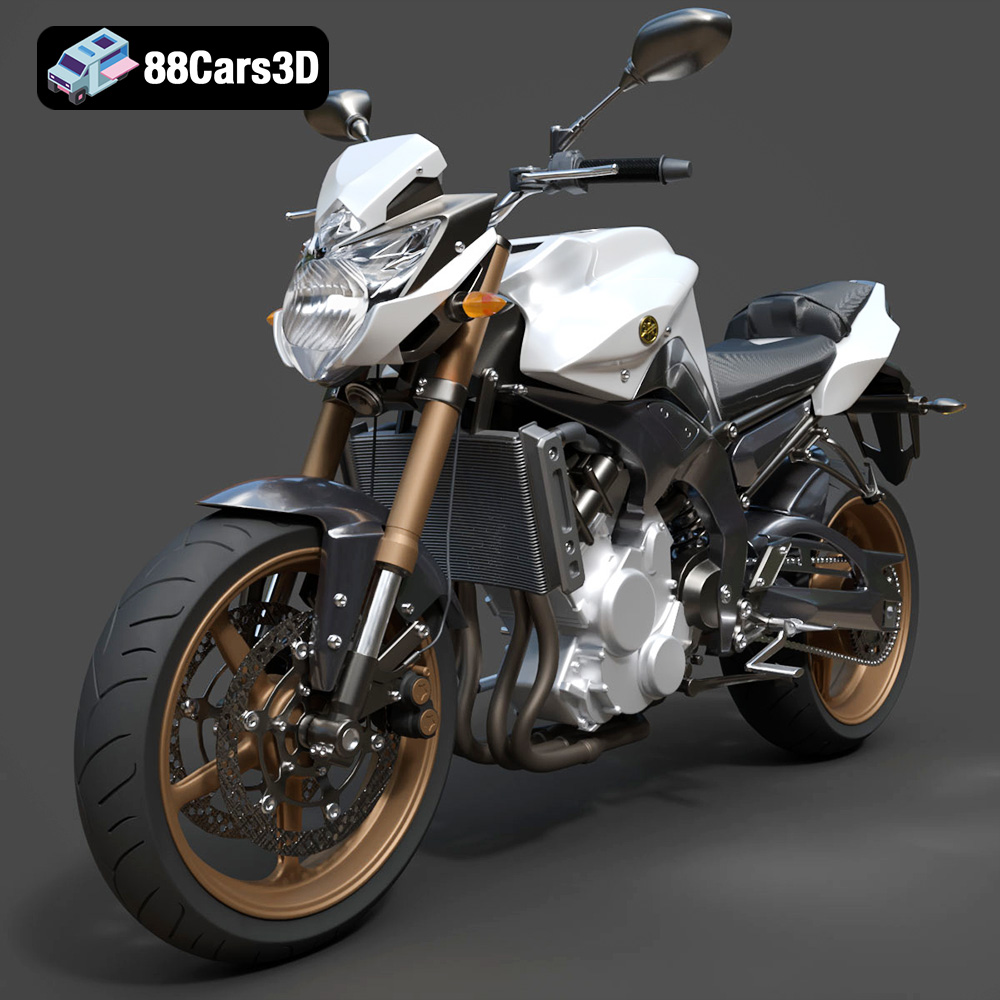
Texture: Yes
Material: Yes
Download the Yamaha FZ8 2011 3D Model featuring clean geometry, realistic detailing, and a fully modeled interior. Includes .blend, .fbx, .obj, .glb, .stl, .ply, .unreal, and .max formats for rendering, simulation, and game development.
Price: $19.99

Texture: Yes
Material: Yes
Download the Yamaha Stryker 2012 3D Model featuring clean geometry, realistic detailing, and a fully modeled interior. Includes .blend, .fbx, .obj, .glb, .stl, .ply, .unreal, and .max formats for rendering, simulation, and game development.
Price: $19.99
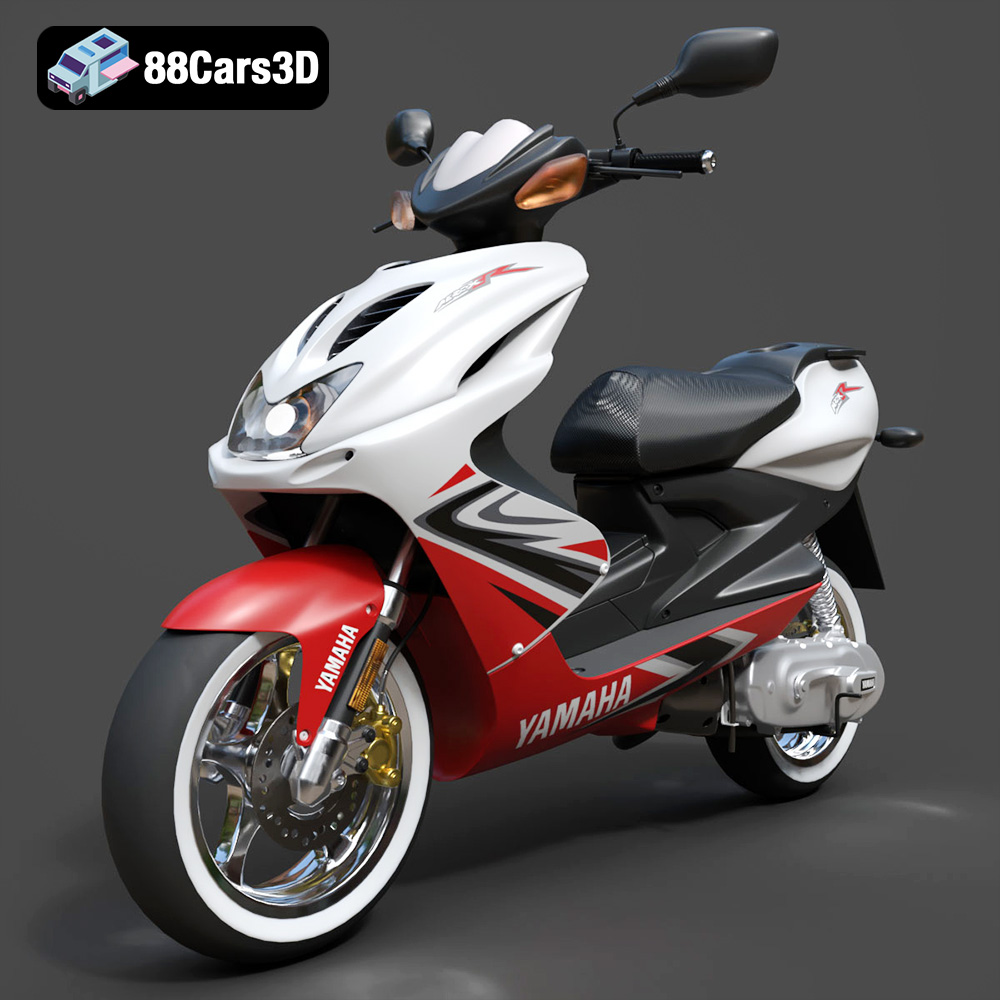
Texture: Yes
Material: Yes
Download the Yamaha Aerox R-002 2024 3D Model featuring clean geometry, realistic detailing, and a fully modeled interior. Includes .blend, .fbx, .obj, .glb, .stl, .ply, .unreal, and .max formats for rendering, simulation, and game development.
Price: $19.99
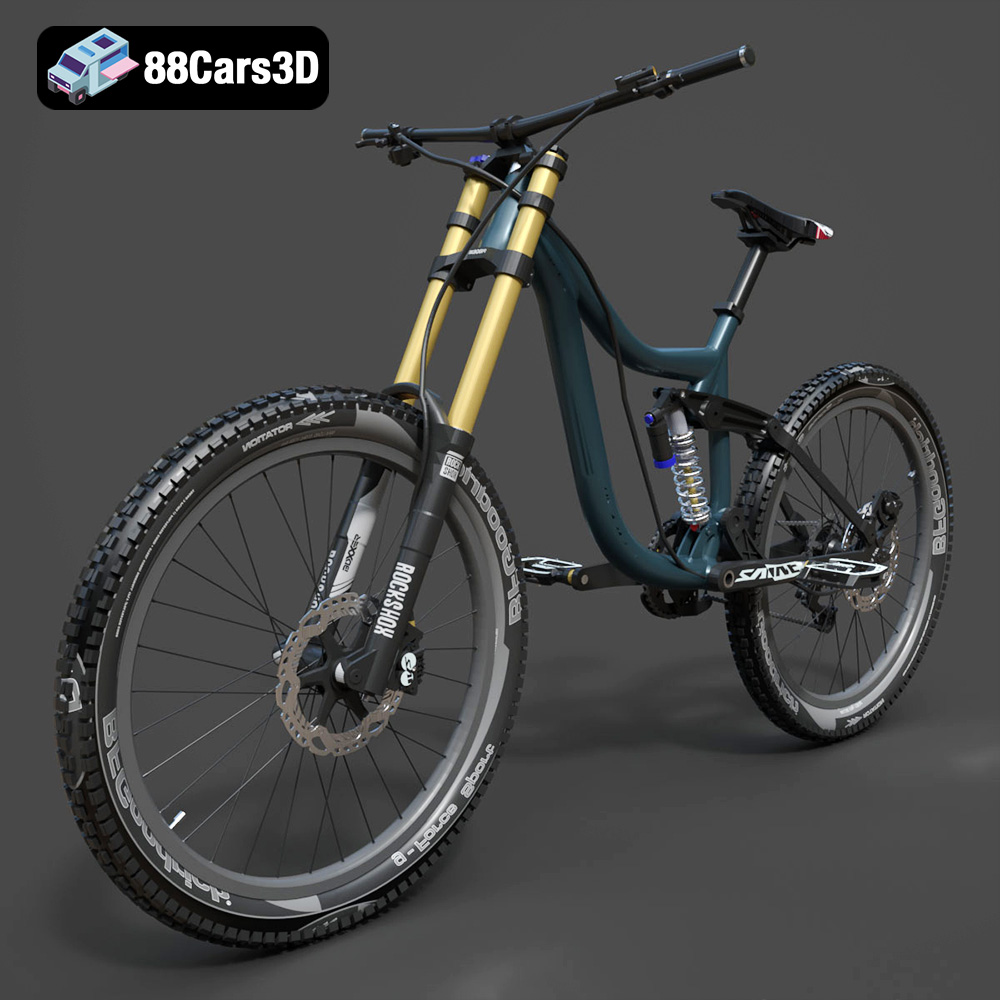
Texture: Yes
Material: Yes
Download the Mototsikly Downhill Bike-002 3D Model featuring clean geometry, realistic detailing, and precise mechanical components. Includes .blend, .fbx, .obj, .glb, .stl, .ply, .unreal, and .max formats for rendering, simulation, and game development.
Price: $19.99

Texture: Yes
Material: Yes
Download the Ford Ambulance AmServ LTD Dusan-002 3D Model featuring a high-detail exterior and interior, realistic textures, and emergency lighting. Includes .blend, .fbx, .obj, .glb, .stl, .ply, .unreal, and .max formats for rendering, simulation, and game development.
Price: $19.99
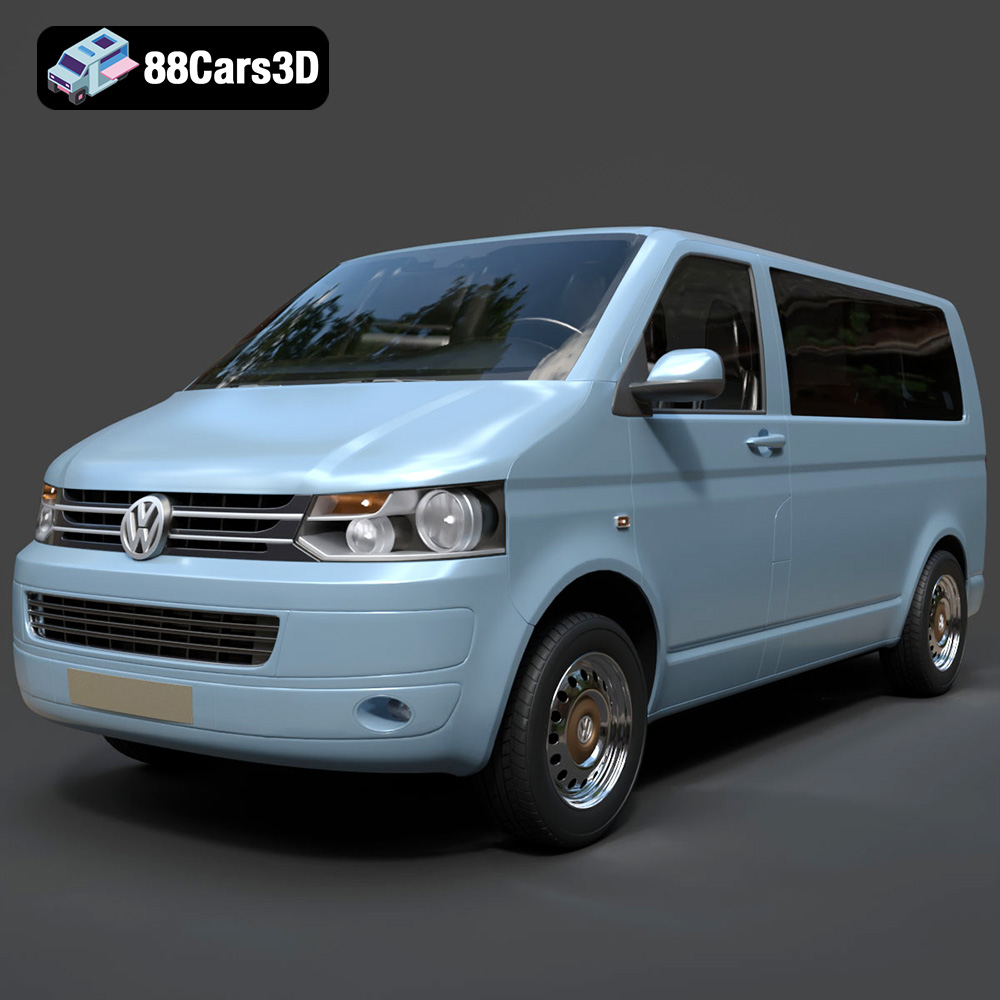
Texture: Yes
Material: Yes
Download the Volkswagen Transporter T5 FL 2010 3D Model featuring clean geometry, realistic detailing, and a fully modeled interior. Includes .blend, .fbx, .obj, .glb, .stl, .ply, .unreal, and .max formats for rendering, simulation, and game development.
Price: $22.99
Texture: Yes
Material: Yes
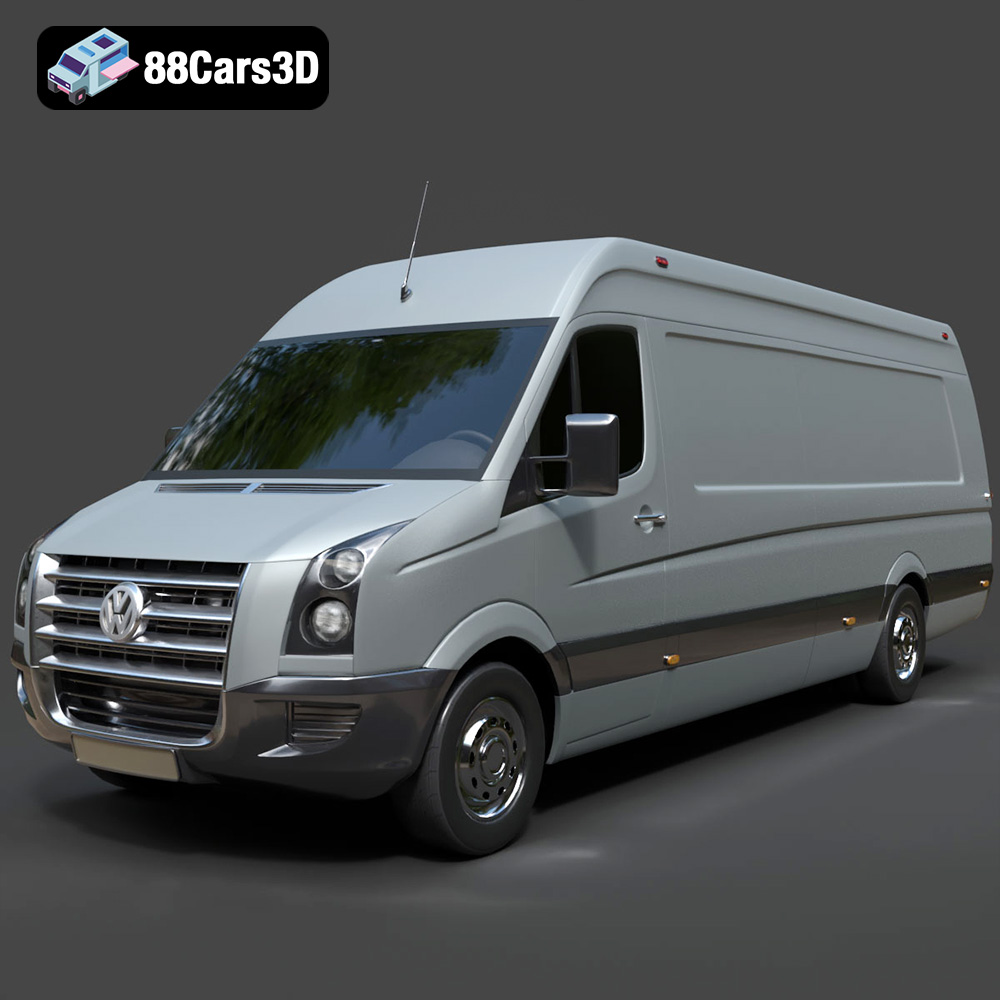
Download the Volkswagen Crafter 2020 3D Model featuring clean geometry, realistic detailing, and a fully modeled interior. Includes .blend, .fbx, .obj, .glb, .stl, .ply, .unreal, and .max formats for rendering, simulation, and game development.
Price: $22.99
Texture: Yes
Material: Yes
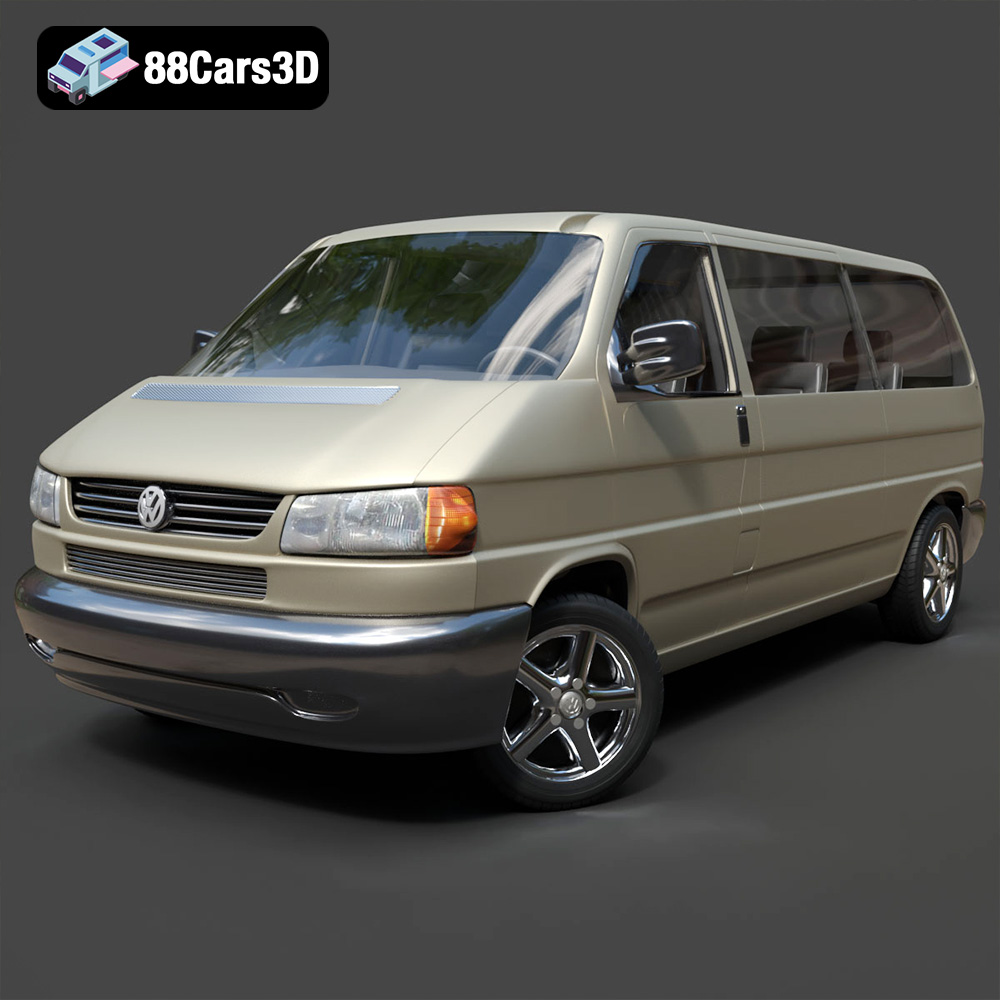
Download the Volkswagen Caravelle 3D Model featuring a detailed exterior, functional interior, and optimized topology. Includes .blend, .fbx, .obj, .glb, .stl, .ply, .unreal, and .max formats for rendering, simulation, and game development.
Price: $23.99
Texture: Yes
Material: Yes
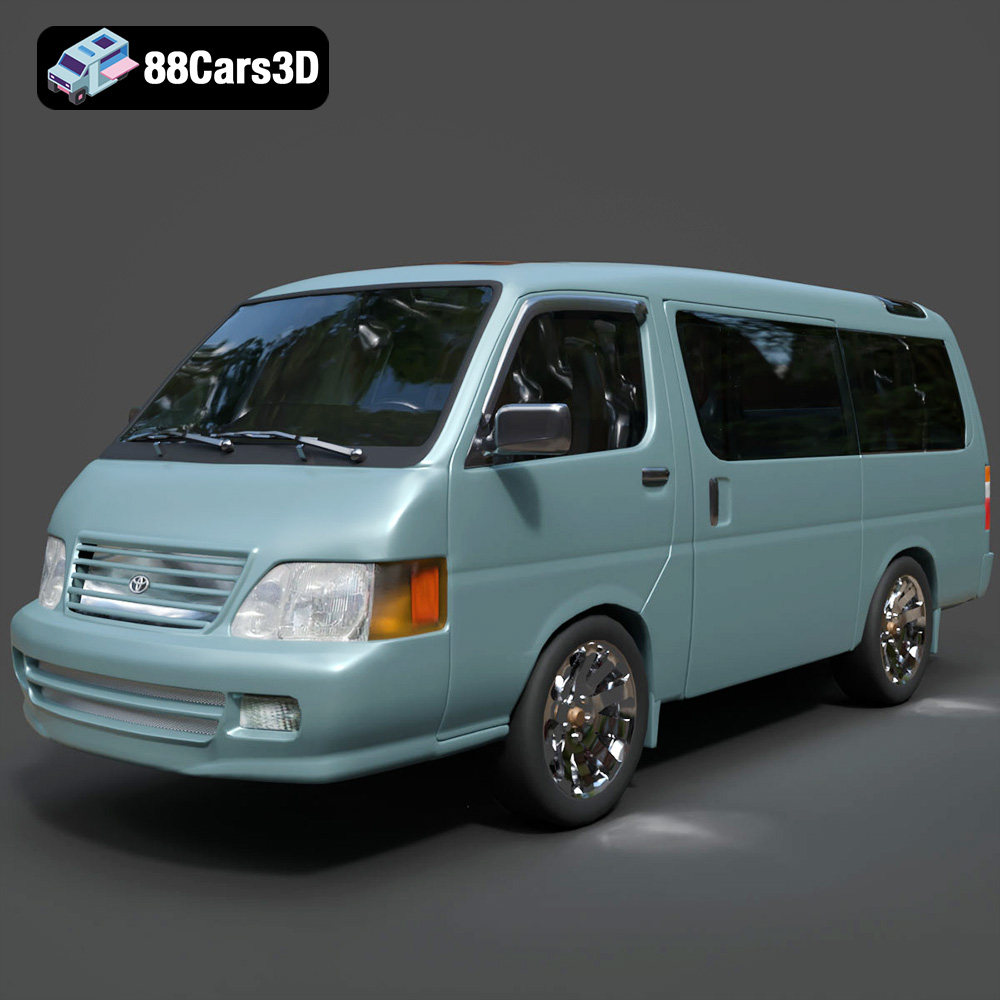
Download the Toyota Hiace 3D Model featuring versatile design and detailed exterior. Includes .blend, .fbx, .obj, .glb, .stl, .ply, .unreal, and .max formats for rendering, simulation, and game development.
Price: $21.99
Texture: Yes
Material: Yes
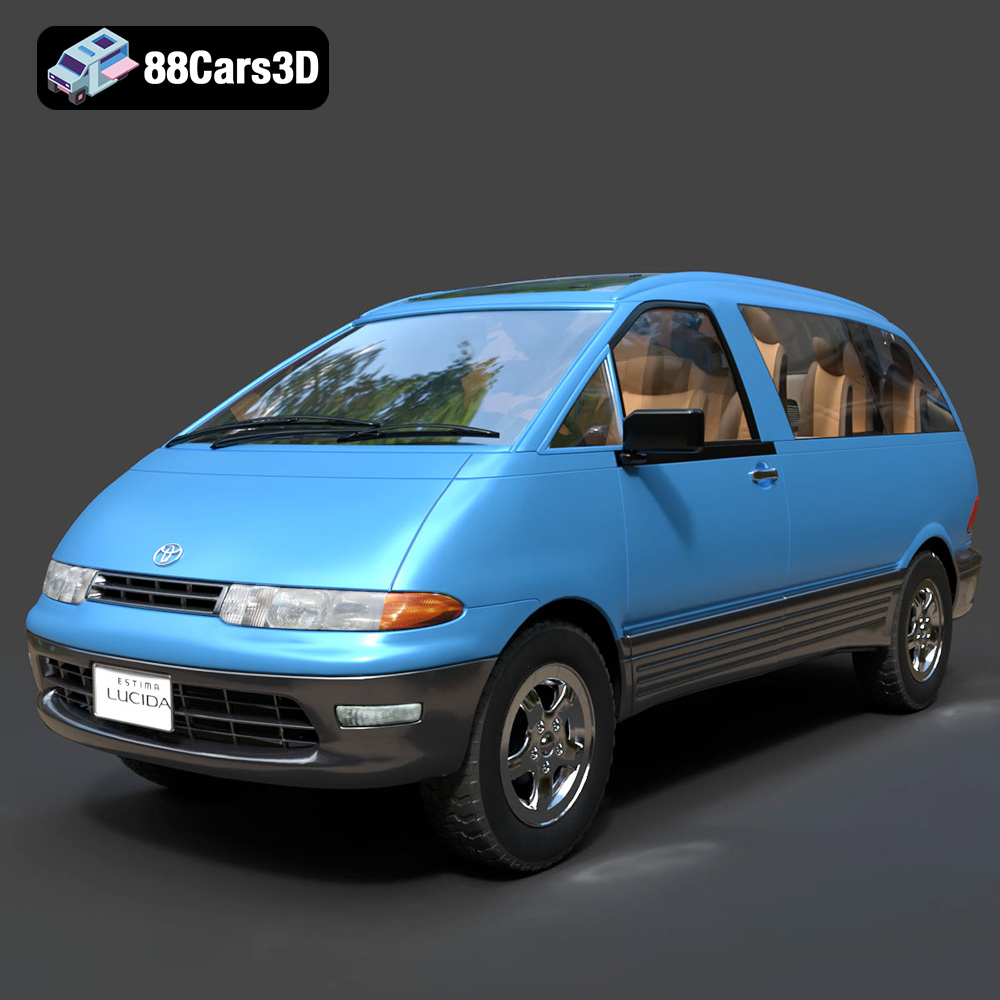
Download the Toyota Estima Lucida 3D Model featuring its iconic compact MPV design, versatile interior, and accurate exterior details. Includes .blend, .fbx, .obj, .glb, .stl, .ply, .unreal, and .max formats for rendering, simulation, and game development.
Price: $24.99

