⚡ FLASH SALE: Get 60% OFF All Premium 3D & STL Models! ⚡

In the expansive realm of real-time rendering and interactive experiences, immersion is paramount. For automotive visualization, game development, and virtual production, merely showcasing a static 3D car model, no matter how meticulously crafted, often falls short of capturing a truly lifelike scene. The environment plays a critical role in storytelling, mood-setting, and visual fidelity. This is where dynamic weather systems in Unreal Engine become invaluable, transforming a simple backdrop into a living, breathing world that interacts with your stunning vehicle assets.
Imagine a gleaming sports car from 88cars3d.com, its PBR materials glinting under a clear sky, suddenly caught in a torrential downpour, raindrops streaking across the windshield, puddles forming on the asphalt, and the metallic paint reflecting the stormy grey clouds. Or perhaps, the same model parked amidst a serene snowfall, a delicate layer of powder accumulating on its hood, fog swirling around its tires. These scenarios aren’t just visually appealing; they evoke emotion, enhance realism, and provide dynamic opportunities for interaction within your Unreal Engine projects.
This comprehensive guide will delve deep into the technical intricacies of building robust and visually stunning dynamic weather systems in Unreal Engine. We’ll cover everything from project setup and material adaptations to sophisticated particle effects, Blueprint scripting, and critical performance optimization. Whether you’re an Unreal Engine developer, a 3D artist focusing on automotive visualization, or a game developer striving for unparalleled realism, you’ll gain actionable insights to elevate your projects and bring your automotive scenes to life with the unpredictable beauty of nature.
Before we conjure storms and blizzards, a solid foundation is essential. Proper project setup ensures that Unreal Engine’s powerful rendering features are optimally configured to handle the demands of dynamic weather. Starting with a blank or game template is often preferred, giving you maximum control over project settings and eliminating unnecessary clutter that might come with other templates. Scalability settings should be considered early on, allowing you to design for a range of hardware targets, which is crucial for real-time applications like games or AR/VR experiences.
Crucially, enabling the right plugins is the first technical step. Navigate to Edit > Plugins and activate essential modules such as ‘Niagara’ for advanced particle systems, ‘Volumetric Clouds’ for realistic sky rendering, and potentially ‘Water’ for dynamic water bodies and ripples. These plugins unlock powerful tools that we’ll extensively utilize for creating rain, snow, fog, and their interactive elements. Your initial environment should typically include a Directional Light (representing the sun/moon), a Skylight for ambient light and reflections, and an Exponential Height Fog actor to establish atmospheric depth. These core lighting and atmospheric elements will be dynamically altered by our weather system, forming the visual backbone of our transitions. For more details on environment setup, consult the official Unreal Engine documentation on lighting and atmosphere.
When you first create a new project, consider starting with the “Blank” template to maintain maximum control. For a game or simulation, ensure your project is set to “Scalable 3D or 2D” and “Desktop/Console” as a target platform. This provides a good balance between visual fidelity and performance. Within the Project Settings, under Rendering, ensure features like “Lumen Global Illumination” and “Nanite Virtualized Geometry” are enabled if you plan to leverage Unreal Engine 5’s cutting-edge rendering capabilities. Lumen will be critical for how dynamic lighting from weather interacts with your scene, especially wet surfaces, while Nanite allows for incredibly detailed car models without traditional polygon budget constraints, perfect for the high-quality assets found on platforms like 88cars3d.com.
For weather, the ‘Niagara’ plugin is non-negotiable for particle effects. ‘Volumetric Clouds’ is vital for realistic cloud cover and storms. If you plan to have large bodies of water or dynamic puddles, the ‘Water’ plugin offers tools for oceans, rivers, and even static water bodies. Beyond these, ‘HDRIBackdrop’ can be useful for initial lighting, though we’ll move towards more dynamic methods. Make sure these are enabled and restart the editor if prompted.
The foundation of any stunning automotive visualization project begins with high-quality 3D car models. When sourcing assets from marketplaces such as 88cars3d.com, you’re acquiring models specifically designed for professional use in Unreal Engine. These models typically feature clean topology, realistic PBR materials (Base Color, Normal, Roughness, Metallic, Ambient Occlusion maps), and optimized UV mapping across multiple file formats like FBX and USD. Importing these models into Unreal Engine is straightforward: drag and drop your FBX or USD file into the Content Browser, ensuring you select appropriate import settings for materials and textures. Pay close attention to the scale, ensuring your vehicle is proportional to Unreal Engine’s default units (1 Unreal Unit = 1 cm). Once imported, create a Blueprint class from your static mesh car model. This allows for easier manipulation, adding components, and scripting interactions later. Verify the PBR materials are correctly assigned and adjust them slightly if needed to ensure they react accurately to the default scene lighting before introducing complex weather effects. This preparation ensures your vehicle assets are primed to dynamically interact with the environmental changes we’re about to create.
Rain is one of the most common and impactful weather elements, adding drama and realism to any scene. Recreating realistic rain in Unreal Engine involves a multi-faceted approach, combining particle effects, material shaders, and environmental adjustments. At the heart of most rain systems lies Niagara, Unreal Engine’s powerful particle effects system. To simulate falling rain, you’ll create a Niagara Emitter with simple billboard particles. Key parameters to tweak include the ‘Spawn Rate’ (e.g., 500-2000 particles per second for light to heavy rain), ‘Velocity’ (downward along Z-axis, with some minor X/Y variation for wind), and ‘Life Span’. For added realism, consider using ‘Mesh Particles’ instead of billboards, assigning a small, stretched raindrop mesh. This gives particles proper volume and allows for accurate reflections. Crucially, enable ‘GPU Particles’ for optimal performance, especially with high spawn counts, ensuring your rain doesn’t cripple your framerate. You can also implement ‘Collision’ modules to have raindrops realistically splash upon hitting surfaces, spawning secondary splash emitters or generating temporary decals. The interplay of rain particles with your 88cars3d.com vehicle will be a major visual draw, emphasizing the high fidelity of your car models. The Unreal Engine documentation on Niagara provides excellent tutorials for getting started.
Start by creating a new Niagara System (right-click in Content Browser > FX > Niagara System). Choose an empty template or a basic “Fountain” template as a starting point. Within the Niagara Emitter, add a ‘Sphere Location’ or ‘Box Location’ module to define the rain’s spawn area, typically encompassing your entire scene or the area of interest for your automotive shot. Adjust its size to match your environment. For the ‘Spawn Rate’ module, experiment with values from 500 to 5000 depending on the desired rain intensity. The ‘Add Velocity’ module should primarily provide a negative Z-axis value (e.g., -2000 to -5000 cm/s) to make rain fall downwards, with slight random X and Y variations for realism. For collision, add a ‘Collision’ module, set it to “World Static” or “All”, and enable “Kill on Collision” or “Spawn Burst on Collision” to trigger splash effects. For these splashes, create a separate, smaller Niagara Emitter that spawns fewer, faster-decaying particles or uses a simple splash decal upon impact. A common technique is to use GPU particles for the main rain and CPU particles for localized splashes, as CPU particles handle precise collisions better.
While particle systems handle the falling rain, the magic of wet surfaces is achieved through clever material work. For your car models and ground surfaces, you’ll want to create material functions or master materials that can dynamically switch between dry and wet states. This typically involves using a ‘Lerp’ (Linear Interpolate) node to blend between different PBR textures. For wetness, we generally want to:
The blend factor for this Lerp can be driven by a ‘Scalar Parameter’ in your material instance, allowing Blueprint to control the wetness intensity. For dynamic ripples, particularly on ground planes, a ‘Panner’ node applied to a normal map of water ripples (using ‘BlendAngleCorrectedNormals’ for proper mixing) can create the illusion of surface disturbance. For realistic car glass, a custom material that samples the scene behind it and applies distortion based on a rain normal map can simulate water running down the windows, enhancing the visual fidelity of your 88cars3d.com vehicles. Ensure these material changes are smooth and visually consistent across all relevant assets.
Beyond rain, snow introduces a different aesthetic, transforming landscapes with soft blankets and glittering flakes. Creating dynamic snowfall in Unreal Engine follows principles similar to rain but with distinct visual and material properties. Niagara remains our primary tool for particle effects, but the behavior of snow particles needs to reflect their lighter, more delicate nature. Snowflakes typically fall slower, drift more, and accumulate on surfaces. The true challenge and artistic opportunity with snow lie in simulating its accumulation and creating realistic frosty and icy materials that react to light in a unique way.
For snowfall, your Niagara Emitter will again use ‘GPU Particles’ for efficiency. Adjust the ‘Spawn Rate’ to be potentially higher than rain (e.g., 1000-8000 particles/sec) to create dense blizzards, but use a much slower ‘Velocity’ (e.g., -100 to -500 cm/s on Z-axis) and significantly more random X/Y velocity for a natural drifting effect. A ‘Curl Noise Force’ module can be added to create swirling patterns. The particle material should be a translucent, white material, perhaps with a subtle normal map for snowflake shape. For snow accumulation, the magic happens in the materials. You’ll want to create a master material or material function that uses ‘World Aligned Blend’ to apply a snow layer to upward-facing surfaces. This material should include a ‘Base Color’ for white snow, a ‘Roughness’ value that gives it a diffuse, slightly sparkly quality, and a ‘Normal Map’ for subtle snow texture. The blend factor for this world-aligned material can be a dynamic parameter controlled by Blueprint, allowing you to gradually accumulate snow depth over time. For high-fidelity scenes, you can even explore tessellation or displacement maps on the snow material to give it actual geometric depth, though this comes with a performance cost.
The snow accumulation shader is a cornerstone of realistic winter scenes. This shader typically works by blending your base material (e.g., the car paint or road asphalt) with a snow material, driven by the world-space normal of the surface. A ‘World Aligned Blend’ node in the Unreal Engine Material Editor is perfect for this. You feed it your base material and your snow material, and it will automatically apply the snow material to surfaces facing predominantly upwards (Z-axis). To control the snow depth and coverage, you can use a ‘Scalar Parameter’ to adjust the blend factor’s bias or contrast, allowing Blueprint to dynamically increase or decrease the snow level. For more advanced accumulation, consider sampling a heightmap texture generated from a runtime capture or a simplified physics simulation. Icy materials, on the other hand, require a different approach. They typically have very low ‘Roughness’ values, making them highly reflective, almost mirror-like. A subtle blue tint in the ‘Base Color’ or ‘Specular’ can enhance the icy look, and a fine-detail normal map that mimics frost patterns can break up the reflections and add realism. For glass surfaces, a separate material can be created to apply a frosted texture or normal map, simulating frozen condensation, dynamically revealed by a Blueprint-driven defroster or wiper simulation.
Weather is more than just precipitation; it’s also about the atmosphere. Fog and clouds play a pivotal role in setting the mood, obscuring distant elements, and dramatically changing the lighting of a scene. Unreal Engine’s volumetric tools, combined with careful lighting adjustments, allow us to create incredibly convincing atmospheric effects that seamlessly integrate with our dynamic rain and snow systems. These elements add immense depth and realism to automotive visualization, making static renders feel truly alive.
Unreal Engine’s Volumetric Clouds are incredibly powerful for creating realistic, dynamic cloud formations. Enabled via a component on your Directional Light (representing the sun) and a separate ‘Volumetric Clouds’ actor in your scene, these clouds interact physically with light, casting shadows and scattering light in a physically plausible way. For a clear day, you might have sparse, high-altitude clouds. As a storm approaches, Blueprint can smoothly transition parameters like ‘Coverage’, ‘Density’, and ‘Anisotropy’ to create heavy, dark storm clouds that dramatically obscure the sun and diffuse light. Similarly, the ‘Sky Atmosphere’ actor works in conjunction with your Directional Light and Skylight to simulate atmospheric scattering, producing realistic sky colors, sunrises, and sunsets. To integrate weather, you would adjust parameters like ‘Rayleigh Scattering Scale’ or ‘Mie Scattering Scale’ to simulate haze or fog within the atmosphere, making the distant environment feel more dense and moody. For example, during heavy rain or snow, increasing the ‘Mie Scattering Scale’ can simulate the reduced visibility, making your 88cars3d.com vehicle stand out against a muted background.
While Volumetric Clouds handle the upper atmosphere, ‘Exponential Height Fog’ and ‘Volumetric Fog’ are crucial for ground-level atmospheric effects. Exponential Height Fog creates a uniform fog layer that increases in density with distance and height, excellent for broad atmospheric perspective. Key parameters like ‘Fog Density’ and ‘Fog Height Falloff’ can be dynamically adjusted via Blueprint to simulate varying levels of mist or haze, crucial for integrating with rain or snow. For more localized, three-dimensional fog effects, ‘Volumetric Fog’ (enabled within the Exponential Height Fog actor) is indispensable. Volumetric Fog uses actual voxels to represent fog, allowing light to scatter realistically through it, creating stunning crepuscular rays and localized fog banks. This is particularly effective for simulating ground fog, mist rising from wet surfaces, or dense fog banks during a snowstorm. By dynamically adjusting the ‘Fog Inscattering Color’, ‘Albedo’, and ‘Extinction Scale’ within the Exponential Height Fog actor, you can achieve nuanced and believable transitions from clear conditions to dense, visibility-reducing fog, enhancing the overall realism of your automotive environments.
The true magic of dynamic weather lies not just in the particles falling from the sky, but how the environment, and especially your detailed car models, react to it. A truly convincing weather system requires surfaces to dynamically change their appearance, reflecting wetness, snow accumulation, or ice. This involves sophisticated material work within the Unreal Engine Material Editor, leveraging the PBR pipeline and dynamic parameters to create realistic and believable visual transitions for your 88cars3d.com vehicles.
The high-quality PBR materials of models from 88cars3d.com provide an excellent starting point for weather effects. To adapt them, you’ll need to create material instances of your car’s primary materials (paint, glass, plastic, rubber) and expose parameters that Blueprint can control. For wetness, the core principle is to decrease roughness and potentially darken the base color. You can achieve this by having two sets of PBR textures (dry and wet) and ‘Lerping’ between them based on a ‘WetnessAmount’ scalar parameter. A more advanced approach involves a custom material function that takes the dry PBR inputs and calculates wetness by clamping roughness, subtly desaturating color, and blending in a faint normal map for water film. For snow accumulation, as discussed earlier, a ‘World Aligned Blend’ is crucial. This will blend a snow material on top of your existing car material, ensuring snow accumulates on horizontal surfaces like the hood, roof, and trunk. For dirt, a similar blending approach can be used, potentially with a ‘Noise’ texture or ‘Mask’ to apply grime irregularly, simulating how dirt splashes onto the vehicle. The key is to avoid simply replacing textures and instead blend effects, maintaining the original material’s characteristics while applying the weather influence.
Professional Tip: Material Layering For complex scenarios, consider using Unreal Engine’s ‘Material Layering’ system. This allows you to define reusable material layers (e.g., “Dry Car Paint,” “Wet Overlay,” “Snow Accumulation,” “Dirt Layer”) and blend them non-destructively. This significantly streamlines material management and allows for more intricate and realistic layering of weather effects onto your automotive assets.
Beyond surface properties, dynamic decals and effects enhance realism. For rain, ‘Decal Actors’ can be spawned via Blueprint at impact points, projecting animated ripple textures onto surfaces where Niagara particles collide. These temporary decals give a strong visual cue of impact. Similarly, for snow and mud, ‘Deferred Decals’ can be used to project tire tracks. This involves creating a material that uses the mesh’s normal and depth to project a tire track texture, blending it with the ground material. When a vehicle from 88cars3d.com drives over snowy terrain, Blueprint can detect the collision and spawn these decals, adjusting their opacity and blend mode to simulate fresh tracks. These decals can even have a slightly altered normal map to give the impression of compressed snow or displaced mud. For larger puddles, a simple mesh plane with an animated water material, featuring subtle normal map driven ripples via a ‘Panner’ node, can be dynamically placed or revealed by the weather system. The combination of particle splashes, material wetness, and projected decals creates a truly immersive and reactive environment.
For in-car perspectives or close-ups, the windshield’s reaction to weather is critical. A sophisticated wiper blade simulation can dramatically enhance realism. This involves a Blueprint-driven animation of the wiper arms and blades. The visual effect of clearing rain from the windshield is achieved through a custom material applied to the car’s glass. This material would typically use a ‘SceneTexture’ node to sample the scene behind the glass, then apply a rain droplet normal map or distortion texture. As the wiper blade animates, a ‘Mask’ texture (representing the wiper’s path) is used to ‘Lerp’ between the wet, distorted glass material and a clear, dry glass material. This creates the illusion of the wiper physically clearing the water. For snow, a similar masking technique could reveal clear glass as the wiper pushes snow away. This level of detail, especially on a high-fidelity car model, elevates the sense of presence and interaction, making the driver feel truly inside the vehicle.
Particle effects and material shaders lay the groundwork, but Blueprint visual scripting is the conductor that orchestrates these elements into a cohesive, dynamic weather system. Blueprint allows us to define different weather states, smoothly transition between them, and respond to events, making your Unreal Engine scene truly interactive. This is where the engineering of your weather system comes to life, allowing for intricate control over every visual and atmospheric parameter.
A ‘State Machine’ is an incredibly effective way to manage dynamic weather. You would define different weather states such as ‘Clear’, ‘Light Rain’, ‘Heavy Rain’, ‘Snowfall’, ‘Foggy’, and ‘Storm’. Each state would have a defined set of parameters for lighting (Directional Light intensity, color, Skylight intensity), atmospheric effects (Fog density, cloud coverage), and particle system properties (rain/snow spawn rate, velocity). In Blueprint, you can create an Enum (enumeration) to represent these states. A central ‘Weather Manager’ Blueprint actor would house the logic. When a state change is triggered (e.g., from ‘Clear’ to ‘Light Rain’), the Weather Manager would execute a function that smoothly interpolates between the current state’s parameters and the target state’s parameters over a defined duration. This smooth interpolation, often handled by ‘Timelines’ or ‘Lerp’ nodes, prevents jarring visual pops and maintains immersion. For instance, transitioning from ‘Clear’ to ‘Rain’ might involve decreasing sun intensity, darkening sky atmosphere colors, increasing fog density, and gradually increasing the rain particle spawn rate and wetness material parameter.
Within your Weather Manager Blueprint, you’ll expose a multitude of variables as ‘Float’ or ‘Vector’ parameters, corresponding to the material instance parameters (e.g., ‘WetnessAmount’, ‘SnowAmount’), Niagara system parameters (e.g., ‘Rain_SpawnRate’, ‘Snow_Density’), and lighting/atmospheric actor properties (e.g., ‘DirectionalLight_Intensity’, ‘Fog_Density’). When transitioning between states, ‘Timelines’ are invaluable. A Timeline node can output a float value over time (e.g., 0 to 1 over 10 seconds), which you can then feed into ‘Lerp’ (Linear Interpolate) nodes to smoothly blend between the start and end values of your parameters. For example, a Timeline progressing from 0 to 1 over 30 seconds could drive the ‘alpha’ input of a Lerp node, where A is the ‘DryRoughness’ and B is the ‘WetRoughness’, effectively animating the wetness on your car paint. Event-driven weather changes could be triggered by time of day (e.g., a chance of rain after 3 PM), player interaction (e.g., a “toggle weather” button in an automotive configurator), or game events. This allows for truly dynamic and interactive experiences, where the environment responds intelligently to the scenario, enhancing the presentation of your 88cars3d.com vehicle in any given moment.
Example: Automotive Configurator Integration Imagine an automotive configurator built around one of 88cars3d.com’s premium car models. Using Blueprint, you could implement buttons or sliders that allow the user to instantly change the time of day, toggle different weather presets (sunny, rainy, snowy), or even control the intensity of effects like ground fog. This interactivity not only showcases the vehicle in various conditions but also demonstrates the robustness of your Unreal Engine environment.
Creating visually stunning weather effects often comes with a performance cost. For real-time applications like games, AR/VR experiences, or high-frame-rate automotive configurators, optimization is not optional—it’s essential. A beautiful but unplayable scene serves no purpose. We need to employ a range of strategies to ensure our dynamic weather systems run efficiently across target hardware, leveraging Unreal Engine’s advanced features responsibly.
Level of Detail (LODs) are critical for all assets, including particle systems. For Niagara emitters, implement LODs to reduce particle count, complexity, and even switch to simpler materials for distant rain or snow. For example, a dense rain system might spawn 2000 particles per second up close, but switch to 500 particles per second with a simpler material at 5000 units distance, and then eventually cull entirely. Utilize ‘Culling’ techniques like ‘Frustum Culling’ and ‘Occlusion Culling’ to ensure particles and other weather-related geometry are only rendered when visible to the camera. For environmental assets and your 88cars3d.com car models, ensure proper LODs are generated. Unreal Engine’s built-in ‘LOD Group’ settings and ‘HLODs’ (Hierarchical LODs) for large outdoor environments can significantly reduce draw calls and vertex counts for distant objects, ensuring that precious GPU resources are primarily focused on the immediate environment and high-fidelity details of your vehicle.
Practical Tip: Particle System Bounds Always ensure your Niagara System’s ‘Bounds’ are correctly set. If bounds are too small, particles might be prematurely culled; if too large, the system might be rendered even when entirely off-screen. Use ‘Fixed Bounds’ for predictable behavior in large-scale weather effects.
Unreal Engine 5’s Nanite and Lumen technologies are game-changers, but they also require careful consideration for dynamic weather. Nanite virtualized geometry allows for incredibly high-polygon car models and detailed environments from 88cars3d.com without traditional LOD concerns for static meshes. However, dynamic meshes or those with complex material blending (like some snow accumulation shaders) might still benefit from traditional LODs or optimized material setups if not fully compatible with Nanite. Lumen Global Illumination and Reflections provide stunning real-time lighting, making wet surfaces and icy reflections incredibly realistic. However, Lumen is computationally intensive. For lower-end hardware or specific applications (e.g., mobile AR/VR), consider fallback lighting solutions or lower Lumen quality settings. Implement ‘Scalability Settings’ in your project. This allows users to choose between ‘Epic’, ‘High’, ‘Medium’, and ‘Low’ quality settings, dynamically adjusting particle counts, material complexity, shadow quality, and Lumen/Nanite settings based on their hardware capabilities. This ensures a broad audience can experience your automotive scene, even if at reduced fidelity.
Optimization is an iterative process. You must constantly ‘Profile’ your scene to identify bottlenecks. Unreal Engine provides powerful profiling tools:
Use these tools regularly as you build your weather system. For example, if ‘Stat GPU’ shows high ‘Translucency’ costs, you might need to optimize your rain/snow particle materials or reduce their spawn count. If ‘Stat Niagara’ indicates expensive ‘Collision’ calculations, consider simplifying collision logic or using fewer collision-enabled particles. Debugging material issues with the ‘Material Debugger’ and ‘Shader Complexity’ view mode (Alt+8) can help you identify overly complex or expensive material nodes. Continually test your dynamic weather system across different hardware configurations and make adjustments to particle counts, material complexity, and lighting parameters until you achieve a smooth and visually appealing experience that brings your 88cars3d.com models to life without compromise.
The journey of creating dynamic weather systems in Unreal Engine is a deeply rewarding one, blending technical mastery with artistic vision. We’ve explored the foundational project setup, delved into the intricacies of crafting realistic rain and snowfall with Niagara, and unveiled the secrets behind atmospheric depth using volumetric fog and clouds. Crucially, we’ve highlighted how to make your high-quality automotive assets from 88cars3d.com truly react to these environmental changes through PBR material adaptations, dynamic decals, and interactive elements like wiper simulations. Finally, we’ve emphasized the power of Blueprint for orchestrating these complex systems and the paramount importance of performance optimization to deliver stunning, playable experiences.
Implementing dynamic weather transforms static automotive scenes into living, breathing narratives. It enhances realism, evokes emotion, and provides endless opportunities for creative storytelling in games, virtual production, and real-time visualization. By mastering these techniques, you can showcase the meticulously detailed 3D car models from 88cars3d.com in an unprecedented light, from the dazzling reflections of a rain-soaked street to the serene beauty of a snow-covered landscape. The real-time capabilities of Unreal Engine, combined with your creativity and the foundational quality of optimized game assets, empower you to build truly immersive worlds.
The next step is yours: start experimenting. Download a high-quality 3D car model from 88cars3d.com, set up your Unreal Engine project, and begin building your own dynamic weather system. Play with particle effects, tweak material parameters, and script captivating transitions. The possibilities are limitless, and with the tools and knowledge gained, you are now equipped to breathe life into your virtual automotive dreams.
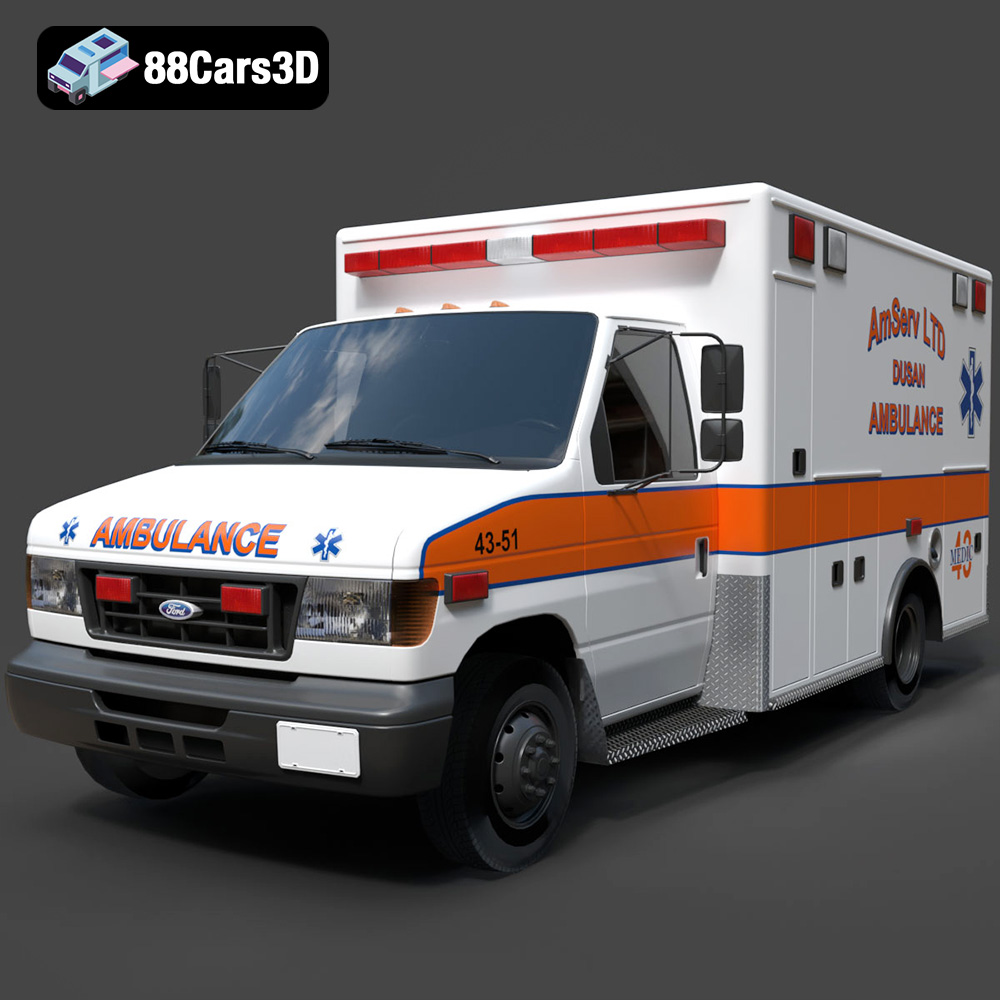
Texture: Yes
Material: Yes
Download the Ford Ambulance AmServ LTD Dusan-002 3D Model featuring a high-detail exterior and interior, realistic textures, and emergency lighting. Includes .blend, .fbx, .obj, .glb, .stl, .ply, .unreal, and .max formats for rendering, simulation, and game development.
Price: $19.99
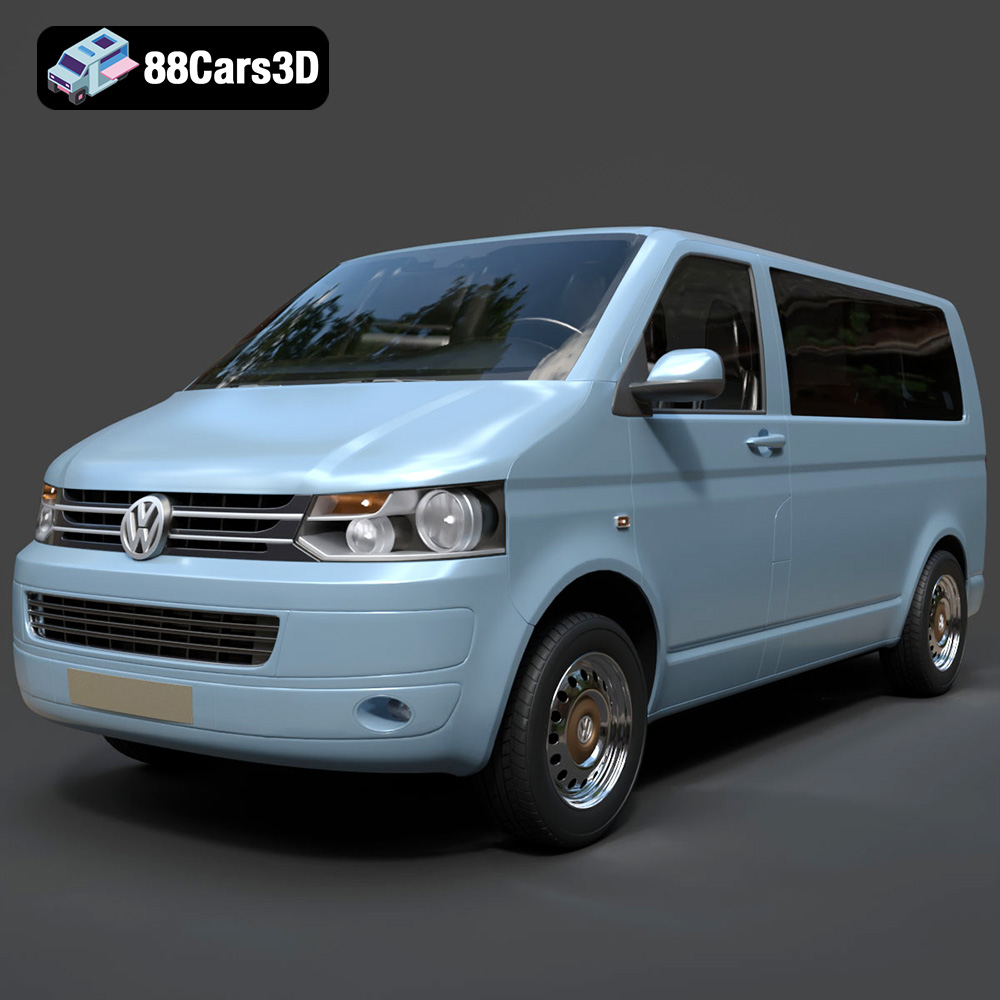
Texture: Yes
Material: Yes
Download the Volkswagen Transporter T5 FL 2010 3D Model featuring clean geometry, realistic detailing, and a fully modeled interior. Includes .blend, .fbx, .obj, .glb, .stl, .ply, .unreal, and .max formats for rendering, simulation, and game development.
Price: $22.99
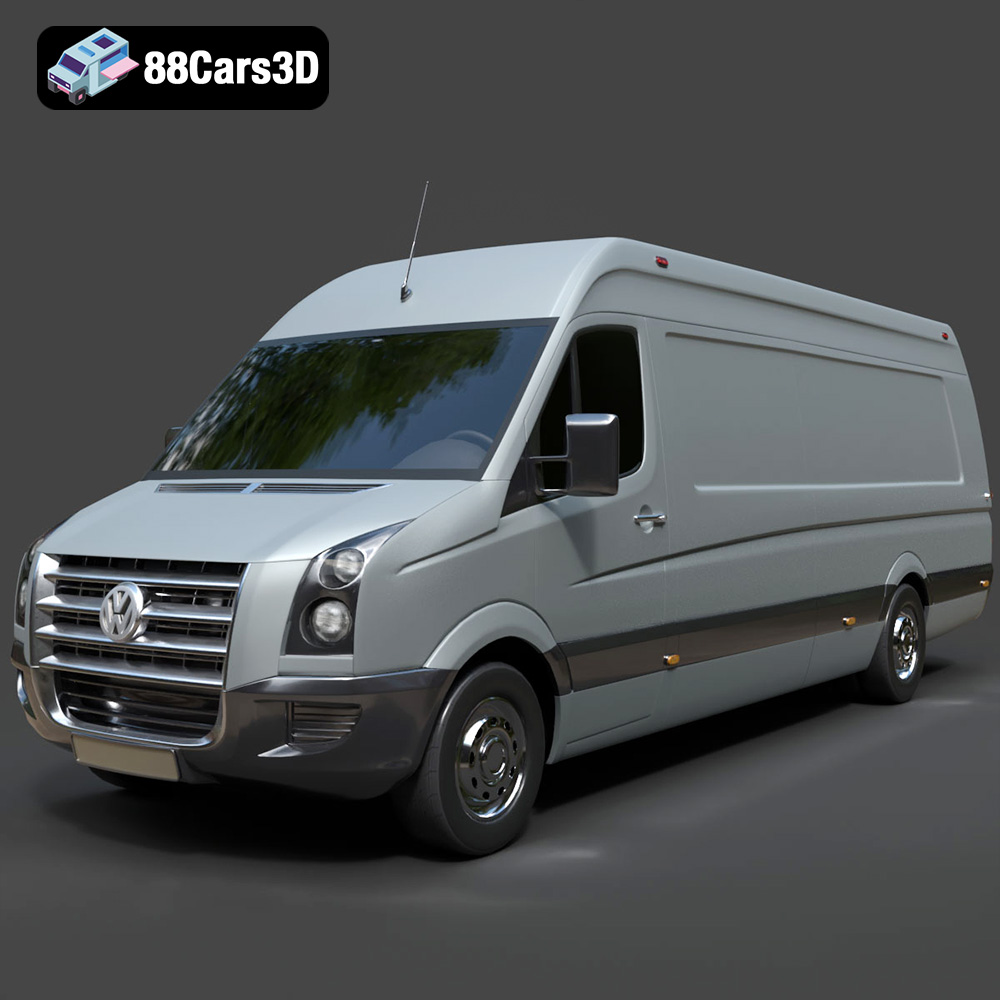
Texture: Yes
Material: Yes
Download the Volkswagen Crafter 2020 3D Model featuring clean geometry, realistic detailing, and a fully modeled interior. Includes .blend, .fbx, .obj, .glb, .stl, .ply, .unreal, and .max formats for rendering, simulation, and game development.
Price: $22.99
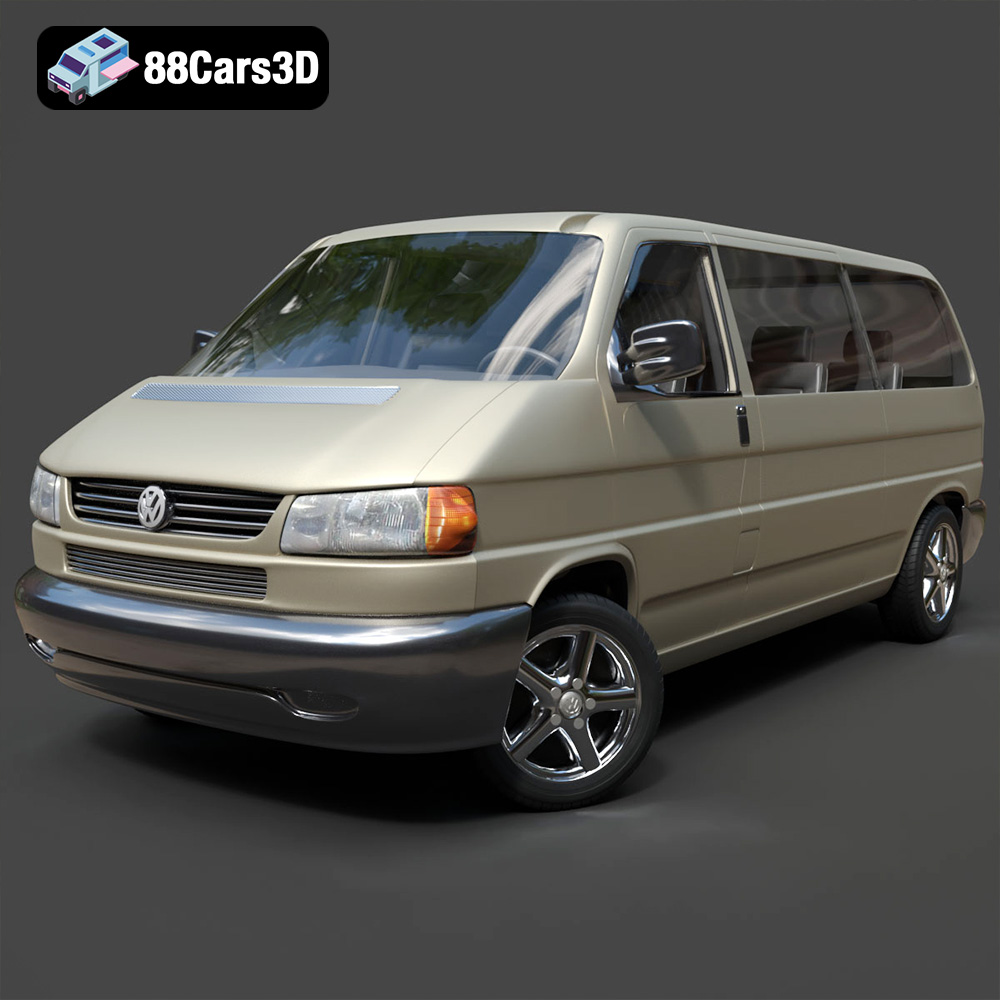
Texture: Yes
Material: Yes
Download the Volkswagen Caravelle 3D Model featuring a detailed exterior, functional interior, and optimized topology. Includes .blend, .fbx, .obj, .glb, .stl, .ply, .unreal, and .max formats for rendering, simulation, and game development.
Price: $23.99
Texture: Yes
Material: Yes
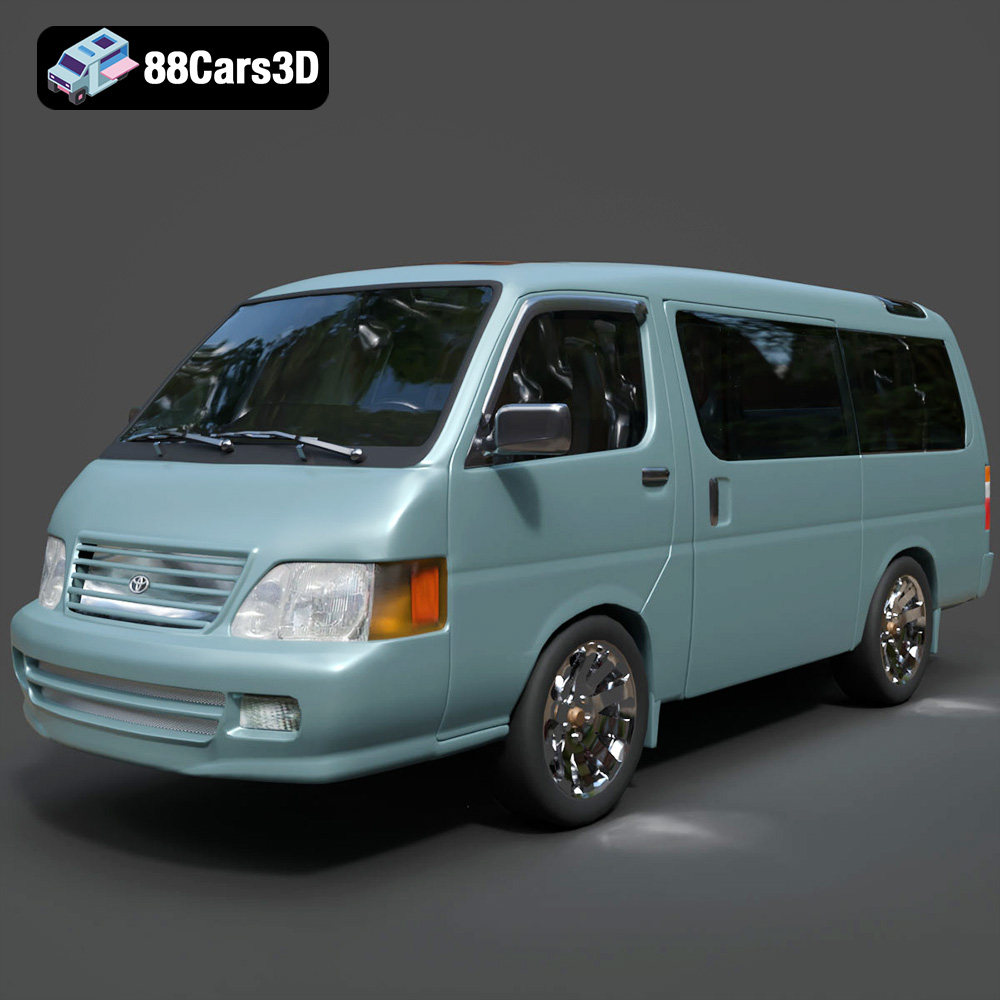
Download the Toyota Hiace 3D Model featuring versatile design and detailed exterior. Includes .blend, .fbx, .obj, .glb, .stl, .ply, .unreal, and .max formats for rendering, simulation, and game development.
Price: $21.99
Texture: Yes
Material: Yes
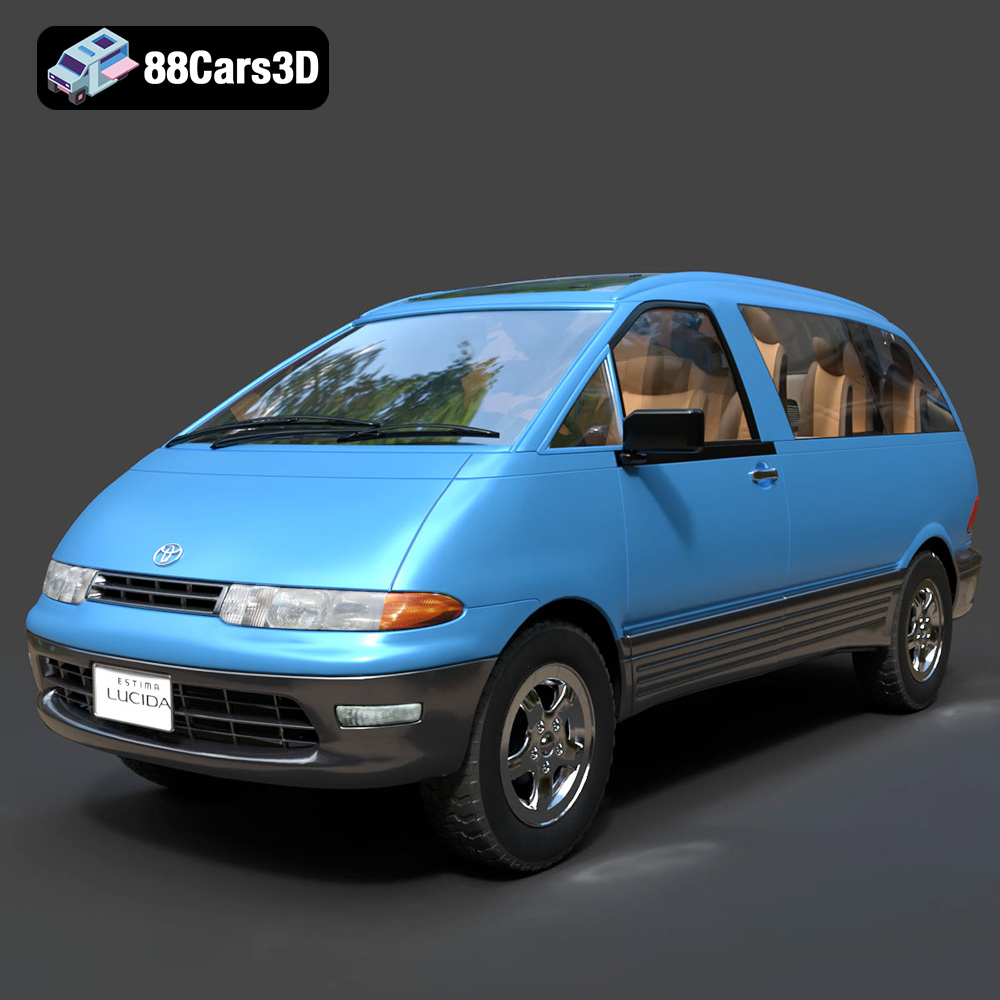
Download the Toyota Estima Lucida 3D Model featuring its iconic compact MPV design, versatile interior, and accurate exterior details. Includes .blend, .fbx, .obj, .glb, .stl, .ply, .unreal, and .max formats for rendering, simulation, and game development.
Price: $24.99

Texture: Yes
Material: Yes
Download the Toyota Alphard 3D Model featuring a detailed luxury minivan design with an accurate exterior and interior. Includes .blend, .fbx, .obj, .glb, .stl, .ply, .unreal, and .max formats for rendering, simulation, and game development.
Price: $21.99
Texture: Yes
Material: Yes
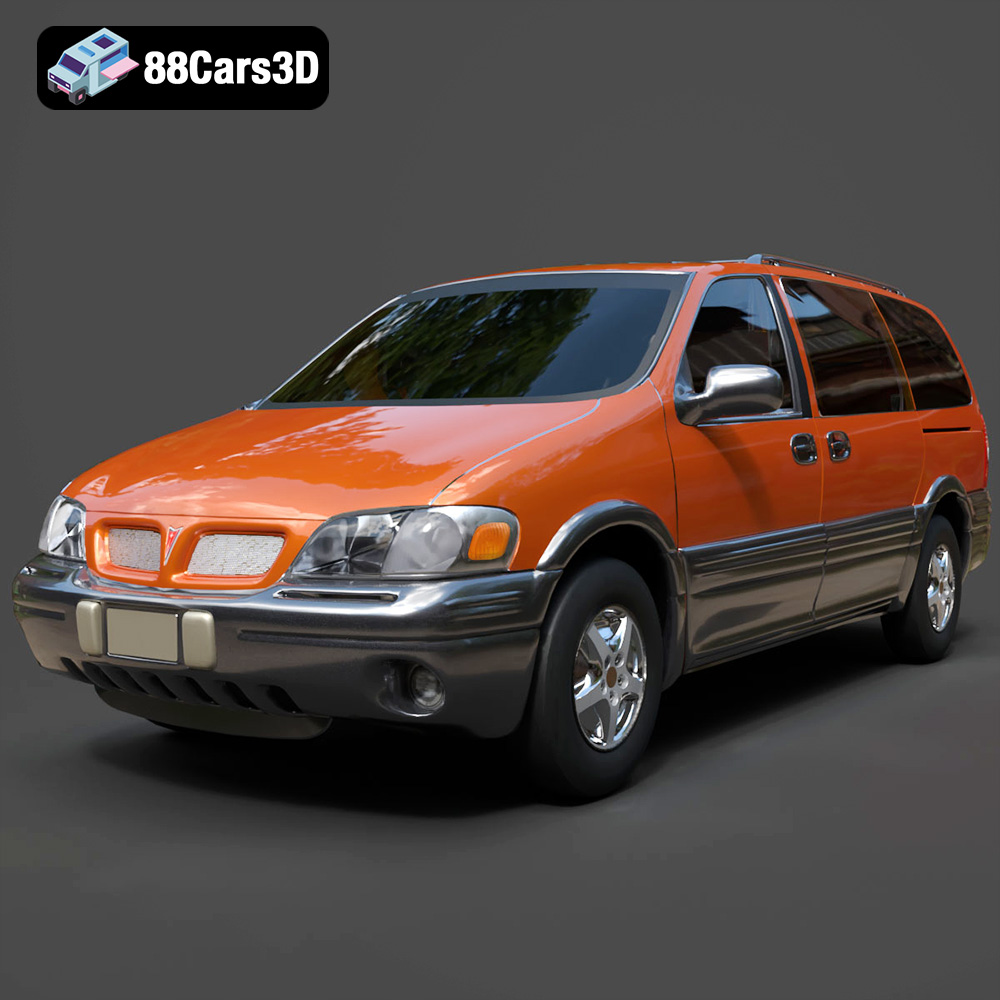
Download the Pontiac Montana 1998 3D Model featuring a detailed exterior, functional interior, and optimized mesh. Includes .blend, .fbx, .obj, .glb, .stl, .ply, .unreal, and .max formats for rendering, simulation, and game development.
Price: $21.99
Texture: Yes
Material: Yes
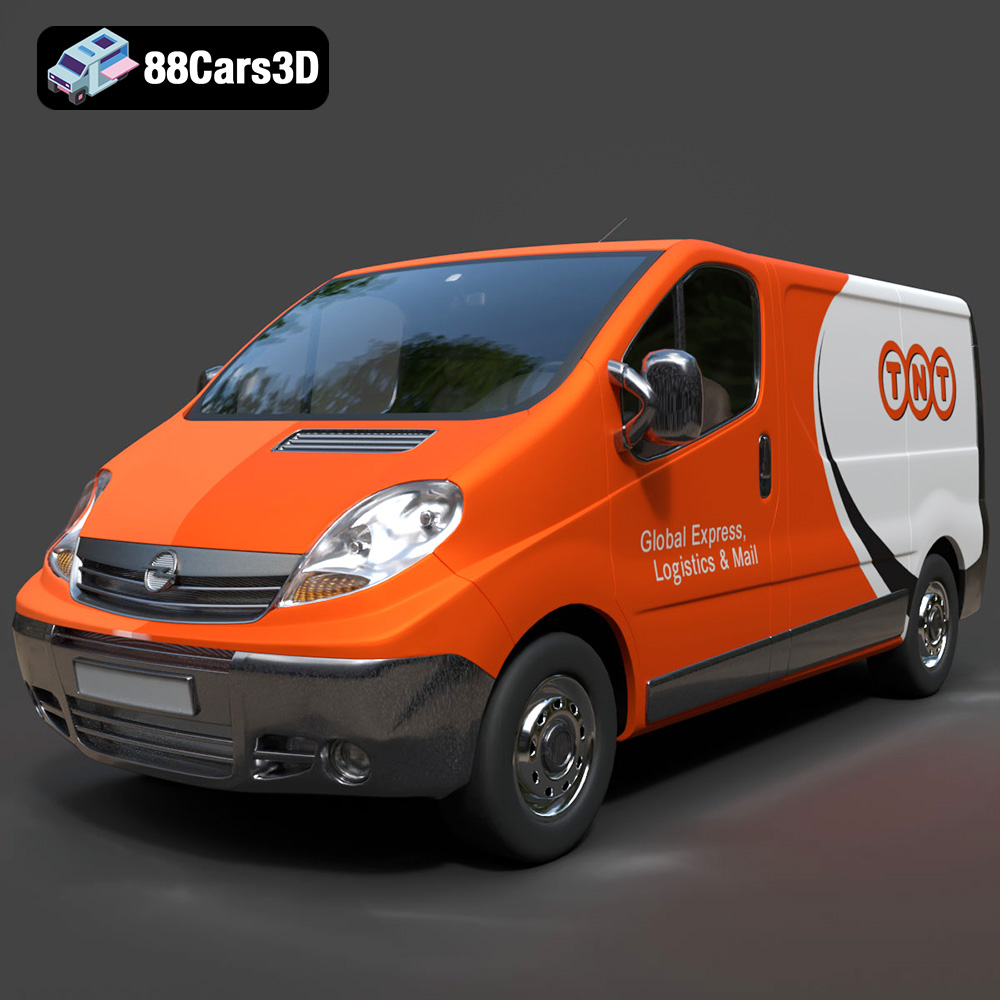
Download the Opel Vivaro 3D Model featuring a versatile commercial van design with balanced detailing. Includes .blend, .fbx, .obj, .glb, .stl, .ply, .unreal, and .max formats for rendering, simulation, and game development.
Price: $21.99
Texture: Yes
Material: Yes
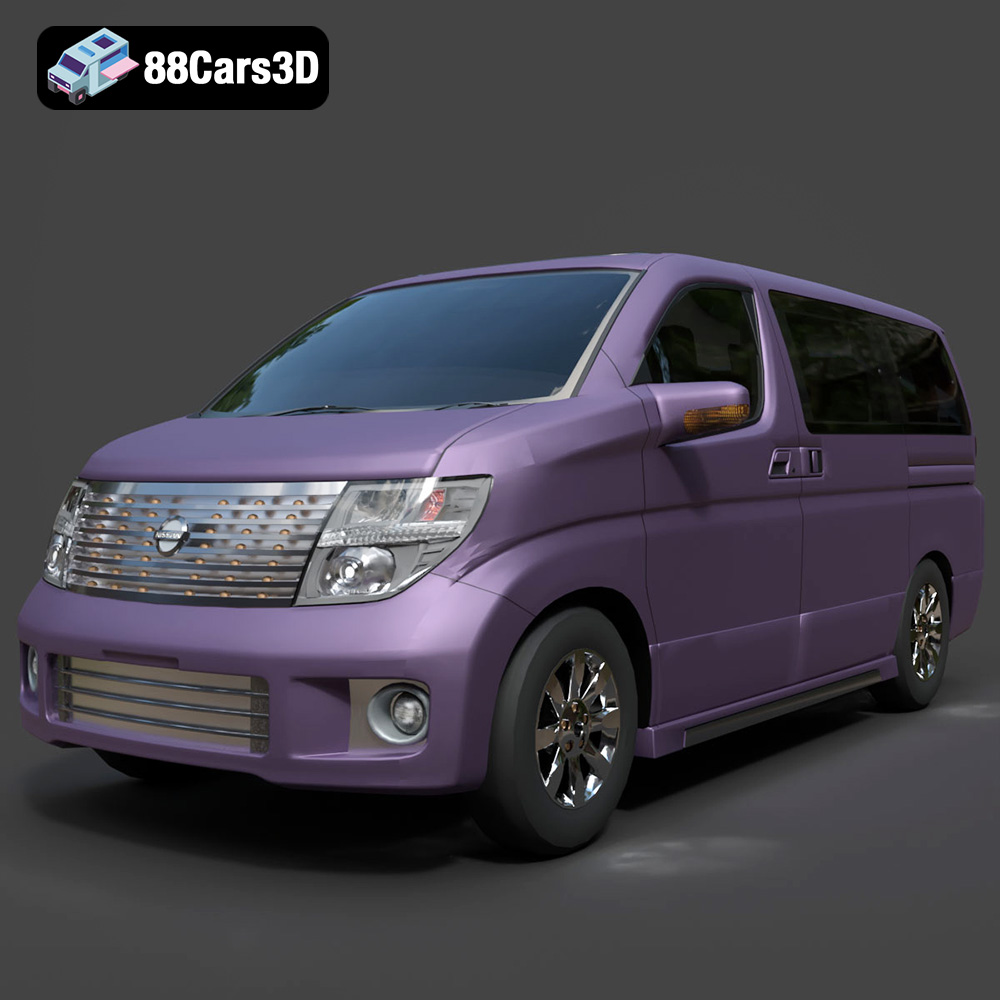
Download the Nissan Elgrand 3D Model featuring a versatile minivan design. Includes .blend, .fbx, .obj, .glb, .stl, .ply, .unreal, and .max formats for rendering, simulation, and game development.
Price: $21.99

