⚡ FLASH SALE: Get 60% OFF All Premium 3D & STL Models! ⚡

In the exhilarating world of 3D game development and real-time visualization, stunning visual fidelity often comes at a significant performance cost. This constant tug-of-war between breathtaking graphics and buttery-smooth frame rates is especially apparent when dealing with complex assets like high-detail 3D car models. Automotive models, with their intricate curves, detailed interiors, and multiple components, can easily push polygon counts into the millions, making them a formidable challenge for any real-time application. This is where Levels of Detail, or LODs, emerge as an indispensable strategy.
LODs are a fundamental optimization technique that allows developers to display simplified versions of a 3D model based on its distance from the camera. Instead of rendering a meticulously detailed supercar with hundreds of thousands of polygons when it’s a tiny speck on the horizon, LODs enable the game engine to swap it out for a much simpler, lower-polygon version. As the vehicle approaches, progressively more detailed models are loaded, ensuring that visual quality is maintained only when and where it truly matters. Understanding and mastering LOD implementation is not just an optimization trick; it’s a core skill for anyone involved in creating performant and visually engaging game assets, automotive renders, and interactive experiences. This comprehensive guide will delve deep into the technical intricacies of LODs, exploring their creation, implementation, and application across various industries, from cutting-edge games to immersive AR/VR environments.
At its core, a Level of Detail (LOD) system is a technique designed to reduce the workload on the graphics processing unit (GPU) by rendering less complex versions of objects that are far away or less visually prominent. Imagine a racing game with dozens of high-definition cars on screen. If each car, regardless of its distance, were rendered with its full polygon count, the frame rate would plummet, leading to a choppy and unplayable experience. LODs solve this by providing a hierarchy of models for each asset, ranging from the original high-polygon mesh (often called LOD0 or the ‘hero’ model) to several progressively simplified versions (LOD1, LOD2, LOD3, etc.).
The primary benefit of LODs lies in their ability to dramatically reduce draw calls and fill rate. A draw call instructs the GPU to draw an object, and highly complex scenes with many distinct objects or high polygon counts can quickly accumulate a large number of draw calls, becoming a bottleneck. By reducing the complexity of distant objects, fewer vertices and triangles need to be processed, directly translating to fewer draw calls and a lower fill rate (the number of pixels the GPU has to shade). This optimization frees up valuable GPU and CPU resources, allowing for higher frame rates, more objects on screen, or the allocation of resources to other demanding visual effects. Moreover, lower polygon counts also mean less memory usage, which is crucial for overall game performance and especially important for platforms with limited resources like mobile devices or older consoles. The strategic implementation of LODs is not about sacrificing quality, but about intelligently managing it to deliver an optimal user experience.
The fundamental principle guiding LOD implementation is finding the optimal balance between visual fidelity and performance. A meticulous 3D car model designed for close-up shots and high-resolution renders might feature an astounding polygon count, perhaps ranging from 200,000 to over a million triangles, complete with detailed interiors, undercarriage components, and individual bolts. While breathtaking for a portfolio piece or a static render, this level of detail is simply unsustainable for real-time applications when the car is viewed from a distance. The human eye cannot discern individual polygons or minute details on a small, distant object. Therefore, rendering these details is a waste of computational power.
An effective LOD strategy involves creating simplified meshes that mimic the silhouette and main characteristics of the original model as closely as possible, but with significantly fewer polygons. For instance, LOD1 might reduce the polygon count by 50-75% from LOD0, while LOD2 might reduce it by another 50-75% from LOD1, and so on. The goal is to make the transition between these LOD levels imperceptible to the player. Game engines use a variety of metrics, most commonly screen space percentage or distance from the camera, to determine when to swap between LOD levels. When a car is far away, the engine displays LOD2 or LOD3. As it approaches, it switches to LOD1, and finally to LOD0 when it’s close to the camera. This dynamic adjustment ensures that the player always experiences the appropriate level of detail without unnecessary strain on system resources, making it a cornerstone for creating high-performance interactive automotive rendering and visualization experiences.
Creating an effective LOD strategy for 3D car models demands a thoughtful approach that balances visual integrity with aggressive optimization. Unlike simpler assets, cars possess complex shapes, intricate components, and often feature transparent elements and highly reflective surfaces. This complexity requires careful planning to ensure that polygon reduction doesn’t result in noticeable popping, deformed silhouettes, or broken shading. The initial step involves defining the number of LOD levels required, typically between three and five, depending on the asset’s importance, expected viewing distances, and the target platform’s specifications. A hero vehicle in a driving simulator, for example, might require more LOD levels and smaller percentage reductions between them to ensure seamless transitions, while background traffic might get away with fewer, more aggressive reductions.
For a high-quality automotive asset, LOD0 (the highest detail model) might range from 150,000 to 500,000 polygons, sometimes even exceeding 1 million for exceptionally detailed interiors or specific visualization needs. LOD1 might target a 50-70% reduction, bringing it down to 45,000 – 150,000 polygons. LOD2 could then aim for another 50-70% reduction, resulting in 15,000 – 50,000 polygons. For very distant or small on-screen versions (LOD3, LOD4), the count might drop significantly, perhaps to a few thousand or even hundreds of polygons, resembling a basic silhouette. Crucially, these reductions must prioritize maintaining the primary contours and critical features of the car – the iconic grille, headlights, wheel arches, and overall body shape must remain recognizable, even at lower polygon counts. The transition distances between these levels are also paramount; they must be set carefully to avoid visible ‘popping’ as the models switch. Often, these distances are determined through extensive testing within the target game engine or real-time application.
The process of determining specific LOD levels and their respective polygon count targets for 3D car models is a blend of artistic judgment and technical foresight. For a high-fidelity car used as a primary asset, LOD0 is the full-detail model. For example, a sports car might start at 350,000 triangles. The first reduction, LOD1, typically aims for a 50-75% decrease, bringing the model down to approximately 80,000-175,000 triangles. This reduction often involves simplifying less visible parts like the underside, engine bay details that aren’t critical for gameplay, and reducing the tessellation of smooth surfaces where curvature isn’t extreme.
LOD2 would then target another significant reduction, perhaps bringing the polygon count down to 25,000-75,000 triangles. At this stage, more aggressive simplification occurs, potentially merging smaller components, reducing the detail on wheels and tires, and simplifying the interior to a basic shell. For LOD3, intended for distant views, the target might be as low as 5,000-20,000 triangles, focusing purely on maintaining the car’s overall silhouette. Finally, for extreme distances or small screen sizes, an LOD4 might exist, consisting of mere hundreds or thousands of triangles, essentially a recognizable block-out. These percentage reductions are guidelines; the actual counts depend heavily on the model’s initial complexity, the artistic style, and the performance budget of the game or application. The key is to achieve maximum reduction without a perceptible loss of visual quality at the respective viewing distance, ensuring that the topology remains clean enough to deform correctly if the vehicle experiences damage or physics interactions.
The effectiveness of an LOD system hinges on correctly defining visual thresholds and transition distances. These parameters dictate when a lower-detail model replaces a higher-detail one, ensuring the switch is imperceptible to the viewer. For a typical 3D car model, an LOD transition might occur based on the model’s screen space size. For instance, if the car occupies more than 50% of the screen, LOD0 is rendered. When it shrinks to 25-50%, LOD1 kicks in. Between 10-25%, LOD2 is used, and below 10%, LOD3 or even an impostor (a 2D image plane) might be employed. These percentages are approximate and must be fine-tuned through extensive in-engine testing.
Alternatively, transitions can be distance-based. For example, a vehicle might render LOD0 within 20 meters, LOD1 between 20 and 50 meters, LOD2 between 50 and 150 meters, and LOD3 beyond 150 meters. The exact distances are highly context-dependent, influenced by factors such as the game’s camera FOV, screen resolution, and the density of environmental detail. Implementing a smooth transition, often called ‘dithering’ or ‘cross-fading’, during the LOD swap can further mask any abrupt changes, though this comes with a slight performance cost. The goal is to set these thresholds precisely so that the reduction in detail is only noticed if the viewer is actively looking for it during a transition, maintaining the illusion of high fidelity across all viewing distances. Platforms like 88cars3d.com often provide models with ready-made LODs, which simplifies this process for developers by offering pre-optimized assets for various scenarios.
Creating effective LODs for 3D car models is a skillful blend of artistic discretion and technical precision. It’s not merely about indiscriminately removing polygons, but about intelligently simplifying the mesh while preserving the critical visual cues and structural integrity of the original asset. The process typically begins with the high-polygon LOD0 model, which serves as the visual benchmark. From this point, subsequent LODs are derived, each with a progressively lower polygon count. The challenge lies in ensuring that the visual quality degradation is minimal at the intended viewing distance for each LOD level, and that the silhouette and key features remain consistent.
Mesh optimization for LODs involves several techniques. For highly important assets like hero cars, manual retopology might be employed for LOD1 and potentially LOD2. This allows artists to meticulously reconstruct the mesh with optimal edge flow and polygon distribution, ensuring clean deformation, proper shading, and efficient UV mapping. However, manual retopology is incredibly time-consuming. For other LOD levels or assets with less demanding visual requirements, automated decimation tools found in 3D software packages like Blender, Maya, and 3ds Max are invaluable. These tools, while powerful, require careful parameter tuning to avoid artifacting, especially around sharp edges and areas with complex curvature. Understanding when to use which technique, and how to combine them, is key to producing optimized game assets that perform flawlessly.
When it comes to generating Levels of Detail, artists typically choose between meticulous manual retopology and efficient automated decimation, or often, a combination of both. For critical 3D car models such as player vehicles or main cinematic assets, manual retopology for LOD1 is often the preferred method. This involves an artist painstakingly rebuilding the mesh by hand, creating new, optimized topology with clean edge loops, even polygon distribution, and careful attention to areas requiring deformation (like doors or wheels). This ensures that the simplified mesh retains perfect shading, allows for clean UV unwrapping, and prevents any visual glitches that automated tools might introduce. While incredibly time-consuming, manual retopology delivers superior quality and control, crucial for assets under intense scrutiny.
For lower LODs (LOD2, LOD3, etc.), or for background vehicles and less critical assets, automated decimation tools are a lifesaver. Software like Blender offers a powerful Decimate Modifier, which can drastically reduce polygon counts. To use it in Blender, you would select your mesh, go to the Modifiers tab, and add a ‘Decimate’ modifier. You can choose from ‘Collapse’, ‘Un-Subdivide’, or ‘Planar’ modes. ‘Collapse’ mode is most commonly used for LODs, allowing you to set a ‘Ratio’ (e.g., 0.5 for 50% reduction) to control the polygon count. Crucially, options like ‘Triangulate’ and ‘Preserve UVs’ should be considered. When using the Decimate Modifier, it’s vital to bake any high-resolution normal maps from the original LOD0 onto the lower LODs to retain visual detail and surface complexity. For more detailed instructions on the Decimate Modifier, consult the Blender 4.4 documentation. Similar functionality exists in Maya (Reduce) and 3ds Max (ProOptimizer). These tools require careful parameter tuning to prevent distortion, preserve UVs, and maintain sharp edges by leveraging features like “Preserve Borders” or “Keep Boundaries.” The decision to go manual or automated depends heavily on the asset’s visual importance and the project’s time constraints.
The illusion of detail in lower LODs, despite significant polygon reduction, is predominantly achieved through clever texturing techniques, chief among them being normal mapping. After decimating a high-polygon LOD0 car model to create LOD1, LOD2, and so forth, the fine surface details, panel lines, bolts, and subtle curvature that were present in the original geometry are baked into a normal map. This normal map is then applied to the simplified mesh, tricking the rendering engine into displaying these details as if they were actual geometry, without incurring the performance cost of additional polygons. The baking process is critical; discrepancies in UV mapping or mesh alignment between LODs can lead to artifacts. It’s often beneficial to have a consistent UV layout across LODs where possible, or to re-unwrap and then re-bake for each LOD, though this increases workflow complexity. Ambient occlusion maps and curvature maps can also be baked down from the high-poly model to further enhance the visual depth and realism on lower-poly versions.
Beyond normal maps, material complexity reduction is another vital strategy for maintaining performance across LODs. For LOD0, a PBR material might consist of multiple texture maps (albedo, normal, roughness, metallic, ambient occlusion, emission) and complex shader networks for car paint, glass, chrome, and interior fabrics. For LOD1, some of these layers might be combined or simplified. By LOD2 and LOD3, the material could be dramatically simplified, perhaps using fewer texture samples or even a single atlas texture for multiple components, reducing the number of texture lookups and shader instructions. For instance, the intricate reflections of a chrome bumper in LOD0 might be represented by a simpler, pre-baked reflection map or even just a flatter metallic value in LOD2. The goal is to maintain the overall visual impression and color scheme of the car while ruthlessly stripping away unnecessary computational demands from the materials for distant objects.
Effective UV mapping and texture management are paramount to a successful LOD strategy, especially for complex assets like 3D car models. A common pitfall in LOD implementation is allowing UVs to become inconsistent or broken across different detail levels. While it might seem intuitive to generate new UVs for each simplified mesh, maintaining consistent UV space for core elements (like the main body panels) across all LODs is often a more robust approach. This consistency allows for easier texture swapping and ensures that baked maps, particularly normal maps, apply correctly without noticeable shifts or distortions. For example, if LOD0, LOD1, and LOD2 all share a similar UV layout for the car’s hood, the high-detail normal map baked from LOD0 can potentially be reused or slightly downscaled for LOD1 and LOD2, minimizing texture memory and production time.
Texture resolution is another key optimization vector. While LOD0 might utilize 4K or even 8K textures for exceptional detail, subsequent LODs should progressively reduce their texture resolutions. LOD1 might use 2K textures, LOD2 1K, and LOD3 512px or even smaller. This significant reduction in texture memory is crucial for overall game performance and especially vital for memory-constrained platforms. To further optimize, texture atlasing is highly recommended. Combining multiple smaller textures (like those for individual car parts like headlights, grilles, or badges) into a single, larger texture atlas reduces draw calls and improves cache efficiency, as the GPU only needs to load one texture to render multiple surfaces. The careful management of UVs and textures across LODs ensures that visual integrity is maintained while optimizing for memory and render performance, crucial for realistic automotive rendering.
Maintaining consistent UV mapping across different Levels of Detail is a critical, yet often overlooked, aspect of optimization for 3D car models. Ideally, the core elements of the car’s body should occupy roughly the same UV space across LOD0, LOD1, and LOD2. This consistency allows textures to be applied seamlessly, or at least with minimal adjustment, as the LODs swap. If each LOD has a completely different UV layout, it necessitates creating entirely new texture sets for each, which is inefficient in terms of both memory and development time. For instance, if the main body of a car has its UVs laid out on a single 0-1 UV square in LOD0, aiming for a similar, albeit simplified, layout for LOD1 and LOD2 can be immensely beneficial.
When creating lower LODs, especially through decimation, the UVs can sometimes become distorted or stretched. It is essential to check and, if necessary, re-unwrap specific areas or even the entire model for each LOD to ensure clean texture application. However, even when re-unwrapping, striving for similar islands and orientations helps in the texture baking process. Tools in modern 3D software allow for “transfer attributes” or “re-project UVs” from a higher-detail mesh to a lower-detail one, which can help maintain consistency. This meticulous attention to UVs ensures that normal maps, albedo maps, and other PBR textures continue to look correct, preventing unsightly texture stretching or seams that would betray the LOD transition. For models sourced from marketplaces like 88cars3d.com, inspecting the UV consistency across provided LODs is a good practice to ensure smooth integration into a game engine pipeline.
The twin strategies of texture atlasing and resolution reduction are indispensable for optimizing texture memory and draw calls when implementing LODs for 3D car models. Texture atlasing involves combining multiple smaller textures (e.g., textures for headlights, taillights, grilles, badges, and interior elements) into a single, larger texture sheet. Instead of making separate draw calls for each material that uses a unique texture, the engine can draw multiple surfaces using a single texture atlas, significantly reducing the overhead associated with texture binding and state changes on the GPU. This is particularly effective for lower LODs where many small details might be simplified and grouped together. For example, all the various small metallic elements on a car’s exterior could share a single atlas containing their respective PBR maps.
Coupled with atlasing, reducing texture resolution is a straightforward yet powerful optimization. While LOD0 might demand 4096×4096 (4K) or even 8192×8192 (8K) textures for hero shots and high-detail automotive rendering, LOD1 could effectively use 2048×2048 (2K) textures. LOD2 might drop to 1024×1024 (1K), and LOD3 could utilize 512×512 or even 256×256 textures. This exponential reduction in resolution dramatically decreases the amount of video memory (VRAM) consumed by the asset. A 4K texture uses 16 times more memory than a 1K texture of the same format. Modern game engines typically handle this automatically by generating mipmaps – scaled-down versions of textures – which are then sampled based on the object’s distance and screen size. However, explicitly providing lower-resolution textures for lower LODs gives artists more control over the quality and can prevent potential mipmap blurring issues, ensuring a sharp appearance even at lower detail levels. This combination ensures that the visual integrity of the car remains acceptable at various distances while keeping performance high.
Once 3D car models have been expertly crafted with multiple Levels of Detail, the next critical step is to integrate them into a game engine. Modern game engines like Unity and Unreal Engine provide robust, user-friendly systems for managing LODs, allowing developers to define transition distances and visual thresholds with precision. This integration involves importing the various LOD meshes, setting up the LOD group, and configuring the rules for when each LOD should be displayed. The goal is a seamless transition between detail levels, where the player perceives no ‘popping’ or abrupt changes in visual quality, even during fast-paced gameplay or camera movements. Proper implementation in the engine ensures that the performance gains from creating LODs are fully realized, providing a smooth and immersive experience for players. This process also often involves configuring material properties and ensuring that textures and normal maps are correctly assigned to each LOD, maintaining the PBR material fidelity across all detail levels.
Beyond basic LOD group setup, game engines offer additional optimization features. For instance, Unreal Engine’s Hierarchical LOD (HLOD) system takes optimization a step further for vast open-world environments, automatically grouping distant meshes and simplifying them into single, combined meshes, further reducing draw calls. Similarly, Unity provides options for cross-fading between LOD levels, making transitions even smoother, albeit with a slight overhead. Understanding these engine-specific features and knowing when and how to apply them is crucial for maximizing performance. Regular profiling within the engine is essential to validate the effectiveness of the LOD setup, identifying any bottlenecks and allowing for fine-tuning of transition distances and culling settings. This iterative process of implementation, testing, and refinement ensures that the automotive assets contribute to a visually stunning yet highly performant game world.
Unity’s LOD Group system provides a straightforward and powerful way to manage Levels of Detail for 3D car models and other assets. To implement an LOD Group in Unity, you typically create an empty GameObject and add an “LOD Group” component to it. Then, you drag and drop your various LOD meshes (LOD0, LOD1, LOD2, etc.) as child objects of this LOD Group GameObject. In the LOD Group component, you can visually define the transition points for each LOD level using a series of sliders. These sliders represent the percentage of the screen space the object occupies. For example, LOD0 might be active when the object fills 100% down to 50% of the screen, LOD1 from 50% down to 25%, and so on, until a final ‘Culled’ state where the object is no longer rendered at all.
Each LOD level within the group points to a specific mesh renderer. You can also configure rendering modes for the transitions, such as ‘Fade’ or ‘Cross Fade’, which smoothly blend between LODs over a short distance, making the switch less noticeable. While ‘Cross Fade’ offers a visually pleasing transition, it does incur a small performance cost due to rendering two meshes simultaneously during the blend. For critical performance scenarios, a hard switch might be preferred. Unity’s system allows for fine-tuning based on runtime performance. During development, using the Frame Debugger and Profiler tools within Unity is crucial. They help identify if LODs are indeed reducing draw calls and vertex counts effectively, allowing developers to adjust screen percentage thresholds or even the number of LOD levels to meet the target frame rate. This iterative testing is vital for optimizing game assets and ensuring smooth performance for automotive rendering in real-time.
Unreal Engine offers a highly sophisticated and flexible LOD system, making it ideal for managing the complexity of 3D car models in high-fidelity games. For individual static meshes, LODs are configured directly within the Static Mesh Editor. After importing your various LOD meshes (e.g., a high-poly FBX for LOD0 and progressively lower-poly FBX files for LOD1, LOD2, etc.), you can assign them to specific LOD slots. Unreal then allows you to set the ‘Screen Size’ for each LOD, which determines at what percentage of the screen the mesh should occupy before transitioning to the next LOD. For example, LOD0 might have a screen size of 1.0 (meaning it’s always rendered if the object is large enough), LOD1 at 0.5, LOD2 at 0.25, and so on, down to a ‘Min LOD’ value that effectively culls the object entirely. Unreal also provides options for ‘Number of LODs’ and can even automatically generate LODs through mesh reduction, though artist-created LODs typically yield better visual results. When working with marketplace assets from sources like 88cars3d.com, ensure that the provided models are compatible with Unreal’s import settings and that their LODs are correctly set up.
Beyond individual static mesh LODs, Unreal Engine excels with its Hierarchical LOD (HLOD) system, a feature crucial for optimizing vast open-world environments. HLODs automatically combine and simplify distant clusters of meshes into single, aggregated meshes, drastically reducing draw calls and improving performance over long view distances. This is particularly beneficial for cities or large landscapes populated with numerous automotive models and environmental props. Unreal Engine 5 further advances this with Nanite virtualized geometry, which intelligently streams and processes only the necessary detail of a mesh regardless of polygon count. While Nanite still benefits from well-structured meshes and artist-created LODs for certain workflows, especially for character deformation or transparent materials, it significantly alleviates the traditional pain points of high-polygon asset management. For game developers, a deep understanding of Unreal’s LOD and HLOD systems, combined with tools like the ‘ProfileGPU’ command and STAT commands, is essential for optimizing complex game assets and achieving cinematic automotive rendering in real-time.
While often associated with game development, the principles of Levels of Detail extend far beyond the gaming industry, proving equally vital in fields like architectural visualization, product configurators, and immersive AR/VR experiences. In these applications, the demand for realistic visual fidelity often clashes with the necessity for real-time interactivity and smooth performance. Whether showcasing a detailed architectural model or a photorealistic car in a virtual showroom, LODs enable designers and developers to deliver rich visual content without compromising the user experience. The considerations for LODs in these sectors might differ slightly from traditional game development, often prioritizing visual quality and model integrity over aggressive polygon reduction for the closest LODs, while still applying significant optimization for distant or non-interactive elements.
For instance, in a real-time architectural walkthrough, a highly detailed building exterior might have LODs that progressively simplify facade elements, window frames, and landscaping as the viewer moves away. Similarly, in an interactive car configurator, a 3D car model will display its highest detail when the user is zoomed in to inspect specific features like the wheel design or interior stitching. As the user pans out to view the entire vehicle or places it in an environment, lower LODs activate. The core objective remains the same: to deliver the optimal level of detail where and when it matters most, ensuring fluid navigation and interaction. This intelligent management of complexity is particularly crucial for emerging technologies like AR/VR, where performance budgets are often extremely tight, and any dropped frames can lead to user discomfort or nausea. The demand for highly optimized, multi-LOD visualization assets continues to grow, making LOD proficiency a cornerstone skill for professionals in these evolving fields.
In real-time architectural visualization and interactive product configurators, 3D car models often serve as crucial context or focal points, and their LOD implementation is paramount for performance. Imagine an interactive apartment configurator where a user can place various furniture pieces and view the space from different angles. If the high-detail car parked outside the window or in a virtual garage is always rendered at maximum fidelity, it would needlessly consume resources, especially when the focus is on the interior. Here, LODs ensure that the car is displayed with appropriate detail: LOD0 when inspected closely, LOD1 when viewed from inside the apartment, and LOD2 or LOD3 when merely a distant speck outside.
Similarly, for high-end product configurators showcasing a new vehicle, the primary focus is on presenting the automotive model with exquisite detail. When the user zooms in on a specific component like the headlights, the system should render LOD0 with all its intricate internal geometry and realistic materials. As the user zooms out to view the entire car in a showroom environment, LOD1 or LOD2 can be used. The challenge is balancing high visual fidelity, essential for showcasing product features, with smooth interaction. This often means very subtle LOD transitions for the closer detail levels and more aggressive reductions for background elements. The judicious use of LODs allows for complex scenes with multiple detailed objects, enabling users to explore and customize products in real-time without experiencing performance hitches, crucial for engaging visualization experiences.
For augmented reality (AR) and virtual reality (VR) experiences, LODs are not merely an optimization; they are a fundamental necessity. The stringent performance requirements of AR/VR—often demanding sustained frame rates of 60-90 frames per second or higher per eye—mean that every polygon and texture must be meticulously managed. A single dropped frame in VR can cause motion sickness, making aggressive optimization strategies, including comprehensive LOD implementation for 3D car models, absolutely critical. Polygon budgets in mobile AR/VR applications can be incredibly tight, sometimes limiting an entire scene to a few hundred thousand triangles. This often means that even LOD0 for an AR/VR car model might be comparable to an LOD1 or LOD2 from a high-end desktop game.
When preparing game assets for AR/VR, particularly 3D car models, designers must focus on optimizing every aspect:
These techniques ensure that automotive models appear realistic and fluid, preventing performance bottlenecks that could otherwise break the immersion or cause user discomfort in AR/VR environments.
While 3D printing doesn’t directly utilize Levels of Detail in the same real-time rendering sense, understanding mesh density and integrity—concepts closely related to LOD creation—is crucial for successful print outcomes. When preparing a 3D car model for printing, the focus shifts from real-time performance to physical manufacturability. A common challenge with models designed for rendering, especially high-polygon LOD0 assets, is that they might contain non-manifold geometry, open edges, flipped normals, or internal faces—issues that are invisible in renders but fatal for 3D printing. A 3D printer requires a “watertight” mesh, meaning it must be a completely enclosed volume without any holes or intersecting faces.
The process of simplifying a high-poly model for 3D printing often resembles creating an LOD. Excessive polygon counts, while desirable for visual smoothness in renders, can lead to unnecessarily large file sizes and complex slicing operations for a 3D printer. Therefore, a judicious decimation, similar to generating an LOD1 or LOD2, can be beneficial. Tools for mesh repair (e.g., Blender’s 3D Print Toolbox add-on, Meshmixer, Netfabb) are indispensable for identifying and fixing issues like non-manifold edges, zero-area faces, and inconsistent normals. The goal is to produce a single, manifold mesh that accurately represents the desired shape, optimized for the printer’s resolution and the physical scale of the print. While not directly about swapping detail levels, the skills in optimizing topology and ensuring mesh integrity learned from LOD creation are directly transferable and incredibly valuable for preparing models for physical output, ensuring that a stunning digital 3D car model can become a tangible object.
Levels of Detail (LODs) are far more than just a performance hack; they are a sophisticated and indispensable optimization strategy that underpins the visual quality and smooth performance of virtually all modern real-time 3D applications. From high-octane racing games to immersive AR/VR experiences and intricate automotive rendering visualizations, the intelligent management of 3D car models through LODs ensures that users always see the appropriate level of detail without sacrificing frame rates or memory efficiency. Mastering the art and science of LOD creation—from meticulous mesh optimization and UV mapping to strategic PBR material management and seamless integration into game engines—is a hallmark of a skilled 3D professional.
The journey from a breathtaking high-polygon hero model to its optimized, multi-LOD counterparts involves deep technical understanding of topology, texture atlasing, and engine-specific features. It demands an iterative approach, continually balancing visual fidelity with strict performance budgets. As the demand for photorealistic and interactive game assets continues to grow across diverse industries, the ability to produce highly optimized 3D car models with well-implemented LODs will remain a crucial skill. Whether you’re a game developer striving for cinematic realism, an architect creating interactive walkthroughs, or a designer building cutting-edge AR experiences, understanding and applying LOD principles is key to unlocking the full potential of your 3D assets. For those looking to jumpstart their projects with ready-optimized assets, platforms like 88cars3d.com offer a wide selection of high-quality 3D car models, often including pre-built LODs, making it easier to integrate them directly into your demanding real-time environments.

Texture: Yes
Material: Yes
Download the Ford Ambulance AmServ LTD Dusan-002 3D Model featuring a high-detail exterior and interior, realistic textures, and emergency lighting. Includes .blend, .fbx, .obj, .glb, .stl, .ply, .unreal, and .max formats for rendering, simulation, and game development.
Price: $19.99
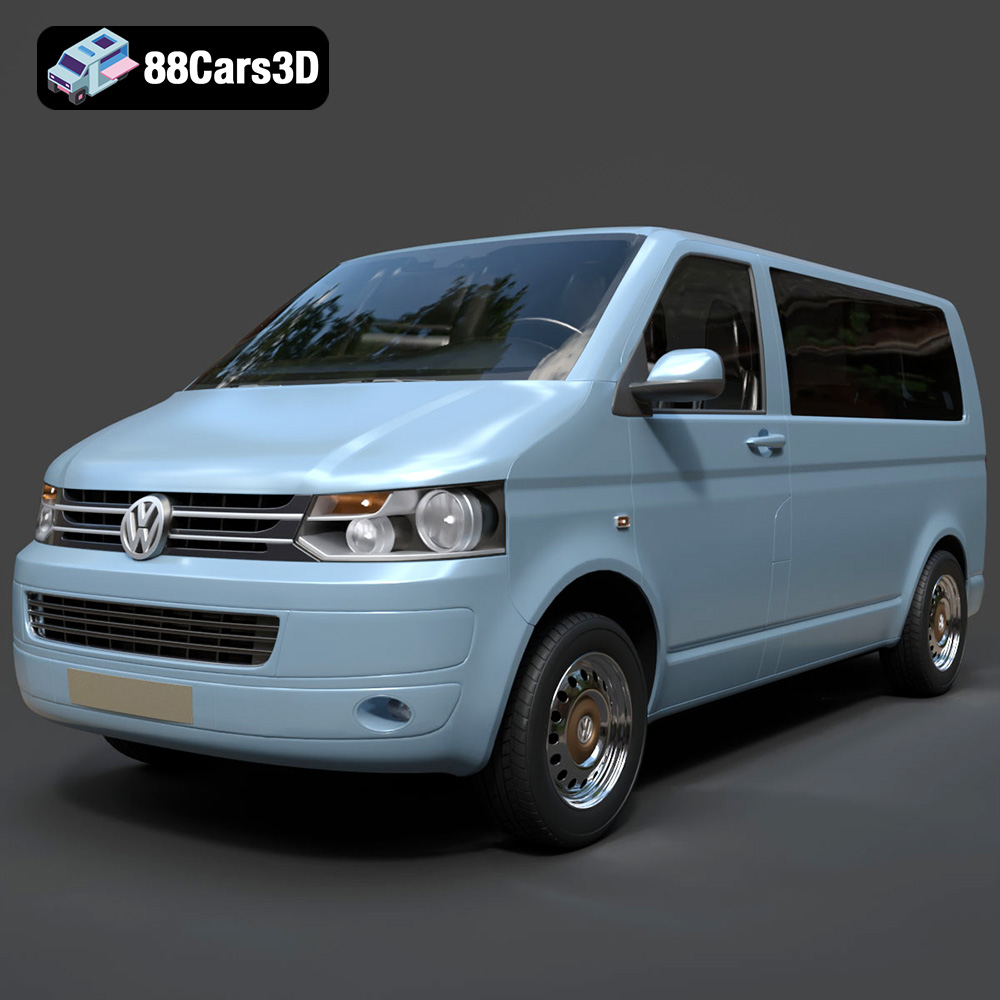
Texture: Yes
Material: Yes
Download the Volkswagen Transporter T5 FL 2010 3D Model featuring clean geometry, realistic detailing, and a fully modeled interior. Includes .blend, .fbx, .obj, .glb, .stl, .ply, .unreal, and .max formats for rendering, simulation, and game development.
Price: $22.99
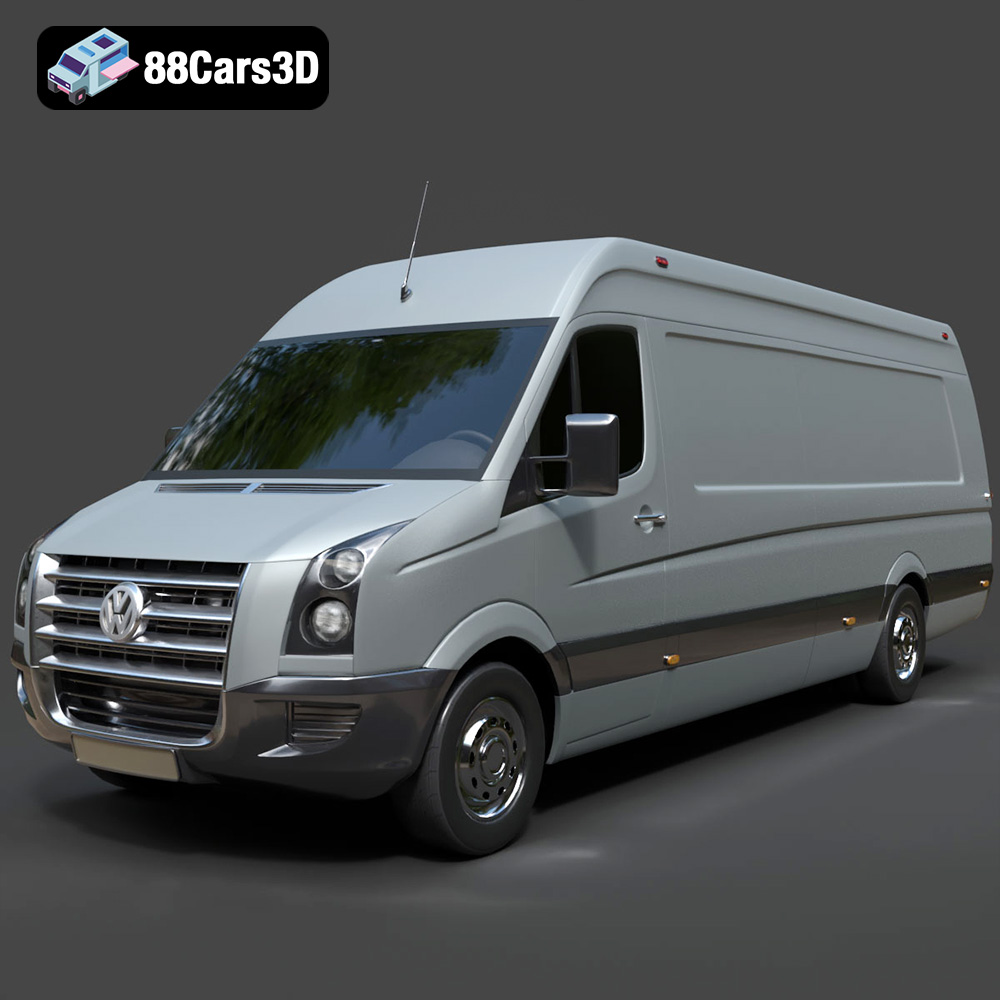
Texture: Yes
Material: Yes
Download the Volkswagen Crafter 2020 3D Model featuring clean geometry, realistic detailing, and a fully modeled interior. Includes .blend, .fbx, .obj, .glb, .stl, .ply, .unreal, and .max formats for rendering, simulation, and game development.
Price: $22.99
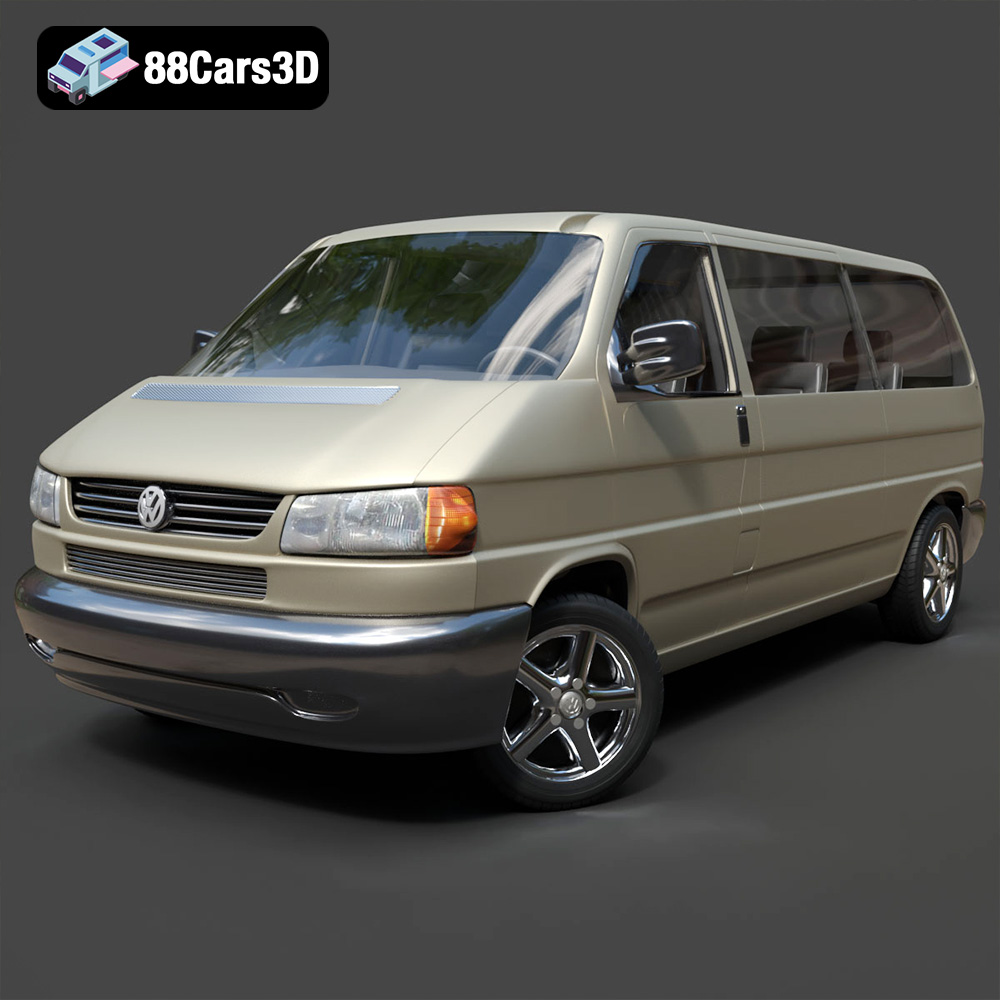
Texture: Yes
Material: Yes
Download the Volkswagen Caravelle 3D Model featuring a detailed exterior, functional interior, and optimized topology. Includes .blend, .fbx, .obj, .glb, .stl, .ply, .unreal, and .max formats for rendering, simulation, and game development.
Price: $23.99
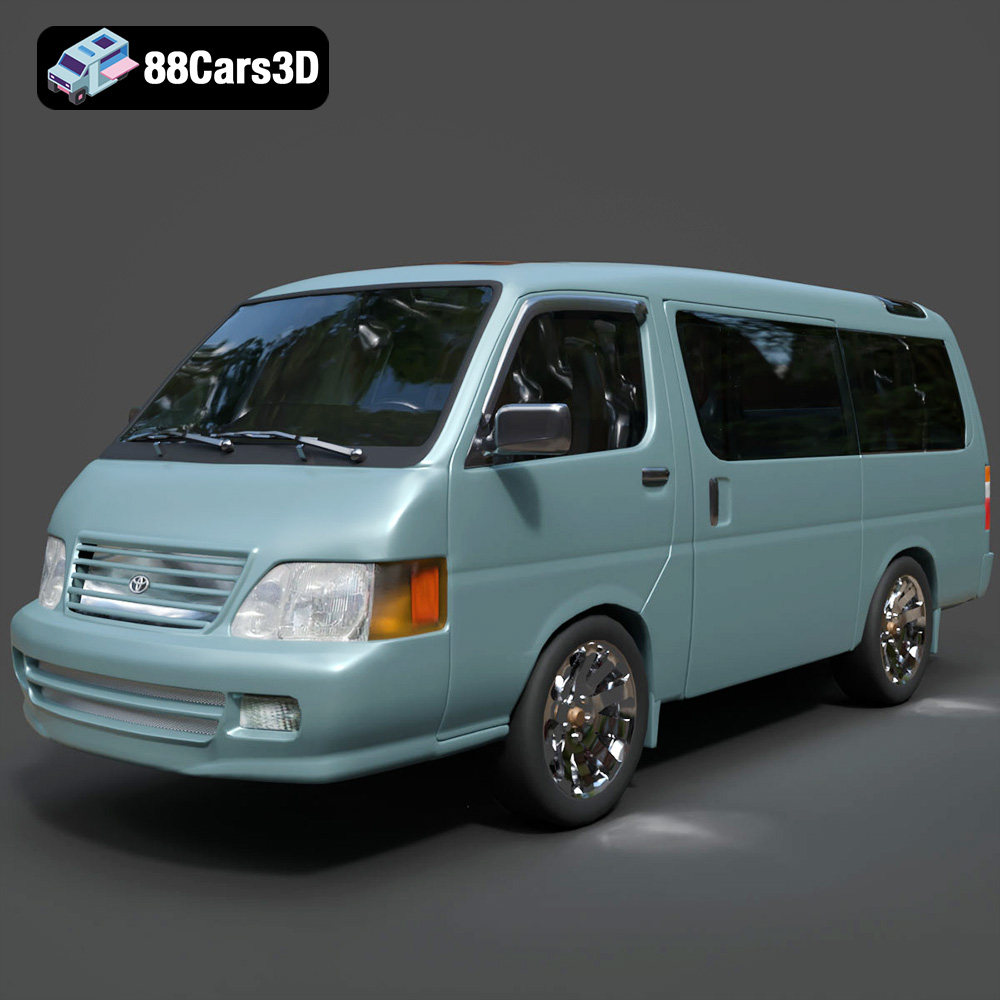
Texture: Yes
Material: Yes
Download the Toyota Hiace 3D Model featuring versatile design and detailed exterior. Includes .blend, .fbx, .obj, .glb, .stl, .ply, .unreal, and .max formats for rendering, simulation, and game development.
Price: $21.99
Texture: Yes
Material: Yes
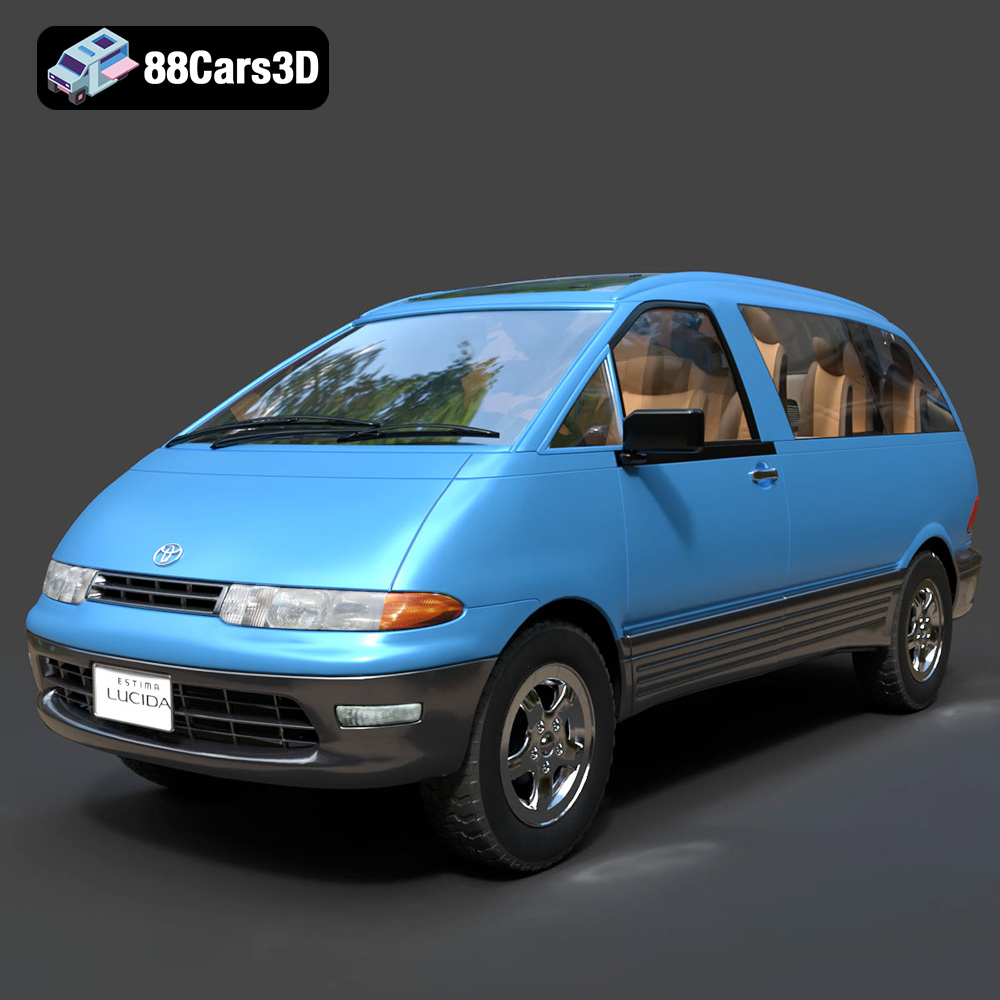
Download the Toyota Estima Lucida 3D Model featuring its iconic compact MPV design, versatile interior, and accurate exterior details. Includes .blend, .fbx, .obj, .glb, .stl, .ply, .unreal, and .max formats for rendering, simulation, and game development.
Price: $24.99

Texture: Yes
Material: Yes
Download the Toyota Alphard 3D Model featuring a detailed luxury minivan design with an accurate exterior and interior. Includes .blend, .fbx, .obj, .glb, .stl, .ply, .unreal, and .max formats for rendering, simulation, and game development.
Price: $21.99
Texture: Yes
Material: Yes
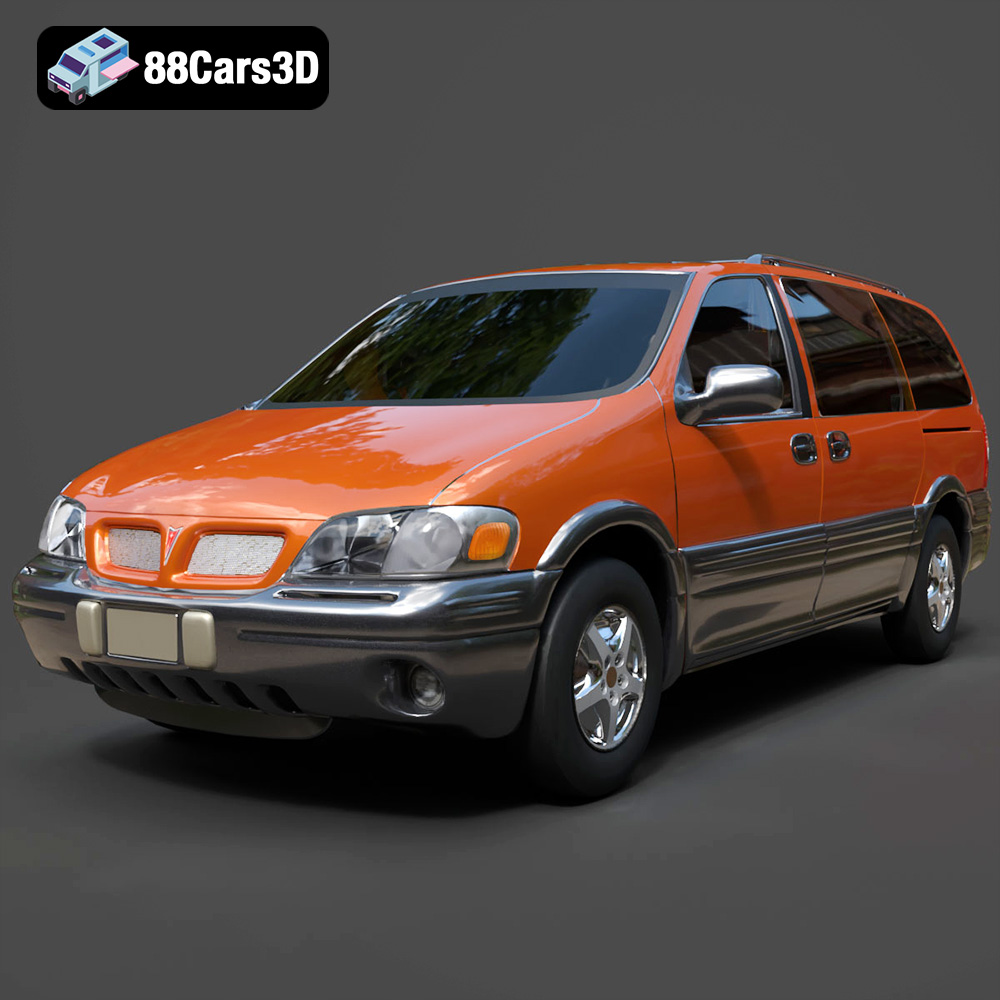
Download the Pontiac Montana 1998 3D Model featuring a detailed exterior, functional interior, and optimized mesh. Includes .blend, .fbx, .obj, .glb, .stl, .ply, .unreal, and .max formats for rendering, simulation, and game development.
Price: $21.99
Texture: Yes
Material: Yes
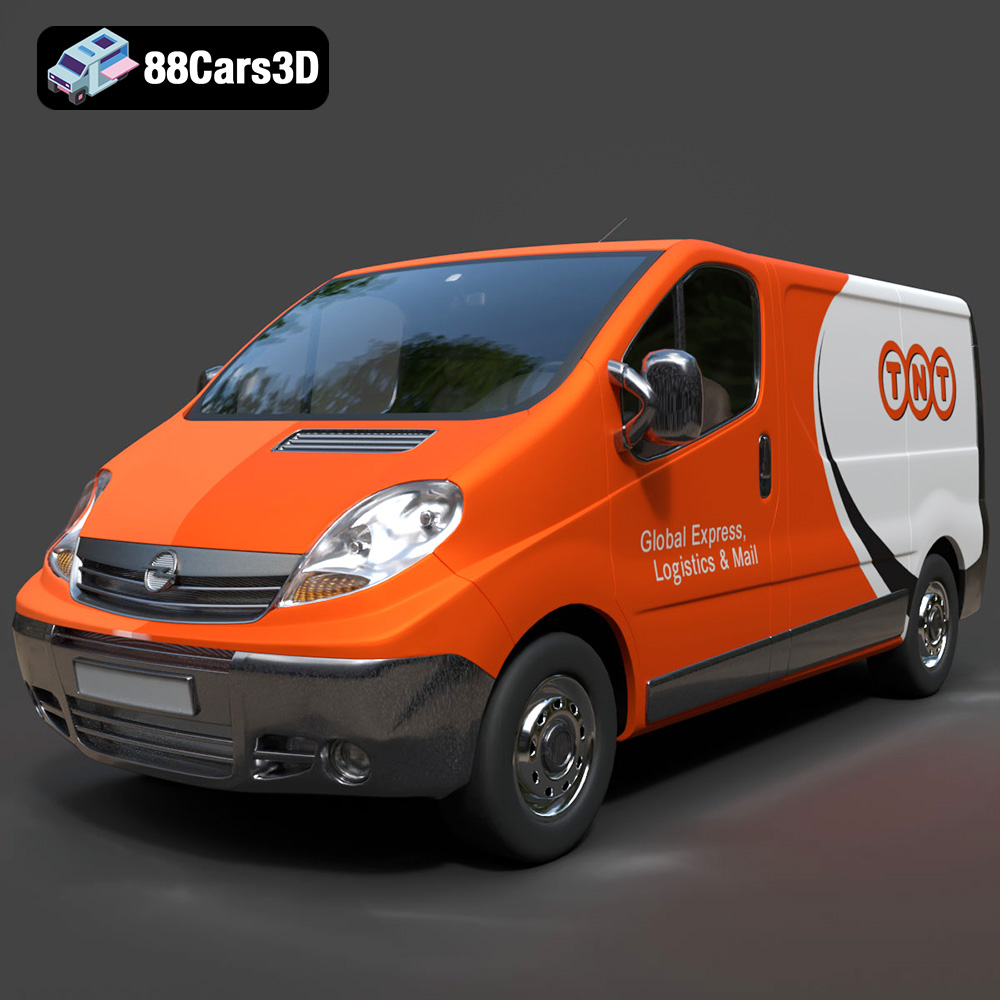
Download the Opel Vivaro 3D Model featuring a versatile commercial van design with balanced detailing. Includes .blend, .fbx, .obj, .glb, .stl, .ply, .unreal, and .max formats for rendering, simulation, and game development.
Price: $21.99
Texture: Yes
Material: Yes
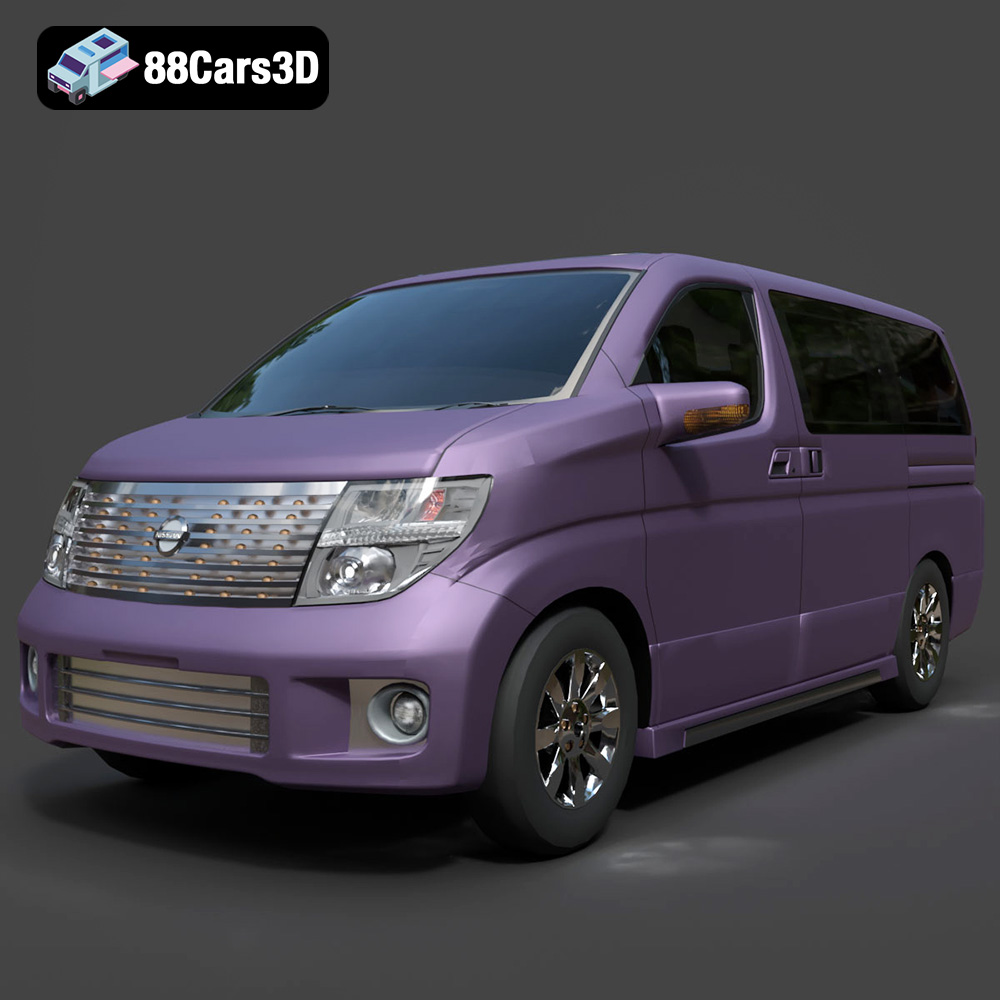
Download the Nissan Elgrand 3D Model featuring a versatile minivan design. Includes .blend, .fbx, .obj, .glb, .stl, .ply, .unreal, and .max formats for rendering, simulation, and game development.
Price: $21.99

