⚡ FLASH SALE: Get 60% OFF All Premium 3D & STL Models! ⚡

The pursuit of hyper-realistic, expansive virtual worlds has always been a core ambition in game development, architectural visualization, and increasingly, in the realm of automotive design and virtual production. For years, managing these colossal environments in Unreal Engine presented significant challenges, often necessitating complex manual level streaming solutions, taxing development workflows, and imposing stringent performance limitations. Enter the Unreal Engine World Partition system – a revolutionary paradigm shift designed to tackle these very hurdles head-on.
World Partition fundamentally redefines how large open worlds are handled within Unreal Engine 5. It transforms a single, monolithic level into a spatially partitioned grid, enabling automatic streaming of world content based on the player’s proximity or editor camera’s viewpoint. This intelligent system drastically improves performance, streamlines collaborative workflows, and empowers creators to build environments of unprecedented scale and detail. For professionals working with high-fidelity assets, such as the meticulously crafted 3D car models available on platforms like 88cars3d.com, World Partition is an indispensable tool for building immersive automotive experiences, expansive test environments, or detailed virtual showrooms without compromising on performance or visual quality. This comprehensive guide will delve into the technical intricacies of World Partition, exploring its benefits, implementation, and how it integrates with other cutting-edge Unreal Engine features to unlock the true potential of your next large-scale project.
At its heart, World Partition is an automatic data management system that spatially divides a large, continuous world into smaller, manageable grid cells. Unlike traditional Level Streaming, where developers manually define and manage numerous sub-levels, World Partition abstracts this complexity. It treats your entire world as a single, persistent level, and then automatically loads and unloads its content (actors, geometry, lighting, etc.) based on defined streaming criteria. This approach dramatically simplifies the development process for vast environments, whether you’re building an open-world game, a sprawling architectural visualization, or an expansive virtual city for automotive simulation.
The system fundamentally changes how assets are loaded. Instead of loading an entire level, World Partition dynamically streams in only the necessary cells, keeping memory footprint low and ensuring smooth framerates even in incredibly detailed worlds. This is particularly beneficial when integrating highly detailed assets, such as the premium 3D car models from 88cars3d.com, into vast scenes. By only loading the surrounding environment elements and the vehicle itself, you can achieve stunning fidelity without overwhelming system resources. World Partition also introduces the concept of “one file per actor,” which significantly improves source control management and collaborative workflows, as multiple team members can work on different parts of the world simultaneously without constant merge conflicts.
The foundation of World Partition is its configurable grid system. When you enable World Partition, your world is divided into a uniform grid of cells. Each cell contains a portion of your level’s actors. The size of these cells is a crucial setting, directly impacting streaming performance and granularity. Smaller cells mean more frequent streaming operations but also allow for finer control over what’s loaded, potentially reducing memory usage. Larger cells stream less frequently but might load more irrelevant content. Finding the right balance is key to optimal performance.
Unreal Engine provides settings to define the streaming distance, which dictates how far around the player or camera (in editor) content should be loaded. This distance is measured in Unreal Units (centimeters) and directly influences the number of active cells at any given time. For instance, in a vast automotive test track, you might set a longer streaming distance for environmental props like trees and buildings, but a shorter one for highly detailed interactive elements or background vehicles that only become relevant up close. Understanding and fine-tuning these parameters is essential for achieving seamless loading transitions and maintaining a consistent performance profile across your large-scale projects.
While most of your world’s content will be streamable, some actors need to be present at all times, regardless of the player’s position. These are designated as “Always Loaded” actors. Examples include global lighting setups (like Directional Light, Sky Light, Sky Atmosphere), certain gameplay managers, or persistent UI elements. It’s crucial to identify and flag these actors correctly to ensure your world’s foundational elements are always available. Overusing “Always Loaded” can negate some of World Partition’s performance benefits, so careful consideration is advised.
World Partition also introduces the concept of External Actors. When World Partition is enabled, each actor in the level is saved as a separate .UAsset file, known as an External Actor. This is a fundamental shift from the traditional method where all actors within a sub-level were saved into a single .umap file. This ‘one file per actor’ approach is a game-changer for collaboration. It drastically reduces the likelihood of merge conflicts in source control systems (like Perforce or Git LFS) because multiple artists or designers can simultaneously work on different actors in the same area of the world without overwriting each other’s changes. This means one artist can adjust the position of a detailed 88cars3d.com car model, while another fine-tunes a nearby material, with minimal conflict risk.
Integrating World Partition into your Unreal Engine project, whether it’s a fresh start or an existing massive environment, is a straightforward but impactful process. For new projects, it’s as simple as checking a box. For established levels, Unreal Engine provides a robust conversion tool that automates the migration, transforming your monolithic or traditional level-streamed world into a World Partition-managed one. This initial setup is critical for laying the groundwork for scalable and performant open-world development, especially when working on projects demanding high visual fidelity, such as automotive configurators or realistic driving simulations.
When starting a new project, simply select the “World Partition” option during the project creation wizard. If you’re converting an existing level, it’s advised to back up your project first. The conversion process will analyze your level, move all actors into the new World Partition system, and save them as individual external actor files. This can take some time depending on the size and complexity of your level. Once converted, your level will no longer rely on manually managed sub-levels, but rather on the automatic streaming provided by World Partition, instantly unlocking the benefits of improved editor performance and collaborative efficiency.
For fresh Unreal Engine projects, setting up World Partition is incredibly simple:
This will configure your new default level to use World Partition, and any subsequent levels you create can also be set up this way. This proactive approach ensures your project is built on a scalable foundation from day one, allowing you to design and populate vast landscapes for your automotive visualizations or game environments without the performance overhead associated with older methods. Always consider the scale of your intended project; if you foresee a large, contiguous environment, World Partition should be your default choice.
Converting an already existing, complex level to World Partition requires a few more steps:
Once the conversion is complete, your original level file (`.umap`) will be significantly smaller, primarily acting as a container for World Partition settings, while all its content is now managed as external actors. You’ll notice a significant improvement in editor responsiveness, especially in large environments, as the editor no longer tries to load every single actor simultaneously. This is a game-changer for artists working on detailed scene composition, such as arranging multiple high-poly car models from 88cars3d.com across an expansive virtual landscape.
While World Partition handles the spatial streaming of your world, Data Layers provide an orthogonal dimension for content management, allowing you to organize, enable, or disable groups of actors based on contextual needs. Think of them as intelligent visibility toggles that work seamlessly with World Partition’s streaming. This powerful feature is invaluable for managing variations of your world, creating dynamic environments, or facilitating highly organized collaborative workflows. For automotive visualization and configurator projects, Data Layers are particularly impactful, enabling dynamic scene changes or showcasing different car models and features within the same environment.
Data Layers allow you to group related actors into logical units. For example, you might have a Data Layer for “Day Lighting,” another for “Night Lighting,” or “Traffic Vehicles,” “Pedestrians,” and “Interactive Props.” By activating or deactivating these Data Layers, you can instantly swap out environmental conditions, populate a scene with different elements, or create distinct gameplay scenarios without creating entirely separate levels. This flexibility not only enhances productivity but also provides incredible creative control, allowing you to build rich, complex worlds that respond dynamically to user input or narrative progression.
The primary benefit of Data Layers is content organization. Instead of having dozens or hundreds of sub-levels, you use a single level managed by World Partition and then assign actors to specific Data Layers. This allows you to easily filter and work on subsets of your world. For instance, in an automotive configurator, you could have Data Layers for:
By toggling these layers, you can switch between different vehicle configurations or environmental setups instantly, streamlining the demonstration and design process. This makes Data Layers an indispensable tool for interactive product showcases and complex simulation environments, ensuring that your 88cars3d.com car models can be presented in a multitude of scenarios from a single, optimized project.
Beyond editor organization, Data Layers can be dynamically activated or deactivated at runtime using Blueprint or C++. This opens up a vast array of possibilities for creating interactive and adaptive experiences:
This dynamic control allows you to pack immense complexity and variation into a single project, providing rich, interactive experiences without the overhead of loading entirely separate levels. Data Layers become a powerful ally in creating compelling and performant automotive visualizations that truly stand out.
World Partition’s core promise is improved performance and scalability for large worlds, and it delivers on this through intelligent streaming, robust culling mechanisms, and seamless integration with other Unreal Engine 5 technologies like Nanite and Lumen. Achieving optimal performance with World Partition requires a deep understanding of its configuration settings and how it interacts with your content. This is especially crucial for high-fidelity automotive projects where visual quality cannot be sacrificed for performance.
The system intelligently determines which portions of your world are relevant to the player’s current location and streams only those cells, keeping the majority of your expansive world unloaded. This significantly reduces the memory footprint and CPU load compared to attempting to load an entire massive level at once. Beyond spatial streaming, World Partition also works in conjunction with Unreal Engine’s Hierarchical Level of Detail (HLOD) system, enabling the generation of optimized proxy meshes for distant geometry. This multi-layered approach to optimization ensures that whether you’re observing a detailed car model up close or surveying a sprawling virtual cityscape, performance remains smooth and consistent.
Configuring World Partition’s streaming settings is vital for balancing visual quality and performance. Key parameters include:
For distant geometry, World Partition integrates seamlessly with the HLOD system. HLODs generate simplified proxy meshes and merged materials for groups of actors, reducing draw calls and vertex counts for objects far from the camera. With World Partition, HLODs are automatically generated for unloaded cells, ensuring that your distant landscape still has visual representation without rendering every individual detailed mesh. This is particularly effective for expansive outdoor automotive test environments, where distant cityscapes or mountain ranges can be represented efficiently while maintaining visual fidelity.
World Partition truly shines when combined with Unreal Engine 5’s flagship features: Nanite and Lumen.
This powerful combination allows developers to create environments of unprecedented scale and detail, all while maintaining excellent real-time performance, making it perfect for next-generation game development and high-end visualization projects.
One of the most significant yet often overlooked benefits of the World Partition system is its profound impact on collaborative development and source control management. Traditional large-scale Unreal Engine projects often struggled with merge conflicts and cumbersome level-locking mechanisms, especially when multiple team members needed to work in the same general area of a massive map. World Partition fundamentally resolves these issues, enabling true concurrent development and streamlining the entire production pipeline for large teams.
By leveraging the “one file per actor” approach, World Partition drastically reduces the likelihood of merge conflicts. Each modification to an actor, whether it’s moving a prop, changing a material, or adjusting a light source, is saved to its own unique `.UAsset` file. This means that if two artists are working on different car models in the same virtual showroom, or one is placing streetlights while another adjusts terrain, their changes are saved to separate files, allowing both to check in their work simultaneously without overwriting each other’s progress. This level of granular control is transformative for team efficiency, allowing for faster iteration and a smoother overall development experience, particularly for complex automotive visualization projects involving numerous detailed assets from marketplaces like 88cars3d.com.
The “one file per actor” system, where each actor in your World Partition level is saved as an external actor file, is the cornerstone of its collaborative advantages. Instead of a single, monolithic `.umap` file representing your entire level, you have a primary `.umap` that stores World Partition settings, and then thousands of individual `.UAsset` files, each representing a single actor. When you modify an actor in the editor, only its specific `.UAsset` file is marked for saving.
This has immense benefits for source control systems like Perforce (P4V) or Git LFS:
This paradigm shift empowers large teams to tackle massive open-world projects with unprecedented efficiency, greatly accelerating the iterative design process for complex automotive environments.
World Partition complements Unreal Engine’s Multi-User Editing feature beautifully. While Multi-User Editing allows multiple users to simultaneously connect to the same editor session and see each other’s changes in real-time, World Partition provides the underlying data structure that makes this robust and scalable. With World Partition, the automatic streaming ensures that each user only loads the relevant parts of the world, even in a shared session, keeping performance fluid. This is particularly valuable for virtual production workflows where real-time collaboration on virtual sets is paramount.
Data Layers further enhance collaborative workflows by allowing teams to work on distinct feature sets or variations without interfering with each other. For instance, in an automotive project:
By activating or deactivating these layers, team members can focus on their specific tasks without the distraction or performance overhead of unrelated content. This layered approach fosters specialization and parallel development, making World Partition an indispensable tool for complex, team-driven projects.
The automotive industry is rapidly embracing real-time rendering for everything from design reviews and marketing campaigns to autonomous driving simulations and interactive configurators. World Partition is a game-changer in this space, enabling the creation of immense, highly detailed environments that were previously impractical to build and run efficiently. Imagine a sprawling virtual city for testing self-driving cars, a vast proving ground for vehicle dynamics, or an interactive virtual showroom that encompasses an entire dealership and its surrounding urban landscape – all rendered in stunning real-time with Unreal Engine.
World Partition, coupled with high-quality assets (such as the optimized 3D car models from 88cars3d.com), allows for the creation of photorealistic backdrops that dynamically stream as the user navigates. This eliminates the need for separate, smaller scenes for different scenarios and instead provides a cohesive, persistent world. Whether you’re showcasing a new vehicle’s design in a virtual studio, conducting virtual test drives across varied terrains, or developing complex interactive demos, World Partition provides the performance foundation to make these visions a reality, maintaining visual fidelity without sacrificing crucial frame rates.
For automotive R&D and simulation, World Partition enables the construction of massive virtual proving grounds and test tracks that accurately mimic real-world conditions. These environments can include:
By providing a single, coherent world, World Partition simplifies the creation of simulation scenarios and ensures consistency across various tests. This allows engineers and designers to iterate faster and gather more reliable data, driving innovation in vehicle development. Integrating meticulously crafted vehicles, such as those found on 88cars3d.com, into these vast environments means simulations are not only functional but also visually compelling.
The interactive configurator experience is elevated significantly by World Partition. Instead of static backdrops or limited scenes, users can explore a vehicle within a full-scale, dynamic environment. Imagine:
This level of immersion and interactivity creates a far more engaging customer experience, bridging the gap between digital visualization and physical interaction. World Partition allows these complex, feature-rich applications to run smoothly, maintaining high visual quality for every detail of the car model and its surrounding environment.
World Partition is not just a static system; it’s a foundation designed to evolve with the ever-increasing demands of real-time content creation. Its architecture allows for seamless integration with new Unreal Engine features and opens up exciting possibilities for next-generation virtual experiences. From enabling highly efficient virtual production pipelines to enhancing AR/VR applications and facilitating complex cinematic storytelling, World Partition is at the forefront of scalable environment management.
The system’s modularity and ‘one file per actor’ approach also empower developers to integrate sophisticated editor scripting and automation tools. This allows for programmatic generation and manipulation of large-scale content, which can further accelerate world-building workflows. As hardware capabilities grow and the appetite for immersive, persistent digital worlds intensifies, World Partition stands ready to meet these challenges, offering a robust and flexible solution for creating environments of truly epic proportions with unparalleled detail and performance.
For virtual production, especially with large LED walls, World Partition is transformative. It allows for the creation of massive virtual sets that can dynamically stream content to the LED wall, simulating an expansive environment far beyond the physical boundaries of the stage. This means filmmakers can:
In AR/VR applications, performance is paramount. World Partition significantly aids optimization by reducing the memory footprint and processing load, which are critical for maintaining comfortable frame rates in immersive experiences. For automotive AR/VR, imagine walking around a full-scale, high-fidelity car model (sourced from 88cars3d.com) in a vast virtual city. World Partition ensures that only the immediate surroundings and the vehicle are loaded, preventing performance bottlenecks and delivering a smooth, realistic experience.
World Partition integrates elegantly with Unreal Engine’s powerful cinematic tool, Sequencer, and its visual scripting system, Blueprint. When creating cinematics in a World Partition-managed level, Sequencer automatically handles the loading and unloading of actors based on the camera’s path and the needs of the sequence. This means you can create sweeping camera movements through vast landscapes without worrying about manually managing level visibility, allowing for more ambitious and detailed cinematic storytelling.
Blueprint scripting also plays a crucial role. You can use Blueprints to:
This robust integration allows for highly dynamic and interactive experiences, whether you’re crafting a linear narrative or building an open-ended simulation, showcasing the power of Unreal Engine for complete project development.
The Unreal Engine World Partition system represents a monumental leap forward in the management of large-scale virtual environments. By providing an intelligent, automatic spatial streaming solution, it solves long-standing challenges related to performance, memory footprint, and collaborative workflows. For game developers, architectural visualizers, and especially for professionals in automotive visualization and virtual production, World Partition unlocks the potential to create worlds of unprecedented scale and detail without compromising on real-time performance or visual fidelity.
From enabling vast virtual proving grounds for autonomous vehicle testing to crafting expansive, interactive showrooms for next-generation car configurators, World Partition empowers creators to push the boundaries of realism and immersion. Its seamless integration with cutting-edge features like Nanite and Lumen, coupled with its powerful Data Layer system and improved source control compatibility, makes it an indispensable tool for any ambitious Unreal Engine project. By leveraging World Partition, along with high-quality assets from trusted sources like 88cars3d.com, you can build truly groundbreaking experiences that captivate audiences and deliver unparalleled visual quality. Embrace World Partition, and transform your vision of a boundless virtual world into a tangible, performant reality.

Texture: Yes
Material: Yes
Download the Ford Ambulance AmServ LTD Dusan-002 3D Model featuring a high-detail exterior and interior, realistic textures, and emergency lighting. Includes .blend, .fbx, .obj, .glb, .stl, .ply, .unreal, and .max formats for rendering, simulation, and game development.
Price: $19.99
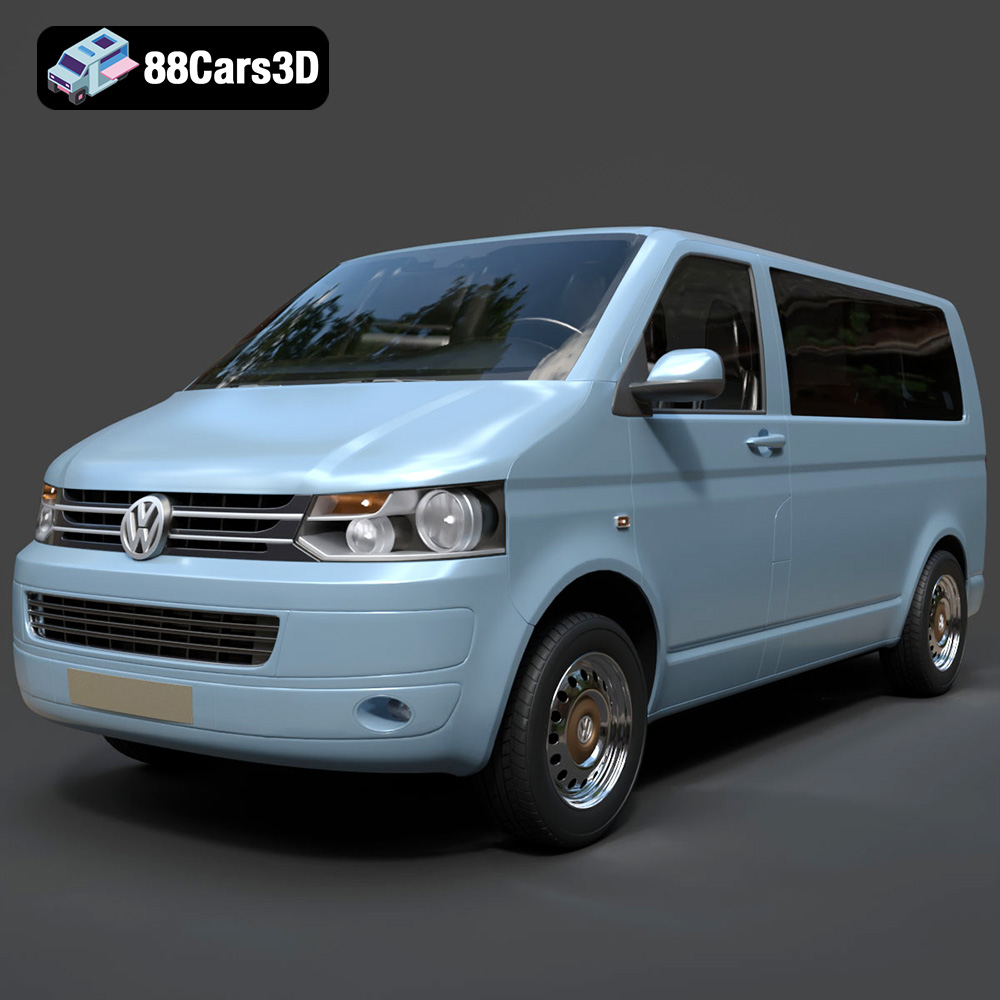
Texture: Yes
Material: Yes
Download the Volkswagen Transporter T5 FL 2010 3D Model featuring clean geometry, realistic detailing, and a fully modeled interior. Includes .blend, .fbx, .obj, .glb, .stl, .ply, .unreal, and .max formats for rendering, simulation, and game development.
Price: $22.99
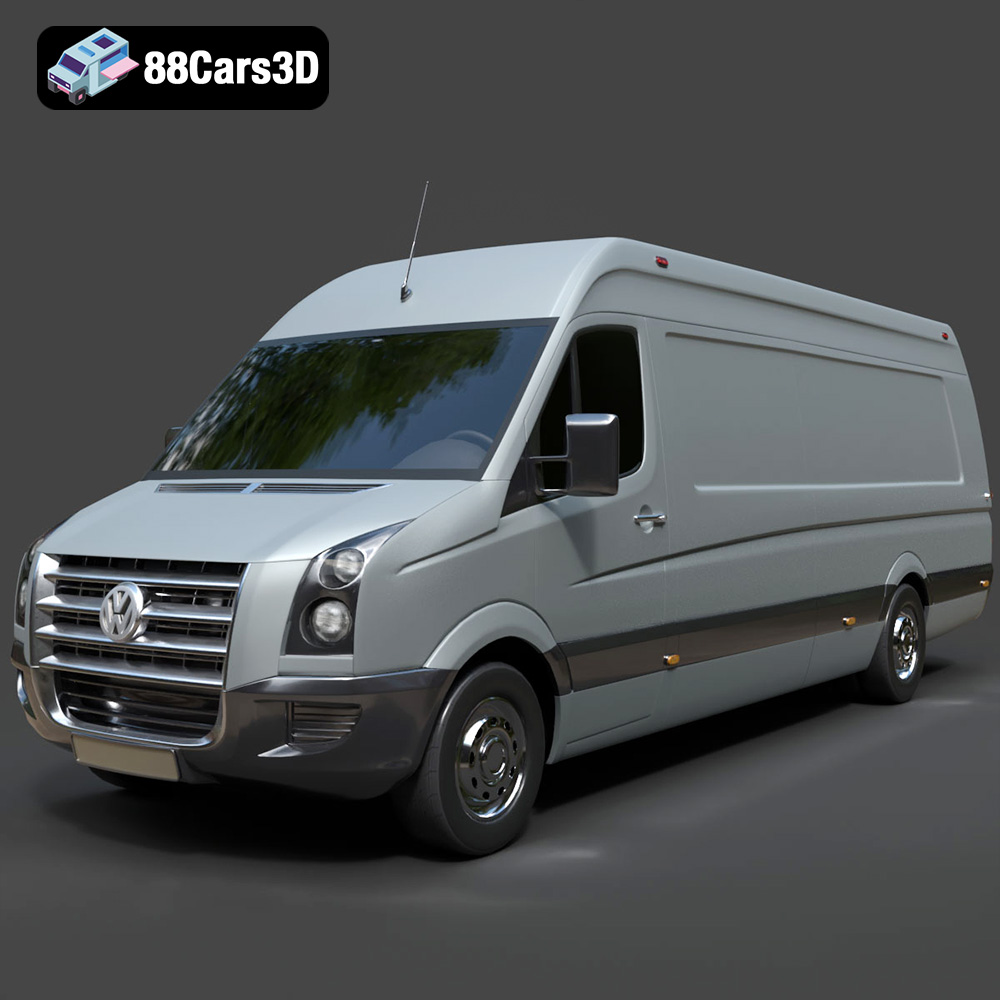
Texture: Yes
Material: Yes
Download the Volkswagen Crafter 2020 3D Model featuring clean geometry, realistic detailing, and a fully modeled interior. Includes .blend, .fbx, .obj, .glb, .stl, .ply, .unreal, and .max formats for rendering, simulation, and game development.
Price: $22.99
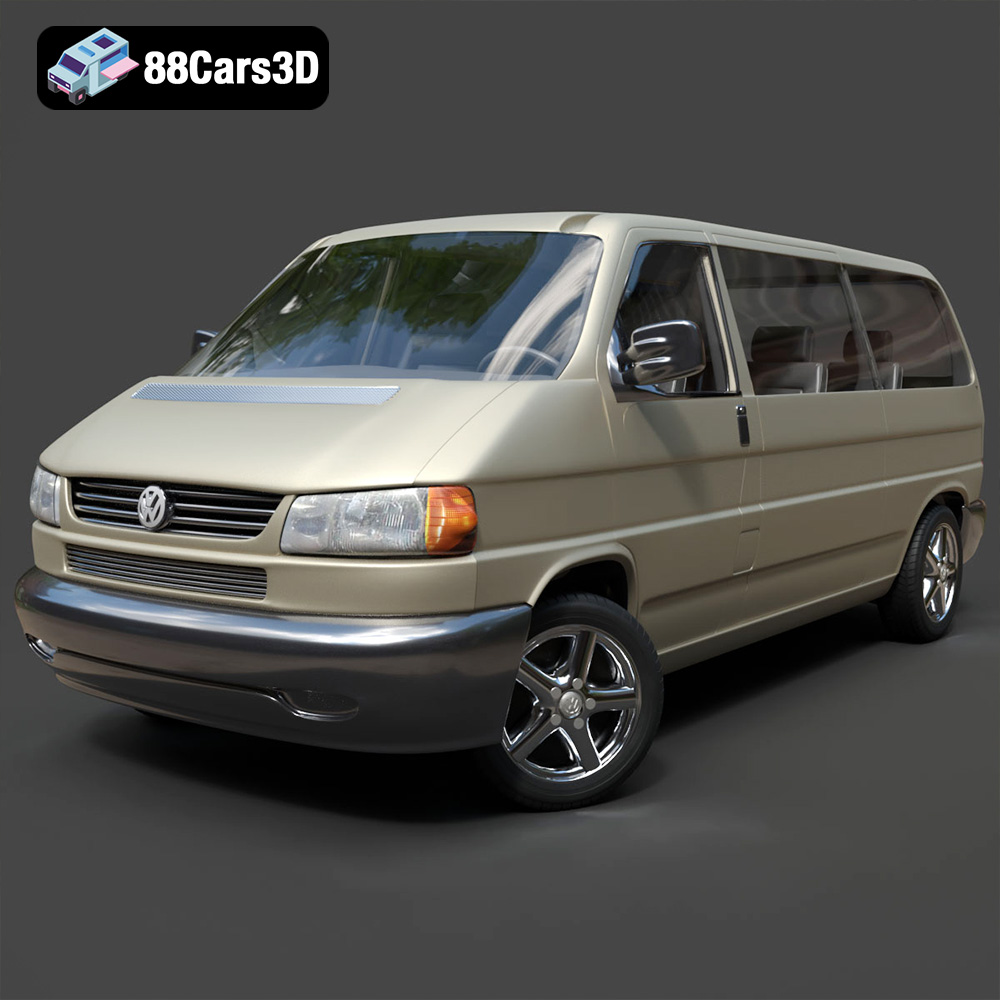
Texture: Yes
Material: Yes
Download the Volkswagen Caravelle 3D Model featuring a detailed exterior, functional interior, and optimized topology. Includes .blend, .fbx, .obj, .glb, .stl, .ply, .unreal, and .max formats for rendering, simulation, and game development.
Price: $23.99
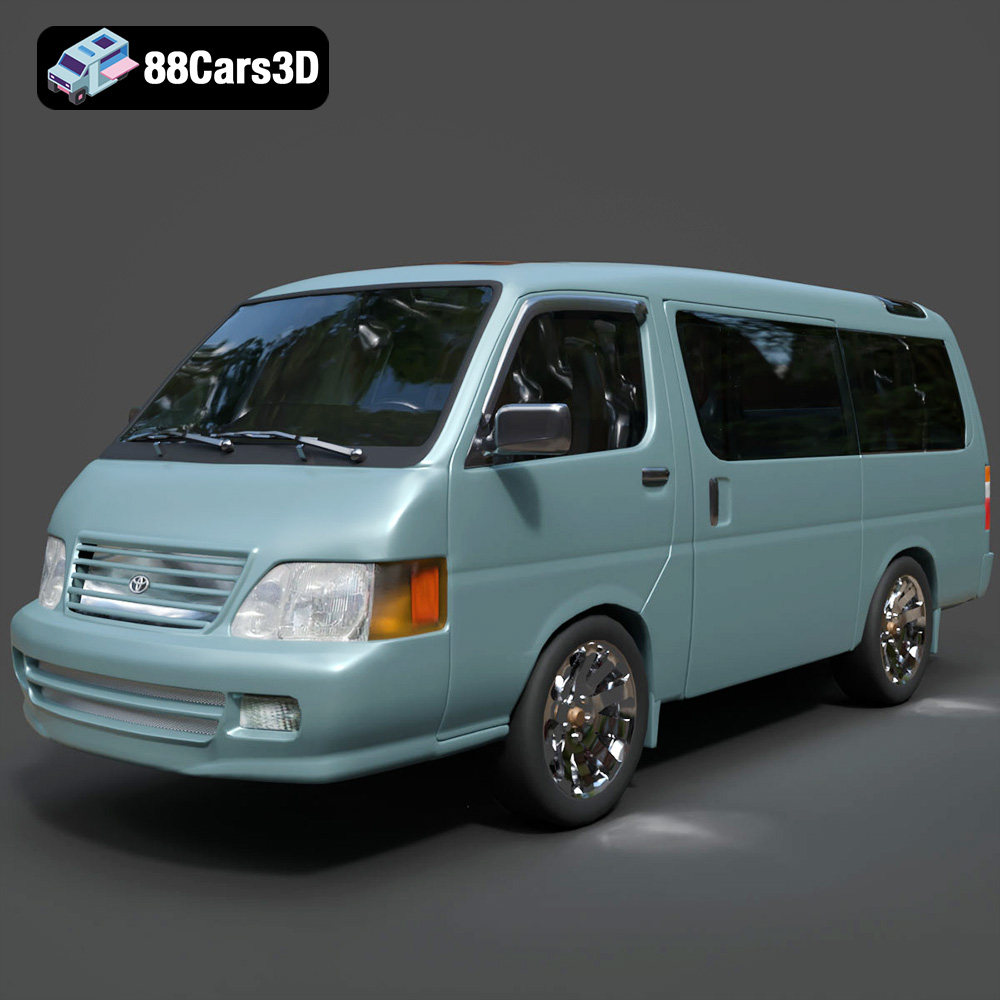
Texture: Yes
Material: Yes
Download the Toyota Hiace 3D Model featuring versatile design and detailed exterior. Includes .blend, .fbx, .obj, .glb, .stl, .ply, .unreal, and .max formats for rendering, simulation, and game development.
Price: $21.99
Texture: Yes
Material: Yes
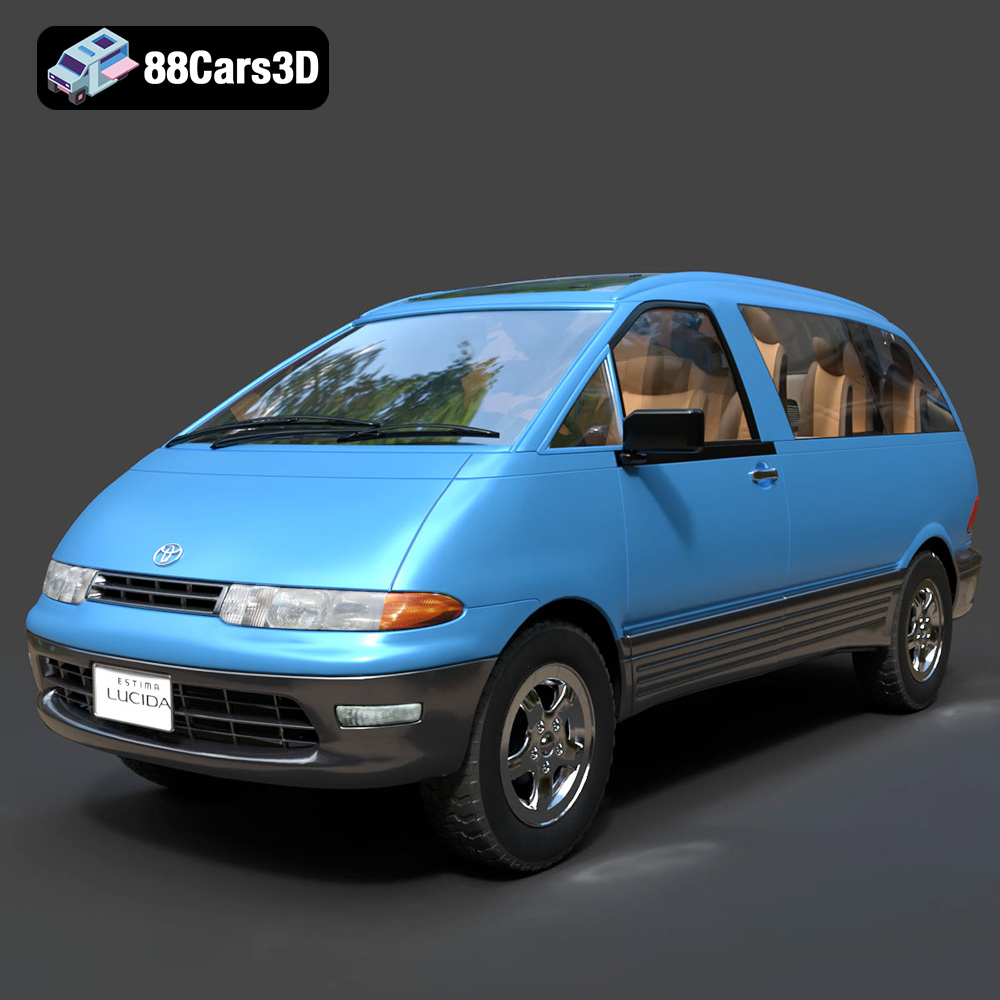
Download the Toyota Estima Lucida 3D Model featuring its iconic compact MPV design, versatile interior, and accurate exterior details. Includes .blend, .fbx, .obj, .glb, .stl, .ply, .unreal, and .max formats for rendering, simulation, and game development.
Price: $24.99

Texture: Yes
Material: Yes
Download the Toyota Alphard 3D Model featuring a detailed luxury minivan design with an accurate exterior and interior. Includes .blend, .fbx, .obj, .glb, .stl, .ply, .unreal, and .max formats for rendering, simulation, and game development.
Price: $21.99
Texture: Yes
Material: Yes
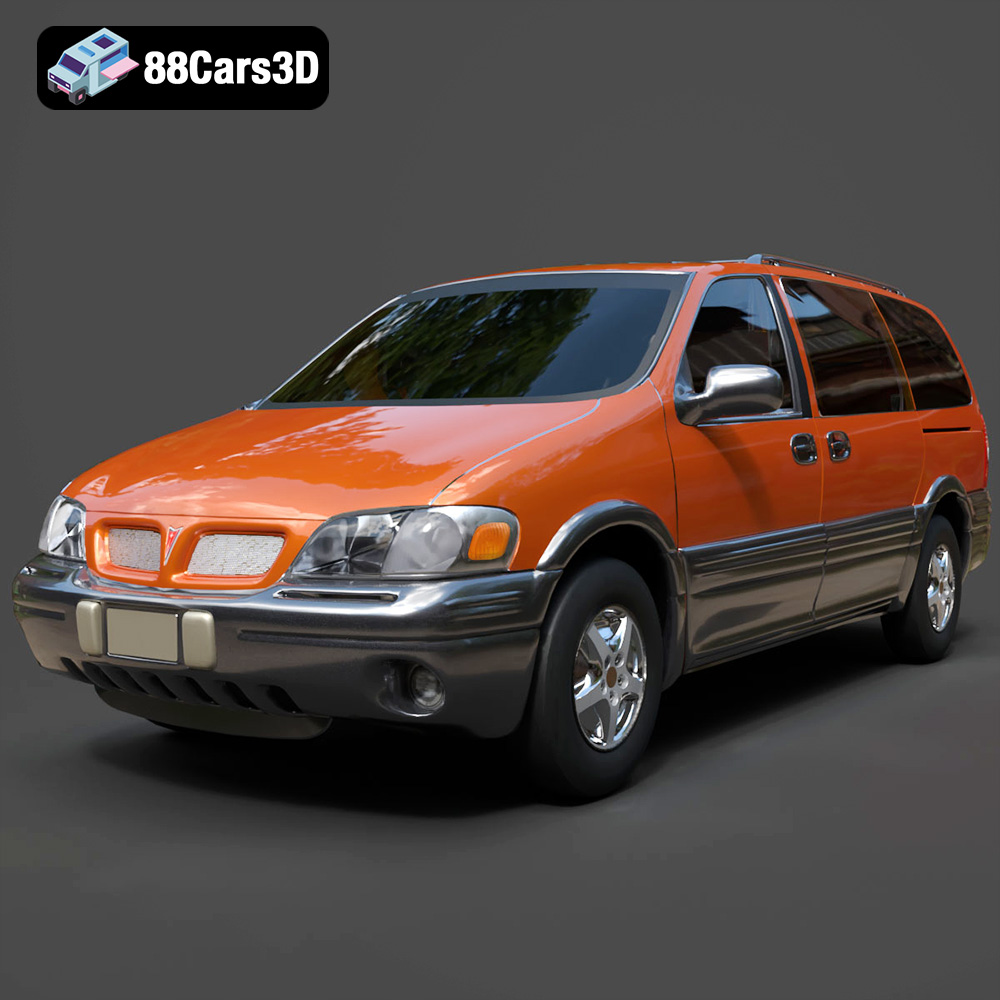
Download the Pontiac Montana 1998 3D Model featuring a detailed exterior, functional interior, and optimized mesh. Includes .blend, .fbx, .obj, .glb, .stl, .ply, .unreal, and .max formats for rendering, simulation, and game development.
Price: $21.99
Texture: Yes
Material: Yes
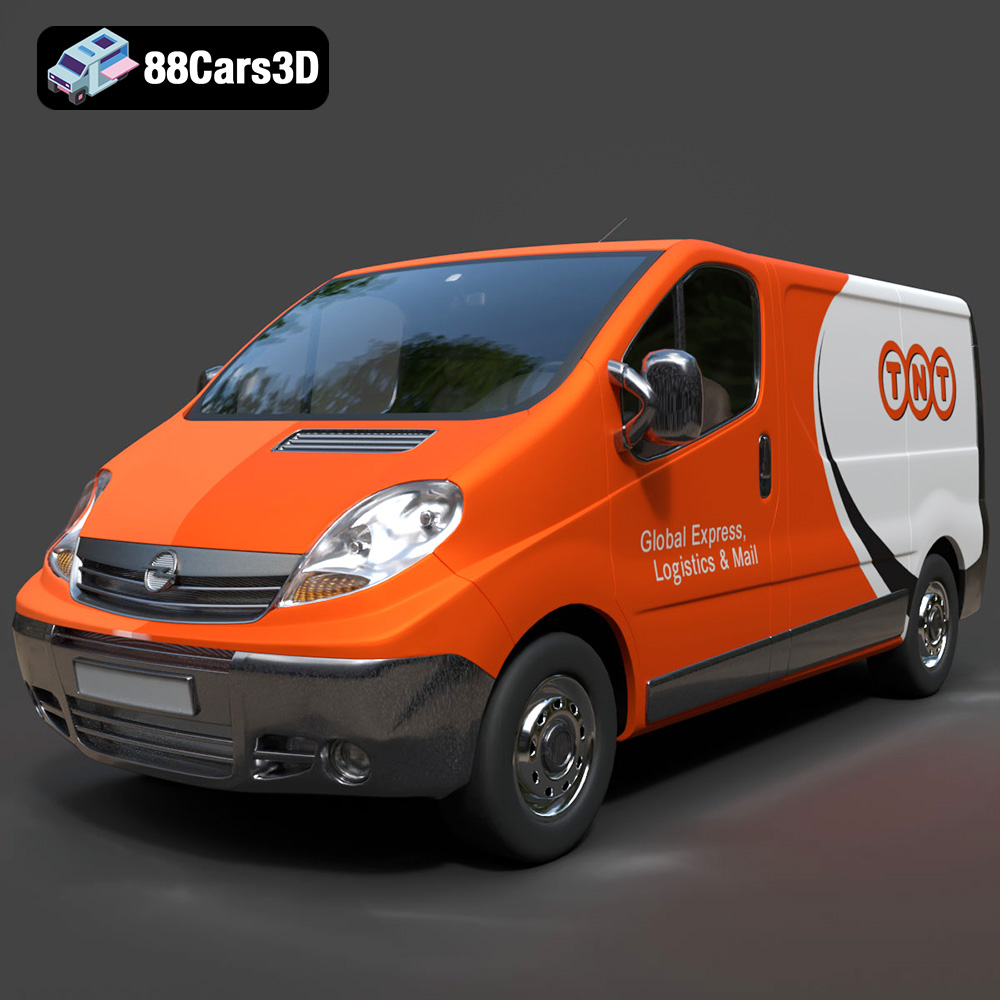
Download the Opel Vivaro 3D Model featuring a versatile commercial van design with balanced detailing. Includes .blend, .fbx, .obj, .glb, .stl, .ply, .unreal, and .max formats for rendering, simulation, and game development.
Price: $21.99
Texture: Yes
Material: Yes
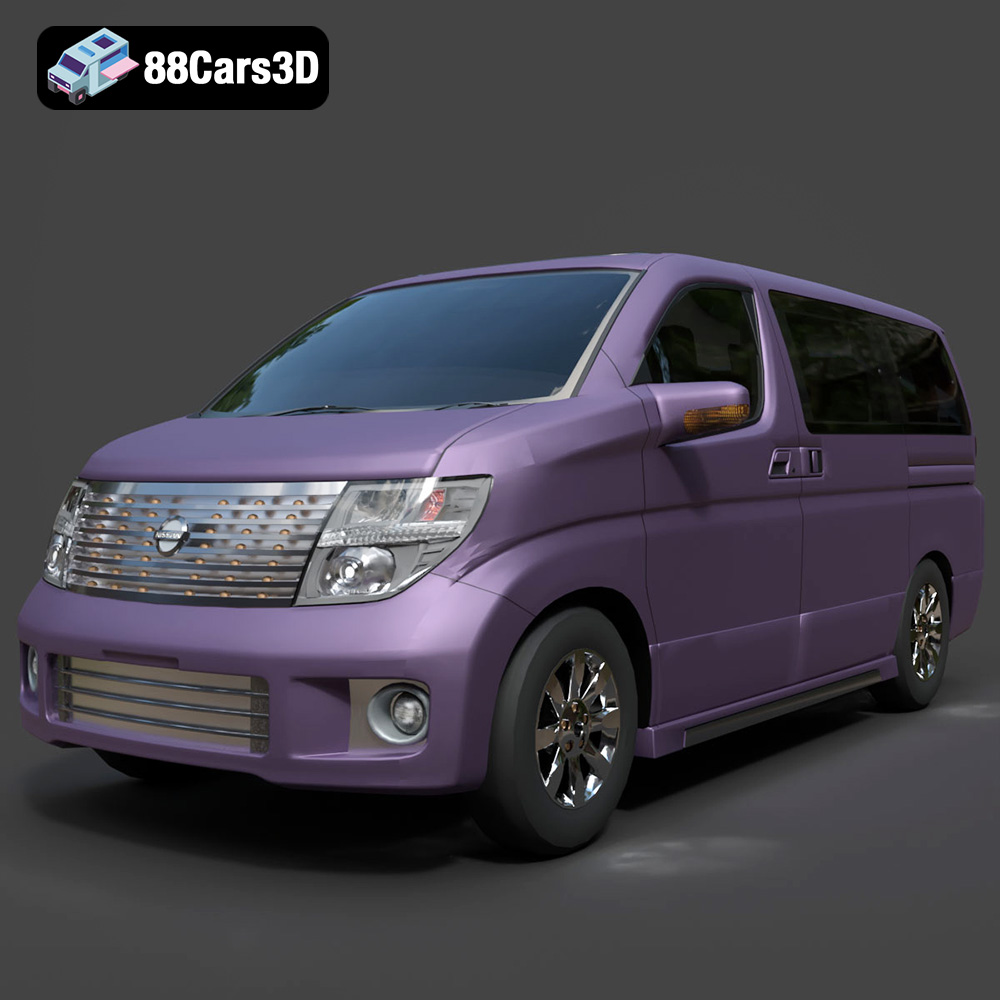
Download the Nissan Elgrand 3D Model featuring a versatile minivan design. Includes .blend, .fbx, .obj, .glb, .stl, .ply, .unreal, and .max formats for rendering, simulation, and game development.
Price: $21.99

