⚡ FLASH SALE: Get 60% OFF All Premium 3D & STL Models! ⚡

In the fast-paced worlds of automotive design, architectural visualization, game development, and cinematic production, the demand for realistic, high-quality 3D assets is paramount. A meticulously crafted 3D car model isn’t just an object; it’s a foundation for immersive experiences, a tool for precise engineering, and a canvas for boundless creativity. These assets allow designers to iterate rapidly, game developers to populate vast virtual worlds, and animators to tell compelling stories with unparalleled visual fidelity.
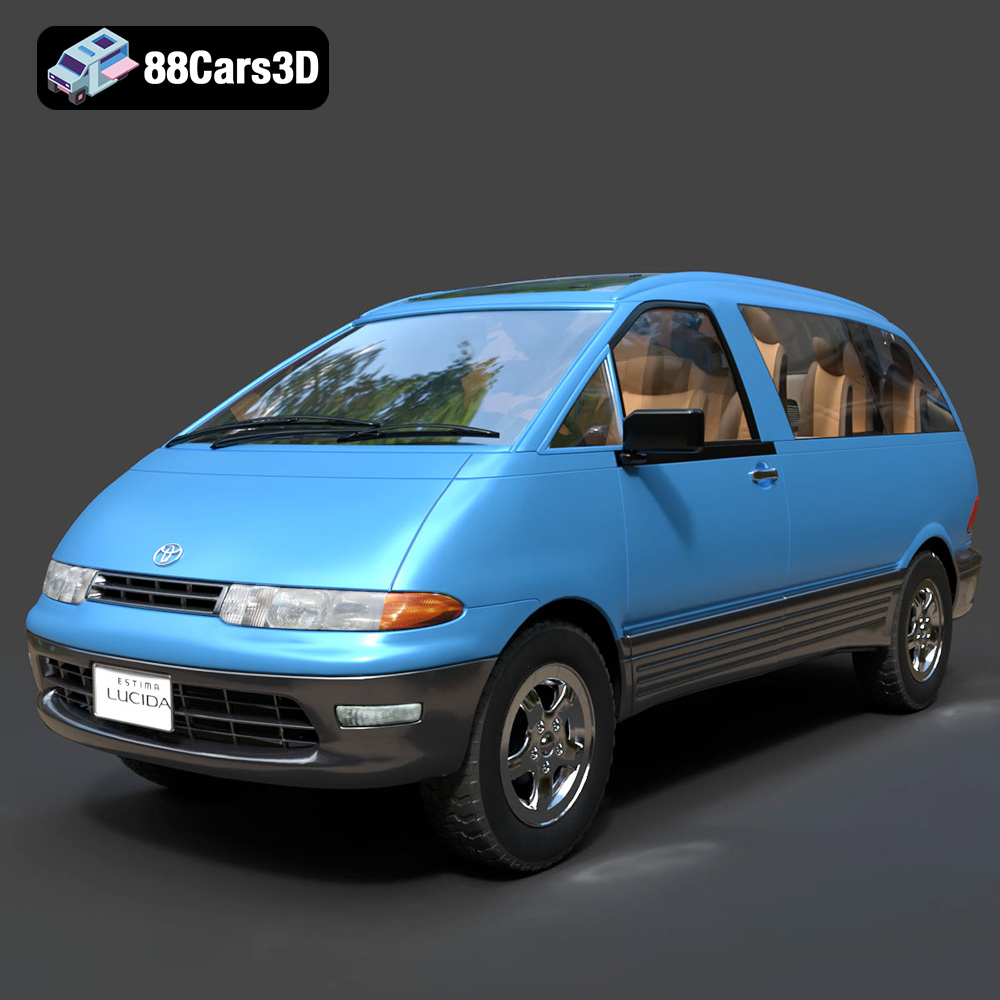
Today, we delve into the intricate details that elevate a good 3D car model to an indispensable professional asset. We’ll explore the technical specifications, workflow advantages, and diverse applications that make a difference in professional projects. As a prime example of such a versatile asset, we’ll frequently reference the Toyota Estima Lucida 3D Model available on 88cars3d.com. This model encapsulates the balance between aesthetic accuracy and technical optimization, making it an excellent case study for understanding the value of premium 3D vehicle assets.
The choice of file format for a 3D model is far more than a simple preference; it dictates compatibility, optimizes performance, and streamlines workflows across diverse software and platforms. Professionals must understand the nuances of each format to ensure their assets, such as the Toyota Estima Lucida 3D Model, are utilized to their fullest potential.
.fbx (Filmbox): Developed by Autodesk, FBX has become the industry-standard interchange format, particularly for animation and game development. It’s incredibly versatile, capable of storing not just mesh data but also materials, textures, animations, camera information, and even skeletal rigs. This comprehensive data packing makes .fbx ideal for transferring complex scenes between applications like 3ds Max, Maya, Blender, and directly into game engines like Unreal Engine and Unity. When integrating a detailed model like the Toyota Estima Lucida into a real-time environment or a complex animation sequence, .fbx is often the go-to choice due to its ability to preserve hierarchical data and animation curves.
.obj (Wavefront OBJ): As one of the oldest and most widely supported 3D file formats, .obj is a universal workhorse. It’s excellent for exchanging static mesh data and basic material information (through an accompanying .mtl file) across virtually all 3D software. Its simplicity is its strength; .obj files are often smaller and easier to parse, making them a robust option for basic mesh export or archival. While it doesn’t support animation or rigging, its widespread compatibility ensures that the core geometry of any 3D car model, including the Toyota Estima Lucida, can be accessed and manipulated regardless of your preferred software.
.blend (Blender Project): This native file format for Blender contains an entire Blender scene, including meshes, materials, textures, lights, cameras, animations, and modifiers. For Blender users, it offers the most complete and editable version of the model. It allows for non-destructive workflow adjustments, making it perfect for custom modifications, rendering, or preparing assets for specific pipelines. A .blend file like that offered for the Toyota Estima Lucida provides the ultimate flexibility for Blender artists.
.max (3ds Max Project): Similar to .blend for Blender, the .max file is the native format for Autodesk 3ds Max. It stores all scene information, including complex hierarchies, modifiers, animation data, and specific rendering setups (like V-Ray or Corona). For professionals working within the 3ds Max ecosystem, the .max file is essential for full control over the model, allowing for advanced rendering, intricate rigging, and scene integration. It represents the complete editable state of the asset within its native environment.
.unreal (Unreal Engine Asset): This isn’t a single file format in the traditional sense, but rather an engine-ready asset or project setup specifically for Unreal Engine. It implies the model has been optimally prepared, possibly with proper material instances, collision meshes, LODs (Levels of Detail), and blueprint configurations for immediate use within an Unreal Engine project. This saves significant setup time for game developers or virtual production artists, enabling seamless drag-and-drop integration of assets like the Toyota Estima Lucida directly into their real-time environments.
.glb (GL Transmission Format Binary): GLB is the binary version of glTF, a royalty-free specification for the efficient transmission and loading of 3D scenes and models by applications. It’s highly optimized for web-based 3D, AR (Augmented Reality), and VR (Virtual Reality) applications, packaging geometry, materials, textures, and animation into a single compact file. Its small file size and runtime performance make it ideal for interactive browser experiences or mobile AR applications. For showcasing the Toyota Estima Lucida in an AR experience or on a website, .glb offers exceptional efficiency.
.stl (Stereolithography): This format is synonymous with 3D printing. STL describes only the surface geometry of a 3D object, typically using a collection of triangular facets. It lacks color, texture, or other CAD attributes. For physical prototyping or creating scale models of the Toyota Estima Lucida, converting its geometry to .stl is the necessary step before sending it to a 3D printer. The model must have “manifold” geometry (no holes or non-watertight surfaces) to be suitable for .stl export.
.ply (Polygon File Format / Stanford Triangle Format): The PLY format is designed to store 3D data from 3D scanners. It can store a wider range of properties than .stl, including color, transparency, surface normals, and texture coordinates. While less common for general asset exchange, .ply is valuable in scientific, engineering, and CAD workflows where precise mesh data, often derived from laser scans or detailed analyses, is critical. For high-precision analysis of the Toyota Estima Lucida’s geometry, .ply can be a useful format.
By offering a comprehensive range of these file formats, including the specific .unreal and .max projects, a marketplace like 88cars3d.com ensures that assets like the Toyota Estima Lucida 3D Model are immediately usable and adaptable across the broadest spectrum of professional pipelines.
Achieving photorealistic automotive rendering requires a deep understanding of geometry, materials, and lighting. A professional 3D car model, such as the Toyota Estima Lucida 3D Model, is built from the ground up to meet these stringent demands, allowing artists to create stunning visuals for marketing, film, or architectural presentations.
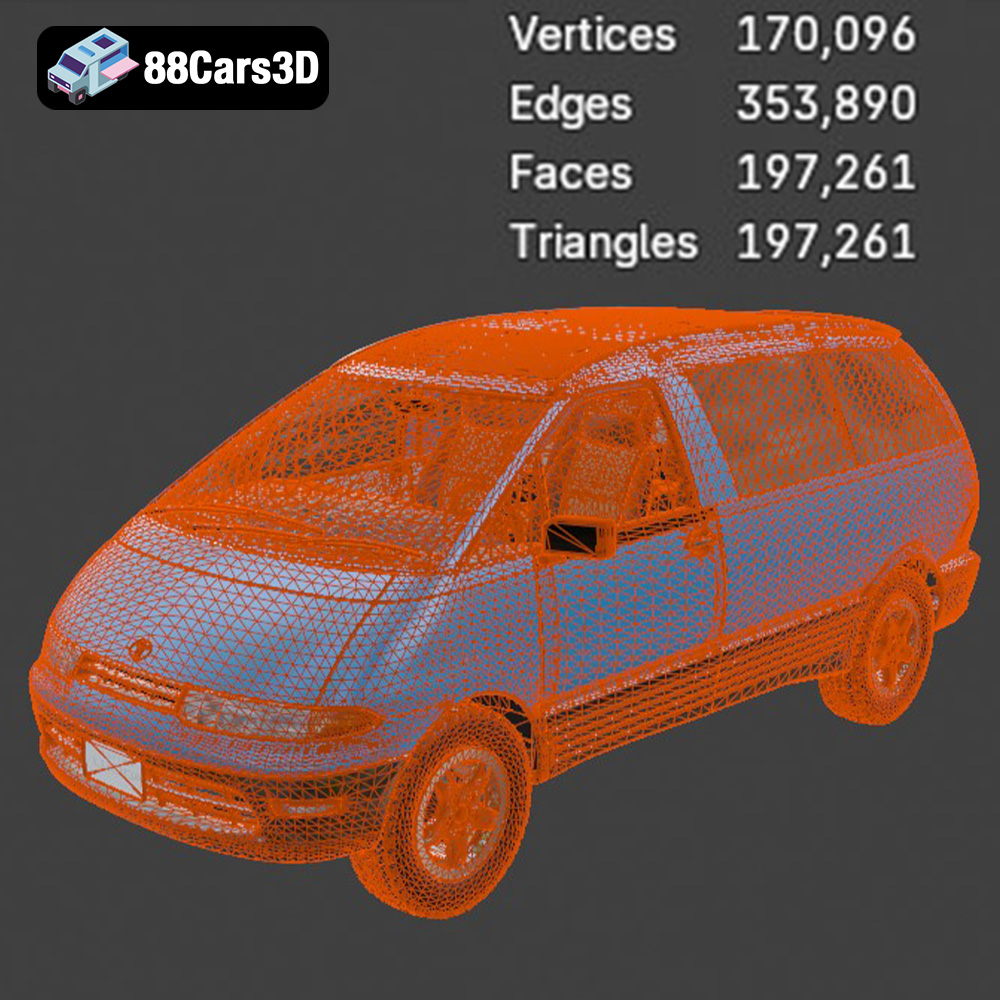
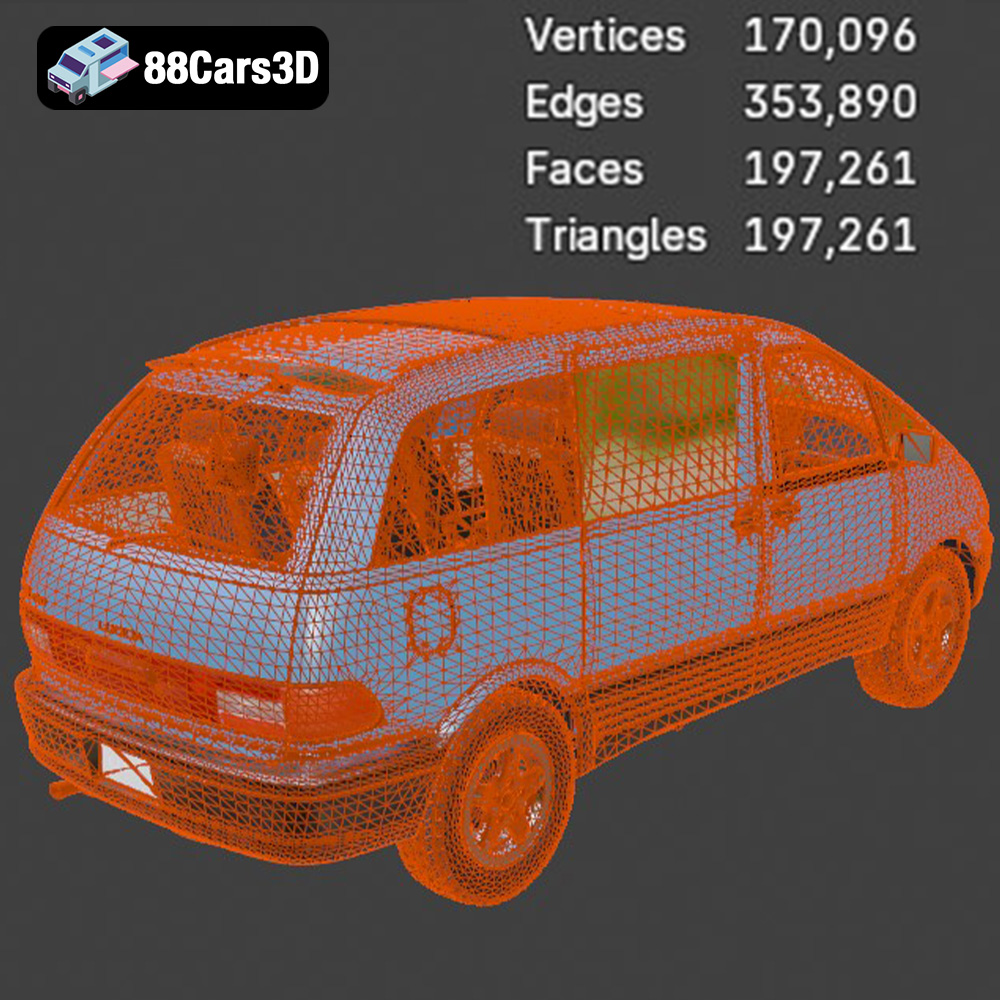
The foundation of any high-quality 3D model lies in its geometry and topology. For automotive assets, this translates into clean, quad-dominant meshes. Quads (four-sided polygons) are preferred because they deform smoothly during animation and respond predictably to subdivision surfaces, avoiding pinching or undesirable artifacts. The Toyota Estima Lucida model exemplifies this with its optimized geometry, ensuring smooth curves and accurate body panels that reflect the vehicle’s distinctive aerodynamic profile. Modeling to real-world scale is equally crucial. This ensures that the vehicle integrates seamlessly into existing scenes, maintaining correct proportions relative to environments, characters, or other objects. Accurate scaling prevents visual discrepancies and simplifies scene setup in rendering engines like V-Ray, Corona, or Cycles.
Detailed features are also essential for realism. This includes precisely replicated headlights, taillights, and indicator lights with realistic glass materials that refract and reflect light credibly. Wheels and tires are often a focal point, demanding intricate tread patterns and rim details that stand up to close-up shots. Furthermore, components like doors, the hood, and trunk are modeled as separate elements, not just for aesthetic accuracy but crucially for facilitating easy animation and rigging workflows. This foresight in modeling saves countless hours in post-production and animation phases.
Beyond geometry, the visual quality hinges on sophisticated material work and a nuanced understanding of lighting. Physically Based Rendering (PBR) materials are standard, accurately simulating how light interacts with different surfaces. This means creating realistic paint finishes with subtle reflections, clear and tinted window glass materials that allow for authentic transparency and reflections, and rubber textures for tires that respond to light with appropriate roughness and specularity. The Toyota Estima Lucida model offers adjustable material properties, allowing artists to customize paint finishes, metal luster, and glass transparency to match specific project requirements or creative visions.
Lighting is the final touch that breathes life into a render. Studio renders often utilize controlled environments with HDRI (High Dynamic Range Imaging) lighting to capture complex real-world illumination. Architectural visualizations might integrate the car into a dynamic exterior scene, requiring careful consideration of sun angle, shadows, and ambient occlusion. Professional rendering engines like 3ds Max with V-Ray or Blender with Cycles/Eevee provide the tools to manipulate these elements, allowing artists to achieve cinematic quality outputs that truly showcase the vehicle’s design. The included .max and .blend files with the Toyota Estima Lucida provide a robust starting point for these advanced rendering tasks.
In game development and real-time interactive experiences, performance is paramount. A beautiful 3D model means little if it causes frame rate drops or excessive loading times. High-quality 3D car models designed for real-time applications, such as those found on 88cars3d.com, strike a delicate balance between visual fidelity and computational efficiency.
Game assets require carefully managed polygon counts. While rendering can handle millions of polygons, real-time engines operate under strict budgets. A professionally optimized model employs techniques like careful retopology to reduce unnecessary geometry while maintaining visual integrity. It also leverages “Levels of Detail” (LODs). LODs are progressively simpler versions of the same model that swap in as the camera moves further away from the object. This ensures that a high-detail model like the Toyota Estima Lucida looks excellent up close, but simpler versions are used at a distance, significantly improving performance without a noticeable visual degradation to the player.
Beyond poly count, efficient UV unwrapping and texture atlas creation are critical. UVs dictate how a 2D texture map is applied to the 3D surface. Clean, non-overlapping UVs are essential for baking detailed normal maps, ambient occlusion maps, and diffuse textures that add realism without adding geometric complexity. The Toyota Estima Lucida 3D Model, optimized for various rendering engines and real-time applications, implicitly relies on these best practices, providing a ready-to-use asset that performs well in demanding environments.
For game development, cars are rarely static. They need to drive, have doors open, and wheels turn. A professional 3D car model accounts for this with an organized hierarchy and properly set pivots. For the Toyota Estima Lucida model, separate components for doors, hood, and trunk, combined with correctly placed pivot points, simplify the rigging and animation process. This means a game developer can easily script door opening animations or integrate the vehicle into a physics system where wheels rotate realistically and suspension components articulate. Basic under-the-hood engine and drivetrain components, while not always fully animated, provide comprehensive visuals for potential damage models or customizable engine bay views.
Collision meshes are another often-overlooked but crucial aspect. These are simplified geometric shapes used by the game engine for physics calculations and determining when objects hit each other. A good game asset includes optimized collision geometry to ensure accurate interaction with the game world without heavy performance costs.
Integrating a 3D car model into a game engine like Unreal Engine or Unity needs to be a smooth process. Formats like .fbx are excellent for this, importing not just the mesh but also the skeletal rig, animations, and basic material assignments. For a model like the Toyota Estima Lucida, which offers an explicit “.unreal” project setup, this process is even more streamlined. The asset might already come with pre-configured material instances, LODs, and even basic blueprints for interactive functionality. This greatly reduces the overhead for game developers, allowing them to focus on gameplay and scene design rather than wrestling with asset preparation.
Whether creating a racing game, an open-world simulation, or an interactive training module, the quality and optimization of the 3D vehicle assets are paramount. By leveraging high-quality 3D car models from marketplaces like 88cars3d.com, developers can significantly accelerate their production timelines and achieve a higher level of polish in their final products.
The utility of a high-fidelity 3D car model extends far beyond traditional rendering and game development. With advancements in augmented reality (AR), virtual reality (VR), high-precision simulation, and 3D printing, a versatile asset like the Toyota Estima Lucida 3D Model finds powerful applications across diverse industries.
Augmented Reality and Virtual Reality environments demand assets that are not only visually appealing but also highly optimized for real-time performance on a variety of devices, from powerful VR headsets to mobile phones. The .glb file format, provided with the Toyota Estima Lucida, is a perfect fit for this. Its compact, single-file nature makes it ideal for rapid deployment in web-based AR viewers or mobile VR applications, allowing users to interact with a realistic vehicle in their own environment or an immersive digital world. Imagine a customer viewing the Toyota Estima Lucida on their driveway through their phone’s AR camera, rotating it, opening doors, and changing paint colors in real-time. Or an architect using VR to walk a client through a virtual dealership showroom, showcasing the car within their design.
These applications leverage the model’s clean geometry and optimized materials to deliver compelling, interactive experiences that push the boundaries of product visualization and digital engagement. The ability to seamlessly integrate into immersive environments makes these 3D car models invaluable tools for marketing, sales, and interactive design reviews.
Accuracy is paramount in simulation and training environments. Whether for advanced driving simulators, automotive design reviews, or educational modules, the real-world scale and detailed components of a professional 3D car model are essential. The Toyota Estima Lucida’s accurately modeled body panels, detailed interior (dashboard, steering wheel, instrument cluster), and basic engine components provide the level of fidelity required for realistic training scenarios. For instance, a driving simulator could use this model to accurately represent vehicle dynamics and occupant interaction within a virtual environment. Engineers can use the model for early-stage design review, identifying potential issues or refining aesthetics before physical prototypes are built, saving significant time and cost.
Formats like .ply can also come into play for highly precise mesh analysis, especially if the model is being integrated into a CAD or engineering analysis pipeline, allowing for detailed examination of its geometry and structure.
The journey of a 3D model doesn’t always end on a screen. For product designers, hobbyists, or even marketing agencies, transforming a digital asset into a physical object via 3D printing is a powerful capability. The Toyota Estima Lucida 3D Model is described as having geometry suitable for conversion to .stl, the standard format for 3D printing. This means the model’s underlying mesh is “manifold”—watertight and without holes—a crucial requirement for successful 3D prints. From creating scale models for display to rapid prototyping custom components, the ability to transition from digital visualization to tangible reality adds another layer of utility to these comprehensive 3D assets.
This versatility underscores the immense value of a well-prepared 3D car model. It’s not just a single-purpose asset but a multi-faceted tool capable of empowering innovation across a multitude of professional domains.
In today’s fast-paced creative industries, time is a precious commodity. Building a high-quality 3D car model from scratch can take hundreds of hours, demanding specialized skills in modeling, texturing, and optimization. This is where a trusted marketplace like 88cars3d.com becomes an indispensable resource for professionals and studios alike.
Purchasing a pre-built 3D model like the Toyota Estima Lucida 3D Model offers a significant advantage: instant access to a professional-grade asset. Instead of dedicating valuable resources to modeling, artists can immediately jump into rendering, animation, or game development. This drastic reduction in production time translates directly into cost savings and allows teams to focus on core creative challenges rather than repetitive asset creation tasks. The quality assurance that comes with a meticulously crafted model ensures that artists aren’t spending time fixing geometry, unwrapping UVs, or rebuilding materials. The model’s clean, quad-dominant topology and organized hierarchy mean it’s ready for immediate integration, subdivision, or rigging.
Furthermore, the provision of multiple file formats—including native project files for Blender (.blend) and 3ds Max (.max), along with universal options like .fbx and .obj, and specialized formats for AR/VR (.glb) and 3D printing (.stl)—ensures broad compatibility. This flexibility is a hallmark of premium assets from 88cars3d.com, empowering artists to work within their preferred software ecosystem without compromise.
While pre-built, these models are designed for adaptability. The Toyota Estima Lucida, for instance, offers easily adaptable paint finishes and graphic designs. This means artists can quickly change the car’s color, apply custom liveries for a racing game, or integrate branding for a marketing campaign. Adjustable material properties for metals, plastics, rubber, and glass allow for fine-tuning to achieve desired visual effects, ensuring the model fits perfectly into any scene’s aesthetic. Flexible lighting setup modifications further enhance this adaptability, allowing the vehicle to seamlessly match different scene moods and environments, from a bright studio render to a moody night-time street scene.
This balance of pre-built quality and extensive customization options makes models from 88cars3d.com incredibly versatile. They serve as robust foundations that can be rapidly deployed or extensively modified, providing immense value to any project demanding high-quality 3D vehicle assets. It’s about empowering artists to achieve their vision more efficiently and effectively.
The journey from a blank canvas to a stunning, interactive 3D automotive experience is paved with technical challenges and creative opportunities. High-quality 3D car models are the unsung heroes of this journey, providing the detailed foundation upon which entire projects are built. We’ve explored the critical role of versatile file formats, the artistry of crafting photorealistic geometry and materials, and the rigorous optimization required for seamless performance in real-time environments.
From captivating studio renders and immersive AR/VR experiences to dynamic game simulations and precise 3D prints, a meticulously prepared 3D vehicle asset is indispensable. The Toyota Estima Lucida 3D Model, with its clean topology, extensive detailing, and broad compatibility across multiple platforms and software, stands as a prime example of the kind of asset that fuels professional innovation. By choosing expertly crafted assets from trusted sources like 88cars3d.com, artists and studios can significantly streamline their workflows, save valuable time, and elevate the quality of their final output, ultimately driving innovation in design and digital entertainment.
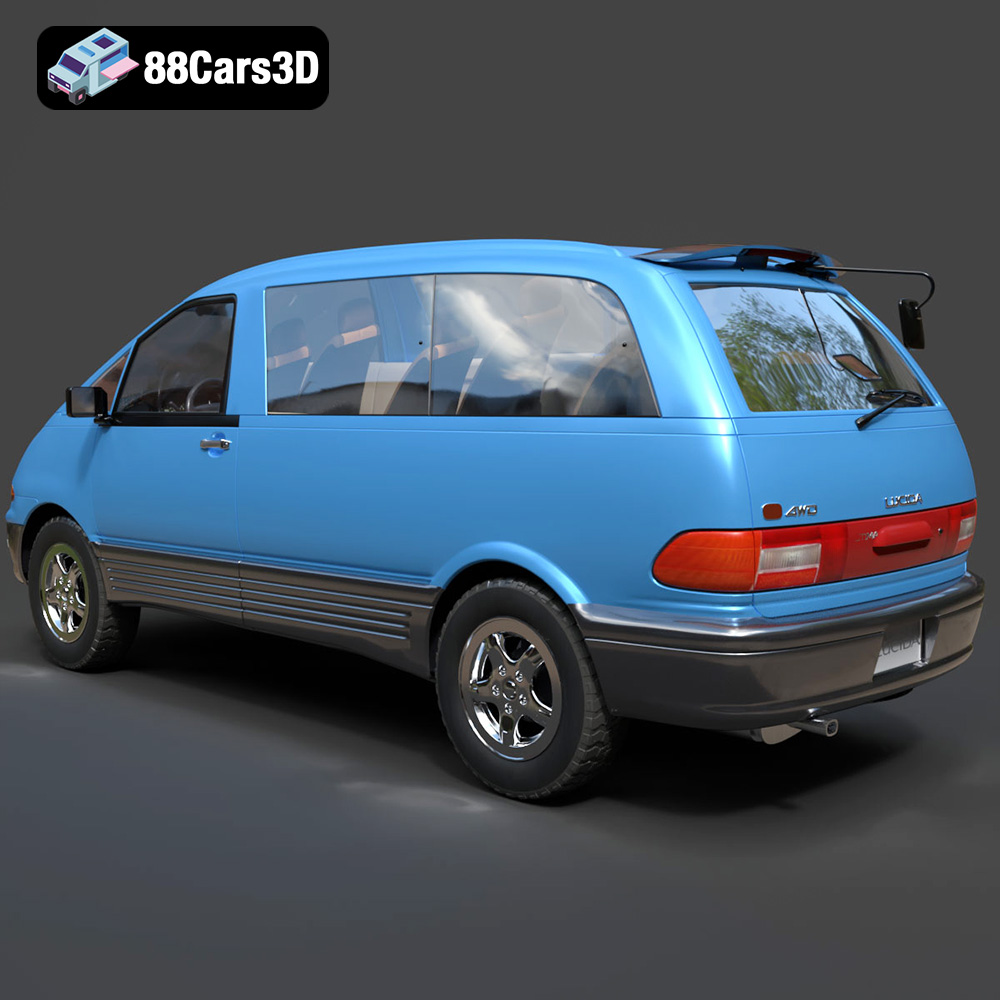
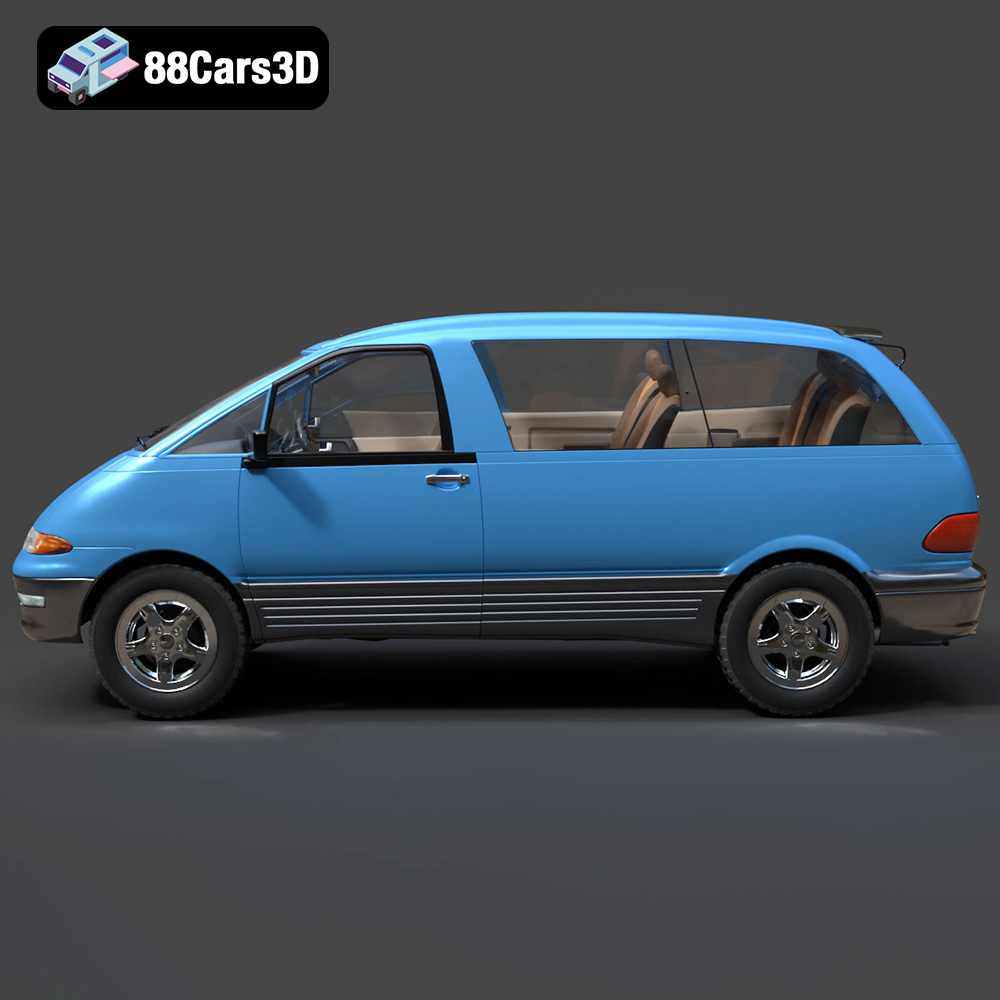
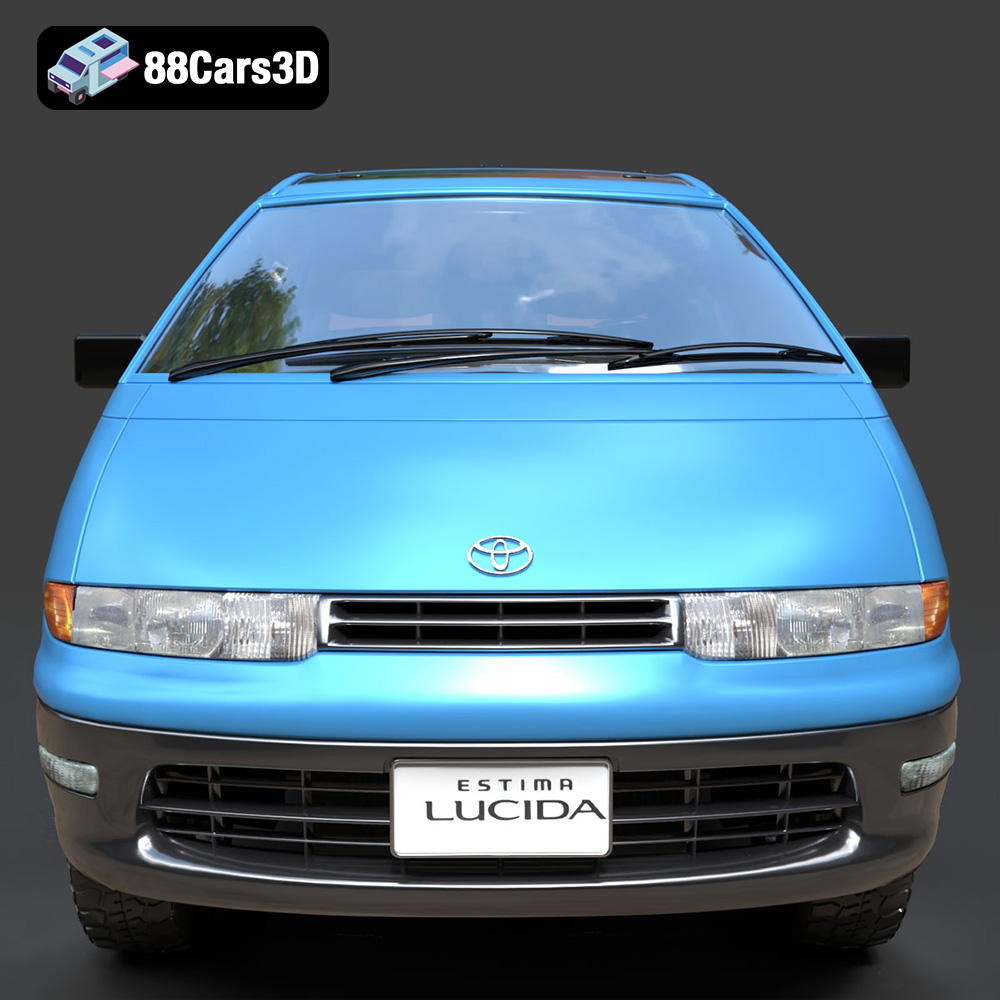
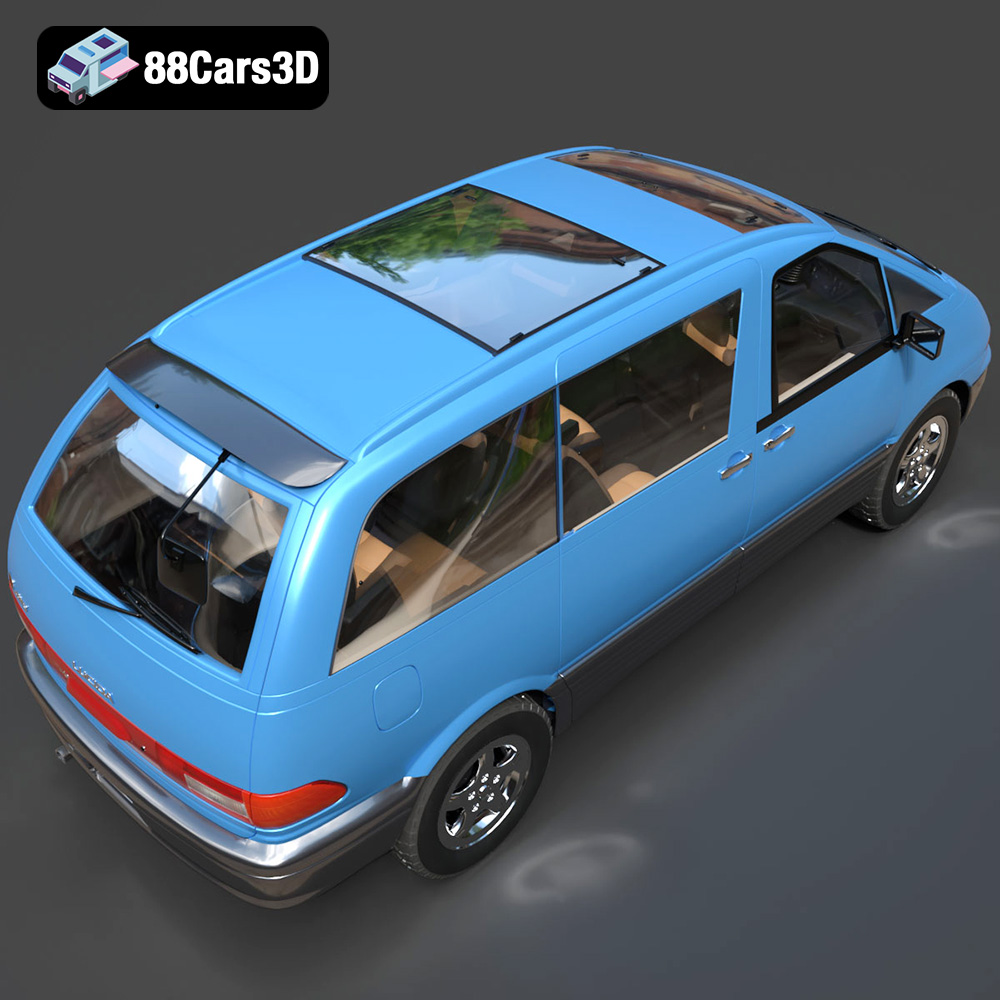
Experience the iconic functionality and distinctive design of the Toyota Estima Lucida with this meticulously crafted 3D model. Representing a quintessential compact MPV, this model captures the vehicle’s unique proportions and practical aesthetics. Built with clean, optimized geometry and balanced detailing, it is engineered for exceptional performance across various applications, making it ideal for high-fidelity rendering, realistic animation sequences, detailed simulations, and seamless integration into game development projects.
$24.99