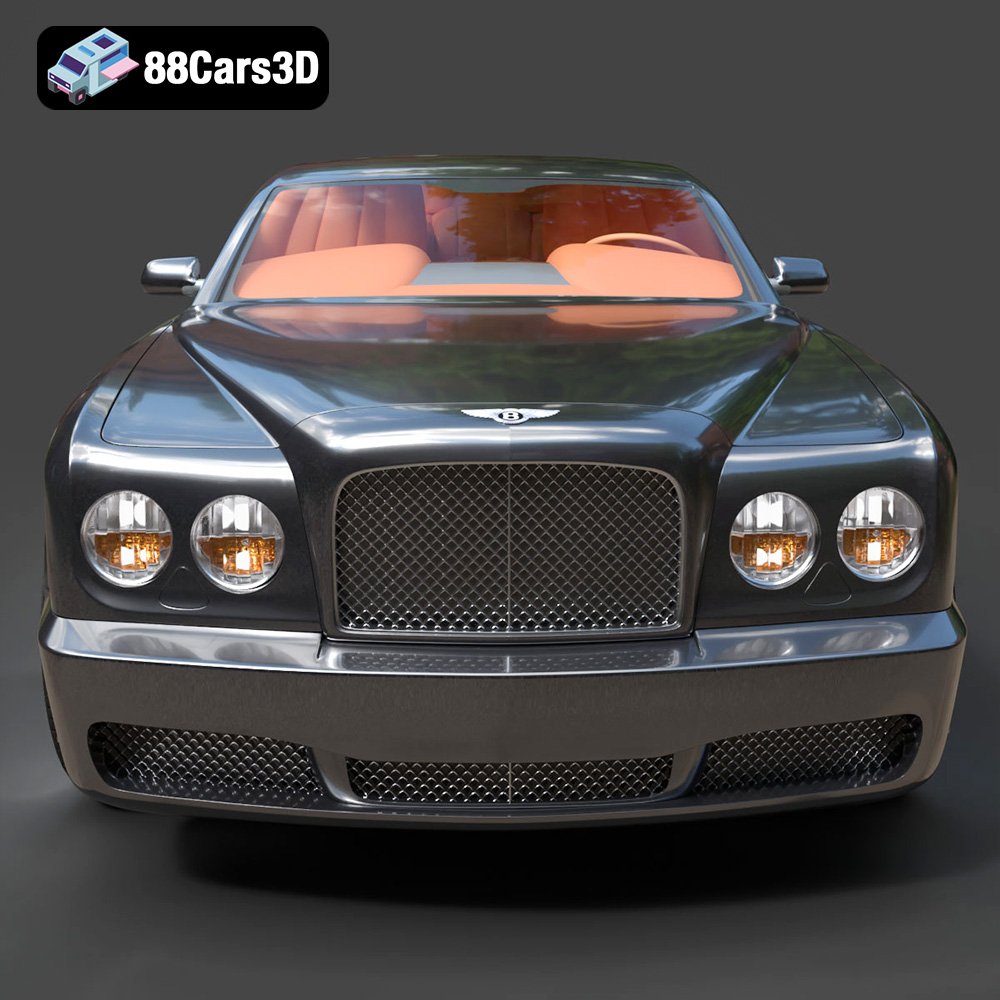
Bentley Brooklands 2008 3D Model – Unleashing Digital Luxury: The Power of High-Fidelity 3D Car Models in Modern Visualization

Unleashing Digital Luxury: The Power of High-Fidelity 3D Car Models in Modern Visualization
In the dynamic world of digital content creation, the demand for exceptionally crafted 3D models continues to soar. From hyper-realistic automotive configurators to immersive virtual reality experiences and blockbuster film sequences, a high-quality 3D car model is often the linchpin of a successful project. It’s not merely about having a representation; it’s about capturing the essence, the engineering, and the luxury of a vehicle with unerring accuracy. Professionals across various sectors, from game development studios to architectural visualization firms, understand that the foundation of compelling visual content lies in the precision and detail of their core assets.
This drive for perfection is precisely why models like the Bentley Brooklands 2008 3D Model stand out. It’s more than just a digital replica; it’s a meticulously engineered asset designed to meet the rigorous demands of professional visualization. Whether you’re aiming to render a pristine showroom scene, integrate it into a cutting-edge game, or produce a breathtaking cinematic shot, the technical prowess of such a model ensures that every curve, every texture, and every opulent detail of this classic coupe is rendered with exceptional fidelity. This level of detail and optimization makes assets from reputable marketplaces like 88cars3d.com invaluable for professionals seeking to elevate their projects.
The following exploration delves into the intricate world of 3D car models, examining the technical considerations, diverse applications, and advanced workflows that leverage assets of this caliber. We will specifically highlight how the Bentley Brooklands 2008 3D Model exemplifies the standards required for today’s most demanding digital environments.
Understanding 3D Model File Formats: The Backbone of Digital Assets
The versatility and utility of any 3D model are heavily reliant on the file formats it supports. Each format is designed with specific use cases in mind, offering unique advantages for different stages of a production pipeline, from initial design and animation to real-time rendering and physical output. Understanding these distinctions is crucial for selecting the right asset and integrating it seamlessly into your workflow. The Bentley Brooklands 2008 3D Model, for example, comes equipped with a comprehensive suite of formats, ensuring broad compatibility and utility.
.blend – Fully Editable Blender Scene with Materials
The native file format for Blender, a powerful open-source 3D creation suite, the .blend file provides a complete, editable scene. For artists and studios utilizing Blender, this is often the preferred format as it retains all the scene data: geometry, materials (including complex node setups), textures, lighting, cameras, animations, and even physics simulations. Working directly with a .blend file offers maximum flexibility for modifications, custom rigging, or adapting the model to specific project requirements within the Blender ecosystem. It’s an ideal starting point for those who want to deeply customize the Bentley Brooklands 2008 3D Model, leveraging Blender’s robust toolset.
.fbx – Ideal for Unreal, Unity, and Real-Time Pipelines
Developed by Autodesk, the .fbx format has become an industry standard for exchanging 3D data between various software applications, particularly in game development. FBX supports not just geometry and materials, but also animations, skinning, rigging, and camera data. This makes it incredibly versatile for game engines like Unreal Engine and Unity, where assets need to be transferred with all their transform data intact. The optimized nature of .fbx files, along with their ability to encapsulate complex scene information, makes them a go-to choice for importing 3D car models into real-time environments, ensuring proper scaling and pivot points.
.obj – Universal Format for Cross-Software Compatibility
The Wavefront .obj format is one of the most widely supported 3D file formats, making it a truly universal option for geometry exchange. While it primarily stores polygon mesh data (vertices, normals, UV coordinates) and references to material libraries (.mtl files), it does not typically support animation, rigging, or scene hierarchy as robustly as .fbx. However, its widespread compatibility means that almost any 3D software can open and import an .obj file, making it excellent for cross-platform collaboration or as a fallback option when specific software integrations are challenging. For general 3D car model use, .obj offers a reliable foundation.
.glb – Optimized for AR, VR, and Browser-Based Display
The GL Transmission Format (.glb or .gltf) is a relatively newer open standard specifically designed for efficient transmission and loading of 3D scenes and models by applications. Its “glTF Embedded Binary” format (.glb) bundles textures and other assets directly into a single file, making it highly optimized for web-based 3D, augmented reality (AR), virtual reality (VR), and other interactive applications where quick loading and compact file sizes are critical. For showcasing the Bentley Brooklands in a web configurator or an AR experience, .glb offers superior performance and ease of deployment.
.stl – Suitable for 3D Printing Output
The Stereolithography (.stl) format is the de facto standard for 3D printing. It represents a 3D model as a series of connected triangles, describing only the surface geometry of an object without color, texture, or other CAD attributes. While simple, its ubiquity in manufacturing and prototyping means that if you plan to 3D print a physical model of the Bentley Brooklands, an .stl file is essential. Precision in the mesh density and watertightness are critical for successful 3D prints.
.ply – Precision Mesh Format for CAD or Analysis
The Polygon File Format (.ply) is a flexible format often used for storing 3D data from 3D scanners, CAD software, and other scientific applications. It can store various properties beyond just geometry, such as color, transparency, surface normals, and range data, making it useful for more complex data analysis or visualization where precise geometric and property information is paramount. While less common for general rendering, it serves niche applications where raw, detailed mesh data is required.
.unreal – Engine-Ready Asset for Real-Time Environments
The .unreal format, specifically referring to asset packages or files directly configured for Unreal Engine, provides models that are often pre-optimized and set up within the engine’s ecosystem. This means materials, textures, collision meshes, and sometimes even basic blueprints might already be configured, streamlining the import process and reducing setup time dramatically. For game developers and real-time visualization artists working within Unreal Engine, an .unreal file represents an unparalleled level of integration, ensuring the Bentley Brooklands 2008 3D Model is ready to perform optimally out-of-the-box.
.max – Editable 3ds Max Project for Animation and Rendering
As the native file format for Autodesk 3ds Max, the .max file is the counterpart to Blender’s .blend for a different industry-leading software. It contains the complete scene, including geometry, modifiers, materials, lighting, cameras, and animation data. For professionals rooted in the 3ds Max environment, this format allows full control over every aspect of the Bentley Brooklands model, from tweaking material parameters to setting up complex rendering passes for high-end cinematic animations or product visualizations.
The Art and Science of Automotive Rendering
Automotive rendering is a specialized field that demands a fusion of artistic vision and technical mastery. It’s not just about making a car look good; it’s about evoking emotion, highlighting design philosophy, and presenting a vehicle in its most appealing light. High-quality 3D car models, such as the Bentley Brooklands 2008 3D Model, are foundational to achieving stunning results in this domain.
Achieving Photo-Realism with PBR Materials
The cornerstone of modern automotive rendering is Physically Based Rendering (PBR). PBR materials simulate how light interacts with surfaces in the real world, leading to incredibly convincing results. For a luxury vehicle like the Bentley Brooklands, this means accurately reproducing the subtle glint of chrome, the deep reflection of a polished paint job, the intricate weave of interior fabrics, and the precise scattering of light through glass. A professionally crafted 3D model will come with PBR materials meticulously set up, featuring essential maps like Albedo (Base Color), Normal, Roughness, Metallic, and Ambient Occlusion. These maps dictate how light is absorbed, reflected, and diffused, ensuring that the vehicle looks authentic under any lighting condition, from a sun-drenched outdoor scene to a dramatically lit studio environment.
Advanced Lighting and Camera Techniques
Beyond materials, superior lighting is paramount. High Dynamic Range Imagery (HDRI) environments are commonly used to provide realistic, global illumination, casting natural reflections and subtle color tints onto the vehicle’s surfaces. Combining HDRIs with carefully placed virtual studio lights allows artists to sculpt the car’s form, emphasize its lines, and create dramatic highlights. Camera settings, much like in real-world photography, play a critical role. Depth of field can draw the viewer’s eye to specific details, while cinematic camera angles and sophisticated motion blur add dynamism and elegance, essential for showcasing the luxurious presence of a Bentley.
Post-Production for Impact
The rendering process doesn’t end when the image is computed. Post-production in software like Adobe Photoshop or DaVinci Resolve is crucial for refining the final output. This stage involves color grading, adjusting contrast, adding subtle atmospheric effects like haze or lens flares, and ensuring the image composition is perfect. These final touches elevate a technically sound render into a captivating visual masterpiece, often blurring the lines between digital art and actual photography.
Integrating 3D Car Models into Game Development
The interactive nature of game development presents a unique set of challenges and opportunities for 3D car models. While photo-realism is still a goal, it must be balanced with strict performance requirements to ensure smooth gameplay. The Bentley Brooklands 2008 3D Model, with its optimized structure, is well-suited for these demanding real-time environments.
Optimization for Real-Time Performance
For game assets, polygon count is a critical factor. While high-fidelity models for rendering can push millions of polygons, game engines require a more efficient approach. “Clean geometry” in game assets typically means a well-optimized mesh that strikes a balance between visual detail and performance. Techniques like Level of Detail (LODs) are essential, where simpler versions of the model are rendered when the car is further from the camera, significantly reducing the load on the GPU. Effective UV mapping is also paramount for texture efficiency, allowing for high-quality visual detail without excessive memory usage.
Asset Pipeline for Unreal Engine and Unity
Importing 3D car models into game engines like Unreal Engine and Unity involves a systematic pipeline. The .fbx format is often the preferred choice due to its ability to transfer meshes, materials, and skeletal animations. Once imported, PBR materials need to be properly set up within the engine’s material editor, linking the various texture maps (Albedo, Normal, Roughness, Metallic) to the appropriate channels. Collision meshes are also critical, defining the physical boundaries of the vehicle for accurate physics simulations and interactions within the game world. The inclusion of a pre-configured .unreal file for the Bentley Brooklands model greatly streamlines this process for Unreal users, minimizing setup time.
Crafting Immersive Driving Experiences
Beyond mere visuals, 3D car models in games contribute to an immersive driving experience. This involves integrating the model with the game’s physics engine to simulate realistic acceleration, braking, and handling. Animation of wheels, steering, and suspension components adds to the realism. For a luxury car like the Bentley Brooklands, subtle details like realistic dashboard instrumentation and interactive interior elements can enhance player engagement, making the virtual driving experience truly compelling.
Advanced Workflows: Architectural Visualization, AR/VR, and Film
The utility of a professional 3D car model extends far beyond standalone rendering and gaming. Its versatility makes it an indispensable asset in a myriad of advanced visualization workflows, each presenting unique demands and creative opportunities.
Elevating ArchViz Scenes with Realistic Vehicles
In architectural visualization (ArchViz), the environment is paramount, but the addition of realistic contextual elements, such as luxury vehicles, can dramatically enhance a scene’s believability and aspirational quality. Imagine a meticulously rendered modern mansion, its driveway graced by the elegant lines of the Bentley Brooklands 2008 3D Model. The car not only fills empty space but also conveys a lifestyle, scale, and sense of luxury that resonates with potential clients. For ArchViz artists, integrating a pre-textured, high-quality vehicle like this saves countless hours of modeling and texturing, allowing them to focus on environmental details and lighting. The model’s clean geometry and photo-realistic materials ensure it seamlessly blends into the highly detailed architectural context.
Interactive Experiences in AR/VR
Augmented Reality (AR) and Virtual Reality (VR) are transforming how we interact with digital content, and 3D car models are at the forefront of this revolution. For AR applications, the .glb format is particularly beneficial due to its optimization for web and mobile platforms. Users can “place” a virtual Bentley Brooklands in their driveway via their smartphone, exploring its design in a real-world context. In VR, the model can be the centerpiece of a virtual showroom, allowing potential buyers to “walk around,” “sit inside” the car, and interact with its features in an immersive 3D space. These applications require models with efficient poly counts and well-optimized materials to maintain high frame rates and a comfortable user experience. The Bentley model’s suitability for real-time engines makes it an excellent candidate for these interactive experiences.
Cinematic Storytelling and Film Production
In film, television, and high-end commercial production, 3D car models are used for everything from realistic background vehicles to hero shots in action sequences. For these applications, the highest level of fidelity is often required, making models with fully modeled interiors, intricate details, and robust material setups essential. The Bentley Brooklands 2008 3D Model, with its detailed interior and professional-grade features, is perfect for close-up shots and virtual fly-throughs demanded by cinematic projects. Animators can utilize its editable .max or .blend files to rig the vehicle for complex camera movements, wheel rotations, and even door openings, allowing for dynamic storytelling that would be prohibitively expensive or impossible with practical effects alone. The ability to render the vehicle under precise lighting conditions and integrate it seamlessly into live-action footage or fully CG environments makes such a 3D car model an invaluable asset for film professionals.
Technical Excellence: Geometry, Materials, and Optimization
The true value of a professional 3D car model, such as those available on 88cars3d.com, lies in its underlying technical quality. This isn’t just about how good it looks in a promotional image, but how well it performs and integrates into diverse professional workflows. The Bentley Brooklands 2008 3D Model exemplifies these characteristics through its carefully considered geometry, material setup, and overall optimization.
The Importance of Clean Topology and UV Mapping
“Optimized, clean geometry” is a crucial phrase for any serious 3D artist. It means the model’s polygon mesh is efficiently constructed, typically using quad-based topology where appropriate, allowing for smooth subdivision and distortion without artifacts. Clean geometry is easier to animate, modify, and texture. For a complex form like a car body, this ensures that reflections flow smoothly across surfaces and that deformations (like tire compression) look natural. Equally important is professional UV mapping, which is the process of flattening the 3D surface into 2D space for texture application. High-quality UVs prevent texture stretching, allow for efficient texture packing, and simplify the texturing process, ensuring that the signature grille and detailed wheel rims of the Bentley Brooklands appear pristine.
Mastering Photo-Realistic Materials and Textures
The difference between a generic digital car and a photo-realistic masterpiece often comes down to the materials. The Bentley Brooklands model boasts materials “set up for photo-realism,” which implies a sophisticated PBR workflow. This means each surface—from the glossy paintwork and reflective chrome to the leather upholstery and wood trim—is accurately reproduced using a combination of carefully crafted textures. These textures (e.g., diffuse, normal, roughness, metallic, ambient occlusion) are typically high-resolution and meticulously painted or derived from real-world references to capture the nuanced finishes of the original vehicle. This attention to detail in material science is what allows the model to respond realistically to light, creating breathtaking renders.
Scalability and Performance Across Applications
A truly professional 3D car model isn’t built for just one purpose; it’s designed to be versatile. The “optimized structure” of the Bentley Brooklands 2008 3D Model allows it to be scalable, meaning it can perform efficiently in both high-end rendering scenarios and demanding real-time applications like game development or AR/VR. This often involves careful poly-count management, efficient material setups that can be adapted for different rendering engines, and potentially pre-made LODs. This inherent flexibility reduces the need for extensive modification, saving valuable production time and resources, making it a smart investment for any studio.
Conclusion
In the modern digital landscape, the demand for high-quality 3D assets is insatiable, and nowhere is this more evident than in the automotive sector. From compelling marketing materials and immersive training simulations to cutting-edge game environments and cinematic masterpieces, professional-grade 3D car models are indispensable tools. They bridge the gap between imagination and tangible digital reality, enabling artists and developers to craft experiences that are both visually stunning and technically sound.
The Bentley Brooklands 2008 3D Model exemplifies the pinnacle of what a professional automotive asset should offer. With its expertly crafted, clean geometry, photo-realistic PBR materials, fully modeled interior, and comprehensive array of file formats including .blend, .fbx, .obj, .glb, .stl, .ply, .unreal, and .max, it is equipped to tackle virtually any professional visualization challenge. Whether you are an architectural visualizer adding a touch of luxury to your scenes, a game developer building the next generation of racing simulations, or a film studio seeking a high-fidelity vehicle for a commercial, this model provides an exceptional foundation.
Investing in meticulously designed 3D car models like the Bentley Brooklands ensures not only visual fidelity but also significant time savings and workflow efficiency. For those seeking to elevate their projects with premium assets, 88cars3d.com offers a curated selection of high-quality 3D car models, empowering creators to achieve their most ambitious visions with confidence and unparalleled detail.
Featured 3D Model
Bentley Brooklands 2008 3D Model
Experience the luxury and distinctive engineering of the Bentley Brooklands 2008 with this expertly crafted 3D model. Developed for professional visualization needs, this asset captures the classic coupe design with exceptional fidelity, ensuring accurate representation in any digital environment.
This model boasts professional-grade features, including optimized, clean geometry for fast rendering and efficient integration. All materials are set up for photo-realism, accurately reproducing the textures and finishes of the original vehicle, from the signature grille to the detailed wheel rims. The interior is fully modeled and ready for close-up shots and virtual walk-throughs.
Perfect for a wide range of creative and commercial applications, this Bentley asset is ready for use in automotive configurators, detailed product rendering, architectural visualization, and film production. Its optimized structure also makes it suitable for real-time applications such as game development (Unity/Unreal Engine) and interactive AR/VR experiences.
Included File Formats
- .blend – Editable Blender file with materials and lighting setup
- .fbx – Game-engine ready format for Unreal Engine and Unity
- .obj – Standard 3D model format compatible with all major software
- .glb – Optimized for AR/VR and web-based visualization
- .stl – Suitable for 3D printing and prototyping
- .ply – Detailed polygon mesh for analysis and visualization
- .unreal – Pre-configured for Unreal Engine use
- .max – Editable 3ds Max file for rendering and animation
Tags: .bentley, .brooklands, .luxurycar, .coupe, .classiccar, .car3dmodel, .rendering, .simulation, .gameasset, .arvr, .blend, .fbx, .obj, .glb, .stl, .ply, .unreal, .max
Tags:
.bentley, .brooklands, .luxurycar, .coupe, .classiccar, .car3dmodel, .rendering, .simulation, .gameasset, .arvr, .blend, .fbx, .obj, .glb, .stl, .ply, .unreal, .max
$14.99
Product Image Gallery