⚡ FLASH SALE: Get 60% OFF All Premium 3D & STL Models! ⚡

In the fast-paced world of digital creation, the demand for exquisite, ready-to-use 3D assets continues to soar. Whether you’re a seasoned automotive visualization artist, a game developer crafting immersive open worlds, or an architect integrating vehicles into sprawling ArchViz scenes, the quality of your 3D car models can make or break a project. A truly exceptional model isn’t just about accurate proportions; it encompasses meticulous detailing, optimized geometry, and flexible file formats designed for diverse professional pipelines.
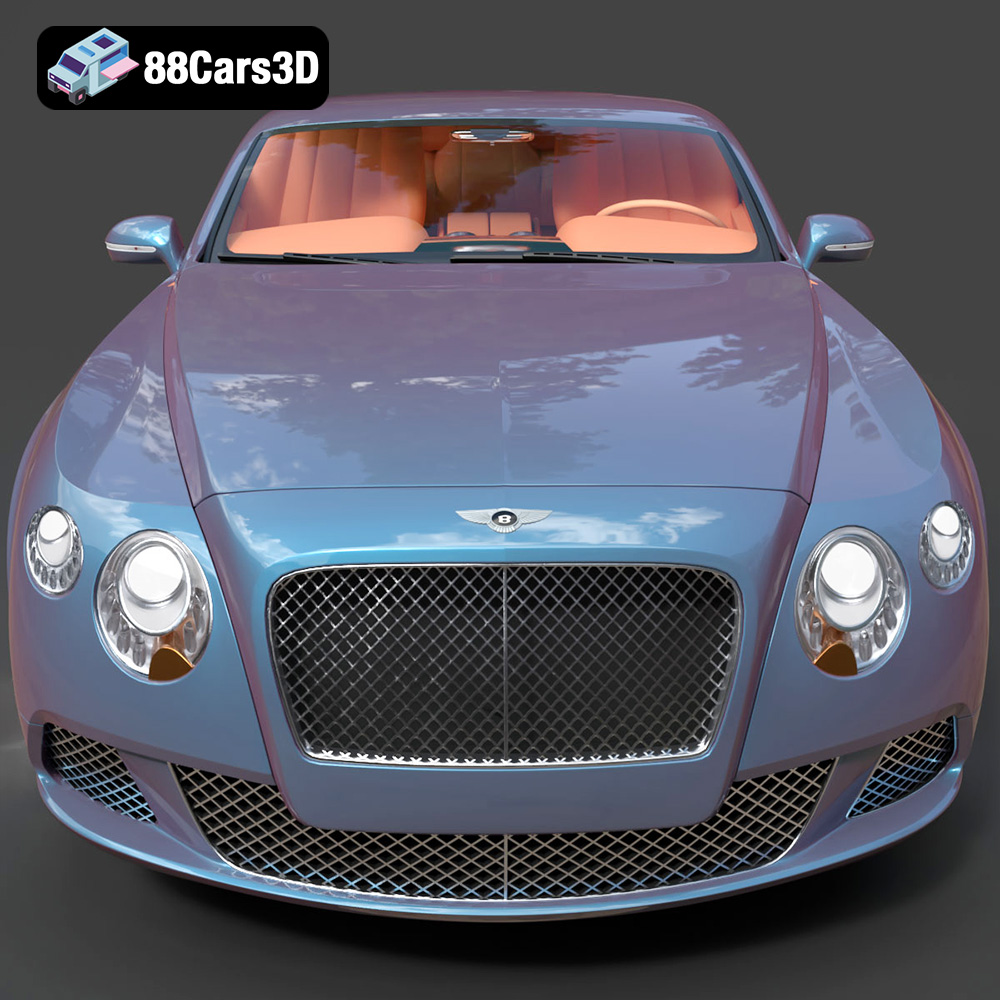
This pursuit of digital perfection is precisely where assets like the Bentley Continental GT 2011 3D model from 88cars3d.com shine. Engineered for accurate visualization, this particular asset captures the true essence of the luxury grand tourer, offering a meticulously detailed digital representation that’s primed for high-fidelity rendering, demanding real-time applications, and a spectrum of other creative endeavors. Throughout this comprehensive guide, we’ll delve into the technical intricacies that define a premium 3D car model, explore advanced workflows, and demonstrate how a versatile asset like the Bentley Continental GT 2011 3D model becomes an indispensable tool in your creative arsenal.
Choosing the right file format is paramount for a seamless workflow in any 3D project. Each format is designed with specific applications and compatibilities in mind, dictating how easily a model can be integrated, modified, or optimized for different platforms. High-quality 3D car models, especially those from a professional marketplace like 88cars3d.com, typically come packaged with multiple formats to ensure maximum versatility. Understanding these options is key to leveraging your assets effectively.
The .blend file is native to Blender, the powerful open-source 3D creation suite. When a model is provided in this format, it typically includes the complete Blender scene, often with materials, textures, lighting setups, and sometimes even basic animation rigs. For users deeply integrated into the Blender ecosystem, a .blend file offers the highest degree of editability. You can easily modify geometry, adjust materials, re-rig components, or tweak lighting for specific render requirements. This format is ideal for artists who want to delve deep into the model’s structure, customize it extensively, or render directly within Blender’s Cycles or Eevee engines. The Bentley Continental GT 2011 3D model, for instance, offers an editable .blend file with materials and lighting setup, providing a robust starting point for any Blender user.
Autodesk’s .fbx (Filmbox) format is arguably the most widely used interchange format in the 3D industry, particularly favored for game development and real-time applications. It efficiently encapsulates not just mesh data, but also materials, textures, animations, bones, and even camera information. Its robust support across major 3D software (like 3ds Max, Maya, Blender) and game engines (Unreal Engine, Unity) makes it indispensable for pipelines requiring smooth asset transfer. When optimizing 3D car models for real-time, .fbx is often the go-to format for exporting to engines due to its comprehensive data storage and efficient handling of complex scenes. The “game-engine ready” descriptor for the Bentley Continental GT 2011 3D model in .fbx format highlights its direct usability in such environments.
The .obj (Wavefront Object) format is a classic, universal standard for 3D geometry. While it doesn’t support advanced features like animation or rigging, it excels at storing mesh data (vertices, normals, UVs) and referencing external material files (.mtl). Its simplicity and widespread compatibility mean almost every 3D software can import and export .obj files. This makes it an excellent choice for cross-software compatibility, especially when you need a clean mesh to start with, or if you’re working in a pipeline where various artists use different tools. For basic asset transfer or archival purposes, .obj remains a reliable option.
.glb (GL Transmission Format Binary) is the binary version of glTF, an open-standard format designed for efficient transmission and loading of 3D scenes and models by applications. It’s particularly optimized for AR, VR, and web-based visualization due to its compact size and comprehensive support for PBR (Physically Based Rendering) materials. As AR/VR experiences become more prevalent, .glb is gaining traction as the preferred format for displaying interactive 3D content directly in browsers or on mobile devices. The Bentley Continental GT 2011 3D model’s inclusion of a .glb file makes it immediately suitable for embedding in websites or deploying in immersive AR/VR apps.
The .stl (Stereolithography) format is almost exclusively used for 3D printing and CAD software. It represents a 3D model as a series of connected triangles, describing only the surface geometry without color, texture, or other attributes. For prototyping, manufacturing, or creating physical models of digital designs, .stl is the industry standard. While not suitable for rendering or animation directly, it’s crucial for designers who wish to bring their digital car models into the physical realm. The Bentley Continental GT 2011 3D model in .stl format allows for precise 3D printing and rapid prototyping.
The .ply (Polygon File Format) is another format for storing 3D data, capable of representing a wider range of properties beyond just geometry, such as color, transparency, normals, and even confidence values for each vertex. It’s commonly used in applications that involve scanning, scientific data visualization, and reverse engineering, where precision and detailed attribute storage are important. While less common for general animation or rendering compared to .fbx or .obj, it offers a robust solution for specific analysis and visualization tasks.
The .unreal file designation often implies an asset that has been specifically configured or exported for direct use within Unreal Engine. This could mean it comes with pre-applied materials, optimized collision meshes, LODs (Levels of Detail), and a proper asset hierarchy, all structured to integrate seamlessly into an Unreal project. While typically .fbx is used to import into Unreal, a vendor-supplied .unreal asset signifies a higher level of preparation, saving developers valuable setup time. For users working with Unreal Engine, this pre-configured format ensures a smoother, more efficient workflow.
Similar to .blend for Blender, the .max file is native to Autodesk 3ds Max, a long-standing industry standard for 3D modeling, animation, and rendering. A .max file provides the complete 3ds Max scene, offering full editability of geometry, modifiers, materials (often V-Ray, Corona, or Arnold specific), lighting, and animation setups. For professionals whose pipelines are centered around 3ds Max, this format is essential for leveraging the model’s full potential, making deep modifications, or integrating it into complex architectural or product visualization projects. The availability of the Bentley Continental GT 2011 3D model in .max format ensures its readiness for high-end rendering and animation within a 3ds Max environment.
The provision of such a comprehensive array of file formats with the Bentley Continental GT 2011 3D model underscores its adaptability, ensuring it meets the diverse technical requirements of virtually any professional project.
Automotive visualization is a specialized field that blends technical precision with artistic flair to create stunningly realistic digital representations of vehicles. For car manufacturers, advertisers, and even film studios, photorealistic renders are crucial for marketing, design reviews, and storytelling. A high-quality 3D car model, such as the Bentley Continental GT 2011 from 88cars3d.com, is the foundation upon which these breathtaking visuals are built.
Photorealism is the holy grail of automotive rendering. It’s not just about making something look “good”; it’s about making it indistinguishable from a photograph. This requires meticulous attention to detail at every stage. From the nuanced reflections on the paintwork to the subtle imperfections that add character, every element must be carefully crafted. The Bentley Continental GT 2011 3D model is specifically engineered for this purpose, with its clean, optimized geometry ensuring that even extreme close-ups maintain visual integrity, crucial for high-resolution output.
At the core of a photorealistic render lies superior geometry and PBR materials. The curvature of a car’s body panels, the crispness of its edges, and the intricate details of its interior components must all be accurately modeled. Low-quality models often suffer from jagged edges, inconsistent surfaces, or insufficient detail, which immediately detract from realism. The Bentley Continental GT 2011 3D model excels in this area, boasting clean, optimized geometry and materials set up for photorealistic results. This means the metallic flake in the paint, the sheen of the leather, and the reflective qualities of chrome are all accurately replicated, providing a robust base for your rendering engine to interpret.
Even the most perfectly modeled car will look flat without compelling lighting. Professional automotive visualization relies heavily on advanced lighting techniques, often mimicking real-world studio setups or outdoor environments using HDRIs (High Dynamic Range Images). These HDRIs provide both illumination and reflections, making the vehicle look integrated into its surroundings. Complementary fill lights, rim lights, and global illumination settings are then carefully tuned to highlight the car’s form and accentuate its luxurious design. Software like 3ds Max, Blender, and Unreal Engine offer powerful rendering capabilities that, when combined with a premium asset, allow artists to create captivating scenes that bring the vehicle to life.
Game development presents a unique set of challenges for 3D assets. While visual fidelity is increasingly important, real-time performance is paramount. A high-quality 3D car model must strike a delicate balance between detail and optimization to perform efficiently within game engines like Unreal Engine and Unity. The Bentley Continental GT 2011 3D model is designed with these considerations in mind, making it an excellent candidate for demanding real-time applications.
Unlike pre-rendered animations, game engines must render complex scenes many times per second. This means every polygon, every texture, and every material needs to be as efficient as possible. High-poly models, while great for close-up renders, can quickly cripple performance. Game developers utilize techniques like polygon reduction, baking high-detail normal maps, and using efficient material setups to ensure smooth frame rates. The Bentley Continental GT 2011 3D model’s optimized geometry ensures it can handle the rigors of real-time rendering without sacrificing visual quality, offering a solid foundation for further game-specific optimizations.
Advanced game development workflows often involve creating multiple Levels of Detail (LODs) for each asset. LODs are progressively simpler versions of the model that are swapped in as the camera moves further away, drastically reducing the poly count rendered at a distance. Collision meshes, often simplified versions of the main model, are also crucial for accurate physics interactions within the game world. Furthermore, efficient UV mapping is essential for applying textures without stretching or distortion and for creating lightmaps. A well-organized 3D car model, such as those found on 88cars3d.com, typically comes with clean UVs and can be easily prepped for LOD generation and collision mesh creation, streamlining the integration process into game engines.
Both Unreal Engine and Unity are industry-leading platforms for game development, each with robust tools for importing and managing 3D assets. When working with a model like the Bentley Continental GT 2011 3D model, the .fbx format is often the preferred choice for import due to its comprehensive data handling. For Unreal Engine users, the dedicated .unreal file format offers an even smoother experience, potentially including pre-configured materials, textures, and even blueprints. In either engine, materials are set up using PBR workflows, allowing artists to achieve realistic surface properties. The clean structure and optimized nature of the Bentley Continental GT 2011 3D model mean less time spent on cleanup and more time on game development, providing a significant advantage for any production pipeline.
Beyond traditional rendering and game development, high-quality 3D car models are finding exciting new applications in augmented reality (AR), virtual reality (VR), and even physical production through 3D printing. These emerging fields leverage digital assets in unique ways, pushing the boundaries of interactive and tangible experiences. The versatility of the Bentley Continental GT 2011 3D model, with its wide array of included formats, makes it an ideal candidate for these innovative applications.
AR and VR environments demand highly detailed yet optimized assets to create convincing immersive experiences. Whether showcasing a new vehicle in an interactive showroom application, building a virtual driving simulator, or allowing users to “place” a car in their real-world environment via AR, the visual fidelity must be top-notch. The Bentley Continental GT 2011 3D model’s meticulous detailing ensures that its digital presence is compelling in these interactive contexts. The .glb format, specifically optimized for AR/VR and web-based visualization, is particularly valuable here, allowing for seamless deployment across various platforms and devices. Imagine a potential buyer exploring every angle of the Continental GT from their living room, or a training simulation for mechanics to learn about its intricate engine components – all powered by a robust 3D model.
3D printing offers an incredible avenue for bringing digital designs into the physical world, enabling rapid prototyping, creating scale models, or even producing custom parts. For automotive designers, being able to quickly print a concept model or a detailed miniature of a vehicle like the Bentley Continental GT 2011 can be invaluable. The .stl file format, included with the Bentley model, is the industry standard for 3D printing. This format represents the model’s surface geometry as a series of triangles, ready for slicing software to prepare it for printing. While the digital model is fully detailed, preparing it for 3D printing may involve additional steps like ensuring manifold geometry, checking wall thickness, and scaling to the desired physical size. The accuracy of the base model ensures the physical output is a faithful representation of the digital design.
For professional artists and studios, a high-quality 3D car model isn’t just an endpoint; it’s a starting point for deeper customization and integration into complex projects. The Bentley Continental GT 2011 3D model, with its well-organized structure and native project files, provides the flexibility needed for advanced workflows.
One of the key advantages of a professionally built 3D model is its internal organization. Components like wheels, doors, interior elements, and lights are typically separated and properly named, allowing for easy selection and modification. This modularity is crucial for customization. Artists can readily change the paint color, swap out wheel designs, open doors for interior shots, or even retexture specific parts to match a client’s specific vision. For instance, the clean structure of the Bentley Continental GT 2011 3D model means you can effortlessly animate its doors opening, adjust seat materials, or integrate custom branding elements without wrestling with messy geometry.
Beyond static renders, 3D car models are often integral to animations and simulations. This could range from a simple turntable animation showcasing the vehicle’s design, to complex driving simulations in games, or even crash test visualizations. For animation, the model’s pivot points need to be correctly set for components like wheels and doors. For physics simulations, the mesh needs to be clean and optimized to interact accurately with collision systems. The comprehensive nature of the .max and .blend files included with the Bentley Continental GT 2011 3D model means that these foundational elements are often already in place or easily configurable, enabling artists to jump directly into animating exhilarating drives or dynamic camera movements.
The inclusion of native project files like .max and .blend is a significant advantage. These files offer access to the full creative history and setup of the model. In 3ds Max or Blender, artists can:
This level of access transforms the Bentley Continental GT 2011 3D model from a static asset into a flexible toolkit for creative expression, allowing artists to truly make it their own.
In a saturated market of digital assets, discerning creators understand that not all 3D models are created equal. Investing in professional-grade 3D car models is a strategic decision that pays dividends in quality, efficiency, and project success. This is precisely the ethos behind the curated selection available at 88cars3d.com, where models like the Bentley Continental GT 2011 are designed to meet rigorous industry standards.
Building a high-fidelity 3D car model from scratch is an incredibly time-consuming and complex endeavor, often requiring hundreds of hours of work by skilled artists. This includes modeling every panel, creating intricate interior details, unwrapping UVs, texturing, and setting up materials. By purchasing a pre-made, professional asset, you bypass this entire initial phase, allowing your team to focus immediately on rendering, animation, or game integration. This dramatically reduces project timelines and allows for quicker turnaround, a critical factor in today’s fast-paced production environments. The ready-to-use nature of models from 88cars3d.com represents significant time savings for any production.
Professional marketplaces like 88cars3d.com prioritize quality. This means models are not just visually appealing, but also technically sound. They feature clean topology, optimized polygon counts for their intended use, accurate real-world scale, well-organized hierarchies, and properly configured materials. Lower-quality or free models often come with hidden issues: messy geometry, broken UVs, flickering textures, or unoptimized meshes that lead to rendering artifacts and performance bottlenecks. These issues can quickly consume valuable artist time in cleanup, negating any initial cost savings. With assets such as the Bentley Continental GT 2011 3D model, you get a reliable foundation, minimizing unforeseen technical headaches.
Ultimately, a high-quality 3D car model is an investment in the overall success and visual impact of your project. Whether it’s a critical marketing campaign render, an immersive game environment, or an architectural visualization that needs to impress, the realism and detail of the vehicle can elevate the entire scene. Using subpar assets can detract from the professionalism of your work, whereas premium models enhance credibility and deliver stunning results. The Bentley Continental GT 2011 3D model is a prime example of an asset that offers this level of quality, ensuring your final output is nothing short of exceptional.
In the dynamic landscape of 3D visualization and interactive experiences, the pursuit of digital perfection is constant. High-quality 3D car models are not merely assets; they are the bedrock upon which stunning renders, immersive game worlds, and groundbreaking AR/VR applications are built. From the nuanced reflections of photorealistic automotive rendering to the optimized performance required for real-time game engines, every aspect demands precision and expertise.
The Bentley Continental GT 2011 3D model exemplifies what a professional-grade asset should be. Its meticulously detailed digital representation, coupled with clean, optimized geometry and materials configured for photorealistic results, ensures it meets the rigorous demands of various professional pipelines. Furthermore, the comprehensive suite of included file formats – from .blend and .max for deep customization to .fbx and .unreal for game development, and .glb for AR/VR – guarantees unparalleled versatility and ease of integration across diverse platforms.
By choosing a premium 3D car model like the Bentley Continental GT 2011 from 88cars3d.com, you are investing in efficiency, quality, and the ultimate success of your project. It empowers artists and developers to save invaluable time, avoid technical pitfalls, and focus on unleashing their creative vision. Explore the possibilities and elevate your next project with a model that truly embodies digital excellence.
Presenting the Bentley Continental GT 2011 3D model, engineered for accurate visualization. This asset captures the essence of the luxury grand tourer, offering a meticulously detailed digital representation ready for professional pipelines and detailed rendering.
The model features clean, optimized geometry suitable for close-up renders and demanding real-time applications. Materials are set up for photorealistic results, accurately replicating the sleek exterior finish and luxurious interior components of the Continental GT. Every effort was made to ensure the structure is well-organized, facilitating easy integration and modification within your existing projects.
Versatile for various industry needs, this asset is ideal for automotive visualization, architecture visualization (ArchViz), simulation training, interactive augmented reality (AR) and virtual reality (VR) experiences, and high-fidelity game development projects.
$14.99