⚡ FLASH SALE: Get 60% OFF All Premium 3D & STL Models! ⚡

In the expansive and ever-evolving landscape of digital content creation, the demand for realism and precision continues to escalate. From blockbuster cinematic productions and immersive video games to cutting-edge architectural visualizations and advanced engineering simulations, the underlying quality of 3D assets dictates the overall fidelity and impact of a project. A well-crafted 3D model isn’t just a visual element; it’s a foundation for storytelling, interaction, and accurate representation.
Achieving this level of quality often requires a significant investment in time and expertise. Artists and developers routinely face the challenge of balancing intricate detail with optimal performance, ensuring their assets are both visually stunning and technically robust. This is where pre-made, professional-grade 3D models become invaluable, offering a shortcut to excellence without compromising on standards.
Today, we delve into the anatomy of such an asset, exploring how a meticulously designed model can transform your digital endeavors. We’ll specifically examine the Bicycle 01-007 3D Model, a prime example of versatility and technical craftsmanship available on platforms like 88cars3d.com. This asset, crafted for a diverse range of applications, embodies the principles we’ll discuss, from foundational geometry to integration into complex pipelines.
When working with 3D models, understanding the various file formats is paramount. Each format serves a specific purpose, excelling in different stages of the 3D pipeline, from initial modeling to final rendering, game integration, or even 3D printing. The Bicycle 01-007 3D Model exemplifies versatility by being available in a comprehensive suite of formats, ensuring broad compatibility and utility across countless professional workflows.
The .blend format is native to Blender, the popular open-source 3D creation suite. When you acquire a .blend file, you’re not just getting a model; you’re getting a complete Blender scene. This typically includes the model’s geometry, materials (using Blender’s Eevee or Cycles render engines), textures, lighting, camera setups, and even animation data if present. For users deeply integrated into the Blender ecosystem, a .blend file offers maximum editability and immediate access to all the model’s properties, allowing for seamless customization, re-rigging, or re-texturing directly within the software. The Bicycle 01-007, provided as a .blend, ensures Blender users can dive straight into their projects with all the native advantages.
.fbx (Filmbox) is arguably the most widely adopted proprietary 3D file format for interchange between various 3D software applications and game engines. Developed by Autodesk, FBX files are excellent for transferring geometry, materials (though material definitions can sometimes be simplified during export/import), textures, skeletal animations, blend shapes, and camera data. It’s the go-to format for bringing assets into game engines like Unreal Engine and Unity, or for moving models between 3ds Max, Maya, and Cinema 4D. Its robust support for animation and scene hierarchy makes it indispensable for animated game assets or complex scene assembly. The Bicycle 01-007 in .fbx format is therefore optimized for real-time environments and cross-software collaboration.
The .obj (Wavefront OBJ) format is one of the oldest and most universal 3D file formats. It’s a simple, text-based format primarily used for storing 3D geometry (vertices, normals, texture coordinates, and faces) and references to external material files (.mtl). While it doesn’t support animation or rigging data, its simplicity and widespread compatibility make it an excellent choice for basic mesh exchange between virtually any 3D software. If you need to import a model into an obscure program or simply want the raw mesh data, .obj is a reliable choice. The Bicycle 01-007 as an .obj ensures unparalleled compatibility across all major 3D packages.
.glb (GL Transmission Format Binary) is a modern, compact, and efficient format designed for rapid loading and display in web-based 3D applications, augmented reality (AR), and virtual reality (VR) experiences. It packages 3D model data (geometry, materials, textures, animations) into a single binary file, making it incredibly easy to share and integrate. GLB is often used with WebGL and popular JavaScript frameworks, allowing interactive 3D content directly within browsers without plugins. For showcasing the Bicycle 01-007 in an AR app or on a product configurator webpage, the .glb format is ideal.
.stl (Stereolithography) is the de facto standard file format for 3D printing. It represents a 3D model as a series of connected triangles, describing only the surface geometry of an object without color, texture, or other model attributes. While basic, its ubiquity in the additive manufacturing world makes it essential. When converting a complex model like the Bicycle 01-007 for physical output, ensuring a watertight mesh and appropriate scale in .stl is crucial for a successful print. This format allows for the creation of tangible prototypes or physical models of the digital asset.
.ply (Polygon File Format) is another format for storing 3D data, particularly useful for scanned data, point clouds, and precision meshes. It can store a wider range of properties than .obj, including color, transparency, normals, texture coordinates, and reliability information, on each vertex or face. It’s often used in scientific visualization, CAD workflows, and for models derived from 3D scanning, where accuracy and additional metadata are important. The Bicycle 01-007 in .ply format offers a robust option for engineers or researchers needing detailed mesh data for analysis or integration into CAD systems.
The term .unreal typically refers to assets specifically prepared and packaged for direct import or use within Unreal Engine projects. While it might sometimes be an .fbx pre-configured with Unreal-specific materials and textures, it can also signify a full Unreal Engine asset package (.uasset) or even a project file snippet. Such files are optimized for Unreal’s rendering pipeline, often including proper material instances, collision meshes, LODs (Levels of Detail), and blueprint configurations. The Bicycle 01-007 as an .unreal asset means minimal setup time for developers, allowing them to drop it into their environments with pre-set materials and optimized meshes for real-time performance.
Finally, the .max format is the native file type for Autodesk 3ds Max, a powerful 3D modeling, animation, and rendering software. Similar to .blend for Blender, a .max file contains the entire 3ds Max scene, including geometry, materials (often V-Ray, Corona, or Arnold specific), lighting, cameras, animation, and scene hierarchy. For professionals working within a 3ds Max pipeline, this format provides full editability and access to all the original artist’s setups, making it perfect for high-fidelity rendering, complex scene construction, and detailed animation work. The Bicycle 01-007 provided in .max ensures native compatibility and full control for 3ds Max users.
The availability of the Bicycle 01-007 3D Model in all these formats on 88cars3d.com underscores its incredible adaptability, catering to virtually any professional requirement or creative vision.
The mark of a truly high-quality 3D model lies in its underlying construction and the meticulous attention to detail during its creation. The Bicycle 01-007 3D Model is a testament to this philosophy, built with a purposeful design that prioritizes both visual fidelity and technical efficiency. It’s not merely a static representation but an adaptable asset engineered for various complex digital environments.
One of the most critical technical advantages of the Bicycle 01-007 is its clean quad-dominant topology. In 3D modeling, topology refers to the arrangement of polygons (faces) that make up a mesh. Quad-dominant means the model is primarily built from four-sided polygons (quads). This is superior to meshes composed largely of triangles (tris) for several reasons:
The Bicycle 01-007 leverages this, ensuring artists can modify or animate the model with confidence, knowing its underlying structure will perform flawlessly.
Accuracy in 3D modeling extends beyond aesthetic appeal; it encompasses real-world scale and mechanical integrity. The Bicycle 01-007 3D Model is built to accurate real-world scale, which is essential for seamless integration into existing scenes, whether for architectural visualization, urban planning, or game environments. Dropping an asset into a scene and finding it disproportionately sized can be a major workflow interruption. This model eliminates that guesswork.
Furthermore, the attention to mechanical features is exceptional. The drivetrain, including the chain, gears, and pedals, is precisely modeled for accurate representation. This level of detail isn’t just for show; it’s vital for simulations, educational tools, or any application where the mechanical function of the bicycle needs to be understood or observed. Functional brake levers and cables are also integrated, contributing to the overall realism and providing tangible elements for potential interaction or animation.
While detail is important, it must be balanced with optimization, especially for game development and real-time applications. The Bicycle 01-007 boasts optimized mesh quality, ensuring smooth deformations during animation and efficient rendering. This often means a balanced polygon count – high enough for visual quality but low enough to maintain performance.
A truly professional 3D asset also comes with an organized hierarchy and properly set pivot points. The Bicycle 01-007 includes:
These technical considerations highlight why assets from sources like 88cars3d.com are preferred by professionals – they are built not just to look good, but to perform flawlessly within complex production pipelines.
The versatility of the Bicycle 01-007 3D Model shines brightest when considering its seamless integration into various professional 3D workflows. Its comprehensive file format support and robust internal structure make it an ideal candidate for diverse applications, from high-fidelity rendering to interactive game environments.
For artists focused on photorealistic rendering, the Bicycle 01-007 is an excellent choice. Its detailed components, high-quality materials, and clean topology are primed for rendering engines like V-Ray, Corona Renderer, Arnold, and Cycles (Blender). Imagine placing this bicycle model in an exterior architectural visualization scene, leaning against a modern building, or parked elegantly within a bustling urban environment. Its realistic metal, rubber, and plastic materials, coupled with transparent elements for lights or reflectors, catch light beautifully, adding an essential layer of realism and context to any scene.
The .max and .blend formats, in particular, offer the most comprehensive starting points for these high-end rendering tasks, often including pre-configured materials that serve as excellent bases for further customization.
The demand for game-ready assets that are both visually rich and performant is constant. The Bicycle 01-007 excels here, optimized for integration into leading game engines like Unreal Engine and Unity. Its clean mesh quality and organized hierarchy are fundamental to maintaining high frame rates in real-time environments.
A quality game asset like this from 88cars3d.com can significantly accelerate development cycles, allowing teams to focus on gameplay and interaction rather than asset creation from scratch.
Beyond entertainment, the Bicycle 01-007 finds significant utility in educational and simulation contexts. Its precise mechanical representation of the drivetrain and brake system makes it an excellent asset for:
The .ply format, with its capacity for precision mesh data, could even be leveraged for more advanced analytical simulations if additional metadata were required. Its accurate scale ensures that any simulated interactions or measurements would be based on realistic proportions.
In the realm of interactive 3D, especially game development and AR/VR, the balance between visual fidelity and real-time performance is a constant challenge. A beautiful model that causes frame rate drops is often unusable. The Bicycle 01-007 3D Model addresses this crucial need through its fundamental design principles, making it a true game-ready asset.
The phrase “optimized mesh quality” used in the product description is key. It refers to a careful balance of polygon count. While high-poly models offer intricate detail for cinematic renders, real-time engines require meshes that are efficient to process. A well-optimized model will have:
For game developers, starting with a robust and optimized base model like the Bicycle 01-007 from 88cars3d.com significantly reduces the time and effort typically spent on mesh cleanup and optimization.
While not explicitly mentioned as included, the optimized nature of the Bicycle 01-007 makes it perfectly suited for the creation of essential game development components:
The provision of the model in .fbx and .unreal formats specifically signals its readiness for these types of real-time engine optimizations, allowing developers to focus on gameplay and interactivity.
Beyond geometry, the way materials are handled significantly impacts real-time performance. High-quality 3D car models or bicycle models often come with physically based rendering (PBR) materials, which use textures like Albedo, Normal, Roughness, Metallic, and Ambient Occlusion maps to simulate real-world surface properties.
By leveraging these optimization techniques, the Bicycle 01-007 3D Model ensures that it can be seamlessly integrated into high-performance real-time applications, delivering stunning visuals without sacrificing the smooth, interactive experience that users expect.
The utility of a robust 3D model extends far beyond traditional screen-based rendering and game development. With the rise of augmented reality (AR), virtual reality (VR), and accessible 3D printing technologies, the demand for versatile assets that can seamlessly transition between these mediums is higher than ever. The Bicycle 01-007 3D Model is meticulously designed to meet these burgeoning needs, offering unique advantages for each application.
Augmented and Virtual Reality experiences thrive on realistic, performant 3D assets. The Bicycle 01-007 is particularly well-suited for AR/VR applications due to several key factors:
Imagine a product configurator in AR where customers can virtually place and customize the Bicycle 01-007 in their driveway, or an interactive VR museum exhibit detailing the mechanics of a modern bicycle. The model provides the perfect foundation for such innovative applications.
The ability to transform a digital model into a tangible object through 3D printing opens up a world of possibilities for prototyping, display models, and educational tools. The Bicycle 01-007 is designed to be compatible with this process, particularly through its .stl format.
This capability allows designers to create physical prototypes of urban bicycles for design review, educational models for schools, or even unique display pieces. The presence of the .stl format confirms that the Bicycle 01-007 is not just a digital asset but also a blueprint for physical creation, showcasing the comprehensive utility of assets available on 88cars3d.com.
While the technical prowess and file format support of a 3D model are fundamental, its true value often lies in its flexibility and potential for customization. The Bicycle 01-007 3D Model is a testament to this, offering artists and developers a robust foundation that can be easily adapted to a myriad of creative visions and project requirements.
One of the most immediate avenues for customization is the aesthetic transformation of the bicycle. The clean geometry and well-structured materials of the Bicycle 01-007 make this process intuitive:
This level of material flexibility is what transforms a generic asset into a bespoke element within a project, saving immense time compared to modeling and texturing from scratch.
The Bicycle 01-007 isn’t just a standalone object; it’s a component designed for seamless integration into larger scenes. Its accurate real-world scale is a major advantage here, ensuring it fits naturally alongside other assets, whether they are 3D car models, architectural elements, or character models.
The intrinsic quality and thoughtful design of the Bicycle 01-007 3D Model mean that creative energy can be directed towards artistic expression and storytelling, rather than grappling with technical imperfections. It empowers artists to push boundaries, knowing they have a reliable and adaptable asset at their disposal from marketplaces like 88cars3d.com.
In the dynamic world of 3D modeling, the pursuit of digital realism and efficiency drives innovation. As we’ve explored, a high-quality 3D asset is far more than just aesthetically pleasing; it is a meticulously engineered component, designed for seamless integration, optimal performance, and extensive customization across a myriad of professional workflows. The Bicycle 01-007 3D Model stands as a prime example of such craftsmanship, demonstrating how attention to detail in topology, scale, mechanical representation, and file format support can empower creators.
From the detailed examination of its clean quad-dominant topology that simplifies subdivision and UV unwrapping, to its precisely set pivot points that streamline animation, every aspect of this model is geared towards maximizing utility. Its comprehensive support for formats like .blend, .fbx, .obj, .glb, .stl, .ply, .unreal, and .max ensures unparalleled compatibility for high-fidelity rendering in 3ds Max or Blender, robust game development in Unreal Engine or Unity, immersive AR/VR experiences, and even tangible creations through 3D printing.
The ability to easily modify paint finishes, add custom graphics, and adjust material properties further solidifies its position as a versatile tool for any artist or developer looking to enhance their projects. Investing in such a professionally crafted asset liberates valuable time and resources, allowing creative professionals to focus on artistic direction and innovative execution, rather than the foundational complexities of 3D asset creation.
For those seeking to elevate their digital projects with reliable, high-quality 3D assets, whether it’s the versatile Bicycle 01-007 or other exceptional 3D car models, platforms like 88cars3d.com offer a curated selection backed by professional craftsmanship and attention to detail. Explore their collection to find the perfect assets that will bring your digital visions to life with unparalleled realism and efficiency.
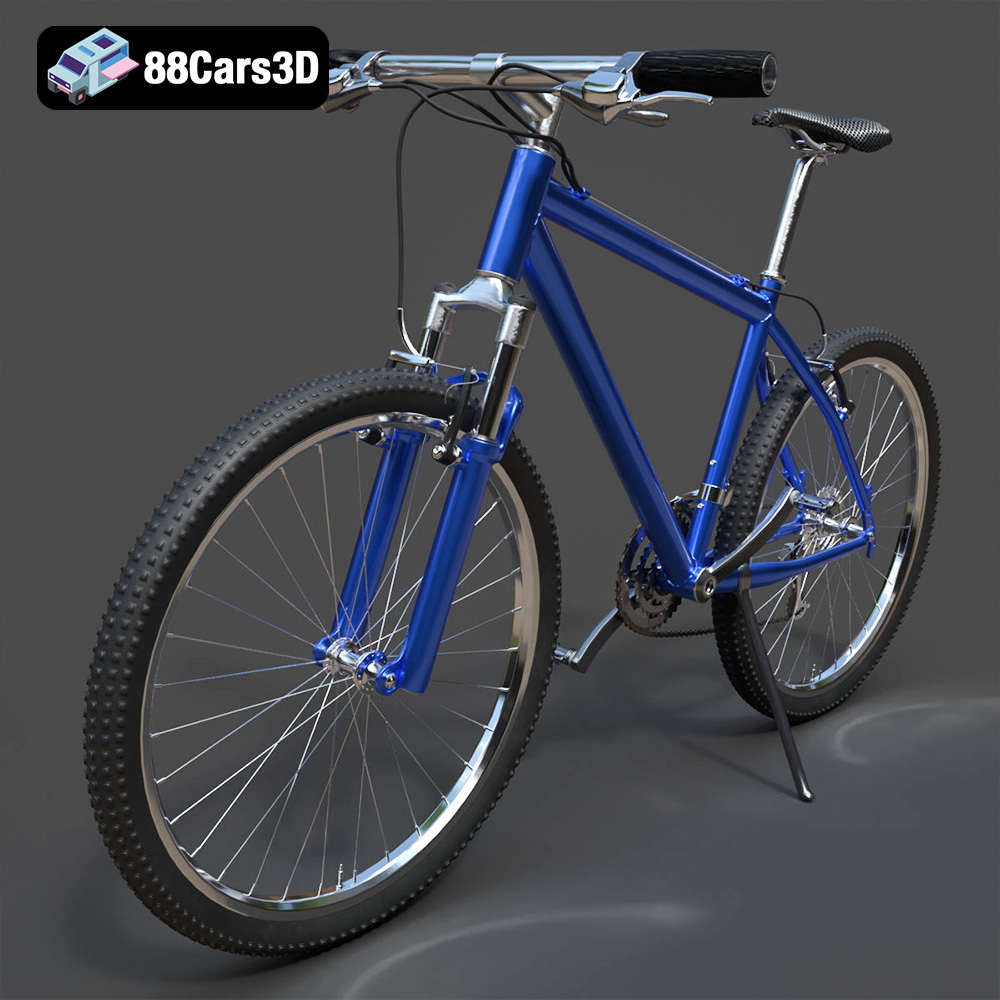
Presenting the Bicycle 01-007 3D Model, a versatile and meticulously crafted asset designed for a wide range of digital projects. This model captures the essence of a modern bicycle, featuring a clean and efficient design suitable for urban commutes, recreational rides, or dynamic action scenes. Built with clean geometry and a balanced level of detail, it ensures optimal performance without sacrificing visual quality. Ideal for high-fidelity rendering, realistic animations, detailed simulations, and immersive game development environments.
Exterior Features:
Interior / Mechanical Features:
Technical Advantages:
Applications:
Customization Options:
Invest in the Bicycle 01-007 3D Model for a reliable, high-quality asset that brings realism and versatility to your digital projects, backed by professional craftsmanship and attention to detail.
Included File Formats:
Tags:
.bicycle.01-007.commuterbike.mountainbike.urbanbike.rendering.simulation.gameasset.arvr.blend.fbx.obj.glb.stl.ply.unreal.maxMercedes Benz CLS 500 3D Model
$19.99
.bicycle.01-007.commuterbike.mountainbike.urbanbike.rendering.simulation.gameasset.arvr.blend.fbx.obj.glb.stl.ply.unreal.max