⚡ FLASH SALE: Get 60% OFF All Premium 3D & STL Models! ⚡

In the expansive and ever-evolving landscape of 3D visualization, the demand for high-quality, meticulously crafted assets is paramount. From blockbuster game titles and cinematic automotive commercials to cutting-edge architectural presentations and immersive virtual reality experiences, the foundational element remains consistent: exceptional 3D models. These digital creations are not merely static representations; they are the building blocks of entire virtual worlds, each designed with purpose, precision, and an eye for photorealism. Within this realm, 3D car models stand out as particularly challenging and rewarding assets, requiring a deep understanding of design, engineering, and digital artistry.
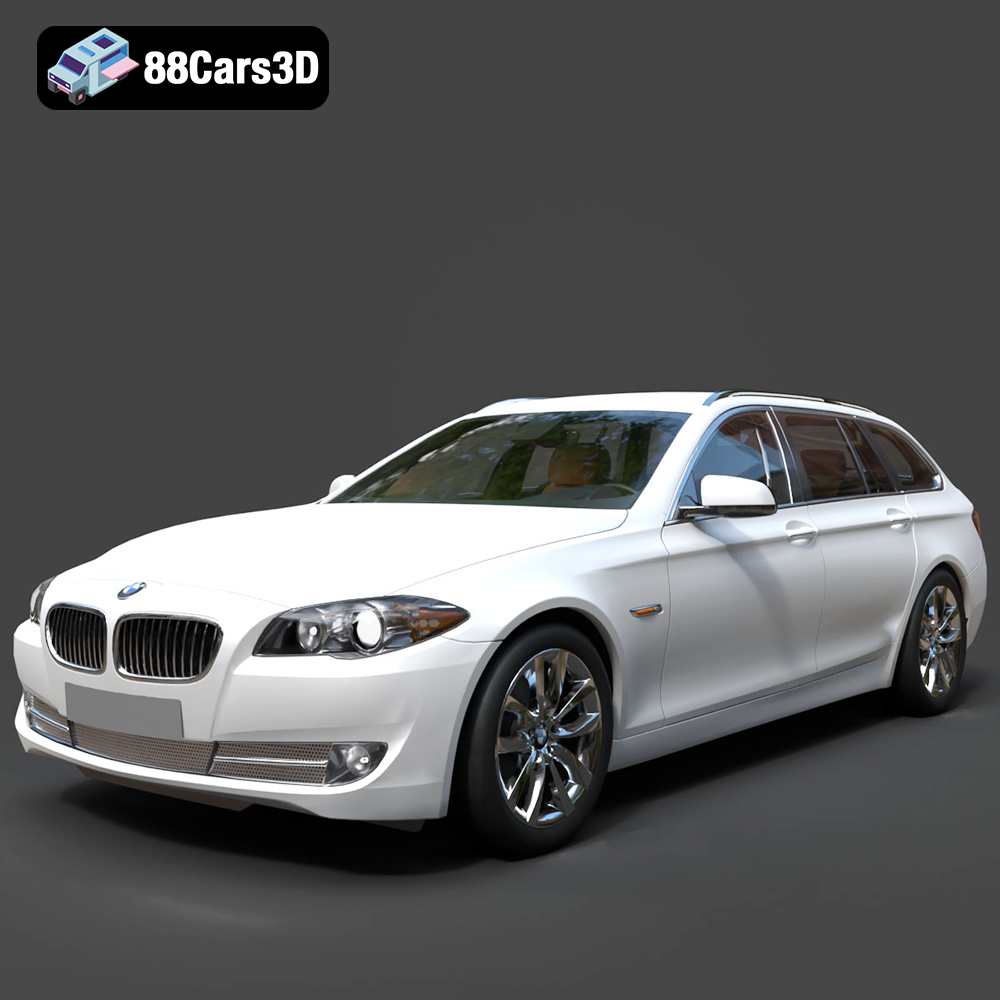
The journey from a real-world vehicle to a perfectly replicated 3D asset involves countless hours of dedicated modeling, texturing, and optimization. It’s a process that merges artistic vision with technical rigor, ensuring that every curve, every reflection, and every material accurately conveys the essence of the original. When seeking professional-grade assets, creators often turn to specialized marketplaces that uphold strict standards of quality. One such marketplace, 88cars3d.com, offers a curated selection of premium 3D models, including the impressive BMW 5 Series Touring F11-007 3D Model, a prime example of excellence in automotive digital design. This model embodies the precision and elegance required for top-tier projects, seamlessly bridging the gap between digital aspiration and tangible realism across various applications.
The versatility of a 3D model often hinges on the file formats it supports. Different software applications and platforms require specific formats, each with its own advantages and technical nuances. Understanding these distinctions is crucial for seamless integration into any professional workflow, ensuring compatibility and preserving critical data. The BMW 5 Series Touring F11-007 3D Model, for instance, comes equipped with a comprehensive suite of file formats, offering unparalleled flexibility.
The .blend format is the native file type for Blender, a powerful open-source 3D creation suite. A .blend file typically encapsulates an entire scene, including all geometry, materials, textures, lighting setups, cameras, animations, and even physics simulations. For artists working in Blender, having a .blend file means gaining full access to the original project, allowing for intricate modifications, material adjustments, and animation tweaks without any loss of data. The inclusion of materials in the .blend file for the BMW 5 Series Touring F11-007 model ensures that users can immediately render or modify the asset within Blender’s ecosystem with all its intended visual fidelity.
The .fbx (Filmbox) format, developed by Autodesk, is one of the most widely adopted interchange formats in the 3D industry. It excels at transferring a broad range of 3D data between different software applications and game engines like Unreal Engine and Unity. An .fbx file can contain geometry (meshes), UV maps, materials (sometimes limited to basic properties), textures, rigging, skinning, and animation data. Its robust support for animation makes it invaluable for character and vehicle animation in game development and cinematic sequences. For the BMW F11-007 model, the .fbx format ensures that the mesh, UVs, and potentially basic material assignments can be smoothly imported into real-time engines for efficient game asset integration.
The .obj (Wavefront Object) format is a venerable and universally supported file type, renowned for its simplicity and wide compatibility. It primarily stores geometric data, including vertices, normals, UV coordinates, and polygonal faces. While .obj files don’t typically embed material definitions or animation data directly, they are often accompanied by an .mtl (Material Template Library) file that defines basic material properties and references texture maps. The .obj format is an excellent choice for straightforward mesh transfer between virtually any 3D software, making the BMW F11-007 accessible to almost every 3D artist, regardless of their preferred software.
The .glb (GLB format for GL Transmission Format) is a modern, compact, and efficient file format designed specifically for the transmission of 3D scenes and models in a single file. It’s the binary version of glTF (GL Transmission Format), often referred to as the “JPEG of 3D.” .glb files package geometry, materials, textures, animations, and skeletal data into one self-contained unit. This makes them exceptionally well-suited for web-based 3D applications, augmented reality (AR), and virtual reality (VR) experiences, where quick loading times and efficiency are critical. For showcasing the BMW 5 Series Touring F11-007 in a browser or an AR app, the .glb format provides an optimized solution.
The .stl (STereoLithography) format is the standard for 3D printing. It represents 3D surfaces using a tessellation of triangles. Unlike other formats, .stl files do not contain color, texture, or material information; they solely describe the geometric shape of the object. While this might seem limiting, it’s precisely what makes them perfect for conveying physical dimensions to 3D printers. The availability of the BMW F11-007 in .stl format means enthusiasts or designers can physically materialize the digital model, creating prototypes or collectibles.
The .ply (Polygon File Format or Stanford Triangle Format) is another format for storing 3D data, particularly suited for scanner data, CAD applications, and scientific visualization. It can store a wide range of properties beyond just geometry, including color, transparency, normals, texture coordinates, and even reliability information for each vertex and face. While less common for general 3D asset exchange, its precision and ability to carry diverse data make it valuable for specific analytical or industrial applications involving the BMW F11-007 model.
The .unreal format, or more accurately, assets pre-configured for Unreal Engine, implies that the model has been specifically prepared and optimized for seamless integration into Unreal Engine projects. This often means proper folder structures, material instances, collision meshes, LODs (Levels of Detail), and sometimes even basic blueprints. An engine-ready asset like the BMW 5 Series Touring F11-007 significantly reduces setup time for game developers and real-time visualization artists, allowing them to drop the model directly into their scenes and begin working immediately.
The .max format is the native file format for Autodesk 3ds Max, a leading software for 3D modeling, animation, rendering, and visualization. Similar to .blend, a .max file stores a complete scene with all its elements: geometry, modifiers, materials, textures, lights, cameras, animation, and scene setup. For professionals using 3ds Max, this format provides full editability, allowing for complete control over every aspect of the BMW F11-007 model, from adjusting polygon density with modifiers to crafting intricate animations and photorealistic rendering setups. This level of access is crucial for high-end rendering and animation studios.
Automotive rendering is a specialized field within 3D visualization that demands an exceptional level of detail, realism, and aesthetic understanding. It’s not just about making a car look good; it’s about capturing the essence of its design, the interplay of light on its surfaces, and the feeling it evokes. High-quality 3D car models are the bedrock of this process, providing the necessary foundation for breathtaking visuals.
Modern automotive rendering relies heavily on Physically Based Rendering (PBR) workflows. PBR materials accurately simulate how light interacts with surfaces in the real world, producing realistic reflections, refractions, and diffuse scattering. A premium 3D model like the BMW 5 Series Touring F11-007 is designed with PBR in mind. Its “realistic material definitions for paintwork, glass, chrome accents, and rubber components” are critical. This means the model comes with textures and material setups that define properties like albedo (base color), roughness (how shiny or matte a surface is), metallic (if it’s a metal), normal maps (for fine surface detail), and ambient occlusion. Artists can then fine-tune these parameters in renderers like V-Ray, Corona, or Octane to achieve hyper-realistic results, making the paint sparkle and the chrome gleam with authentic reflections.
Even the most detailed 3D car models require expert lighting and composition to truly shine. Lighting can dramatically alter the mood and visual impact of a render. Techniques such as HDRI (High Dynamic Range Image) lighting, area lights, and volumetric effects are employed to mimic natural or studio environments. Compositing, the art of combining multiple images or rendered passes, further enhances the final output. With a high-fidelity asset such as the BMW F11-007, artists can experiment with diverse lighting setups to achieve varied atmospheric effects and moods. This could range from dramatic, moody shots under city lights to bright, clean studio renders highlighting every curve and contour. The model’s “clean and optimized mesh structure” ensures that shadows fall correctly and reflections behave realistically, crucial elements for stunning renders and automotive showcases.
Game development presents a unique set of challenges for 3D assets, particularly for complex objects like cars. Real-time performance, efficient memory usage, and robust collision detection are paramount. A well-designed 3D car model must strike a delicate balance between visual fidelity and optimization.
For game development, “optimized mesh density for efficient performance across various platforms” is a non-negotiable feature. This means the BMW 5 Series Touring F11-007 3D Model is built with an intelligent polygon count – enough to look great, but not so much that it bogs down the game engine. Techniques like Levels of Detail (LODs) are often employed, where simpler versions of the model are swapped in when the car is further from the camera, saving valuable processing power. Furthermore, proper UV mapping is essential for baking lightmaps and efficient texture rendering. The clean, quad-dominant topology of the BMW F11-007 model ensures smooth deformations during animation and is easier for game engines to process, contributing to higher frame rates and a smoother player experience in racing games or open-world environments.
Beyond individual vehicle performance, 3D car models play a crucial role in building immersive game environments. Placing realistically rendered cars, like the BMW F11-007, in a virtual city or garage significantly enhances the sense of realism and atmosphere. The “separated doors, hood, and trunk for easy animation workflows” are particularly valuable for interactive elements in games, allowing players to open car doors, inspect the engine, or access the trunk for in-game items. When coupled with detailed interiors, such as the BMW model’s “detailed dashboard, steering wheel, and center console elements,” the vehicle becomes more than just a prop; it becomes an interactive part of the virtual world, elevating the overall player experience. The availability of the model in .fbx and .unreal formats further streamlines this integration into leading game engines.
The utility of high-quality 3D car models extends far beyond traditional rendering and game development. They are increasingly vital for cutting-edge applications in augmented reality (AR), virtual reality (VR), high-fidelity simulations, and even architectural visualization, where an accurately scaled vehicle can provide critical context.
Augmented Reality and Virtual Reality applications demand 3D assets that are both visually rich and highly optimized for real-time interaction. The BMW 5 Series Touring F11-007 3D Model, with its “optimized mesh density” and “accurate real-world scale,” is perfectly suited for these immersive environments. Imagine a prospective buyer viewing the car in their driveway via an AR app, or walking around it in a VR showroom. The “.glb” format is specifically designed for such scenarios, offering a compact and efficient way to deliver the model to AR/VR platforms. The model’s “logically organized hierarchy with proper pivot points” is also critical for interactive manipulation within AR/VR, allowing users to open doors or rotate the car smoothly with natural gestures.
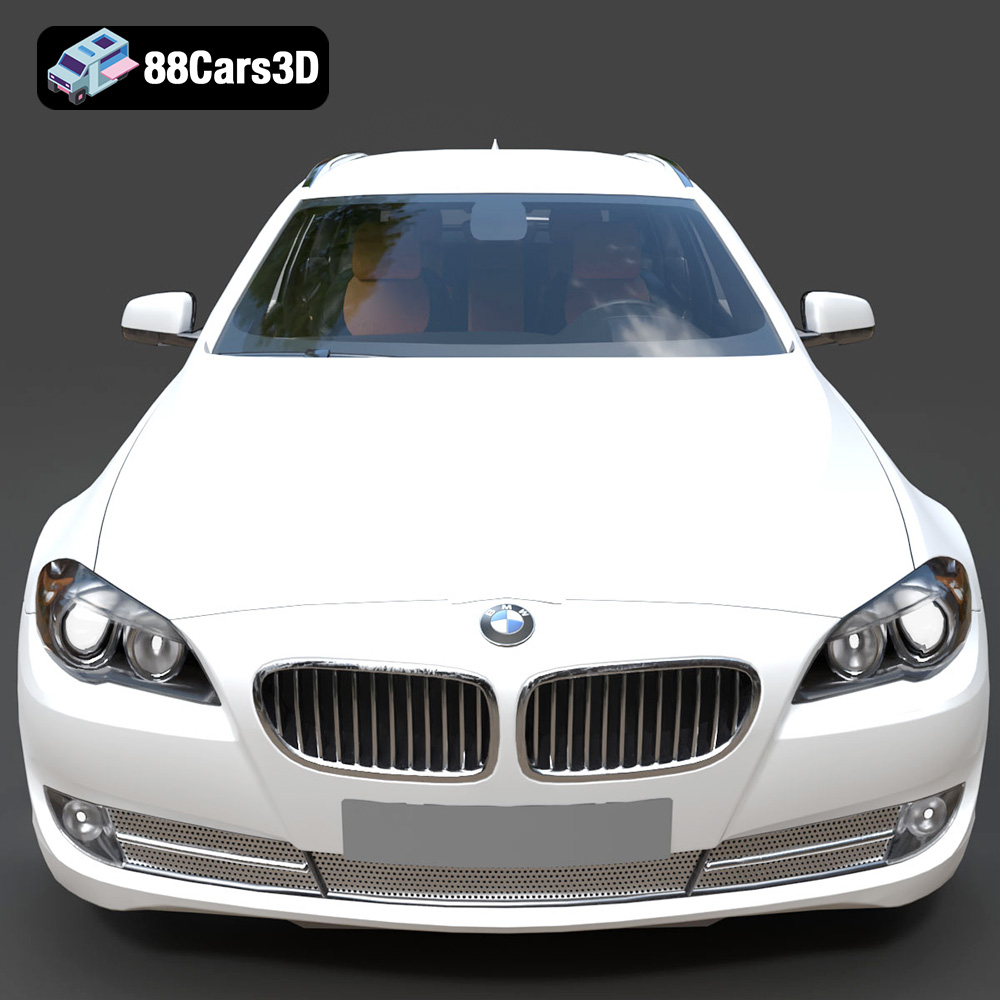
Simulation and training modules often require extremely accurate and reliable 3D models. From driving simulators that replicate real-world vehicle dynamics to architectural visualizations that need precise context, the integrity of the 3D asset is paramount. The BMW F11-007 model, with its “accurately modeled body panels” and “authentic BMW kidney grille, emblems, and badging,” provides the visual fidelity necessary for believable simulations. In architectural visualizations, placing this precise model next to a building helps convey scale and lifestyle. For driving simulators, the accurate representation and organized hierarchy allow for realistic physics implementation and driver training scenarios. Such models facilitate critical decision-making and enhance the overall realism of complex training environments.
Not all 3D models are created equal. The distinction between a mediocre asset and a premium one often lies in the meticulous attention to detail, technical cleanliness, and professional approach to its construction. These are the hallmarks of products found on platforms like 88cars3d.com, ensuring that every purchase is an investment in quality.
A truly professional 3D model, such as the BMW 5 Series Touring F11-007, begins with “clean, quad-dominant topology.” This refers to the arrangement of polygons (faces) that make up the model’s surface. Quads (four-sided polygons) are preferred over tris (three-sided) because they subdivide more smoothly, deform better during animation, and are easier to work with for artists. Clean topology prevents visual artifacts, ensures consistent shading, and provides a solid foundation for high-resolution renders and real-time performance. Equally important is “accurate real-world scale.” This ensures that when the model is imported into any scene or engine, it appears at its correct size relative to other objects, eliminating tedious scaling adjustments and maintaining realism.
The true magic of a premium 3D car model lies in its ability to capture authentic detail while remaining versatile. The BMW F11-007 exemplifies this with “detailed headlights and taillights with transparent materials for realistic illumination,” “high-resolution wheels and tires with distinct tread patterns,” and “detailed dashboard, steering wheel, and center console elements.” These interior and exterior features are not merely superficial; they are modeled with enough precision to hold up in close-up renders. Furthermore, “separated doors, hood, and trunk for easy animation workflows” and a “logically organized hierarchy with proper pivot points for animation and manipulation” offer artists incredible flexibility. This allows for customized animations, easy integration into various scenes, and the ability to modify paint finishes, apply custom graphics, or adjust material properties to match specific project requirements. Such foresight in design is what empowers creators to elevate their projects.
The landscape of 3D visualization is constantly pushing the boundaries of realism and immersion, driven by the relentless pursuit of high-quality digital assets. From cinematic rendering to interactive game environments and cutting-edge AR/VR experiences, the foundational strength of any project lies in the integrity and detail of its 3D models. Understanding the technical nuances of various file formats and appreciating the meticulous craftsmanship behind each asset are crucial for professionals across industries.
The BMW 5 Series Touring F11-007 3D Model stands as a testament to the blend of artistic skill and technical precision required in modern 3D production. Its clean quad-dominant topology, accurate real-world scale, detailed exterior and interior features, and wide array of file formats (including .blend, .fbx, .obj, .glb, .stl, .ply, .unreal, and .max) ensure its versatility and compatibility with virtually any professional pipeline. Whether you are a visualization artist aiming for photorealism, a game developer building an immersive world, or an innovator exploring AR/VR, this model provides an indispensable foundation.
Investing in professional 3D car models not only saves invaluable time but also guarantees a level of quality that elevates projects to new heights. For those seeking such exceptional assets, 88cars3d.com offers a curated collection of vehicles designed to meet the rigorous demands of professional production. Explore their range and discover how premium 3D models like the BMW 5 Series Touring F11-007 can drive your creative vision forward, transforming concepts into stunning realities.
Experience the precision and elegance of the BMW 5 Series Touring F11-007 with this professional 3D model. Meticulously crafted to capture the iconic design and functional aesthetics of the luxury station wagon, this model boasts clean geometry and balanced detailing. It is optimized for a wide range of applications, including high-fidelity rendering, realistic animation sequences, immersive simulation environments, and robust game development.
Exterior Features:
Interior / Mechanical Features:
Technical Advantages:
Applications:
Customization Options:
Elevate your projects with the authentic representation of the BMW 5 Series Touring F11-007 3D model. Its professional quality and versatile design make it an indispensable asset for any creative endeavor requiring precision and realism.
Included File Formats:
Tags:
.bmw.5series.touring.f11007.car.wagon.stationwagon.familycar.rendering.simulation.gameasset.arvr.blend.fbx.obj.glb.stl.ply.unreal.maxMercedes Benz CLS 500 3D Model
$10.79
.bmw.5series.touring.f11007.car.wagon.stationwagon.familycar.rendering.simulation.gameasset.arvr.blend.fbx.obj.glb.stl.ply.unreal.max