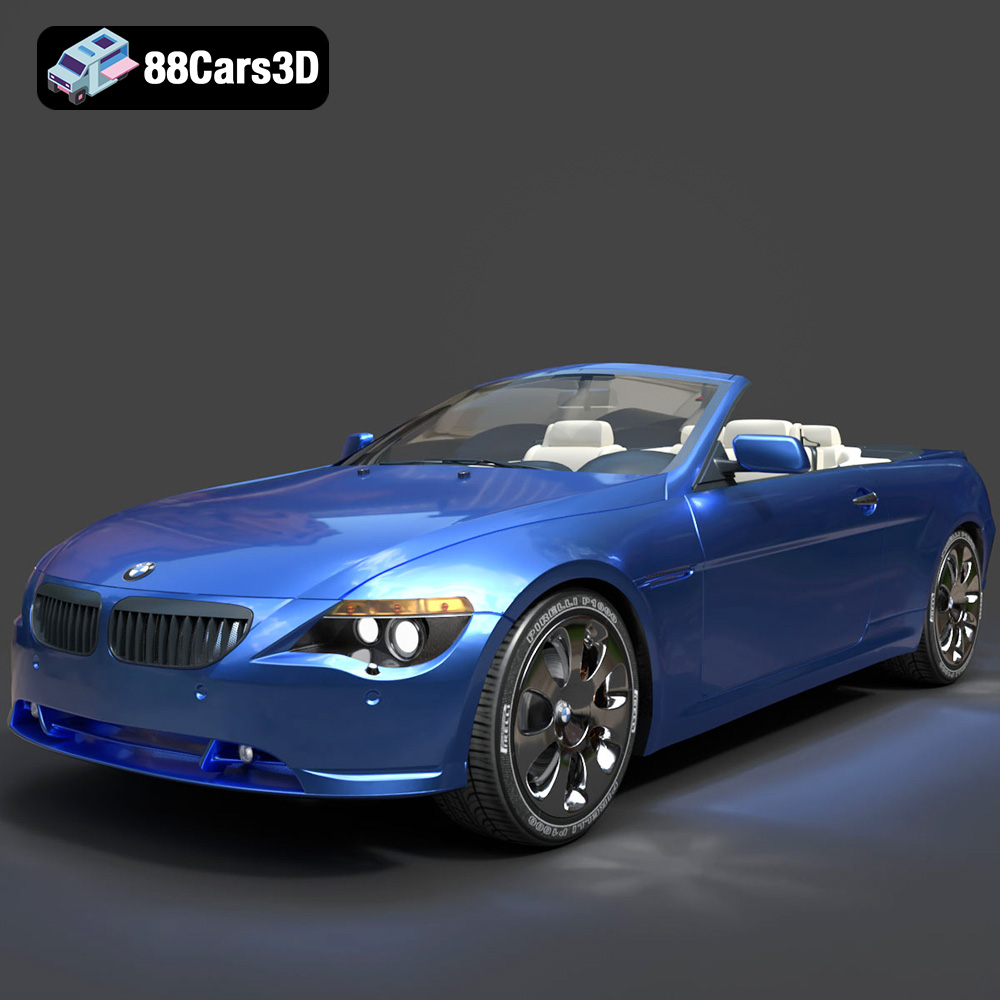
BMW 6 Series Convertible 3D Model – Elevating Digital Automotive Design: The Power of Premium 3D Car Models

Elevating Digital Automotive Design: The Power of Premium 3D Car Models
In the fast-paced world of digital creation, the demand for high-fidelity 3D assets continues to soar. From captivating cinematic sequences to immersive virtual realities and hyper-realistic architectural visualizations, stunning visuals are paramount. Nowhere is this more evident than in automotive design and visualization, where precision, authenticity, and visual impact are non-negotiable. Professionals across industries are constantly seeking ways to streamline their workflows while delivering unparalleled quality.
Achieving photorealistic results with 3D car models requires not just artistic skill but also access to meticulously crafted digital assets. Imagine bringing the elegance and performance of a luxury vehicle into your projects with absolute fidelity, without the monumental task of building it from scratch. This is where specialized marketplaces like 88cars3d.com become indispensable, offering a curated selection of premium 3D assets designed to meet the most stringent professional standards. Today, we’re diving deep into the technical prowess and versatile applications of such models, exemplifying this with the highly detailed BMW 6 Series Convertible 3D Model – an asset that perfectly captures the essence of German luxury performance, ready to be integrated into your next groundbreaking project.
Understanding 3D Model File Formats: The Foundation of Digital Workflows
The choice of a 3D model file format is far more than a mere technicality; it dictates compatibility, optimizes performance, and influences the entire production pipeline. A versatile asset, like the BMW 6 Series Convertible 3D Model, provides multiple formats to ensure seamless integration into various professional applications. Understanding what each format offers is crucial for maximizing efficiency and achieving desired outcomes.
.blend – The Power of Blender Integration
The .blend format represents a fully editable Blender scene. For users of Blender, this is often the preferred choice as it retains all native scene data, including meshes, materials, textures, lighting setups, cameras, animations, and even modifiers. It’s an excellent format for artists who want to dive deep into the model, make extensive modifications, tweak PBR (Physically Based Rendering) materials, or reconfigure the lighting environment within Blender. The .blend file for the BMW 6 Series Convertible 3D Model provides a complete, ready-to-render scene, saving significant setup time.
.fbx – The Industry Standard for Interoperability
.fbx (Filmbox) is arguably one of the most ubiquitous 3D exchange formats, developed by Autodesk. It excels at transferring 3D model data between different software applications, particularly for animation pipelines. An .fbx file can encapsulate geometry (meshes), textures, materials, animations, cameras, and lights. It is widely supported by game engines like Unreal Engine and Unity, making it ideal for real-time applications where efficient data transfer and accurate material representation are critical. When working with game assets, .fbx ensures that the meticulously crafted BMW model can transition smoothly into a real-time environment with minimal fuss.
.obj – The Universal Geometry Carrier
The .obj (Wavefront OBJ) format is a fundamental and widely supported format for purely geometric data. It primarily stores vertex positions, UV coordinates, normals, and material group information. While it doesn’t typically store animation or complex scene data like .fbx or .blend, its strength lies in its universal compatibility. Almost every 3D software application can import and export .obj files, making it an excellent fallback or starting point for cross-software workflows. For the BMW 6 Series Convertible 3D Model, the .obj version guarantees accessibility across virtually all major 3D packages, perfect for those needing raw mesh data.
.glb – Optimized for AR, VR, and Web
.glb (GL Transmission Format Binary) is a modern, efficient, and increasingly popular format, especially for AR, VR, and web-based 3D applications. It’s a binary version of glTF, embedding all assets (like textures and shaders) directly into a single file, which streamlines loading and distribution. .glb files are highly optimized for fast loading and rendering on various devices and platforms, making them perfect for interactive experiences where performance is key. The .glb version of the BMW 6 Series Convertible 3D Model is tailor-made for interactive product configurators, virtual showrooms, and augmented reality experiences.
.stl – Precision for 3D Printing
.stl (Stereolithography) is the standard file format for 3D printing. It represents a 3D model as a series of connected triangles, defining only the surface geometry without color or texture information. Its simplicity makes it universally compatible with 3D printers and slicing software. For designers looking to prototype or create physical models of the BMW 6 Series Convertible, the .stl file provides the clean, watertight mesh necessary for successful additive manufacturing.
.ply – Detailed Polygon Mesh for Analysis
.ply (Polygon File Format or Stanford Triangle Format) is a versatile format often used for storing 3D data from 3D scanners, point cloud data, and high-resolution meshes. It can store a wider range of properties than .obj or .stl, including color, transparency, and even normal vectors per vertex or face. It’s particularly useful for scientific, engineering, or detailed analysis applications where precise mesh data is paramount. The .ply version of the BMW model is suitable for detailed inspection or integration into CAD/CAM pipelines.
.unreal – Engine-Ready for Real-Time Environments
The .unreal format signifies an asset specifically pre-configured and optimized for Unreal Engine. This often means the asset has been properly scaled, collision meshes might be included, materials are set up using Unreal’s PBR system, and potentially even LODs (Levels of Detail) are integrated. Using an .unreal file dramatically reduces import and setup time within the engine, allowing developers to immediately drop the BMW 6 Series Convertible 3D Model into their scenes and begin working. This level of optimization is invaluable for game development and high-fidelity real-time simulations.
.max – The Professional 3ds Max Project
Similar to .blend for Blender, the .max format is a native 3ds Max project file. It contains all scene data, including geometry, materials (with V-Ray, Corona, or Arnold settings if used), lighting, cameras, and animation. For professionals heavily reliant on 3ds Max for architectural visualization, automotive advertising, or cinematic rendering, the .max file provides the highest level of editability and control. It ensures that the BMW 6 Series Convertible 3D Model can be seamlessly integrated into complex 3ds Max scenes, leveraging all the powerful features of the software for animation and high-quality rendering.
The Art and Science of Automotive Rendering
Automotive rendering stands as a pinnacle of 3D visualization, demanding meticulous attention to detail, lighting, and material fidelity. Professionals in advertising, product design, and ArchViz rely on stunning renders to showcase vehicles in their best light. High-quality 3D car models are the cornerstone of this process.
Achieving Photorealism with PBR Materials
Modern rendering relies heavily on PBR (Physically Based Rendering) workflows. PBR materials accurately simulate how light interacts with surfaces in the real world, leading to highly convincing results. The BMW 6 Series Convertible 3D Model, for instance, comes equipped with realistic PBR materials. This means that its paintwork, chrome accents, glass, and interior textures will react correctly to various lighting conditions, whether you’re using V-Ray, Corona Renderer, Arnold, or cycles in Blender. Artists can adjust parameters like roughness, metallicness, and albedo maps to achieve subtle nuances, from a showroom-fresh gloss to a weathered patina, without needing to recreate the material properties from scratch.
Lighting and Environment Setup for Impact
Beyond the model itself, sophisticated lighting is crucial for captivating automotive renders. High Dynamic Range Images (HDRIs) are commonly used to provide realistic environmental lighting and reflections, simulating everything from a sunny outdoor scene to an indoor studio setup. When integrating a model like the BMW 6 Series Convertible into a scene, artists focus on crafting compelling compositions, using key lights to define form, fill lights to soften shadows, and rim lights to highlight contours. The pre-configured setups often included in .blend or .max files accelerate this process, offering a strong starting point for professional lighting artists.
Workflow Integration: From CAD to Cinematic
The journey from a raw CAD model to a stunning cinematic sequence involves several stages. Initially, models might be refined in software like 3ds Max or Blender to optimize geometry for rendering, ensuring clean topology and efficient poly counts. UV mapping is crucial for applying textures without distortion. Once optimized, the model is brought into a rendering engine. For automotive advertising, artists might animate camera paths, create dynamic environments, and even add subtle atmospheric effects. The ready-to-use nature of models from 88cars3d.com, particularly those with pre-configured materials and clean geometry, significantly cuts down the initial preparation time, allowing more focus on the creative aspects of lighting, composition, and animation.
Integrating 3D Car Models into Game Development
The interactive nature of game development presents unique challenges and opportunities for 3D car models. Performance, optimization, and seamless integration are paramount when bringing vehicles to life in real-time environments like Unreal Engine or Unity.
Optimization for Real-Time Performance
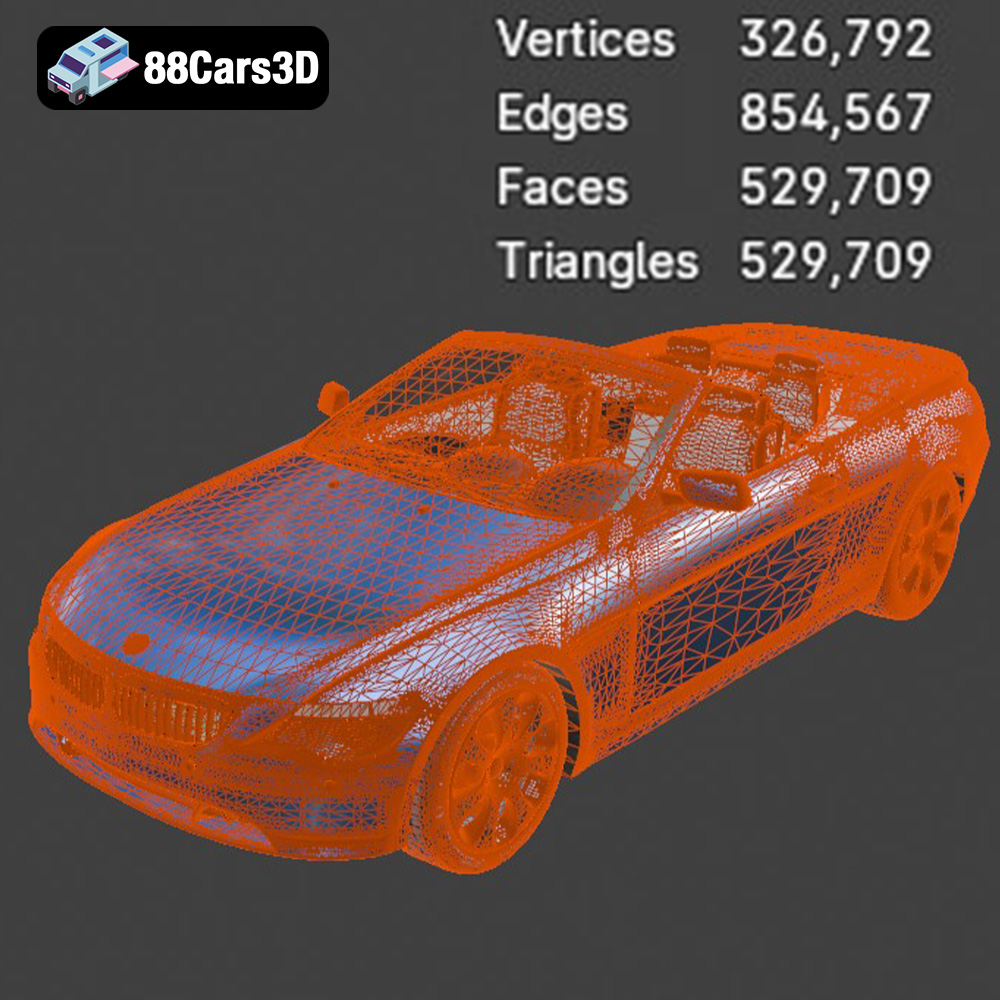
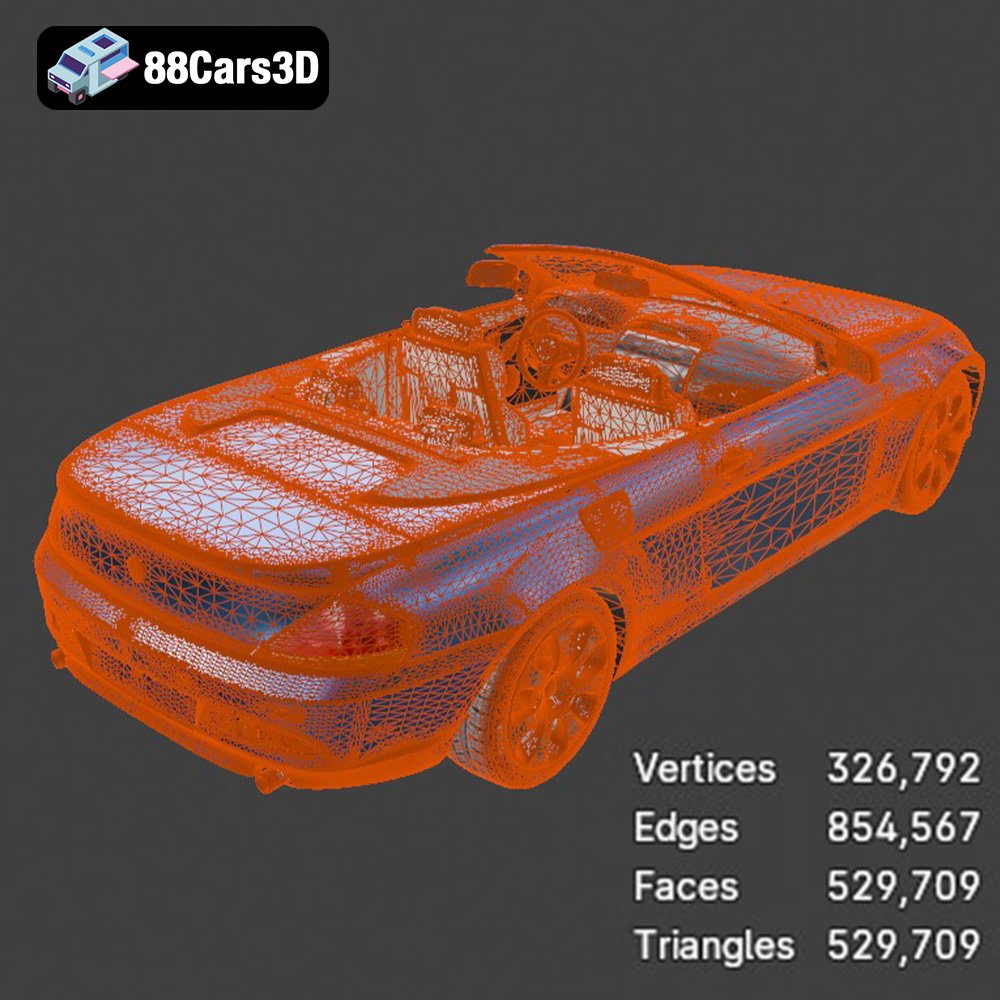
Unlike offline rendering, where computational power is less constrained, game engines require models to be highly optimized. This involves managing polygon counts, creating LODs (Levels of Detail), and ensuring efficient texture memory usage. The BMW 6 Series Convertible 3D Model, described as having “incredibly clean, optimized geometry,” is designed with this in mind. Clean topology allows for efficient deformation and physics simulations, while well-structured UVs prevent texture stretching and allow for effective texture atlas creation. Game developers can often take a high-detail model and generate lower-poly versions and LODs to ensure smooth framerates, even in crowded scenes.
PBR Workflow in Game Engines (Unreal Engine & Unity)
Both Unreal Engine and Unity have robust PBR material systems that leverage similar principles to offline renderers. The included .fbx and .unreal formats for the BMW 6 Series Convertible 3D Model are specifically tailored for these environments. This means the PBR textures (Albedo/Base Color, Metallic, Roughness, Normal, Ambient Occlusion) are already set up to be correctly interpreted by the engine’s shaders. Game artists can quickly import the model, assign the pre-made materials, and begin fine-tuning them within the engine’s material editor, accelerating the asset pipeline considerably. This ready-to-use approach is vital for rapid prototyping and efficient production in game studios.
Developing Interactive Experiences and Vehicle Physics
Beyond visual fidelity, game assets need to be functional. For vehicle models, this often includes setting up collision meshes, implementing realistic physics, and integrating animation for doors, wheels, and suspension. A well-constructed base mesh, like that of the BMW 6 Series Convertible, provides a solid foundation for these interactive elements. Developers can attach wheels to physics constraints, define articulation points for convertibles, and build intricate damage systems, all while relying on the underlying geometric integrity of the model. This robust structure ensures reliable performance in simulations and virtual environments, making it a powerful asset for any real-time project.
Beyond Visualization: AR/VR and 3D Printing with Car Models
The utility of high-quality 3D car models extends far beyond traditional rendering and game development, venturing into the exciting realms of augmented reality (AR), virtual reality (VR), and even physical prototyping through 3D printing.
Immersive Experiences with AR/VR
AR and VR environments demand highly optimized, performant 3D assets to maintain smooth framerates and prevent user discomfort. The .glb format, included with the BMW 6 Series Convertible 3D Model, is specifically designed for this purpose. Its single-file nature and efficient data structure make it ideal for quick loading and rendering in mobile AR apps, web-based VR experiences, and standalone headsets. Imagine placing a virtual BMW 6 Series Convertible on your driveway via an AR app, or exploring its fully modeled interior in a VR showroom. The detail and optimization of such a model ensure a compelling and immersive user experience, critical for interactive product showcases or training simulations.
3D Printing for Prototyping and Physical Models
For designers, engineers, or enthusiasts who require a tangible representation of a vehicle, 3D printing offers an invaluable solution. The .stl format, provided with the BMW 6 Series Convertible 3D Model, is the universal standard for additive manufacturing. This format represents the model’s surface as a collection of triangles, creating a watertight mesh necessary for successful printing. Whether for creating scaled prototypes for design review, manufacturing custom parts, or producing collectible figurines, a clean and optimized .stl file ensures that the physical output accurately reflects the digital design. This bridge between the digital and physical realms highlights the versatility of expertly crafted 3D assets.
Architectural Visualization and Virtual Showrooms
In architectural visualization (ArchViz), vehicles are essential elements for adding scale, realism, and a sense of life to renders of buildings and urban landscapes. A high-quality 3D car model like the BMW 6 Series Convertible can instantly elevate an ArchViz scene, grounding it in reality. Beyond static renders, the detailed interior and exterior of the BMW model make it perfect for virtual showrooms or interactive property tours. Clients can virtually “walk through” a garage, step inside the vehicle, and appreciate the luxurious details, creating a far more engaging and memorable presentation than traditional static images. The multiple file formats ensure seamless integration into popular ArchViz software like 3ds Max with V-Ray or Enscape.
Optimizing Workflows with Professional 3D Models
Time is a critical resource in any professional production pipeline. Leveraging pre-built, high-quality 3D car models is a strategic decision that can dramatically improve efficiency and elevate final output.
Saving Time and Resources
Modeling a vehicle from scratch, especially one as detailed as the BMW 6 Series Convertible, is an incredibly time-consuming and resource-intensive endeavor. It requires specialized skills in hard-surface modeling, topology optimization, UV unwrapping, and PBR material creation. By purchasing a professional-grade asset from 88cars3d.com, studios and individual artists can save hundreds of hours of development time. This allows them to focus on the creative aspects of their projects – lighting, animation, scene composition, and client revisions – rather than getting bogged down in the foundational asset creation. The cost-effectiveness of a ready-made model far outweighs the internal labor costs of building one to the same standard.
Ensuring Consistency and Quality
Professional 3D model marketplaces curate assets to meet specific quality benchmarks. This means models often adhere to industry best practices for clean topology, accurate scale, efficient poly counts, and correctly configured PBR materials. The “exacting standards” and “meticulously recreated” details mentioned for the BMW 6 Series Convertible 3D Model ensure visual fidelity suitable for even the most demanding professional projects. Such consistency is crucial for large-scale productions where multiple artists might be working on different aspects of a project, requiring reliable assets across the board. It guarantees that the visual integrity of the vehicle remains high, whether viewed in a close-up render or as part of a dynamic game environment.
Versatility Across Platforms and Projects
The inclusion of multiple file formats (like .blend, .fbx, .obj, .glb, .stl, .ply, .unreal, .max) with a single purchase underscores the versatility of professional 3D car models. This ensures that the asset can be used across a diverse range of applications, from cinematic rendering in 3ds Max to real-time game development in Unreal Engine, or even for AR/VR experiences and 3D printing. This adaptability provides incredible value, allowing the same high-fidelity model to serve various purposes without requiring conversion or extensive re-setup. This makes a single asset like the BMW 6 Series Convertible 3D Model a powerful tool in any digital artist’s toolkit.
Why Quality Matters: The 88cars3d.com Advantage
In the competitive landscape of 3D visualization, the quality of your assets directly reflects the quality of your final output. Choosing professional-grade 3D car models is an investment that pays dividends in realism, efficiency, and project success.
The Difference High Fidelity Makes
A low-quality 3D model with poor topology, incorrect scale, or basic materials can quickly undermine even the most expertly lit and composed scene. Details like realistic panel gaps, accurately modeled interiors, and precise tire treads are what elevate a good render to an outstanding one. The BMW 6 Series Convertible 3D Model’s commitment to “exacting standards” and “photorealistic results” highlights this focus on high fidelity. These nuances are what sell the illusion, making viewers believe they are looking at a real vehicle rather than a digital representation. For automotive advertising, where brand perception is everything, this level of detail is non-negotiable.
Reliability for Professional Applications
Professional projects demand reliable assets. This means models that are stable, don’t crash software, and perform as expected. Clean geometry, optimized for various platforms, contributes to this reliability. Furthermore, assets that come with pre-configured PBR materials and organized file structures reduce the chances of errors and unexpected issues during integration. When deadlines are tight and client expectations are high, having a dependable asset like the BMW 6 Series Convertible 3D Model ensures a smoother workflow and a higher likelihood of project success. 88cars3d.com strives to provide such reliable resources to digital artists worldwide.
Supporting Diverse Creative Needs
Whether you are an individual freelancer, a small studio, or a large production house, the need for high-quality assets is universal. A marketplace like 88cars3d.com serves this diverse range of creative needs by offering assets that are not only visually stunning but also technically robust. The provided formats cater to various software preferences and end-use cases, from game developers needing engine-ready assets to ArchViz artists requiring maximum rendering fidelity. This comprehensive approach ensures that the investment in a premium 3D car model empowers artists to push the boundaries of their creative vision across multiple disciplines.
Conclusion
The journey through the world of advanced 3D car models underscores their indispensable role in modern digital production. From the nuanced technicalities of various file formats to the intricate processes of automotive rendering, game development, and the exciting frontier of AR/VR and 3D printing, high-quality assets are the bedrock of compelling visuals and efficient workflows.
The BMW 6 Series Convertible 3D Model exemplifies what a premium asset should be: meticulously detailed, optimized for performance, and versatile across multiple platforms. Its clean geometry, PBR materials, and extensive file format support make it an ideal choice for professionals seeking to elevate their projects. By choosing assets from reputable sources like 88cars3d.com, artists and studios can save valuable time, ensure consistent quality, and focus on unleashing their creativity, ultimately delivering breathtaking results that capture the imagination.
Featured 3D Model
BMW 6 Series Convertible 3D Model
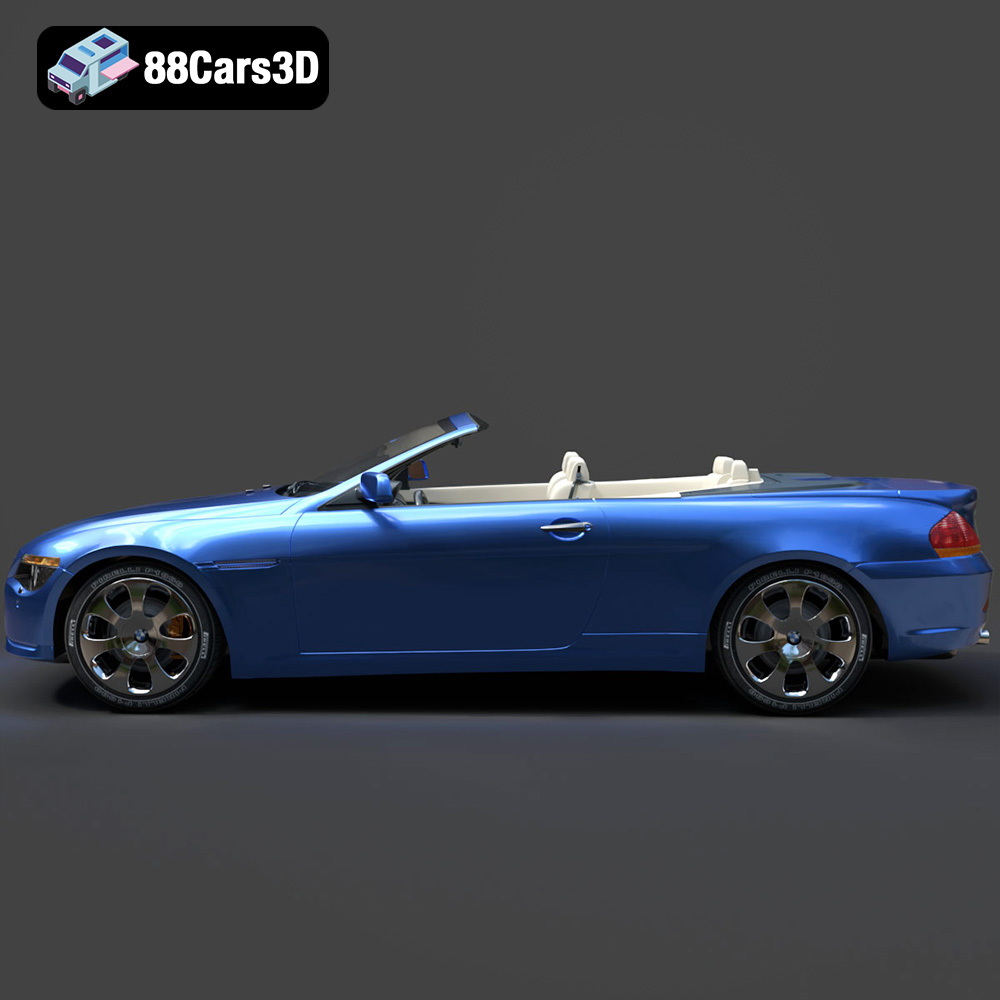
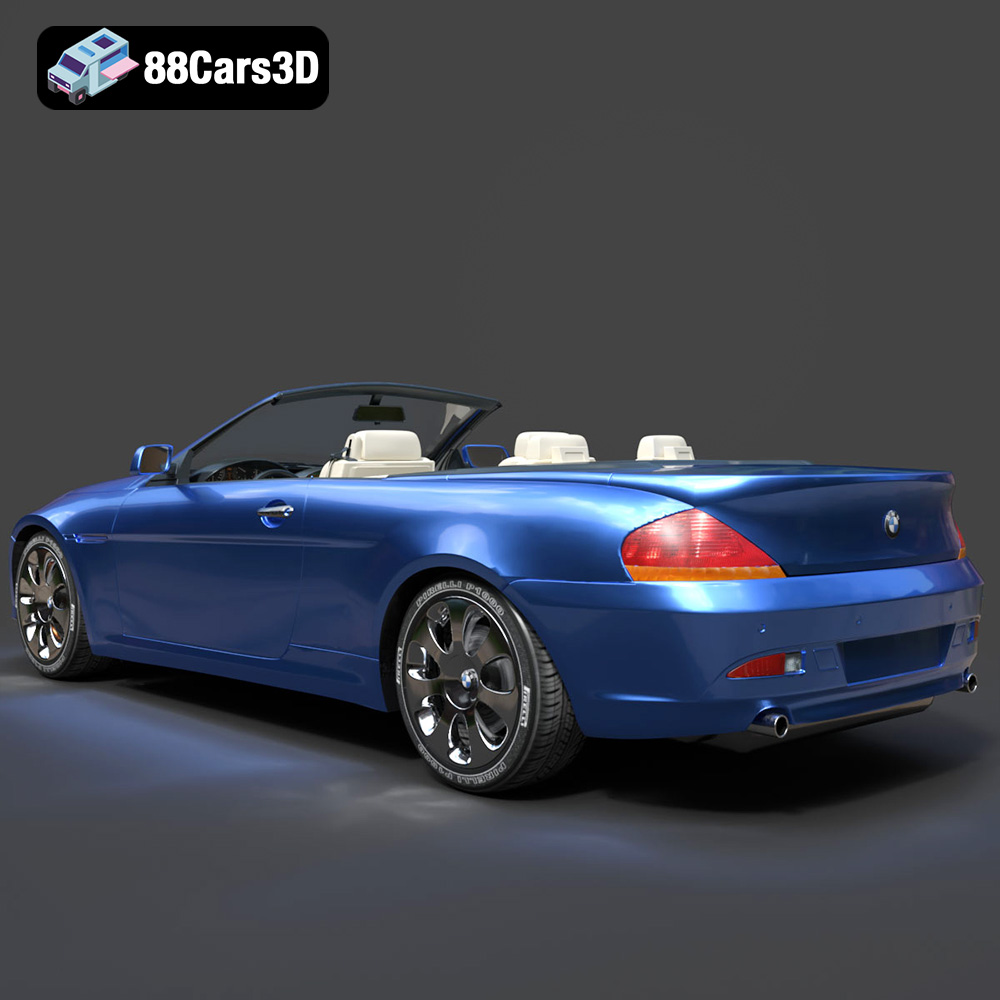
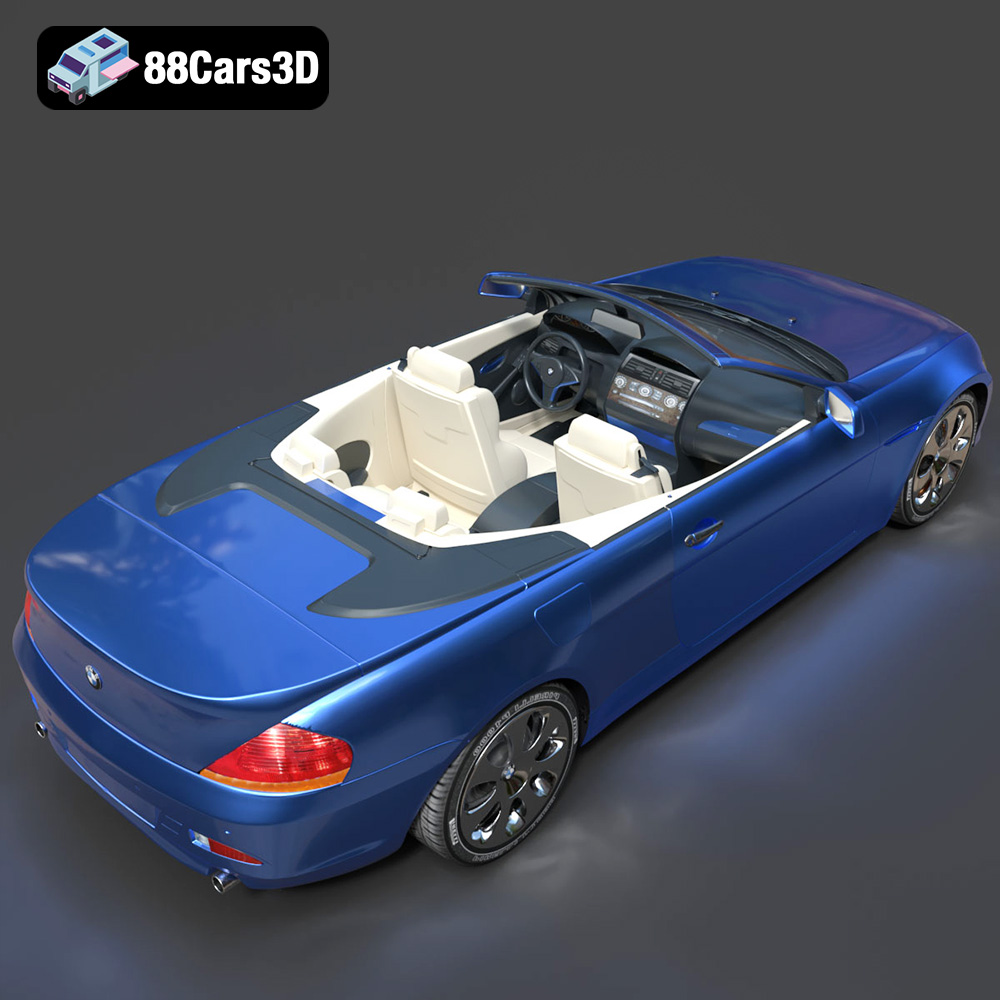
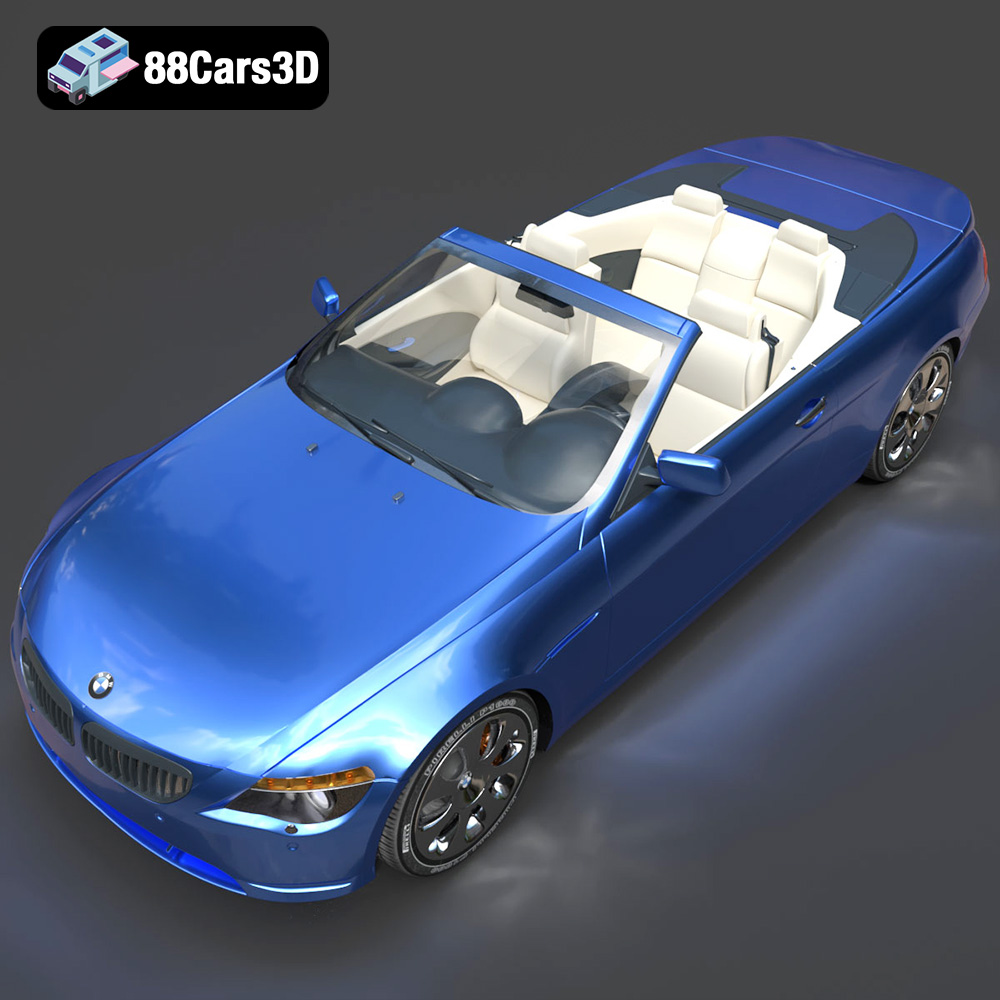
Capture the essence of German luxury performance with this detailed 3D model of the BMW 6 Series Convertible. Modeled to exacting standards, this asset delivers visual fidelity suitable for professional projects requiring authentic vehicle representation. Every curve and panel gap has been meticulously recreated to ensure photorealistic results in any rendering environment. This automotive asset features incredibly clean, optimized geometry, designed to perform efficiently across various digital platforms. It includes realistic PBR (Physically Based Rendering) materials configured for immediate use, reducing setup time significantly. The model boasts a fully modeled interior and detailed chassis elements, making it versatile for close-up shots, simulations, and virtual walkthroughs. The BMW 6 Series Convertible 3D Model is ready for integration into numerous professional applications, including cinematic rendering, architectural visualization, automotive advertising, real-time game development (Unreal Engine, Unity), virtual reality (VR), and augmented reality (AR) experiences. Its robust structure ensures reliable performance regardless of the target platform.
$14.99
Product Image Gallery