BMW i8 2015 3D Model – The Cornerstone of Digital Automotive Design: High-Quality 3D Models

The automotive world is a perpetual motion machine of innovation, pushing boundaries in design, engineering, and performance. Few vehicles embody this spirit of futuristic elegance and technological prowess quite like the BMW i8. Its distinctive silhouette, advanced hybrid powertrain, and commitment to sustainable luxury carved a unique niche in the sports car landscape. For designers, animators, game developers, and visualization specialists, bringing such an iconic vehicle into the digital realm requires more than just a model; it demands a meticulously crafted asset that faithfully captures its essence.
This is where high-quality 3D car models become indispensable tools. They are the digital blueprints that empower creators to render stunning visuals, develop immersive interactive experiences, and conduct crucial simulations. The demand for accurate, optimized, and versatile automotive assets is at an all-time high, driving platforms like 88cars3d.com to offer professional-grade solutions. Among their stellar collection, the BMW i8 2015 3D Model stands out as a prime example of what a premium digital asset can offer.
This comprehensive guide delves into the technical intricacies of working with 3D car models, exploring the essential file formats, professional workflows, and real-world applications. We’ll examine how a model like the BMW i8 2015, with its detailed geometry and robust construction, serves as a cornerstone for projects ranging from cinematic automotive rendering to cutting-edge game asset development and AR/VR experiences.
The Cornerstone of Digital Automotive Design: High-Quality 3D Models
In today’s visually driven industries, the quality of a 3D model directly impacts the realism and effectiveness of a project. For automotive design and visualization, this is even more critical. A subpar model can break immersion, introduce artifacts, and complicate production. Conversely, a professionally crafted 3D model, such as the BMW i8 2015 3D Model available at 88cars3d.com, provides a solid foundation for any creative endeavor.
Precision Modeling and Texturing
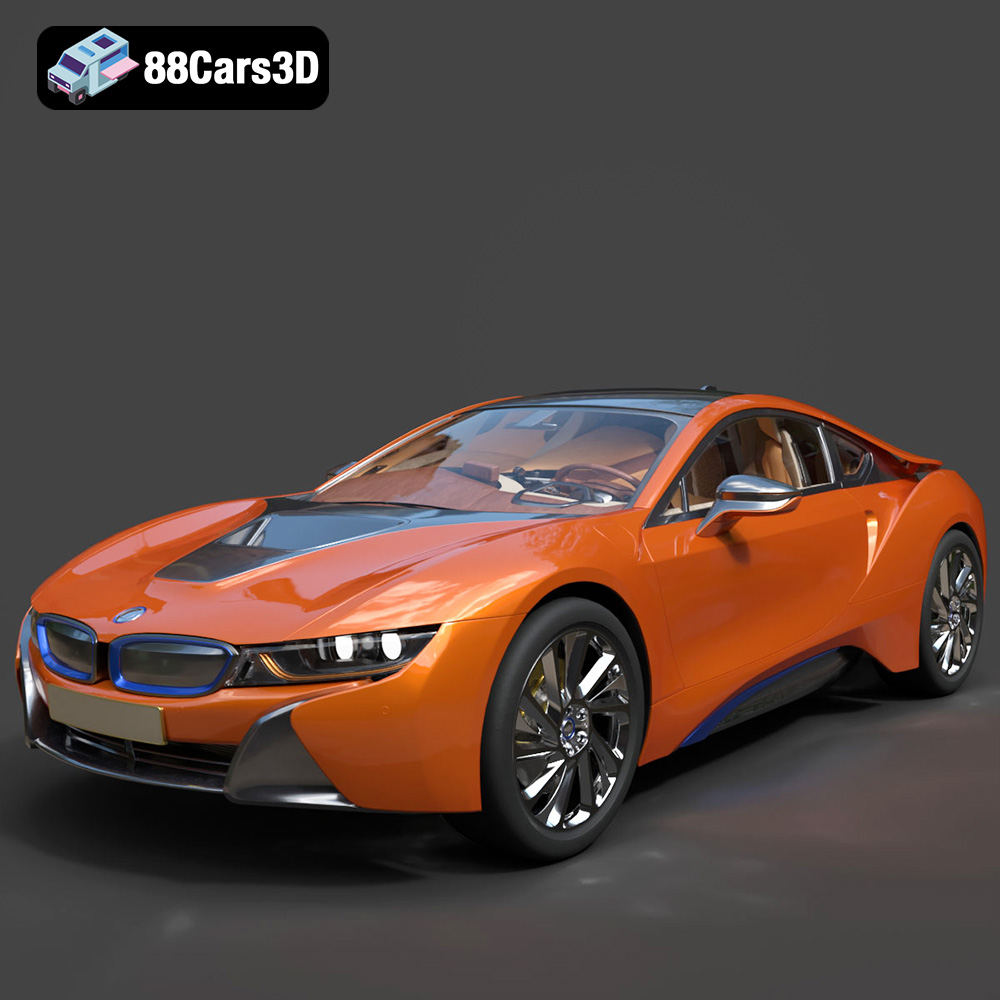
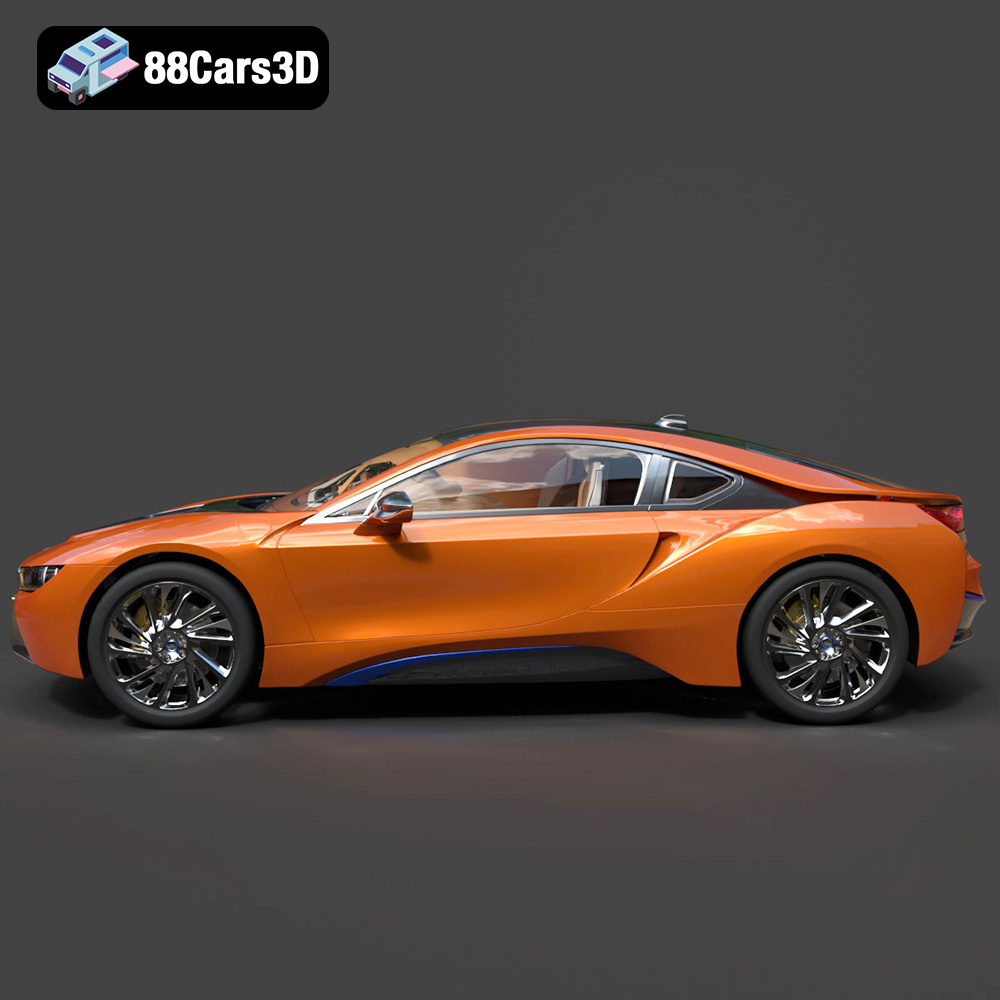
Creating an accurate 3D model of a complex object like a car involves a meticulous process. It begins with precise blueprints, reference images, and often, CAD data, to ensure every curve, panel gap, and design feature is replicated faithfully. The BMW i8 2015 model exemplifies this attention to detail, capturing the distinctive silhouette, advanced lighting systems, and aerodynamic lines that define the original vehicle. This level of accuracy is paramount for maintaining brand integrity in marketing materials or achieving photorealism in cinematic sequences.
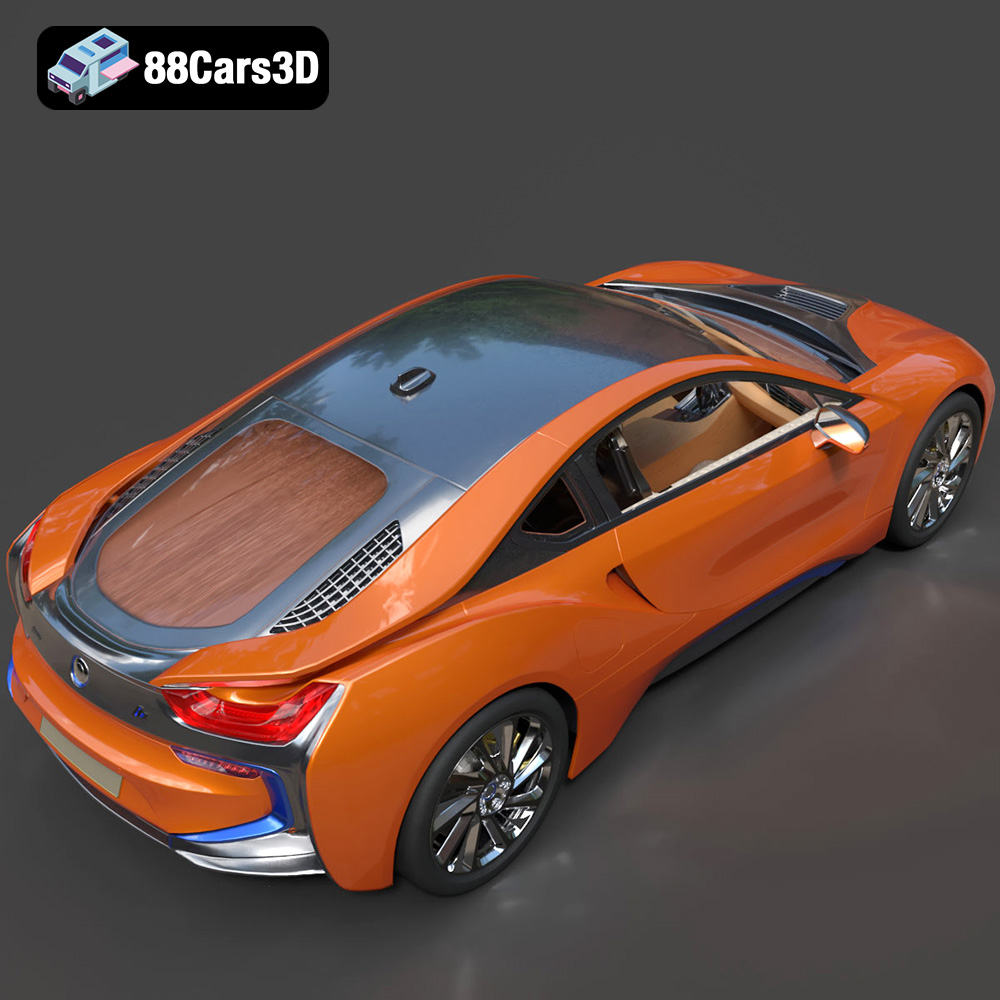
Beyond the raw geometry, texture work brings the model to life. This includes creating high-resolution PBR (Physically Based Rendering) materials that accurately simulate metallic paints, glass, rubber, carbon fiber, and interior fabrics. Each material must respond correctly to light, reflecting and refracting it in a way that mimics real-world physics. For the BMW i8 2015 3D Model, this means realistic materials and textures applied across all components, from the exterior body panels and specialized wheels to the comprehensive interior environment, ensuring visual fidelity across various rendering engines.
The Role of Optimized Geometry and UVs
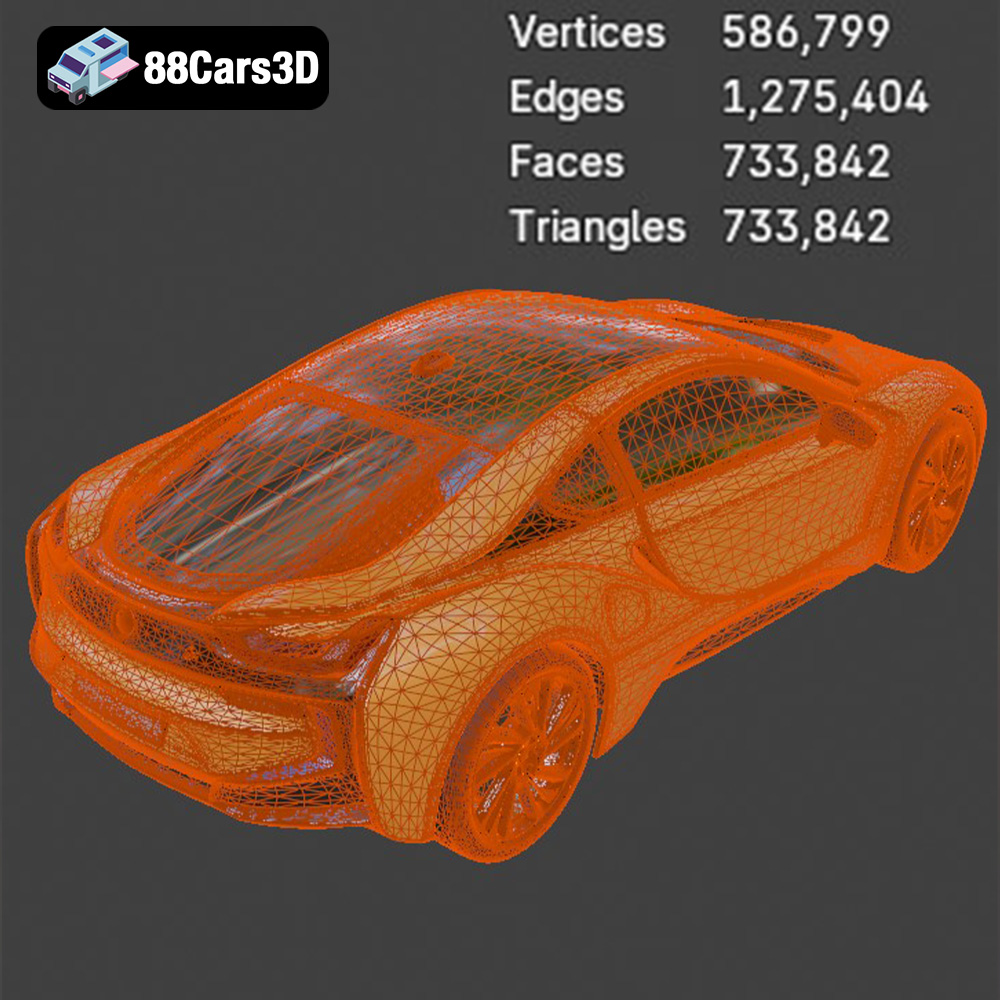
While detail is crucial, so is optimization. A model with excessively high polygon counts can cripple real-time performance in game engines or significantly increase rendering times in offline renderers. Professional 3D car models strike a balance, utilizing clean, optimized geometry that maintains visual fidelity without being overly burdensome. This often involves efficient edge flow, proper subdivision surface topology, and the judicious use of normal maps to simulate fine surface details without adding unnecessary polygons.
UV mapping is another critical technical aspect. UVs are 2D coordinates that tell the rendering engine how to project 2D textures onto the 3D surface of the model. Well-laid-out UVs are essential for seamless texture application, avoiding stretching or distortion. They also facilitate efficient texture packing, which improves performance by reducing the number of texture maps needed. A model with clean, optimized geometry and carefully unwrapped UVs, like the BMW i8 2015, ensures reliable performance and flawless results, whether for high-resolution rendering or real-time applications.
Understanding 3D Model File Formats
The versatility of a 3D car model often hinges on the range of file formats it supports. Each format is designed with specific use cases, compatibility requirements, and technical characteristics in mind. Understanding these distinctions is crucial for selecting the right asset for your project and integrating it smoothly into your workflow. The BMW i8 2015 3D Model, for instance, comes with a comprehensive suite of formats to cater to diverse professional needs.
.blend – The Blender Ecosystem
The .blend format is the native file type for Blender, the popular open-source 3D creation suite. A .blend file typically encapsulates an entire scene, including not just the 3D model’s geometry and UVs, but also its materials, textures, lighting setups, cameras, animations, physics simulations, and even custom scripts. This makes it an incredibly powerful and self-contained format for Blender users, offering full editability and allowing artists to leverage all of Blender’s robust features. When you acquire a .blend file like the one for the BMW i8 2015, you get a ready-to-render scene, often with pre-configured Cycles or Eevee materials and lighting, saving significant setup time.
.fbx – The Industry Workhorse
The .fbx (Filmbox) format, originally developed by Kaydara and now owned by Autodesk, has become one of the most widely supported and robust interchange formats in the 3D industry. It’s particularly ideal for conveying complex scene data, including geometry (meshes, polygons, NURBS), materials (basic properties, sometimes PBR maps), textures, camera information, lights, and crucially, animation data (skeletons, skinning, keyframe animation). Its strength lies in its ability to transfer models, rigs, and animations between different 3D software applications and game engines like Unreal Engine and Unity. For the BMW i8 2015, an .fbx file is game-engine ready, providing a streamlined path for integration into real-time environments due to its efficiency and comprehensive data transfer capabilities.
.obj – Universal Compatibility
The .obj (Wavefront OBJ) format is one of the oldest and most universally compatible 3D file formats. It primarily stores geometric data, including vertices, normals, UV coordinates, and faces. While it doesn’t typically store animation or advanced material properties, it can reference external .mtl (Material Template Library) files for basic material definitions (like color and shininess) and texture paths. Its simplicity makes it an excellent choice for straightforward mesh transfer between almost any 3D software, acting as a reliable fallback when other formats fail. If you need a clean mesh of the BMW i8 2015 for sculpting or retopology in a niche application, .obj is often the go-to.
.glb – The Web and AR/VR Standard
.glb (GL Transmission Format Binary) is the binary version of glTF, a royalty-free specification for 3D scenes and models. Designed by the Khronos Group, .glb is increasingly becoming the “JPEG of 3D” due to its efficiency and optimization for web-based applications, augmented reality (AR), and virtual reality (VR). A single .glb file can contain models, textures, animations, and PBR materials, making it a highly portable and self-contained format. It’s optimized for fast loading and rendering on various devices and platforms, making it perfect for showcasing the BMW i8 2015 in an interactive web viewer or a mobile AR app.
.stl – For Physical Prototyping
The .stl (Stereolithography) format is the standard file type for 3D printing and CAD software. It describes only the surface geometry of a 3D object using a tessellated mesh of triangular facets. It does not store color, texture, or material information, making it unsuitable for rendering or animation. However, for physical prototyping or rapid manufacturing of the BMW i8 2015, an .stl file is precisely what’s needed to prepare the model for a 3D printer, ensuring the physical replica accurately reflects the digital form.
.ply – Precision for Analysis
The .ply (Polygon File Format or Stanford Triangle Format) is another format for storing 3D data, particularly useful for scan data and point clouds. It can store not only geometry (vertices, faces) but also additional attributes like color, normals, transparency, and even properties for each vertex or face. While less common for general 3D model exchange compared to .fbx or .obj, it’s frequently used in scientific applications, 3D scanning, and precise reverse engineering where detailed information about the mesh’s properties is important. For specialized analysis of the BMW i8 2015’s geometry, a .ply export provides a detailed polygon mesh.
.unreal – Native Engine Integration
While not a universal file format in the traditional sense, the term .unreal often refers to assets specifically prepared or packaged for direct import and optimal performance within Unreal Engine. This typically involves .fbx files that have been carefully exported with settings tailored for Unreal, combined with PBR material setups, collision meshes, LODs (Levels of Detail), and blueprint configurations directly within the engine. The BMW i8 2015 3D Model offers a pre-configured .unreal option, meaning it’s ready for immediate use, leveraging Unreal’s advanced rendering and physics capabilities without extensive manual setup.
.max – 3ds Max Project Files
The .max format is the proprietary file type for Autodesk 3ds Max, a leading software for 3D modeling, animation, and rendering. Similar to .blend, a .max file contains a complete scene, including all objects, lights, cameras, materials (often with V-Ray, Corona, or Arnold shaders), textures, and animation data. It offers full editability within 3ds Max, making it invaluable for professionals who use this software as their primary tool. For those working in architectural visualization, product design, or cinematic rendering, the .max file for the BMW i8 2015 provides an editable project, allowing for deep customization and integration into complex scenes.
Integrating 3D Car Models into Professional Workflows
The true power of a high-quality 3D car model like the BMW i8 2015 lies in its seamless integration into diverse professional pipelines. From generating photorealistic images to building interactive experiences, the right asset can significantly accelerate and enhance production.
Cinematic Rendering and ArchViz
For cinematic sequences, commercials, or architectural visualization (ArchViz) where a car is often a central element, stunning realism is paramount. Artists typically use powerful offline renderers like V-Ray, Corona Renderer, Arnold, or Blender’s Cycles. A .max or .blend file of the BMW i8 2015, with its detailed materials and optimized geometry, provides an excellent starting point. The workflow involves importing the model into 3ds Max or Blender, setting up sophisticated lighting rigs (e.g., HDRI environments, physically accurate lights), composing camera angles, and then rendering high-resolution images or animation sequences. This process demands a model with clean topology and robust materials to avoid rendering artifacts and ensure that reflections, refractions, and surface details appear flawless under various lighting conditions.
Game Development with Unreal Engine and Unity
In game development, real-time performance is king. Assets must be highly optimized to maintain smooth frame rates while still looking visually appealing. The .fbx and .unreal formats of the BMW i8 2015 3D Model are specifically tailored for this purpose. Developers typically import the .fbx into Unreal Engine or Unity, where they set up PBR materials, collision meshes (simple proxy geometry for physics interactions), and LODs (Levels of Detail) that swap out higher-poly versions of the car for lower-poly ones as the player moves further away, saving computational resources. A pre-configured .unreal asset takes this a step further, often including optimized materials, LODs, and even basic blueprint configurations ready to be dropped into a game world. This makes the BMW i8 2015 an ideal game asset for racing simulations, open-world environments, or interactive showrooms.
Augmented Reality (AR) and Virtual Reality (VR) Experiences
AR and VR push the boundaries of immersion, requiring models that are both visually rich and incredibly performant on a variety of devices, from high-end VR headsets to mobile phones. The .glb format of the BMW i8 2015 is perfectly suited for these applications. Developers can easily integrate this optimized, self-contained file into ARKit, ARCore, WebXR, or custom VR applications. Its small file size and PBR material support ensure quick loading times and consistent visual quality across different platforms. Imagine placing a virtual BMW i8 2015 on your driveway with an AR app or exploring its detailed interior in a VR showroom – the .glb model makes these experiences possible and highly engaging.
The Art of Automotive Rendering and Visualization
Beyond simply having a great model, the skill of rendering is what truly transforms a 3D asset into a captivating visual. Automotive rendering is a specialized field that demands an understanding of light, materials, and composition to produce photorealistic results.
Material Creation and PBR Workflows
Modern rendering relies heavily on Physically Based Rendering (PBR), a methodology that simulates how light interacts with surfaces in a physically accurate manner. This involves creating textures for parameters like Albedo (base color), Metallic (how metallic a surface is), Roughness (how rough or smooth a surface is), Normal (fine surface details), and sometimes Ambient Occlusion (self-shadowing). The BMW i8 2015 3D Model comes with fully detailed, realistic materials and textures applied across all components, simplifying the PBR setup. For instance, the car’s paint would have precise metallic and roughness values to catch highlights realistically, while tire rubber would exhibit a distinct dullness and subtle normal map details.
Lighting, Cameras, and Composition
No render looks good without proper lighting. For automotive renders, this often involves using High Dynamic Range Images (HDRIs) to simulate real-world lighting environments, such as a sunny outdoor scene or an indoor studio. Combined with carefully placed artificial lights, HDRIs create realistic reflections and global illumination. Camera settings – aperture, focal length, depth of field – are crucial for mimicking real-world photography and guiding the viewer’s eye. Composition, the arrangement of elements within the frame, plays a vital role in telling a story or highlighting specific features of the BMW i8 2015. A strong composition, paired with expert lighting, can elevate a simple model into a work of art.
Post-Production Techniques
The rendering process doesn’t always end when the image comes out of the 3D software. Post-production in software like Adobe Photoshop or Affinity Photo is essential for refining the final output. This includes color grading, adding subtle atmospheric effects (like lens flares or bloom), sharpening details, and correcting any minor imperfections. Post-production can significantly enhance the mood, realism, and visual impact of an automotive rendering, taking it from a raw render to a polished, professional image ready for marketing or display.
Case Studies: Bringing the BMW i8 to Life
Let’s consider how the versatility and quality of a model like the BMW i8 2015 3D Model translate into tangible project benefits across various industries.
A Marketing Campaign for a Hybrid Supercar
Imagine an automotive marketing agency tasked with creating a compelling digital campaign for the BMW i8 2015. Instead of relying solely on costly photoshoots, they could leverage the 3D model. Using the .max or .blend file, they could render the i8 in various custom environments – perhaps dynamically parked in front of a modern skyscraper for an architectural visualization, or cruising through a futuristic city. Different paint schemes, wheel options, and interior configurations could be rapidly prototyped and rendered without physical production. Animated sequences showcasing its aerodynamic lines and unique lighting systems would be easily achievable, providing stunning visuals for online ads, brochures, and interactive web experiences. The clean geometry ensures smooth deformations for animation, and the realistic materials ensure the car always looks its best.
Developing an Interactive Driving Simulator
For a game studio developing a high-fidelity racing simulator, the BMW i8 2015 3D Model would be an invaluable game asset. Starting with the .fbx or .unreal version, developers could quickly integrate the car into their engine. The optimized geometry ensures it runs smoothly, while the detailed interior allows for a realistic first-person driving experience. With the model’s structure built for easy modification, developers could implement custom physics, add damage models, and even animate the doors, steering wheel, and dashboard elements. This foundational asset saves hundreds of hours of modeling and texturing, allowing the team to focus on gameplay mechanics and overall experience.
Visualizing Future Urban Mobility
An urban planning firm is tasked with visualizing a smart city concept that incorporates autonomous, eco-friendly vehicles. They need a fleet of modern, iconic cars to populate their digital cityscapes. The BMW i8 2015, with its hybrid concept car aesthetic, is a perfect fit. Using the .glb format, they could easily integrate the model into a web-based interactive map or an AR application, allowing stakeholders to virtually “drive” through the future city and see how the vehicles interact with the environment. The detailed model provides a sense of realism and scale, making the visualization more impactful and believable for presentations and public engagement initiatives.
Conclusion
The digital frontier of automotive design, visualization, and entertainment is continuously expanding, and at its core are high-quality 3D car models. They are the essential building blocks that enable creators to push the boundaries of realism and immersion, whether for stunning automotive rendering, engaging game assets, or cutting-edge AR/VR experiences. The intricate balance of precision, optimization, and versatility defines a truly professional 3D asset.
The BMW i8 2015 3D Model exemplifies these qualities, offering meticulously crafted geometry, realistic materials, and a comprehensive suite of file formats to meet the demands of any professional workflow. It’s an asset designed not just to look good, but to integrate seamlessly and perform reliably across platforms, saving valuable production time and ensuring outstanding results. For professionals seeking top-tier 3D models that deliver on quality and versatility, platforms like 88cars3d.com are an invaluable resource, providing the foundation for countless creative possibilities.
Featured 3D Model
BMW i8 2015 3D Model
Bring the iconic design and futuristic engineering of the BMW i8 2015 into your digital projects. This meticulously crafted 3D model captures the distinctive silhouette, advanced lighting systems, and aerodynamic lines of BMW’s groundbreaking hybrid sports car. Developed with attention to accuracy, the model is built upon clean, optimized geometry suitable for demanding production environments.
The model features fully detailed, realistic materials and textures applied across all components, including the exterior body panels, specialized wheels, and a comprehensive interior environment. Its professional-grade construction ensures reliable performance in real-time applications and flawless results in high-resolution rendering workflows. The structure is built for easy modification and integration into existing scenes.
This versatile asset is ideal for a range of professional applications, including cinematic rendering, architectural visualization (ArchViz), simulation training, automotive marketing, and interactive real-time environments such as game development (using Unreal Engine or Unity) and advanced AR/VR experiences.
Included File Formats
- .blend – Editable Blender file with materials and lighting setup
- .fbx – Game-engine ready format for Unreal Engine and Unity
- .obj – Standard 3D model format compatible with all major software
- .glb – Optimized for AR/VR and web-based visualization
- .stl – Suitable for 3D printing and prototyping
- .ply – Detailed polygon mesh for analysis and visualization
- .unreal – Pre-configured for Unreal Engine use
- .max – Editable 3ds Max file for rendering and animation
Tags: .bmw, .i8, .bmwi8, .sportscar, .hybridcar, .conceptcar, .coupe, .car3dmodel, .rendering, .simulation, .gameasset, .arvr, .blend, .fbx, .obj, .glb, .stl, .ply, .unreal, .max
Tags:
.bmw, .i8, .bmwi8, .sportscar, .hybridcar, .conceptcar, .coupe, .car3dmodel, .rendering, .simulation, .gameasset, .arvr, .blend, .fbx, .obj, .glb, .stl, .ply, .unreal, .max
$12.99
Product Image Gallery