German U-Boat U-99 Submarine 1940 3D Model – Diving into History: The Art and Science of Crafting Immersive 3D Naval Vessels

Diving into History: The Art and Science of Crafting Immersive 3D Naval Vessels
In the expansive world of 3D visualization, where every detail matters, the creation of historically accurate and visually stunning assets is a craft of paramount importance. Whether you’re a game developer aiming for unparalleled realism, a filmmaker seeking cinematic authenticity, or an architect bringing a vision to life, the quality of your 3D models dictates the success of your project. This is particularly true for complex subjects like naval vessels, which carry both intricate engineering and significant historical weight.
Imagine recreating a pivotal moment from history, or designing an educational experience that transports users directly into the past. Such endeavors demand assets that are not merely models, but digital artifacts capable of conveying narrative, engineering marvel, and the very essence of their real-world counterparts. This pursuit of digital authenticity is where specialized marketplaces like 88cars3d.com excel, providing professionals with a rich library of high-quality models that save invaluable development time and elevate project fidelity. Today, we delve deep into the technical intricacies and creative potential offered by a remarkable example: the German U-Boat U-99 Submarine 1940 3D Model, an asset that brings a piece of World War II history to life with exceptional detail and professional-grade engineering.
Understanding 3D Model File Formats: Choosing the Right Tool for the Job
The utility of any 3D model, especially one as intricate and versatile as the German U-Boat U-99 Submarine 1940, hinges significantly on the file formats in which it is provided. Each format serves specific purposes, catering to different stages of a production pipeline, software compatibility, and final delivery platforms. Understanding these distinctions is crucial for maximizing efficiency and achieving optimal results.
.blend – The Native Blender Ecosystem
The .blend file format is Blender’s native project file. When you receive a .blend file for the U-99 model, you’re gaining access to the complete scene setup as it was created. This typically includes the model’s geometry, modifiers, materials (configured for Blender’s Cycles or Eevee render engines), lighting, camera setups, and even animation data if present. For artists working primarily in Blender, this is the most flexible format, allowing for direct modification, material adjustments, re-texturing, and integration into existing Blender projects without any loss of data fidelity. It’s ideal for deep customization, rendering out stills or animations directly, and leveraging Blender’s powerful toolset.
.fbx – The Industry Standard for Interoperability
Autodesk’s .fbx (Filmbox) format is arguably the most widely adopted interchange format in 3D production. It excels at transferring 3D models and their associated data – including geometry, UV maps, textures, materials (with some limitations depending on software translation), skeletal animations, and cameras – between different software applications and game engines like Unreal Engine and Unity. For the U-99 model, an .fbx file ensures a smooth import process into game development pipelines, facilitating the setup of collisions, LODs (Levels of Detail), and real-time materials. Its robust nature makes it indispensable for collaboration across varied software environments.
.obj – The Universal Geometry Carrier
The .obj (Wavefront OBJ) format is a fundamental and universal 3D model format. While it primarily stores geometric data (vertices, normals, texture coordinates, and faces), it also references external material libraries (.mtl files) which contain basic material properties and texture paths. The .obj format is highly compatible with nearly every 3D software application, making it an excellent fallback or starting point for projects requiring maximum cross-software portability. For the U-99, it guarantees that the core mesh data is accessible regardless of your primary modeling suite, though more complex material setups might need re-creation.
.glb – Optimized for AR, VR, and Web
The .glb (GL Transmission Format Binary) is the binary version of glTF, a royalty-free specification for the efficient transmission and loading of 3D scenes and models by applications. .glb files are highly optimized for use in augmented reality (AR), virtual reality (VR), and web-based 3D viewers due to their compact size and ability to embed all textures and animation data directly within a single file. For presenting the U-99 in an interactive web viewer, a mobile AR experience, or a lightweight VR simulation, .glb provides excellent performance and ease of deployment.
.stl – The 3D Printing Workhorse
The .stl (STereoLithography) format is the de facto standard for 3D printing. It represents a 3D model as a collection of unconnected triangles, defining only the surface geometry without color, texture, or material information. While less versatile for rendering or animation, it is perfect for converting the German U-Boat U-99 into a physical prototype or a detailed scale model via additive manufacturing. When preparing an .stl for 3D printing, careful consideration of scale, manifold geometry, and wall thickness is essential.
.ply – Precision Mesh for Analysis and Visualization
The .ply (Polygon File Format, or Stanford Triangle Format) is a versatile format for storing 3D data, particularly useful for scan data and scientific visualization. It can store a variety of properties including color, transparency, surface normals, and texture coordinates alongside vertex and face data. While less common for general asset exchange than .fbx or .obj, it offers a robust way to preserve precise mesh information and is often used in fields requiring detailed geometric analysis or where data originates from 3D scanning, making it suitable for high-precision visualization of the U-99.
.unreal – Engine-Ready for Real-Time Environments
The .unreal format, or more accurately, assets provided in a structured way that integrates directly into Unreal Engine, signifies a model that has been specifically prepared for Epic Games’ powerful real-time engine. This means the asset package for the U-99 might include pre-configured static meshes, material instances, textures, LODs, and potentially even collision meshes. This ‘engine-ready’ designation drastically reduces the setup time for developers, allowing for immediate integration into an Unreal project, leveraging the engine’s advanced rendering capabilities for stunning real-time visualization.
.max – The 3ds Max Native Project
Similar to .blend for Blender, the .max file is the native project format for Autodesk 3ds Max. This file contains the complete scene, including the U-99 model’s geometry, modifiers, intricate material networks (e.g., V-Ray, Corona, or standard Max materials), lighting, cameras, and any animation data. For professionals entrenched in the 3ds Max ecosystem, this format offers the highest level of editability and allows for seamless integration into complex rendering and animation pipelines, providing full control over every aspect of the scene.
The Power of Historical Accuracy in 3D Modeling
Historical accuracy in 3D modeling transcends mere aesthetics; it’s about preserving legacies, facilitating education, and providing an authentic foundation for creative projects. When a model like the German U-Boat U-99 Submarine 1940 is meticulously crafted, it becomes more than just a digital object—it becomes a window into the past.
Beyond Visuals: The Educational Impact
For educational institutions, museums, and historical documentaries, an accurate 3D model of the U-99 is an invaluable teaching aid. Students can explore its design, understand its operational capabilities, and grasp the complexities of naval engineering from an era long past. Interactive exhibits built around such models can bring history to life in ways traditional media cannot, fostering deeper engagement and understanding.
Setting the Standard for Game Development and Simulation
In game development, particularly for military simulations or historical strategy games, accuracy is paramount for immersion. Players expect to see authentic representations of vehicles and environments. A high-fidelity U-Boat model ensures that gameplay mechanics align with historical reality, from the placement of its deck cannon to the function of its hydroplanes, contributing significantly to a believable and engaging player experience. Similarly, for professional training simulations, precise models are critical for effective learning outcomes.
Crafting Realism: The Technical Excellence of the U-99 3D Model
The German U-Boat U-99 Submarine 1940 3D Model available on 88cars3d.com is a testament to the meticulous work involved in creating production-ready assets. Its design principles are rooted in balancing visual fidelity with optimal performance, a crucial consideration for any professional 3D artist or developer.
Geometry and Optimization: Detail Without Compromise
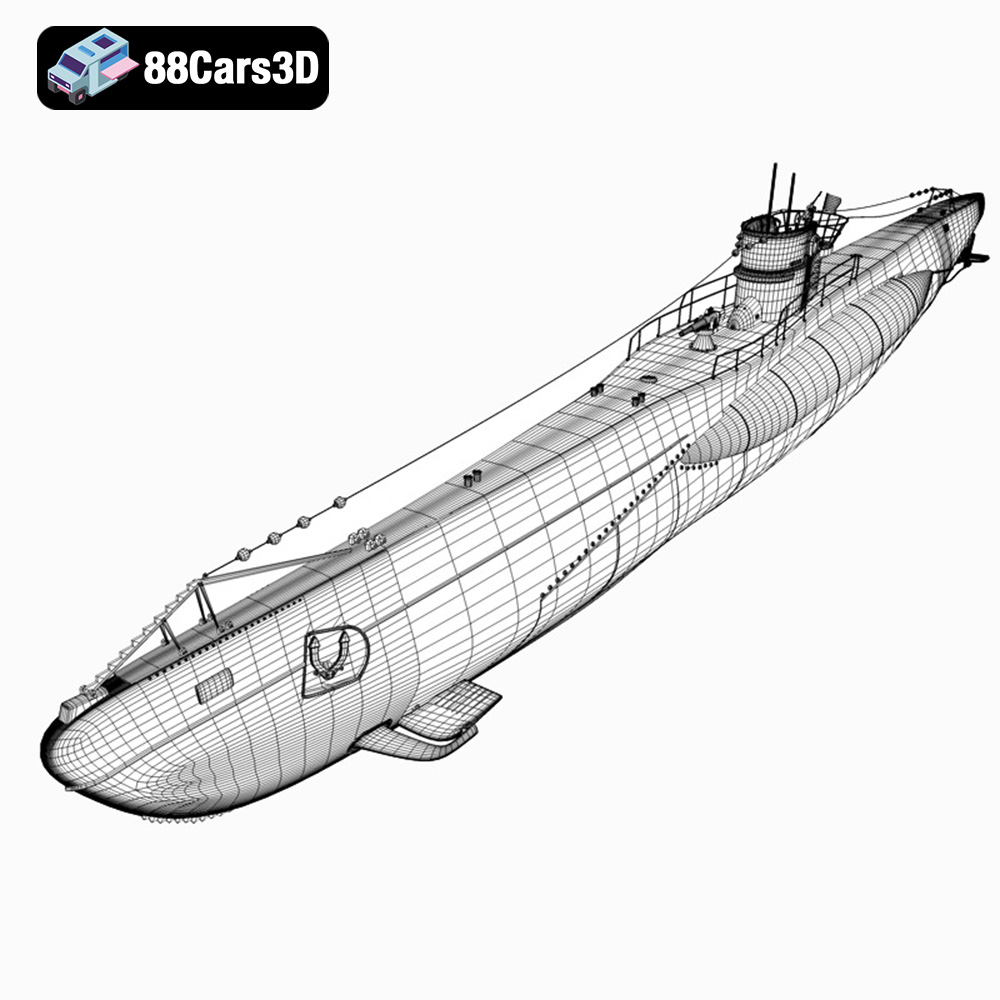
The model boasts clean and optimized geometry, meaning its polygon count is managed efficiently to provide intricate details where necessary (such as the conning tower, deck cannon, and hydroplanes) without overburdening rendering engines. This intelligent poly distribution ensures that the model looks exceptional in close-up renders while remaining performant enough for real-time applications like game engines. Effective edge flow and topology are maintained, making the model easy to modify or sculpt further if needed.
Realistic Materials and Textures: Bringing Life to Steel
One of the U-99 model’s standout features is its use of realistic materials and professionally created textures. This involves a comprehensive PBR (Physically Based Rendering) workflow, where textures like Albedo (color), Roughness, Metallic, Normal, and Ambient Occlusion maps are carefully crafted to simulate the physical properties of the submarine’s hull and mechanical components. The weathered look, subtle rust streaks, and worn paint are not painted on arbitrarily but are generated through a sophisticated texturing process that mimics real-world aging and exposure, resulting in an authentic and visually rich asset.
Scalability and Modularity: Ready for Any Challenge
While designed for exceptional visual fidelity, the model’s underlying structure allows for scalability. For game development, this often means the ability to generate various Levels of Detail (LODs) from the primary mesh, ensuring optimal performance at different viewing distances. Its modular construction also implies that specific components could potentially be isolated for animation, damage states, or interactive elements, offering significant flexibility for advanced projects.
Integrating the U-99 into Professional Workflows
The true value of a high-quality 3D asset lies in its seamless integration into diverse professional workflows. The German U-Boat U-99 Submarine 1940 3D Model, with its multiple file formats, is designed precisely for this purpose, accommodating artists and developers using a range of industry-standard software.
Blender Workflow: Full Creative Control
For Blender artists, the provided .blend file offers immediate access to a fully editable scene. Users can dive straight into rendering with Cycles or Eevee, utilizing the pre-configured materials and lighting. This setup provides an excellent foundation for cinematic sequences or detailed product shots. Artists can easily modify the model, add custom animations for surfacing or diving, or integrate it into complex ocean environments with dynamic water simulations, leveraging Blender’s powerful procedural tools and physics engines.
3ds Max and Rendering Pipelines: Precision and Photorealism
The .max file caters directly to 3ds Max users, granting full access to the project’s native data. This is particularly advantageous for high-end visualization and animation studios that rely on renderers like V-Ray or Corona. Artists can fine-tune material settings, apply advanced lighting techniques such as volumetric fog to simulate underwater depths, and set up intricate camera paths for compelling cinematic presentations. The editable nature of the .max file also allows for rigging the submarine’s moving parts, like the rudder and hydroplanes, for dynamic animations.
Unreal Engine and Real-Time Interaction: Immersive Experiences
For game developers and AR/VR creators, the .fbx and .unreal files are game-changers. Importing the U-99 into Unreal Engine is streamlined, often requiring minimal setup due to pre-configured materials and optimized geometry. Developers can immediately place the U-Boat in their virtual worlds, set up physics-based interactions, add water effects with buoyancy, and design complex gameplay scenarios around it. The focus shifts from asset creation to level design, scripting, and interaction, significantly accelerating development cycles for military game development or immersive AR/VR experiences. The included textures are typically PBR-ready, ensuring they look correct under Unreal Engine’s advanced lighting.
Beyond Visualization: Diverse Applications for the U-99 Model
The versatility of a well-crafted 3D model extends far beyond simple rendering. The German U-Boat U-99 Submarine 1940 is a prime example of an asset that can serve a multitude of professional applications, bridging various industries.
Military Game Development and Historical Simulations
This model is a natural fit for military game development. From detailed first-person submarine simulators to real-time strategy games, the U-99 provides an accurate and visually appealing asset that enhances player immersion. Developers can integrate it into naval combat scenarios, historical reenactments, or exploration games set in the WWII era. Its optimized geometry ensures it runs smoothly within game engines, while its high detail supports close-up encounters.
Educational and Archival Visualization Projects
For educators and historians, the U-99 model offers an unprecedented tool for interactive learning. Imagine virtual tours of the submarine, allowing students to explore its exterior and even hypothesize about its interior layout. Museums can create interactive kiosks or virtual exhibits, bringing a pivotal historical vessel to a global audience. This form of visualization is vital for archiving historical knowledge in a dynamic and accessible format.
Cinematic Sequences and Documentary Filmmaking
Filmmakers and animators can leverage the U-99 for cinematic sequences within documentaries, historical dramas, or short films. Its high fidelity is suitable for close-up shots and renders, allowing for dramatic storytelling without the prohibitive costs of physical replicas. Compositing the 3D model into live-action footage or fully CGI environments can produce stunning, historically accurate visuals that are indistinguishable from reality.
Immersive AR/VR Experiences
The .glb file format specifically tailors the U-99 for augmented and virtual reality. Developers can create AR applications where users place a virtual U-Boat in their living room, rotating and inspecting it in real-time. In VR, users could “stand” on the submarine’s deck or navigate a virtual ocean environment, experiencing its scale and presence firsthand. These immersive experiences offer unique engagement opportunities for entertainment, education, and even design review.
3D Printing and Prototyping
With the included .stl file, the U-99 model can be brought into the physical world. Hobbyists, model makers, or even designers seeking a physical representation for display or prototyping can 3D print the submarine. This process allows for the creation of highly detailed scale models, opening avenues for customized paint jobs, diorama creation, and tangible historical representations that complement the digital asset.
The Value of Production-Ready Assets from 88cars3d.com
In a fast-paced industry, time is money. Developing a highly detailed, historically accurate 3D model from scratch, especially one as complex as a WWII U-Boat, requires thousands of hours of skilled labor, research, and technical expertise. This is where the strategic advantage of acquiring production-ready assets becomes clear.
Saving Time and Resources
Purchasing a model like the German U-Boat U-99 Submarine 1940 from a reputable source like 88cars3d.com eliminates the need for extensive modeling, texturing, and optimization phases. This allows artists and development teams to focus their resources on other critical aspects of their projects, such as level design, animation, coding, or rendering the final scene. It significantly shortens production timelines and reduces overall project costs.
Ensuring Quality and Reliability
When you acquire assets built to professional standards, you’re guaranteed clean geometry, optimized performance, realistic materials, and professionally created textures. These aren’t just buzzwords; they represent a commitment to quality that ensures the model integrates smoothly, performs efficiently, and looks exceptional across various platforms and rendering pipelines. Such reliability is crucial for commercial projects where deadlines and visual fidelity are non-negotiable.
Access to Diverse File Formats for Maximum Flexibility
The provision of multiple file formats—from native Blender and 3ds Max files to universal .fbx and .obj, and specialized formats like .glb and .stl—offers unparalleled flexibility. This ensures compatibility with virtually any software environment and facilitates diverse use cases, from real-time game engines to high-fidelity offline rendering and even 3D printing. It empowers users to apply the model in the way that best suits their project’s unique requirements.
Conclusion: Charting New Courses with Premium 3D Models
The creation and deployment of compelling 3D content require not only artistic vision but also a deep understanding of technical processes and the strategic use of high-quality assets. The German U-Boat U-99 Submarine 1940 3D Model stands as an exemplary product in this regard, offering a meticulously crafted, historically accurate, and technically robust solution for a wide array of professional applications.
From powering immersive military game development and detailed historical simulations to serving as an educational tool or a cinematic prop, this U-Boat model demonstrates the profound impact of well-engineered 3D assets. Its optimized geometry, realistic materials, and comprehensive suite of file formats ensure seamless integration into workflows spanning Blender, 3ds Max, Unreal Engine, and beyond, supporting everything from high-fidelity automotive rendering principles to complex AR/VR experiences.
By investing in production-ready models like the U-99, artists and developers gain a significant advantage, accelerating their projects, enhancing visual quality, and ensuring historical authenticity. For those seeking to infuse their creations with unparalleled detail and historical significance, exploring the curated selection of high-quality assets at 88cars3d.com is an essential step towards charting new courses in digital visualization.
Featured 3D Model
German U-Boat U-99 Submarine 1940 3D Model
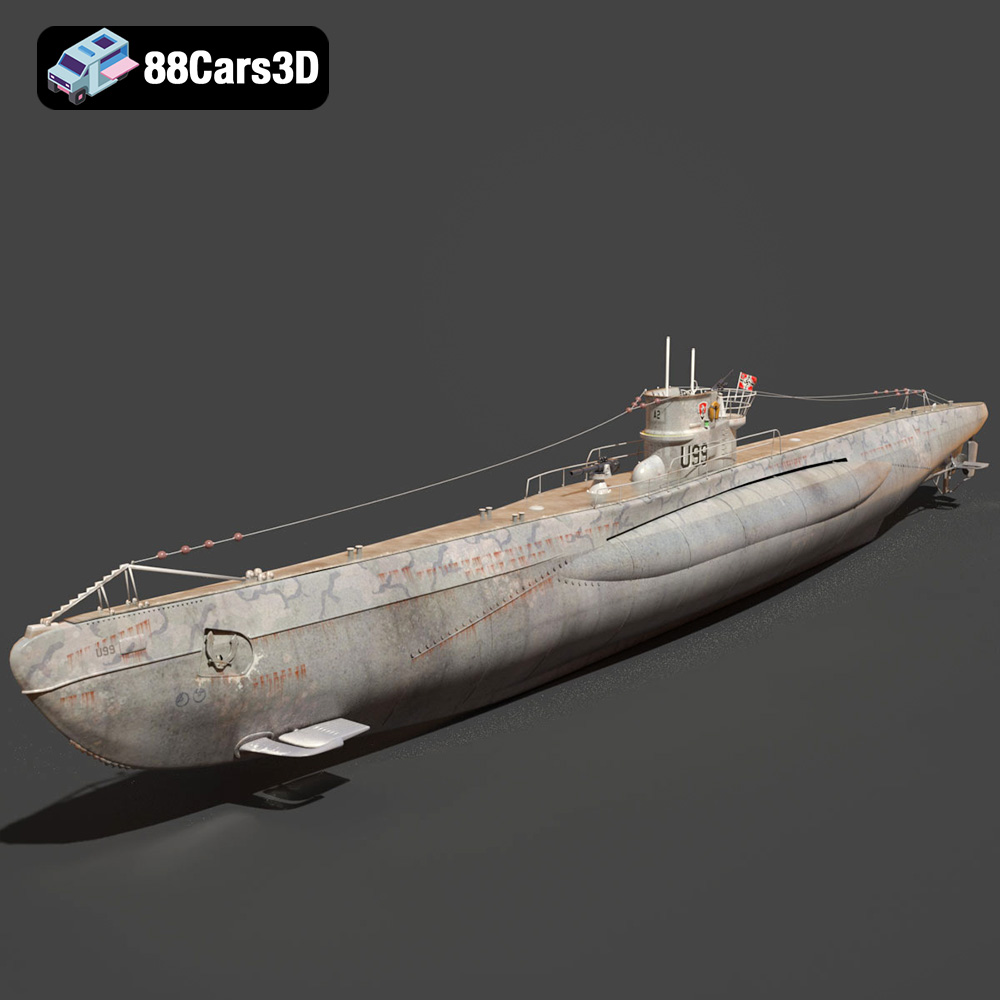
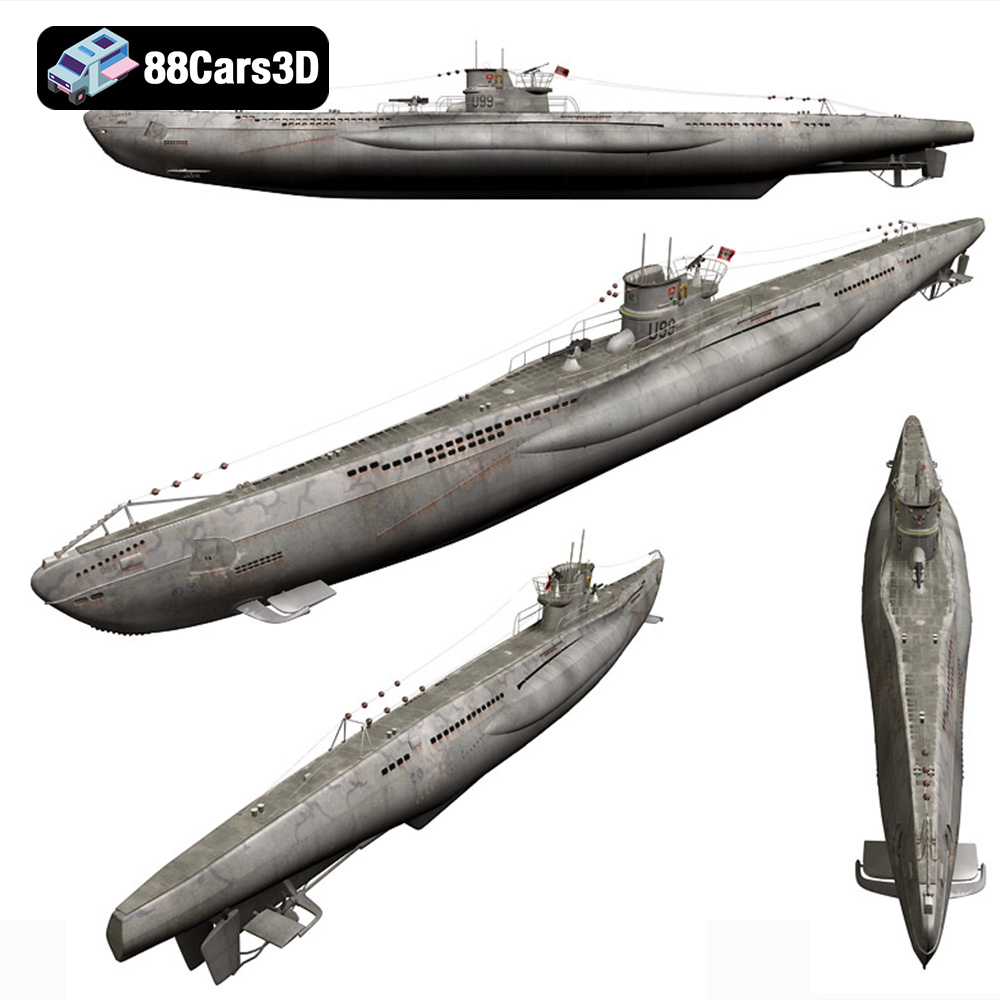
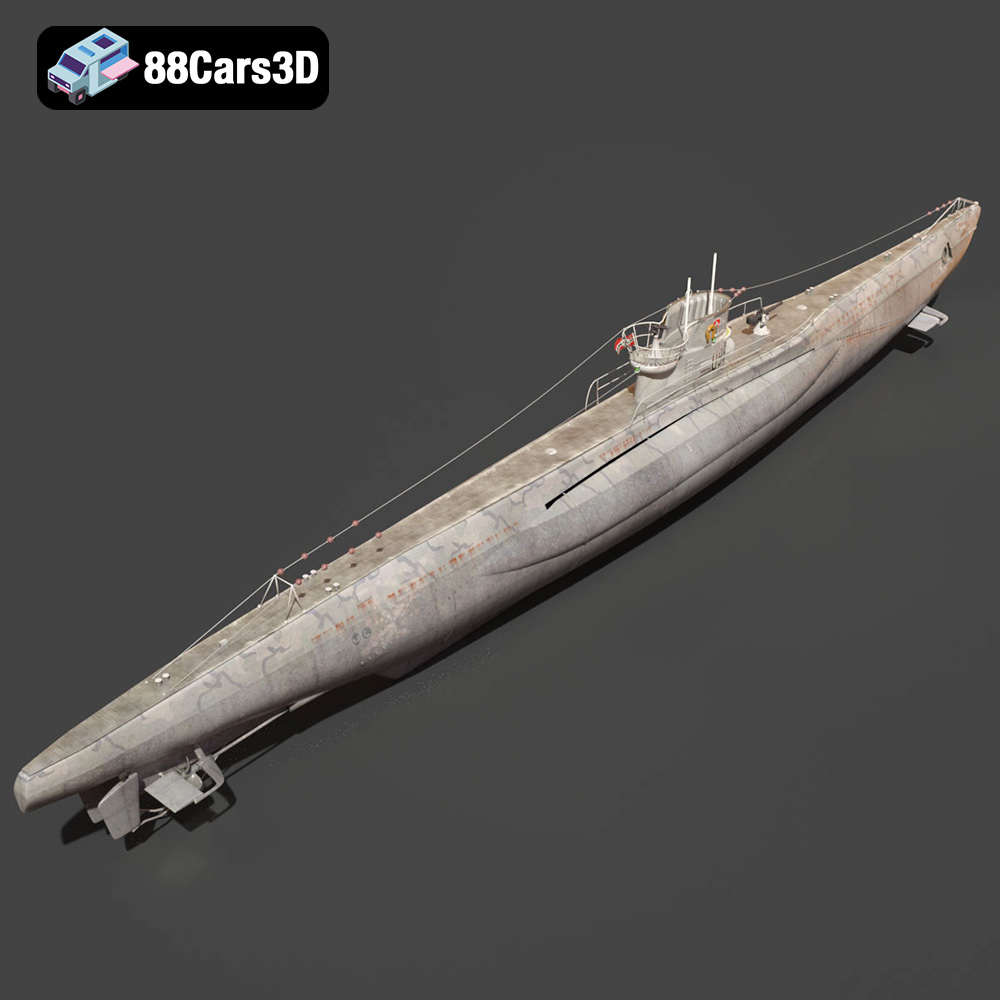
Introducing the meticulously crafted 3D model of the German WWII Type VIIB U-Boat U-99, known for its pivotal role in naval warfare. This asset captures the authentic scale and detailed design of the historic naval vessel, providing exceptional visual fidelity suitable for close-up renders and detailed virtual environments. The geometry is clean and optimized for performance across various platforms while maintaining intricate details, including the conning tower, deck cannon, and hydroplanes. Realistic materials and professionally created textures ensure accurate representation of the weathered hull and mechanical components. This asset is built to professional standards for reliability and ease of integration. This detailed asset is ideal for historical simulations, military game development, educational visualization projects, cinematic sequences, and immersive AR/VR experiences focused on World War II themes or maritime history.
$10
Product Image Gallery