Mercedes-Benz S500 2022 3D Model – Understanding 3D Model File Formats

The world of 3D visualization is a dynamic realm, constantly pushing the boundaries of realism and immersion. From breathtaking cinematic sequences to interactive real-time environments, the demand for high-fidelity 3D assets has never been greater. At the core of many professional projects lies the need for meticulously crafted vehicle models that can elevate any scene. This is particularly true in automotive design, architectural visualization, and game development, where the finest details can make or break a project’s credibility.
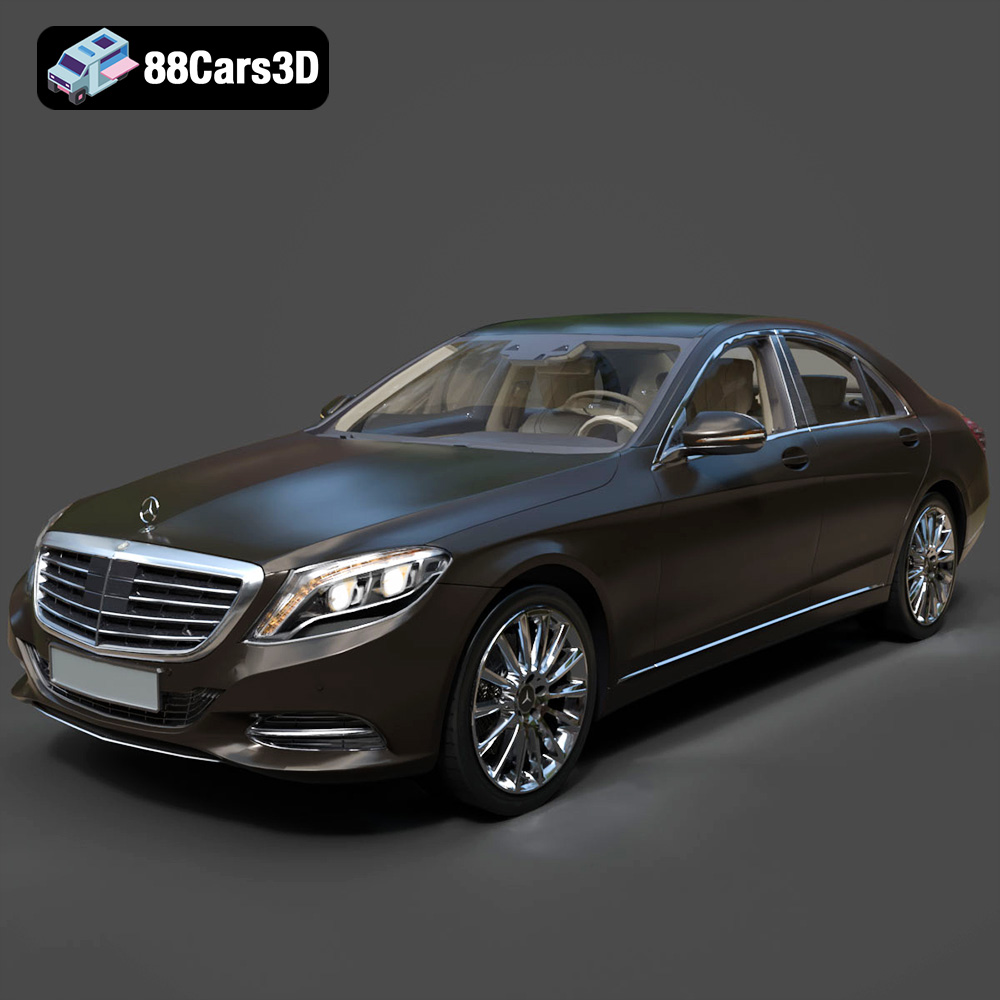
Enter the Mercedes-Benz S500 2022 3D Model – an exemplary asset designed to meet these exacting standards. This model encapsulates the luxurious styling and sophisticated engineering of the flagship sedan, meticulously recreated in the digital domain. Its precision and detailed representation make it an indispensable tool for professionals seeking unparalleled realism in their visualizations. Whether you are aiming for demanding cinematic renders, seamless real-time experiences, or engaging augmented and virtual reality applications, this model provides a robust foundation, saving countless hours of intricate modeling work.
Understanding 3D Model File Formats
In the diverse ecosystem of 3D content creation, selecting the correct file format is crucial for workflow efficiency, compatibility, and achieving optimal results. The Mercedes-Benz S500 2022 3D Model stands out by offering a comprehensive suite of file formats, ensuring maximum versatility across various professional applications. Understanding the nuances of each is key to leveraging this premium asset to its full potential.
.blend – The Blender Native Experience
The .blend format is the native file type for Blender, the widely popular open-source 3D creation suite. When you acquire the Mercedes-Benz S500 in this format, you receive a fully editable Blender scene. This includes not only the meticulously modeled geometry but also pre-configured materials, textures, and often a basic lighting setup ready for rendering in Cycles or Eevee. Artists working within Blender will find this format incredibly convenient, allowing for immediate customization, animation, and integration into their existing projects without compatibility hurdles. It’s perfect for detailed adjustments, non-destructive workflows, and leveraging Blender’s extensive toolset.
.fbx – The Industry Workhorse for Real-Time
As an Autodesk proprietary format, .fbx (Filmbox) has become an industry standard for data exchange between 3D applications and especially for real-time engines. It excels at preserving complex scene data including geometry, materials, textures, animations, and skeletal deformation. For game developers, the .fbx version of the S500 model is ideal for direct import into engines like Unreal Engine and Unity. Its robust support for hierarchies and animation makes it the go-to choice for dynamic real-time pipelines, ensuring that the detailed vehicle can be integrated smoothly and interactively.
.obj – The Universal Communicator
The .obj (Wavefront OBJ) format is renowned for its universal compatibility. Practically every 3D software application can import and export .obj files, making it an excellent choice for cross-software collaboration. While it primarily stores geometric data (vertices, faces, UV coordinates) and basic material references (via an accompanying .mtl file), it lacks support for animations or rigging. For static renders, architectural visualizations, or foundational modeling, the .obj version of the Mercedes-Benz S500 offers a reliable, uncompromised mesh that can be easily brought into any major 3D package.
.glb – Optimized for AR, VR, and Web
.glb (GL Transmission Format Binary) is the binary version of glTF, a royalty-free specification for the efficient transmission and loading of 3D scenes and models by applications. This format is specifically optimized for web-based displays, augmented reality (AR), and virtual reality (VR) experiences. Its compact size and single-file nature (embedding textures and other data) make it perfect for quickly deploying interactive 3D content. For showcasing the Mercedes-Benz S500 in a web viewer or an AR application, the .glb format offers superb performance and ease of integration.
.stl – The Standard for 3D Printing
The .stl (Stereolithography) format is the de facto standard for 3D printing. It represents the surface geometry of a 3D object using a collection of interconnected triangles. While it doesn’t store color, texture, or material information, its simplicity makes it universally readable by 3D printers and slicing software. If your project involves creating a physical prototype or a scale model of the Mercedes-Benz S500, the .stl file ensures a clean, manifold mesh ready for fabrication.
.ply – Precision Mesh for CAD or Analysis
The .ply (Polygon File Format) is a file format for storing graphical objects that have a range of properties including color, transparency, surface normals, and more, in addition to basic geometric data. It’s particularly useful for precision mesh data, often generated from 3D scanners or used in CAD and scientific visualization applications. For engineers or designers needing a highly detailed polygon mesh for analysis or specific rendering requirements, the .ply variant of the S500 model provides robust data integrity.
.unreal – Engine-Ready for Real-Time Environments
The .unreal designation refers to an asset specifically prepared and often pre-configured for direct use within Unreal Engine. This isn’t a single file format in the traditional sense, but rather a package or collection of assets (often derived from .fbx) that includes optimized meshes, PBR-ready materials, collision meshes, LODs (Levels of Detail), and potentially even basic blueprints for vehicle interaction. This format dramatically accelerates workflow for Unreal Engine developers, allowing them to drop the Mercedes-Benz S500 2022 3D Model directly into their projects with minimal setup, maximizing performance and visual fidelity within the engine.
.max – The 3ds Max Project File
Lastly, the .max format is the native project file for Autodesk 3ds Max, a powerful 3D modeling, animation, rendering, and compositing software. This file contains the complete scene information, including geometry, materials, textures, lighting, cameras, and animation data. For users of 3ds Max, the .max version of the S500 model provides full editability and compatibility with professional rendering engines like V-Ray and Corona Renderer, making it ideal for high-end cinematic renders and complex animation sequences.
This comprehensive array of file formats ensures that regardless of your software preference or project requirements, the Mercedes-Benz S500 2022 3D Model from 88cars3d.com can seamlessly integrate into your workflow, providing a high-quality foundation for any creative endeavor.
The Art and Science of Automotive Rendering
Automotive rendering is an intricate discipline, blending artistic vision with technical precision to create visuals that are often indistinguishable from photographs. A premium 3D model like the Mercedes-Benz S500 2022 is the cornerstone of achieving such photorealism.
Photorealism through PBR Workflows
Physical Based Rendering (PBR) is the gold standard for achieving photorealistic results in modern rendering. PBR workflows simulate how light interacts with surfaces in the real world, based on physical properties of materials like metallicness, roughness, albedo, and normal maps. The Mercedes-Benz S500 2022 3D Model is specifically designed with PBR materials, ensuring that its chrome trim reflects light accurately, the paint finish exhibits realistic specular highlights and subsurface scattering, and the interior leather upholstery responds authentically to environmental lighting. This meticulous material setup allows artists to achieve consistent, realistic results across various render engines such as V-Ray, Corona Renderer, Redshift, Arnold, or Blender’s Cycles, translating the luxury of the S500 into compelling digital imagery.
Lighting and Environment Setup for Impact
Even the most detailed 3D car models require sophisticated lighting to truly shine. Automotive rendering heavily relies on High Dynamic Range Images (HDRIs) to simulate real-world lighting conditions, from bright sunny days to dramatic sunsets or studio environments. Coupled with physical lights (area lights, spot lights) to emphasize key design lines and interior details, the S500 model’s PBR materials come alive. Its precisely modeled surfaces beautifully catch and reflect light, showcasing the elegant curves and sharp creases of the vehicle’s design. This thoughtful interplay between model quality and lighting setup is essential for creating emotive and impactful automotive renders that highlight the S-Class’s inherent sophistication.
Post-Production and Final Polish
While the 3D render itself provides a strong foundation, post-production is where the final magic happens. Techniques such as color grading, subtle depth of field to draw attention to the car, and cinematic motion blur for dynamic shots, further enhance the realism and artistic appeal. Compositing the rendered Mercedes-Benz S500 into a real-world backplate or a fully CG environment requires precise matching of lighting and perspective, skills that are greatly facilitated by a model with accurate geometry and PBR materials that respond correctly to any environment.
Integrating 3D Car Models into Game Development
For game developers, 3D car models serve as critical game assets, demanding a balance between visual fidelity and real-time performance. The Mercedes-Benz S500 2022 3D Model is engineered to excel in this demanding environment, suitable for AAA titles, interactive simulations, and more.
Optimization for Real-Time Performance
Creating believable vehicles for games requires rigorous optimization. The Mercedes-Benz S500 model features clean, optimized geometry, which is crucial for maintaining high frame rates. This often involves efficient polygon distribution, ensuring enough detail where it matters (like the exterior panels and visible interior) without excessive poly counts that can burden game engines. Furthermore, real-time assets often require Levels of Detail (LODs) – progressively simpler versions of the model that swap in as the camera moves further away, drastically reducing rendering load. Collision meshes, which define the physical boundaries of the vehicle for physics simulations, are also essential, alongside optimized UV layouts for texture efficiency.
Workflow in Unreal Engine and Unity
The provision of .fbx and .unreal formats makes integrating the Mercedes-Benz S500 model into Unreal Engine and Unity incredibly streamlined. Developers can import the .fbx directly, setting up PBR materials within the engine’s node-based material editors, often leveraging instances for performance. For Unreal Engine users, the .unreal format implies a pre-configured asset, potentially including material instances, LODs, and even basic collision, allowing for a near plug-and-play experience. Once integrated, the model can be combined with vehicle physics systems (e.g., Unreal Engine’s Chaos Vehicles or Unity’s Wheel Colliders), enabling interactive driving experiences or cinematic in-game sequences. The high level of detail, particularly in the interior, also makes it suitable for first-person driving perspectives or detailed cutscenes.
Creating Immersive AR/VR Experiences
Augmented Reality (AR) and Virtual Reality (VR) represent another frontier for 3D car models. The .glb format, specifically optimized for web and mobile performance, is invaluable here. Its compact size ensures quick loading times and smooth interaction, which are paramount for immersive AR/VR experiences. Imagine a virtual showroom where customers can explore the Mercedes-Benz S500 in full 3D, customize its colors, or even place it in their driveway using AR on a smartphone. The S500 model’s high fidelity and optimized geometry ensure that these experiences are not only interactive but also visually stunning, bridging the gap between digital luxury and real-world perception.
Precision Engineering for Architectural Visualization and Simulation
Beyond the glitz of game development and cinematic renders, high-quality 3D car models like the Mercedes-Benz S500 2022 play a critical, often understated role in architectural visualization and specialized simulations.
Enhancing ArchViz Scenes with Realistic Vehicles
Architectural Visualization (ArchViz) relies heavily on realism to convey a design’s intent and atmosphere. While buildings are the primary focus, the surrounding elements, especially vehicles, provide crucial context, scale, and a sense of life. A generic, low-poly car can detract from an otherwise pristine architectural render. The Mercedes-Benz S500 2022 3D Model, with its “luxurious styling and sophisticated details,” instantly elevates an ArchViz scene, placing the architectural design within a credible, high-end environment. Imagine this S-Class parked in front of a sleek modern villa or pulling up to a corporate headquarters – it immediately conveys a sense of aspiration and refined living, adding depth and believability to the overall composition.
High-Fidelity Models for Training and Simulation
The demand for ultra-realistic simulations extends beyond entertainment. In fields like autonomous vehicle development, driver training, and urban planning, highly accurate digital twins of real-world vehicles are essential. The Mercedes-Benz S500 model, with its “complex interior structure, including dashboard layout and seating,” becomes a valuable asset for such simulations. This level of detail allows for accurate visual representation in virtual driving simulators, vehicle dynamics research, or even emergency response training scenarios. The precision geometry and PBR materials ensure that visual feedback within these simulations is as close to reality as possible, enhancing the efficacy of the training or research.
Utilizing for 3D Printing and Prototyping
The journey of a 3D model doesn’t always end on a screen. For designers, engineers, or hobbyists looking to bridge the digital and physical worlds, 3D printing offers a tangible output. The inclusion of .stl and .ply formats with the Mercedes-Benz S500 2022 3D Model caters directly to this need. The .stl format, with its triangulated mesh, is the industry standard for 3D printing, enabling the creation of physical scale models for design reviews, display, or even functional prototyping. The .ply format, offering a precision polygon mesh, can be used for more analytical or specialized manufacturing processes. This versatility underscores the comprehensive utility of such a finely crafted 3D asset, allowing it to move from virtual rendering to a physical object with ease.
Professional Workflows with the Mercedes-Benz S500 2022 3D Model
The true value of a premium 3D asset lies in its seamless integration into diverse professional workflows, allowing artists and developers to focus on creativity rather than foundational modeling. The Mercedes-Benz S500 2022 3D Model provides this flexibility and efficiency.
Mastering 3ds Max for Cinematic Renders
For professionals entrenched in Autodesk 3ds Max, the included .max file is a significant advantage. This native file provides access to the full scene setup, including hierarchical structures, precise modeling data, and potentially intricate material graphs designed for V-Ray or Corona Renderer. 3ds Max users can immediately leverage its powerful animation tools to create sophisticated camera movements around and within the S500, orchestrate dynamic environment interactions, or even integrate the vehicle into elaborate architectural scenes with high levels of control. The “exceptional accuracy, capturing the luxurious styling and sophisticated details” of the S500 is fully exposed here, allowing for the creation of truly cinematic, high-resolution renders.
Blender’s Versatility in Automotive Projects
Blender has emerged as a powerhouse in the 3D industry, and the dedicated .blend file for the Mercedes-Benz S500 2022 is perfect for its rapidly growing user base. Artists can open the model directly in Blender, taking advantage of its robust modeling, sculpting, and texturing tools. The included PBR materials are typically set up for Cycles or Eevee, offering immediate, high-quality rendering. Blender’s non-destructive workflow allows for extensive customization without altering the base geometry, making it ideal for experimental renders or integrating the car into complex environmental compositions. This accessibility empowers individual artists and studios to produce top-tier automotive renders without needing to convert or re-configure assets.
Streamlining Production with High-Quality Assets
Perhaps the most significant benefit of acquiring a professional-grade 3D car model like the Mercedes-Benz S500 2022 is the immense time and resource savings. Modeling a vehicle of this complexity from scratch, with its “clean, optimized geometry” and “fully modeled complex interior structure,” can take hundreds of hours for a skilled artist. By starting with a pre-made, high-quality asset from a trusted source like 88cars3d.com, studios and freelancers can drastically shorten production cycles. This allows teams to allocate their valuable time to creative direction, scene composition, lighting refinement, and animation, ultimately delivering higher-quality projects on schedule and within budget. The reliability and consistency of such assets ensure that the focus remains on artistic expression and project goals, rather than technical hurdles.
Conclusion
The modern landscape of 3D visualization demands assets that are not only visually stunning but also technically robust and incredibly versatile. The Mercedes-Benz S500 2022 3D Model epitomizes these qualities, offering a meticulously crafted digital representation of a luxury icon. Its exceptional accuracy, PBR-ready materials, and optimized geometry make it a crucial asset for an expansive array of professional applications.
Whether your project calls for breathtaking automotive rendering, high-performance game assets, immersive AR/VR experiences, detailed architectural visualizations, precise simulations, or even physical 3D prints, this model provides the ultimate foundation. With a comprehensive suite of file formats, including .blend, .fbx, .obj, .glb, .stl, .ply, .unreal, and .max, it ensures seamless integration into virtually any professional pipeline, maximizing efficiency and creative potential. By choosing such a high-caliber 3D model, artists and developers can focus on innovation, knowing they have a reliable and detailed asset at their fingertips. Elevate your next project by exploring premium 3D car models like the Mercedes-Benz S500 2022, available at 88cars3d.com.
Featured 3D Model
Mercedes-Benz S500 2022 3D Model
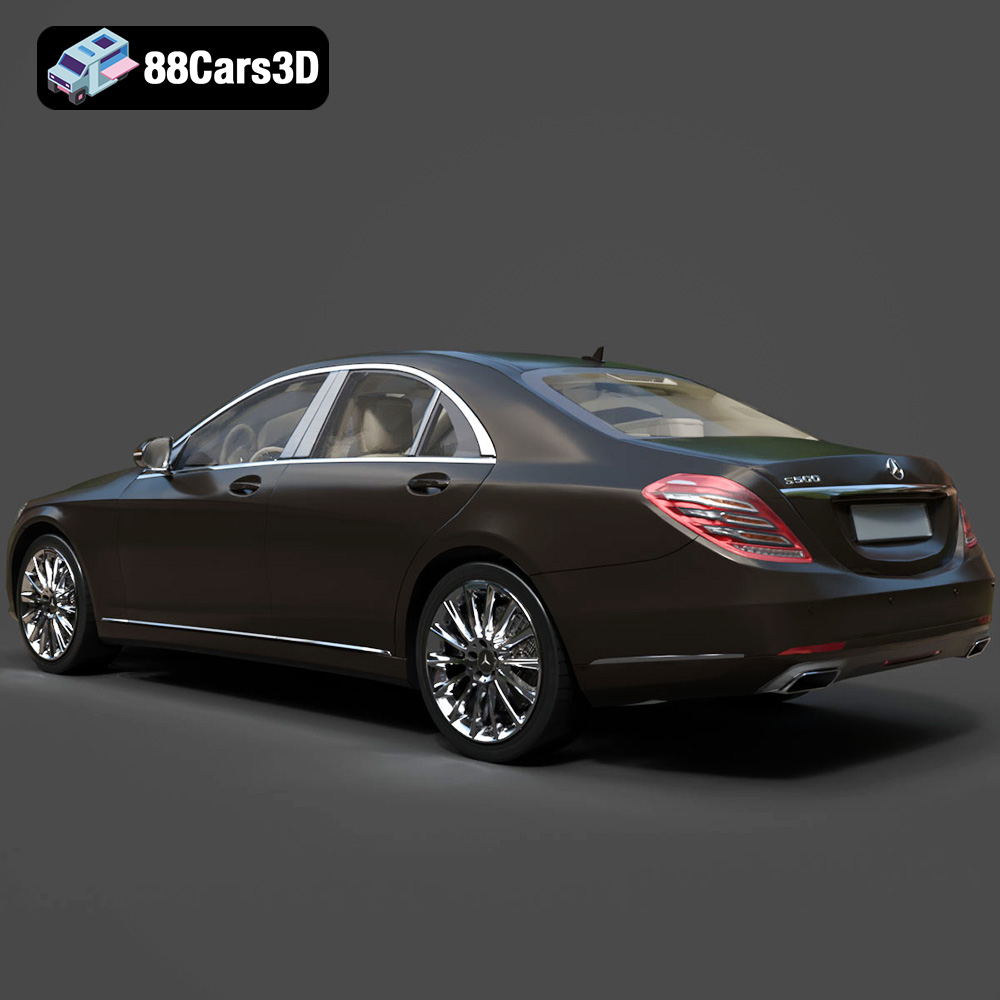
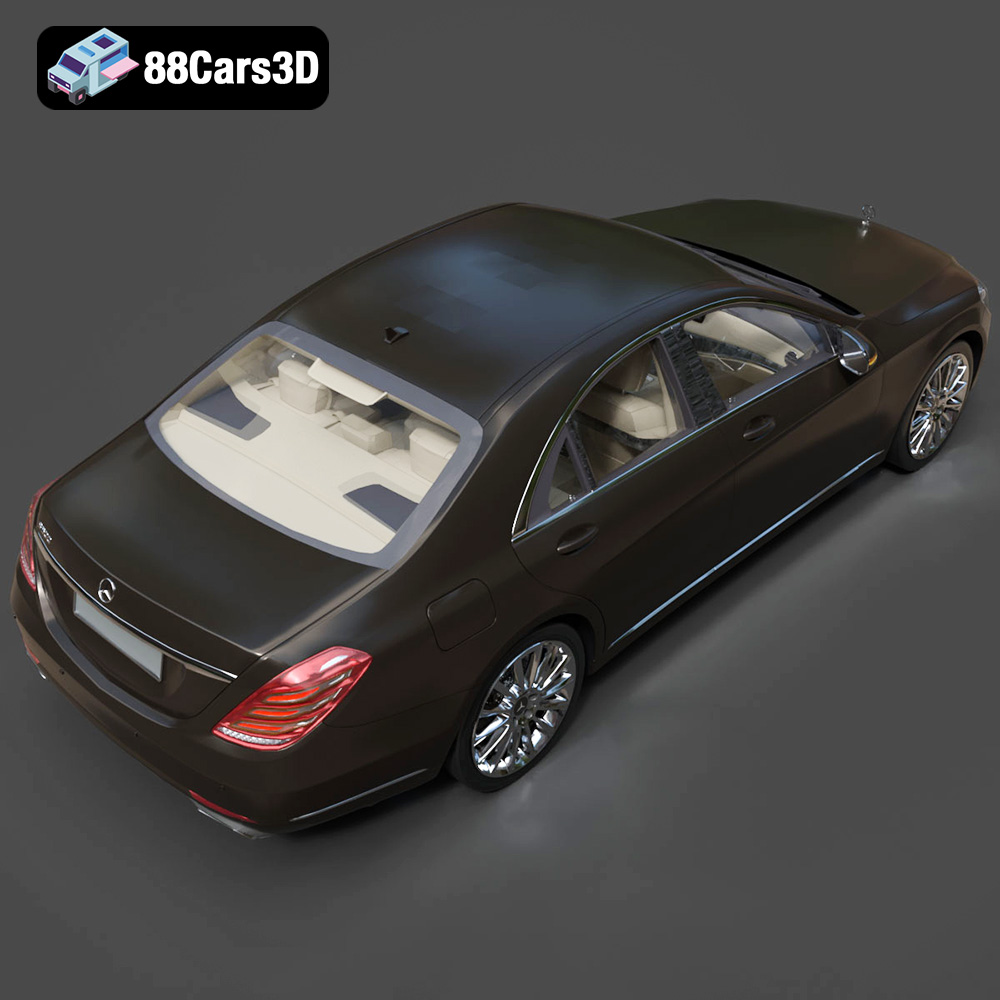
The Mercedes-Benz S500 2022 3D Model delivers exceptional accuracy, capturing the luxurious styling and sophisticated details of the flagship sedan. Designed from the ground up to meet professional standards, this model is a crucial asset for visualizations requiring precision and detailed vehicle representation. This asset features clean, optimized geometry suitable for real-time applications and demanding cinematic renders. Materials are configured for PBR workflows, ensuring surfaces like the chrome trim, paint finish, and interior leather render with impressive fidelity across various lighting conditions. The complex interior structure, including dashboard layout and seating, is fully modeled. Ideal for a wide range of uses, the Mercedes-Benz S500 model is perfect for architectural visualization (ArchViz) projects, interactive training simulations, AAA game development, augmented reality (AR), virtual reality (VR) experiences, and large-scale rendering pipelines.
$19.99
Product Image Gallery