
BMW 5 E34-535i 3D Model – The Technical Blueprint: Geometry and Detail in Automotive Modeling

The pursuit of photorealism and technical efficiency in digital production hinges entirely on the quality of source assets. For automotive visualization—a field demanding precision, historical accuracy, and flexible pipelines—high-fidelity 3D car models are indispensable. Whether you are developing a AAA racing simulation, creating cinematic automotive rendering sequences for a commercial, or prototyping design concepts, the foundational geometry must be flawless.
Few vehicles strike the perfect balance between classic design and engineering robustness like the BMW 5 Series E34. This era of BMW represents a gold standard in executive sedan design, making the accurate digital representation of the BMW 5 E34-535i 3D Model a powerful tool for professionals. This long-form guide delves into how such a meticulously crafted asset facilitates high-end workflows across various industries, from game development to advanced visualization, underscoring the technical necessities that define a premium 3D model.
Sourced from specialized marketplaces like 88cars3d.com, professional 3D car models offer immediate, production-ready quality, bypassing the lengthy and often error-prone process of modeling from scratch. We will explore the technical specifications, file format versatility, and optimized workflows that turn a digital asset like the E34 into a central component of any serious visualization pipeline.
The Technical Blueprint: Geometry and Detail in Automotive Modeling
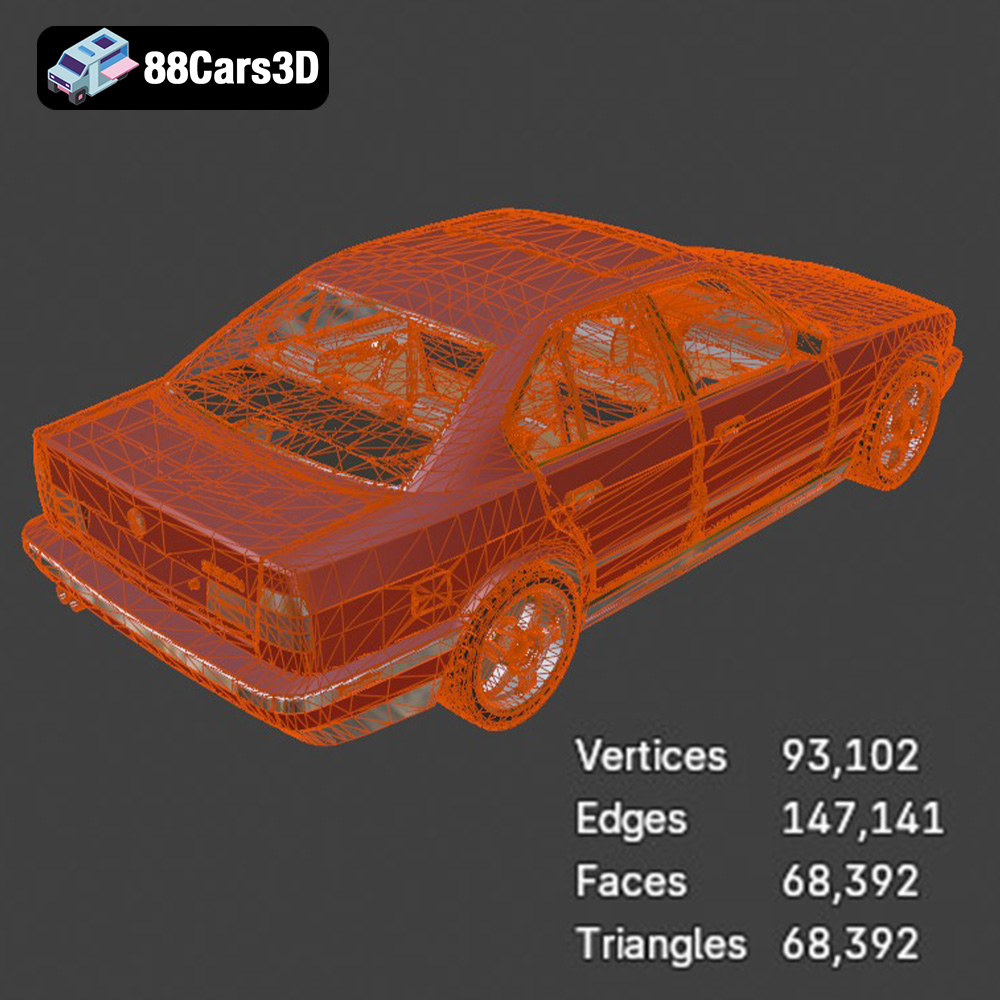
The value of any 3D car model is ultimately determined by its underlying geometry. High-quality assets, such as the BMW 5 E34-535i, adhere to stringent topological standards, ensuring seamless deformation, easy customization, and efficient subdivision for rendering.
Quad-Dominant Topology for Subdivision
One of the core technical advantages of this specific model is its maintained quad-dominant topology. This is crucial for artists utilizing subdivision surface modeling techniques (like Turbosmooth in 3ds Max or Subdivision Surface Modifier in Blender). Quads (four-sided polygons) distribute surface curvature smoothly, preventing artifacts and pinching when high levels of detail are required. This allows users to dynamically control the model’s polygon density—low poly for real-time applications and high poly for cinematic close-ups—all from the same foundational mesh.
- Smooth Deformation: Quad-based meshes deform predictably, essential for rigging doors, trunks, and suspension components for animation.
- Retopology Efficiency: Artists can easily isolate and rework specific areas of the mesh without disrupting the overall flow, simplifying tasks like applying custom vents or body kits.
- Real-World Scale: The model is built to accurate real-world scale, a fundamental requirement for architectural visualization (ArchViz) and professional simulators, ensuring correct perspective and lighting interaction.
Modeling for Exterior and Interior Fidelity
The level of detail must be intelligently allocated across the vehicle. The BMW 5 E34-535i model demonstrates this principle by providing robust detail where it matters most for both close-up rendering and functional simulations.
Exterior Modeling Requirements
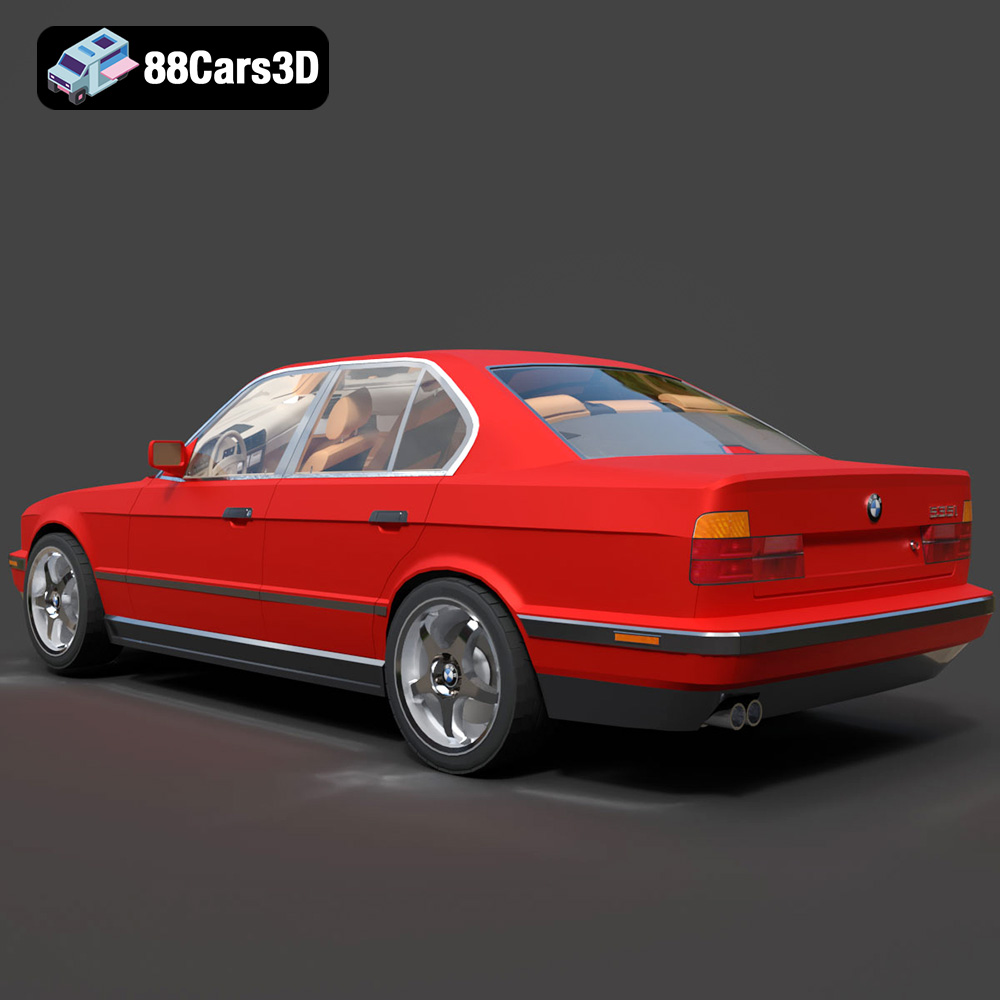
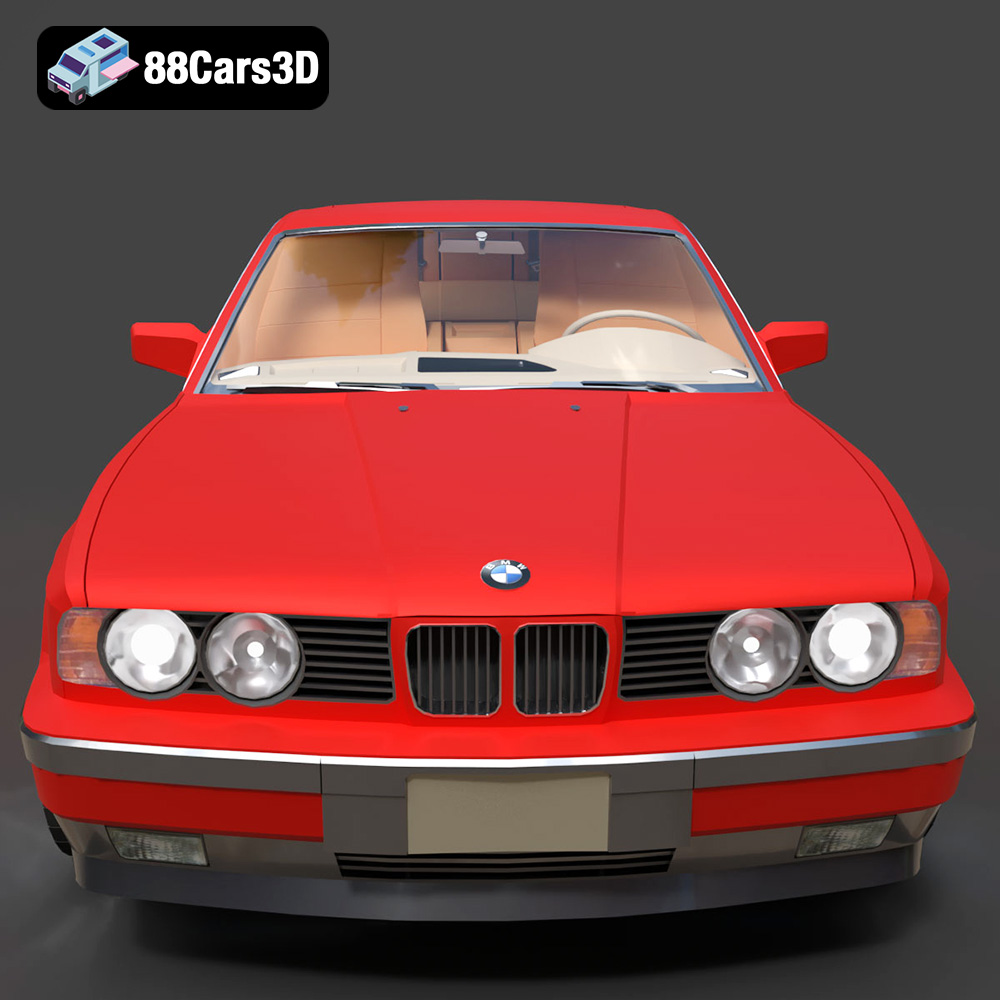
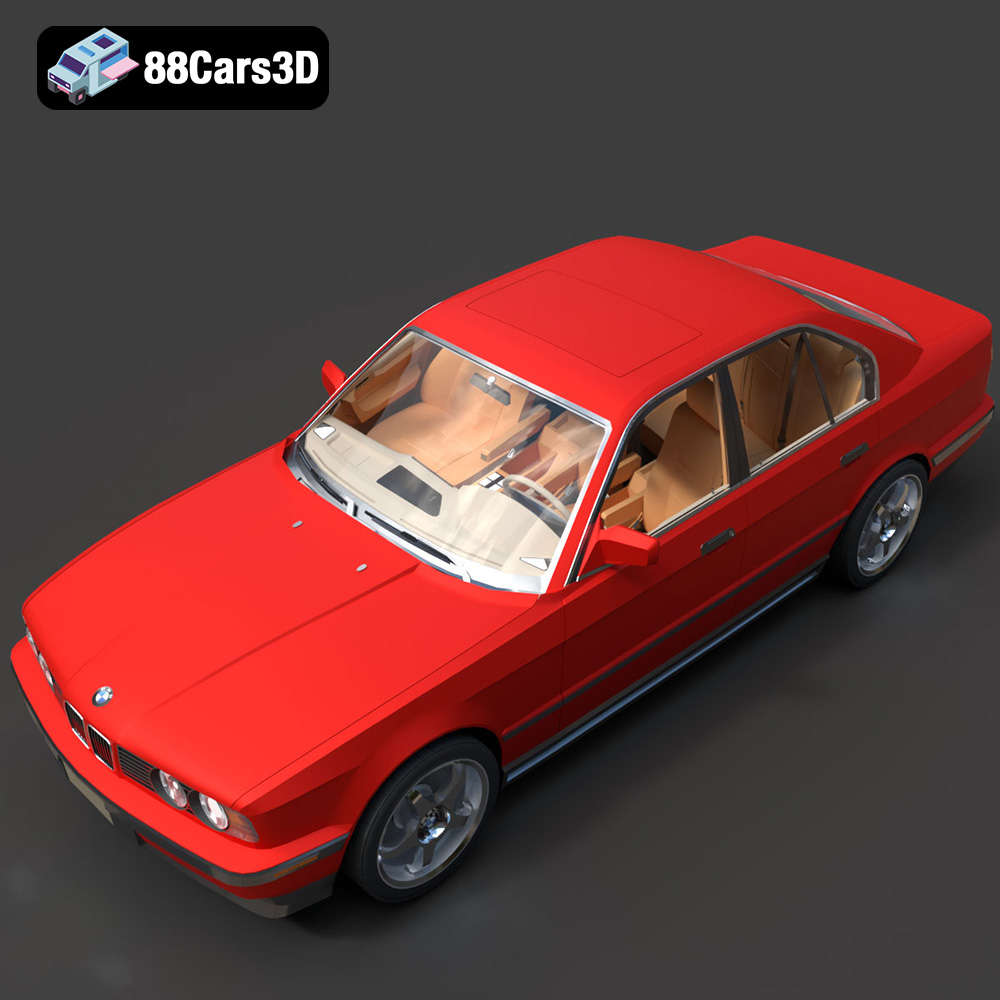
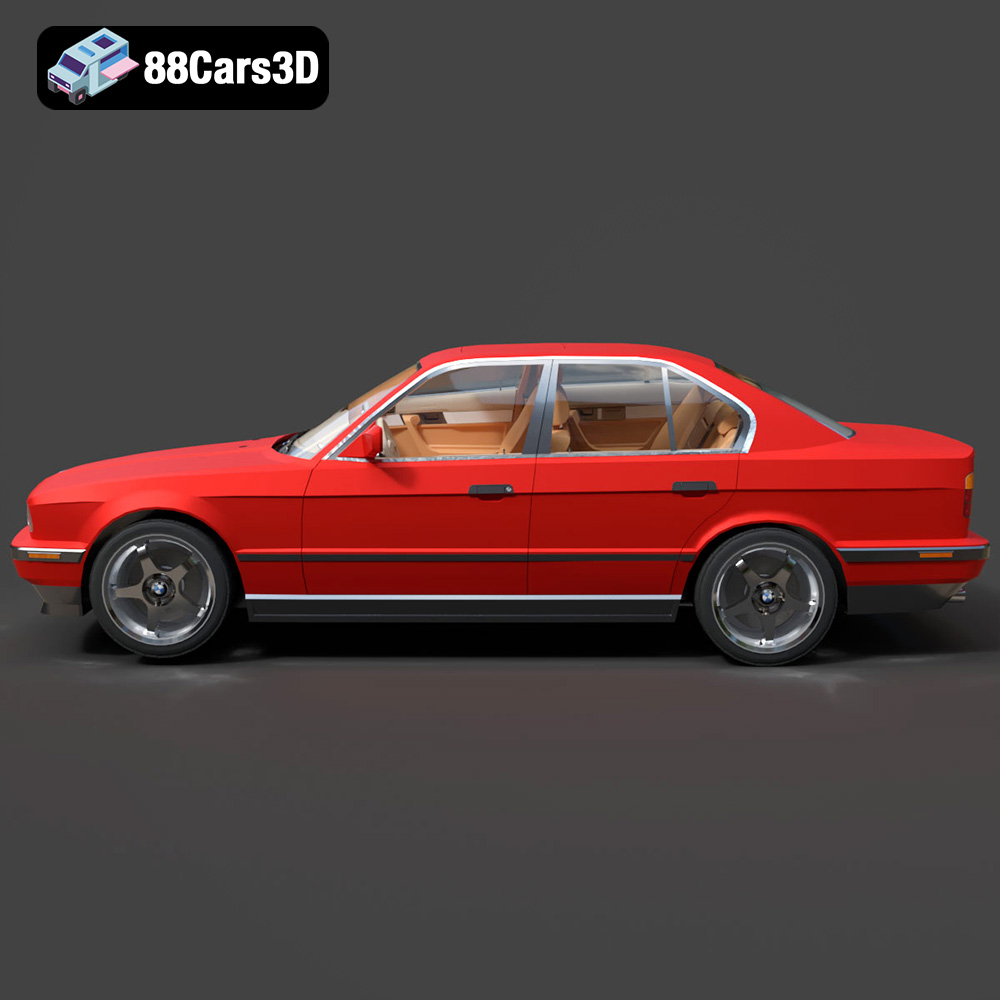
Exterior fidelity focuses on capturing the iconic lines and separating components for functional animation. The model features precisely modeled headlights and taillights, utilizing separate geometry and transparent materials crucial for accurate ray-traced lighting and reflections. Furthermore, the segmentation of components—such as the doors, hood, and trunk—allows for simple rigging and the implementation of realistic opening and closing sequences in animation software or game engines.
Optimized Interior Structure
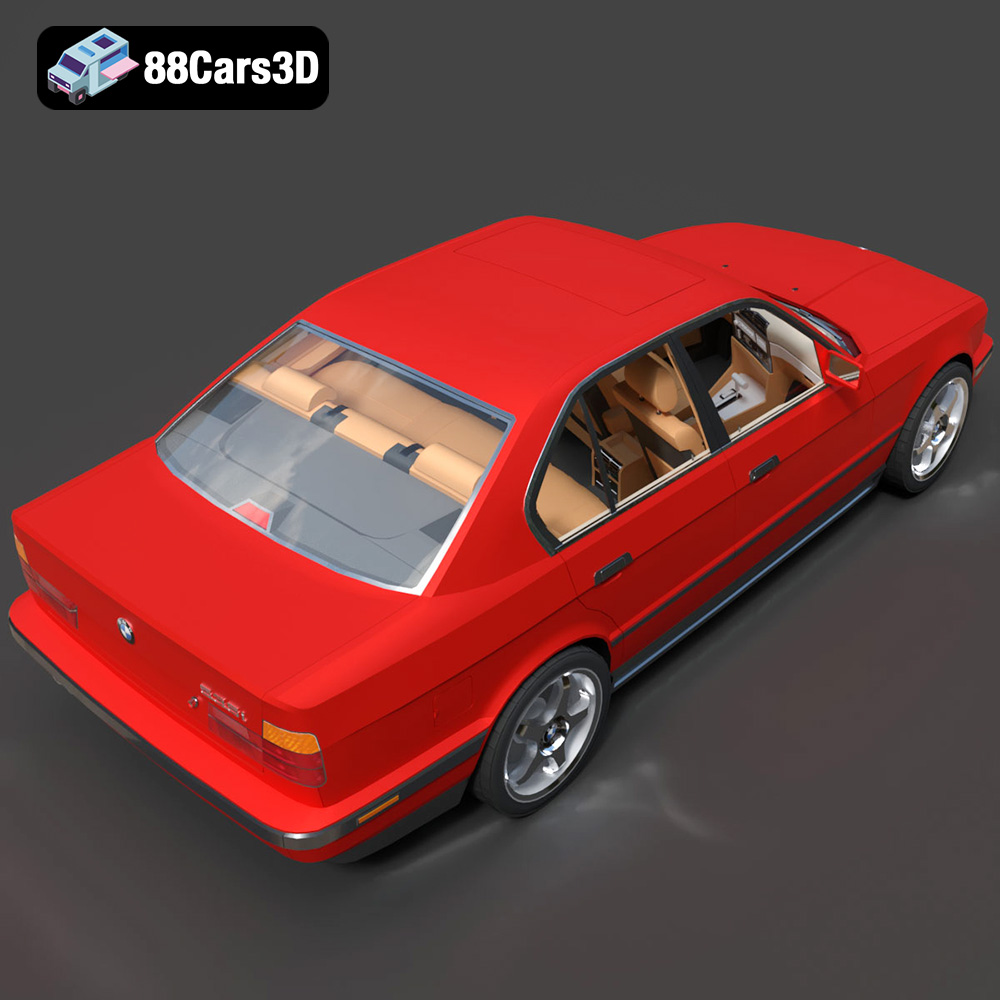
For detailed automotive rendering or immersive AR/VR experiences, a detailed interior is mandatory. The E34 model includes a comprehensive dashboard, accurate instrumentation, detailed seating upholstery, and central console elements. Critically, the mesh is clean and optimized. In many cases, high-poly interiors can bottleneck real-time performance; the optimization here ensures that while the detail is high, the draw call count remains manageable for game engines like Unreal Engine and Unity.
Understanding 3D Model File Formats
The true measure of a versatile 3D car model lies in its broad format support. Professionals rarely rely on a single software package; pipelines often involve switching between modeling, texturing, rendering, and engine integration tools. The extensive format library offered with the BMW 5 E34-535i ensures maximal compatibility and efficiency across diverse workflows.
The Eight Essential File Formats Explained
Each included file format serves a distinct purpose, tailored to specific stages of the production pipeline or deployment targets. Understanding when and why to use each format is critical for maximizing productivity.
.blend – Fully Editable Blender Scene with Materials: This native format is the definitive starting point for many artists. It includes the complete scene setup, materials, textures, and modifiers (like the subdivision surface modifier). Using the .blend file ensures that the user has the highest level of editability, allowing for non-destructive changes and the use of Blender’s powerful Cycles or Eevee rendering engines immediately upon download.
.fbx – Ideal for Unreal, Unity, and Real-Time Pipelines: FBX (Filmbox) is the industry standard for asset exchange, particularly for game development. It efficiently packages mesh data, UV maps, materials, rigging information, and animation data into a single, portable file. For users aiming for maximum performance as a game asset, the FBX format ensures reliable import into Unreal Engine or Unity, preserving the hierarchy and pivot points necessary for vehicle physics and interactions.
.obj – Universal Format for Cross-Software Compatibility: The Wavefront OBJ format is the most widely supported 3D interchange format. While it lacks advanced features like complex material nodes or animation data, it is indispensable for ensuring the mesh geometry and UVs can be opened and utilized by virtually any 3D software package, including specialized tools like CAD programs or less common renderers.
.glb – Optimized for AR, VR, and Browser-Based Display: GLB (Binary GL Transmission Format) is optimized for delivery on the web and in real-time AR/VR environments. It is a compact format that embeds textures and materials directly into the mesh file, minimizing load times. This format is essential for showcasing the BMW E34 in interactive web viewers or integrating it seamlessly into emerging Metaverse platforms.
.stl – Suitable for 3D Printing Output: STL (Stereolithography) is the default format for additive manufacturing. It defines only the surface geometry of the 3D model using a series of interconnected triangles. While this model is high-fidelity, converting the professional asset to .stl allows engineers and hobbyists to generate a physical scale replica of the classic BMW E34, requiring careful consideration of wall thickness and scale.
.ply – Precision Mesh Format for CAD or Analysis: PLY (Polygon File Format) is often used for 3D scanning, point cloud data, and precision engineering applications. It allows for the storage of color, confidence data, and normal vectors, making it suitable for rigorous technical analysis, quality control, or integration into CAD (Computer-Aided Design) workflows.
.unreal – Engine-Ready Asset for Real-Time Environments: Providing a native Unreal Engine project setup streamlines the workflow significantly. This file skips the manual material setup process by including pre-configured physics assets, materials (often leveraging Unreal’s advanced material graph), and LODs (Levels of Detail), ensuring the E34 is ready for immediate deployment in a cinematic or interactive environment.
.max – Editable 3ds Max Project for Animation and Rendering: For professionals utilizing the Autodesk ecosystem, the native .max file provides the highest level of compatibility within 3ds Max. This includes the scene hierarchy, lighting setups, materials configured for rendering engines like V-Ray or Corona, and procedural modifiers—making it the ideal choice for high-end visualization studios.
Integrating the BMW E34 into High-End Visualization Workflows
Professional rendering is often characterized by meticulous lighting, complex material shaders, and seamless environment integration. The quality of 3D car models determines the realism achieved, particularly in automotive advertising and architectural visualization.
Cinematic Automotive Rendering in 3ds Max and V-Ray
In a typical V-Ray or Corona workflow using 3ds Max, the .max file provided is the starting point. The asset’s clean UV mapping allows for precision texture work, such as applying detailed normal maps to the tires and nuanced reflection maps (HDRIs) to the highly reflective body panels. Since the materials are flexible, artists can easily customize the E34’s finish—from period-correct metallic paint to matte vinyl wraps—by adjusting IOR (Index of Refraction) and roughness parameters in the material editor.
Advanced Material Customization
- Layered Shaders: Utilizing complex layered materials to simulate clear coat, base paint, and metallic flake provides depth and realism that simple diffuse textures cannot match.
- Tire Tread Detail: Accurate tire sidewall geometry and tread depth are essential for realism; the model includes realistic alloy wheels and tires, ready for high-resolution texture application.
- PBR Workflow: The asset is designed around a modern Physically Based Rendering (PBR) workflow, ensuring consistent material behavior under various lighting conditions, crucial for achieving photorealism.
Real-Time Performance and Optimization for Game Assets
When developing the E34 as a game asset for modern simulators or open-world titles, the emphasis shifts from polygon count maximization to efficient draw call reduction and LOD management.
LOD Generation and Performance Profiling
The model’s clean topology simplifies the generation of Level of Detail (LOD) meshes. A professional game asset must include three to five LODs to maintain frame rate as the vehicle moves away from the camera. The primary mesh (LOD 0) captures maximum detail (e.g., the detailed interior), while LOD 3 or 4 might be a simplified convex hull used only for shadow casting or distant occlusion. The optimized base mesh minimizes the complexity of this process.
Setting Up Vehicle Physics in Unreal Engine
The inclusion of the .unreal file and the well-structured .fbx file is critical for developers. The hierarchy of components (chassis, wheels, steering rack, suspension) is logically organized with correctly positioned pivot points. This ensures seamless integration with Unreal Engine’s Chaos Vehicle system or similar physics engines in Unity, allowing developers to quickly assign suspension geometry and accurately simulate the handling characteristics of a rear-wheel-drive classic like the BMW 5 E34-535i.
Beyond Rendering: Applications in AR/VR and Simulation
The modern digital asset market extends far beyond traditional film and game pipelines. The BMW 5 E34-535i 3D model is robust enough to serve complex engineering, educational, and interactive requirements.
Immersive AR/VR Experiences (GLB Optimization)
Augmented Reality (AR) and Virtual Reality (VR) demand exceptionally lightweight and efficient assets. The .glb format, included with this model, is specifically tailored for this deployment. Imagine an AR application where a user can place the classic E34 on their driveway via their phone, exploring the highly detailed exterior and interior. The optimized mesh ensures low latency and stable frame rates, preventing motion sickness and enhancing immersion.
- Training Modules: Using the detailed interior and engine block components, technical training programs can utilize VR to allow mechanics or engineers to virtually disassemble and reassemble the vehicle for training purposes.
- Virtual Showrooms: Automotive manufacturers or classic car dealers can integrate this model into virtual showrooms, allowing potential buyers to customize colors and explore features interactively before ever seeing the physical car.
3D Printing and Prototyping (.stl and .ply)
For modelers, restorers, or designers, the ability to generate a physical prototype is invaluable. The .stl format allows for outputting scale models for display. For engineering firms, the .ply format offers data precision suitable for prototyping replacement parts or conducting airflow simulations based on the precise exterior geometry. Utilizing professional 3D car models like those found on 88cars3d.com ensures that the source geometry is dimensionally accurate, which is non-negotiable for 3D printing success.
Case Study: The BMW E34 in Architectural Visualization
Architectural visualization relies heavily on context and realism. A scene depicting a modern office block or a luxury residential development is immediately elevated by the inclusion of realistic, high-fidelity vehicles parked within the environment.
Aesthetic Enhancement and Scene Composition
The BMW E34-535i, with its timeless design, often serves as an excellent focal point in visualization. Unlike generic, low-poly background cars, a detailed model ensures that even when placed close to the camera, it holds up under intense scrutiny.
- Lighting Interaction: Accurate geometric features, particularly around the windows and body curves, allow complex ray-traced reflections of the surrounding architecture, dramatically increasing the photorealism of the overall scene.
- Contextual Realism: Selecting a vehicle like the E34, which suggests a specific era or demographic, adds narrative depth to the visualization, grounding the rendered architecture in a believable, detailed world.
Seamless Integration (Pivot Points and Hierarchy)
A minor but vital technical detail is the proper setup of pivot points and hierarchy. For ArchViz artists, this means the car can be imported, quickly placed on the ground plane, and rotated or scaled correctly without manual alignment fixes. The E34 model features logically organized hierarchies, ensuring that if the artist needs to adjust the steering or open a door for a scene setup, the manipulation is quick and accurate.
Conclusion: The Value of Premium Automotive Assets
The creation of compelling digital content—be it high-octane automotive rendering, functional game assets, or cutting-edge AR experiences—starts with uncompromising asset quality. The BMW 5 E34-535i 3D Model exemplifies the technical standards required by professional pipelines: quad-dominant topology, accurate real-world scale, detailed interior and exterior separation, and comprehensive multi-format support.
Investing in pre-built, production-ready 3D car models from trusted sources like 88cars3d.com significantly accelerates production schedules and guarantees fidelity that meets industry demands. The versatility provided by formats like .fbx for real-time engines, .max for high-end rendering, and .glb for web deployment ensures that this classic BMW asset is not just a digital sculpture, but a flexible, high-performance tool ready for any creative challenge.
Featured 3D Model
BMW 5 E34-535i 3D Model
Experience the timeless elegance and robust engineering of the classic BMW 5 Series E34-535i with this meticulously crafted 3D model. Representing a pivotal era in BMW’s design philosophy, this model captures the essence of the executive sedan, blending performance aesthetics with sophisticated lines. Built with clean geometry and balanced detailing, it is engineered for optimal performance across a variety of professional applications, including high-fidelity rendering, realistic animations, detailed simulations, and immersive game development. Includes .blend, .fbx, .obj, .glb, .stl, .ply, .unreal, and .max formats.
$10.79
Product Image Gallery


Related Tags
.535i
.5e34
.arvr
.blend
.bmw
.classiccar
.executivecar
.fbx
.gameasset
.glb
.max
.obj
.ply
.rendering
.retromodel
.sedan
.simulation
.stl
.unreal
