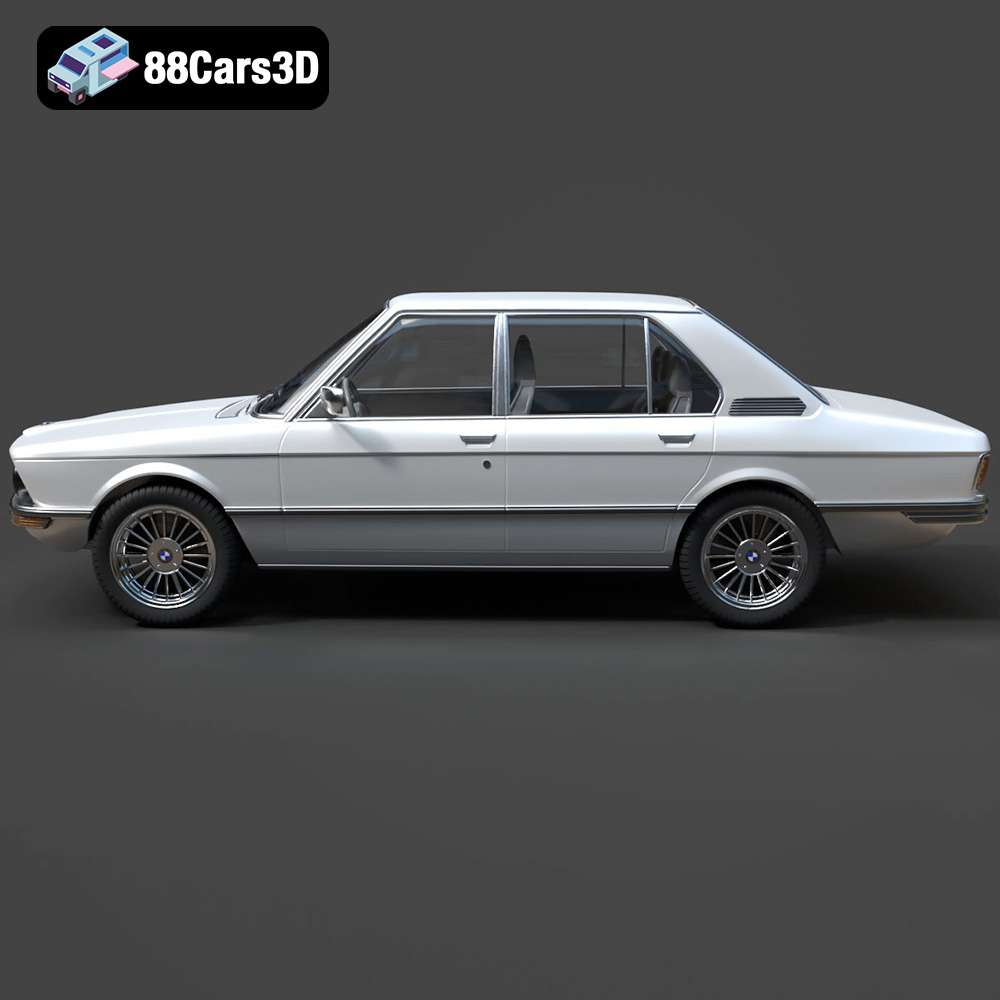
BMW 5 Series E12 528i 3D Model – Mastering Automotive Visualization: Integrating the Classic BMW 5 Series E12 528i into Professional 3D Pipelines

Mastering Automotive Visualization: Integrating the Classic BMW 5 Series E12 528i into Professional 3D Pipelines
The field of professional 3D visualization demands not only cutting-edge tools but also assets that embody technical perfection and historical accuracy. When tackling classic vehicles, the challenge is compounded by the necessity of translating nuanced, hand-crafted design elements into clean, optimized digital geometry. Few cars capture the transition to modern automotive design quite like the BMW 5 Series E12, the original five-series generation.
For studios engaged in feature film production, high-end automotive rendering, or creating historically accurate simulations, procuring highly detailed 3D car models is paramount. This deep technical dive explores how an asset of this caliber, specifically the BMW 5 Series E12 528i 3D Model available on 88cars3d.com, serves as a foundation for demanding professional workflows, covering everything from mesh topology standards to multi-engine format deployment.
Why Classic Vehicles Present Unique Modeling Challenges
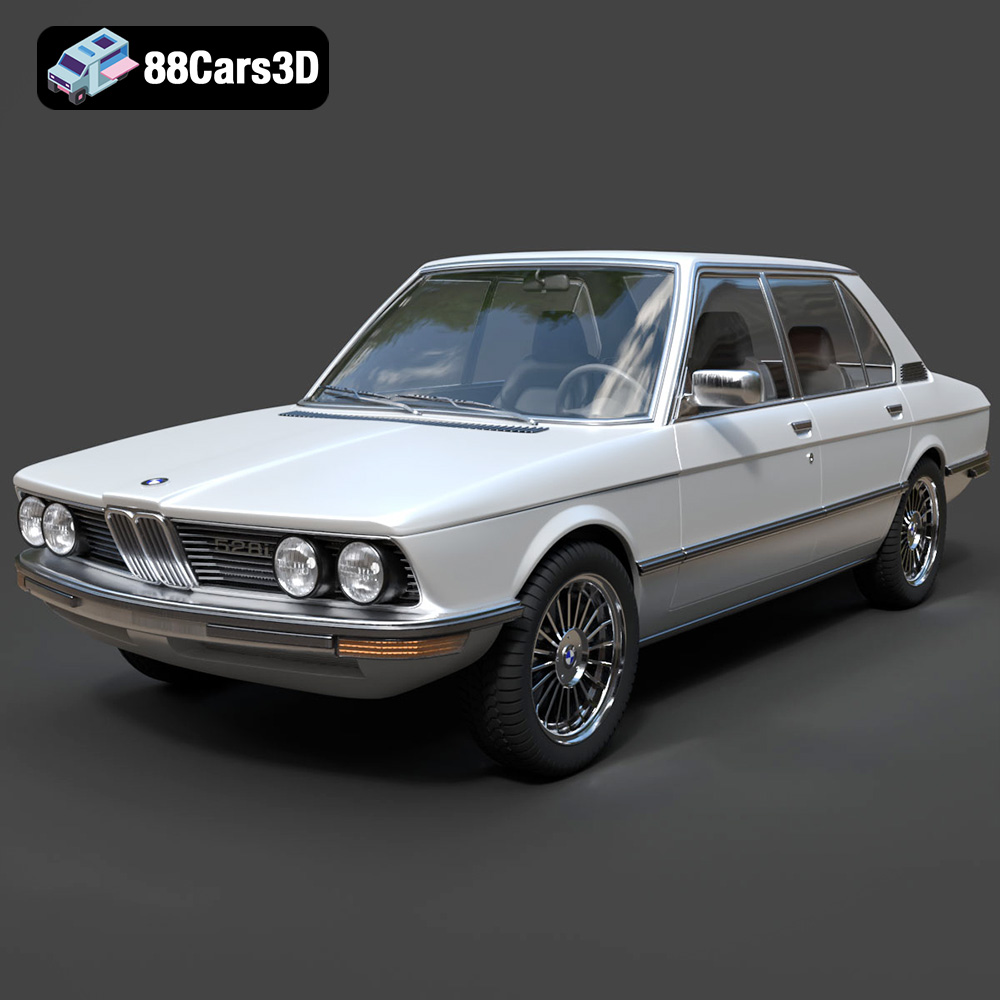
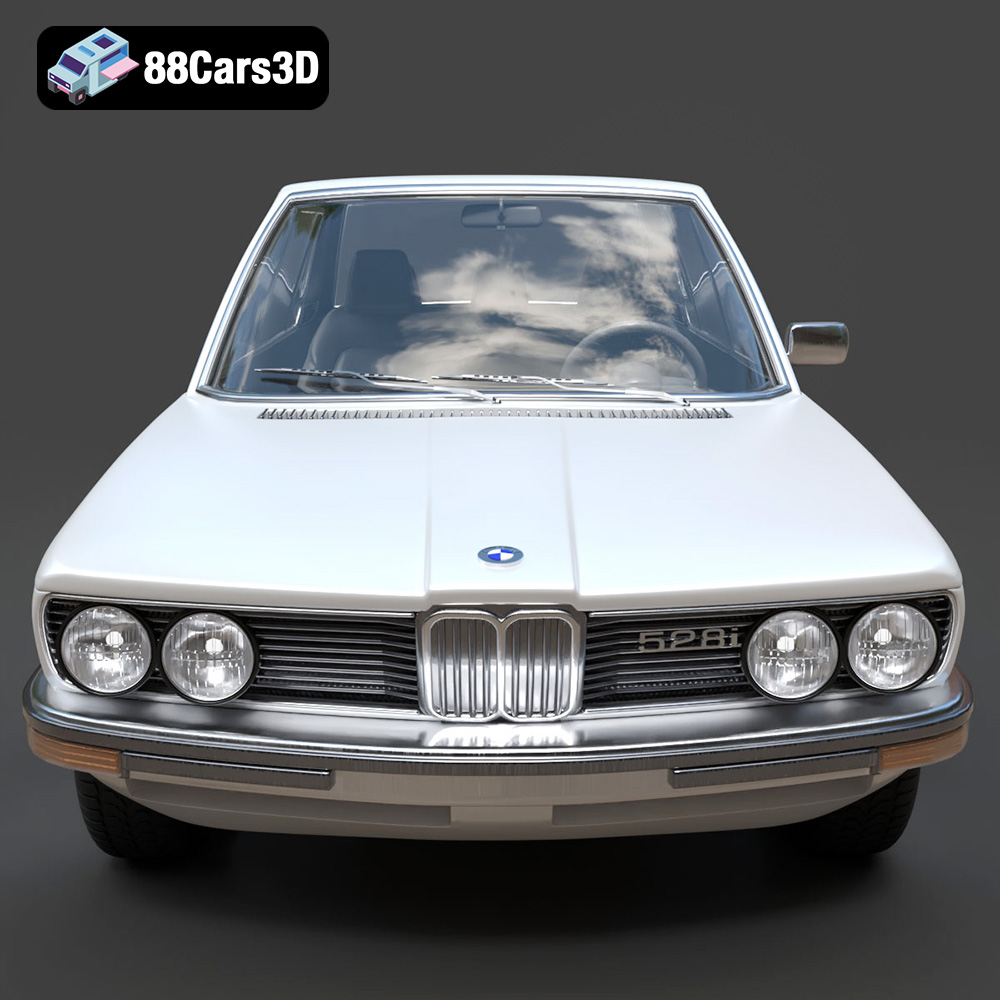
Unlike modern vehicles designed using CAD with mathematically perfect surfaces, classic cars often exhibit subtle variances in curvature and panel alignment due to older manufacturing techniques. Replicating this “human touch” digitally requires expert modeling proficiency. The E12 528i model captures the specific character—the tight Hoffmeister kink, the angled shark nose, and the delicate integration of chrome trim—which are critical for achieving authentic automotive rendering.
The Role of High-Fidelity Assets in Modern Production
A high-fidelity 3D model is more than just a surface mesh; it is a repository of technical data. Professional assets, like the E12 model, must include accurate scale, correct pivot placement, meticulous topology suitable for subdivision rendering, and comprehensive UV mapping. This level of preparation ensures that the model can be used immediately across different departments—from animation teams to material artists—without time-consuming cleanup or remodeling.
Understanding 3D Model File Formats
One of the defining features of a truly professional 3D asset package is the variety and quality of its included file formats. A single geometry file cannot serve the vastly different requirements of real-time game assets, photorealistic rendering engines, and niche applications like 3D printing or AR/VR. The BMW 5 Series E12 528i 3D Model includes eight distinct formats, each optimized for a specific segment of the production pipeline, ensuring seamless integration regardless of the target platform or primary DCC (Digital Content Creation) application.
Optimized Formats for Real-Time and Interoperability
.fbx (Filmbox): This is the industry workhorse for transferring 3D data between DCC tools and game engines (Unity, Unreal). The strength of FBX lies in its ability to carry not just geometry, but also animation data, materials (in a simplified common structure), and scene hierarchy. For real-time applications, the FBX version of the E12 528i is typically triangulated and optimized, ready for efficient loading as a game asset or simulation component.
.glb (GL Transmission Format Binary): GLB is a compact, binary format specifically designed for efficient transmission and loading in web browsers, augmented reality (AR), and virtual reality (VR) environments. It packages the mesh, materials (using the PBR metallic/roughness workflow), and textures into a single file. For developers creating AR showcases of the classic BMW, GLB provides the smallest necessary footprint without sacrificing visual quality.
.unreal (Unreal Engine Ready): This is often a pre-configured FBX import or a project segment optimized specifically for the Unreal Editor environment. Such a file saves significant time by having materials and textures correctly assigned within Unreal’s shader system (using specialized nodes like clearcoat or subsurface scattering), ensuring the BMW E12 looks perfect immediately in the Lumen-powered environment.
Editable Sources and Archival Formats
.blend (Blender Native): Blender has become a ubiquitous tool in the 3D industry. The inclusion of the native .blend file allows artists to access the original modeling history, material node setups (often using Cycles or Eevee), and the specific lighting environment used for the preview renders. This provides maximum flexibility for highly customized automotive rendering projects.
.max (3ds Max Native): For visualization studios that rely on the robust rendering capabilities of V-Ray or Corona Renderer, the native .max file is essential. It provides the fully editable scene, often including complex modifiers, layered PBR shaders, and high-quality environment lighting rigs, ready for the most demanding cinematics.
.obj (Wavefront Object): As the most universal interchange format, OBJ contains geometry and UV mapping data, relying on a separate .mtl file for basic material descriptions. While it does not carry complex PBR data or rigging, the .obj format guarantees that the E12 model is compatible with virtually every 3D application, making it the perfect archival standard for cross-software compatibility.
Specialized Applications (3D Printing and Analysis)
.stl (Stereolithography): This format defines only the surface geometry of a 3D object using triangular facets. It is the gold standard for additive manufacturing. While the high-fidelity E12 model may require manual preparation (shelling and repair) before printing, the inclusion of the STL output means the geometry is suitable for prototyping or creating physical scale models of the classic sedan.
.ply (Polygon File Format): PLY is often used for data generated by 3D scanners, but in visualization, it is a robust format for storing complex polygonal meshes with associated attributes (like color or normal data). It is typically leveraged in scientific visualization, CAD analysis, or when high precision mesh definition is required, offering an alternative to OBJ for highly specific engineering or simulation tasks.
Technical Deep Dive: Topology and Mesh Quality
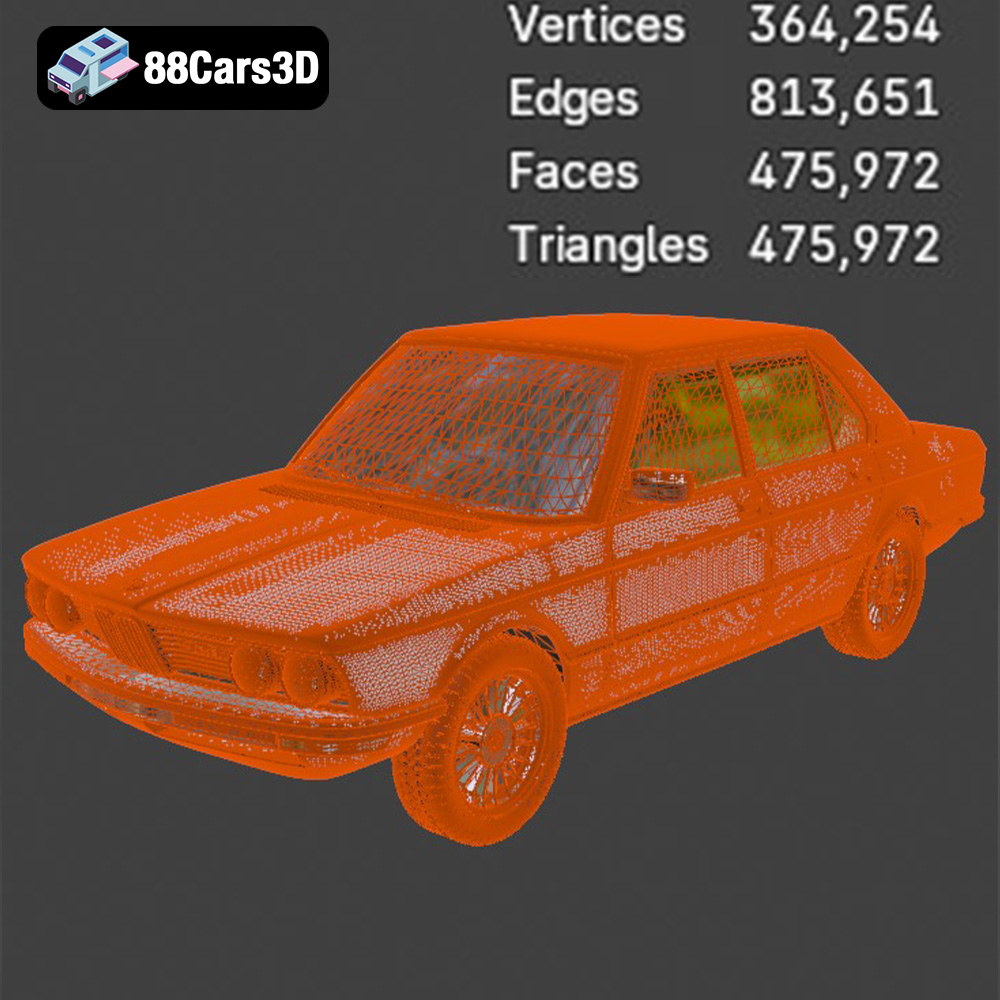
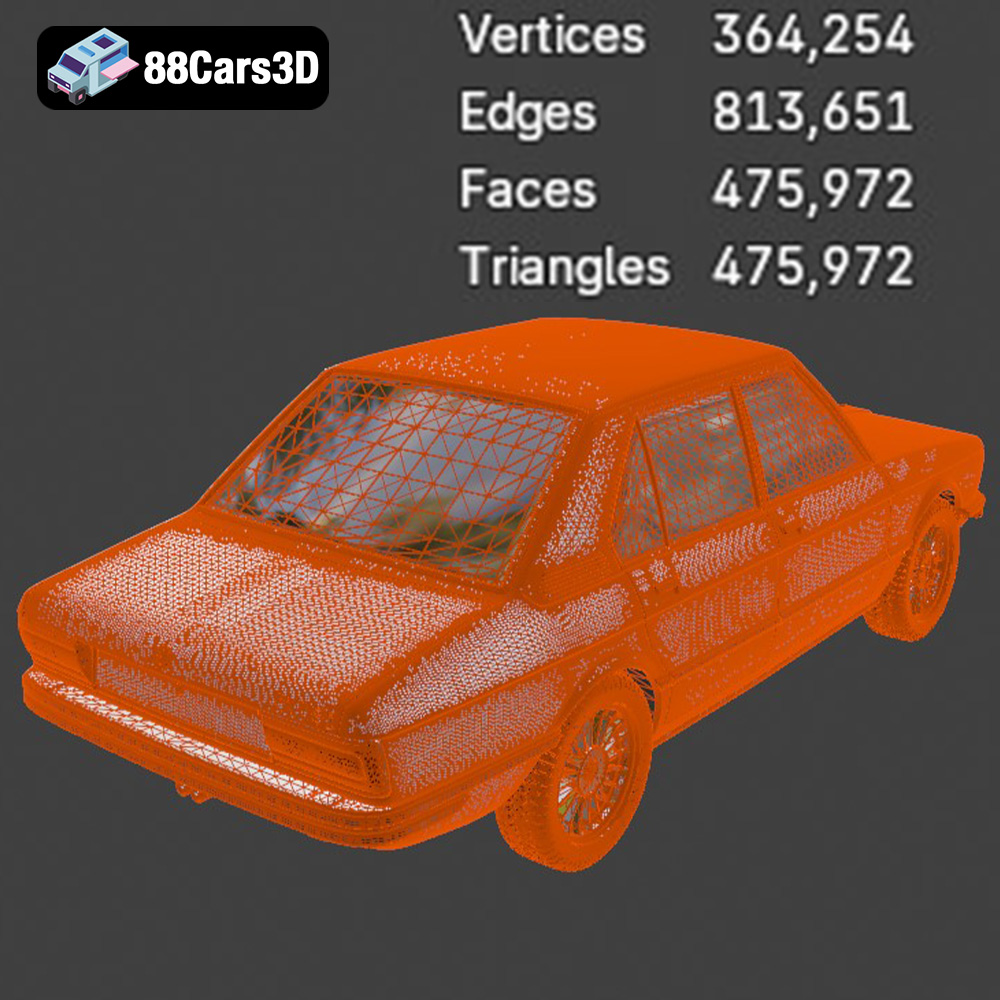
The cornerstone of a professional 3D car model is its topology. In the competitive world of high-end visualization, substandard geometry leads to artifacts, pinching, and catastrophic failures when subdividing or deforming the mesh. The BMW E12 528i model meets the highest industry standards by utilizing clean quad-dominant geometry, which is crucial for achieving photorealistic results.
The Importance of Clean Quad Topology for Subdivision
Automotive surfaces rely heavily on smooth, continuous reflections. To capture the smooth curves of the E12’s body panels accurately, the mesh must consist almost entirely of four-sided polygons (quads). When subdivision surface modifiers (like TurboSmooth in 3ds Max or Subdivision Surface in Blender) are applied, quad topology ensures predictable, smooth curvature without the unsightly pinching or stretching that results from using triangles or N-gons on curved surfaces. The model’s geometry is structured to support smooth iteration, allowing artists to effortlessly toggle between a low-poly base mesh for performance and a multi-million polygon mesh for final, close-up automotive rendering.
UV Mapping Strategies for Automotive Texturing
Effective UV mapping is non-negotiable for professional texturing workflows. The E12 528i model features clear, non-overlapping UV layouts. The vehicle’s components are logically separated:
- Body Panels: Large, continuous UV islands minimize seams and facilitate the creation of complex, layered car paint shaders that need seamless metallic flake distribution.
- Interior Components: Separated UVs for upholstery, dash, and trim allow for texture density optimization, ensuring that high-resolution textures can be applied to complex materials like leather and fabric for interior close-ups.
- Engine Bay: Detailed, modular UVs ensure that intricate components like hoses, engine block castings, and air filters can be textured individually for detailed simulation or engine-focused shots.
Geometry Optimization for Game Assets (LODs, Poly Count Management)
While the initial mesh for this classic BMW is high-detail, suitable for cinematic rendering, deployment as a genuine game asset requires strategic optimization. Professional users leveraging this model for Unreal Engine or Unity need to generate multiple Levels of Detail (LODs). This process involves reducing the poly count incrementally for objects viewed at a distance. The clean base geometry simplifies LOD generation, ensuring that the silhouette of the E12 remains recognizable and geometrically stable even at the lowest poly counts, maximizing frame rates in real-time simulations.
Professional Workflow: Rendering the E12 in 3ds Max and Blender
Achieving photorealism is the ultimate goal of professional automotive rendering. Whether utilizing the industry standard 3ds Max (.max) with Corona/V-Ray, or the flexible open-source Blender (.blend) with Cycles, the provided materials and topology in the E12 model accelerate the setup process significantly.
Achieving Photorealism with PBR Materials (Paint, Chrome, Glass)
The materials configured for the BMW E12 528i are based on the Physically Based Rendering (PBR) workflow, providing predictable and accurate results under diverse lighting conditions. Key material challenges inherent in automotive subjects are already addressed:
- Car Paint: True automotive paint requires complex shaders incorporating a base coat, metallic flakes (controlled via procedural or texture maps), and a precise clearcoat layer that governs reflection sharpness and Fresnel effects. The provided PBR configuration accurately simulates the depth and wet look of classic single-stage or two-stage paint.
- Chrome and Metal Trim: Classic cars, especially 1970s European models, feature substantial chrome brightwork. The material setup accurately defines the high reflectivity and low roughness of polished metal, essential for catching sharp highlights that define the vehicle’s form.
- Glass and Lighting: Headlights and taillights require specialized glass shaders (often using transmission and volume scattering) to correctly refract light and achieve the realistic depth of stacked reflectors and lenses.
Lighting Setups for Classic Automotive Rendering (HDRI vs. Studio Lighting)
The choice of lighting profoundly affects the visual impact of an automotive render. Studios commonly rely on two primary methods, both supported by the model’s PBR workflow:
- HDRI (High Dynamic Range Image) Lighting: This method uses a spherical photograph of a real-world location or studio environment to generate accurate reflections and global illumination. The E12 528i model reflects these environments perfectly, making it ideal for integration into backplates for virtual photography or architectural visualization scenes.
- Studio Lighting Rigs: For controlled, brochure-style renders, artists employ virtual softboxes and area lights. The clean topology ensures that reflections from these controlled light sources travel smoothly across the sedan’s large surfaces, highlighting the precision of the body design.
Deploying the Classic Car Model in Real-Time Environments (Unreal Engine)
The demand for interactive, high-fidelity visualization is skyrocketing, driving the need for exceptional game assets that transition seamlessly into platforms like Unreal Engine (UE) and Unity. The inclusion of the .fbx and .unreal files ensures that the BMW E12 is production-ready for real-time applications.
Preparing FBX Imports for Nanite and Lumen
In modern Unreal Engine workflows (UE5+), the Nanite virtualized geometry system allows developers to utilize high-poly cinematic assets directly in real-time without the traditional constraints of poly budget. For the E12 528i, the extremely detailed mesh can be imported with Nanite enabled. This preserves the subtle curvature and detail necessary for close-up shots within virtual production or advanced architectural walkthroughs, something previously impossible for large, complex meshes.
Furthermore, Unreal Engine’s Lumen global illumination system relies on accurate surface data. Since the 88cars3d.com model features meticulous topology and PBR materials, the surfaces correctly interact with Lumen’s dynamic lighting, resulting in highly realistic indirect light and bounced reflections, enhancing the sense of presence in a VR or game environment.
Configuring Vehicle Blueprints and Physics
For simulation or driving games, the 3D model must be configured within a vehicle blueprint. Professional models include correctly set pivot points (origins) for wheels, doors, and the chassis. Using the provided FBX data, developers can:
- Set up Wheel Colliders: Assigning physical constraints and collisions to the wheel geometry ensures realistic handling.
- Implement Functional Elements: Doors, trunk, and hood can be rigged quickly using the hierarchy defined in the asset, enabling interactive opening and closing animations for detailed exploration.
- Integrate Suspension and Steering: Accurate scale provided by the model allows for realistic input values for suspension travel and steering geometry within the physics system.
Case Studies: Applications Beyond Traditional Rendering
The versatility of high-quality 3D car models extends far beyond standard marketing renders. The technical precision of the E12 528i model makes it an asset powerhouse for specialized fields.
Integrating Classic Cars into Architectural Visualization (ArchViz)
In ArchViz, vehicles are crucial context setters. Placing a classic BMW E12 outside a modern architectural structure or a period-correct street scene instantly anchors the visualization in a specific aesthetic and time period. ArchViz requires highly detailed assets for close-up views and optimized assets for background context. Because this model includes formats optimized for various uses (detailed .max for V-Ray renders, optimized .fbx for real-time ArchViz walkthroughs), studios can easily control the fidelity level based on camera proximity.
Preparing the E12 for AR/VR Experiences
Augmented Reality (AR) experiences, such as virtual showrooms or museum exhibits, require models that are low-latency and efficient to load on mobile devices. The included .glb format is tailor-made for this. Developers can quickly upload the GLB of the classic BMW E12 into AR platforms, allowing users to place a life-sized, photorealistic version of the vehicle in their actual driveway via their smartphone or VR headset. This bridge between high-detail sourcing and optimized deployment showcases the value proposition of choosing expertly prepared assets from marketplaces like 88cars3d.com.
Conclusion: The Value of Precision in 3D Car Models
The ability to instantly integrate a highly complex, historically accurate digital asset like the BMW 5 Series E12 528i 3D Model is invaluable for professional creative teams. From the rigorous quad-based topology ensuring perfect subdivision in automotive rendering projects, to the multi-format packaging (.fbx, .unreal, .glb) that guarantees swift deployment into game assets and simulation environments, the technical quality minimizes pipeline friction.
Selecting 3D car models that are already validated for professional use saves thousands of dollars in modeling time and cleanup. This level of meticulous detail ensures that whether you are creating a cinematic visualization or building a real-time interactive experience, your focus remains on creativity, not geometry correction. Professionals seeking reliable, top-tier automotive assets will find 88cars3d.com a trusted resource for models that meet stringent industry requirements.
Featured 3D Model
BMW 5 Series E12 528i 3D Model
The BMW 5 Series E12 528i 3D model captures the essence of this influential classic sedan with uncompromising accuracy. Every exterior panel, lighting fixture, and badge has been meticulously recreated to deliver a digital asset suitable for professional visualization projects. This model provides an authentic representation of the first generation of the 5 Series, perfect for projects requiring automotive nostalgia and technical precision. This product features professional-grade topology and clean, optimized geometry, ensuring smooth subdivision and reliable performance in various 3D environments. Materials are configured for realism, delivering accurate reflections and surface textures on paint, glass, rubber, and chrome components. The model includes a fully detailed interior and engine bay suitable for close-up renders and simulation environments.
$14.99
Product Image Gallery