
BMW 6 Series 640i F12 3D Model – The Anatomy of a High-Fidelity 3D Car Model

The demand for ultra-realistic and technically precise 3D car models has never been higher. Whether you are creating a photorealistic commercial render, designing the next generation of AAA racing games, or developing sophisticated automotive simulation environments, the quality of your source assets dictates the success of your project. Professional content creators require assets that are not just visually appealing but structurally sound, optimized for performance, and versatile across multiple software platforms and rendering pipelines.
In this comprehensive guide, we delve into the technical requirements for integrating high-fidelity automotive assets into production workflows. We will use the stunning BMW 6 Series 640i F12 3D Model—available on 88cars3d.com—as a case study to demonstrate best practices in geometry, materials, rigging, and pipeline optimization. This specific model, known for its sleek F12 generation silhouette, exemplifies the balance needed between aesthetic luxury and technical robustness.
Understanding how models like the BMW 6 Series 640i F12 are prepared, formatted, and deployed is crucial for maximizing efficiency and achieving cinematic quality in your final output. We will explore everything from topology optimization for subdivision surfaces to preparing assets for real-time environments like Unreal Engine.
The Anatomy of a High-Fidelity 3D Car Model
A premium 3D car model, such as the BMW 6 Series 640i F12, is more than just a surface mesh; it is a complex assembly of mathematically precise components designed for specific rendering and animation purposes. Its quality is defined by several key technical factors that influence everything from rendering time to real-time performance.
Topology and Polygon Efficiency
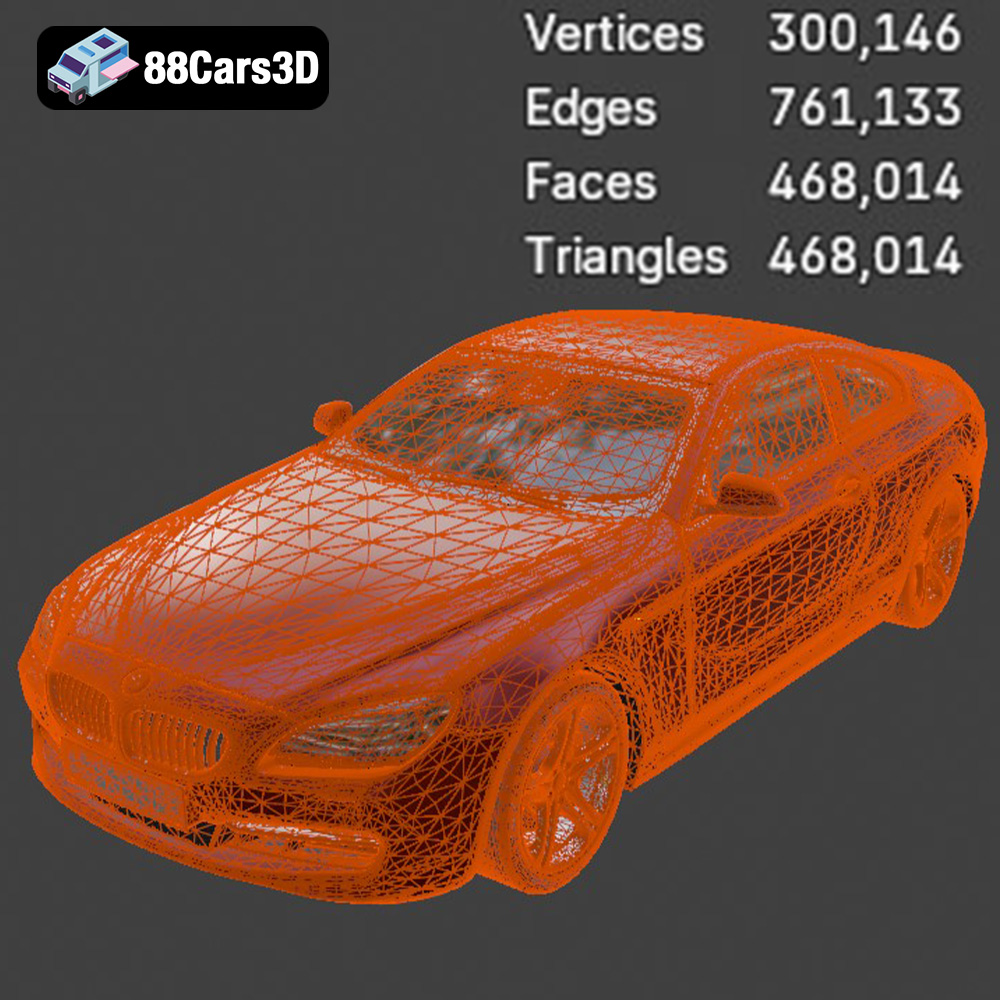
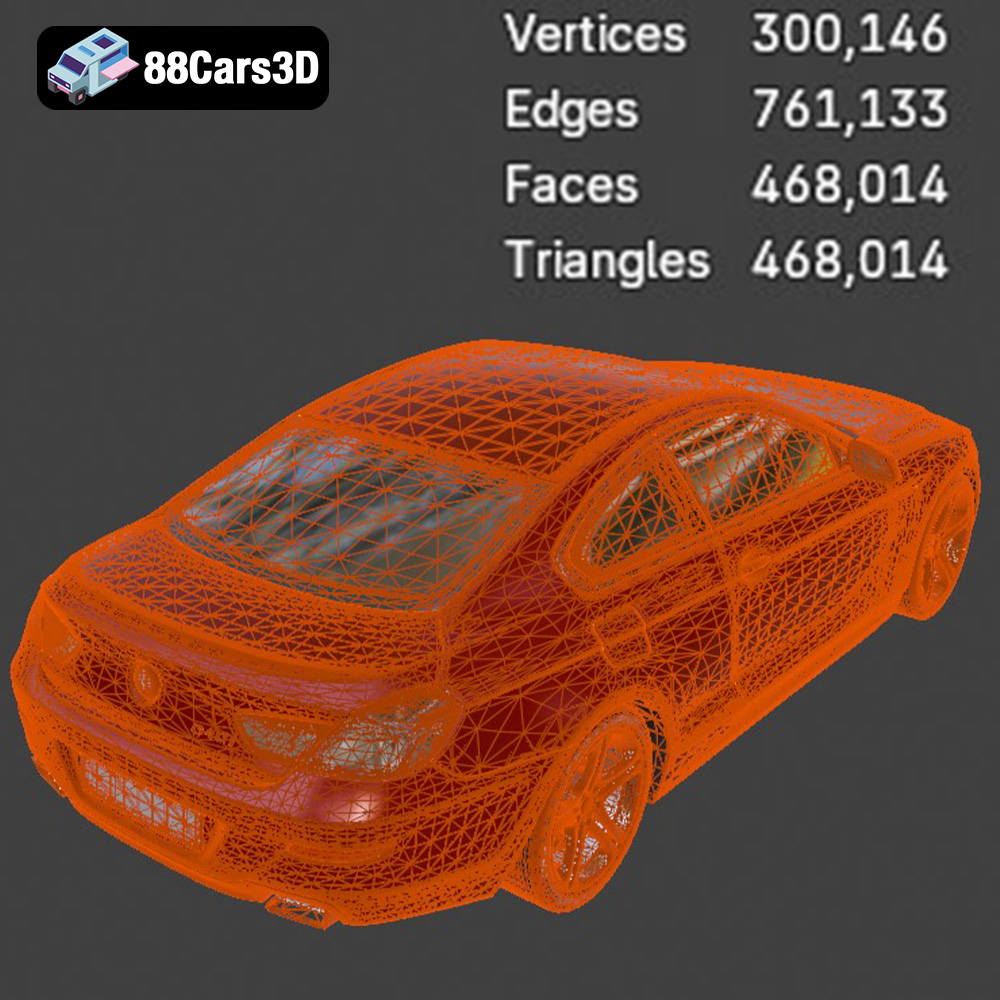
For professional rendering (like V-Ray, Arnold, or Cycles), topology must be clean and quad-dominant. The BMW 6 Series 640i F12 model boasts clean, quad-dominant geometry, which is essential for ensuring smooth subdivision surface results. Automotive curves, especially those characterizing the luxury lines of a BMW, require highly controlled edge flow to prevent pinching or artifacts when modifiers like TurboSmooth or Subdivision Surface are applied. An efficient, clean mesh allows artists to quickly switch between low-poly game resolution and high-poly subdivision levels required for close-up promotional renders.
Real-World Scale and Dimensional Accuracy
Accuracy is paramount in automotive rendering and visualization. The model must be built to real-world scale (e.g., meters or centimeters) to integrate seamlessly into complex scenes, especially those involving architectural visualization (arch-viz) or physical simulations. If the scale is incorrect, issues arise with lighting calculation, physics simulation, and shader behavior (particularly subsurface scattering or distance-based effects). The BMW 6 Series F12 model adheres strictly to accurate dimensions, facilitating professional integration without tedious scaling adjustments.
Hierarchy, Rigging, and Animation Readiness
An organized asset saves hundreds of hours in production. The model structure must feature a logically organized hierarchy with appropriately named parts (e.g., Body_Panel_Hood, Wheel_FL, Brake_Caliper_FR). Crucially, pivot points must be set correctly. For instance, wheels need their pivots centered at the axle, and doors must have pivots located exactly where the hinges would be. This preparation allows animators to quickly set up keyframes for actions like opening the trunk, turning the wheels, or animating suspensions, crucial for cinematic sequences or interactive visualization.
Understanding 3D Model File Formats
The ability of a high-quality 3D car model to serve various industries—from cinema to gaming—relies heavily on the multitude of file formats it supports. The BMW 6 Series 640i F12 model from 88cars3d.com is provided in eight distinct formats, each serving a unique technical purpose and workflow requirement. Selecting the correct format is not merely about compatibility; it’s about optimizing data transfer, material preservation, and execution efficiency.
.blend – Fully Editable Blender Scene with Materials
The .blend file is the native format for Blender, a rapidly expanding powerhouse in 3D content creation. This format is ideal for artists who use Blender as their primary DCC (Digital Content Creation) tool. It preserves the complete scene structure, including lighting, cameras, native Cycles or Eevee materials, modifiers, and custom node setups. Using the native file prevents translation errors and allows for immediate, non-destructive editing of the mesh or scene elements.
.max – Editable 3ds Max Project for Animation and Rendering
The .max format is the backbone for many visualization and design studios, especially those leveraging the powerful V-Ray or Corona render engines. This format guarantees that the original model hierarchy, complex material setups (Multi/Sub-Object materials, blending layers), and specific modifiers (like the crucial TurboSmooth for subdivision) are preserved exactly as intended by the modeler. It is the preferred format for advanced rendering and architectural integration.
.fbx – Ideal for Unreal, Unity, and Real-Time Pipelines
FBX (Filmbox) is the industry standard for asset exchange, particularly for game development. It efficiently packages mesh data, material slots, UV maps, textures, and animation data (bones, keyframes) into a single file. For high-performance environments like Unreal Engine and Unity, .fbx provides a robust, optimized path. When importing the BMW F12 model via FBX, artists must ensure they correctly handle scaling and tangent/binormal generation within the game engine settings for optimal PBR (Physically Based Rendering) results.
.unreal – Engine-Ready Asset for Real-Time Environments
While .fbx is the common import method, providing a pre-configured .unreal project setup accelerates integration exponentially. This engine-ready asset means the model is already imported, scaled, and potentially configured with high-quality master materials utilizing Unreal’s robust shader pipeline. This eliminates time spent mapping textures and setting up LODs (Levels of Detail), allowing developers to drop the BMW F12 directly into their virtual scene for immediate real-time visualization or gameplay testing.
.obj – Universal Format for Cross-Software Compatibility
Wavefront OBJ is one of the most widely supported formats, offering near-universal compatibility across all 3D software packages (Maya, Cinema 4D, Modo, etc.). It primarily stores geometry and UV data. While it is excellent for pure mesh transfer, it often requires manual reconstruction of complex materials and animation rigs upon import into the target software. It serves as a reliable fallback when native or FBX translation proves difficult.
.glb – Optimized for AR, VR, and Browser-Based Display
The Graphics Library Transmission Format (glTF) and its binary counterpart, .glb, are essential for modern visualization. Optimized for size and runtime delivery, .glb encapsulates geometry, PBR materials, and textures efficiently. This makes the BMW 6 Series 640i F12 model perfect for deployment in AR experiences (like those used on mobile platforms) or interactive 3D viewers embedded in web browsers, drastically lowering load times while maintaining visual fidelity.
.stl – Suitable for 3D Printing Output
The Stereolithography (STL) format is the standard for additive manufacturing (3D printing). It represents the surface geometry using a series of connected triangles. While the initial BMW 6 Series F12 model is high-poly, the provided .stl version is optimized or cleaned to ensure watertight meshes and appropriate thickness, preparing it for physical output, such as creating scale prototypes or desktop collector models.
.ply – Precision Mesh Format for CAD or Analysis
PLY (Polygon File Format) is often used for storing data from 3D scanners or for CAD (Computer-Aided Design) and technical analysis workflows. It can store complex data beyond simple vertices and faces, including color, transparency, and range data. Providing the BMW 6 Series F12 in .ply supports engineers and simulation specialists who require extremely precise mesh data for aerodynamic testing or structural analysis.
Advanced Automotive Rendering Workflows in 3ds Max and Blender
Achieving magazine-quality automotive rendering demands sophisticated lighting, material setups, and meticulous attention to detail. Both 3ds Max and Blender offer powerful toolsets to transform a detailed mesh like the BMW 6 Series 640i F12 into a photorealistic visual masterpiece.
Material PBR Fidelity and Shader Networks
The core of modern rendering is PBR (Physically Based Rendering). For the BMW F12 model, this means crafting accurate shader networks for various materials: metallic paint, rubber tires, clear glass, chrome trim, and interior fabrics. In 3ds Max (using V-Ray or Corona), custom material layers are often stacked to simulate the multi-layer depth of car paint (base coat, metallic flake, clear coat). In Blender (using Cycles), complex procedural nodes are employed to mimic these subtle optical phenomena, ensuring the model reacts correctly to environmental light (Image-Based Lighting or IBL).
- Car Paint: Requires realistic metallic flakes controlled by noise textures and layered Fresnel reflections to capture depth.
- Glass: Must use thin-film transparency settings and accurate IOR (Index of Refraction) values to prevent visual distortions.
- Tire Rubber: Should incorporate slight micro-surface roughness (micro-detail displacement or normal maps) to break up perfect reflection and achieve a matte, worn look.
Studio Lighting and HDRI Environments
The secret to stunning automotive imagery lies in the lighting setup. Professional automotive visualization often employs large, soft area lights, mirroring real-world studio softboxes, to emphasize the body lines and volume of the vehicle. For exterior shots, high-dynamic-range imaging (HDRI) maps are crucial. An HDRI provides real-world lighting and reflections, instantly integrating the BMW 6 Series F12 into a realistic environment. Leveraging a high-resolution 32-bit HDRI within the rendering environment guarantees complex, accurate reflections across the car’s sleek surfaces.
Post-Processing and Final Output
Rendering is only half the battle. Post-processing in tools like Adobe Photoshop or Nuke refines the image. Key techniques include adding subtle chromatic aberration, adjusting depth of field (DOF), enhancing rim lighting for definition, and performing careful color grading. Because the BMW F12 model is built with separate components and precise UVs, rendering passes (AOV/Cryptomattes) can be used to mask specific parts (wheels, windows) for targeted adjustments without affecting the rest of the scene.
Integrating 3D Car Models as Game Assets
The transition from a high-resolution rendering model to an optimized game asset requires significant technical transformation, focusing primarily on polycount reduction and LOD strategy. The BMW 6 Series 640i F12 model is designed to bridge this gap, offering a foundation that is suitable for both pipelines.
Level of Detail (LOD) Strategy
Game engines cannot sustain the full geometric detail required for cinematic rendering across multiple moving vehicles simultaneously. Therefore, an LOD strategy is mandatory. The BMW F12 asset is suitable for creating at least four levels of detail:
- LOD0 (High Detail): Full polycount (e.g., 500k-1M+ triangles), used for close-ups, hero shots, and player-controlled vehicles.
- LOD1 (Medium Detail): 50% poly reduction, noticeable details removed (e.g., small interior buttons, brake caliper inner details), used for mid-range views.
- LOD2 (Low Detail): Aggressive reduction (e.g., 50k triangles), complex curves simplified, details baked onto normal maps. Used for distant vehicles or AI traffic.
- LOD3 (Billboard/Proxy): Extremely low-poly representation or even a 2D billboard texture, used for vehicles very far from the camera.
This systematic reduction ensures optimal framerates without significant visual degradation.
Real-Time Material Setup in Unreal Engine
Using the provided .fbx or .unreal file format, the BMW 6 Series F12 can be imported directly into Unreal Engine (UE) or Unity. In UE, materials are converted to PBR standards (Base Color, Metallic, Roughness, Normal, Ambient Occlusion). Due to the high quality of the base asset, baking high-resolution detail onto low-poly meshes (Normal Map generation) yields exceptional results, maintaining the sleek surface quality of the F12 while utilizing real-time performance.
Special attention must be paid to collision geometry. Instead of using the high-poly visual mesh for physics, a simplified, lower-resolution collision mesh is created to handle physics interactions, ensuring stable performance in racing simulations.
Case Studies in Professional Visualization
The quality and versatility of models available on marketplaces like 88cars3d.com directly translate into measurable advantages across various professional domains. The BMW 6 Series 640i F12 3D model offers concrete benefits in three primary visualization sectors.
Automotive Design Review and Configuration Tools
Before physical prototypes are built, automotive manufacturers rely heavily on accurate 3D models for virtual design reviews. Using the high-detail F12 model in VR/AR environments, designers can walk around and inspect the vehicle at 1:1 scale. The clean topology allows for rapid material and color switching—allowing stakeholders to instantly visualize the car in various metallic paints, interior leather configurations, or even with different alloy wheel designs, significantly accelerating the design approval process.
Cinematic Commercials and VFX
For cinematic sequences—whether TV advertisements or integrated visual effects (VFX) in film—uncompromising realism is necessary. The separated components of the BMW F12 (doors, hood, wheels) facilitate complex animation sequences, such as slow-motion shots highlighting opening doors or close-ups of spinning, detailed brake calipers. The model’s adherence to real-world dimensions ensures that it composites seamlessly with live-action backplates, correctly capturing environmental reflections and shadows.
Driving Simulation and Training
Professional driving simulators require high-fidelity models for both visual feedback and accurate physics calculations. The optimized mesh and real-world scale of the BMW 6 Series 640i F12 make it an excellent candidate for these systems. Its interior detailing, including the steering wheel and dashboard, can be mapped directly to physical simulator controls, providing trainees with a truly authentic visual representation of the vehicle they are operating, enhancing the efficacy of the training.
Optimization for AR/VR and WebGL Environments
Augmented Reality (AR) and Virtual Reality (VR) represent the frontier of interactive visualization. Deploying complex 3D car models like the BMW F12 in these environments demands rigorous optimization, often leveraging the .glb format.
Polycount Budgeting for Mobile AR
Mobile AR platforms (like Apple’s ARKit or Google’s ARCore) have strict limitations on polygon count and draw calls due to hardware constraints. While the master model may exceed one million polygons, the AR-optimized version must typically be reduced to under 100,000 triangles. This reduction is achieved through careful manual decimation, ensuring that critical silhouettes and distinguishing features (like the signature kidney grille) are preserved, while small interior details are aggressively culled or replaced by baked texture data.
Shader Complexity in Real-Time Mobile Rendering
Standard ray-traced automotive shaders are too expensive for mobile devices. AR and WebGL environments rely on simplified PBR shaders that minimize texture sampling and instruction count. The BMW 6 Series 640i F12 model utilizes streamlined texture sets (PBR maps packed into fewer channels) to ensure smooth performance while retaining high visual quality, allowing users to inspect the vehicle from all angles using just a smartphone or tablet browser.
Conclusion: The Value of Premium Automotive Assets
The modern digital production pipeline demands assets that are not only aesthetically impressive but technically sound and ready for immediate deployment. Whether your focus is cinematic automotive rendering, developing immersive game assets, or creating interactive AR visualizations, selecting a meticulously crafted 3D car model is foundational to your success.
The BMW 6 Series 640i F12 3D Model exemplifies this standard, offering clean, quad-dominant topology, real-world scale, and crucial multi-format support (including .blend, .fbx, and engine-ready .unreal setups). Its technical robustness ensures seamless integration into major DCC tools and real-time engines, saving professional artists countless hours of cleanup and preparation.
By investing in high-fidelity models like this one, available on 88cars3d.com, creators can focus their expertise on lighting, composition, and storytelling, confident that the underlying geometry and material structure are already optimized for world-class results. Elevate your next project with precision-engineered automotive assets that meet the rigorous demands of professional production.
Featured 3D Model
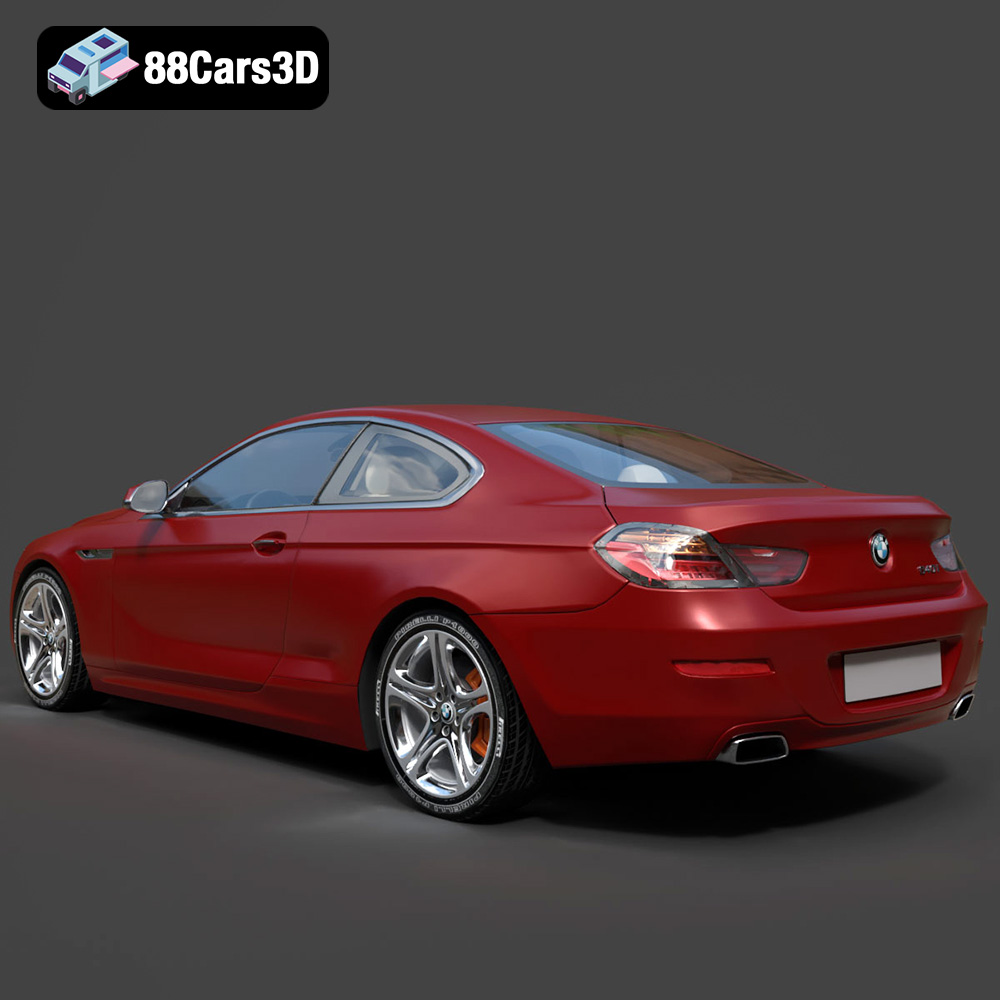
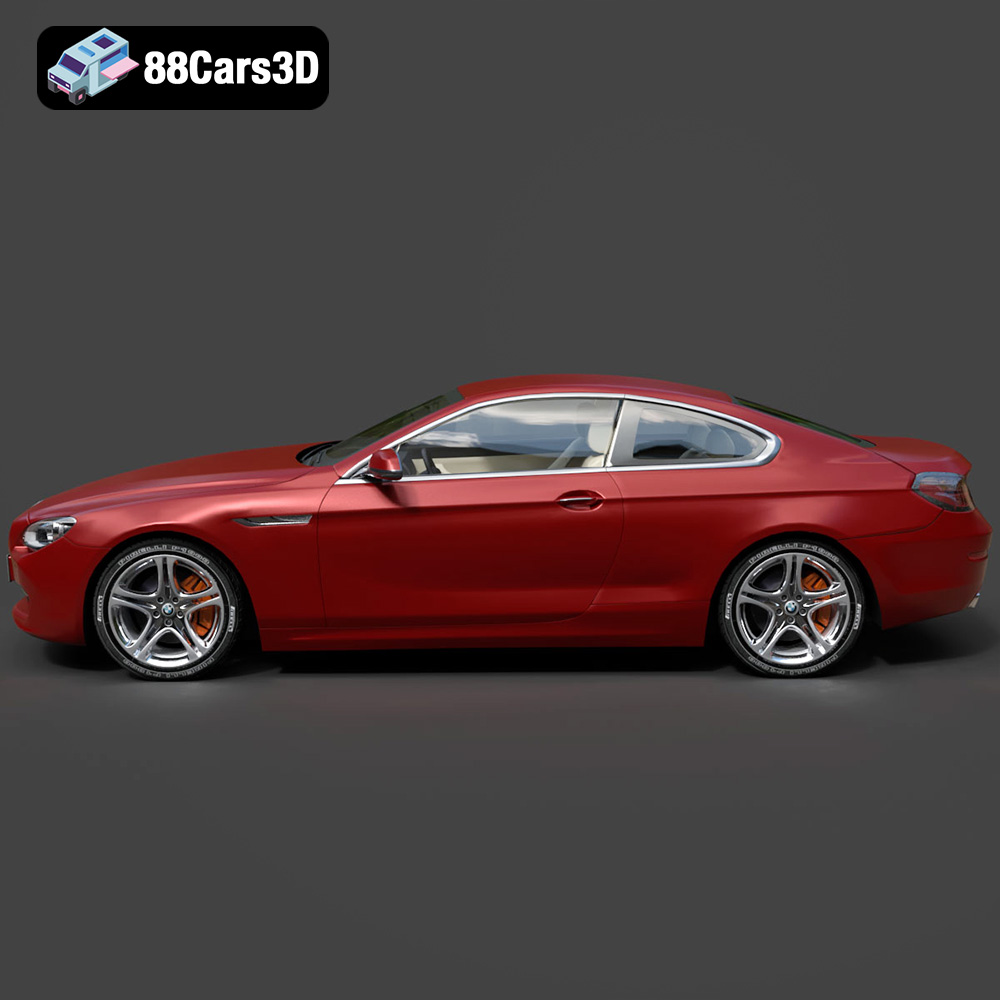
BMW 6 Series 640i F12 3D Model
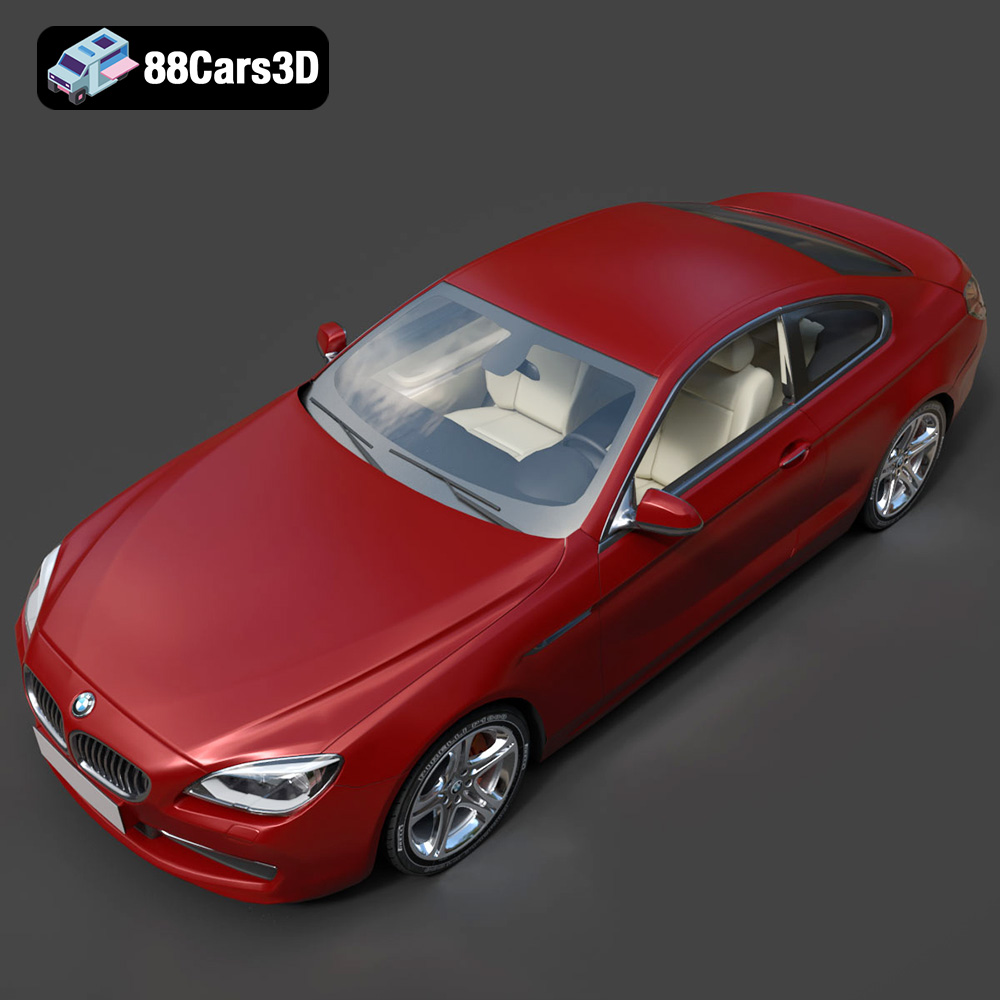
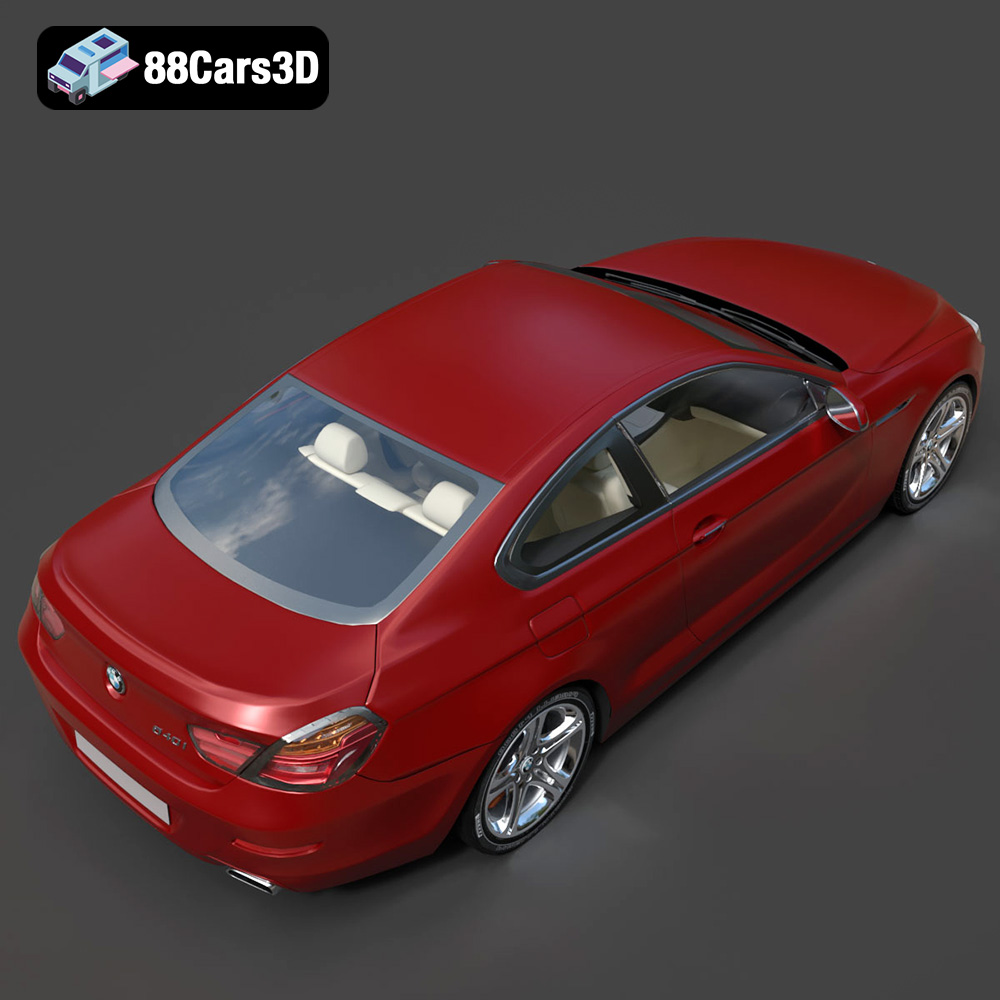
Experience automotive excellence with this meticulously crafted 3D model of the BMW 6 Series 640i F12. Representing BMW’s iconic blend of luxury, performance, and sophisticated design, this model captures the sleek lines and sporty elegance of the F12 generation. Built with clean geometry and balanced detailing, it is optimized for a wide range of professional applications, including high-end rendering, dynamic animation sequences, realistic simulations, and immersive game development environments.
$10.79
Product Image Gallery


Related Tags
.640i
.6series
.arvr
.blend
.bmw
.car
.coupe
.f12
.fbx
.gameasset
.glb
.luxurycar
.max
.obj
.ply
.rendering
.simulation
.sportsCar
.stl
.unreal
