
BMW M3 Coupe E92-002 3D Model – Precision Modeling for Photorealistic Automotive Rendering

The pursuit of photorealism in visualization and the demand for high-fidelity assets in modern game engines require specialized tools and exceptionally detailed source material. For automotive designers, rendering specialists, and game developers, the quality of the base 3D car models determines the success of the entire project. Few vehicles embody the blend of engineering precision and iconic design as effectively as the BMW M3 Coupe E92. Capturing this essence digitally demands a technical approach that respects both artistic detail and practical application.
This article dives deep into the technical requirements for professional automotive rendering and real-time integration, using a specific, expertly crafted asset—the BMW M3 Coupe E92-002 3D Model—as a prime case study. We will explore topology, material workflows, software integration, and the critical role of versatile file formats in modern pipelines. For those seeking assets that meet stringent industry standards, resources like 88cars3d.com provide foundational material that elevates projects from conceptual to production-ready.
Precision Modeling for Photorealistic Automotive Rendering
Achieving truly photorealistic results with a vehicle model like the BMW M3 Coupe E92-002 is less about the final render settings and more about the underlying mesh integrity. The E92 M3, known for its subtle curves and aggressive character lines, requires a 3D model that handles light and reflection accurately across all surfaces.
The Importance of Quad-Dominant Topology
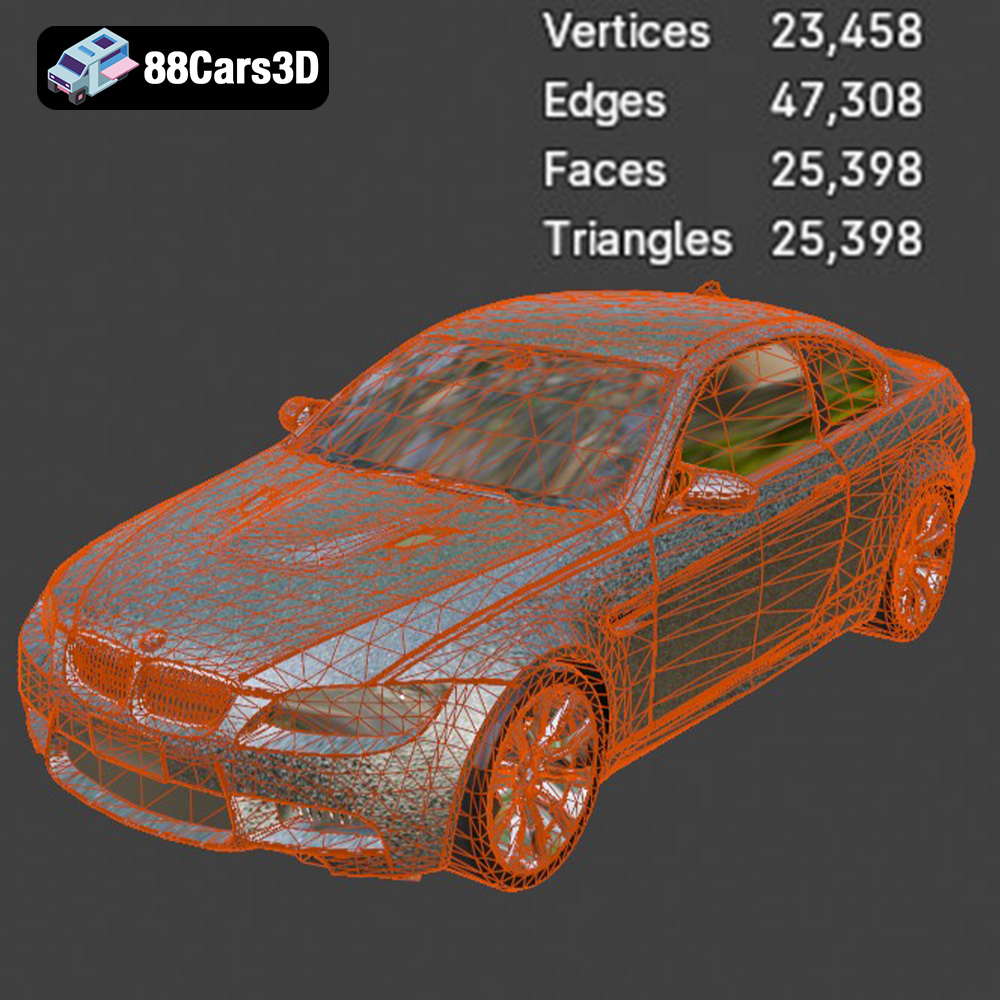
In high-end 3D car models, topology is paramount. The BMW M3 E92-002 model utilizes a clean, quad-dominant mesh structure. Quads (four-sided polygons) are essential for two main reasons:
- Subdivision Smoothness: Quads ensure predictable and uniform deformation when subdivision surface modifiers (like TurboSmooth in 3ds Max or Subdivision Surface in Blender) are applied. This is critical for automotive body panels, where any pinching or artifacting becomes immediately visible in reflections.
- UV Mapping Integrity: Clean quad flow simplifies the process of unwrapping complex surfaces for UV mapping. Accurate UVs are necessary for applying texture details, decals, and critical ambient occlusion or curvature maps without stretching or distortion.
Material Shaders and Detail Integrity
The realism of an automotive render hinges on how materials interact with virtual light. The model must provide detailed mesh elements that support complex shaders:
- Multilayer Car Paint: Professional renders require car paint shaders that simulate clear coat, metallic flake, and base color layers. The geometry of the BMW M3 Coupe E92-002 must be smooth enough to prevent stepping artifacts that disrupt these complex reflection calculations.
- Headlight and Taillight Refinement: The lighting elements are often the focal point. The E92 model includes detailed headlight and taillight geometry with separate glass lenses, reflectors, and light housing components. This allows for dedicated material shaders (e.g., Fresnel effects on the glass, anisotropic reflection on chrome parts) to truly sell the illusion.
- Accurate Tire Tread and Wheel Details: Even secondary elements, like the brake calipers and tire tread, are modeled precisely. This level of detail is necessary not just for close-up shots, but because these complex surfaces contribute significantly to the overall realism of environmental interaction and shadows.
Understanding 3D Model File Formats
In the professional pipeline, no single software solution reigns supreme. Asset exchange efficiency is determined by the quality and versatility of the included file formats. The comprehensive package offered with the BMW M3 Coupe E92-002 3D model ensures maximum flexibility across all professional workflows, from rendering visualization to developing real-time game assets.
Proprietary and Universal Formats Explained
Choosing the correct file format is crucial for maintaining integrity, optimizing performance, and ensuring compatibility. Here is a detailed breakdown of the formats provided:
- .blend – Fully Editable Blender Scene with Materials: This proprietary format is ideal for users integrated into the Blender ecosystem. It includes the full scene setup, lighting, camera positions, and node-based materials. For artists using Blender’s cycles or Eevee renderers, the
.blendfile offers immediate access to a pre-configured, render-ready asset, allowing for rapid customization and texture modification without complex import/export procedures. - .max – Editable 3ds Max Project for Animation and Rendering: As a cornerstone of high-end visualization, the
.maxformat provides the complete, editable project file for Autodesk 3ds Max users. This format is essential for complex rigging, advanced V-Ray or Corona rendering setups, and utilizing 3ds Max’s powerful animation tools, ensuring that the logically organized hierarchy and pivot points of the BMW M3 are preserved perfectly. - .fbx – Ideal for Unreal, Unity, and Real-Time Pipelines: The FilmBox format (
.fbx) is the industry standard for asset exchange, particularly between modeling software and game engines. It reliably transports mesh geometry, materials (using standard PBR workflows), rigging information, and animation data. The.fbxversion of the M3 E92-002 model is optimized for import into Unreal Engine and Unity, making it perfect for creating high-performance game assets. - .obj – Universal Format for Cross-Software Compatibility: The Wavefront
.objformat is a universal, highly compatible mesh format. While it may not carry complex material shaders or rigging data as effectively as.fbx, it guarantees geometry compatibility across virtually every 3D application (Maya, Cinema 4D, Houdini, etc.). It serves as the reliable fallback when standard formats encounter compatibility issues, ensuring the base geometry of the car remains accessible. - .unreal – Engine-Ready Asset for Real-Time Environments: This dedicated setup often implies an exported and configured asset package specifically optimized for the Unreal Engine workflow. This preparation typically includes correct scale, pivot setup, LOD (Level of Detail) configuration, and validated PBR materials using Unreal’s native shading model, drastically reducing the time required for developers to integrate the car into a functional environment.
- .glb – Optimized for AR, VR, and Browser-Based Display: The Graphics Library Transmission Format (
.glb) is increasingly important for immersive media. It is highly efficient and packages the mesh, textures, and basic materials into a single, compact file. This optimization makes the BMW M3 model ideal for deployment in WebGL viewers, augmented reality (AR) apps, and virtual reality (VR) experiences, where loading speed and file size are critical performance factors. - .stl – Suitable for 3D Printing Output: The Stereolithography (
.stl) format defines geometry using only triangular facets, making it the de facto standard for additive manufacturing. While visualization models require careful conversion to.stl(often requiring solid modeling adjustments), its inclusion ensures that the high-detail model can be successfully prototyped or produced as a physical collectible via 3D printing. - .ply – Precision Mesh Format for CAD or Analysis: The Polygon File Format (
.ply) is frequently used in scientific applications, 3D scanning, and engineering workflows (CAD). It can store information beyond vertices and faces, such as color, transparency, and sometimes even density. This format provides an accurate, robust representation of the BMW M3’s geometry for technical analysis or reverse engineering visualization.
The provision of this comprehensive list of formats simplifies the complex process of asset transfer, guaranteeing that studios utilizing multiple pipelines can seamlessly integrate the high-quality 3D car models found on platforms like 88cars3d.com.
Optimizing the E92 M3 for Real-Time Game Assets
The requirements for real-time game assets differ significantly from those for static renders. Game engines like Unreal and Unity prioritize polygon efficiency and draw call optimization while still demanding visual fidelity. The BMW M3 Coupe E92-002 model is structured to meet this balance.
The Real-Time Topology Strategy
While the initial model possesses high-detail topology suitable for subdivision rendering, its structure must be manageable for real-time performance. Key optimization strategies include:
- Modular Component Separation: The model’s components (doors, hood, trunk, wheels) are logically separated. This is essential for game pipelines, allowing developers to implement dynamic physics, damage systems, or custom animations without affecting the entire body mesh.
- Level of Detail (LOD) Implementation: For large open-world games or simulations, assets must utilize LOD meshes. Although LOD generation is often the developer’s responsibility, a clean base mesh (provided by the E92-002 model) ensures that the automated reduction process maintains visual integrity even at distance.
- Optimized UV Maps for Texture Baking: High-resolution detail, such as rivets, panel gaps, and subtle surface scratches, are often baked into normal maps rather than modeled directly as geometry. The clean UV mapping of the model is crucial for efficiently baking these details, keeping the runtime poly count low while preserving high visual quality.
Seamless Integration into Unreal Engine
The dedicated .unreal and robust .fbx formats are tailored for efficient Unreal Engine integration. When imported, the asset benefits from:
- Accurate Scale: The model is built to real-world scale, eliminating the frustrating scaling issues common with poorly prepared assets. Accurate scale is vital for physics simulations and correct interaction with the engine’s lighting and camera systems.
- Material Conversion: The asset utilizes standard PBR (Physically Based Rendering) principles, ensuring that materials translate correctly into Unreal Engine’s material editor, producing predictable and realistic reflections, roughness, and metallic properties, crucial for high-quality automotive rendering in a game environment.
Professional Workflow Case Study: Cinematic Animation with 3ds Max and V-Ray
For cinematic visualization or high-impact marketing materials, artists often turn to powerful software combinations like 3ds Max and V-Ray. The BMW M3 Coupe E92-002 model, provided in the native .max format, simplifies this demanding workflow.
Rigging and Animation Preparation
A professional 3D car model must be ready for dynamic sequences, such as driving shots, suspension articulation, and opening components. The E92-002 model is structured specifically for this:
- Correct Pivot Points: Pivots for the wheels, doors, hood, and trunk are correctly positioned at their real-world rotation points. This foundational step is essential for rigging the vehicle. When setting up a standard IK (Inverse Kinematics) or constraint-based vehicle rig in 3ds Max, the accurate pivots ensure realistic movement and separation.
- Scene Hierarchy: The clean, logically organized hierarchy (e.g., Wheels are children of Axles, Axles are children of the Chassis) accelerates the rigging process significantly. Artists can quickly link components to control objects, enabling complex shots like dynamic steering or opening the trunk to reveal the detailed interior.
Achieving Next-Level Automotive Rendering
Using the high-resolution mesh in 3ds Max allows artists to leverage advanced V-Ray features that demand impeccable geometry:
- Displacement and Micro-Detailing: While the base topology is excellent, artists can use V-Ray displacement maps on areas like the plastic trim or exhaust tips to add micro-surface texture that catches highlights perfectly, pushing realism beyond standard bump mapping.
- Complex Glass Shading: Realistic automotive glass requires multiple reflection passes and careful handling of volumetric effects. Because the E92-002 features dedicated, separate glass geometry, V-Ray can be configured to use complex transmission settings and subtle scattering effects, enhancing the interior visibility and external reflectivity.
- DOF and Motion Blur Integrity: When rendering high-speed cinematic sequences, accurate geometry ensures that depth of field (DOF) and motion blur calculations in the render engine are artifact-free. The solid structure of the 3D car model prevents light leaks or mesh tearing under these intense computational loads.
Versatility in Immersive Media: AR/VR and 3D Printing
The applications for high-quality 3D car models have expanded beyond traditional rendering into emerging fields like augmented reality (AR), virtual reality (VR), and additive manufacturing. The BMW M3 Coupe E92-002 supports these modern applications through specialized formats.
AR/VR Showrooms with GLB
Virtual showrooms and interactive vehicle configurators are increasingly common in automotive marketing. The .glb format is critical here:
- Web Optimization:
.glbfiles are highly efficient and designed for streaming over the web, making them ideal for displaying the E92 M3 in a browser-based configurator or embedding it into an AR app (via platforms like Adobe Aero or specific web viewers). - Interactive Detail: Even in these compressed formats, the core details—such as the meticulously modeled wheels, interior elements, and exterior contours—remain visually strong, allowing customers to interact with an authentic digital representation of the vehicle.
Prototyping and Collectibles with STL
For designers or enthusiasts looking to create physical prototypes or highly detailed collectibles, the .stl format provides the necessary foundation.
- Solid Geometry Requirement: Converting a complex visualization model to a solid
.stlsuitable for 3D printing requires that the source geometry be “watertight.” While some post-processing may be required depending on the scale and printing method, the clean topology of the BMW M3 E92-002 minimizes errors during this conversion process. - Precision Scale Output: Since the model is built to accurate real-world scale, it ensures that any resulting physical model maintains correct proportions, a crucial requirement for scale modeling and functional prototyping.
Selecting Professional-Grade Automotive Assets
When investing in digital assets, quality is not a luxury; it is a necessity that dictates project efficiency and final output success. Platforms specializing in high-fidelity resources, such as 88cars3d.com, ensure that artists and developers receive assets that have undergone rigorous technical scrutiny.
Key Indicators of a High-Quality 3D Car Model
Before integration, professionals should confirm several technical checkpoints, all met by the BMW M3 Coupe E92-002:
- Quad-Flow Certification: Verify the mesh flow, especially on highly reflective surfaces like the hood and side panels, to ensure zero pinching.
- Real-World Scale Accuracy: Confirmation that the model measures correctly in all axes (essential for physics and environment integration).
- Separated Components for Animation: The ability to easily separate doors, hood, and wheels confirms readiness for rigging and animation workflows.
- Comprehensive Format Support: The inclusion of dedicated formats like
.fbx,.unreal, and native software files (.blend,.max) proves the asset is truly pipeline-agnostic and ready for diverse professional tasks, from high-end automotive rendering to immediate integration as game assets.
Conclusion: The Technical Edge in Automotive Digital Production
The digital representation of iconic machinery, such as the BMW M3 Coupe E92, demands uncompromising technical quality. From the meticulously clean, quad-dominant topology required for flawless reflections in automotive rendering, to the optimized mesh structure necessary for efficient real-time performance as game assets, the underlying data structure is the defining factor of professional success.
The BMW M3 Coupe E92-002 3D Model exemplifies this technical excellence, providing artists and developers with a production-ready foundation across every major platform and application. Its comprehensive file format support—including .blend, .max, .fbx, and engine-specific .unreal—ensures immediate utility whether you are creating cinematic visualizations in 3ds Max or building immersive virtual environments. Investing in assets of this caliber, available through specialized marketplaces, significantly shortens production cycles and ensures the final output meets the highest standards of photorealism and technical fidelity.
Featured 3D Model
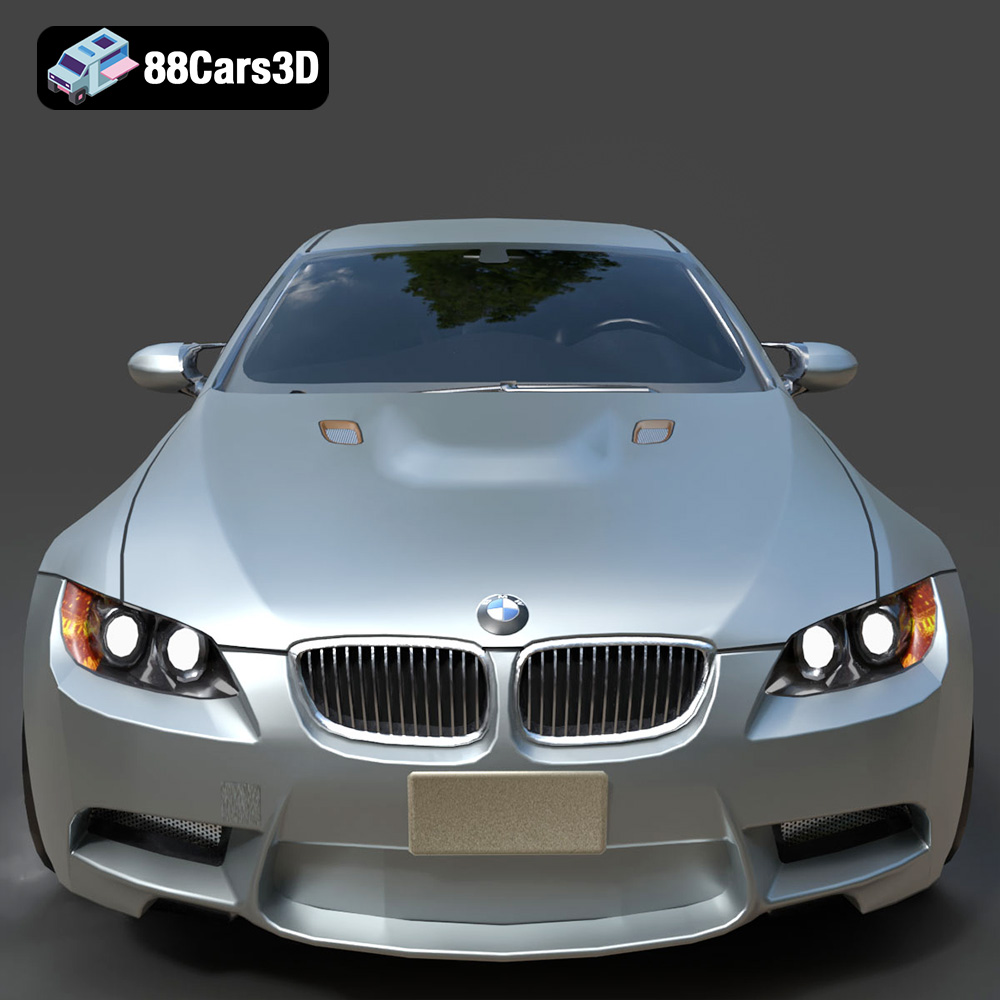
BMW M3 Coupe E92-002 3D Model
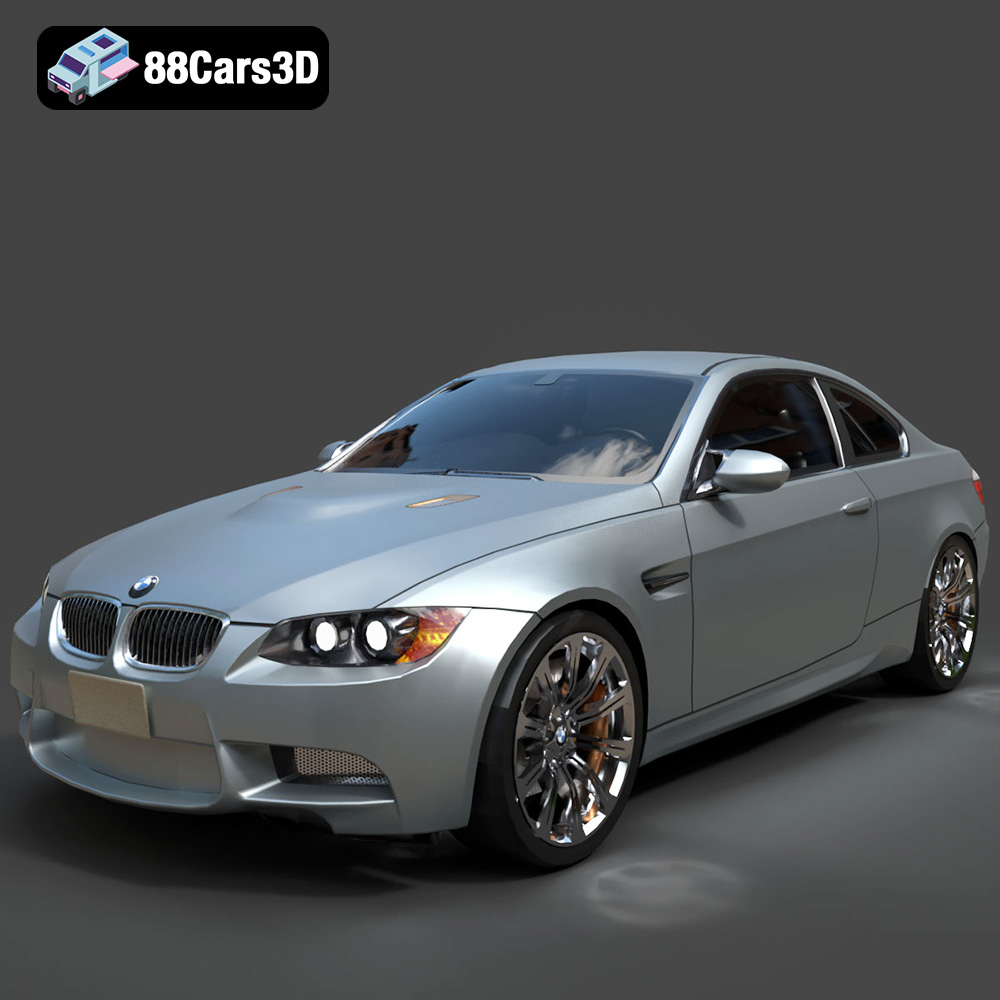
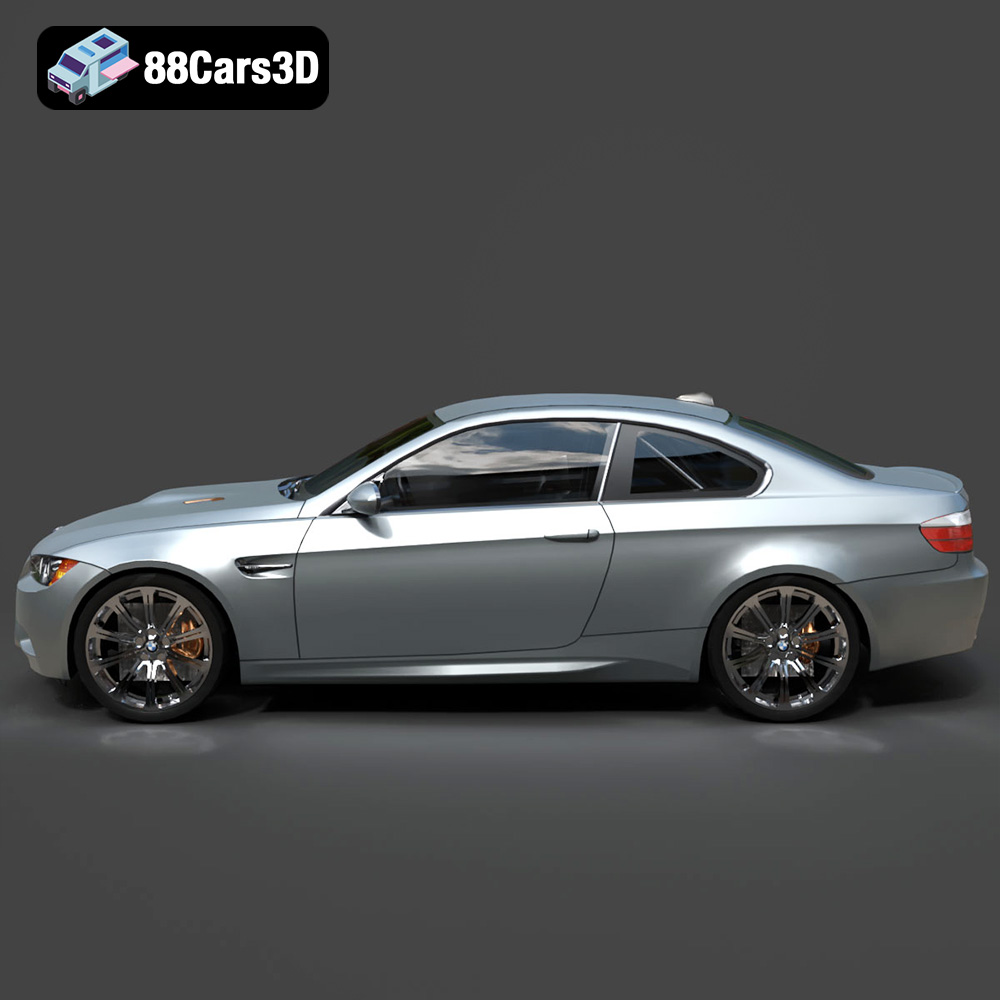
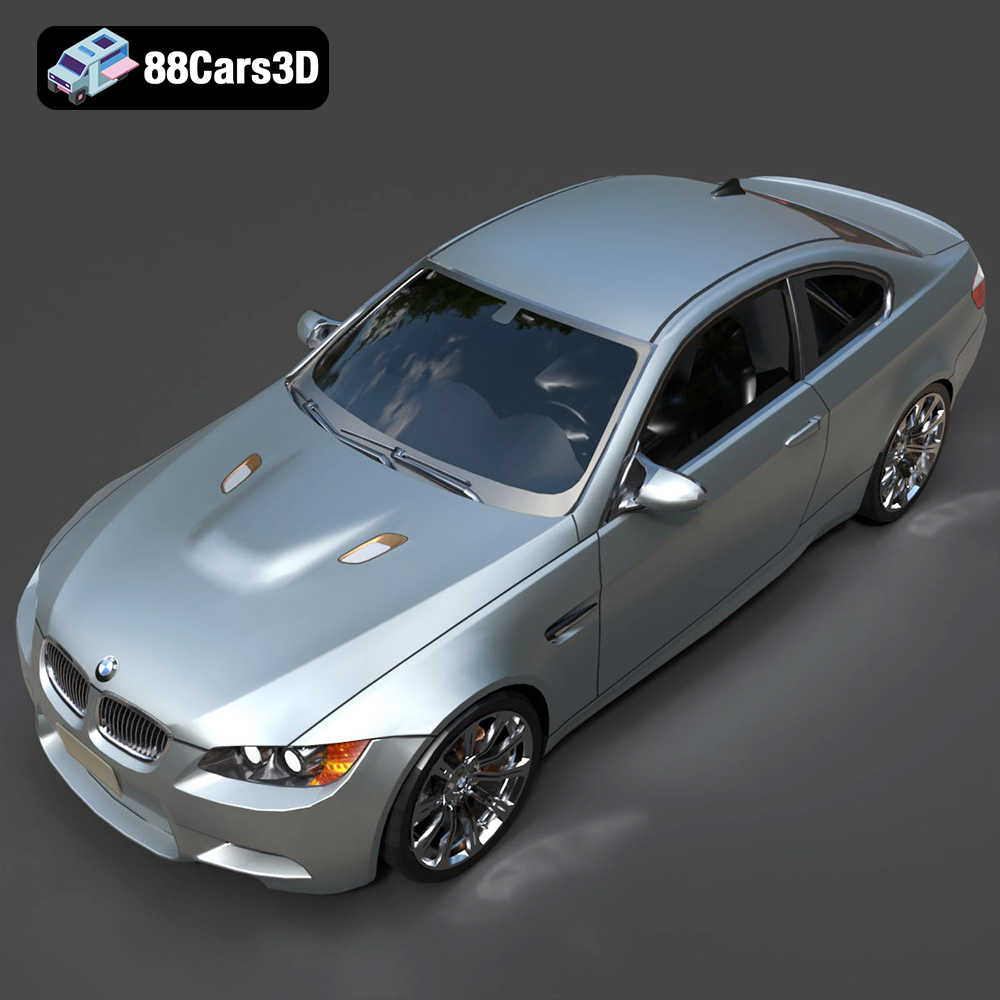
Immerse yourself in the world of high-performance automotive design with this professional 3D model of the BMW M3 Coupe E92-002. This model meticulously captures the aggressive stance and iconic styling of BMW’s renowned sports coupe, offering an authentic digital representation. Engineered with clean geometry and balanced detailing, it is optimized for a wide range of applications, including high-fidelity rendering, dynamic animation sequences, realistic simulations, and integration into modern game development pipelines.
$10.79
Product Image Gallery



Related Tags
.arvr
.blend
.bmw
.car
.coupe
.fbx
.gameasset
.glb
.m3coupee92002
.max
.obj
.ply
.rendering
.simulation
.sportsCar
.stl
.unreal
