DUB Big Chips-004 3D Model – The Foundation of Visual Fidelity: Why Specialized 3D Car Models are Essential for Professional Automotive Rendering

The Foundation of Visual Fidelity: Why Specialized 3D Car Models are Essential for Professional Automotive Rendering
In the highly competitive fields of automotive design visualization, game asset development, and cinematic rendering, the quality of individual components is paramount. A truly successful 3D project hinges not just on the vehicle’s body geometry, but on the precise detail of its peripherals—most critically, the wheels. Wheels are complex geometric objects, defined by tight curves, reflective surfaces, and intricate mechanical detailing. Using subpar assets can quickly break the illusion of realism, especially in high-resolution close-ups.
For professionals seeking uncompromising quality, utilizing meticulously crafted 3D car models—like the featured DUB Big Chips-004 wheel model—is non-negotiable. This asset is specifically engineered not just to look good, but to perform flawlessly across diverse pipelines, from high-end automotive rendering setups like V-Ray and Corona, to real-time environments powering the latest generation of games and AR/VR experiences.
This comprehensive guide dives deep into the technical requirements for high-fidelity automotive assets, dissecting the necessary file formats, optimization techniques, and integration workflows that characterize professional 3D content available on marketplaces like 88cars3d.com.
Understanding 3D Model File Formats: The Backbone of Cross-Platform Compatibility
The versatility of a professional 3D model is often defined by the range and quality of the included file formats. When investing in premium assets, such as the DUB Big Chips-004 wheel model, you are buying not just geometry, but seamless integration potential. The specific format dictates everything from material preservation and animation hierarchy to deployment in real-time engines or for physical manufacturing. Understanding these formats is crucial for optimizing your workflow and ensuring data integrity across different software suites.
The Native and Universal Standards
.max (3ds Max): This is the native file format for Autodesk 3ds Max, a long-standing industry standard for architectural and automotive rendering and animation. The .max file preserves complex modifier stacks, light setups, camera views, and sophisticated shader networks (like V-Ray or Corona materials) entirely. For studios heavily invested in 3ds Max for cinematic visualization, the .max format ensures the highest level of editability and scene control.
.blend (Blender): Representing the fully editable native Blender project, the .blend file is essential for users leveraging Blender’s powerful Cycles or Eevee rendering engines. This file format retains node-based materials, custom groups, physics properties, and geometry setups, allowing for direct manipulation of the quad-dominant topology of the DUB wheel model and rapid iterative design.
.obj (Wavefront Object): Known as the universal translator, .obj is perhaps the most compatible format for cross-software movement. It reliably carries geometry, UV coordinates, and basic material assignment definitions. However, it often lacks advanced features like complex shader data, bone hierarchies, or animation curves, making it ideal for pure mesh transfer between disparate applications (e.g., from modeling software to sculpting tools).
Real-Time Engine and Interchange Optimization
.fbx (Filmbox): The undisputed king of interchange, the .fbx format is critical for transitioning 3D car models into game engines like Unreal and Unity. FBX is excellent at preserving object hierarchy, pivot points, local transformations, animation data, and sometimes basic materials. For game assets, the .fbx export pipeline allows developers to embed Level of Detail (LOD) meshes and custom collision geometries, ensuring optimal performance in real-time environments.
.unreal (Unreal Engine Project): This dedicated file or package structure provides the asset ready-to-use within an Unreal Engine environment. This significantly streamlines the game development pipeline, bypassing manual import settings, material setup, and scaling adjustments. An engine-ready asset like the DUB Big Chips-004 provided in the .unreal format saves critical pipeline time by being immediately functional.
.glb (GL Transmission Format): Optimized specifically for AR (Augmented Reality), VR (Virtual Reality), and browser-based display, .glb is highly efficient. It packages geometry, materials, and textures into a single binary file, minimizing load times and ensuring consistent display across web viewers. This format is vital for showcasing interactive visualizations of 3D car models directly on a webpage or mobile application.
Specialized Engineering and Manufacturing Formats
.stl (Stereolithography): The mandatory format for Additive Manufacturing (3D Printing). The .stl format represents geometry purely through a mesh of triangular facets. It sacrifices color and UV information in favor of defining a watertight surface shell, ensuring the model is physically reproducible. The DUB wheel model can be easily prepared from its high-poly quad base into a print-ready .stl for prototyping or creating detailed scale replicas.
.ply (Polygon File Format): Often used in academic, engineering, and CAD workflows, .ply is a versatile format capable of storing color, transparency, and sometimes precision data like surface normals and confidence values. It is highly valued for assets derived from 3D scanning or for simulation purposes where mesh integrity and external data attachment are priorities.
Technical Deep Dive: Topology, Scaling, and PBR Readiness
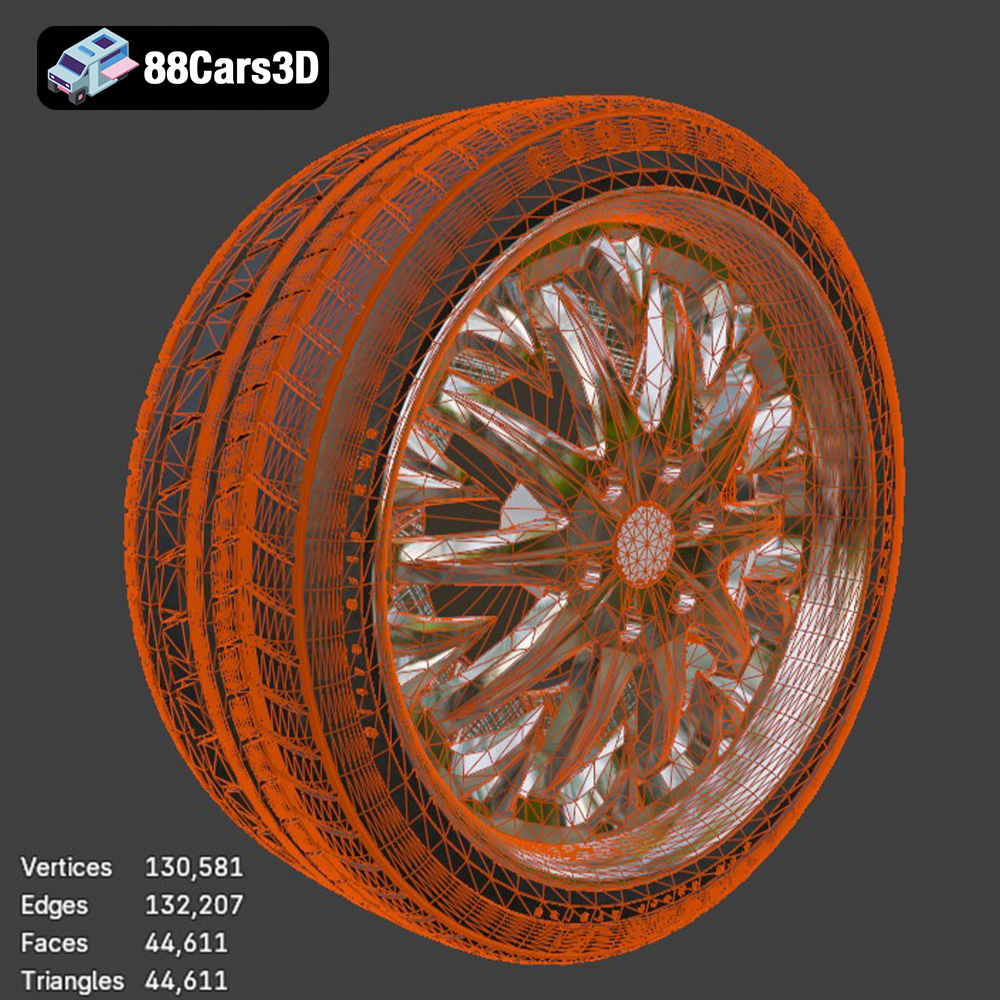
The hallmark of a high-quality 3D asset is not its initial visual appearance, but its underlying structure. For complex curves found in automotive components, flawed geometry leads to visible artifacts, shading errors (known as terminator artifacts), and difficulties during subdivision or deformation. The DUB Big Chips-004 model meets stringent professional standards by focusing on three key technical pillars: topology, scaling, and PBR compliance.
Quad-Dominant Topology and Subdivision Efficiency
Professional automotive models rely almost exclusively on quad (four-sided polygon) topology. Quads allow for predictable, smooth deformation when subdivision surface modifiers (like TurboSmooth in 3ds Max or Subdivision Surface in Blender) are applied. If the geometry were dominated by triangles or N-gons, the resulting smooth curves would suffer from visible pinching and irregularities, especially along the reflective spokes and sharp edges of the rim.
- Rendering Smoothness: Clean quad flow ensures that reflections—critical for realistic metal and paint finishes in automotive rendering—are continuous and undistorted.
- LOD Generation: Starting with clean quads makes the process of creating efficient, low-poly versions (LODs) far simpler and cleaner for game assets integration.
Real-World Scale and Accurate Pivot Placement
Accuracy is foundational in professional visualization. The DUB Big Chips-004 wheel is modeled to precise, real-world metric scale. This is not merely a convenience; it is a necessity for several technical reasons:
First, it ensures perfect integration with any chassis model built to scale. Second, it is essential for physics and simulation environments. If a model is not scaled correctly, rendering engines like V-Ray or Octane, which rely on physically accurate light transport calculations, will produce erroneous results (e.g., incorrect subsurface scattering or exaggerated reflections).
Furthermore, the model’s hierarchy is logically organized, and its pivot point is correctly centered at the rotational axis of the wheel. This crucial detail allows for immediate and accurate animation of rotation and easy attachment to a vehicle’s hub or suspension system without manual alignment adjustments.
Physically Based Rendering (PBR) Material Optimization
Modern visualization relies on PBR workflows, which require the material setup to mimic real-world light interaction (reflection, refraction, diffusion). The geometry of the DUB model is optimized for PBR systems (Metalness/Roughness workflow). The clean UV mapping ensures that textural details, such as brushed metal grain or light dust weathering, map flawlessly onto the complex spoke geometry. The robust structure of the mesh allows for accurate calculation of Fresnel reflections, providing that deep, glossy, or highly metallic look expected from high-end wheels.
Integrating the Wheel into Real-Time Engines: A Game Asset Workflow
The demand for high-quality real-time assets is skyrocketing, driven by applications in high-fidelity racing simulators, visualization configurators, and immersive AR/VR experiences. Integrating a complex asset like a wheel requires meticulous preparation to balance visual quality with frame rate performance. Assets purchased from 88cars3d.com are typically structured to accelerate this process.
FBX Import Pipeline for Unreal Engine
When moving the DUB Big Chips-004 model into Unreal Engine (using the optimized .fbx or .unreal formats), the focus shifts immediately to optimization. The engine asset pipeline requires careful management of geometric complexity.
- Level of Detail (LODs): While the core model is high-fidelity for close-ups, multiple LOD meshes are essential for performance. These lower-poly versions are swapped in automatically by the engine as the camera moves further away. Professional game assets must include clearly demarcated LODs to prevent performance bottlenecks.
- Collision Meshes: For physical interaction (driving, hitting barriers), a separate, simplified collision mesh (often prefixed with “UCX_”) is required. This low-resolution, convex hull prevents the engine from needing to calculate physics against the thousands of polygons in the visual mesh.
- Nanite and Virtual Geometry: In modern engines supporting technologies like Unreal’s Nanite, the high polygon density of the wheel can be handled efficiently without traditional LOD constraints, provided the geometry remains clean and watertight.
Vehicle Customization Systems and Dynamic Materials
In many modern racing titles, vehicle customization is a key feature. A well-constructed 3D asset supports this dynamism by having distinct, logically separated components. The DUB wheel model is structured to separate the rim, the lug nuts, and potentially the central cap.
This separation allows developers to implement dynamic customization options:
- Users can select different finishes (e.g., swapping matte black paint to polished chrome) via material instances without loading entirely new geometry.
- Animation scripts can easily target the wheel for spin or suspension movement because the pivot points are already correctly defined.
- Integration into complex vehicle customization UIs is simplified, as components can be toggled on and off based on user selection.
Mastering Automotive Rendering Workflows: Studio Quality Visuals
When the goal is photorealistic visualization for advertising, product showcases, or cinematic sequences, the fidelity of the rendering engine is matched only by the fidelity of the geometry it processes. The DUB Big Chips-004 model provides an excellent foundation for achieving studio-grade results in both industry-leading 3ds Max and the increasingly popular Blender environment.
High-Fidelity Rendering in 3ds Max and V-Ray
The .max file format is indispensable for 3ds Max users. Within this environment, artists leverage powerful rendering tools to simulate complex lighting interactions that highlight the metallic sheen and precise contours of the wheel.
The workflow typically involves:
- HDR Environment Lighting: Utilizing high dynamic range images (HDRIs) captured from real-world locations or studio setups to provide realistic reflections on the glossy surfaces of the wheel spokes.
- Shader Network Construction: Moving beyond simple PBR maps to use procedural shaders (like V-Ray materials) to add micro-details such as fingerprints, dust mottling, or slight imperfections that sell the realism.
- Depth of Field and Compositing: Achieving a cinematic look requires carefully controlled depth of field, often handled in the renderer and then refined in post-production using multi-channel renders (AO, Z-Depth, Normals) exported from the 3ds Max scene.
Utilizing Blender Eevee for Rapid Visualization
For projects requiring high-quality results in extremely short turnaround times, Blender’s Eevee real-time render engine, accessible via the native .blend file, is highly advantageous. Eevee leverages GPU technology to render results instantly, making it perfect for rapid prototyping and client feedback cycles in automotive rendering projects.
Because the DUB model features clean, optimized geometry, Eevee can efficiently apply screen-space reflections, ambient occlusion, and volumetric lighting effects, providing near-Cycles quality visuals in seconds rather than minutes. This speed makes iterative material and lighting adjustments significantly faster, allowing the artist to focus more time on creative direction.
Beyond Visualization: Prototyping and Simulation
The utility of professional 3D car models extends far past traditional rendering and game development. Assets engineered with precision topology, like those found on 88cars3d.com, are robust enough for technical applications such as 3D printing for physical prototyping and integration into serious engineering simulation software.
Preparing Meshes for Additive Manufacturing (.stl)
To convert the highly detailed, quad-based DUB Big Chips-004 model into a physical prototype, preparation for 3D printing is required. The key is ensuring the model is “watertight”—meaning it has no holes, non-manifold geometry, or intersecting faces that would confuse the slicing software used by the printer.
The process involves converting the quads into a triangulated mesh, often through the .stl export process. Since the original geometry is clean, the transition is smooth. The resulting .stl file provides the precise geometry necessary for rapid prototyping, allowing designers to physically examine the form factor, mounting points, and structural aesthetics of the wheel before committing to mass production.
CAE and Simulation Data Integrity (.ply)
For automotive engineering firms or advanced simulation trainers, the .ply format offers a robust way to transfer highly accurate geometric data. When used in Computational Aided Engineering (CAE) or technical simulations, geometric precision is paramount. Tools used for finite element analysis (FEA) or computational fluid dynamics (CFD) often require meshes with defined normals and minimal irregularities.
The real-world scale and clean internal structure of the DUB model mean it can be directly incorporated into simulators used for driver training or vehicle dynamics studies, providing a visually and structurally accurate representation of the component under test.
Conclusion: Elevating Your Library with Professional 3D Car Models
In the high-stakes world of digital automotive creation, time is money, and quality is non-negotiable. Relying on pre-optimized, expertly crafted 3D car models—like the versatile DUB Big Chips-004 wheel—allows professionals to bypass hundreds of hours of modeling and topology clean-up. This efficiency allows creative teams to focus their resources on lighting, texturing, animation, and final polish, resulting in superior automotive rendering and high-performance game assets.
The comprehensive support for formats ranging from native .blend and .max files to industry standards like .fbx, and specialized formats like .glb and .stl, ensures that this single asset is a powerful tool across visualization, simulation, and real-time integration workflows.
If you are looking to elevate the realism and technical performance of your next project, explore the extensive catalog of premium assets available at 88cars3d.com. Investing in professional-grade components is the fastest path to achieving industry-leading visual results.
Featured 3D Model
DUB Big Chips-004 3D Model
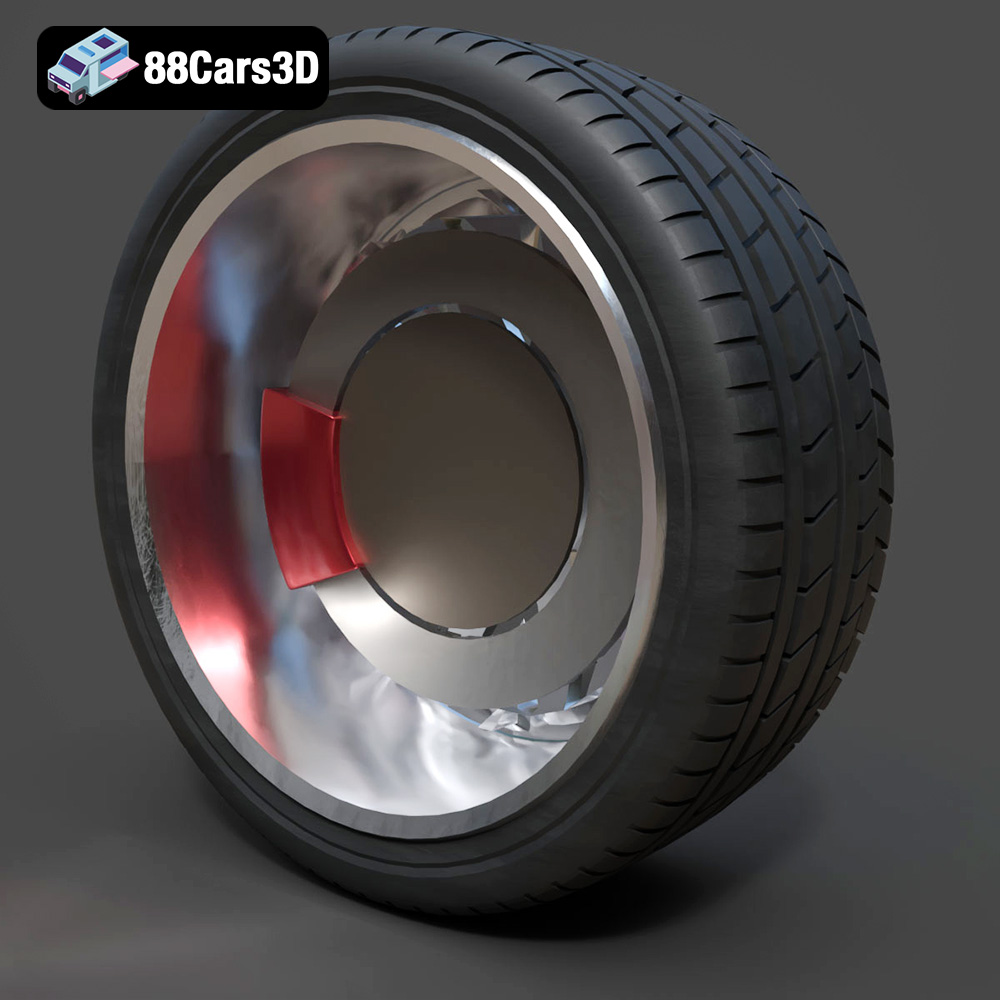
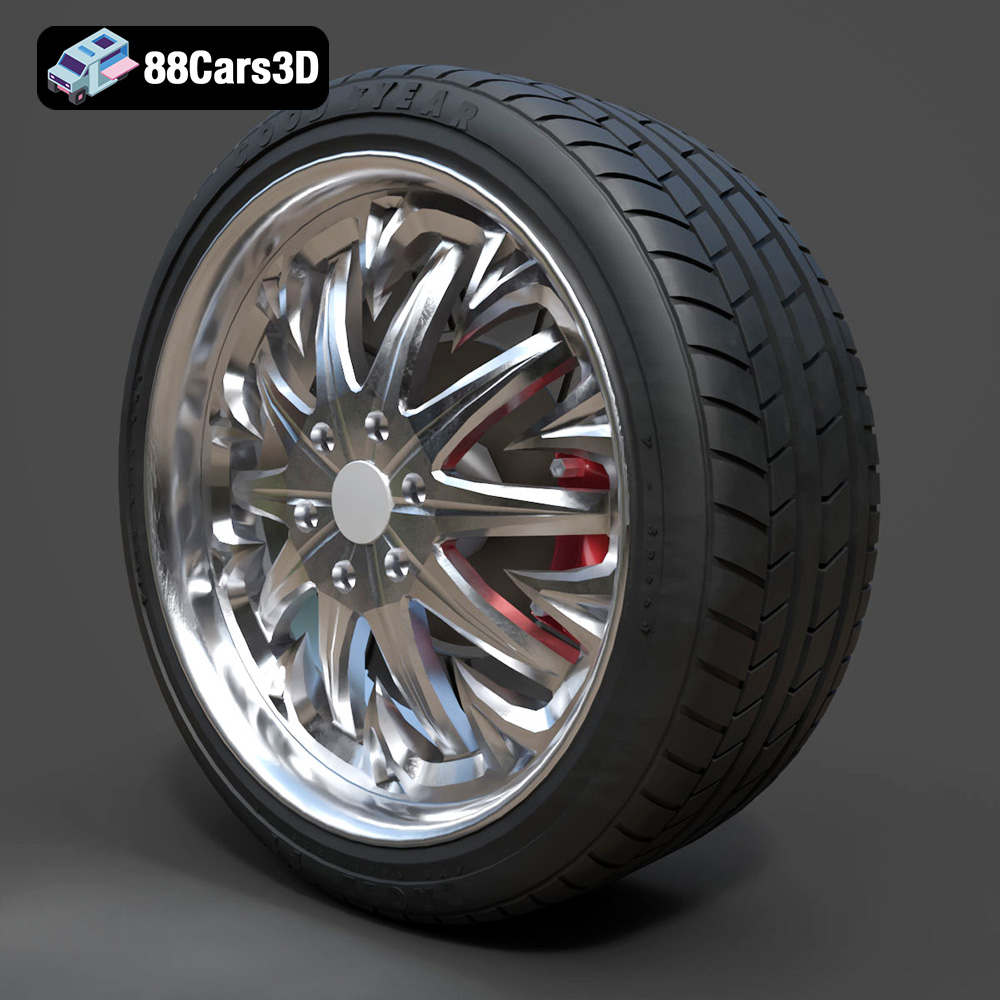
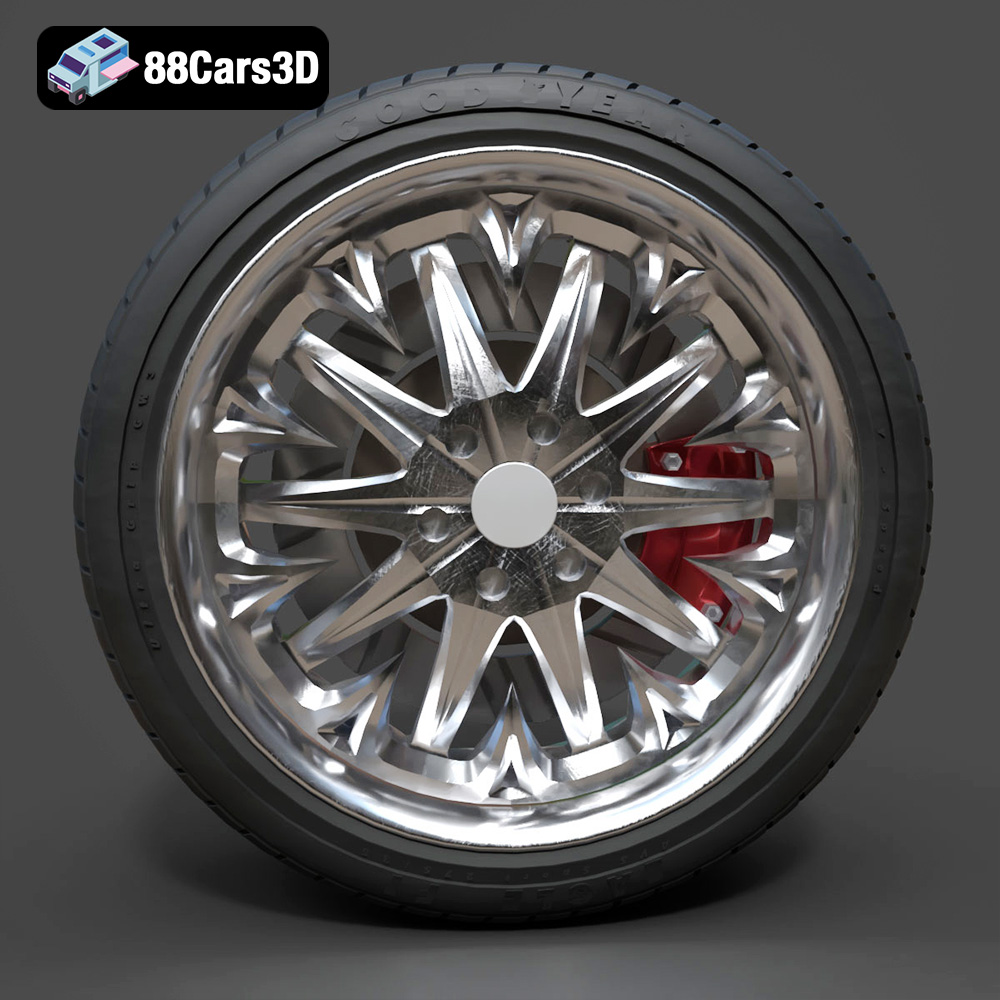
This professional 3D model accurately represents the DUB Big Chips-004 wheel, meticulously designed for high-end automotive visualization and simulation. Featuring a robust build quality with clean, quad-dominant geometry and balanced detailing, this model is engineered for precision and performance. It is an ideal asset for high-quality rendering, cinematic animation, realistic simulations, and integration into game development projects.
$19.99
Product Image Gallery