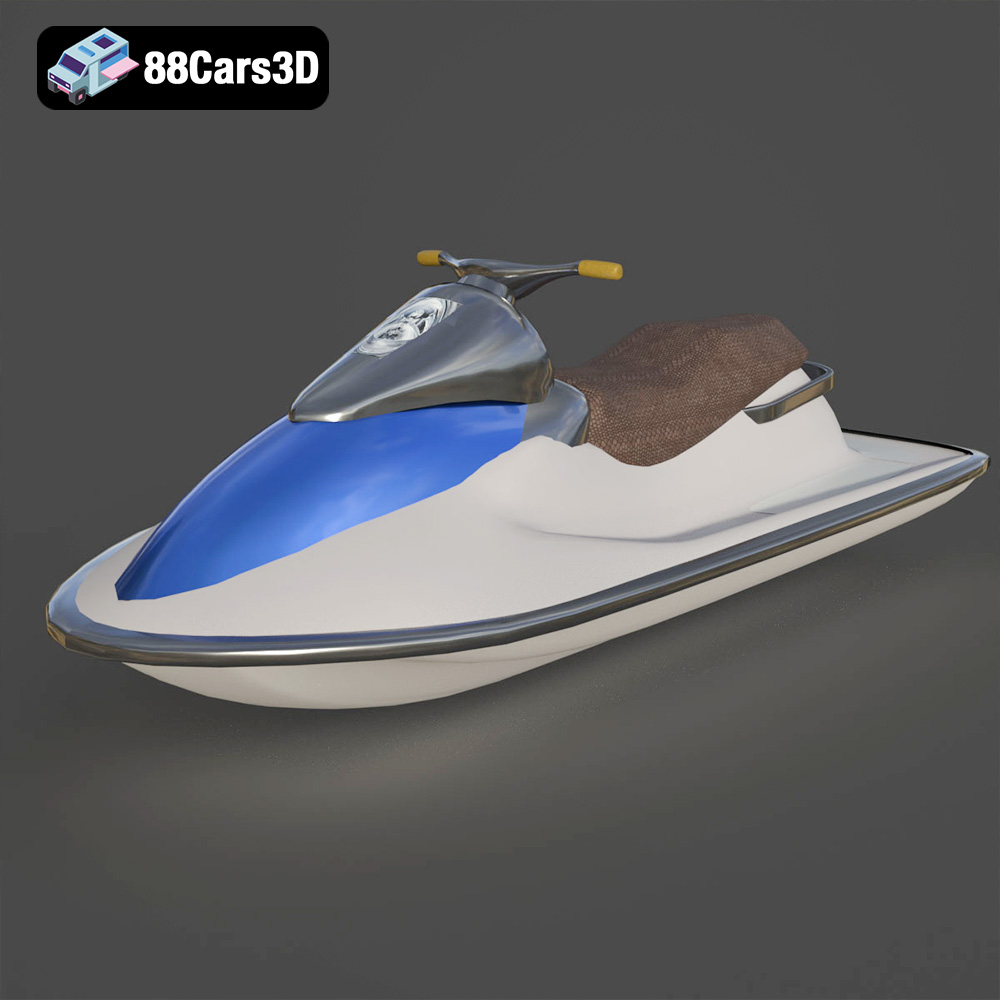
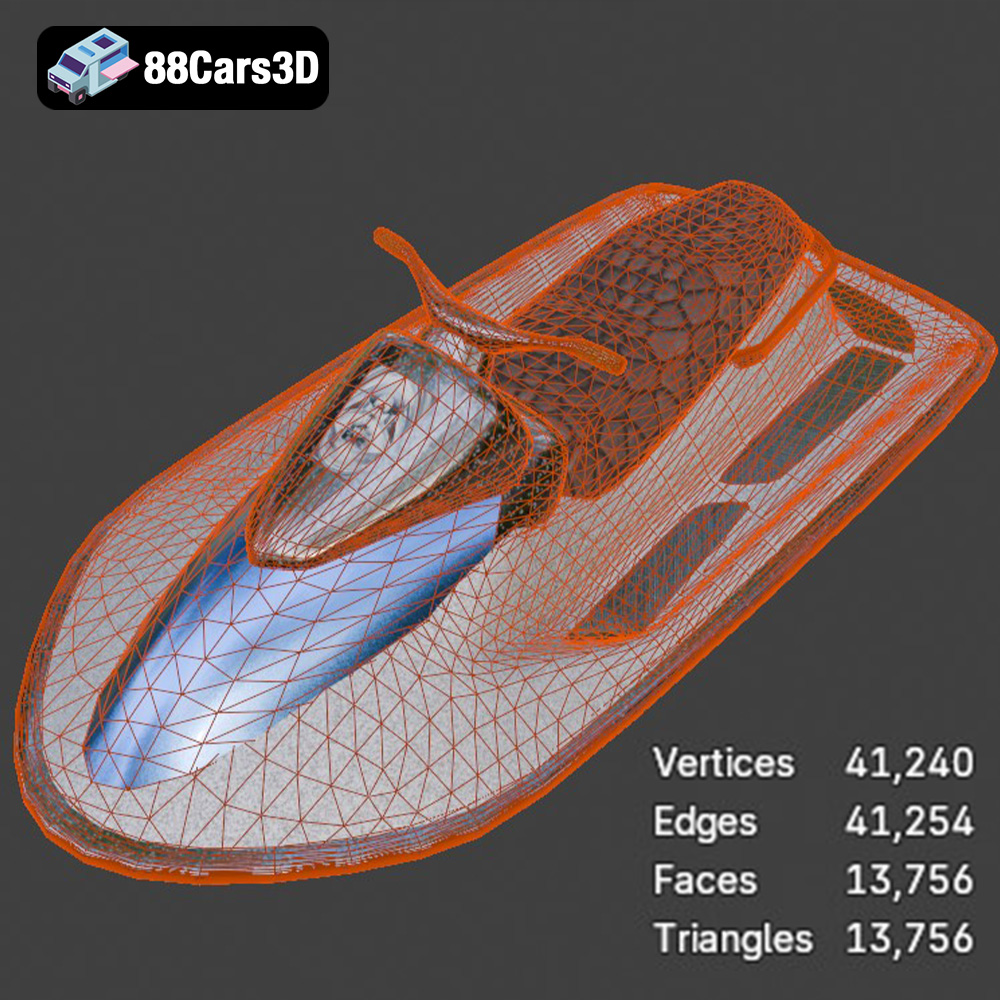
Jet Ski Yamaha 3D Model – Mastering High-Fidelity Automotive Rendering and Real-Time Integration: A Deep Dive into the Corvette Stingray 3D Model

Mastering High-Fidelity Automotive Rendering and Real-Time Integration: A Deep Dive into the Corvette Stingray 3D Model
The demand for highly accurate, production-ready 3D car models has never been higher. Whether you are developing AAA title game assets, producing cinematic-quality automotive advertisements, or building immersive AR/VR training simulations, the foundation of your project lies in the quality of your source geometry and materials. Generic or poorly optimized assets introduce immediate bottlenecks, increasing development time and compromising final visual fidelity.
This challenge is particularly acute when dealing with iconic, high-performance vehicles, where every curve and material choice is critical to the brand identity. This technical deep dive explores the requirements and workflows necessary to utilize truly professional assets, focusing specifically on the Chevrolet Corvette Stingray 2023 3D Model available through the professional marketplace at 88cars3d.com.
The Chevrolet Corvette Stingray 2023 3D Model is engineered for precision. It features meticulously optimized topology, ensuring clean geometry and efficient automotive rendering performance across diverse platforms. We will unpack how this level of detail translates into practical results across various pipelines, from cinematic 3ds Max workflows to real-time deployment in Unreal Engine.
Understanding the technical specifications and the strategic use of accompanying file formats is essential for minimizing conversion errors and accelerating integration. Let’s start by dissecting the crucial component of asset compatibility: the file formats themselves.
Understanding 3D Model File Formats
When purchasing a professional asset like the Chevrolet Corvette Stingray 2023 3D Model, the variety of included file formats is not merely a convenience—it is a critical requirement for seamless cross-platform workflow. Each format serves a specific technical purpose, optimized for different stages of the production pipeline, from initial editing to final deployment. Mastering their individual capabilities ensures efficiency and data integrity.
The Editable Project Files: .blend and .max
The .blend format provides a fully editable Blender scene, typically including the high-resolution mesh, calibrated PBR materials, and often a pre-configured lighting setup (such as an HDRI environment or studio lights). This is ideal for artists who need to modify the model’s geometry, adjust UV layouts, or take advantage of Blender’s native Cycles or Eevee rendering engines. Similarly, the .max format serves as the editable 3ds Max project file, crucial for those operating within established animation and visualization studios that rely on V-Ray, Corona, or Arnold renderers. These native formats retain crucial scene data like modifiers, non-destructive deformation cages, and camera settings, which are often stripped away in universal exchange formats.
Universal Exchange and Real-Time Optimization: .fbx and .obj
The .fbx (Filmbox) format stands as the industry standard for transferring rigged and animated data between major applications (3ds Max, Maya, Blender) and game engines (Unreal, Unity). Its primary advantage is its robust support for mesh data, materials, textures, and even complex skeletal animation and blend shapes. When integrating the Corvette as a functioning vehicle into Unreal Engine, the .fbx file is the preferred starting point due to its efficient handling of complex hierarchies. Conversely, .obj (Wavefront Object) is the universal fallback format, prized for its simplicity and near-perfect compatibility across every 3D software package. While it reliably transfers geometry and basic UV mapping, it often struggles with complex material definitions and animation data, making it best suited for static renders or cross-software mesh checking.
Emerging Formats for Connectivity and Precision: .glb, .ply, and .stl
The rise of web visualization and immersive media has elevated the importance of the .glb (GL Transmission Format Binary) file. This format is highly optimized for performance in AR, VR, and browser-based viewers, consolidating mesh, materials, and textures into a single, compact binary file. It is the go-to format for deploying the Corvette model onto e-commerce sites or mobile AR applications. For technical analysis and precise CAD applications, the .ply (Polygon File Format) provides a robust representation of the mesh, often used when precision data like color per vertex is necessary. Finally, .stl (Stereolithography) is mandatory for 3D printing and rapid prototyping workflows. The .stl mesh must be watertight (manifold) and usually requires careful scaling prior to output, ensuring the digital 3D car models translate correctly to a physical object.
Engine-Specific Integration: .unreal
The inclusion of the .unreal file signifies a significant optimization advantage. This format is a pre-configured, engine-ready asset, saving dozens of hours of preparation work typically required for importing complex game assets. It often includes correctly scaled geometry, pre-set collision meshes, optimized material instances using Unreal’s robust PBR shader system, and proper mesh grouping ready for Level of Detail (LOD) implementation. This immediate integration capability is essential for fast-paced game development pipelines.
Engineering Precision: Topology, Poly Count, and LOD Strategies
A high-quality 3D car model is defined less by its apparent detail and more by the underlying engineering of its mesh. The Chevrolet Corvette Stingray 2023 3D Model distinguishes itself through its clean, optimized topology—a crucial factor for achieving flawless subdivisions, deformations, and performance scalability.
Optimized Topology for Smooth Deformation
Professional automotive models rely almost exclusively on quadrilateral (quad) polygons, avoiding triangles and N-gons wherever possible. This quad-based topology ensures predictable smoothing, which is vital when applying subdivision surface modifiers (like TurboSmooth in 3ds Max or Subdivision Surface in Blender) necessary for cinematic close-ups. Clean topology minimizes surface pinching, artifacts around panel gaps, and stretching during simple animations like door opening or steering wheel rotation. The model’s integrity guarantees that even extreme close-ups of the body panels, the detailed stitching on the seats, or the intricacies of the wheel spokes will hold up under scrutiny.
Managing Poly Count for Versatile Applications
A single, high-fidelity mesh is rarely suitable for every deployment. The Corvette model likely operates at two or three distinct poly count tiers: the cinematic high-poly version (potentially millions of polygons after subdivision, used for rendering), and optimized game-ready versions. For high-end automotive rendering, the poly count is often secondary to visual fidelity, but for interactive media, optimization is paramount.
Level of Detail (LOD) Generation for Real-Time Performance
In real-time environments (like Unreal Engine or Unity), the Level of Detail (LOD) system is mandatory for maintaining high frame rates. A professional asset must be structured to facilitate this process. The workflow involves generating successive, simplified versions of the mesh:
- LOD 0 (High Detail): Full geometry, seen at close range (e.g., inside a showroom scene).
- LOD 1 (Medium Detail): Aggressively poly-reduced version (50-70% reduction), maintaining essential silhouettes and using normal mapping to retain fine detail, used for mid-distance shots.
- LOD 2/3 (Low Detail): Drastically simplified, often optimized for distant traffic or background elements, where performance outweighs visual fidelity.
This systematic reduction ensures the model functions seamlessly as a core game asset without crippling the engine’s performance budget.
Achieving Photorealism: PBR Materials and Advanced Lighting Techniques
Geometry creates the form, but materials and lighting deliver photorealism. The Chevrolet Corvette Stingray 2023 3D Model relies on a robust Physically Based Rendering (PBR) material workflow, which mimics how light interacts with real-world surfaces, ensuring consistency across rendering engines like V-Ray, Arnold, and Cycles.
Calibrating PBR Maps for Automotive Finishes
PBR requires accurate input textures—Albedo (color), Roughness, Metalness, and Normal maps—to define surface characteristics. For the Stingray, this means highly calibrated textures for specific automotive elements:
- The Clear Coat: Achieving the depth and subtle orange-peel effect of high-end car paint requires precise control over the roughness and normal mapping, often involving complex material layering (a base metal layer beneath a highly reflective, slightly rough clear coat).
- Interior Materials: Detailed micro-normal maps are essential for leather, carbon fiber trim, and dashboard plastics to catch the light correctly and avoid the flat, CG look.
- Glass and Headlights: Accurate Index of Refraction (IOR) values must be set for the glass and headlight lenses to ensure realistic light bending and caustics, a step often overlooked in lower-quality 3D car models.
Mastering Automotive Lighting Environments
The appearance of a 3D vehicle is almost entirely dependent on the lighting setup. Professional automotive rendering workflows often utilize High Dynamic Range Imagery (HDRI) environments combined with targeted photometric lights for emphasis.
In 3ds Max, V-Ray artists often combine a high-resolution, exterior-based HDRI (for realistic, subtle environmental reflections) with a few powerful dome lights or rectangular planes positioned to emphasize the car’s body lines and reflections. This technique is often referred to as “studio lighting” even when rendering an exterior scene. In Blender’s Cycles, node-based material shading allows for advanced effects like procedural wear and tear or dynamic color changes, enhancing the realism inherent in the clean geometry of the 88cars3d.com asset.
Real-Time Integration: Workflow for Game Assets and AR/VR
The shift toward real-time visualization demands efficient integration strategies. Utilizing the provided .fbx and .unreal files for the Corvette Stingray 2023 accelerates the development of interactive experiences, where performance must be balanced against high visual quality.
The Unreal Engine Workflow with FBX
For Unreal Engine users, the primary import involves the .fbx file, meticulously prepped to respect Unreal’s coordinate system (usually Z-up). Key technical steps during import include:
- Collision Generation: Auto-generated collision meshes are often too inefficient. The model must include custom, simplified collision geometry (UCX_ prefixes) to ensure accurate and fast physics responses during driving simulations.
- Material Instancing: Rather than importing static materials, the asset should utilize master materials within Unreal, creating instances for each part (e.g., body paint, tire rubber, interior trim). This allows for dynamic color changes and shader modifications at runtime without recompiling the entire material, crucial for customization features in games or configurators.
- Pivot Point Setup: Accurate pivot points must be defined for all moving parts (wheels, doors, hood). If the pivots are off, even a perfectly modeled 3D car model will animate unnaturally in the game engine.
Implementing the Corvette as a High-Fidelity Game Asset
Integrating the Corvette goes beyond simple visual placement. It must function dynamically. For serious vehicle simulations or AAA games, developers must focus on:
Suspension and Physics Rigging: Using Unreal’s Chaos Vehicle Physics system or similar proprietary game systems, the mesh needs appropriate bone structures or constraints set up to simulate realistic suspension travel, steering kinematics, and tire deformation. The clean topology of the underlying 88cars3d.com geometry simplifies the skinning process, where mesh vertices are assigned to specific bones for deformation.
AR/VR Optimization: For mobile AR (like ARKit or ARCore), poly counts must be severely restricted, often relying on the .glb format which is specifically designed for quick, efficient loading on lower-powered devices. The model needs static lighting baked into its texture maps (or using simple unlit PBR) to avoid performance hits associated with real-time dynamic lighting on mobile processors.
Specialized Applications: From Simulation to 3D Printing
The versatility of a professional 3D car model extends far beyond standard marketing renders. The variety of formats provided (including .stl and .ply) opens the door to highly technical and physical applications.
Precision Modeling for Simulation and ArchViz
In architectural visualization (ArchViz), vehicles serve as essential context elements, grounding the scene in reality and providing scale. The high detail of the Corvette Stingray 2023 3D Model allows it to be placed in foreground shots within luxury garage visualizations or urban streetscapes without appearing artificial. Furthermore, in high-end driving simulators, precision geometry is paramount, not just for visuals, but sometimes for calculating aerodynamic properties or tire contact patches—requiring the detailed mesh integrity offered by the .ply format.
Preparing the .STL and .PLY for Physical Output
The inclusion of the .stl format caters directly to 3D printing and prototyping needs. Before sending the model to an industrial printer, artists must ensure the mesh is 100% “watertight”—meaning it has no holes or non-manifold geometry. While the geometry must be cleaned, the high surface detail of the original model provides an excellent starting point for creating accurate, scaled replicas for prototyping or physical display.
The .ply format, on the other hand, is crucial for industrial applications involving measurement or scanning. It retains precise polygonal data, making it useful for reverse engineering workflows or comparing the digital model against laser-scanned data of the real vehicle. This level of precision underscores the professional intent behind the creation of this 3D car model asset.
Conclusion: The Value of Investment in Quality Assets
Developing high-fidelity automotive content, whether for a global marketing campaign or a high-performance simulation, requires a foundation built on exceptional 3D car models. The Chevrolet Corvette Stingray 2023 3D Model represents a significant investment in quality and technical efficiency, providing clean topology, robust PBR materials, and comprehensive format support (from .max and .blend for rendering to .fbx and .unreal for game assets).
By offering essential file types like .glb for AR and .stl for prototyping, this asset ensures maximum utility across the modern media landscape. Utilizing assets of this caliber dramatically reduces pipeline friction, accelerates production timelines, and guarantees stunning visual results right out of the gate. For professionals seeking reliable, high-detail automotive resources, the selection available at 88cars3d.com provides the necessary technical advantage in today’s demanding visual industries.
Featured 3D Model
Chevrolet Corvette Stingray 2023 3D Model
Bring unparalleled realism to your projects with the highly detailed Chevrolet Corvette Stingray 2023 3D Model. Engineered for precision, this model captures the dynamic styling and aggressive stance of the iconic sports car, making it perfect for close-up renders and simulations. This professional-grade asset features meticulously optimized topology, ensuring clean geometry and efficient rendering performance across all major platforms. Every detail, from the body panel gaps to the wheel rims and lighting systems, has been accurately modeled. Realistic PBR materials provide accurate reflections and surface fidelity, delivering stunning visual results straight out of the box. The Chevrolet Corvette Stingray 2023 3D Model is an essential resource for a wide range of applications, including AAA game development, architectural visualization (ArchViz), high-fidelity CGI rendering, immersive augmented reality (AR) and virtual reality (VR) environments, and detailed vehicle simulations.
$10
Product Image Gallery