Volkswagen Caravelle 2020 3D Model – The Versatility Engine: Utilizing High-Fidelity Volkswagen Caravelle 3D Models in Professional Pipelines

The Versatility Engine: Utilizing High-Fidelity Volkswagen Caravelle 3D Models in Professional Pipelines
In the demanding world of professional visualization, simulation, and game development, the quality of digital assets directly dictates the final output. While highly stylized sports cars often dominate the 3D marketplace, the need for photorealistic, versatile, and functionally accurate utility vehicles—like the iconic Volkswagen Caravelle—is crucial for realism in urban scenes, architectural visualizations, corporate fleet simulations, and complex traffic systems.
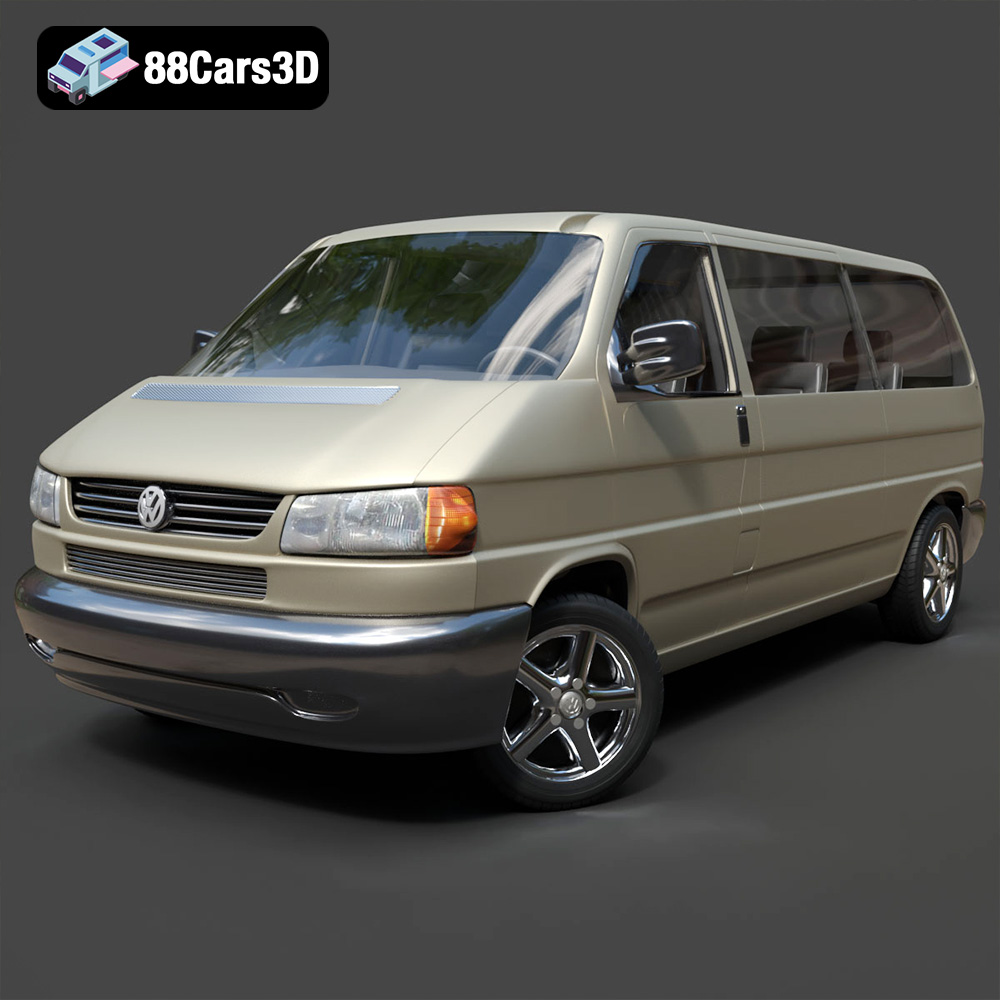
The Volkswagen Caravelle 2020 3D Model featured on 88cars3d.com represents the pinnacle of modern asset creation. It is not merely a static digital sculpture; it is a meticulously engineered data package built for seamless integration across diverse software ecosystems, from high-end automotive rendering engines like V-Ray and Cycles to real-time platforms like Unreal Engine and Unity. This comprehensive guide delves into the technical advantages, workflow optimizations, and specific applications that make professional-grade 3D car models indispensable for serious projects.
Understanding 3D Model File Formats: Selecting the Right Export for Your Pipeline
A high-quality 3D asset’s true value lies in its portability. The Volkswagen Caravelle model package provides an extensive range of native and exchange formats, each optimized for specific technical requirements. Understanding when and why to use each format is fundamental to maintaining data integrity and efficiency in a complex production pipeline. This flexibility ensures that whether you are delivering a cinematic render in 3ds Max or deploying a fleet of vehicles as game assets, the transition is smooth and the technical quality remains intact.
.blend – Fully Editable Blender Scene with Materials
The native Blender (.blend) file is invaluable for artists working within this ecosystem. It typically includes the full non-destructive workflow, material definitions setup using Cycles or Eevee, modifiers (like subdivision surfaces), and potentially intricate node setups for paint or glass shaders. For the Caravelle model, the .blend file allows for deep customization, including modifying the interior mesh, adjusting lighting setups, and re-rigging components without relying on potentially lossy exchange formats.
.max – Editable 3ds Max Project for Animation and Rendering
The .max file is the native project format for Autodesk 3ds Max, a powerhouse in professional architectural and automotive visualization. This format ensures that all scene hierarchy, pivot points, V-Ray or Corona materials, lights, and camera setups are preserved exactly as configured by the modeler. This is the ideal starting point for high-resolution studio shots or complex animation sequences involving the Caravelle.
.fbx – Ideal for Unreal, Unity, and Real-Time Pipelines
The Filmbox (.fbx) format is the reigning industry standard for transferring 3D data, particularly between modeling software and game engines. It reliably packages mesh data, UV layouts, material assignments, hierarchy, and animation curves. When importing the Caravelle into Unreal or Unity, the .fbx file is critical because it preserves the correct pivot points for the doors and wheels, allowing immediate attachment of physics constraints or animation controllers.
.obj – Universal Format for Cross-Software Compatibility
The Wavefront Object (.obj) format is the true universal lingua franca of 3D. While it lacks support for advanced features like skeletal animation or complex proprietary materials, it is excellent for guaranteed mesh, vertex, normal, and UV transfer. If a highly specific or niche rendering package is required, the .obj version of the Caravelle guarantees clean geometry, though the user will need to recreate the materials.
.glb – Optimized for AR, VR, and Browser-Based Display
The GL Transmission Format Binary (.glb) is optimized for web deployment and real-time visualization in AR/VR environments (WebXR). The format packages the mesh and PBR (Physically Based Rendering) texture data into a single, highly efficient file. This makes the Caravelle immediately deployable for interactive viewing on a corporate website or integration into a mobile Augmented Reality application, often yielding faster loading times than traditional formats.
.unreal – Engine-Ready Asset for Real-Time Environments
This specialized project file provides the Caravelle model pre-imported, textured, and configured within an Unreal Engine scene. This drastically reduces the labor involved in setting up materials, managing texture paths, and ensuring optimal scale, offering a true plug-and-play solution for developers focused on creating immersive virtual environments or sophisticated driving simulators.
.stl – Suitable for 3D Printing Output
Stereolithography (.stl) is strictly a geometric format used for additive manufacturing (3D printing). It represents the mesh entirely as triangulated facets. The Caravelle’s high-detail geometry, when converted to .stl, allows designers to produce physical scale models for rapid prototyping, design review, or display, relying on the clean topology to ensure a watertight, manifold mesh required by slicer software.
.ply – Precision Mesh Format for CAD or Analysis
The Polygon File Format (.ply) is often used for data generated from 3D scanners or for applications requiring precise vertex data, common in CAD or engineering analysis software. While less common than .fbx for artistic rendering, the .ply format ensures that the high-precision measurements and geometry of the Caravelle are maintained for simulation or reverse-engineering workflows.
Optimizing the Volkswagen Caravelle for Automotive Rendering Excellence
Automotive rendering demands perfection in reflections, material definition, and lighting interaction. The Caravelle model is specifically engineered to meet these demands, ensuring that its utility-focused design still shines with photorealistic fidelity.
The Critical Role of Quad Topology and Subdivision
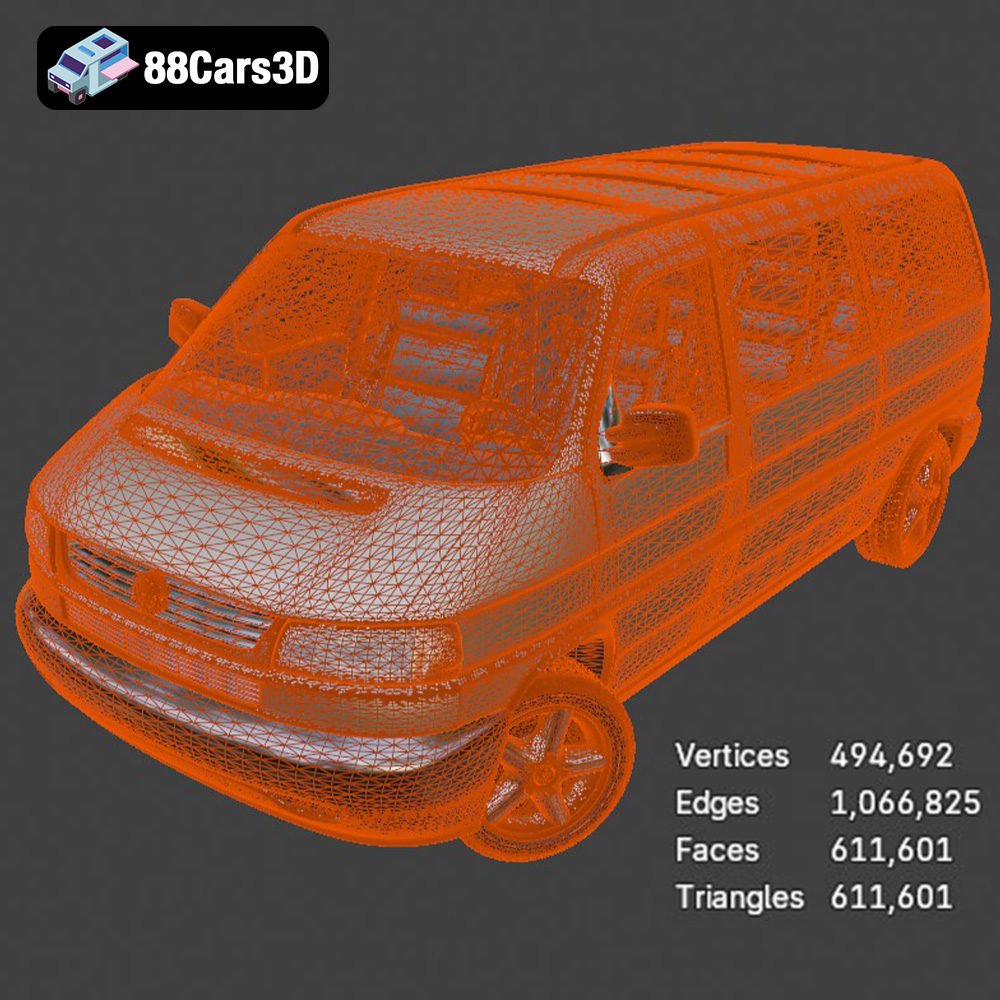
Professional 3D car models must possess quad-dominant topology—meaning the majority of faces are four-sided polygons. This is essential for smooth subdivision. When generating high-resolution renders, applying subdivision modifiers (like Turbosmooth in 3ds Max or Subdivision Surface in Blender) on the Caravelle’s body panels ensures smooth, continuous curvature. Imperfect topology (triangles or N-gons) leads to visible faceting or pinching, destroying the realism of crucial light reflections on the vehicle’s paintwork.
PBR Workflow for Realistic Materials
The quality of the final image relies heavily on Physically Based Rendering (PBR) workflows. The Caravelle asset comes with components separated (body, glass, rubber, chrome). This separation allows artists to apply specialized shaders:
- Car Paint: Utilizing multi-layered shaders that incorporate a base color, metallic flake map, clear coat reflection layer, and Fresnel falloff to simulate depth.
- Glass and Transparency: The headlights and windows feature accurate UVs, allowing for realistic index of refraction (IOR) and dispersion values, crucial for cinematic quality renders.
- Tire Treads: High-resolution bump or displacement maps on the tires provide the necessary grit and realism, often overlooked in lower-quality assets.
Seamless Integration with ArchViz Scenes
The Caravelle’s primary application often extends to architectural visualization (ArchViz). Inserting an accurately scaled, high-detail vehicle immediately grounds a digital scene in reality. Since the model is built to real-world scale, integrating it into a street scene or parking structure visualization is instantaneous, bypassing the tedious scaling and proportion adjustments common with less professional assets.
Integrating High-Fidelity Game Assets into Real-Time Engines
Developing modern games, especially open-world titles or dedicated driving simulators, requires vehicle game assets that balance visual fidelity with strict performance budgets. The Volkswagen Caravelle is optimized for both.
Optimizing the Mesh for Game Engine Performance (LODs)
While the initial model (LOD0) is highly detailed for close-up views, utilizing it universally across a large game environment would be prohibitively expensive computationally. Professional pipelines require Levels of Detail (LODs):
- LOD0 (High): Full detail mesh, used when the player is close (e.g., inside the van or immediately beside it).
- LOD1 (Medium): Reduced poly count (typically 50% reduction) by dissolving edges on flat surfaces; suitable for mid-distance viewing.
- LOD2 (Low): Heavily simplified hull; ideal for vehicles 50+ meters away.
- LOD3 (Billboard/Imposter): A simplified card or proxy mesh used at extreme distances to maintain scene density without taxing the GPU.
The clean quad topology of the Caravelle facilitates fast and accurate automatic LOD generation within engines like Unreal or Unity, saving development time.
Setting Up Physics and Animation Ready Assets
The included .fbx and .unreal formats are prepared for immediate animation. The separation of components is key:
- Pivots: All pivots (wheels, doors, steering wheel) are correctly set at their rotational centers. This allows developers to instantly apply rotation constraints for driving physics or skeletal animation for opening doors.
- Collision Mesh: A specialized, simplified mesh (often automatically generated or manually created using the .ply data) is used solely for collision detection, ensuring accurate physical interaction with the game world without relying on the complex visual geometry.
Precision and Practicality: Simulation, AR/VR, and Digital Fleet Management
The value of professional 3D car models extends far beyond static rendering. The Caravelle, being a practical passenger van, is ideal for technical applications such as corporate visualization and driver training simulations.
Real-World Scale for Simulation and Training
Simulators—whether for logistics planning, traffic flow analysis, or professional driver training—demand absolute dimensional accuracy. Since the Caravelle model adheres to real-world scale (1:1), it ensures that physical dynamics simulated in software (e.g., turning radius, wheelbase, height clearance) are accurate. This fidelity is non-negotiable for serious simulation platforms.
Leveraging .GLB for Augmented Reality Deployments
Augmented Reality (AR) allows potential buyers or logistics managers to view the Caravelle in their own environment using a smartphone or AR headset. The .glb format is perfect for this. Companies can showcase interior layouts or custom livery options on the virtual van placed right in their driveway or warehouse floor, creating an immediate, interactive experience that traditional 2D images cannot match.
Interior Detailing for Immersive VR Experiences
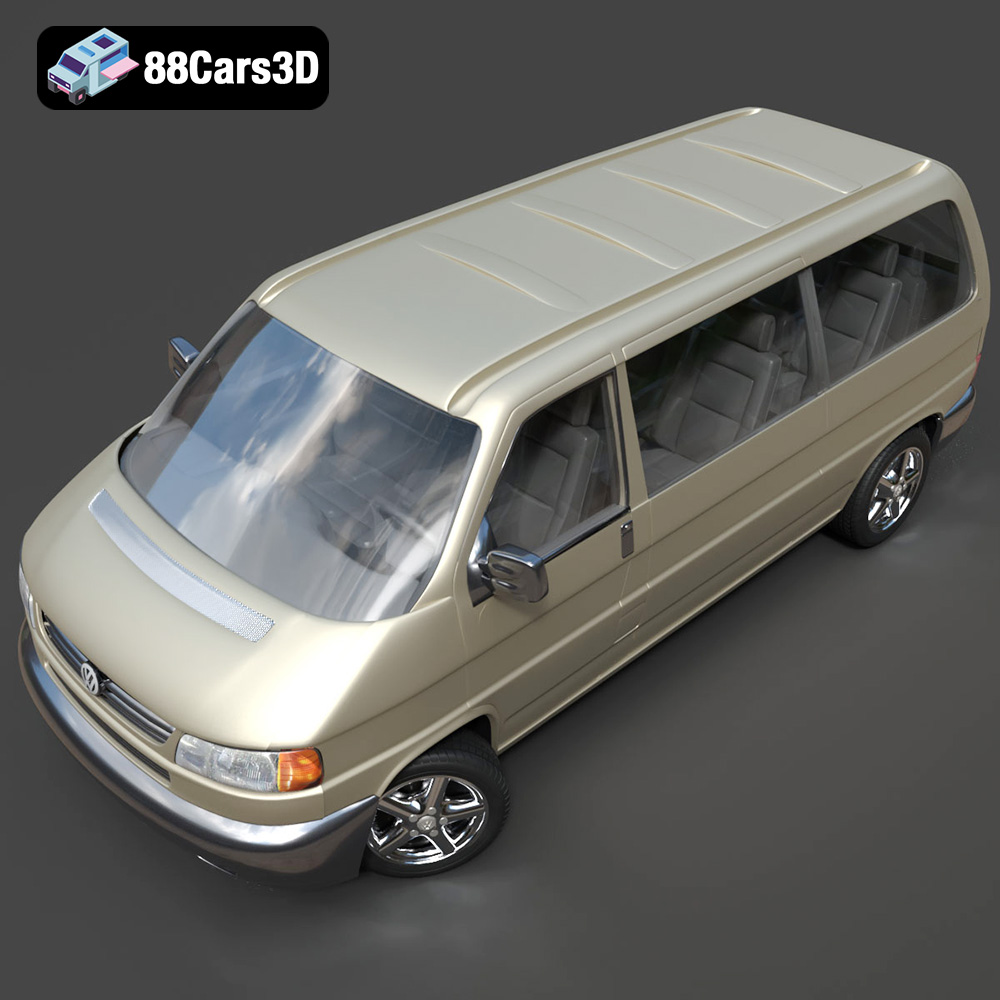
The inclusion of a detailed interior cabin—dashboard, seats, and controls—is crucial for Virtual Reality (VR) applications. When users are immersed in the vehicle, low-detail interiors immediately break immersion. The optimized interior of the Caravelle ensures that VR users can sit inside the van and interact with the virtual environment convincingly, whether for training or visualization purposes.
Technical Deep Dive: Analyzing the Caravelle’s Topology and Setup
A professional asset is defined by its structure and underlying quality, not just its visual output. The rigorous technical execution of the Volkswagen Caravelle 3D Model simplifies professional workflows significantly.
Logically Organized Hierarchy and Naming Conventions
Time is often wasted navigating poorly named hierarchies. The Caravelle asset features a clean, logical grouping:
- Root Object: The main car body and frame.
- Child Objects: Separate objects for Wheels (L/R, Front/Back), Doors, Steering Wheel, Headlights, etc.
- Pivots: Crucially, all moving parts are centered accurately. For example, the doors pivot correctly along the hinge axis, not the center of the door panel. This eliminates hours of prep work for animators.
Customization: Applying Liveries and Decals
The clean UV mapping of the exterior panels allows for easy application of custom textures, such as corporate branding, racing liveries, or police decals. Users simply create a new texture map (e.g., a PSD or TGA file) and layer it over the base paint material. Because the UVs are non-overlapping and planar, there is no distortion when applying large, complex graphics across the vehicle’s body.
The Investment in Professional-Grade Assets
The cost difference between a quickly modeled, low-fidelity asset and a high-grade model, such as those available on 88cars3d.com, is negligible compared to the labor hours saved. Purchasing a model with clean geometry, pre-set pivots, and comprehensive file format support guarantees compatibility and reduces setup time, allowing technical artists to focus on rendering and scene development rather than fixing geometry errors or correcting scale discrepancies.
Conclusion: Elevating Your Projects with Professional-Grade Assets
Whether your goal is to produce stunning photorealistic automotive rendering, deploy optimized game assets for a new real-time simulation, or visualize a corporate fleet in AR, the Volkswagen Caravelle 2020 3D Model provides the robust technical foundation required. Its extensive file format support, meticulous topology, and adherence to real-world scale solidify its place as an essential tool in any professional digital production toolkit.
Investing in assets that are engineered for performance and quality—like those curated by 88cars3d.com—is not just an acquisition; it is a critical optimization of your production pipeline. This level of detail and technical readiness ensures that your final visual output meets the highest industry standards, delivering realism and efficiency across all platforms.
Featured 3D Model
Volkswagen Caravelle 2020 3D Model
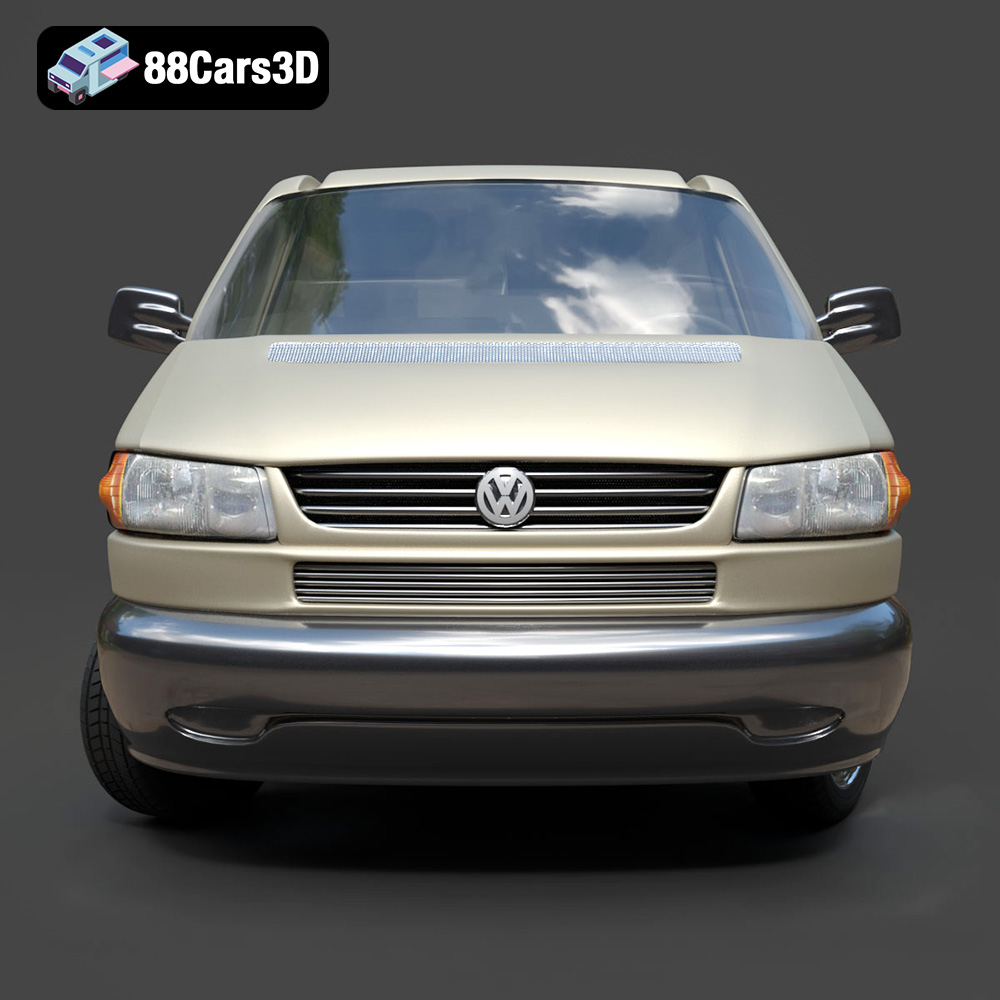
Experience the versatility and iconic design of the Volkswagen Caravelle with this meticulously crafted 3D model. Representing a modern interpretation of the legendary passenger van, this model captures the essence of practicality, comfort, and robust German engineering. Built with clean geometry and balanced detailing, it is engineered for professional applications, making it ideal for high-quality rendering, realistic animation sequences, immersive simulations, and efficient game development.
$23.99
Product Image Gallery