⚡ FLASH SALE: Get 60% OFF All Premium 3D & STL Models! ⚡

The landscape of automotive visualization is undergoing a profound transformation, driven by the relentless pursuit of realism and interactive immersion. While exquisite 3D car models are the undeniable stars of this revolution, the human element often completes the narrative, breathing life and relatability into static scenes. This is where Epic Games’ MetaHuman Creator steps in, offering an unprecedented leap in generating hyper-realistic digital humans. For professionals in automotive design, marketing, and real-time configurators, integrating MetaHumans with stunning vehicle assets in Unreal Engine is no longer a luxury but a powerful differentiator.
This comprehensive guide delves into the intricate process of bringing MetaHumans into your Unreal Engine projects, specifically focusing on how they can elevate your automotive visualization and experiences. We’ll explore the technical workflows, optimization strategies, and creative possibilities that arise when pairing these highly detailed digital humans with the world-class 3D car models you might source from platforms like 88cars3d.com. Prepare to unlock new dimensions of realism, interactivity, and emotional connection in your next automotive showcase.
For decades, populating virtual automotive scenes with convincing human characters was a labor-intensive and often compromising endeavor. Achieving lifelike skin, hair, and clothing required highly specialized 3D artists, extensive scanning equipment, and countless hours of meticulous modeling and texturing. The result was often a noticeable gap in fidelity between the impeccably rendered vehicle and its digital occupants. MetaHuman Creator changes this paradigm entirely, democratizing access to stunningly realistic digital humans through a cloud-based application that’s intuitive and efficient.
In the context of automotive visualization, MetaHumans offer more than just aesthetic appeal; they serve critical functional roles. Imagine an interactive car configurator where a virtual sales representative guides the customer through features, or a cinematic render depicting a family interacting with a new vehicle. These scenarios demand characters that not only look real but also perform convincingly. MetaHuman Creator provides a vast library of pre-built human assets, fully rigged and ready for animation, drastically cutting down production time and costs. This efficiency allows artists and developers to focus on integrating these high-fidelity assets seamlessly into their Unreal Engine automotive projects, rather than spending months on character creation from scratch. The sheer detail, from pore-level skin displacement to individual hair strands and anatomically correct deformations, ensures that your digital humans stand shoulder-to-shoulder with the finest 3D car models.
MetaHuman Creator’s strength lies in its ability to empower users to generate unique, photorealistic digital humans with unprecedented ease. Users can sculpt faces, adjust body proportions, select from a vast array of skin tones, hairstyles, clothing, and even dental structures. Each MetaHuman comes equipped with a full skeletal rig, an advanced facial rig for expressive performances, and meticulously crafted PBR (Physically Based Rendering) materials. These assets are optimized for real-time rendering in Unreal Engine, leveraging features like Nanite and Lumen for exceptional visual quality and performance.
The human element is crucial for telling compelling stories around automotive products. A luxury sedan appears more desirable when a sophisticated MetaHuman character is comfortably seated within, interacting with the interior. A family SUV becomes more relatable when a digital family is shown enjoying a road trip. MetaHumans transform static visualizations into dynamic narratives. For interactive configurators, they can act as virtual guides, explaining features, demonstrating accessibility, or simply populating a virtual showroom to give a sense of scale and realism. This not only enhances the visual fidelity but also deepens the emotional connection a potential buyer feels with the vehicle, making the experience far more engaging and memorable. Integrating realistic characters into your real-time rendering scenes is a game-changer for marketing, sales, and design reviews.
Bringing your custom-created MetaHuman into an Unreal Engine project is a streamlined process thanks to Quixel Bridge. However, merely importing the character is just the first step. To ensure optimal performance and seamless integration within an automotive context, particularly when paired with highly detailed 3D car models, several crucial considerations and workflows must be addressed. Understanding these steps is vital for maintaining visual fidelity while managing performance, a critical balance in real-time rendering applications.
When you download a MetaHuman from Quixel Bridge, it arrives as a highly complex asset, designed for maximum realism. This complexity includes multiple skeletal meshes, numerous material instances, high-resolution textures, and a comprehensive control rig. While this detail is what makes MetaHumans so stunning, it also necessitates careful management, especially when combining them with other demanding assets like detailed vehicles and expansive environments. Ensuring your Unreal Engine project is correctly configured to handle these assets and that your MetaHumans are optimized for the specific demands of an automotive scene will save significant development time and improve the final output. This preparation phase is where the foundation for a successful and performant visualization is laid.
The primary method for getting a MetaHuman into Unreal Engine is through Quixel Bridge. After creating or selecting your MetaHuman in the Creator, you can export it directly into your Unreal Engine project. Ensure you have the Quixel Bridge plugin installed and enabled in your Unreal Editor. When prompted, download the highest quality preset for your MetaHuman (often referred to as ‘LOD0’ or ‘High Quality’) to leverage its full detail. Once downloaded, the MetaHuman will appear in your project’s Content Browser, organized into a specific folder structure.
While MetaHumans are optimized to some extent with their built-in LODs (Levels of Detail), further optimization may be necessary, especially when dozens of characters are interacting with high-fidelity 3D car models in a crowded scene, or in performance-critical applications like AR/VR. Each MetaHuman comprises multiple skeletal meshes (body, face, hair, clothing) and numerous material instances, contributing to draw calls and vertex counts.
The true power of MetaHumans in automotive visualization unfolds when they are seamlessly integrated with high-quality 3D car models. This integration goes beyond merely placing a character next to a vehicle; it involves precise positioning, realistic interaction, and harmonious lighting to create a believable scene. Whether you’re crafting a cinematic commercial, an interactive configurator, or a virtual showroom, the interaction between human and machine is paramount. This section explores the technical aspects of achieving that synergy, ensuring your digital humans complement and enhance the appeal of the vehicle assets.
When working with both MetaHumans and sophisticated car models, often sourced from marketplaces like 88cars3d.com, you’re dealing with two categories of highly detailed assets. Each has its own set of technical requirements for optimal rendering and performance. Achieving a natural look requires careful attention to scale, animation, and, critically, a unified lighting scheme that makes both the character and the car appear to exist in the same physical space. Improper integration can lead to characters looking “pasted” into the scene, undermining the overall realism. We’ll explore strategies for precise placement, animation considerations, and effective lighting techniques to bridge this gap.
Placing a MetaHuman realistically inside a car requires more than just dragging and dropping. Correct scale, natural seating poses, and potential interaction with interior elements are key. MetaHumans, like real humans, need to fit proportionally within a vehicle’s cabin. First, ensure your Unreal Engine project scale (1 unit = 1cm) is consistent for both your car model and MetaHuman assets. Most 3D car models from reputable sources adhere to real-world scale, as do MetaHumans.
Lighting is paramount for unifying MetaHumans with their automotive surroundings. Unreal Engine’s Lumen Global Illumination and Reflections system is a game-changer for achieving real-time, physically accurate lighting that affects both characters and vehicles uniformly. However, even with Lumen, specific character lighting techniques can further enhance realism and integrate the MetaHuman seamlessly.
Static poses are useful, but true immersion in automotive visualization comes alive with animation and interactivity. A MetaHuman that can interact with the vehicle, convey emotion, or guide a user through a configurator adds significant value and realism. Unreal Engine provides a robust suite of tools for animating and scripting MetaHumans, from simple movements to complex cinematic sequences. This section explores how to harness these capabilities to create dynamic and engaging automotive experiences, moving beyond mere visual presence to active participation.
The ability to animate MetaHumans seamlessly, whether it’s a driver turning a steering wheel, a passenger reacting to the ride, or a virtual assistant explaining features, elevates the entire visualization. This involves understanding Unreal Engine’s animation pipeline, including retargeting existing animations, utilizing the powerful Control Rig for bespoke adjustments, and leveraging Blueprint visual scripting for interactive elements. Furthermore, for high-fidelity marketing content, tools like Sequencer allow for precise cinematic control. When combined with realistic 3D car models, animated MetaHumans create compelling narratives that capture attention and communicate product benefits more effectively than static imagery ever could.
Blueprint visual scripting is Unreal Engine’s incredibly powerful and artist-friendly tool for creating interactive logic without writing a single line of code. For automotive configurators, Blueprint can be used to make MetaHumans react to user input, demonstrate features, or even change their expressions based on the selected vehicle options.
For cinematic automotive content, such as commercials or reveal trailers, precise control over MetaHuman animation is crucial. Unreal Engine offers sophisticated tools for both facial and body animation.
Integrating highly detailed MetaHumans with equally complex 3D car models and expansive environments in Unreal Engine inevitably presents performance challenges, especially in real-time rendering scenarios. Automotive visualization often demands high frame rates for smooth configurators or immersive AR/VR experiences, making optimization a critical part of the development pipeline. Balancing visual fidelity with performance is an ongoing task, and understanding Unreal Engine’s advanced features and best practices is essential for achieving a fluid, high-quality experience.
The cumulative impact of multiple high-polygon assets, complex PBR materials, dynamic lighting (Lumen), and character animation can quickly strain even powerful hardware. Therefore, strategic optimization is not an afterthought but a fundamental consideration from the outset. This section focuses on leveraging Unreal Engine’s cutting-edge technologies like Nanite and intelligent LOD management, alongside other runtime optimization techniques, to ensure your automotive scenes with MetaHumans run smoothly. Our goal is to maintain the stunning realism offered by both MetaHumans and high-quality vehicle assets (like those from 88cars3d.com) without sacrificing performance or user experience.
While MetaHumans themselves are primarily skeletal meshes and do not directly benefit from Nanite virtualized geometry in the same way static meshes do, Nanite plays a crucial, complementary role in optimizing scenes that feature MetaHumans alongside 3D car models. Nanite allows artists to import incredibly high-polygon static meshes without traditional polygon budget constraints, meaning the static environment and the car itself can be rendered with unprecedented detail.
Even with Nanite handling the environment, MetaHumans remain highly complex skeletal meshes. Effective LOD management and other runtime optimizations are critical for maintaining frame rates, especially when multiple characters are present or in performance-sensitive applications like AR/VR.
The integration of MetaHumans with cutting-edge automotive visualization techniques extends beyond traditional renders and configurators. Virtual Production and Extended Reality (XR) experiences represent the forefront of immersive technology, offering unparalleled opportunities for realistic interaction between digital humans and vehicles. These advanced applications leverage the full power of Unreal Engine, combining real-time rendering, high-fidelity assets, and interactive systems to create groundbreaking content and experiences. The synergy between MetaHumans and advanced 3D car models is particularly impactful in these evolving fields.
In Virtual Production, MetaHumans can act as virtual performers alongside physical actors and virtual vehicles on LED volumes, blurring the lines between real and digital. For AR/VR, they can transform static automotive displays into dynamic, interactive environments. This section explores how to harness MetaHumans within these complex workflows, highlighting specific technical considerations and strategic advantages. We’ll look at the pipelines that empower filmmakers, designers, and marketers to push the boundaries of realism and engagement, showcasing the versatility of digital humans in a rapidly evolving technological landscape, especially when paired with top-tier assets from sources like 88cars3d.com.
Virtual Production (VP) is revolutionizing filmmaking and high-end marketing, allowing directors to shoot live-action talent against real-time virtual environments rendered on LED walls. Integrating MetaHumans into this workflow adds an additional layer of complexity and creative possibility, allowing for virtual stand-ins, digital doubles, or background characters that interact seamlessly with virtual vehicles and physical sets.
Augmented Reality (AR) and Virtual Reality (VR) offer deeply immersive experiences for automotive configurators, training, and virtual showrooms. Integrating MetaHumans into these environments elevates realism, but demands stringent optimization due to the high performance requirements of XR.
The rapid evolution of technologies like MetaHuman Creator and Unreal Engine ensures that the capabilities for automotive visualization will only continue to expand. What is cutting-edge today becomes standard practice tomorrow. Staying abreast of these advancements and adopting robust best practices are crucial for professionals leveraging digital humans with high-quality 3D car models. The future promises even more seamless integration, higher fidelity, and greater efficiency, further blurring the lines between the real and the digital in the automotive world.
As we conclude this deep dive, it’s important to reflect on the ongoing journey of digital human integration. The tools are powerful, but their effective application still relies on artistic vision, technical understanding, and a commitment to optimization. By continually refining workflows, embracing new features, and meticulously managing asset complexity, developers and artists can unlock the full potential of MetaHumans to create truly compelling and immersive automotive experiences. This proactive approach ensures that your projects remain at the forefront of realism and innovation, delivering unparalleled value to clients and audiences alike.
Epic Games consistently updates MetaHuman Creator and Unreal Engine, bringing new features that directly benefit automotive visualization:
Integrating MetaHumans into your Unreal Engine automotive visualization projects is a powerful way to elevate realism, enhance interactivity, and forge deeper emotional connections with your audience. By mastering the workflows, optimizing for performance, and embracing the creative potential of these hyper-realistic digital humans, you can transform your 3D car models into dynamic, story-rich experiences. From crafting breathtaking cinematics with Sequencer to building engaging interactive configurators with Blueprint, the possibilities are vast. Start experimenting, push the boundaries, and bring your automotive narratives to life with the unparalleled realism of MetaHumans. Remember, platforms like 88cars3d.com offer the perfect foundation of high-quality vehicle assets to complement your digital human creations and drive your projects forward.

Texture: Yes | Material: Yes | 3D Printable: Yes. Download the Italian Thoroughbreds Bundle featuring 5 iconic 3D models: Lamborghini Huracán Performante, Ferrari 458 Italia, Lamborghini Urus, Diablo SV, and Maserati GT. Optimized for 4K rendering and 3D printing (STL included). Save 50% with this ultimate Italian vehicle collection.
Price: $199.99

Download the Elite Future Mobility Bundle featuring 4 highly optimized 3D models: Tesla Model S, Avatr 11, Li L9, and Zoox Robotaxi. Perfect for ArchViz, Smart City renders, and game dev. Optimized for Unreal Engine and Blender. Includes .fbx, .obj, and .max formats.
Price: $99

🚗 5 Iconic German Cars (BMW M4 G82, M5 CS, X3, 1 Series & Mercedes E-Class). ✅ Optimized for ArchViz: Ready for Corona & V-Ray. 💰 Save €71 with this limited-time collection! 🚀 Instant Download after purchase.
Price: $119

Download the Extreme Off-Road & Survival 3D Models Bundle! Includes the Brabus 800 Adventure, Dodge Ram Bigfoot, Spec Truck, and a Caravan. Save over €210 on this premium 4-in-1 off-grid vehicle pack for ArchViz and game development.
Price: $149.99

Download the Heavy Duty & Commercial Logistics 3D Models Bundle! Includes the Ford Sterling, Caterpillar CT680, Mercedes Citaro Bus, and Vito Van. Save over €130 on this massive, game-ready 4-in-1 industrial vehicle pack.
Price: $109.99

Download the Ultimate Custom Motorcycles 3D Models Bundle. Includes a Custom Chopper, Ducati 916 Café Fighter, Harley XR1200X, and BMW K100. Perfect premium props for luxury ArchViz garages. Save over €250 today!
Price: $159.99

Download the ultimate JDM Street Racing 3D Models Bundle! Includes the Nissan GT-R, Toyota Supra, Mazda RX-7, Lancer Evo IX, and Honda NSX. Save big on this highly optimized, game-ready 5-in-1 Japanese legend car pack.
Price: $129.99

Download the ultimate American Muscle & Cinematic Classics 3D Models Bundle! Includes the Dodge Charger ’68, Mustang Eleanor GT500, Camaro Z28 ’79, and a custom ’69 Mustang. Save over €240 on this game-ready, premium 4-in-1 pack.
Price: $149.99

Download the Everyday City Traffic 3D Models Bundle. Includes the VW Golf, Kia Picanto, Hyundai Tucson, Toyota Yaris, and a DHL Ford Transit Van. Save big on this 5-in-1 pack, perfectly optimized for realistic ArchViz streets and game traffic.
Price: $99.99
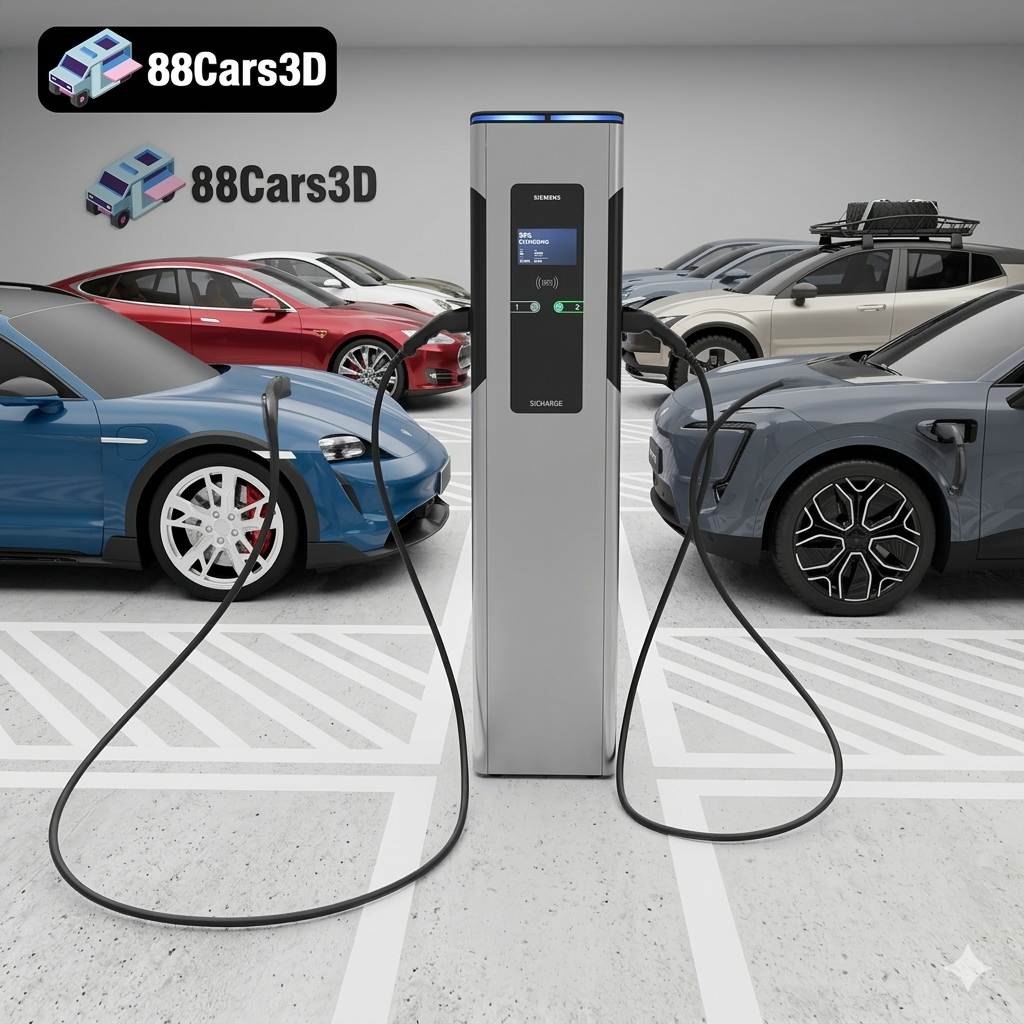
Download the Future of Mobility EV 3D Models Bundle. Includes the Volvo EX30, Tesla Model S, AVATR 11, Porsche Taycan, and a Siemens EV Charger. Save big on this highly optimized 5-in-1 pack for ArchViz and game development!
Price: $89.99

