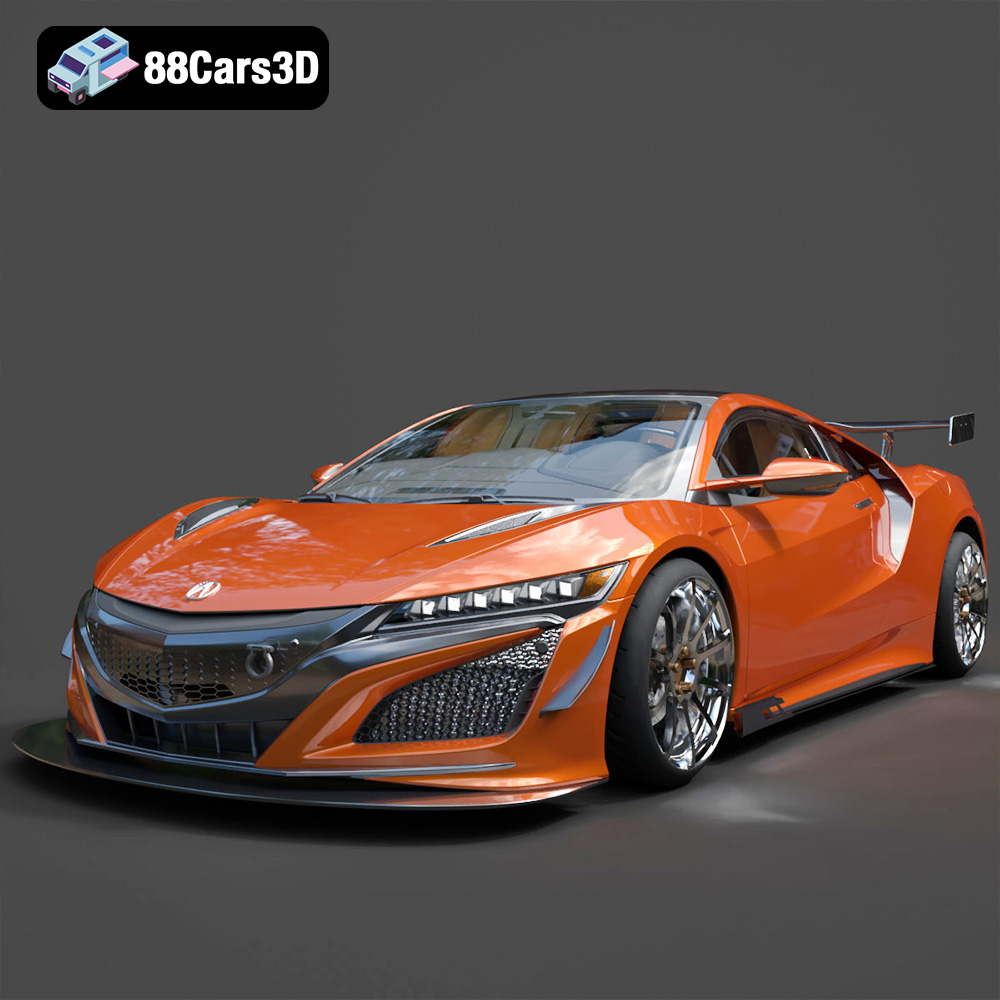
The Pinnacle of Digital Automotive Design: Mastering the Acura NSX 2017 3D Model
In the fast-paced world of 3D visualization, game development, and high-fidelity rendering, the demand for exceptionally detailed and optimized 3D car models is ever-growing. Whether you’re an automotive designer crafting a virtual showroom, a game developer populating a racing title, or an architect integrating a dream car into a visualization, the quality of your assets dictates the impact of your final product. Today, we’re diving deep into an exemplary asset that truly stands out: the Acura NSX 2017 3D Model, a masterpiece available at 88cars3d.com.
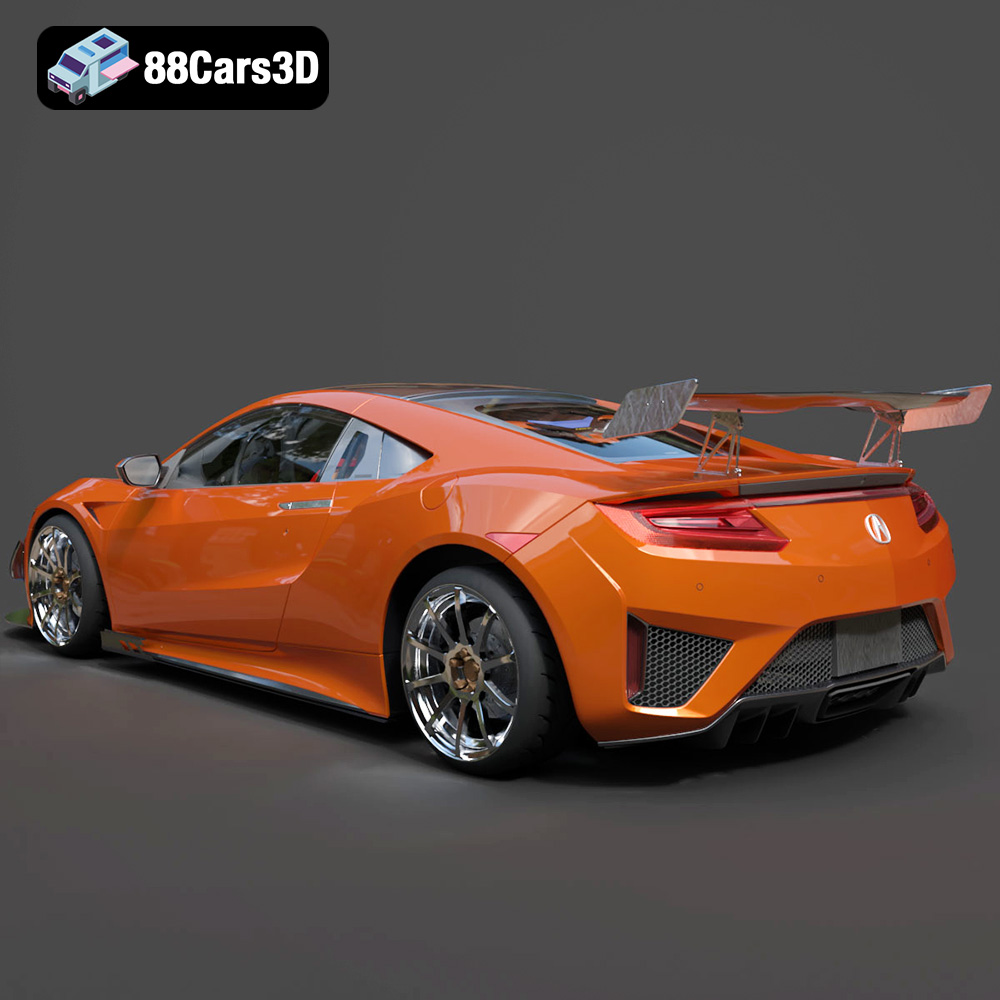
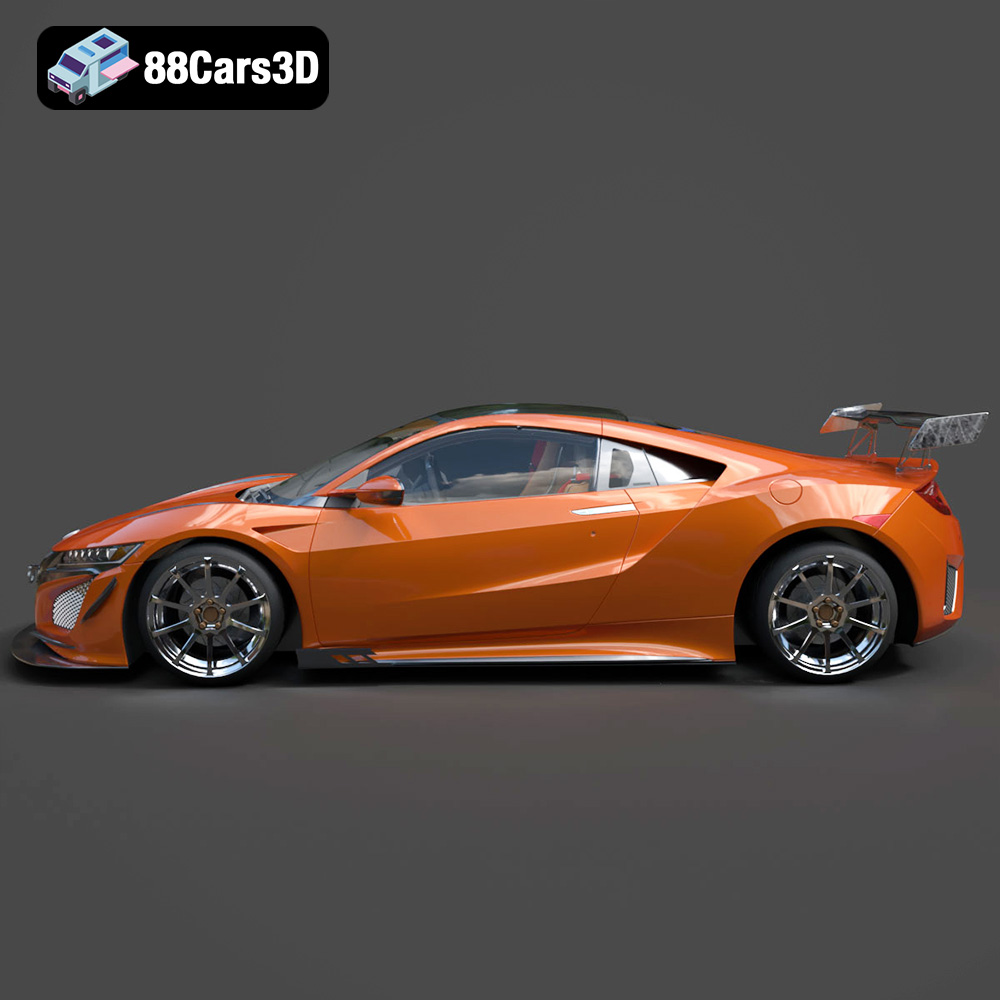
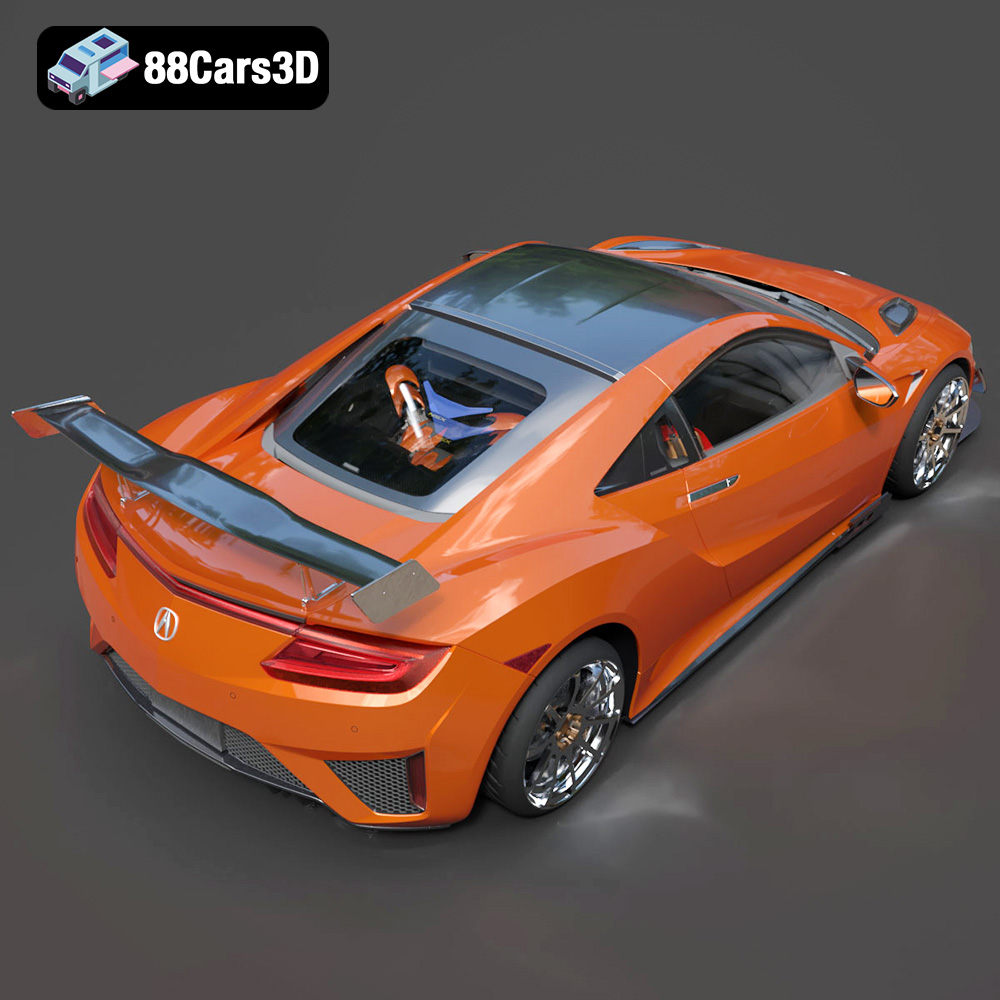
The Acura NSX 2017 represents not just a vehicle, but a statement – a fusion of advanced engineering, striking aesthetics, and electrifying performance. Its digital counterpart must live up to this legacy, and the model we’re exploring does precisely that. This isn’t just a collection of polygons; it’s a meticulously crafted digital sculpture, optimized for a myriad of applications from stunning automotive rendering to real-time interactive experiences and even precision 3D printing. Join us as we explore the technical prowess and creative potential unlocked by such a high-caliber 3D asset.
Understanding 3D Model File Formats: A Technical Deep Dive
The versatility of a 3D model often hinges on the breadth of file formats it supports. Professional workflows demand flexibility, allowing artists and developers to transition models between different software, engines, and output methods seamlessly. The Acura NSX 2017 3D Model excels in this regard, offering a comprehensive suite of formats, each tailored for specific use cases. Understanding these formats is crucial for maximizing efficiency and achieving optimal results in any project.
Native and Interchange Formats for Workflow Flexibility
- .blend (Blender): This is Blender’s native file format, and its inclusion means you receive a fully editable Blender scene. For artists deeply integrated into the Blender ecosystem, this is invaluable. It preserves all scene data—materials, textures, lighting setups, rigging, animations, and even custom properties—allowing for comprehensive modifications without losing any original detail. Blender users can immediately dive in, tweak materials, adjust scene lighting for custom automotive rendering, or re-rig components like doors and wheels for specific animations.
- .max (3ds Max): Similar to .blend, the .max format provides a complete 3ds Max project file. This is the industry standard for many architectural visualization studios and automotive design firms. Having the model in its native 3ds Max format means designers can leverage powerful rendering engines like V-Ray or Corona directly, access modifier stacks, and integrate the NSX seamlessly into complex scene environments, benefitting from 3ds Max’s robust modeling and animation toolset.
- .fbx (Filmbox): As a proprietary format owned by Autodesk, FBX has become the de facto standard for exchanging 3D data between various applications. It’s particularly ideal for game engines like Unreal Engine and Unity, as it efficiently stores mesh data, materials (though material translation can vary), animations, and bone structures. When importing the NSX as .fbx, developers can expect a robust and ready-to-use asset, perfect for integrating into a real-time pipeline with minimal setup.
- .obj (Wavefront OBJ): The universal “lowest common denominator” of 3D formats. OBJ is widely supported across almost all 3D software due to its simplicity. It primarily stores geometry (vertices, normals, texture coordinates, and faces) and can reference external material (.mtl) and texture files. While it doesn’t support advanced features like rigging or animations natively, its widespread compatibility makes it perfect for cross-software transfers or as a reliable backup format when other options fail. For basic static renders or importing into lesser-known applications, .obj is a solid choice.
Real-time and Specialized Applications
- .unreal (Unreal Engine): The inclusion of a dedicated .unreal asset signifies an unparalleled level of optimization and readiness for Unreal Engine. This isn’t just an FBX imported into Unreal; it suggests a pre-packaged asset designed to leverage Unreal’s material system, LODs (Levels of Detail), and physics assets. Such a format drastically cuts down development time, providing an engine-ready asset for real-time environments that can be dropped directly into a project with confidence, ensuring PBR materials are correctly set up and performance is optimized.
- .glb (GL Transmission Format Binary): GLB is the binary version of glTF (GL Transmission Format), designed for efficient transmission and loading of 3D scenes and models by applications. It’s optimized for AR, VR, and browser-based display, making it excellent for webGL applications, interactive car configurators, or augmented reality experiences on mobile devices. Its single-file nature (geometry, materials, textures packed together) makes deployment incredibly simple and fast, ideal for showcasing the NSX in a lightweight, interactive online environment.
Precision Manufacturing and Visualization Formats
- .stl (Stereolithography): STL is the standard file format for 3D printing. It represents a 3D model as a series of connected triangles, describing only the surface geometry without color, texture, or other CAD attributes. The NSX 2017 model’s availability in .stl confirms its suitability for physical output, allowing hobbyists and professionals to fabricate miniature scale models. This format ensures the geometry is “manifold” (watertight), which is essential for successful slicing and printing.
- .ply (Polygon File Format): PLY is a polygon file format primarily used for storing 3D data from 3D scanners or for CAD/analysis applications. It can store a wider range of properties than STL, including color, transparency, and sometimes even normal vectors, making it suitable for scientific visualization or more complex manufacturing analysis. While less common for general interchange, its precision mesh capabilities can be valuable for specific engineering or detailed inspection tasks related to the NSX model.
Having such a diverse array of formats ensures that the Acura NSX 2017 3D Model from 88cars3d.com isn’t just a beautiful asset but a profoundly flexible and professional-grade resource, adaptable to virtually any 3D pipeline or project requirement.
Optimizing for Performance: The NSX Model’s Balanced Topology
The true mark of a professional 3D car model lies not just in its visual appeal but also in its underlying geometry. A model can look stunning, but if it’s overly complex, it becomes unwieldy for real-time applications and can even bog down rendering times. The Acura NSX 2017 3D Model achieves an exceptional balance, landing in what professionals often call the “Goldilocks zone” for polygon count.
The Goldilocks Zone: Detail vs. Efficiency
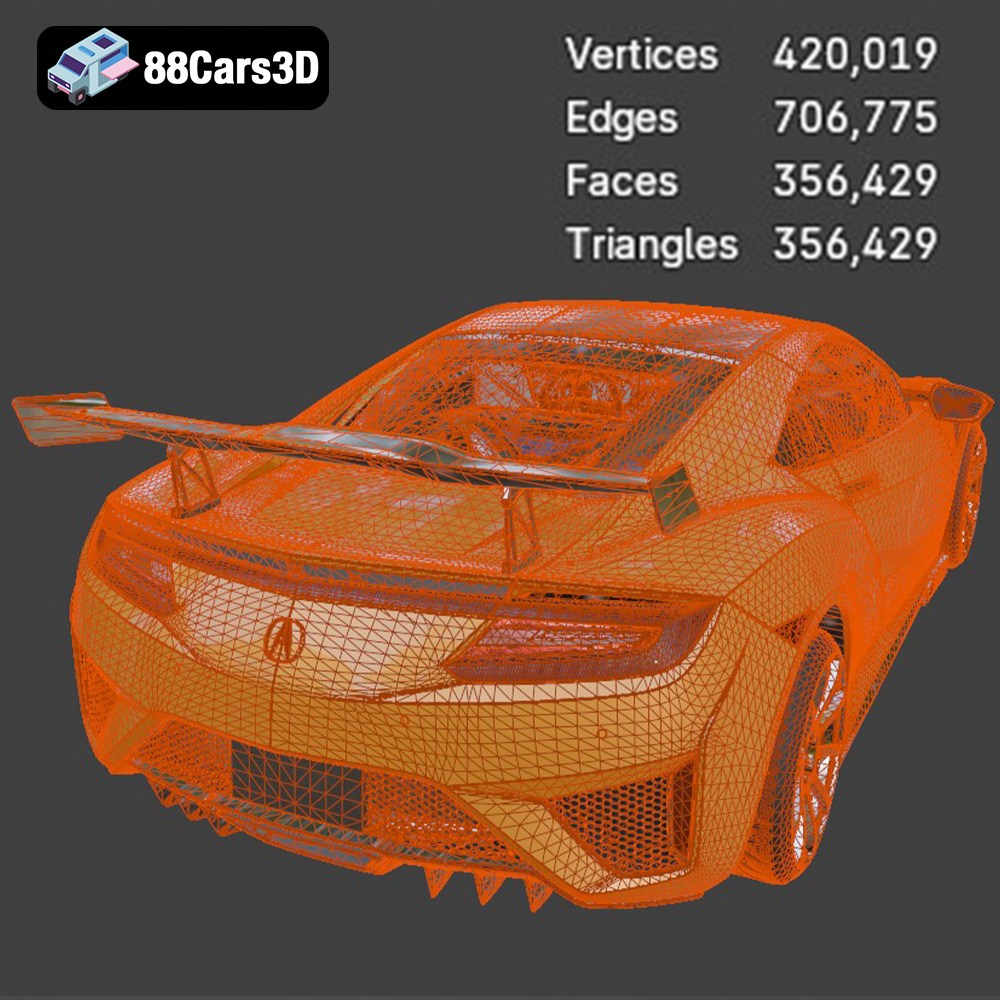
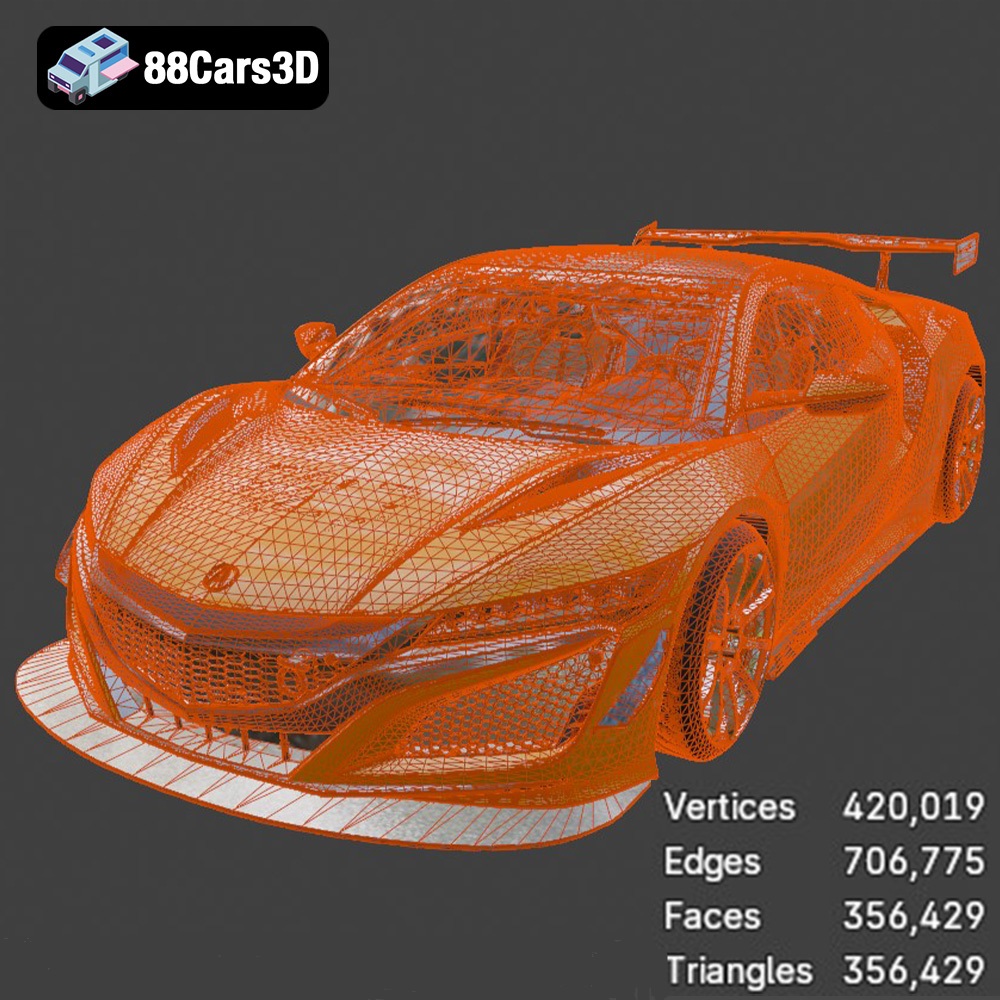
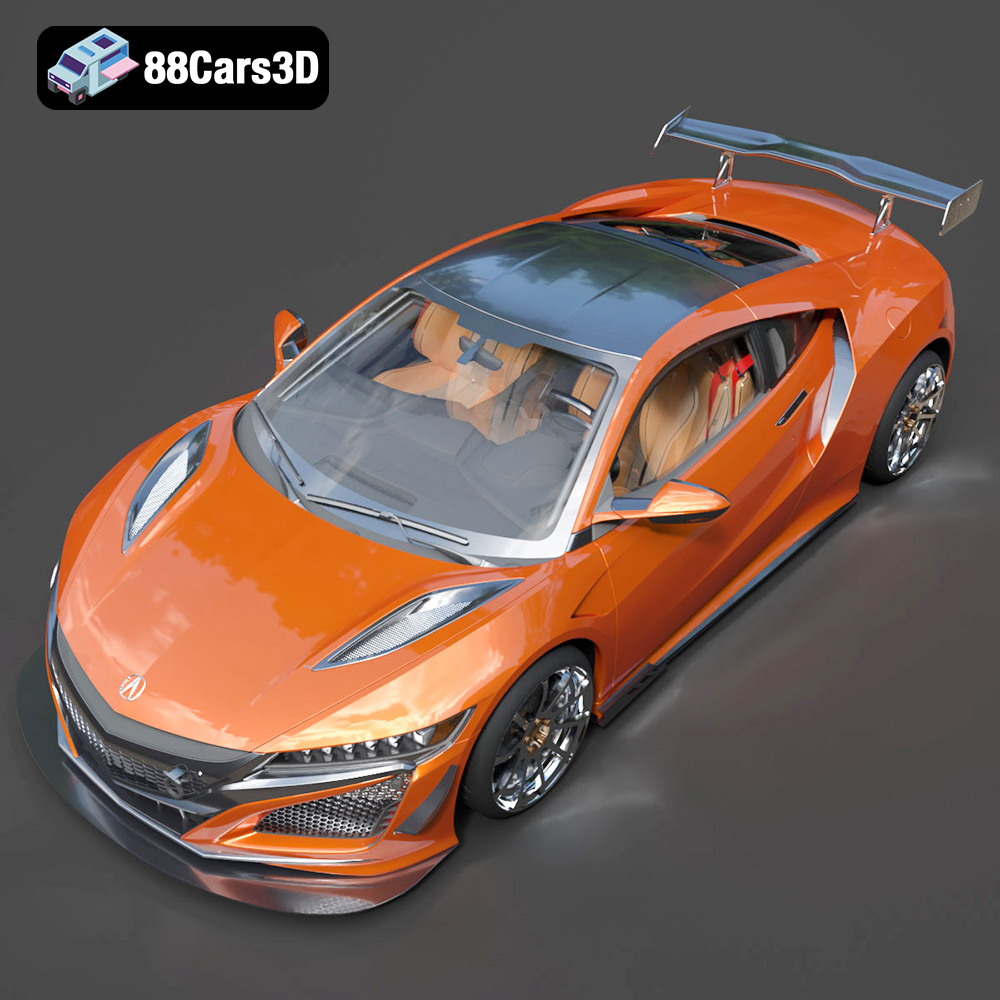
With just over 356,000 triangles (Faces/Polygons: 356,429; Triangles: 356,429; Vertices: 420,019), this NSX model strikes an optimal balance. It’s detailed enough to hold up to extreme close-ups, showcasing the sharp lines, intricate headlight clusters, and sculpted interior elements that define the NSX’s aesthetic. You can zoom in on the Jewel Eye LED headlights, examine the brake calipers through the alloy wheels, and appreciate the nuanced curves of the bodywork without encountering low-poly artifacts.
Simultaneously, this polygon count is remarkably efficient. Many highly detailed studio-quality car models can easily reach millions of polygons, making them impractical for anything other than static renders. The NSX 2017 model avoids this pitfall, ensuring that artists don’t have to spend precious development time optimizing or retopologizing the mesh for performance-critical scenarios.
Practical Applications in Game Development
For game developers, the NSX’s balanced topology is a significant advantage. As a “hero” drivable vehicle in current-gen racing games, it provides high visual fidelity without causing severe performance drops. The model’s optimized interior geometry is specifically tailored for smooth first-person POV experiences in gaming or VR, allowing players to fully immerse themselves in the meticulously crafted cockpit. The separate wheels, steering components, and doors are also crucial for realistic animation and rigging within game engines, making it a truly game-ready asset for dynamic driving mechanics.
High-Fidelity Rendering Without Compromise
Beyond games, this optimized geometry shines in automotive rendering and visualization projects. Imagine integrating the Acura NSX 2017 into an architectural visualization of a luxury garage or a high-octane commercial. The model’s efficiency means faster render times, fewer memory overheads, and a smoother workflow, allowing artists to focus more on creative lighting, material development, and scene composition rather than wrestling with an unwieldy asset. It’s the perfect canvas for dramatic studio lighting setups and cinematic showcases.
Professional Workflows: Integrating the Acura NSX 2017 into Your Projects
A superior 3D asset proves its worth through its seamless integration into diverse professional workflows. The Acura NSX 2017 3D Model from 88cars3d.com is designed with this in mind, providing features and formats that streamline processes for various industries.
Studio Rendering with 3ds Max and V-Ray/Corona
For high-end automotive rendering, 3ds Max remains a powerhouse, especially when paired with V-Ray or Corona Renderer. The .max file format provides a native, editable project, complete with proper pivot setups for animation. Imagine staging the NSX in a sophisticated studio environment. Artists can easily:
- Apply Advanced Materials: Leverage V-Ray or Corona’s physical material systems to create hyper-realistic paint finishes (like Nouvelle Blue Pearl or Valencia Red Pearl), intricate carbon fiber textures for the ‘Carbon Package’ look, and detailed leather for the interior.
- Craft Dynamic Lighting: Utilize HDRI environments for realistic reflections and global illumination, or set up dramatic, multi-point studio lights to highlight the NSX’s aerodynamic curves and Jewel Eye LED headlights. The model’s accurate proportions respond perfectly to ray-traced light.
- Produce Cinematic Animations: With separate components like wheels, doors, and steering, animators can rig the car for complex sequences – from opening doors to dynamic driving shots. The real-world scale accuracy ensures that motion blur and camera physics behave correctly.
Real-Time Development with Unreal Engine
Unreal Engine is a dominant force in real-time visualization and game development. The availability of an .unreal engine-ready asset for the NSX 2017 is a game-changer. This means the model is likely pre-optimized with:
- Optimized Materials and Textures: PBR (Physically Based Rendering) materials are crucial for realism in Unreal. The .unreal asset would typically come with textures correctly set up for albedo, normal, roughness, metallic, and ambient occlusion channels, ensuring consistent visual fidelity.
- LODs (Levels of Detail): For performance, particularly in open-world games or scenes with multiple vehicles, LODs are essential. A well-prepared Unreal asset would include multiple mesh versions that automatically switch based on distance from the camera, significantly reducing polygon count for distant objects.
- Collision Meshes and Physics Assets: Essential for drivable vehicles, these ensure realistic interactions with the game world. Developers can quickly integrate the NSX into a vehicle blueprint, assign physics, and have a drivable car in minutes. This model is perfect for current-gen racing titles, providing a hero vehicle with fantastic engine optimization.
Designing for Interactive Experiences (AR/VR)
The world of Augmented Reality (AR) and Virtual Reality (VR) demands highly optimized assets that can run smoothly on various devices. The Acura NSX 2017 3D Model is an excellent candidate for interactive digital showrooms, car configurators, and mobile AR experiences, especially with its .glb format. Developers can:
- Create Immersive Showrooms: Allow users to explore the NSX in a virtual space, opening doors, changing paint colors, and inspecting the detailed interior. The model’s balanced topology ensures smooth performance even on less powerful VR headsets.
- Develop AR Configurators: Imagine pointing your phone at a floor and having a life-sized NSX appear, allowing you to walk around it, change wheel finishes, or apply carbon fiber packages in real-time. The .glb format is tailor-made for such web-based or mobile AR applications due to its efficiency and packed structure.
Beyond the Screen: 3D Printing the Acura NSX 2017
The versatility of a truly high-quality 3D model extends beyond digital screens. For automotive enthusiasts, collectors, or product designers, the ability to transform a digital asset into a physical object is incredibly exciting. The Acura NSX 2017 3D Model, with its inclusion of the .stl format, is perfectly suited for 3D printing.
Preparing the Model for Physical Manifestation
Converting a complex automotive model like the NSX for 3D printing requires careful consideration of scale, detail, and structural integrity. The provided model’s clean topology and accurate geometry make this process significantly smoother. The .stl format ensures that the mesh is “manifold” or watertight, meaning there are no gaps or holes in the surface that could cause printing errors. This is a critical factor for successful print jobs.
For detailed scale models, the recommended scales of 1:24, 1:18, or 1:12 are ideal. At these sizes, the intricate details of the NSX, such as the Jewel Eye LED clusters, aggressive front fascia, and even the subtle lines of the detailed brake calipers, can be faithfully reproduced.
Recommended Settings for High-Quality Prints
Achieving a stunning physical replica of the Acura NSX 2017 requires precise 3D printing settings:
- Resin Printing is Recommended: For models with sharp aerodynamic edges and fine details like wheels and side mirrors, resin (SLA/DLP) printing is highly recommended. It offers superior resolution and surface finish compared to FDM (filament) printing, capturing the nuances of the NSX’s design.
- Layer Height: A low layer height of 0.04–0.12 mm is crucial for smooth surfaces and crisp details, especially on the smaller scales.
- Supports: Due to the NSX’s intricate design, supports will be necessary. Specifically, the side mirrors, the aggressive rear diffuser, and the iconic floating C-pillars will require careful support placement to prevent warping or failure during printing.
- Print Orientation: Printing the body angled can help achieve a smoother surface finish, especially on visible areas, by minimizing layer lines. Printing wheels separately allows for optimal detail and easier post-processing.
- Wall Thickness and Infill: A wall thickness of 1.2–2.0 mm combined with 15–25% infill provides a good balance of structural integrity and material efficiency.
Post-Processing for a Show-Stopping Collectible
Once printed, the real magic of customization begins with post-processing. This transforms a raw print into a display-worthy collectible:
- Sanding and Priming: Thorough sanding removes any remaining layer lines or support marks, followed by a high-quality primer to create a perfectly smooth canvas.
- Signature NSX Colors: Applying authentic NSX colors like Nouvelle Blue Pearl, Valencia Red Pearl, or Casino White is essential for realism. Automotive-grade paints are ideal for achieving that factory finish.
- Detailing: Fine brushes can be used for intricate details on the taillights, interior, and badging. Adding gloss clear coats or carbon fiber detailing to the roof and spoiler elevates the model’s authenticity, replicating the ‘Carbon Package’ look.
The ability to bring the Acura NSX 2017 3D Model to life as a physical object is a testament to its detailed and well-prepared geometry, offering a unique opportunity for enthusiasts and designers alike.
Customization and Creative Freedom
A truly valuable 3D asset provides a robust foundation, but also ample room for creative interpretation and customization. The Acura NSX 2017 3D Model, with its well-organized geometry and material readiness, offers extensive opportunities for artists to make it their own.
Tailoring Visuals for Specific Scenarios
The NSX is a car that looks at home in diverse settings, from a sun-drenched coastal highway to a neon-lit urban street. With this 3D model, you have the power to:
- Change Exterior Paint Colors: Experiment with the stunning factory Acura options or invent your own bespoke hues. Quickly swap out materials to see the model in a vibrant Valencia Red Pearl or a sleek Nouvelle Blue Pearl, adapting it for different brand campaigns or artistic visions.
- Apply Carbon Fiber Textures: Replicate the aggressive ‘Carbon Package’ look by applying carbon fiber textures to elements like the roof, rear spoiler, and front lip. This adds a layer of high-performance detail that car enthusiasts appreciate.
- Modify Wheel Finishes: Switch between machine-polished alloys for a classic look or matte black finishes for a more aggressive, modern aesthetic. This small detail can significantly alter the overall character of the vehicle.
- Interior Personalization: While the interior geometry is optimized for gaming, it still provides enough detail to customize material choices for seats, dashboard elements, and steering wheel, offering a personalized driver-centric experience.
Exploring Material Variations and Lighting
Lighting and materials are paramount in defining the mood and realism of any 3D scene. The Acura NSX 2017 3D Model, with its clean UVs and material zones, is primed for exploration:
- Dynamic Lighting Setups: Adapt the lighting to transform the NSX’s environment. Create a moody, neon-lit nighttime city street scene where reflections dance across its surfaces, or place it on a bright, high-definition race track under a noon sun to highlight its performance pedigree. The model’s reflective surfaces and transparent glass react realistically to complex lighting.
- Real-time Material Instancing: In game engines like Unreal, the model’s material setup can be leveraged to create instances, allowing rapid changes to color, glossiness, and other parameters without recompiling shaders, speeding up iteration times for artists.
- Damage and Wear: For game development or cinematic narratives, artists can even go further by applying custom textures for dirt, wear, or even crash damage, making the NSX a versatile asset for storytelling.
This level of creative freedom ensures that the Acura NSX 2017 3D Model is not just a static representation but a dynamic, adaptable asset that can be tailored to meet the specific demands of any project, fostering endless creative possibilities.
Conclusion: Drive Your Vision Forward with 88cars3d.com
The Acura NSX 2017 3D Model is a prime example of what a high-quality, professional 3D asset should be. From its meticulous exterior and interior detailing to its perfectly balanced topology, and its comprehensive array of file formats, every aspect is crafted to empower creators. Whether your project involves stunning automotive rendering, demanding game development, immersive AR/VR experiences, or the tactile satisfaction of 3D printing, this model provides an unparalleled foundation.
Its “Goldilocks zone” polygon count ensures it’s both visually rich for close-ups and incredibly efficient for real-time applications. The inclusion of native files for Blender and 3ds Max, along with universal formats like FBX and OBJ, and specialized files like GLB and .unreal, guarantees seamless integration into virtually any professional pipeline. Furthermore, its 3D print readiness opens up exciting avenues for physical collectibles.
For those seeking the pinnacle of 3D car models, look no further than 88cars3d.com. Investing in assets of this caliber not only elevates your projects but also streamlines your workflow, allowing you to focus on creativity rather than technical hurdles. The Acura NSX 2017 3D Model isn’t just a purchase; it’s an investment in quality, versatility, and limitless creative potential.
Featured 3D Model
Acura NSX 2017 3D Model
The Acura NSX 2017 3D Model is a stunning digital recreation of the rebirth of a legendary supercar. Combining striking, aerodynamically optimized styling with a futuristic mid-engine hybrid profile, the 2017 NSX represents the pinnacle of modern precision craftsmanship. Built with a highly efficient and perfectly balanced mid-polygon topology (just over 356k triangles), it provides excellent visual fidelity for close-up automotive rendering while remaining highly optimized for use as a hero vehicle in modern game engines and real-time applications.
$45
View This Model