⚡ FLASH SALE: Get 60% OFF All Premium 3D & STL Models! ⚡

In the dynamic world of digital design, the demand for realistic, high-fidelity 3D assets is ever-present and continually evolving. From blockbuster video games to cinematic automotive commercials and immersive virtual reality experiences, precise digital replicas of real-world objects are the backbone of compelling visual narratives. Few assets are as critical and challenging to perfect as 3D car models. Their intricate curves, complex mechanical components, and reflective surfaces demand an unparalleled level of detail and technical precision.
Creating these models from scratch is a time-intensive endeavor, often requiring hundreds of hours from skilled artists to achieve production-ready quality. This is where professional marketplaces like 88cars3d.com become indispensable, offering meticulously crafted assets that empower creators to focus on their vision rather than the arduous modeling process. Today, we’re diving deep into the technical prowess and versatile applications of one such outstanding asset: the BMW 1 Series Coupe 2009 3D Model. This model isn’t just a digital representation; it’s a gateway to accelerating workflows, enhancing visual fidelity, and unlocking new creative possibilities across various industries, from automotive rendering to game development and even physical prototyping.
Choosing the right file format for your 3D car models is a foundational decision that impacts everything from software compatibility and scene performance to material integrity and overall project efficiency. The BMW 1 Series Coupe 2009 3D Model comes equipped with an impressive array of formats, each optimized for specific workflows and applications. Understanding their nuances is key to leveraging your assets effectively.
The .blend file is Blender’s native format, providing a fully editable scene with all assets, materials, textures, lighting, and camera setups intact. For artists working primarily within Blender, this is the most flexible option. It preserves modifiers, rigging information, and custom properties, allowing for seamless integration and extensive customization without losing any original data. It’s ideal for animators, modelers, and generalists who wish to delve into the model’s construction, make significant modifications, or use Blender’s powerful Cycles or Eevee renderers.
.fbx (Filmbox) is arguably the most widely adopted 3D asset exchange format, especially critical for pipelines involving real-time engines like Unreal Engine and Unity. It excels at preserving not just geometry, but also materials, textures (often embedded or referenced), animations, rigging, skinning, and camera data. When importing the BMW 1 Series Coupe 2009 into Unreal or Unity, an .fbx file ensures that the model’s hierarchy, pivot points (crucial for wheel rotation and steering), and basic materials translate effectively, minimizing setup time for game developers and AR/VR creators.
The .obj (Wavefront Object) format is a universal standard for storing 3D geometry. While it is more limited than .fbx in terms of carrying animation or complex material definitions (it typically references an accompanying .mtl file for basic material properties and texture paths), its strength lies in its widespread compatibility. Almost every 3D software application can import and export .obj files, making it an excellent fallback or starting point for cross-software workflows. It’s particularly useful when you need just the mesh data for sculpting, retopology, or foundational scene building, ensuring broad accessibility for the BMW 1 Series Coupe 2009 3D Model.
.glb (GLB format for GL Transmission Format) is an efficient, single-file format designed for the web, augmented reality (AR), and virtual reality (VR) applications. It bundles 3D model data – geometry, materials, textures, animations, and scene graph – into a single binary file. This optimization makes .glb files incredibly fast to load and display in browsers or AR/VR viewers, perfect for interactive product configurators, virtual showrooms, or social media filters featuring the BMW 1 Series Coupe 2009. Its compact size and self-contained nature are significant advantages for deployment.
.stl (Stereolithography) is the de facto standard for 3D printing. It represents a 3D model as a collection of unconnected triangles, defining only the surface geometry. For successful 3D printing, .stl files must describe a “manifold” mesh, meaning it has no holes, self-intersections, or disconnected faces – every edge must be shared by exactly two triangles. The BMW 1 Series Coupe 2009 3D Model, provided as an .stl, is specifically prepared for this purpose, allowing hobbyists and professionals to produce physical scale models, prototypes, or collectibles. This format bridges the digital and physical realms, turning a virtual asset into a tangible object.
.ply (Polygon File Format) is another format for storing 3D data, often used in scientific and engineering applications, particularly for scanned data. It can store a wider range of properties than .obj, including color, transparency, surface normals, and even confidence values for scanned points. While less common for general 3D asset exchange, its precision makes it valuable for specialized tasks like CAD integration, architectural analysis, or when high fidelity with additional attribute data is required for the BMW 1 Series Coupe 2009.
While often used interchangeably with optimized .fbx, the inclusion of a dedicated .unreal asset implies a model that has been specifically prepared or packaged for direct import and optimal performance within Unreal Engine. This might mean pre-configured collision meshes, LOD (Level of Detail) setups, or even basic material instances optimized for Unreal’s Physically Based Rendering (PBR) system. For professional game development or interactive simulations, this ‘engine-ready’ format can save immense time in the asset pipeline, ensuring the BMW 1 Series Coupe 2009 3D Model performs flawlessly in real-time.
Similar to .blend for Blender, the .max file is the native project file for Autodesk 3ds Max. This format retains all scene data, including complex modifiers, advanced material networks (like V-Ray or Corona materials), lighting setups, animations, and intricate scene hierarchies unique to 3ds Max. For professionals entrenched in 3ds Max for high-end automotive rendering, architectural visualization, or sophisticated animation, the .max file of the BMW 1 Series Coupe 2009 offers the fullest control and flexibility, allowing artists to dive deep into every aspect of its construction and rendering properties.
Automotive rendering is a highly specialized field where realism is paramount. The goal is to create images so lifelike they are indistinguishable from photographs. A high-quality 3D car model like the BMW 1 Series Coupe 2009 serves as the perfect foundation for achieving this photorealistic standard, enabling artists to craft stunning visuals for marketing, design reviews, and conceptual presentations.
For many professionals, Autodesk 3ds Max coupled with renderers like V-Ray or Corona is the gold standard for high-end automotive visualization. The .max file of the BMW 1 Series Coupe 2009 3D Model provides immediate access to a scene that is often pre-configured with materials and possibly even lighting setups optimized for these renderers. Artists can leverage 3ds Max’s robust modeling and animation tools to:
The real-world scale accuracy and optimized polygon flow of the BMW 1 Series Coupe 2009 3D Model are critical here, ensuring that reflections behave correctly and that subdivision surfaces render smoothly without artifacts, even in extreme close-ups.
Blender, with its Cycles and Eevee render engines, offers an equally powerful, open-source alternative for automotive visualization. The .blend file of the BMW 1 Series Coupe 2009 provides a ready-to-render asset that can be seamlessly integrated into Blender-centric pipelines. Artists can:
Whether for static beauty shots for automotive marketing or complex animated sequences, the quality and flexibility of the 88cars3d.com model ensure top-tier results.
The demands of real-time rendering in game development, AR, and VR are unique, balancing visual fidelity with performance optimization. High-quality game assets, particularly for vehicles, must be meticulously prepared to run smoothly while still looking exceptional. The BMW 1 Series Coupe 2009 3D Model is engineered precisely for these environments.
Unreal Engine is a powerhouse for creating immersive real-time experiences. Integrating the BMW 1 Series Coupe 2009 3D Model into an Unreal project can be achieved efficiently using the .fbx or the dedicated .unreal format. Key steps and considerations include:
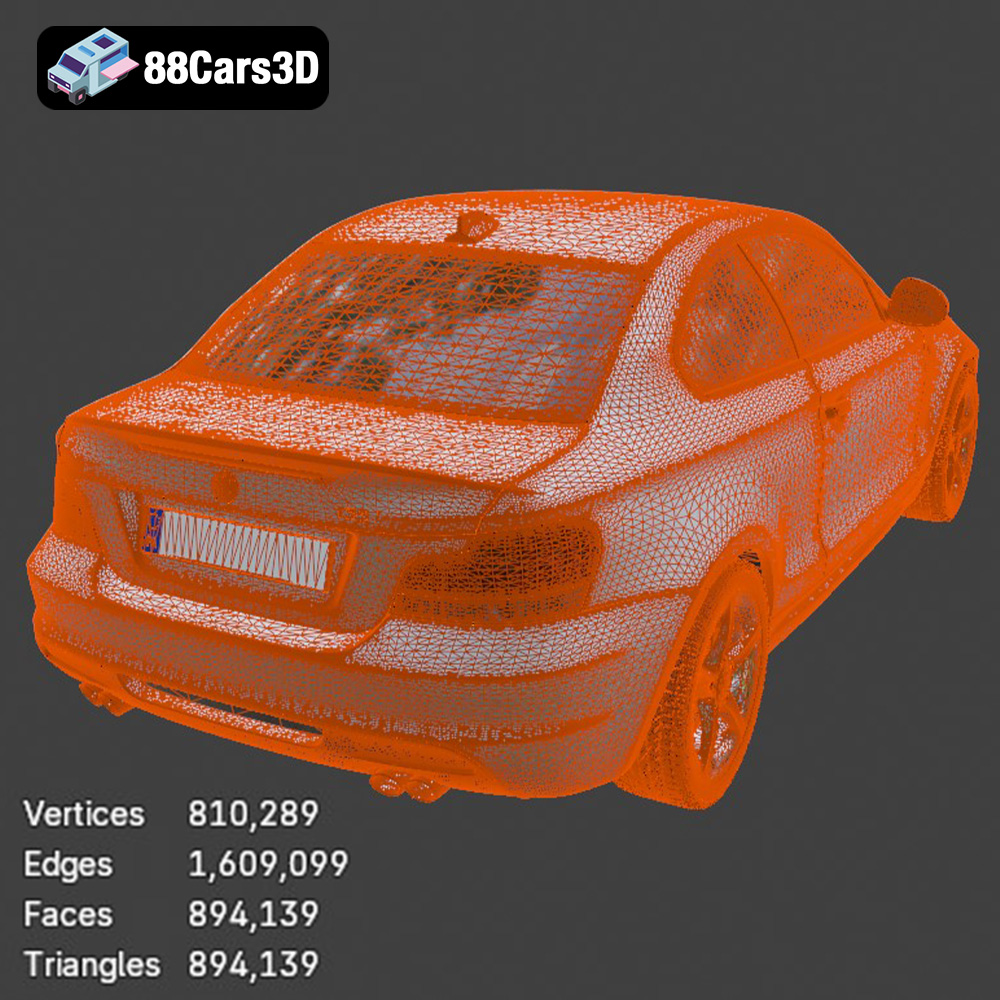
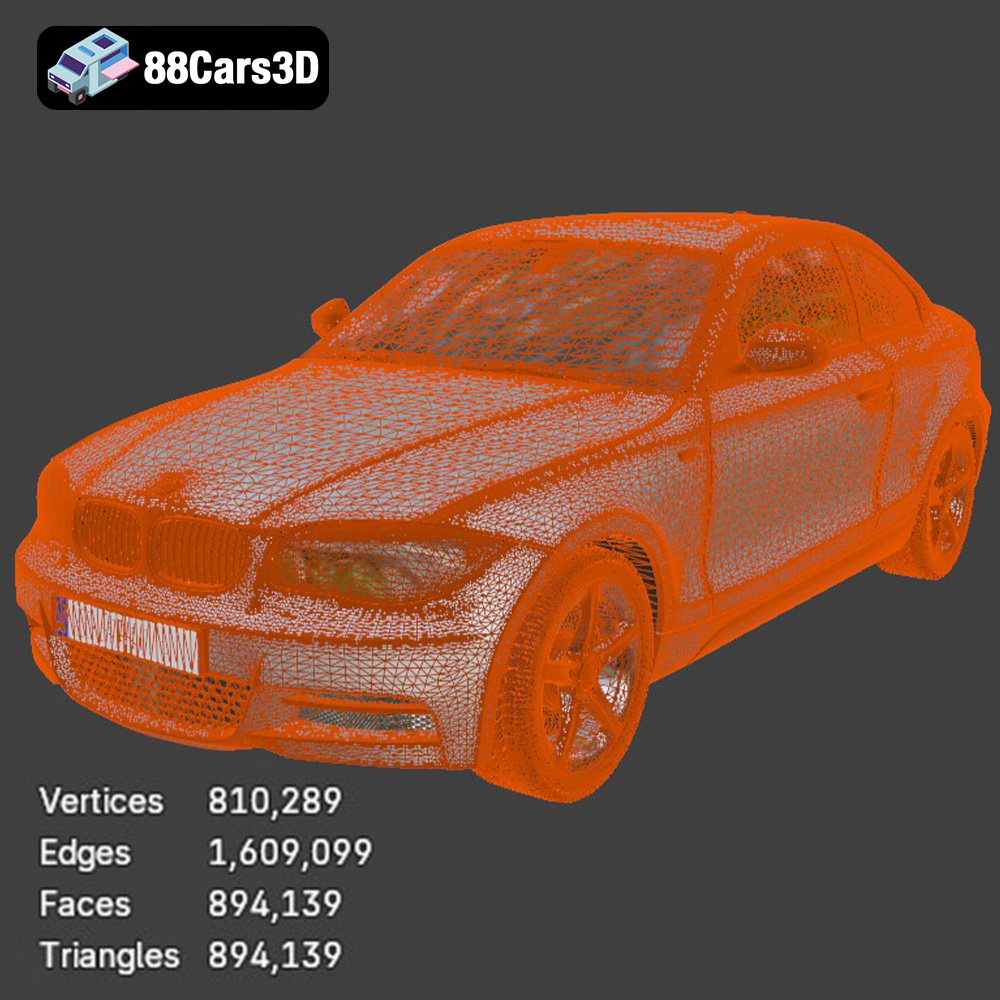
The “optimized polygon flow” mentioned in the product description is a critical feature for game developers, ensuring the model can be used effectively in real-time without excessive poly counts causing performance bottlenecks, while still retaining enough detail for close-up shots.
For AR/VR, where frame rates must be consistently high to prevent motion sickness, optimization is even more critical. The .glb format, included with the BMW 1 Series Coupe 2009 3D Model, is a prime example of an AR/VR-ready asset. Its compact, self-contained nature and efficient data structure make it ideal for quick loading in mobile AR applications or VR environments. Developers can utilize this model for:
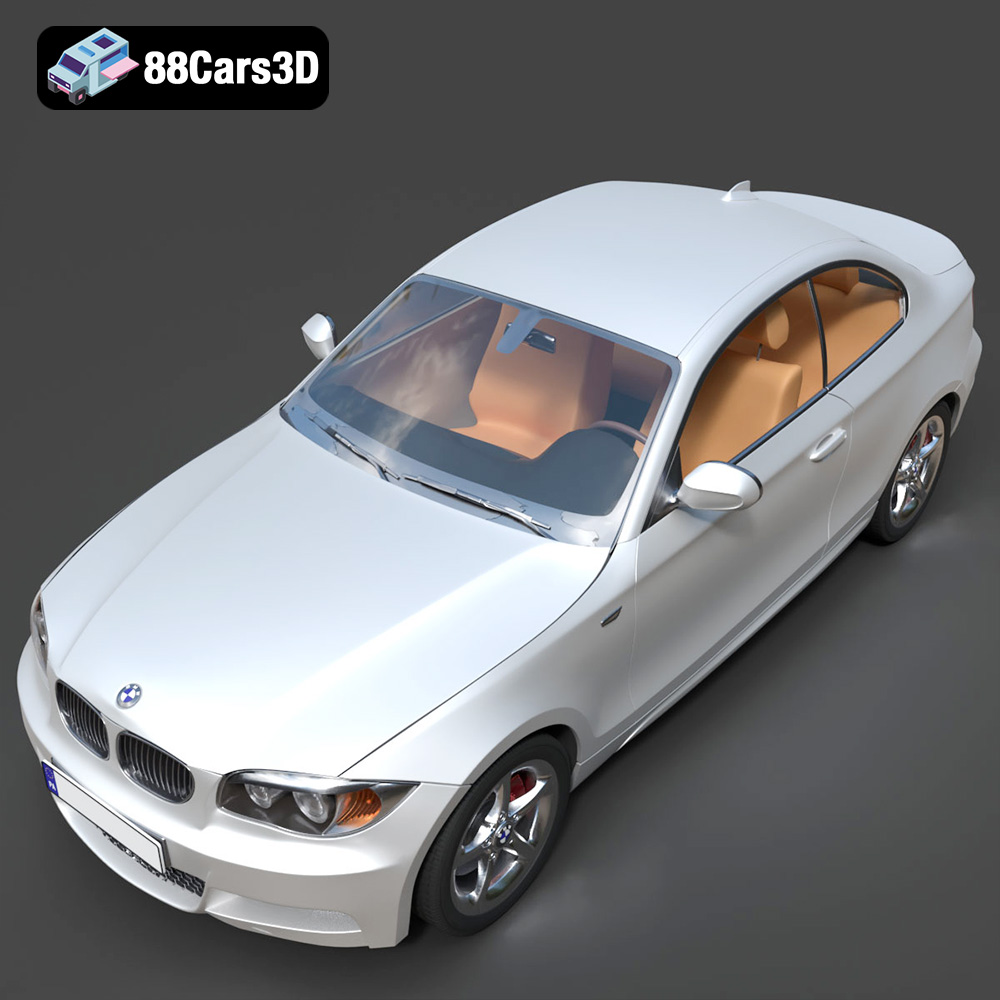
The balance between detailed interior features (dashboard, seats, steering wheel) and optimized geometry ensures that the model provides an immersive experience without sacrificing performance, making it a valuable game asset for these cutting-edge applications.
The utility of high-quality 3D car models extends far beyond digital screens. With the advent of accessible 3D printing technologies, these models can be transformed into tangible, physical objects, opening up new avenues for collectibles, prototyping, and educational tools. The BMW 1 Series Coupe 2009 3D Model’s inclusion of an .stl format specifically caters to this rapidly growing sector.
3D printing requires models to have “manifold” geometry, meaning they are completely enclosed and watertight, with no gaps or intersecting surfaces. The .stl version of the BMW 1 Series Coupe 2009 3D Model is prepared to meet these requirements. The process typically involves:
Once printed, the physical model undergoes post-processing to achieve a professional finish. This often involves sanding to smooth out layer lines, applying primer to prepare the surface, and then painting with gloss automotive paint to mimic the car’s original luster. For the BMW 1 Series Coupe 2009, enthusiasts can go further by adding sport trim detailing, custom license plates, or even modifying the stance and ride height, mirroring the customization options available in the digital model.
This capability to bridge the digital and physical realms highlights the comprehensive value of high-quality 3D car models from sources like 88cars3d.com, offering not just visual assets but also blueprints for tangible creations.
The true value of a professional 3D car model lies not just in its initial appearance, but in its underlying technical quality and the flexibility it offers for customization. The BMW 1 Series Coupe 2009 3D Model exemplifies these qualities, providing artists and developers with a robust foundation for their creative endeavors.
The “clean and well-organized mesh structure” is a fundamental technical advantage. This means the model has optimal polygon flow, with well-distributed quads (four-sided polygons) that allow for smooth subdivision and distortion-free deformation. This is crucial for:
Furthermore, “real-world scale accuracy” is not just a detail; it’s a necessity. Accurate dimensions ensure that the car integrates seamlessly into environments, responds correctly to physics simulations, and looks natural when placed alongside other real-world scaled objects in a scene. This meticulous attention to detail saves countless hours of adjustment and guesswork for the end-user.
A well-built 3D car model acts as a versatile canvas. The BMW 1 Series Coupe 2009 offers a wide array of customization options that allow artists to personalize the model to fit specific project requirements:
These customization capabilities are critical for saving production time. Instead of modeling a new car for every slight variation, artists can efficiently adapt the existing high-quality asset from 88cars3d.com.
In the expansive landscape of 3D car models available online, quality varies dramatically. Opting for a meticulously crafted asset like the BMW 1 Series Coupe 2009 from 88cars3d.com is not just a convenience; it’s a strategic investment that pays dividends in production efficiency, visual fidelity, and overall project success.
The most immediate benefit of a professional-grade 3D model is the immense time savings. Creating a highly detailed vehicle from scratch can take hundreds of hours, encompassing modeling, UV unwrapping, texturing, material creation, and optimization. By purchasing a ready-to-use model, artists and studios can redirect their valuable time and resources towards other critical aspects of their project, such as scene building, animation, or interactive development. This directly impacts project deadlines and budget.
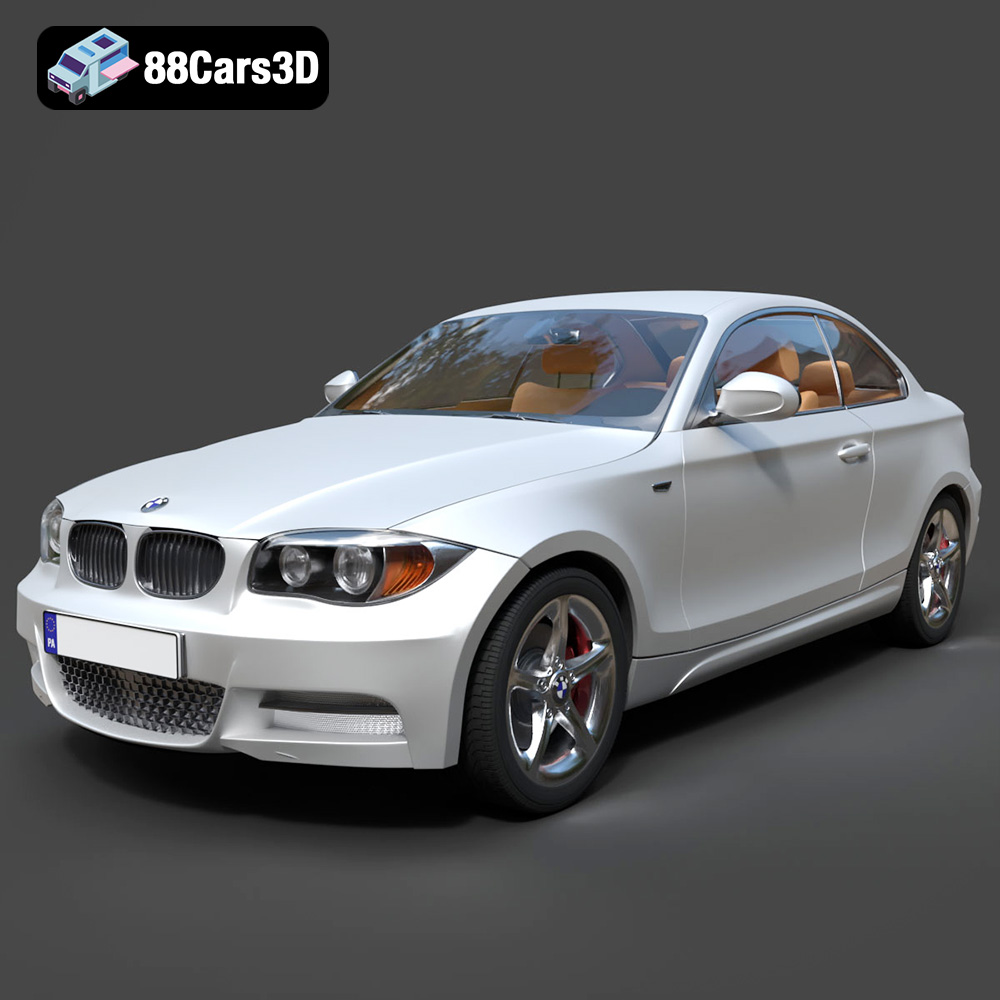
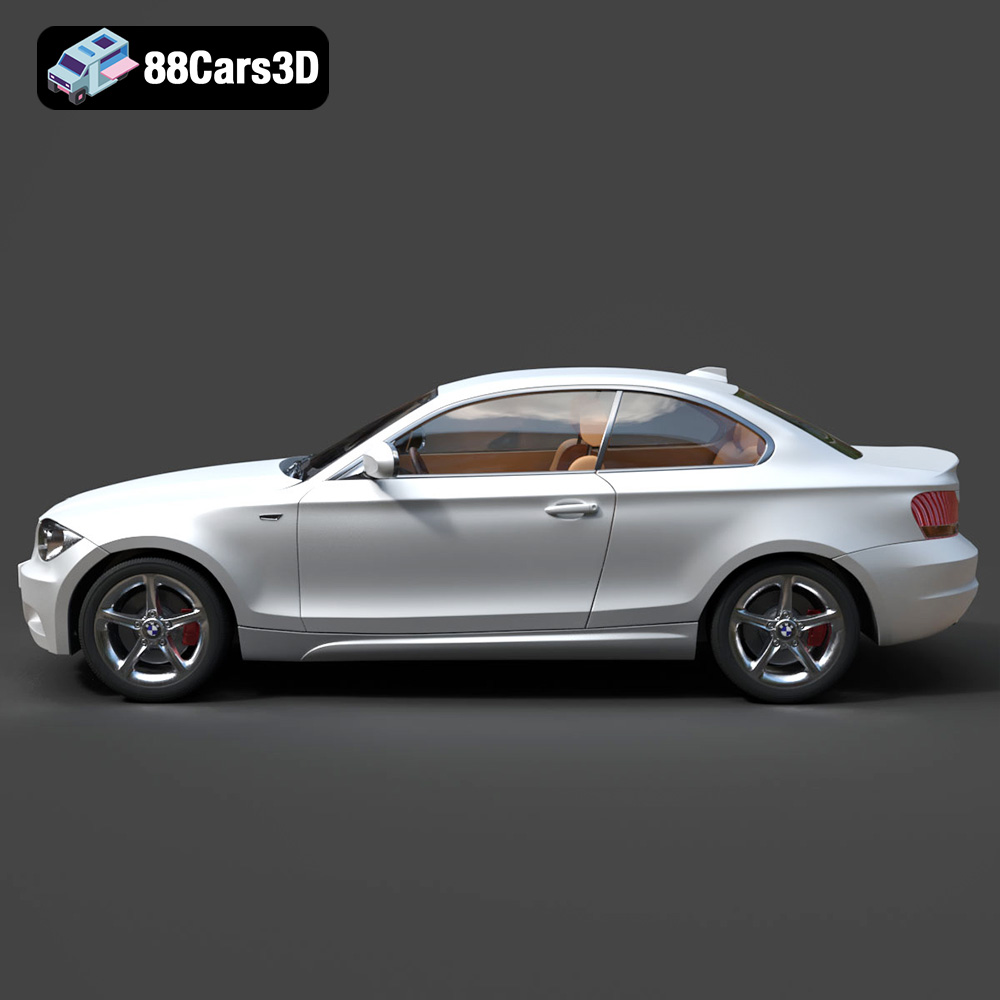
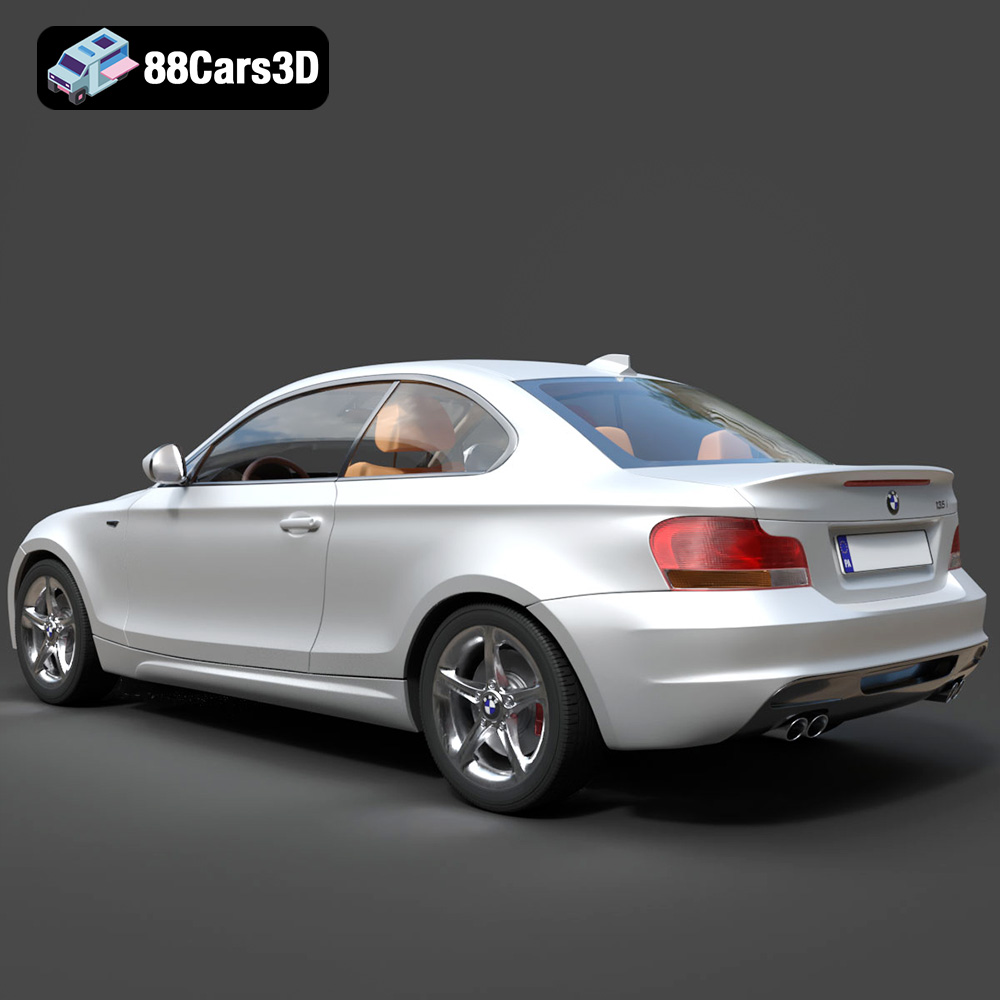
A high-quality model guarantees a level of detail and accuracy that is often challenging for generalist artists to achieve. Features like accurate body proportions, signature BMW kidney grille detailing, sculpted hood lines, and detailed alloy wheels are meticulously replicated. This precision is non-negotiable for automotive rendering, commercials, and high-end visualization where every detail is scrutinized. Subpar models can lead to visible mesh errors, incorrect proportions, or unrealistic material behavior, undermining the professionalism of the final output.
The extensive list of included file formats (.blend, .fbx, .obj, .glb, .stl, .ply, .unreal, .max) for the BMW 1 Series Coupe 2009 3D Model ensures unparalleled versatility. Whether your project demands photorealistic renders, real-time interactive experiences, or even physical 3D prints, this single asset provides the necessary foundation. This eliminates the need to source or re-model the car for different pipelines, consolidating resources and streamlining workflow across various departments or project phases. This is particularly advantageous for studios working on multi-platform projects or those with diverse output requirements.
Ultimately, investing in high-quality 3D car models from reputable sources like 88cars3d.com is an investment in quality, efficiency, and creative freedom. It empowers designers, developers, and artists to realize their most ambitious visions without the technical overhead of building complex assets from the ground up.
In the demanding landscape of modern digital content creation, the need for exceptional 3D car models is constant. Whether you’re a seasoned professional crafting breathtaking automotive rendering, a game developer building the next open-world sensation, or an enthusiast venturing into the realm of 3D printing, the foundational quality of your assets dictates the success of your final output. The BMW 1 Series Coupe 2009 3D Model stands as a testament to the meticulous craftsmanship and technical foresight required in today’s digital age.
Its accurate representation, clean topology, and comprehensive array of file formats – from .blend and .max for native software flexibility, to .fbx and .unreal for real-time engines, and .stl for physical fabrication – make it an incredibly versatile and powerful tool. This model is not merely a static object; it’s a dynamic asset designed to integrate seamlessly into diverse workflows, providing a robust foundation for everything from cinematic visualizations to interactive AR/VR experiences. By choosing high-quality resources from platforms like 88cars3d.com, you’re not just acquiring a model; you’re investing in efficiency, accelerating your creative process, and ensuring your projects achieve a level of realism and professionalism that truly stands out. Empower your next project with assets built for excellence.
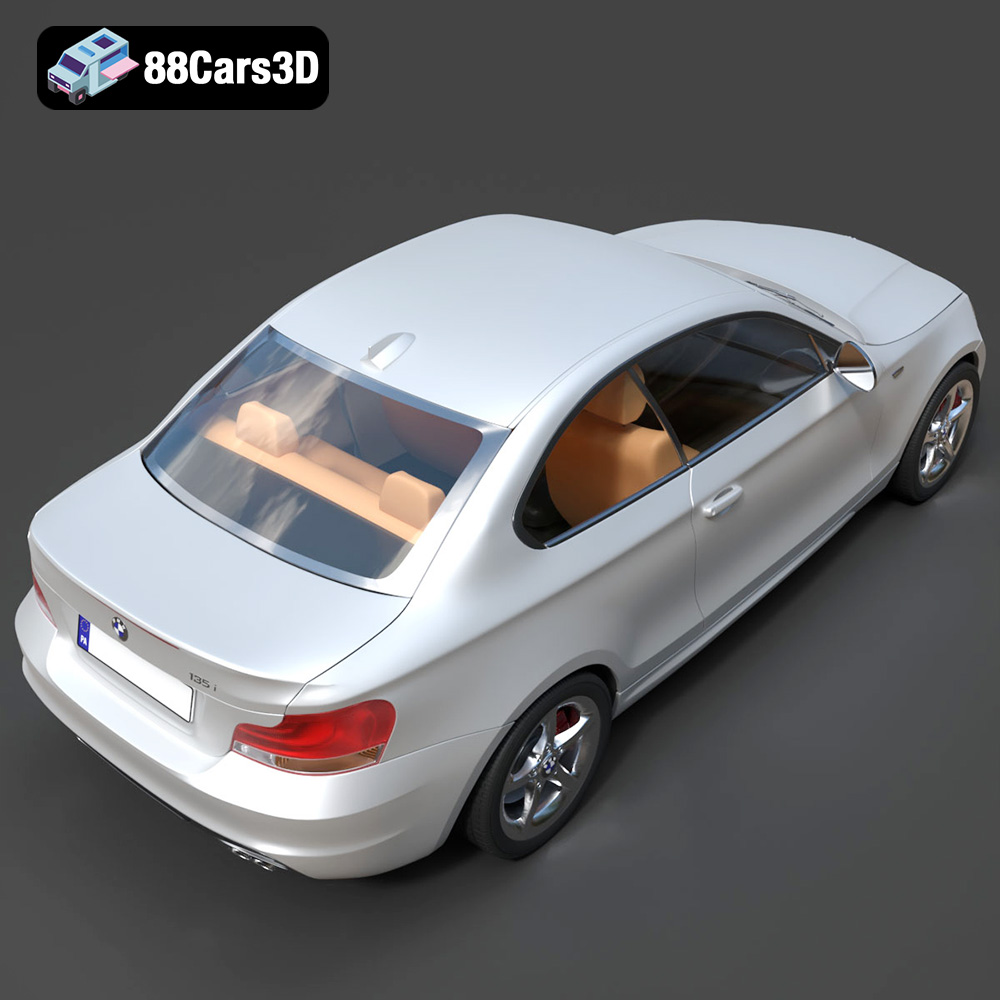
The BMW 1 Series Coupe 2009 3D Model is a high-detail digital recreation of the compact premium sports coupe known for its balanced chassis, rear-wheel-drive dynamics, and distinctive BMW styling. The 2009 1 Series Coupe blends everyday practicality with sporty performance, making it a popular choice among driving enthusiasts. This 3D model accurately represents the signature kidney grille, dual headlight design, sculpted hood lines, compact coupe proportions, sporty side profile, rear trunk layout, and alloy wheel detailing. Built with clean topology and real-world scale accuracy, it is ideal for rendering, animation, automotive visualization, game development, and AR/VR experiences. Perfect for urban driving scenes, car commercials, open-world simulations, cinematic projects, and automotive showcases.
$39.99
.1series
.arvr
.automotive
.blend
.bmw
.bmw2009
.car3dmodel
.compactcoupe
.fbx
.gameasset
.glb
.max
.obj
.ply
.rendering
.simulation
.sportcoupe
.stl
.unreal