⚡ FLASH SALE: Get 60% OFF All Premium 3D & STL Models! ⚡

In the rapidly evolving world of 3D visualization, automotive design, and interactive media, the demand for incredibly detailed and accurate digital assets is paramount. From breathtaking photorealistic renders that grace marketing campaigns to hyper-optimized game assets that define immersive virtual worlds, the quality of a 3D model can make or break a project. Hypercars, with their complex aerodynamic forms, intricate detailing, and legendary status, present a unique challenge and opportunity for 3D artists and developers.
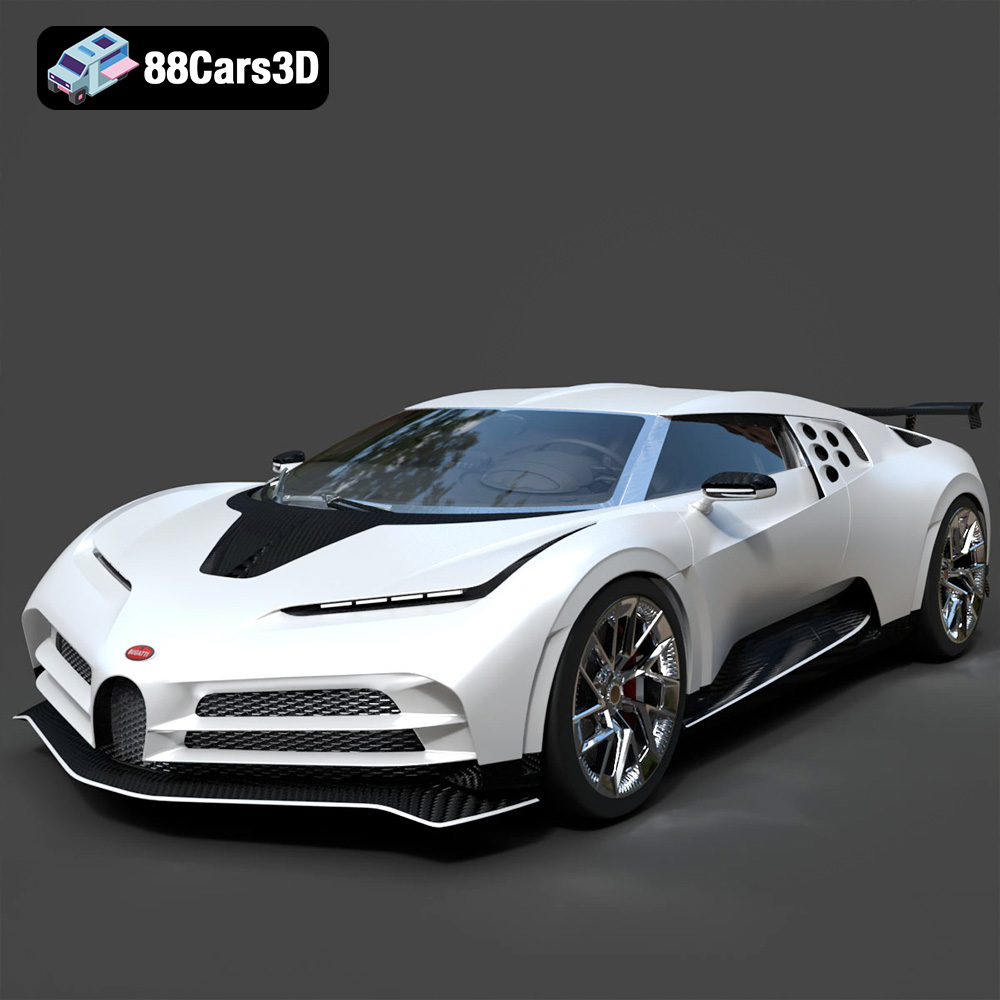
Today, we delve into the meticulous craftsmanship behind premium 3D car models, exemplified by a standout asset: the Bugatti Centodieci 2020 3D Model. This particular model, available on 88cars3d.com, is not just a digital representation; it’s a versatile toolkit for professionals across various industries, bridging the gap between cutting-edge automotive engineering and the limitless possibilities of digital creation. Inspired by the iconic Bugatti EB110, the Centodieci itself is a marvel of modern design fused with heritage, and its digital counterpart mirrors this exclusivity and precision, offering unparalleled opportunities for automotive rendering, game development, AR/VR experiences, and even tangible 3D prints.
Whether you’re an architect visualizing a luxury garage, a game developer populating a high-stakes racing environment, or a marketing specialist creating a captivating product showcase, understanding the technical depth and versatility of such assets is key. Let’s explore how a model of this caliber can elevate your projects from concept to stunning reality.
When acquiring a high-quality 3D asset like the Bugatti Centodieci 2020 3D Model, the variety of included file formats is a critical factor in determining its utility across different software environments and applications. Each format serves a specific purpose, optimized for particular workflows and output types. Understanding these distinctions is crucial for seamless integration and optimal performance in your projects.
The .blend format is native to Blender, the popular open-source 3D creation suite. When you receive a model in .blend format, it’s typically a fully editable scene, often including pre-configured materials, lighting setups, and possibly even rigging or animations. For the Bugatti Centodieci, this means an artist can dive directly into the Blender environment, modify materials, adjust the mesh, or even repurpose the scene for unique animations. It offers the most flexibility for those working within the Blender ecosystem, ensuring all original data, such as modifiers, drivers, and custom properties, are preserved.
.fbx (Filmbox) is a proprietary file format owned by Autodesk and has become an industry standard for interoperability between various 3D applications, especially in game development and animation pipelines. Its strength lies in its ability to store a comprehensive range of data, including geometry, materials (with texture references), animation, skeletons, and blend shapes. For assets destined for Unreal Engine, Unity, or other real-time platforms, .fbx is often the preferred choice due to its robust support for baked animations and efficient handling of complex scene data. The Bugatti Centodieci 3D Model in .fbx format ensures compatibility and performance across professional pipelines.
The .obj (Wavefront OBJ) format is one of the oldest and most widely supported 3D file formats. It’s a universal standard, excellent for exchanging static mesh data across almost any 3D software. An .obj file primarily contains geometry information (vertices, UV coordinates, normals, and faces) and typically references an accompanying .mtl (material) file for basic material properties and texture paths. While it doesn’t support animation or advanced scene data, its widespread compatibility makes it a safe bet for ensuring your Bugatti Centodieci model can be opened and worked on in virtually any 3D application, from ZBrush to Cinema 4D.
.glb is the binary version of the glTF (Graphics Language Transmission Format) format, which is rapidly gaining traction as the “JPEG of 3D.” Designed for efficient transmission and loading of 3D scenes and models by engines and applications, .glb bundles all model data—geometry, materials, textures, and even animations—into a single, self-contained file. This makes it incredibly efficient for web-based 3D viewers, AR/VR applications, and mobile experiences. For presenting the Bugatti Centodieci in an immersive virtual showroom or an interactive web configurator, the .glb format offers optimal performance and accessibility.
The .stl (Stereolithography) format is the de facto standard for 3D printing. It represents a 3D model as a collection of unconnected triangular facets, defining only the surface geometry of an object without color, texture, or other CAD attributes. For the Bugatti Centodieci 2020 3D Model to be 3D printable, its mesh must be “manifold,” meaning it has no holes, self-intersections, or inverted normals, forming a completely watertight volume. The inclusion of an .stl option makes it possible to bring this hypercar from the digital realm into a tangible collectible or a scale model, perfect for enthusiasts or physical prototyping.
.ply (Polygon File Format) is often used for storing 3D data from 3D scanners, particularly in applications requiring high precision. It can store a variety of properties including color, transparency, surface normals, and range data, often per vertex or per face. While less common for general-purpose 3D models like cars, its inclusion suggests the model’s robustness and suitability for scientific visualization, reverse engineering, or detailed CAD analysis where precise geometric data is crucial.
The .unreal format signifies an asset specifically optimized and packaged for use within the Unreal Engine. This might be a native Unreal asset export, or perhaps an .fbx import that has been pre-processed and configured within Unreal Engine itself. Such an asset often comes with pre-assigned PBR materials, collision meshes, LODs (Levels of Detail), and potentially even Blueprint functionality, making it ready for immediate integration into an Unreal project. For game developers or real-time visualization artists working with the Bugatti Centodieci, this format significantly streamlines the workflow and ensures optimal performance within the engine.
Similar to .blend for Blender, the .max format is native to Autodesk 3ds Max, a powerful and widely used 3D modeling, animation, and rendering software. A .max file contains the complete 3ds Max scene, including geometry, cameras, lights, materials, modifiers, and animation data. For professionals relying on 3ds Max for high-end automotive rendering and visualization, the .max file provides full creative control and access to all the original setup, often including V-Ray or Corona Renderer materials, which are critical for photorealistic output.
The comprehensive range of formats offered with the Bugatti Centodieci 2020 3D Model from 88cars3d.com underscores its adaptability and value, ensuring that regardless of your software of choice or your project’s specific requirements, you have an appropriate, optimized version of this exceptional asset at your disposal.
Photorealistic automotive rendering is a highly specialized field, demanding an acute eye for detail, mastery of lighting, and a deep understanding of physically based materials. The Bugatti Centodieci 2020 3D Model, with its “clean topology and real-world scale accuracy,” provides the perfect foundation for creating stunning visuals that are virtually indistinguishable from real-life photographs.
Achieving realism begins with materials. High-quality 3D car models like the Centodieci are built with PBR workflows in mind, utilizing texture maps for base color (Albedo), metallic, roughness, normal, and ambient occlusion. For a hypercar, this means meticulously recreating the intricate reflections of its polished bodywork, the subtle texture of its carbon fiber elements, the precise stitching on its sport bucket seats, and the fine details of its multi-spoke wheels. In 3ds Max, for instance, V-Ray or Corona Renderer materials can be configured to mimic real-world metallic paints, clear coats, and glass, reacting accurately to light. In Blender, Cycles or Eevee render engines offer robust PBR support, allowing artists to replicate the Bugatti’s premium trim and digital instrumentation with convincing fidelity.
Lighting is the soul of a render. For luxury automotive visualization, artists often employ a combination of HDRI (High Dynamic Range Image) environment maps for realistic global illumination and studio-style area lights for precision highlighting. HDRI maps effectively simulate real-world lighting conditions, from a sun-drenched desert road to a sophisticated showroom. Using the Bugatti Centodieci 2020 3D Model, an artist might place it within a virtual automotive studio, using softboxes and reflectors to emphasize its aggressive aerodynamic bodywork, the sharp front fascia, and the sculpted rear. Strategic placement of lights can draw attention to the slim LED headlight design or the stacked quad exhaust configuration, creating dramatic visual narratives for marketing campaigns or cinematic productions.
Even the most detailed model needs expert presentation. Photography principles apply directly to 3D rendering. Utilizing dynamic camera angles, depth of field, and thoughtful composition can elevate a render from good to exceptional. For a hypercar like the Centodieci, low angles often emphasize its powerful stance, while close-ups on its distinctive multi-spoke wheels or interior features (like the detailed hypercar cockpit layout and carbon fiber elements) highlight the model’s “optimized geometry suitable for close-up renders.” The Bugatti Centodieci 2020 3D Model, with its separate wheels and steering components, also allows for dynamic poses and motion blur, adding a sense of speed and action to still images or animations.
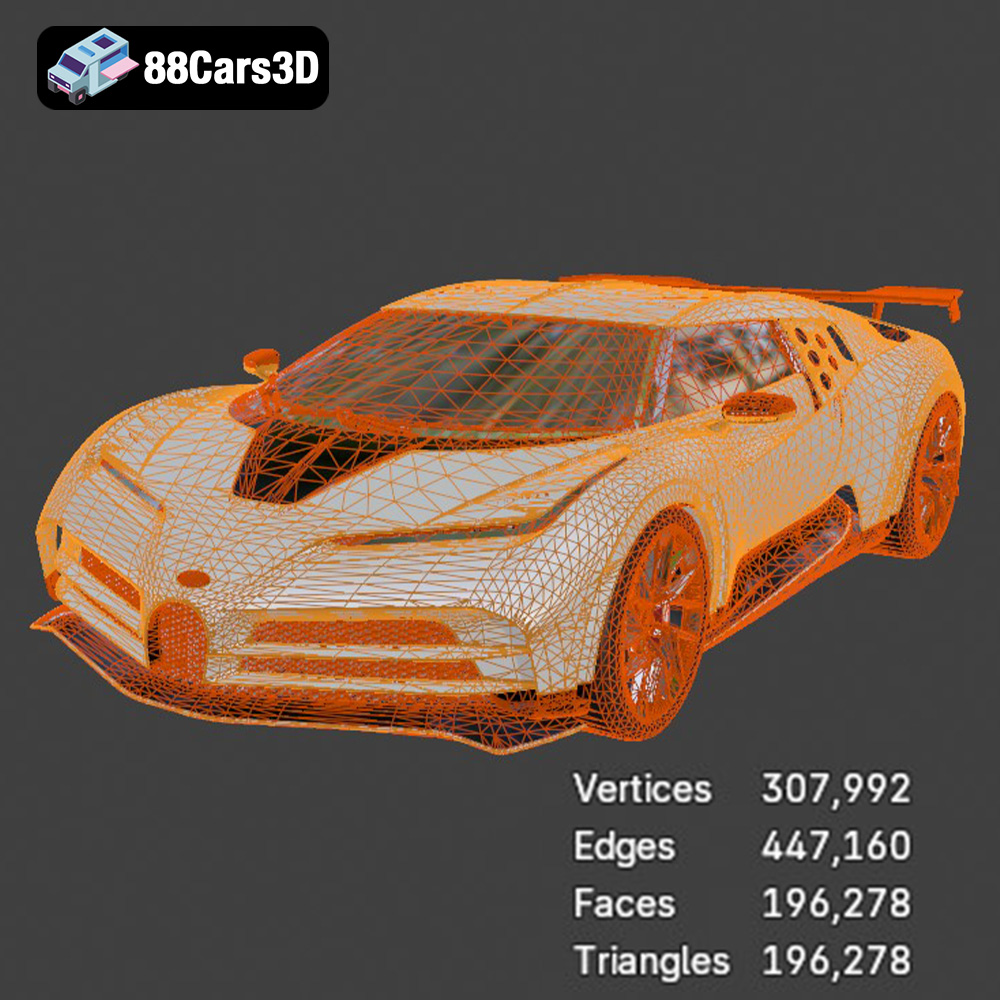
The role of 3D car models extends far beyond static renders, driving the immersive experiences in modern game development and cutting-edge AR/VR applications. Here, performance and optimization are just as critical as visual fidelity. The Bugatti Centodieci 2020 3D Model is designed with these demands in mind, offering “optimized polygon flow for performance and realism.”
In game engines like Unreal and Unity, raw polygon counts can significantly impact frame rates. High-detail models like the Centodieci must be judiciously optimized for real-time environments. This often involves creating multiple Levels of Detail (LODs). An LOD0 might be the full-detail model for close-up views, while LOD1, LOD2, and so on, progressively reduce polygon count while maintaining visual integrity for distant shots. The “optimized polygon flow” of the Bugatti Centodieci ensures that even at higher detail levels, the mesh is clean and efficient, allowing developers to create these LODs effectively. Proper UV mapping is also essential for baking lighting, shadows, and ambient occlusion, further enhancing realism without adding geometric complexity.
The inclusion of .fbx and .unreal formats with the Bugatti Centodieci 2020 3D Model simplifies its integration into popular game engines. When importing into Unreal Engine, the .fbx file typically brings in the mesh, materials, and pivot points. Developers then create PBR materials using the provided textures, set up collision meshes for realistic physics, and configure vehicle Blueprints. The “proper pivot setup for steering and wheel rotation” is invaluable here, saving significant setup time for animations and interactive controls. For Unity, a similar process is followed, utilizing its native PBR shader graph and vehicle physics components. These optimized game assets are critical for creating realistic racing games, open-world supercar collections, and high-performance vehicle packs.
AR/VR applications demand lightweight yet high-quality assets to maintain smooth frame rates and prevent motion sickness. The .glb format is particularly beneficial here, offering a streamlined, optimized package for interactive 3D content. Imagine a luxury automotive brand creating a virtual showroom where potential buyers can explore the Bugatti Centodieci in 1:1 scale, interact with its detailed hypercar cockpit layout, change body colors, or modify wheel finishes in real-time. The optimized geometry and clean mesh of the Centodieci 3D Model ensure a fluid, immersive experience, perfect for virtual showrooms and interactive hypercar experiences where every detail, from the slim LED headlights to the detailed sport bucket seats, can be examined up close.
Beyond screens and virtual worlds, the Bugatti Centodieci 2020 3D Model also offers the unique potential to become a physical object through 3D printing. The inclusion of the .stl format, alongside detailed 3D print settings, opens up a new avenue for enthusiasts, collectors, and prototyping specialists to own a tangible piece of this digital hypercar.
The .stl file provided with the Centodieci is designed to be “manifold geometry,” meaning it’s a solid, watertight mesh ideal for 3D printing. For FDM (Fused Deposition Modeling) printers, which build models layer by layer with extruded plastic, considerations like “wall thickness: 1.2–2.0 mm” are crucial to ensure structural integrity. For higher detail and smoother finishes, especially for collectible hypercar miniatures, resin-based SLA (Stereolithography) or DLP (Digital Light Processing) printers are often preferred, as they can achieve finer layer heights like “0.08–0.16 mm,” capturing the delicate lines of the Centodieci’s aggressive aerodynamics and sculpted hood.
Achieving a successful 3D print requires careful attention to scale, support structures, and print orientation. The recommended scales of “1:32 / 1:24 / 1:18 / 1:12” allow for a range of collectible sizes. Due to the complex overhangs of the Centodieci – its rear wing, splitter, mirrors, and aerodynamic bodywork – “supports” are explicitly “required.” These temporary structures prevent drooping during printing and are removed afterward. “Print orientation” is also key: printing the “body printed angled for smooth aerodynamic surface finish” minimizes layer lines on visible surfaces, while “wheels printed separately” allows for better detail and easier post-processing, especially for the high-performance multi-spoke wheel design.
Once printed, the Bugatti Centodieci model enters the post-processing phase. This is where a raw print transforms into a display-worthy replica. “Sanding, primer, high-gloss automotive paint, optional carbon fiber detailing” are all critical steps. Fine sanding removes layer lines and imperfections. A primer coat prepares the surface for paint. Then, using high-quality automotive paints, the model can be finished in the Centodieci’s signature white, deep blue, or even a custom color, replicating the exclusive finishes of the real hypercar. For those seeking extreme realism, detailed masking and painting for brake caliper colors, headlight lenses, and intricate carbon fiber patterns (which can be applied using decals or careful painting) will bring the miniature to life, echoing the fidelity of the digital 3D car model.
The true value of a premium asset like the Bugatti Centodieci 2020 3D Model from 88cars3d.com lies in its ability to streamline and enhance professional workflows across diverse sectors. It’s more than just a pretty model; it’s a time-saving, quality-boosting investment for anyone working with digital automotive content.
For automotive design studios, advertising agencies, and architectural visualization firms, having immediate access to a high-fidelity hypercar model is invaluable. Instead of spending hundreds of hours modeling the Centodieci from scratch, artists can download this “high-detail digital recreation,” allowing them to focus on creative tasks like scene composition, advanced lighting, and animation. This dramatically accelerates production cycles for luxury automotive marketing, hypercar showcases, and premium promotional campaigns. It means more iterations, higher quality output, and faster delivery to clients who expect nothing less than perfection.
The Bugatti Centodieci is an icon of luxury and performance. Incorporating its 3D model into marketing materials allows brands to create captivating visuals that resonate with a high-end audience. Imagine a dynamic advertisement where the Centodieci races through a futuristic city, or a sophisticated configurator where customers can customize every detail before a physical car is even produced. The model’s “suitable for cinematic close-ups and high-resolution renders” ensures it looks spectacular in any marketing collateral, from glossy print ads to immersive digital experiences. Companies can “change body color,” “adjust brake caliper colors,” and “modify wheel finish” to match campaign themes or offer personalized viewing experiences, adding tremendous value to their luxury lifestyle visuals.
Beyond commercial applications, high-quality 3D car models are pivotal in educational and simulation contexts. Automotive engineering students can use the Centodieci 3D Model for detailed aerodynamic studies, understanding complex body proportions and airflow dynamics. Driving schools or professional racing simulators can integrate the model into their platforms for realistic training experiences, leveraging its “real-world scale accuracy” and “optimized polygon flow.” It provides a cost-effective, safe, and repeatable environment for exploring the intricacies of hypercar design and performance, whether for aerodynamic study presentations or advanced driver training simulations.
The world of 3D modeling continues to redefine what’s possible in automotive visualization, game development, and interactive experiences. The Bugatti Centodieci 2020 3D Model stands as a testament to the meticulous detail and technical prowess available in today’s digital asset marketplace. With its precise recreation of an ultra-exclusive hypercar, optimized geometry, and comprehensive range of file formats—including .blend, .fbx, .obj, .glb, .stl, .ply, .unreal, and .max—it serves as an incredibly versatile asset for professionals across various industries.
From producing stunning photorealistic renders for luxury marketing campaigns to integrating seamlessly as a high-performance game asset in leading engines, and even transitioning into a tangible, 3D-printed collectible, this model offers unparalleled utility. Its design ensures readiness for complex automotive rendering projects, immersive AR/VR showrooms, and rigorous simulation environments.
For artists, developers, and designers seeking to elevate their projects with premium automotive content, the Bugatti Centodieci 2020 3D Model represents an investment in quality and efficiency. You can explore this exceptional model and a wide range of other high-quality 3D car models by visiting 88cars3d.com, your premier destination for digital automotive excellence.
The Bugatti Centodieci 2020 3D Model is a high-detail digital recreation of the ultra-exclusive hypercar inspired by the legendary EB110. Limited to only a handful of units worldwide, the Centodieci combines modern Bugatti engineering with 1990s design heritage, delivering extreme performance and rare collector prestige. This 3D model accurately represents the aggressive aerodynamic bodywork, sharp front fascia with ultra-slim LED headlights, large side air intakes, sculpted rear with stacked exhaust outlets, fixed rear wing, and distinctive multi-spoke wheel design. Built with clean topology and real-world scale accuracy, it is ideal for rendering, animation, hypercar visualization, game development, and AR/VR luxury automotive projects. Convertible to .stl format for collectible hypercar miniatures and display models.
$39.99
.2020hypercar
.arvr
.automotive
.blend
.bugatti
.car3dmodel
.centodieci
.exoticcar
.fbx
.gameasset
.glb
.luxurycar
.max
.obj
.ply
.rendering
.simulation
.stl
.supercar
.unreal