⚡ FLASH SALE: Get 60% OFF All Premium 3D & STL Models! ⚡

In today’s fast-paced digital landscape, the demand for realistic and technically sound 3D assets is paramount across a myriad of industries. From captivating automotive marketing campaigns and advanced engineering visualizations to immersive game environments and precise AR/VR training simulations, the quality of a 3D model directly impacts project success and user experience. Professionals rely on assets that are not only visually stunning but also meticulously crafted with clean topology, accurate scale, and robust file format compatibility.
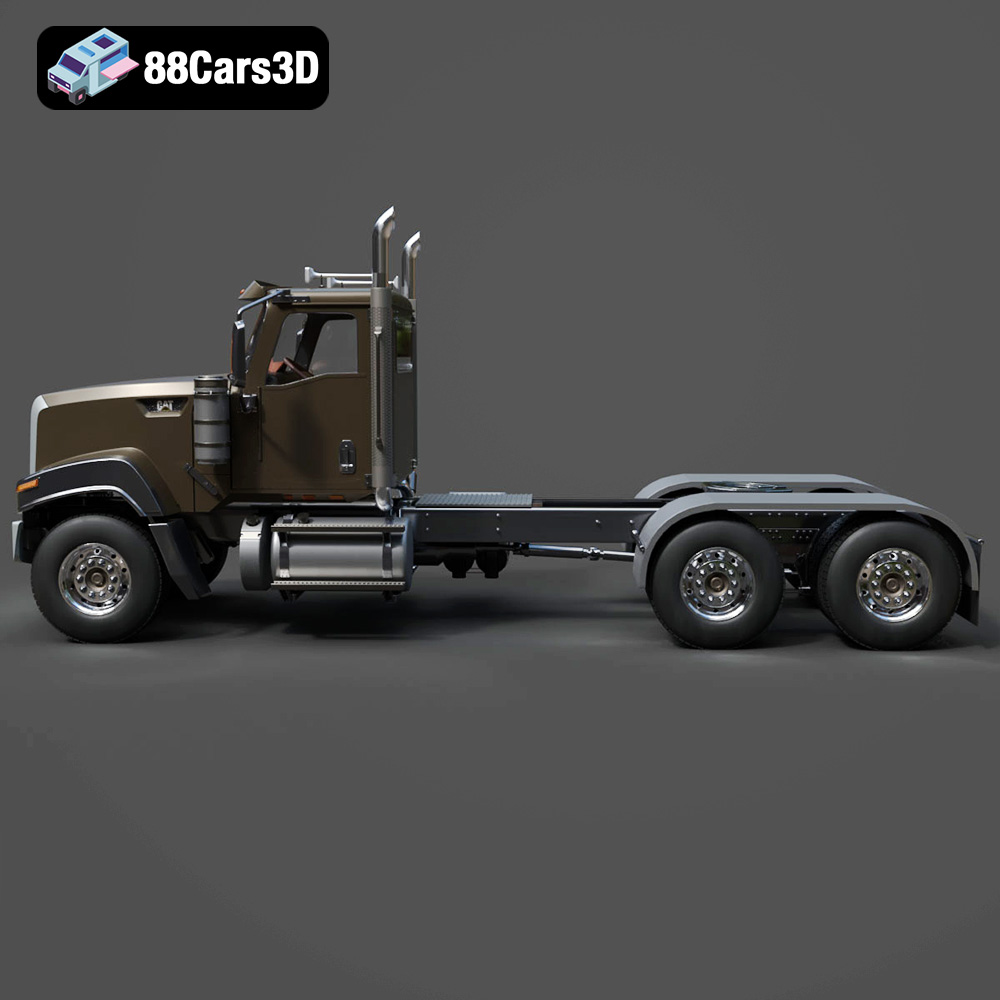
It’s within this demanding context that specialized 3D car models like the Caterpillar CT680 Tractor Truck 2015 3D Model shine. This heavy-duty vocational tractor, revered for its industrial strength and aerodynamic efficiency in the real world, has been digitally recreated with an exacting level of detail that makes it an invaluable asset for designers, developers, and animators. Whether you’re aiming to depict logistical prowess in a commercial, integrate a realistic heavy vehicle into a simulation, or even 3D print a detailed scale model, the foundational quality of the digital asset is non-negotiable. This blog post delves into the technical intricacies and versatile applications of such models, demonstrating how they empower innovation across diverse professional fields.
The automotive industry, perhaps more than any other, has embraced 3D technology as an indispensable tool throughout the entire product lifecycle. From initial concept design and engineering analysis to marketing and virtual showrooms, high-fidelity 3D car models serve as the digital twin that drives decision-making and engagement. These aren’t merely static images; they are dynamic, interactive representations that can be manipulated, animated, and integrated into complex digital ecosystems.
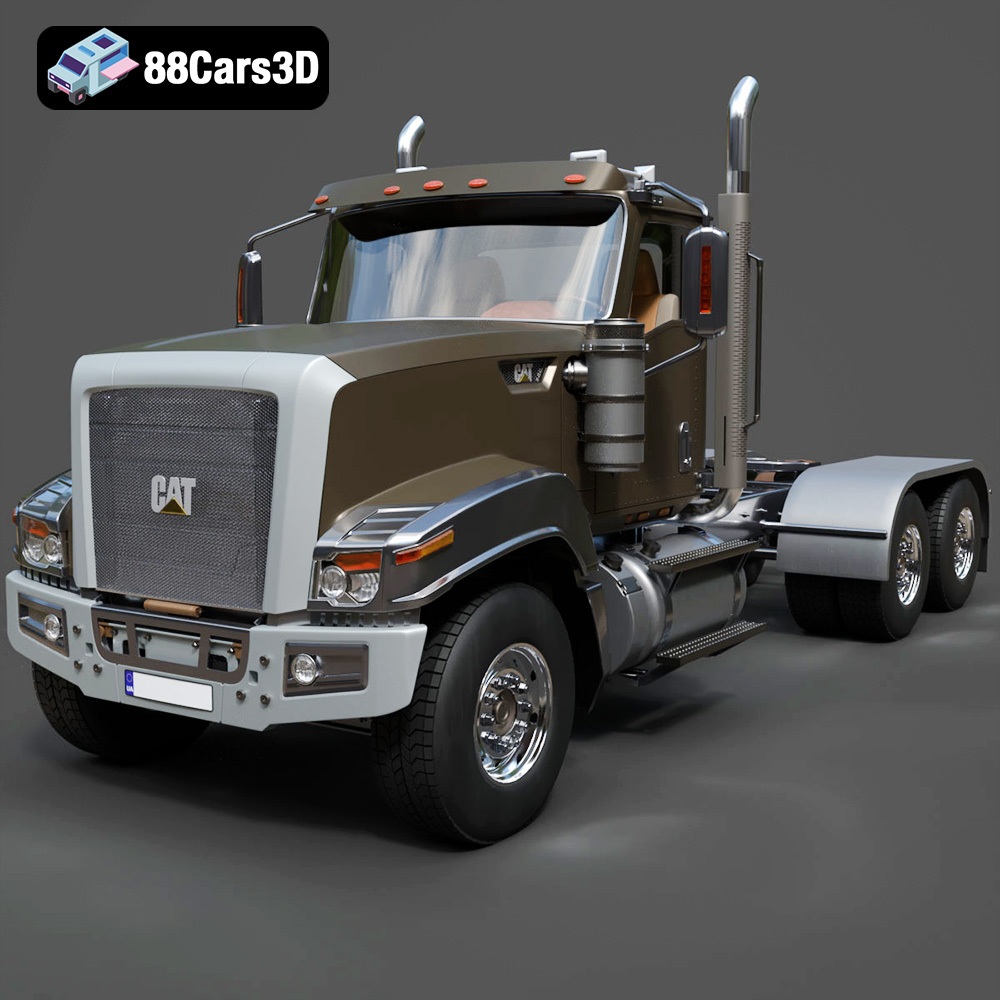
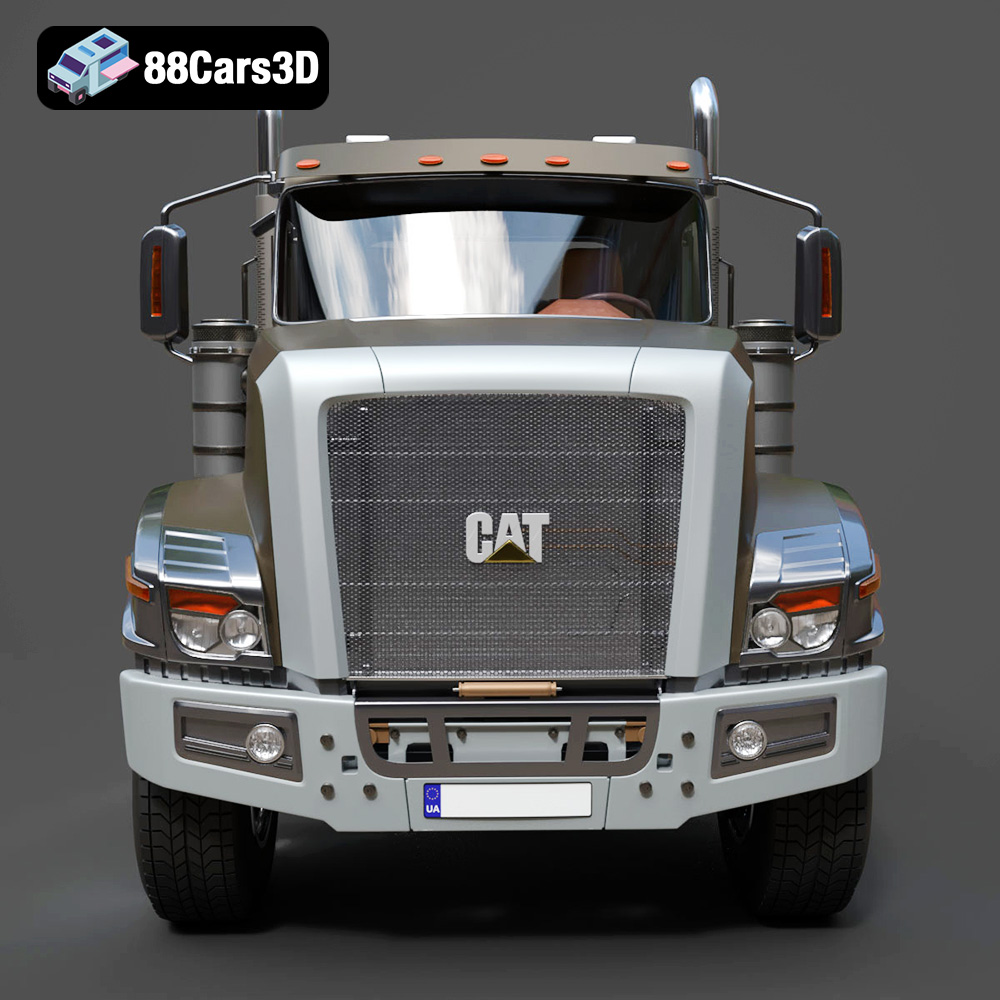
For automotive rendering, precision is paramount. A high-quality 3D car model must perfectly replicate the real-world vehicle’s dimensions, curves, material properties, and mechanical components. This level of accuracy is critical for creating marketing visuals that are indistinguishable from photographs, allowing manufacturers to showcase new vehicles before physical prototypes even exist. For instance, the Caterpillar CT680 Tractor Truck 2015 3D Model provides a solid foundation with its accurate body proportions, detailed grille, and reinforced bumper. These elements, when combined with sophisticated rendering techniques, can produce compelling imagery for brochures, advertisements, and online presentations. Clean topology, proper UV mapping for textures, and real-world scale ensure that light interacts realistically with surfaces, materials appear authentic, and the overall visual impact is maximized, leaving no room for discrepancies that could undermine credibility.
Beyond static images, advanced 3D models bridge the gap between abstract concepts and tangible experiences. They facilitate iterative design reviews, allowing engineers and designers to visualize modifications in real-time within a virtual environment. In simulations, precise 3D car models are crucial for accurate physics calculations and realistic behavioral responses. For AR/VR applications, models like the CT680 are transformed into interactive, immersive experiences, enabling users to explore vehicles in a virtual showroom, conduct maintenance training, or simulate driving conditions without ever stepping into a physical truck. This capability is revolutionizing everything from vehicle prototyping to operator training, offering cost-effective and highly engaging alternatives to traditional methods.
One of the most critical aspects of working with professional 3D car models, and indeed any 3D asset, is understanding the various file formats available. Each format is designed with specific strengths, making it suitable for different stages of a workflow or particular application types. The Caterpillar CT680 Tractor Truck 2015 3D Model from 88cars3d.com is provided in a comprehensive range of formats, ensuring maximum compatibility and utility for diverse projects.
The .blend format is the native file type for Blender, a powerful open-source 3D creation suite. A .blend file typically contains a complete scene, including the 3D mesh geometry, materials, textures, lighting, camera setups, animation data, and even physics simulations. This format is ideal for users working primarily within Blender who need full editability and access to all scene components. It allows for advanced customization, re-rigging, re-texturing, and complex animation setups. For the Caterpillar CT680, having the .blend file means artists can dive deep into the model’s structure, adjust its materials using Blender’s Cycles or Eevee renderers, or integrate it seamlessly into a larger Blender-based animation project.
The .fbx (Filmbox) format is a proprietary file format owned by Autodesk and is widely considered an industry standard for exchanging 3D data between different software applications. It excels at preserving a broad range of 3D data, including geometry, materials (with some limitations), textures, animations, skinning, and camera information. .fbx is particularly ideal for game development pipelines, making it the preferred choice for exporting assets to engines like Unreal Engine and Unity. Its robust support for animation makes it invaluable for animated vehicles where separate wheels and steering components need to retain their pivot setup for rotation, as is the case with the CT680 model.
The .obj (Wavefront OBJ) format is one of the most widely supported and universal 3D file formats. It primarily stores geometric data, including vertices, normals, UV coordinates, and faces. While it can reference external material (.mtl) and texture files, it doesn’t embed them directly or support animations. Its simplicity and widespread compatibility make it an excellent choice for basic mesh exchange between almost any 3D software. For a 3D car model, .obj is a reliable fallback for importing the base geometry into a new software environment for texturing and rendering from scratch, ensuring the core shape and detail of the Caterpillar CT680 are maintained.
The .glb (GL Transmission Format Binary) is the binary version of glTF, a royalty-free specification for the efficient transmission and loading of 3D scenes and models by applications. .glb files encapsulate geometry, materials, textures, and animation into a single, compact file. This optimization makes it perfect for web-based 3D viewers, augmented reality (AR), virtual reality (VR), and browser-based applications where quick loading and efficient rendering are crucial. For interactive fleet demonstrations or immersive industrial simulations involving the CT680, .glb offers a streamlined solution for delivering high-quality assets in real-time, especially useful for showcasing 3D car models directly on a website.
The .stl (Stereolithography) format is the de facto standard for 3D printing. It represents a 3D model as a collection of unconnected triangular facets, defining only the surface geometry of an object without color, texture, or material information. While simple, its universal acceptance by 3D printing software (slicers) makes it indispensable for manufacturing physical objects. The Caterpillar CT680 model’s availability in .stl format means it can be directly prepared for 3D printing, allowing for the creation of scale truck models or display miniatures, following the specified printing settings for optimal results.
The .ply (Polygon File Format or Stanford Triangle Format) is another format that describes a 3D object as a collection of polygons. Unlike .stl, .ply can also store additional information such as color, transparency, surface normals, and even confidence values for each vertex. This makes it suitable for scientific applications, CAD, and situations requiring more detailed mesh data than .obj or .stl. It’s often used for scanned data and applications that require a higher level of mesh integrity and additional per-vertex or per-face data, providing a robust option for the CT680 model in technical analysis contexts.
While often used in conjunction with .fbx imports, the inclusion of an .unreal file (or specific Unreal Engine project files/assets packaged for direct import) indicates that the model is specifically prepared and optimized for the Unreal Engine. This could mean it comes with pre-configured materials, collision meshes, LODs (Levels of Detail), and blueprint setups, significantly streamlining the integration process for game developers and simulation engineers. For the Caterpillar CT680, an Unreal-ready asset reduces setup time, allowing developers to immediately focus on vehicle physics and interaction within their real-time environments.
The .max format is the native file type for Autodesk 3ds Max, a leading software for 3D modeling, animation, and rendering in architectural visualization, design, and media. Like .blend, a .max file stores a complete scene with geometry, lights, cameras, materials (especially V-Ray, Corona, Arnold setups), and animation data. Providing the CT680 in .max format gives 3ds Max users full access to the original scene setup, allowing for advanced rendering with powerful engines, complex animation sequences, or integration into larger visualization projects that leverage 3ds Max’s extensive toolset.
The Caterpillar CT680 Tractor Truck 2015 3D Model exemplifies the meticulous craftsmanship required for industrial-grade 3D assets. It’s more than just a representation; it’s a technical blueprint brought to life in the digital realm, built to serve the demanding requirements of various professional applications. This level of detail and technical correctness is what sets premium 3D car models apart.
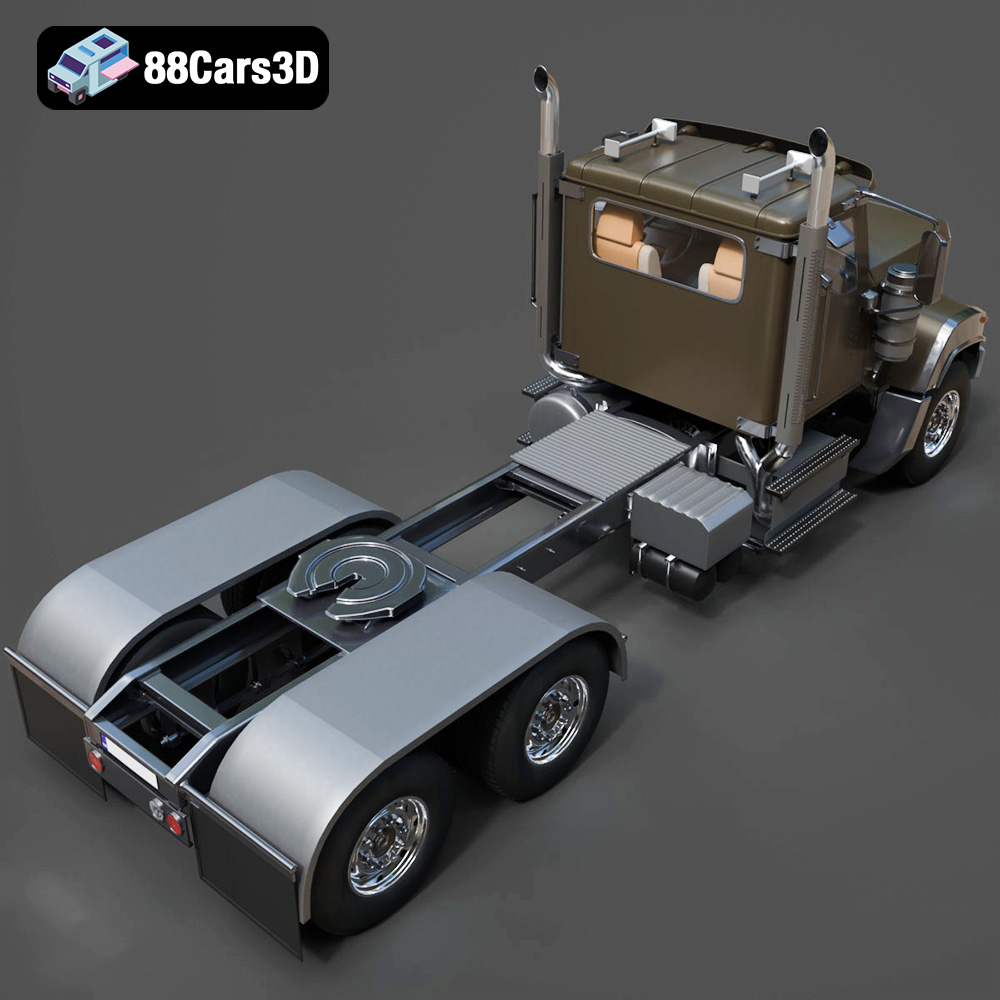
The exterior of the CT680 model accurately mirrors its real-world counterpart, from the distinctive aerodynamic hood and bold grille design to the reinforced bumper and extended mirrors. Every component, including the modeled fuel tanks, exhaust system, side steps, and the full chassis frame with suspension detailing, has been meticulously recreated. The critical fifth-wheel plate for trailer attachment is also present, allowing for realistic coupling simulations. Separate wheels and steering components are intelligently modeled, providing the necessary articulation for dynamic animation without compromising realism. Inside the cabin, the model doesn’t disappoint, featuring a detailed dashboard, instrument cluster, steering wheel, and driver control layout. The driver seat and cabin interior structure are also present, creating an immersive experience for any internal renders or walk-throughs.
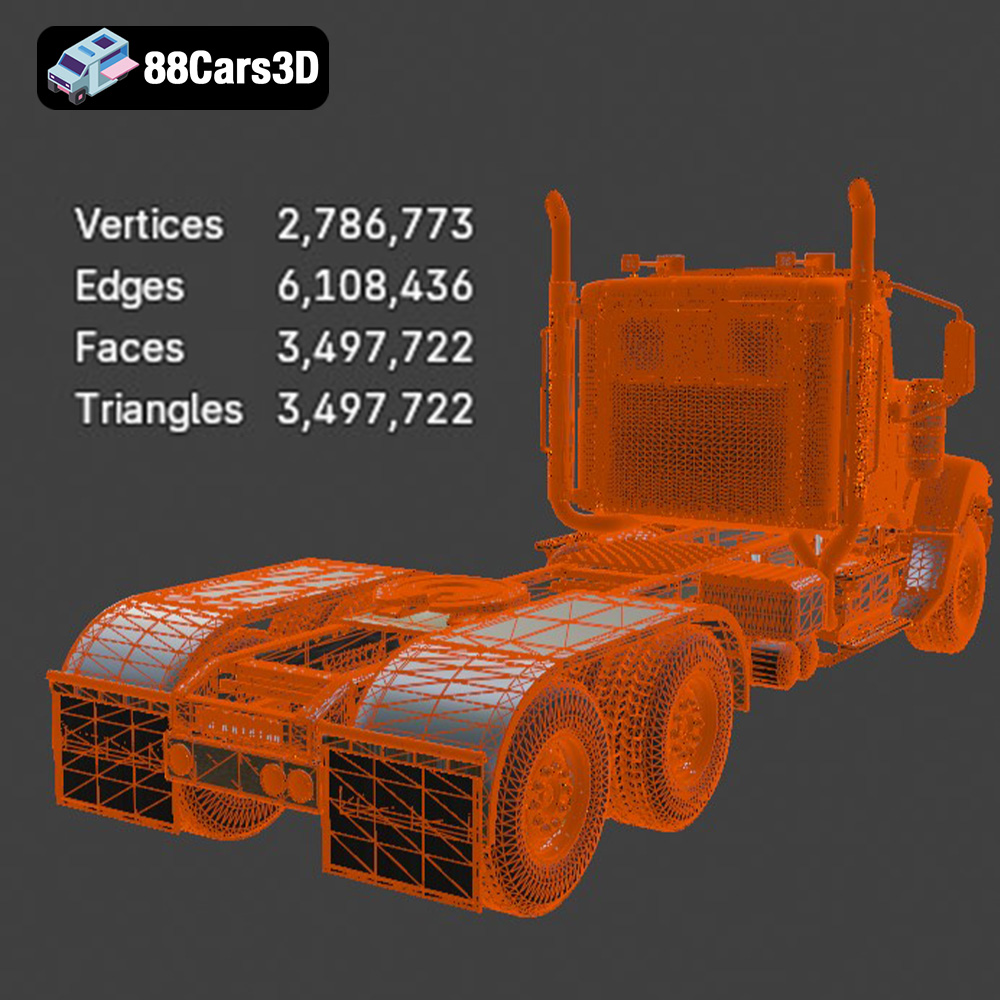
Beyond visual accuracy, the technical underpinnings of this 3D car model are designed for optimal performance and realism. It boasts a clean and well-organized mesh structure, ensuring efficient rendering and smooth deformation during animation. Real-world scale accuracy is maintained, which is vital for correct physical interactions in simulations and for seamless integration into existing scenes. Crucially, the model features a proper pivot setup for steering and wheel rotation, simplifying the animation process and enabling realistic vehicle dynamics in game engines. The optimized polygon flow strikes a perfect balance between high fidelity and performance, making it suitable for both high-quality renders and real-time engines. This careful consideration of technical advantages makes the CT680 model highly compatible with major 3D software platforms and engines, reinforcing its value as a versatile game asset or visualization tool.
The versatility of the Caterpillar CT680 2015 3D Model extends directly into various professional workflows, making it a valuable asset for a wide range of creative and technical endeavors. Its robust design and multiple file formats ensure seamless integration into industry-standard software and pipelines.
For artists focused on producing photorealistic renders and high-impact visualizations, the CT680 model, particularly in its .max and .blend formats, offers an excellent starting point. In 3ds Max, artists can leverage powerful renderers like V-Ray or Corona to create stunning images. The workflow typically involves importing the .max file, setting up PBR (Physically Based Rendering) materials using high-resolution textures (if included, or custom-created), adjusting lighting rigs for realism (e.g., HDRI environment maps for global illumination), and positioning cameras to capture dynamic angles. Animation capabilities are also fully accessible, allowing for sophisticated truck movements, cargo loading sequences, or fleet presentations.
Similarly, Blender users can open the native .blend file and utilize its Cycles or Eevee render engines. The clean mesh structure and proper UVs simplify the application of new materials and textures. Artists can quickly experiment with different paint schemes, add custom decals, and adjust the truck’s components for various scenes – perhaps depicting it in a bustling logistics yard or a serene highway setting. The ability to modify wheel configurations and attach compatible trailer models directly within these software packages greatly enhances the model’s utility for diverse visualization scenarios, solidifying its place among top-tier 3D car models available on platforms like 88cars3d.com.
For game developers and real-time simulation engineers, the Caterpillar CT680 3D Model serves as an ideal game asset. Its optimized geometry and proper pivot setups are crucial for efficient performance within engines like Unreal Engine. The workflow typically involves importing the .fbx or leveraging the pre-prepared .unreal assets directly into the engine. Once imported, developers can create robust material instances for customization, implement LODs (Levels of Detail) to ensure optimal performance at varying distances, and generate precise collision meshes for realistic vehicle physics. The separate wheels and steering components, combined with the accurately defined pivot points, allow for the implementation of complex vehicle blueprints, enabling realistic steering, suspension, and tire deformation. This makes the CT680 perfect for truck simulators, open-world logistics games, and sophisticated heavy transport systems where authenticity is key to player immersion.
The utility of a meticulously crafted 3D model like the Caterpillar CT680 extends far beyond purely digital realms, offering tangible benefits through physical replication and highly interactive immersive experiences.
One of the most exciting applications of the Caterpillar CT680 Tractor Truck 2015 3D Model is its capability for 3D printing. The inclusion of the .stl format makes this heavy-duty vocational tractor convertible into physical scale models. The process involves importing the .stl file into a slicer software, where specific print settings are applied to ensure a successful output. For the CT680, recommended scales such as 1:32, 1:24, 1:18, or 1:14 offer various levels of detail and printability. A layer height of 0.12–0.20 mm is suggested for FDM printing, ensuring a good balance between speed and surface quality, though for finer details, resin printing might be preferred. Wall thickness of 2–3 mm and an infill of 20–35% provide structural integrity.
Crucially, supports will be required for complex geometries like mirrors, exhaust stacks, and chassis overhangs to prevent sagging during printing. A recommended print orientation includes printing the cab upright and the chassis flat for stability, while wheels are best printed separately to maximize detail. Post-processing steps like sanding, priming, and applying an industrial paint finish, perhaps with optional decals, can elevate a raw print into a museum-quality miniature car or a robust automotive collectible for tabletop display or prototype review. This blend of digital precision and physical manifestation showcases the model’s versatile nature as a truly comprehensive 3D car model.
For augmented reality (AR), virtual reality (VR), and advanced simulation environments, the CT680 model is an exemplary asset. The .glb format is particularly advantageous here, providing an optimized, single-file solution perfect for web-based AR experiences or rapid deployment in mobile VR applications. Imagine an interactive fleet demonstration where potential buyers can walk around a virtual CT680 in their own driveway using an AR app, examining its features in real-time. In VR, the model forms the core of immersive industrial simulations, allowing drivers to undergo training modules, practice complex maneuvers, or understand maintenance procedures in a safe, virtual environment.
These applications extend to vocational training simulations and heavy vehicle modeling, providing a realistic and cost-effective platform for skill development. The model’s optimized geometry and clean topology ensure smooth frame rates and a convincing sense of presence within these immersive worlds, making it an indispensable tool for educational institutions and corporate training programs alike. The ability to integrate such high-quality 3D car models into these cutting-edge technologies further highlights their transformative impact on learning and engagement.
The journey from a physical heavy-duty tractor to a meticulously crafted digital asset like the Caterpillar CT680 Tractor Truck 2015 3D Model underscores the profound impact of high-fidelity 3D car models across modern industries. We’ve explored how its technical excellence, from accurate proportions and detailed features to optimized geometry and multi-format compatibility, makes it indispensable for a multitude of professional applications.
Whether you’re an automotive designer seeking a realistic visualization, a game developer building an immersive simulator, an architect integrating vehicles into a scene, or an enthusiast keen on 3D printing a detailed scale model, the CT680 offers the precision and versatility required. Its support for workflows in 3ds Max, Blender, Unreal Engine, and its readiness for AR/VR and 3D printing, exemplify the standard for premium 3D assets. Embracing such high-quality 3D car models not only enhances project outcomes but also unlocks new possibilities for innovation and engagement in an increasingly digital world. For access to an expansive range of professional-grade 3D car models, including the Caterpillar CT680, explore the curated collection available at 88cars3d.com.
The Caterpillar CT680 Tractor Truck 2015 3D Model is a high-detail digital recreation of the heavy-duty vocational tractor developed by Caterpillar Inc. Built for durability and on-highway performance, the CT680 combines industrial strength with aerodynamic efficiency, making it a popular choice for logistics, construction, and long-haul transport operations. This 3D model accurately represents the truck’s aerodynamic hood, bold grille design, reinforced bumper, extended mirrors, exposed chassis frame, and fifth-wheel coupling system. Designed with clean topology and real-world proportions, it is ideal for rendering, animation, simulation, game development, and AR/VR industrial visualization. Perfect for highway scenes, logistics yards, construction environments, freight simulations, and commercial fleet presentations.
$59.90
.arvr
.blend
.caterpillar
.ct680
.fbx
.gameasset
.glb
.heavydutytruck
.industrialvehicle
.logisticsvehicle
.max
.obj
.ply
.rendering
.simulation
.stl
.tractortruck
.truck3dmodel
.unreal