⚡ FLASH SALE: Get 60% OFF All Premium 3D & STL Models! ⚡

The roar of a classic V8, the unmistakable lines of American muscle – few things capture the imagination quite like the Chevrolet Chevelle SS 1969. More than just a car, it’s an icon, a symbol of an era defined by raw power and distinctive styling. In the digital realm, capturing this heritage requires more than just a passing resemblance; it demands meticulous detail, precise topology, and a deep understanding of how 3D assets function across a multitude of platforms. This is where professional-grade 3D car models become invaluable, transforming conceptual designs into tangible, interactive, and render-ready experiences.
Whether you’re an automotive visualization artist, a game developer crafting immersive open worlds, or a designer bringing historical vehicles to life through AR/VR, the quality of your 3D assets can make or break a project. This article delves into the technical intricacies and creative possibilities unlocked by high-fidelity models, using the exceptional Chevrolet Chevelle SS 1969 3D Model as our prime example. Sourced from a trusted marketplace like 88cars3d.com, such a model provides a robust foundation for any serious professional endeavor, offering unparalleled accuracy and versatility.
The world of 3D modeling is vast, and knowing which file format to use for a particular task is crucial for efficiency and quality. The Chevrolet Chevelle SS 1969 3D Model, for instance, comes in a comprehensive array of formats, each serving distinct purposes across various software and pipelines. Understanding these formats is fundamental to leveraging the full potential of your 3D car models.
The .blend format is native to Blender, a powerful open-source 3D creation suite. When you receive a .blend file, you’re getting a fully editable Blender scene, complete with materials, textures, lighting setups, and often, even animations or modifiers. This format is ideal for artists who primarily work within Blender, offering maximum flexibility for customization. You can easily modify the mesh, adjust materials, or re-rig components, making it perfect for bespoke rendering projects or further development.
.fbx (Filmbox) is arguably the most widely used proprietary 3D exchange format, developed by Autodesk. Its strength lies in its ability to store not just mesh data, but also animation, cameras, lights, and materials in a single file. This makes .fbx an industry standard for interoperability between different 3D software applications and, critically, for game engines like Unreal and Unity. For the Chevrolet Chevelle SS 1969 3D Model, an .fbx file ensures that all key elements like separate wheels and steering components for animation are preserved, making it readily pipeline-ready for real-time environments.
The .obj (Wavefront OBJ) format is a universal standard, highly compatible with virtually all 3D software. It primarily stores geometry (vertices, normals, texture coordinates) and references external material and texture files. While it doesn’t support animation or complex scene data, its widespread compatibility makes it excellent for basic mesh exchange, especially when you need a clean slate for material setup in a new application. For web-based and immersive applications, .glb (GL Transmission Format Binary) has emerged as a powerhouse. This format encapsulates 3D models, textures, and animations into a single, optimized file, making it perfect for efficient loading in AR, VR, and browser-based 3D viewers. Its compact nature ensures quick delivery and smooth performance, ideal for showcasing the Chevelle in interactive digital showrooms.
When it comes to physical manufacturing, .stl (Stereolithography) is the go-to format for 3D printing. It represents a 3D model as a series of connected triangles, defining only the surface geometry. While it lacks color or texture information, its simplicity and widespread adoption make it the industry standard for sending models to 3D printers. The Chevrolet Chevelle SS 1969 3D Model’s availability in .stl format means you can easily bring this classic car into the physical world as a collectible scale model. Similarly, .ply (Polygon File Format) is a precision mesh format often used for storing data from 3D scanners, CAD applications, or for scientific analysis. It can store more complex data than .stl, including color per vertex, normal information, and additional properties, making it valuable for specific engineering or highly detailed visualization tasks.
For professionals deeply entrenched in game development, the .unreal format represents an asset specifically prepared for the Unreal Engine. This often implies optimized mesh geometry, LODs (Levels of Detail), collision meshes, and properly configured materials that take full advantage of Unreal’s rendering capabilities. Such an asset is “engine-ready,” significantly reducing setup time for developers. Finally, the .max format is native to Autodesk 3ds Max, another industry-leading 3D software, especially prominent in architectural visualization, rendering, and animation. Like .blend, a .max file provides a complete scene, allowing for comprehensive editing, animation setup, and high-end rendering using various renderers like V-Ray or Corona. The inclusion of .max for the Chevrolet Chevelle SS 1969 3D Model ensures that 3ds Max users can seamlessly integrate and customize this iconic vehicle within their professional projects.
Achieving photorealistic results in 3D rendering demands more than just a well-modeled object; it requires a symphony of careful material definitions, intricate lighting setups, and an underlying mesh structure that supports stunning visuals. The Chevrolet Chevelle SS 1969 3D Model from 88cars3d.com is engineered to excel in these demanding environments, making it a cornerstone for automotive rendering projects.
For many automotive visualization artists, 3ds Max remains a dominant tool. With the Chevrolet Chevelle SS 1969 3D Model in .max format, artists gain a fully editable project that provides immense control. The model’s “optimized polygon flow for performance and realism” translates into clean UVs, which are essential for applying detailed textures without distortion. Imagine defining the metallic flake of the classic red paint, the subtle reflections on the chrome bumpers, or the intricate stitching on the bucket seats. Using advanced renderers like V-Ray or Corona, artists can replicate real-world material properties with remarkable accuracy. Lighting then becomes the painter’s brush – a dramatic studio setup to highlight the car’s aggressive styling, a warm sunset boulevard scene to evoke nostalgia, or harsh street lighting for a drag racing vignette. The “transparent glass materials and mirror detailing” are crucial here, reacting authentically to environmental reflections and light sources, further enhancing the model’s realism.
Blender users, leveraging the .blend file, can harness the power of Cycles for unbiased, physically accurate rendering or Eevee for real-time responsiveness. The model’s “clean and well-organized mesh structure” simplifies the material assignment process in Blender, allowing artists to create stunning PBR (Physically Based Rendering) materials that faithfully represent rubber, leather, steel, and paint. Recreating the Chevelle’s signature dual headlight front grille and classic muscle car wheels with tire tread detail becomes an exercise in applying precise textures and shaders. The “sculpted hood with optional cowl induction styling” provides an excellent canvas for showcasing the interplay of light and shadow, emphasizing the iconic lines that define this muscle car legend. Blender’s robust node-based shader system offers unparalleled flexibility for achieving any desired aesthetic, from showroom polish to weathered street racer.
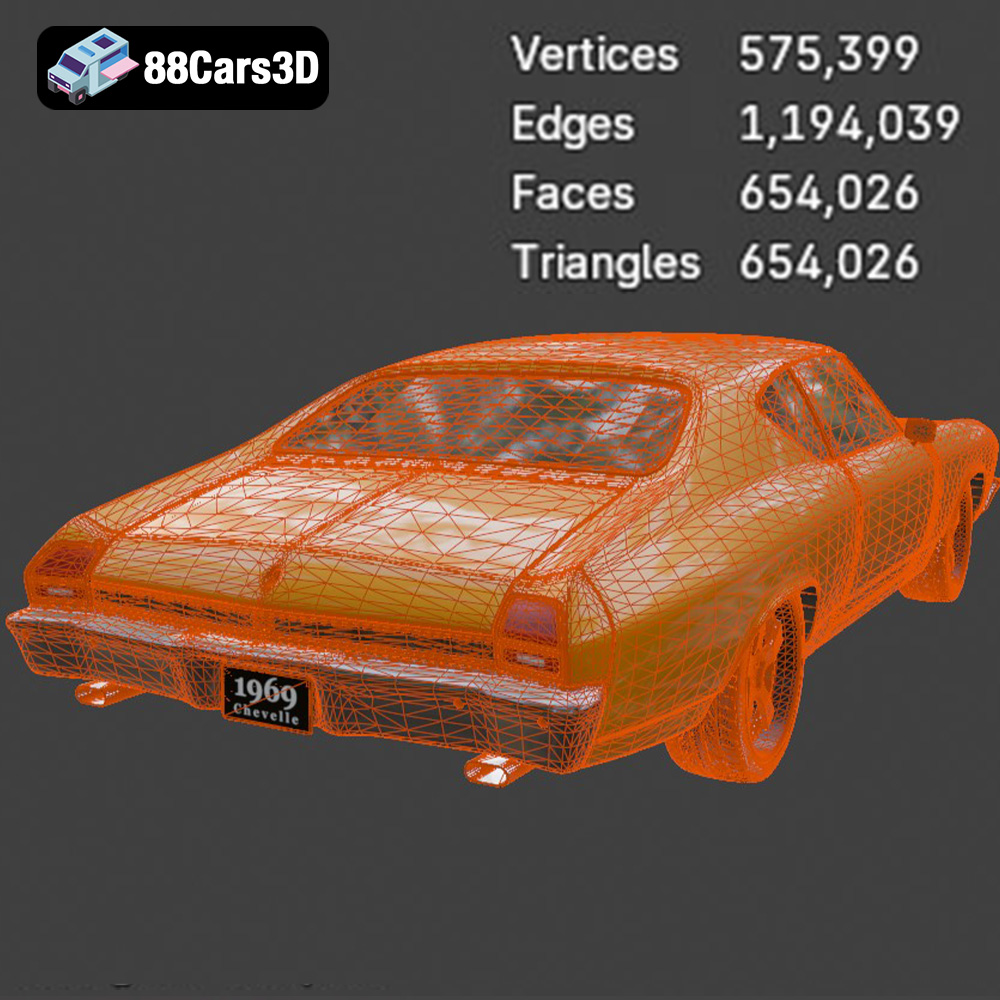
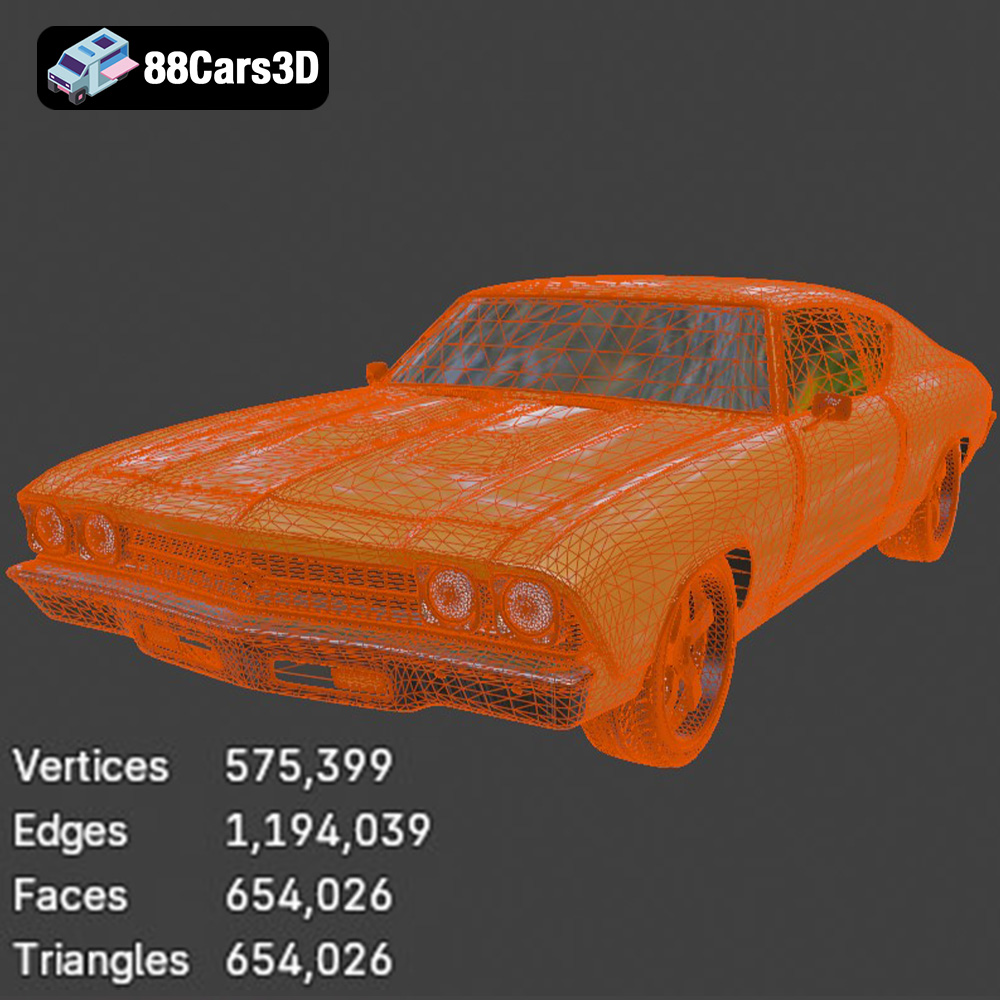
Underpinning any great render are the technical details of the 3D model itself. The Chevrolet Chevelle SS 1969 3D Model boasts “real-world scale accuracy,” ensuring that it integrates seamlessly into existing scenes without proportionality issues. While specific polygon counts aren’t always explicitly listed, “optimized polygon flow” signifies that the model strikes a balance between visual fidelity and performance. This means sufficient detail for close-up renders without excessive geometry that would bog down viewport performance or render times. Good topology is also crucial for deformation if the model is to be animated or modified. Furthermore, “proper pivot setup for steering and wheel rotation” is a technical advantage that saves countless hours in animation prep, ensuring that the wheels and steering components rotate naturally, ready for a dynamic shot or interactive experience.
In the fast-paced world of game development, efficiency and visual quality must go hand-in-hand. High-quality 3D car models like the Chevrolet Chevelle SS 1969 are vital game assets, providing the foundation for realistic driving experiences, detailed environments, and engaging narratives. The model’s design ensures it’s not just beautiful but also game-engine friendly.
For game developers, the .fbx and .unreal formats are critical for seamless integration into Unreal Engine and Unity. The “optimized geometry for real-time engines” means the model is structured to perform well, even within complex game environments. When importing into Unreal Engine, for example, the .unreal file or a well-prepared .fbx can directly translate into static meshes, skeletal meshes (if rigged), and material instances. The “separate wheels and steering components for animation” are crucial here, allowing developers to easily set up vehicle physics, steering mechanics, and suspension systems within the engine. Similarly, Unity developers can leverage the .fbx for straightforward import, taking advantage of its ability to carry over material assignments and basic transforms, ready for scripting and interactivity. The “SS badging and trim detailing” add those subtle touches that elevate a game asset from generic to truly iconic.
A significant challenge in game development is maintaining a smooth frame rate while delivering high visual fidelity. While the Chevrolet Chevelle SS 1969 3D Model is “high-detail,” an optimized asset means it likely features intelligent polygon distribution. For demanding real-time applications, implementing Levels of Detail (LODs) is standard practice. This involves creating multiple versions of the model with varying polygon counts – higher detail for close-ups, lower detail for distant views. A clean base mesh, as implied by “clean and well-organized mesh structure,” makes the creation of effective LODs much simpler. This ensures that the detailed dual headlight front grille and period-correct interior layout are visible when needed, but efficiently swapped out when the player is further away, balancing visual quality with performance demands.
Beyond static representation, bringing the Chevelle to life in a game involves rigging and physics. The “proper pivot setup for steering and wheel rotation” is an enormous head start, as it means the foundational elements for vehicle dynamics are already in place. Developers can then build upon this with advanced vehicle rigs, incorporating suspension, engine vibrations, and damage models. Whether it’s for an open-world driving game or a drag racing simulator, the ability to animate individual components like doors, the hood, or even the subtle rumble of the exhaust pipes adds layers of immersion. The “classic steering wheel design” and “vintage dashboard with analog gauges” also provide excellent opportunities for interactive interior elements, enhancing the player’s connection to this legendary machine.
The utility of a high-quality 3D car model extends far beyond traditional rendering and game development. Augmented Reality (AR), Virtual Reality (VR), and 3D printing offer innovative ways to interact with and experience digital assets, opening new avenues for marketing, education, and artistic expression. The Chevrolet Chevelle SS 1969 3D Model is perfectly positioned to leverage these cutting-edge technologies.
Imagine stepping into a virtual showroom where the Chevrolet Chevelle SS 1969 sits bathed in a perfect spotlight, allowing you to walk around it, open the doors, and even sit inside. This is the power of VR. For AR, envision placing the Chevelle directly into your driveway through a smartphone, scrutinizing its “accurate 1969 Chevelle SS body proportions” or admiring the “chrome front and rear bumpers” as if it were truly there. The .glb format, optimized for AR/VR, facilitates these immersive experiences by packing all necessary data into a single, efficient file. Such applications are invaluable for classic car dealerships offering virtual tours, museums providing interactive historical displays, or even for personal collectors wanting to visualize their dream car in their own space. The “detailed dual headlight front grille” and “SS badging and trim detailing” are rendered with such fidelity that they maintain their realism even in these highly interactive, scaled-to-life environments.
One of the most exciting capabilities of a versatile 3D model is its potential for physical manifestation through 3D printing. The Chevrolet Chevelle SS 1969 3D Model, specifically its availability in .stl format, makes it an excellent candidate for creating tangible scale models. This transforms the digital asset into a collectible, a display piece, or even a prototype. The product description’s detailed 3D print settings are invaluable for hobbyists and professionals alike: “Recommended scale: 1:32 / 1:24 / 1:18 / 1:12,” “Layer height: 0.10–0.16 mm,” and specific advice on supports and print orientation. The recommendation to print the body angled for a smooth surface finish and wheels separately demonstrates a practical understanding of 3D printing best practices, ensuring that the “classic muscle car wheels with tire tread detail” come out crisp and the overall model retains its sculpted integrity. Post-processing suggestions, like “sanding, primer, gloss muscle-car paint finish, optional chrome detailing,” guide users to achieve museum-quality physical replicas.
The flexibility offered by a high-quality 3D model is paramount for creative freedom. The Chevrolet Chevelle SS 1969 3D Model explicitly highlights “Customization Options,” enabling users to “Change body color (classic red, black, blue, metallic finishes),” “Add racing stripes or SS decals,” or even “Modify wheel style and tire type.” This level of adaptability is crucial for agencies creating varied advertising campaigns, game developers wanting to offer player customization, or artists exploring different historical contexts. Whether it’s adjusting the ride height for a drag racing setup or configuring lighting for a sunset boulevard scene, the underlying quality of the model allows for boundless creative iteration without compromising on realism or technical integrity.
In today’s competitive digital landscape, the choice of assets can significantly impact project timelines, budgets, and overall quality. Opting for premium 3D car models, such as those found on 88cars3d.com, is a strategic decision that yields substantial benefits for individuals and large studios alike. The Chevrolet Chevelle SS 1969 3D Model exemplifies this value proposition.
Developing a high-fidelity 3D car model from scratch is an incredibly labor-intensive and costly process. It requires expert modelers, texture artists, and a significant investment of time. By purchasing a pre-made, professionally crafted asset like the Chevrolet Chevelle SS 1969 3D Model, creative teams can dramatically reduce development cycles and reallocate resources to other critical areas of a project. The “clean and well-organized mesh structure” and “optimized geometry” mean less time spent on mesh cleanup or optimization, allowing artists to immediately focus on integration, rendering, and animation. This efficiency is paramount for meeting tight deadlines in advertising, film production, or game releases.
Consider a marketing agency tasked with creating a retro-themed campaign for a new automotive product. Instead of commissioning a custom model of a classic muscle car, they can acquire the Chevrolet Chevelle SS 1969 3D Model, quickly integrating it into high-definition advertisements or interactive web experiences. Its “accurate 1969 Chevelle SS body proportions” and “detailed dual headlight front grille” ensure authenticity, resonating deeply with enthusiasts. In another scenario, a historical preservation society might use the model for an interactive museum exhibit, allowing visitors to explore the Chevelle’s “vintage dashboard with analog gauges” and “classic steering wheel design” in VR, providing an educational and immersive journey into automotive history. For a game studio, the model becomes the centerpiece of a new racing title, providing a visually stunning and physically accurate vehicle for players to enjoy, without the upfront modeling costs.
Investing in versatile, high-quality 3D car models is also a step towards future-proofing your digital asset library. The inclusion of multiple file formats (.blend, .fbx, .obj, .glb, .stl, .ply, .unreal, .max) ensures that the Chevrolet Chevelle SS 1969 3D Model remains compatible with evolving software landscapes and emerging technologies. As AR/VR becomes more mainstream, or as new rendering techniques emerge, having a robust base model that can be easily adapted and optimized for different platforms is invaluable. This adaptability ensures that your investment continues to pay dividends across multiple projects and technological advancements, solidifying the model as a long-term asset in your creative arsenal.
The Chevrolet Chevelle SS 1969 remains an enduring icon, and its digital counterpart, a high-quality 3D model, stands as a testament to the power of meticulous craftsmanship and technical precision in the world of 3D design. From photorealistic automotive rendering to accelerating game development, and from enabling immersive AR/VR experiences to bringing physical models to life through 3D printing, the versatility of such an asset is profound.
The detailed features, robust technical advantages, and comprehensive file format support of the Chevrolet Chevelle SS 1969 3D Model make it an indispensable tool for professionals across various industries. It not only saves invaluable time and resources but also provides a foundation for creating visually stunning and technically sound projects. For those seeking to elevate their digital creations with authentic, high-quality 3D car models, exploring the offerings at 88cars3d.com is a definitive step toward achieving excellence in their craft.
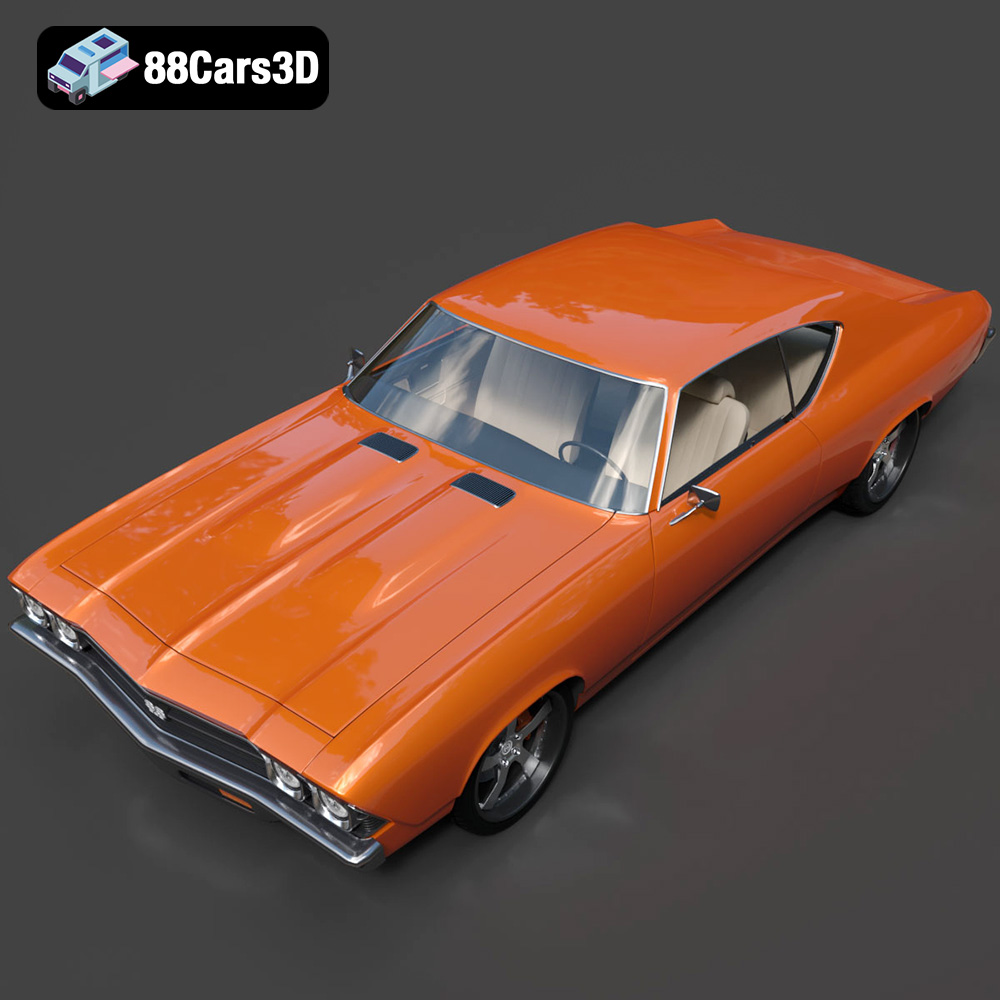
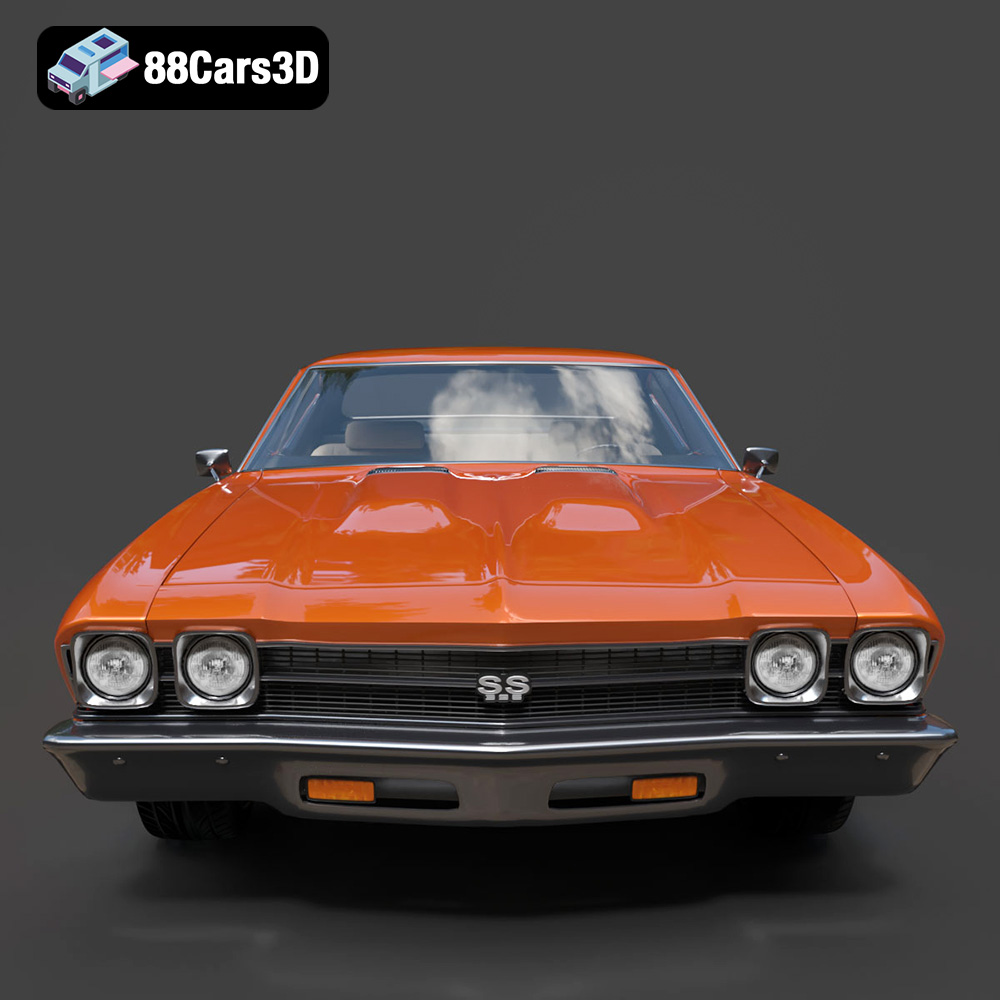
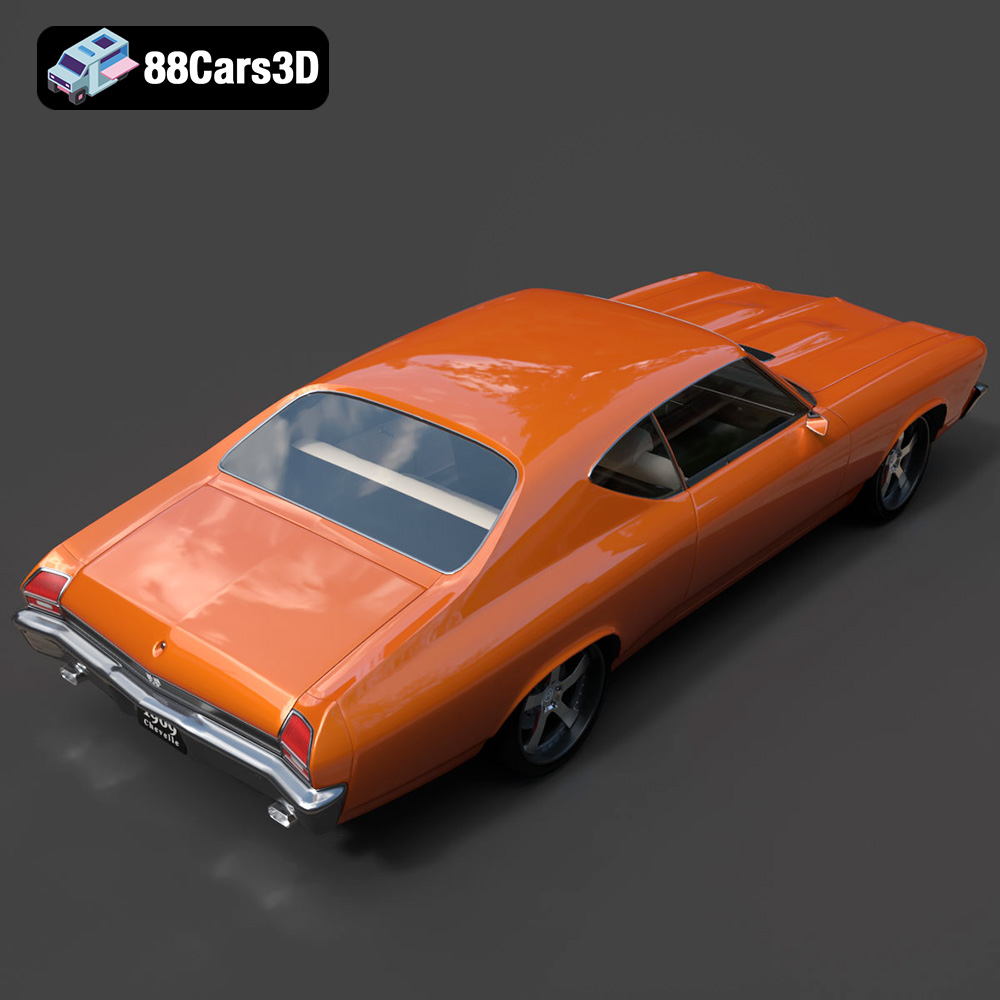
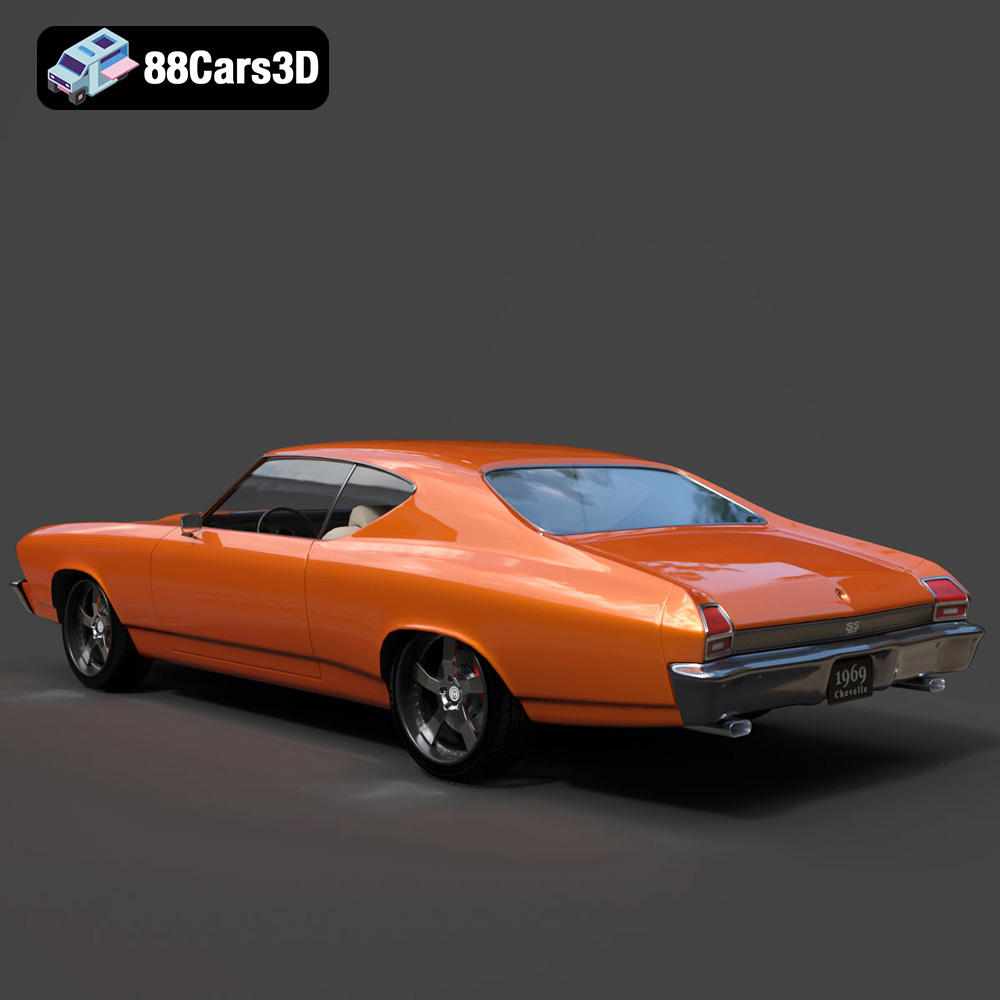
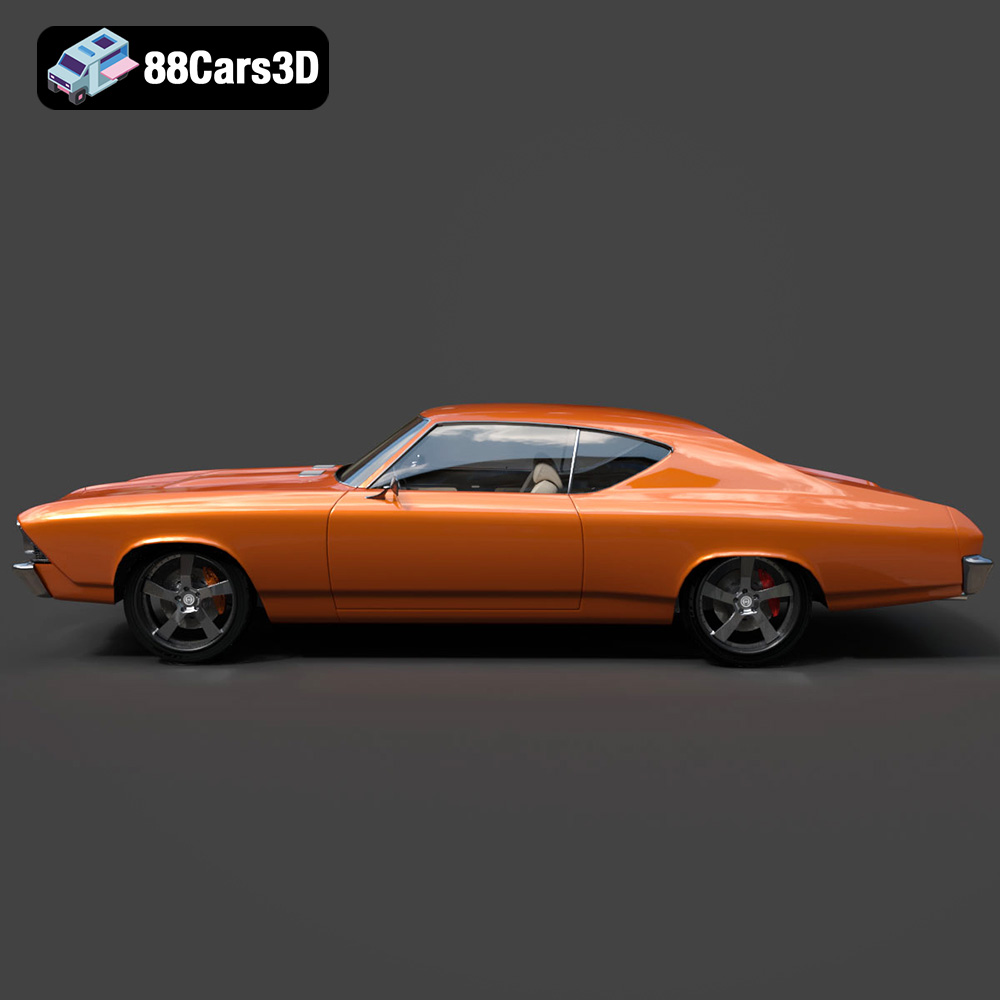
The Chevrolet Chevelle SS 1969 3D Model is a high-detail digital recreation of one of the most iconic American muscle cars of the late 1960s. Known for its aggressive styling, powerful V8 performance, and bold street presence, the 1969 Chevelle SS remains a symbol of classic muscle car heritage. This 3D model accurately represents the long hood and short deck proportions, signature dual headlight front fascia, SS badging, muscular body lines, chrome bumpers, detailed grille, performance wheels, and period-correct interior layout. Built with clean topology and real-world scale accuracy, it is ideal for rendering, animation, automotive visualization, game development, and AR/VR experiences.
$39.9
.1969chevelle
.arvr
.automotive
.blend
.car3dmodel
.chevelle
.chevelless
.chevrolet
.classiccar
.fbx
.gameasset
.glb
.max
.musclecar
.obj
.ply
.rendering
.simulation
.stl
.unreal
.vintagecar