⚡ FLASH SALE: Get 60% OFF All Premium 3D & STL Models! ⚡

In the dynamic world of 3D visualization, the demand for high-quality, meticulously crafted 3D models continues to accelerate. From breathtaking automotive rendering showcasing a vehicle’s every curve to populating expansive virtual worlds with authentic background traffic, precision and optimization are paramount. Artists, developers, and designers are constantly seeking assets that strike the perfect balance between visual fidelity and technical efficiency. This pursuit often leads professionals to specialized marketplaces like 88cars3d.com, where expertly developed 3D car models meet rigorous industry standards.
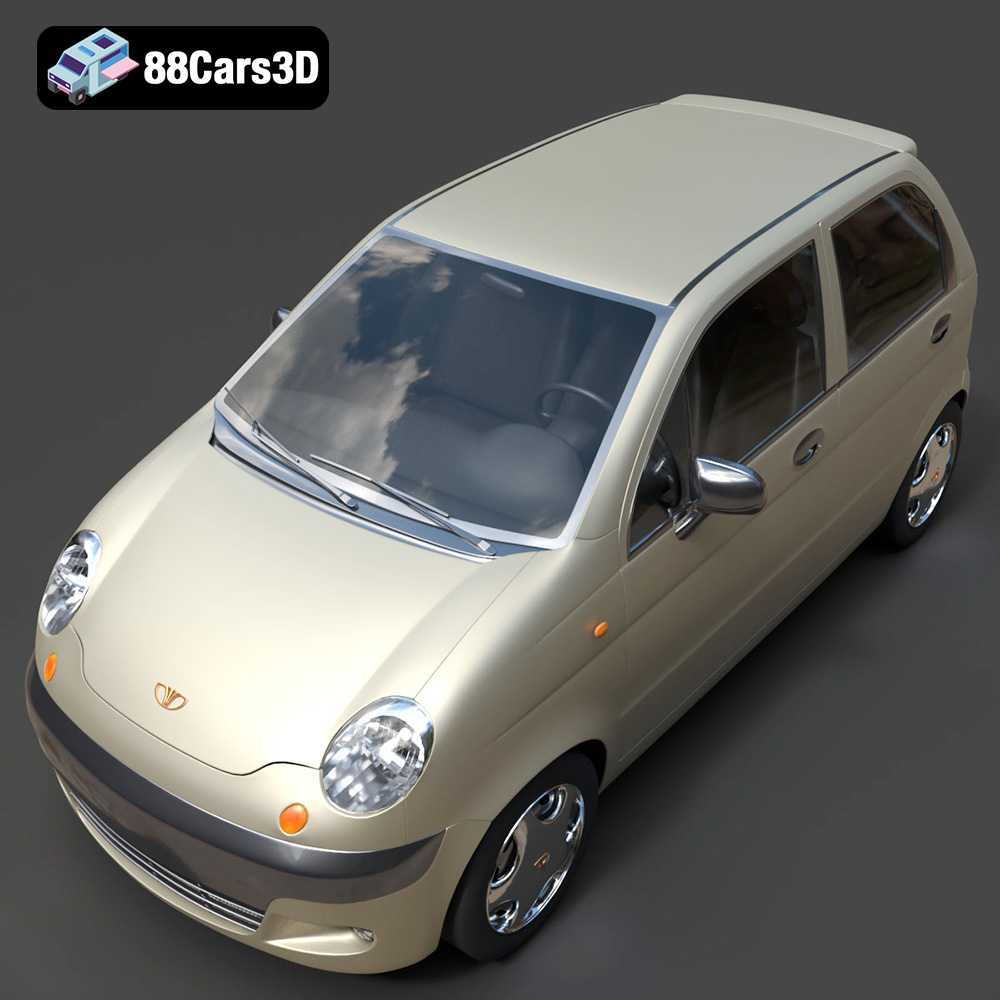
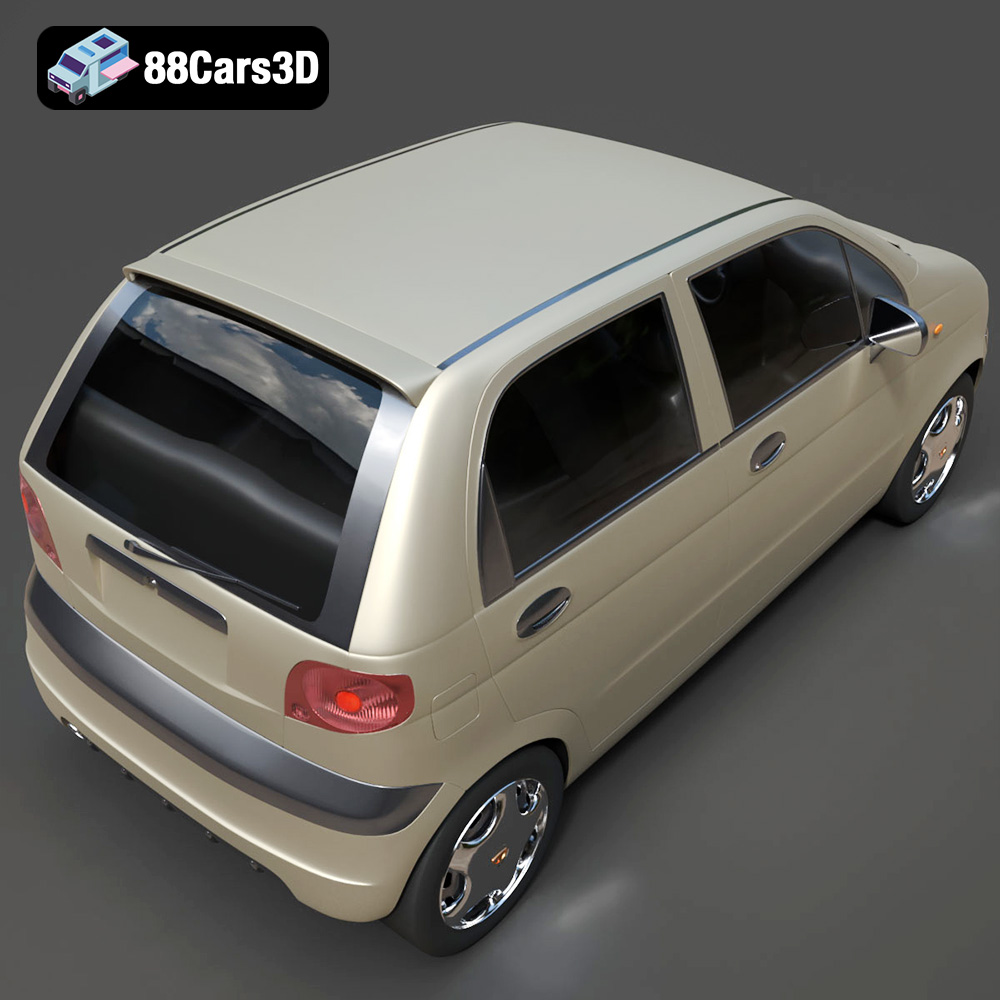
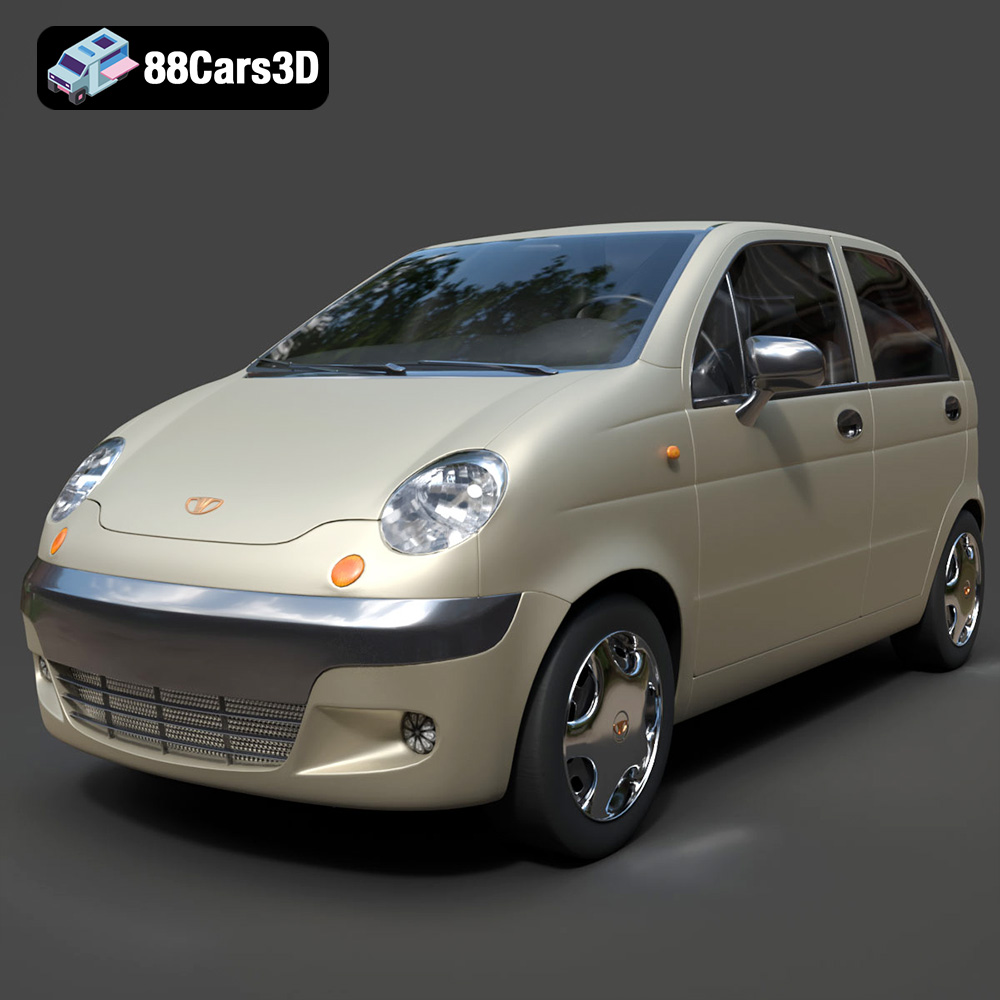
Today, we delve into the intricate details of a versatile and culturally significant asset: the Daewoo Damas Microvan 3D Model. This seemingly humble vehicle, a ubiquitous workhorse across South Korea, Central Asia, and the Middle East, serves as an excellent case study for understanding what makes a 3D model truly professional-grade. We’ll explore its technical specifications, its utility across various industries, and how such a model empowers creators to achieve unparalleled realism and performance in their projects, whether for cinematic renders or bustling interactive environments.
High-fidelity 3D car models are no longer just eye candy; they are foundational elements that define the authenticity and immersion of countless digital experiences. Their impact spans across diverse sectors, each with unique requirements for detail, optimization, and adaptability.
In architectural visualization (ArchViz), realistic vehicles breathe life into static building designs. A meticulously rendered Daewoo Damas Microvan parked on a virtual street can instantly ground a scene in a specific geographical context, adding a layer of realism that generic models simply cannot provide. For product visualization, particularly in the automotive industry, 3D car models allow manufacturers to showcase unreleased designs, explore customization options, and create stunning marketing materials long before physical prototypes exist. The Daewoo Damas model, with its accurate classic proportions and customizable elements, becomes an ideal tool for regional ArchViz projects or simulations of commercial fleets, adding authenticity to urban landscapes.
Game development pushes the boundaries of real-time rendering, demanding assets that are both visually convincing and incredibly efficient. Optimized 3D car models are essential for populating open-world environments, simulating traffic flows, and creating immersive driving experiences. A model like the Daewoo Damas Microvan, specifically designed with a mid-polygon topology of ~321k triangles, is a perfect game asset. It provides enough detail for discernible background traffic or even closer interactions without bogging down the game engine, ensuring smooth frame rates and a responsive player experience. Its separate wheels, steering components, and doors also make it ideal for rigging and animation within game engines like Unreal Engine and Unity.
Augmented Reality (AR) and Virtual Reality (VR) applications require 3D models that are not only optimized for performance but also designed for immersive interaction. In AR, a 3D car model can be overlaid onto a real-world scene, allowing users to “see” a new vehicle in their driveway or interact with a virtual fleet configurator. VR can transport users into fully simulated environments, from virtual showrooms to interactive cityscapes. The Daewoo Damas Microvan 3D Model’s balanced optimization makes it an excellent candidate for such applications, capable of being viewed realistically from the exterior or even explored from its practical, Spartan interior in a VR setting.
The choice of file format for a 3D model is a critical decision that dictates compatibility, functionality, and performance across different software and applications. Professional 3D car models like the Daewoo Damas Microvan often come with a comprehensive suite of formats, each serving a specific purpose in the production pipeline. Understanding these formats is crucial for seamless integration into any workflow.
The .blend format is native to Blender, the popular open-source 3D creation suite. When you download a .blend file, you’re getting a complete Blender scene, often including materials, textures, lighting setups, cameras, and even animations. This format offers the highest degree of editability and allows artists to leverage all of Blender’s powerful features. For the Daewoo Damas, the .blend file would provide full access to its meticulously cleaned quad-heavy topology, allowing for easy modifications, re-texturing, or the creation of custom variations directly within Blender’s environment.
.fbx (Filmbox) is a proprietary file format owned by Autodesk, widely regarded as the industry standard for exchanging 3D data between different software applications. It supports geometry, materials, textures, animations, skinning, and more, making it incredibly versatile. It’s the go-to format for bringing animated models into game engines like Unreal and Unity, ensuring that all rig and animation data is preserved. For the Daewoo Damas, the .fbx version ensures that its separate components (wheels, doors, steering) maintain their pivot points for easy rigging.
.obj (Wavefront OBJ) is another widely supported format known for its simplicity and universality. It primarily stores geometry (vertices, normals, texture coordinates, and faces) and can reference external material (.mtl) and texture files. While it doesn’t support animation or rigging data like .fbx, its widespread compatibility makes it a safe choice for static mesh exchange across virtually all 3D software. The Daewoo Damas .obj file guarantees that its foundational mesh and basic material assignments are accessible to any artist, regardless of their primary software.
.glb (GL Transmission Format Binary) is an increasingly popular format, especially for AR, VR, and web-based 3D applications. It’s a binary version of glTF, designed for efficient transmission and loading of 3D scenes and models. A single .glb file can contain models, animations, materials, and textures, making it highly portable and optimized for real-time display in browsers or mobile AR applications. The Daewoo Damas in .glb format would be perfect for interactive online product viewers or AR fleet configurators.
The .unreal format, or more accurately, assets packaged for Unreal Engine, typically refers to a collection of files (meshes, materials, textures, blueprints) organized within an Unreal Engine project structure. While not a single file type, having an “engine-ready asset” means it’s been prepared specifically for Unreal’s pipeline, often with proper material setups, collision meshes, and LODs (Levels of Detail) already configured. This drastically reduces setup time for developers using the Daewoo Damas in Unreal Engine.
.stl (Stereolithography) is the de facto standard for 3D printing. It represents a 3D model as a series of connected triangles, defining only the surface geometry. While it lacks color or material information, its simplicity makes it universally compatible with 3D printers and slicing software. The Daewoo Damas .stl is specifically prepared for physical output, allowing hobbyists and professionals to create miniature scale models for dioramas or display, following the recommended 3D print settings.
.ply (Polygon File Format) is a more comprehensive format for storing 3D data, capable of representing not only geometry but also properties like color, transparency, normals, and even texture coordinates for each vertex or face. It’s often used for data generated from 3D scanners or for applications requiring precise mesh analysis, particularly in CAD or scientific visualization. For the Daewoo Damas, the .ply format offers an alternative for precise mesh data transfer where vertex color or other per-vertex attributes might be relevant.
Finally, the .max format is the native file type for Autodesk 3ds Max, another industry-leading 3D modeling, animation, and rendering software. Similar to .blend for Blender, a .max file contains the complete scene, including lights, cameras, materials, modifiers, and animation data specific to 3ds Max. For users primarily working in this environment, the Daewoo Damas .max file provides an instantly editable project, ensuring full access to its clean topology and material assignments within a familiar professional ecosystem.
The Daewoo Damas Microvan 3D Model from 88cars3d.com exemplifies how to translate a real-world object’s essence into a technically sound and visually compelling digital asset. Its design choices reflect a deep understanding of industry needs, balancing aesthetic accuracy with performance considerations.
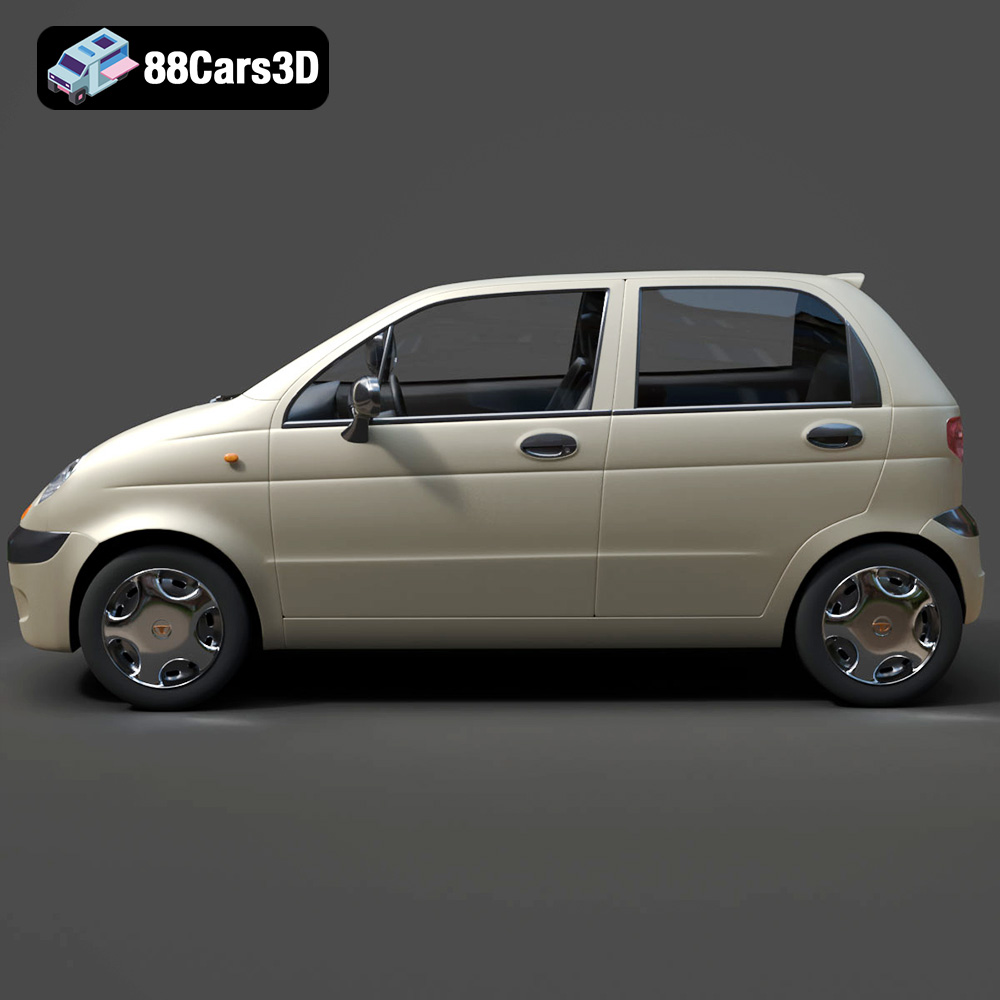
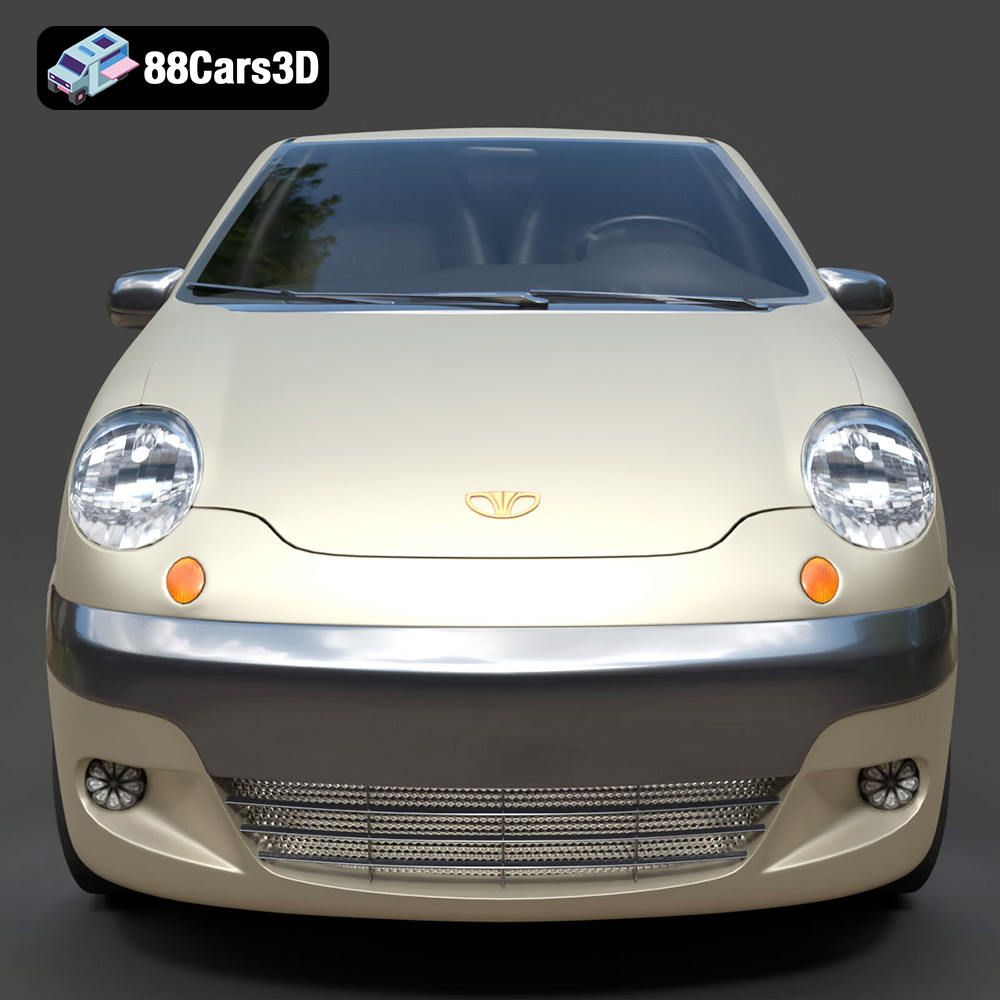
The developers of this 3D model have meticulously replicated the distinctive utilitarian cabover aesthetic of the classic Daewoo Damas. This isn’t just about general shape; it’s about the “distinctive flat front fascia,” the “large rectangular headlight assemblies,” and the “tall, space-maximizing roofline” – details that make the vehicle instantly recognizable in regions where it’s prevalent. This accuracy extends to its “compact microvan proportions” and “space-efficient geometry,” ensuring that the 3D model maintains its real-world scale and visual integrity, whether viewed up close in a render or as part of a busy street scene.
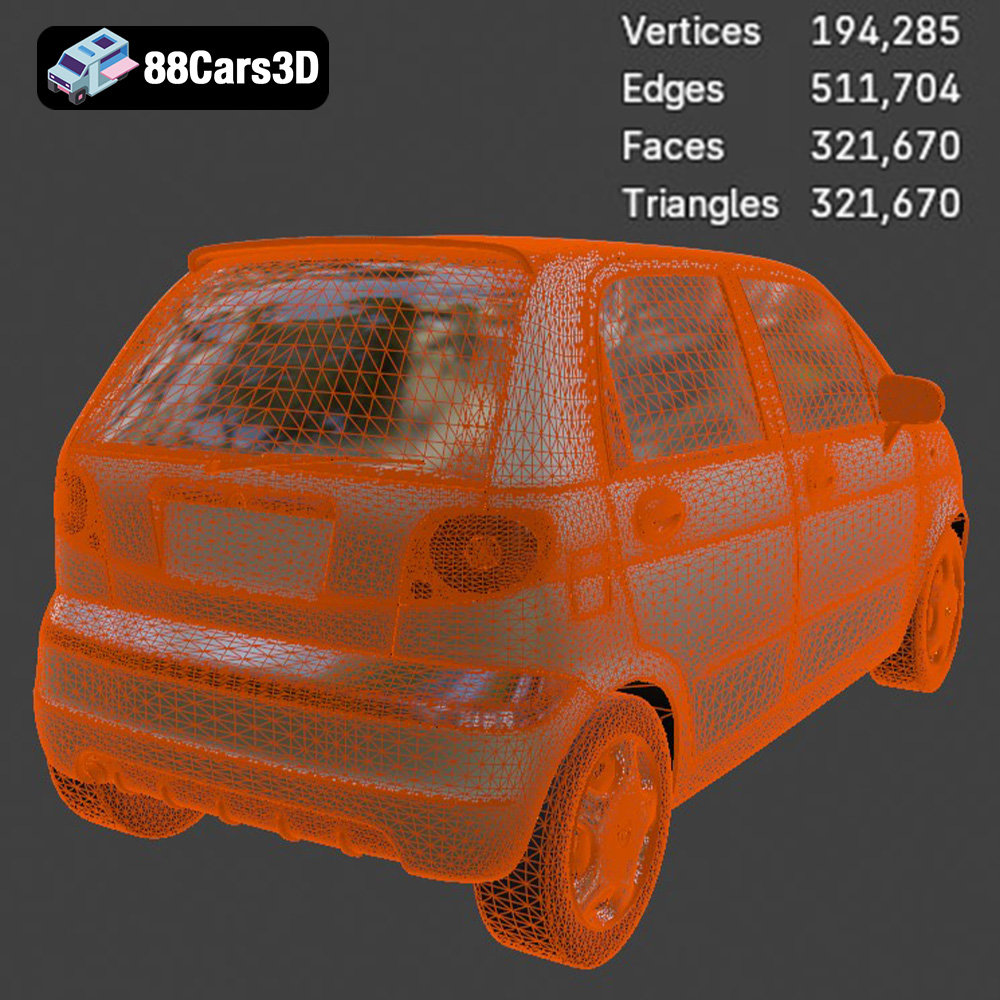
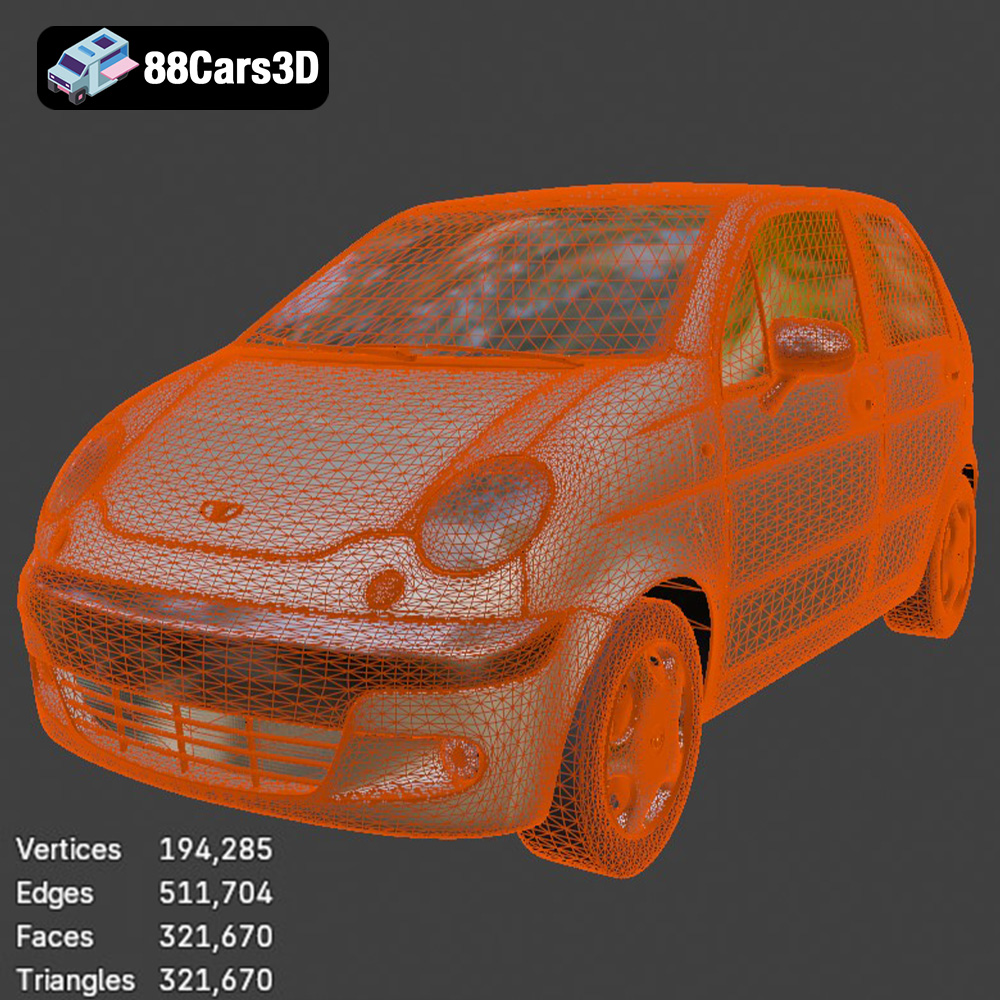
One of the most impressive technical specifications of the Daewoo Damas Microvan 3D Model is its highly optimized, “impeccably clean mid-polygon topology.” With just over 321,670 triangles (and 194,285 vertices), it strikes a “perfect balance.” This mid-poly count is crucial. A model that is too low-poly would lack detail for close-up shots, while an excessively high-poly model would be inefficient for real-time applications or scenes requiring multiple instances. The clean, quad-heavy structure, visible in wireframe renders, signifies a model built for stability, ease of editing, and efficient rendering across various engines. This optimization is what makes it “lightweight enough to be duplicated endlessly as background traffic in modern game engines” without compromising visual fidelity.
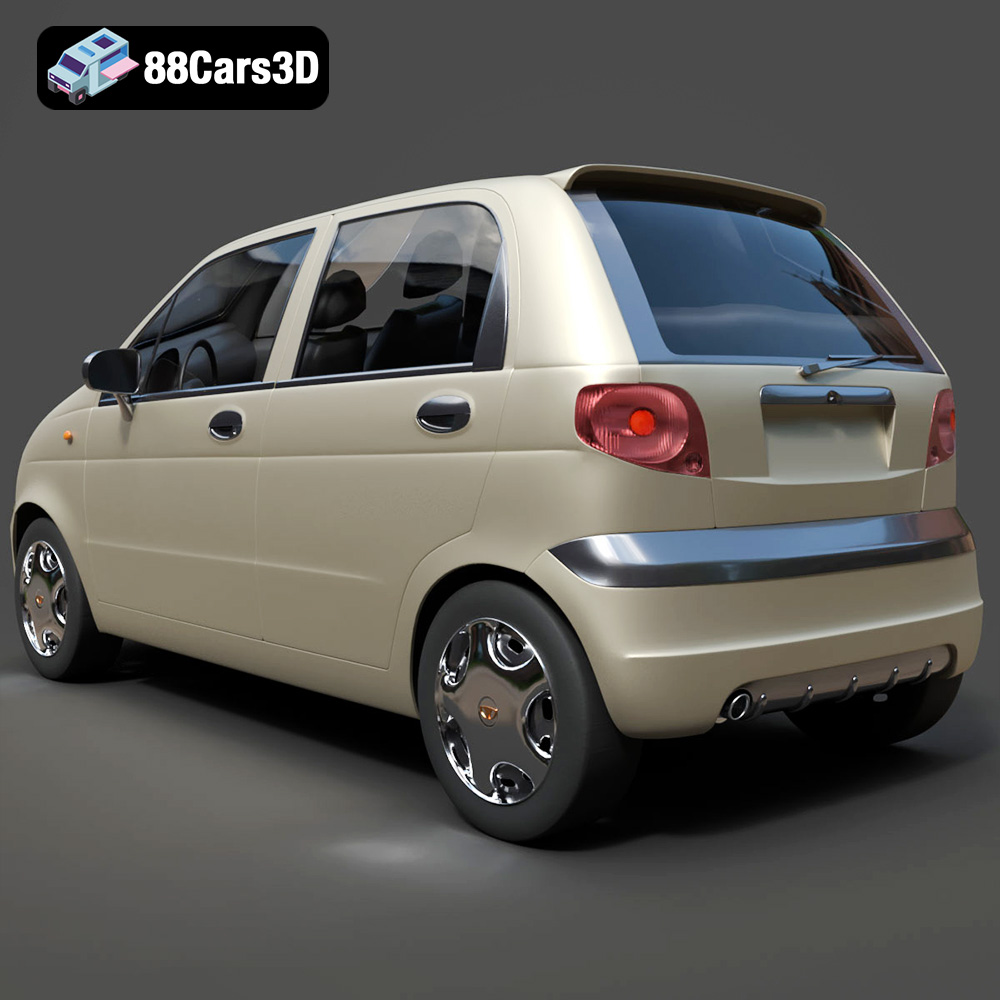
The model’s attention to both exterior and interior details further enhances its versatility. On the exterior, “detailed 12-inch steel wheels wrapped in commercial-grade tires” and “separate wheels, steering components, and doors for rigging and animation” highlight its readiness for interactive and dynamic scenarios. The “proper pivot setup for steering, wheel rotation, and sliding door mechanisms” ensures that animators and game developers can easily bring the vehicle to life. Inside, the “practical, Spartan driver-centric cabin layout” with a “detailed minimalist dashboard” and “realistic seating geometry” provides authenticity. Even though the interior is “optimized,” it’s still “tailored to look authentic from the exterior or in VR,” meaning that even through tinted windows or in immersive virtual reality, the interior holds up to scrutiny.
The true value of a versatile 3D asset lies in its seamless integration into various professional workflows. The Daewoo Damas Microvan 3D Model is engineered for compatibility and ease of use across a spectrum of industry-standard tools.
For artists working with industry giants like Autodesk 3ds Max or Blender, the Daewoo Damas Microvan 3D Model offers native file formats (.max and .blend respectively). This means immediate access to the model within a familiar environment, preserving its clean topology, material assignments, and grouping. In 3ds Max, animators can quickly leverage the pre-set pivots for the doors, wheels, and steering to create realistic vehicle animations for cinematics or simulations. Blender users can benefit from its open-source ecosystem, easily modifying materials using Cycles or Eevee, or integrating the model into complex procedural scenes. The mid-poly count ensures that scene performance remains optimal, even when populating vast urban environments with numerous instances of the Damas.
The “game-ready” nature of the Daewoo Damas is evident in its compatibility with leading real-time engines such as Unreal Engine and Unity. The included .fbx and .unreal files are crucial here. The .fbx format facilitates the smooth transfer of mesh data, basic materials, and crucial pivot information for interactive elements. Developers can import the model, apply engine-specific materials, set up physics, and integrate it into traffic AI systems. For Unreal Engine, the .unreal-ready assets streamline the import process, often providing optimized materials and textures that align with the engine’s rendering pipeline. This makes the Daewoo Damas Microvan an ideal choice for populating virtual cities in open-world games, creating logistics simulators, or developing interactive AR/VR experiences where performance is critical.
The utility of the Daewoo Damas Microvan 3D Model extends beyond digital screens into the realm of physical creation. With its manifold geometry, the .stl file provided is perfectly suited for 3D printing. This opens up possibilities for creating detailed scale models for architectural dioramas, tabletop gaming, or even as collectibles. The product description provides precise 3D print settings—recommended scales (1:24, 1:32, 1:43), layer height, wall thickness, infill, and support requirements—to ensure successful physical reproduction. The suggestion for resin printing for finer details and post-processing with classic commercial colors further highlights the attention to detail for physical model enthusiasts.
A professional 3D car model isn’t just about static perfection; it’s about the flexibility it offers to fit diverse creative visions. The Daewoo Damas Microvan 3D Model is designed with extensive customization in mind, allowing artists to tailor its appearance and function to specific project needs.
The inherent cleanliness and logical UV mapping of the Daewoo Damas’s topology make material and texture customization straightforward. Artists can “change exterior paint colors to match striking commercial palettes or weathered, dusty service vehicles,” transforming its aesthetic from pristine factory new to battle-hardened workhorse. Beyond basic colors, the ability to “add custom delivery logistics decals, company branding, or ‘Marshrutka’ (route taxi) signage” directly to the side panels opens up a world of narrative possibilities. This level of material adaptability is crucial for creating unique instances of the vehicle for different regions or specific commercial fleets, enhancing realism and storytelling in any scene.
The Daewoo Damas Microvan 3D Model is supplied with “separate wheels, steering components, and doors,” along with “proper pivot setup.” This pre-configured structure is invaluable for rigging and animation workflows. Animators can effortlessly rig the steering wheel, wheel rotation, and the distinctive dual sliding doors, enabling realistic motion for vehicle cinematics, interactive simulations, or game cutscenes. In game development, these separate components allow for dynamic interactions, such as opening doors, realistic wheel physics, and even destructible elements, all contributing to a more immersive and interactive user experience. This level of preparation saves considerable time and effort for professionals.
Due to its optimized mid-polygon count, the Daewoo Damas 3D model excels at populating large-scale environments. It can be duplicated numerous times without significantly impacting render times or game performance, making it the “ultimate ‘everyday traffic’ and delivery vehicle” for open-world games and large-scale architectural visualizations. Furthermore, its ability to integrate “weathering materials (dust, mud, or rust)” allows artists to blend it seamlessly into diverse environments, from pristine modern cities to gritty, post-apocalyptic landscapes. Adaptability of “lighting for sunny urban commutes or moody, rainy night-time delivery routes” further extends its versatility, allowing it to convey a wide range of moods and times of day.
The digital realm thrives on the quality and versatility of its foundational assets. As we’ve explored with the Daewoo Damas Microvan 3D Model, a seemingly simple vehicle can become an incredibly powerful tool in the hands of creative professionals. Its meticulously balanced topology, accurate detailing, and extensive file format compatibility underscore its value as a high-quality 3D car model, equally at home in breathtaking automotive rendering projects, demanding game development pipelines, or innovative AR/VR experiences. Whether you’re aiming to populate a bustling virtual city, render a hyper-realistic street scene for architectural visualization, or even 3D print a detailed scale model, the Daewoo Damas offers a robust and reliable solution.
For artists and developers seeking professional-grade 3D models that meet rigorous industry standards for both visual fidelity and technical optimization, exploring resources like 88cars3d.com is essential. The Daewoo Damas Microvan 3D Model is a testament to the expertise and attention to detail that elevate digital assets from mere objects to indispensable components of any successful project. Its comprehensive design and diverse application possibilities make it a prime example of why investing in quality 3D car models is a cornerstone of modern digital content creation.
The Daewoo Damas 3D Model is an incredibly accurate, highly optimized digital recreation of the legendary compact commercial microvan. Based on the classic kei-van architecture, the Damas is a ubiquitous and unstoppable workhorse recognized globally—serving as the ultimate urban delivery vehicle, taxi, and daily commuter, particularly across South Korea, Central Asia (such as Uzbekistan), and the Middle East. This 3D model beautifully captures the timeless, utilitarian cabover aesthetic of the classic Damas. It features the distinctive flat front fascia, large rectangular headlight assemblies, dual sliding passenger/cargo doors, and a tall, space-maximizing roofline. Built with a highly efficient, impeccably clean mid-polygon topology (just over 321k triangles), it strikes the absolute perfect balance. It provides crisp visual fidelity for close-up automotive rendering while remaining lightweight enough to be duplicated endlessly as background traffic in modern game engines. Perfect for populating realistic global street scenes, commercial fleet simulations, architectural visualizations, and mobile game development.
$29