⚡ FLASH SALE: Get 60% OFF All Premium 3D & STL Models! ⚡

In the dynamic worlds of automotive design, visualization, game development, and even physical fabrication, the quality of your 3D assets can be the deciding factor between a good project and a truly exceptional one. From hyper-realistic renderings that blur the line with photography to responsive game environments and precise 3D prints, the foundation lies in meticulously crafted 3D car models. These digital vehicles aren’t just pretty meshes; they are intricate data structures built to perform across a multitude of professional applications.
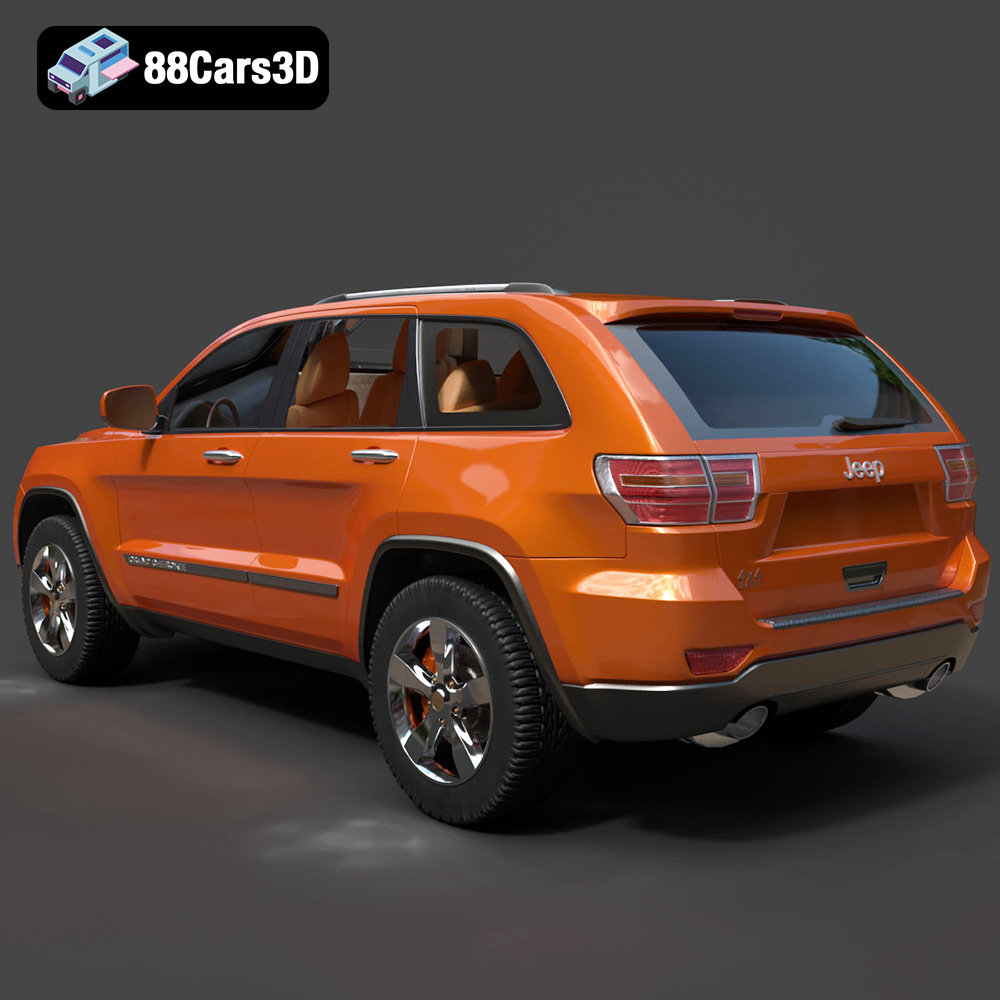
Today, we delve into the technical prowess and versatile applications of a prime example: the Jeep Grand Cherokee 2010 3D Model. This particular asset, representing the robust and recognizable WK generation, stands as a testament to how a well-engineered 3D vehicle can serve as a cornerstone for diverse creative and technical endeavors. Whether you’re an architect integrating a car into a street scene, a game developer populating an open-world environment, or a hobbyist creating a scale model, understanding the nuances of such an asset is crucial.
The choice of file format for a 3D model is far more than a simple preference; it dictates compatibility, functionality, and the efficiency of your workflow. Each format is engineered for specific purposes, carrying unique advantages and limitations. When acquiring a versatile asset like the Jeep Grand Cherokee 2010 3D Model, understanding the included formats is key to maximizing its utility across various software and pipelines.
The .blend format is native to Blender, an increasingly dominant open-source 3D creation suite. When a 3D car model is provided as a .blend file, it means you receive a fully editable scene, complete with materials, lighting setups, and potentially even animation rigs directly within Blender. This format is ideal for artists who primarily work in Blender, offering seamless integration and the ability to deeply customize every aspect of the model without export/import fidelity loss. It’s perfect for detailed texture adjustments, geometric modifications, or integrating the vehicle into a complex Blender scene for rendering with Cycles or Eevee.
.fbx (Filmbox) is arguably the most widely adopted proprietary 3D interchange format, developed by Autodesk. It excels at transferring comprehensive scene data, including meshes, materials, textures, animations, and even skeletal information, between different 3D applications and game engines like Unreal Engine and Unity. For the **Jeep Grand Cherokee 2010 3D Model**, the .fbx version is crucial for real-time applications. It ensures that the model’s clean topology, PBR (Physically Based Rendering) materials, and separated components (like doors, hood, wheels) translate accurately, ready for animation and interactive experiences.
The .obj (Wavefront OBJ) format is one of the oldest and most universally compatible 3D file formats. It’s a simple, text-based format primarily used to store geometric data—vertices, normals, texture coordinates, and faces. While it doesn’t typically store advanced scene information like animation or complex material setups, its strength lies in its widespread support across virtually all 3D software. For the Jeep Grand Cherokee 2010 3D Model, the .obj version serves as an excellent fallback or a base for workflows that require only the raw mesh data, perfect for archival or for importing into niche software that might not support newer formats.
.glb is the binary version of the GL Transmission Format (glTF), designed for efficient transmission and loading of 3D scenes and models by engines and applications. It’s quickly becoming the standard for 3D content on the web, in augmented reality (AR), and virtual reality (VR) environments due to its single-file nature, compact size, and optimization for real-time rendering. Providing the Jeep Grand Cherokee 2010 3D Model in .glb ensures it’s instantly ready for virtual showrooms, interactive web experiences, or mobile AR applications, making it accessible on a broad range of devices.
The .stl (Stereolithography) format is the cornerstone of 3D printing. It represents a 3D model as a series of connected triangles, forming a watertight mesh that defines the surface geometry for fabrication. Unlike other formats, .stl contains no color, texture, or material information—it’s purely about the shape. For the Jeep Grand Cherokee 2010 3D Model being offered as 3D printable, the .stl file is what you feed into your slicing software. It’s engineered to be manifold, meaning it has a clearly defined inside and outside, which is essential for successful physical reproduction.
.ply (Polygon File Format, or Stanford Triangle Format) is another format for storing 3D data, often used in scientific and academic fields. It can store a variety of properties including color, transparency, surface normals, and range data, making it useful for models derived from 3D scanning or for precise engineering analysis. While less common for general design, its inclusion for the Jeep Grand Cherokee 2010 3D Model indicates a commitment to versatility, potentially catering to specific reverse engineering, measurement, or specialized visualization workflows.
The .unreal format signifies an asset specifically optimized and prepared for direct integration into Unreal Engine. This often means the model has appropriate material setups, collision meshes, LODs (Levels of Detail), and potentially even basic blueprints or interactivity configured within the engine’s ecosystem. For game developers leveraging Unreal Engine, this pre-configured asset dramatically reduces setup time, allowing for immediate use of the Jeep Grand Cherokee 2010 3D Model in a game environment or simulation.
Finally, the .max format is the native file format for Autodesk 3ds Max, a powerful 3D modeling, animation, and rendering software widely used in architectural visualization, automotive design, and film production. A .max file provides the full project scene, including all geometric data, textures, materials, lighting, cameras, and modifiers. For users of 3ds Max, the inclusion of this format for the Jeep Grand Cherokee 2010 3D Model ensures complete control over the asset, enabling deep customization, advanced rendering setups with V-Ray or Corona, and complex animation sequences.
Automotive rendering is an intricate discipline, bridging technical precision with artistic vision to create compelling visuals. High-quality 3D car models are the cornerstone of this process, providing the realistic forms and details necessary to achieve photorealism in a digital environment. The Jeep Grand Cherokee 2010 3D Model, with its accurately scaled proportions and detailed components, offers an excellent foundation for such endeavors.
Photorealism in rendering relies heavily on Physically Based Rendering (PBR) workflows. This involves materials that accurately simulate how light interacts with surfaces in the real world. For a vehicle like the Grand Cherokee, this means meticulously crafted shaders for its metallic paint, reflective chrome accents, clear glass, textured rubber tires, and various plastic and leather interior surfaces. A professional 3D model comes with UV mapping that allows for high-resolution textures to be applied seamlessly, capturing every subtle scratch, reflection, and material nuance. Artists can then experiment with studio lighting setups, environmental HDRI maps, and advanced render engines (like V-Ray, Corona, Redshift, or Octane) to produce stunning marketing visuals or detailed design reviews.
Beyond static glamour shots, automotive rendering extends into cinematic productions and architectural visualizations. Imagine the Jeep Grand Cherokee 2010 3D Model navigating a winding mountain trail, kicking up dust in a desert landscape, or simply parked elegantly outside a modern home. Its rugged character makes it ideal for storytelling in adventure-themed advertisements or integrating into immersive scenes for virtual tours. The clean topology and real-world scale of the model ensure it fits naturally into any environment, adding a layer of realism and context that elevates the entire visual narrative. Platforms like 88cars3d.com provide such assets, empowering creators to quickly populate their scenes with professional-grade vehicles.
Game development demands a unique balance of visual fidelity and performance optimization. While high-resolution 3D car models are essential for realism, they must also be efficient enough to render in real-time without bogging down frame rates. The Jeep Grand Cherokee 2010 3D Model is explicitly built with these considerations, making it a valuable asset for dynamic interactive experiences.
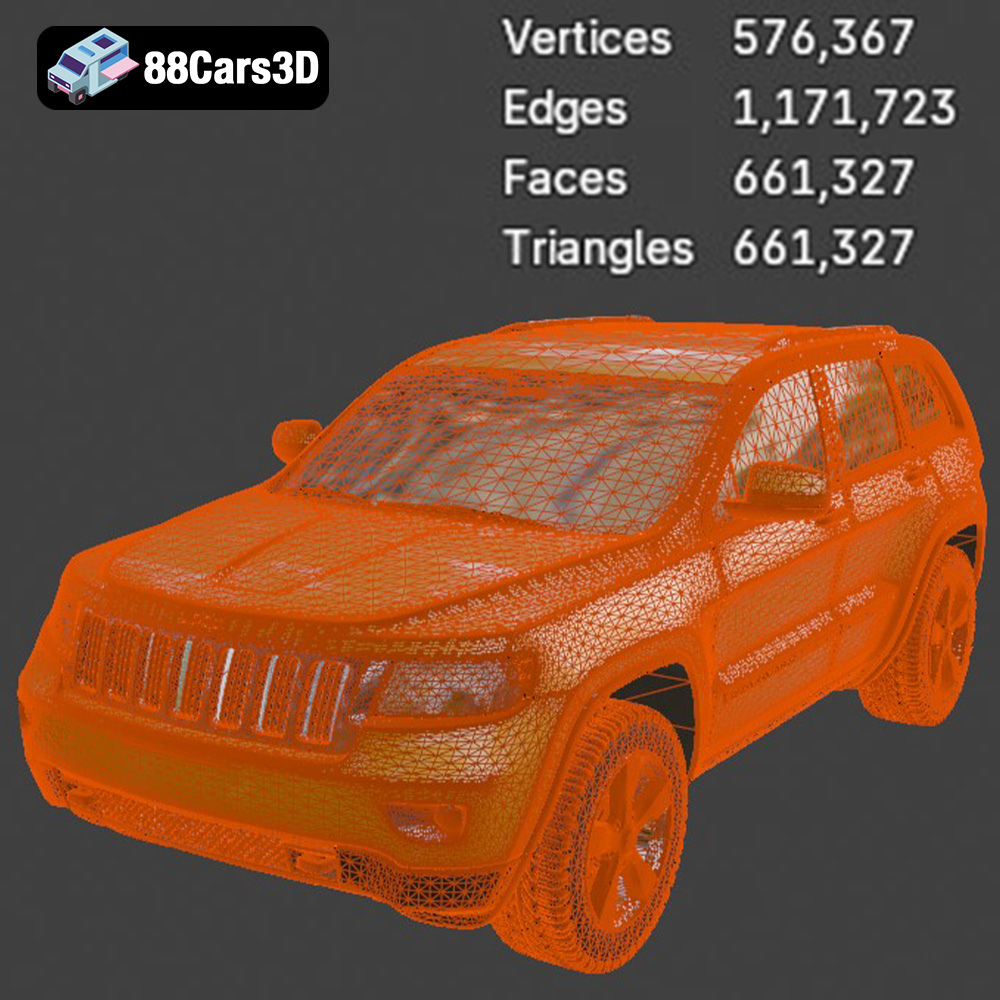
Creating game assets from high-detail models involves careful optimization. This includes techniques like Levels of Detail (LODs), where simpler versions of the model are rendered when the vehicle is further from the camera, saving computational resources. Clean, quad-based topology and efficient UV mapping are critical for baking high-resolution details into normal maps and ensuring texture consistency across various LODs. The product description highlights a “balanced polygon count optimized for both realism and performance,” which is a hallmark of good game assets. The separate components – doors, hood, tailgate, and wheels – are also crucial for game mechanics, allowing for animations like opening doors, rotating wheels, or even damage deformation.
Augmented Reality (AR) and Virtual Reality (VR) represent the next frontier for interactive media, and 3D car models are at the heart of these immersive experiences. The Jeep Grand Cherokee 2010 3D Model, available in formats like .glb and .fbx, is perfectly suited for virtual showrooms where users can explore the vehicle in 360 degrees, or for AR applications that place the SUV directly into their physical environment. Imagine test-driving the Grand Cherokee through a virtual off-road course, or using AR to visualize how it would look in your driveway. The optimized interior mesh, with its dashboard, steering wheel, and seats, provides a convincing experience even when viewed up close in a VR headset, enhancing training simulations or virtual walkthroughs.
The transition from a digital 3D car model to a tangible object through 3D printing opens up new avenues for hobbyists, collectors, and automotive enthusiasts. The Jeep Grand Cherokee 2010 3D Model is designed with 3D printing in mind, allowing for the creation of physical scale models and prototypes.
Successful 3D printing begins with a robust .stl file that is “watertight” and free of errors. The model must have manifold geometry, meaning every edge is connected to exactly two faces, ensuring a solid, printable form. Scale is also paramount; the recommended scales of 1:32, 1:24, 1:18, and 1:12 offer flexibility depending on the desired size and level of detail. Specific print settings, such as a suggested layer height of 0.12–0.20 mm, wall thickness of 2.0–3.5 mm, and infill of 20–35%, are provided to guide users. Furthermore, recommendations like printing the body upside-down for a smoother hood/roof finish and printing wheels separately demonstrate a deep understanding of practical 3D printing challenges and solutions for this specific Jeep Grand Cherokee 2010 3D Model.
Beyond personal enjoyment, 3D printed automotive models serve various professional purposes. Designers can rapidly prototype physical mock-ups to evaluate form and fit before committing to expensive manufacturing. Hobbyists and collectors can create unique, customized scale models of their favorite vehicles. The ability to post-process these prints—sanding, priming, painting with matte or metallic finishes, and adding a clear coat—allows for a truly professional, showroom-quality miniature. This fusion of digital design and physical craftsmanship makes the Jeep Grand Cherokee 2010 3D Model a versatile asset, bridging the gap between virtual and tangible automotive passion.
For studios and independent artists alike, the strategic integration of pre-made, high-quality 3D car models can significantly impact project timelines and overall output quality. A meticulously crafted asset like the Jeep Grand Cherokee 2010 3D Model from 88cars3d.com isn’t just a convenience; it’s a productivity multiplier.
Modeling a complex vehicle from scratch is an incredibly time-consuming and labor-intensive process, often requiring specialized skills in hard-surface modeling, UV unwrapping, and material creation. By purchasing a professionally made 3D car model, artists can bypass weeks or even months of development time. The Jeep Grand Cherokee 2010 3D Model comes with clean, well-structured topology, real-world scale, proper hierarchy, and pivot setup, ensuring it’s ready for immediate use in animation, rendering, or game engines. This “plug-and-play” capability allows teams to focus on creative tasks like scene composition, animation, or interactive logic, rather than the foundational asset creation. The reliability and consistency offered by reputable marketplaces like 88cars3d.com are paramount for maintaining professional standards.
While pre-made, professional 3D car models are ready for immediate use, their true power often lies in their adaptability. The Jeep Grand Cherokee 2010 3D Model is designed for customization, with separated components like doors, hood, tailgate, and wheels for easy animation. Artists can modify paint finishes, swap out wheel designs, add custom roof racks or light bars, and even develop unique off-road packages to suit specific project requirements. Its optimized interior mesh allows for detailed close-ups, making it suitable for virtual tours or driving simulations where cabin fidelity is important. The clean topology also means that even advanced modifications, like adding sub-division surfaces for extreme close-up renders or deforming the mesh for crash simulations, can be performed with relative ease, ensuring the model evolves with your creative vision.
In the expansive realm of digital content creation, the importance of high-fidelity 3D car models cannot be overstated. From breathing life into stunning automotive rendering projects to building immersive worlds for game assets and enabling tangible creations through 3D printing, a well-executed vehicle model is an indispensable tool. The Jeep Grand Cherokee 2010 3D Model exemplifies this versatility, offering a robust, detailed, and technically sound asset across a multitude of applications and file formats.
Whether you’re a seasoned professional seeking to streamline your workflow or an aspiring artist looking for a high-quality foundation, investing in expertly crafted 3D assets provides an unparalleled advantage. It saves invaluable time, ensures technical integrity, and ultimately empowers you to push the boundaries of your creative vision. For a wide selection of such high-quality assets, including this versatile Jeep Grand Cherokee model, exploring platforms like 88cars3d.com is an excellent starting point for any serious digital artist or developer.
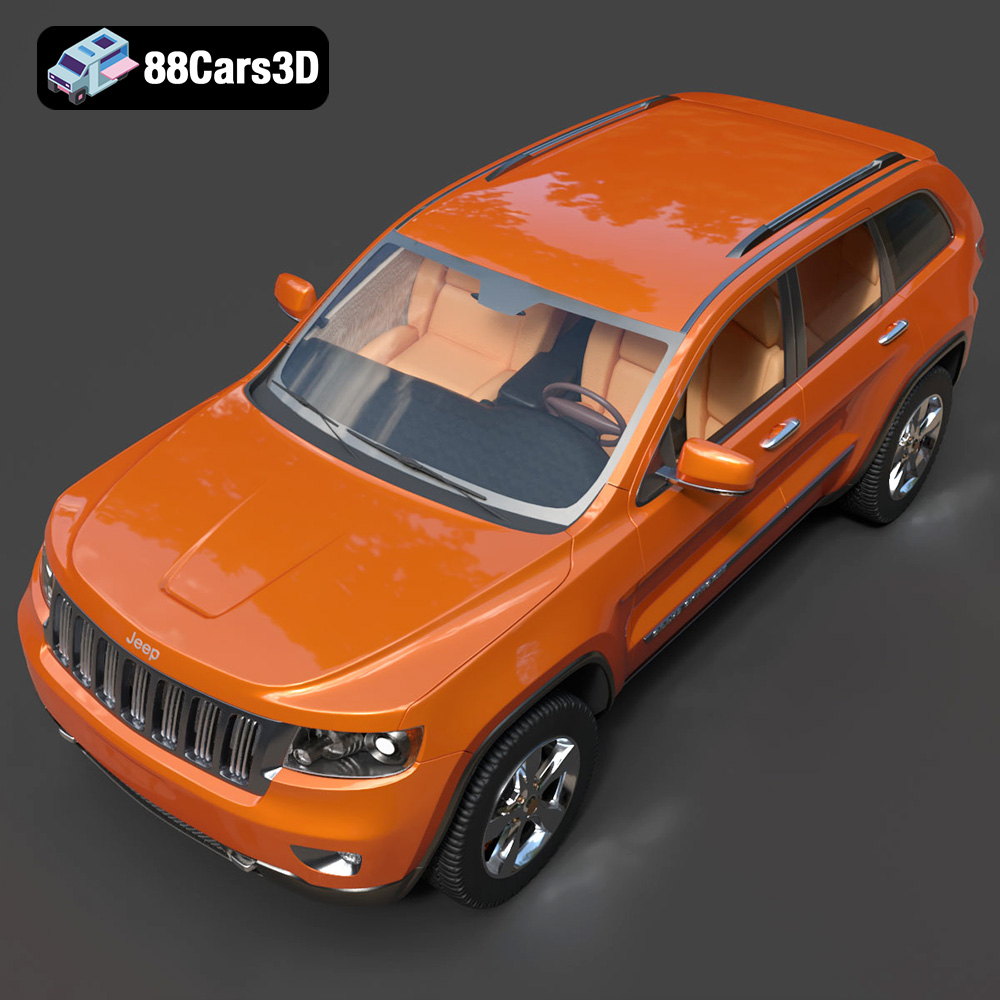
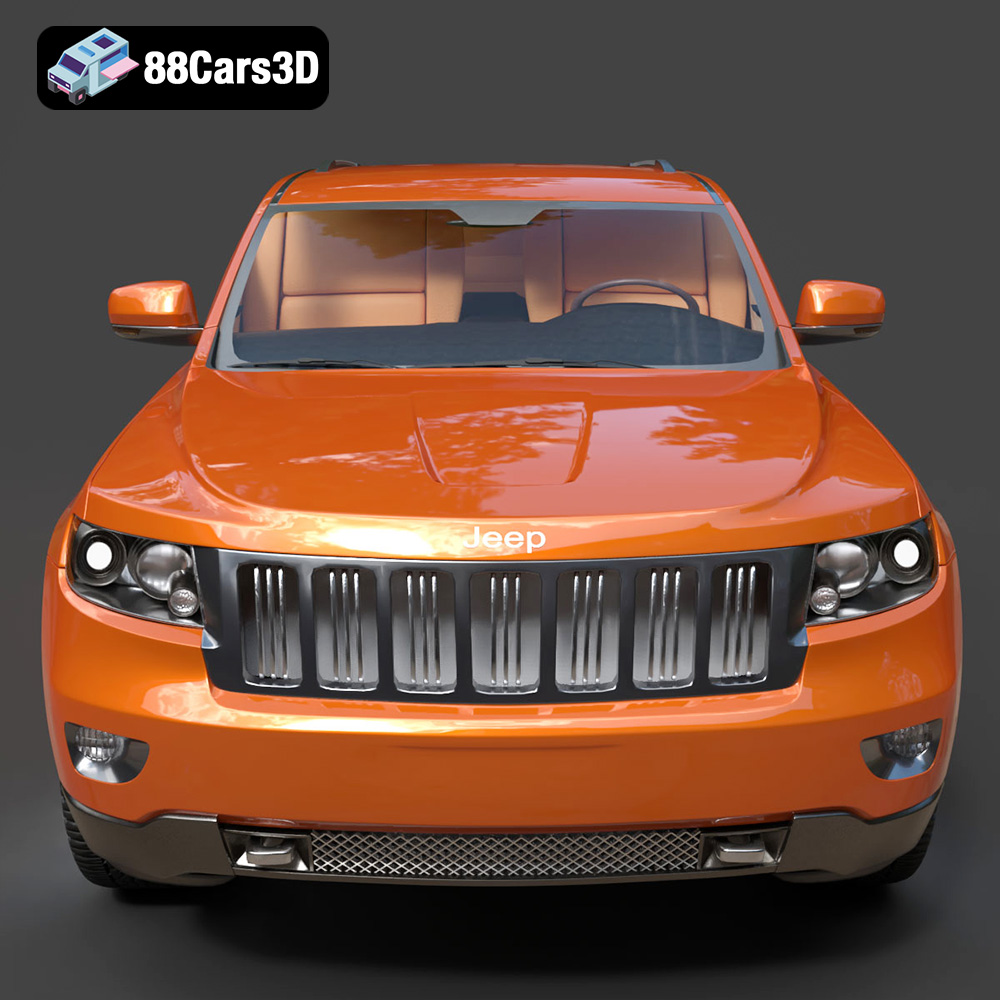
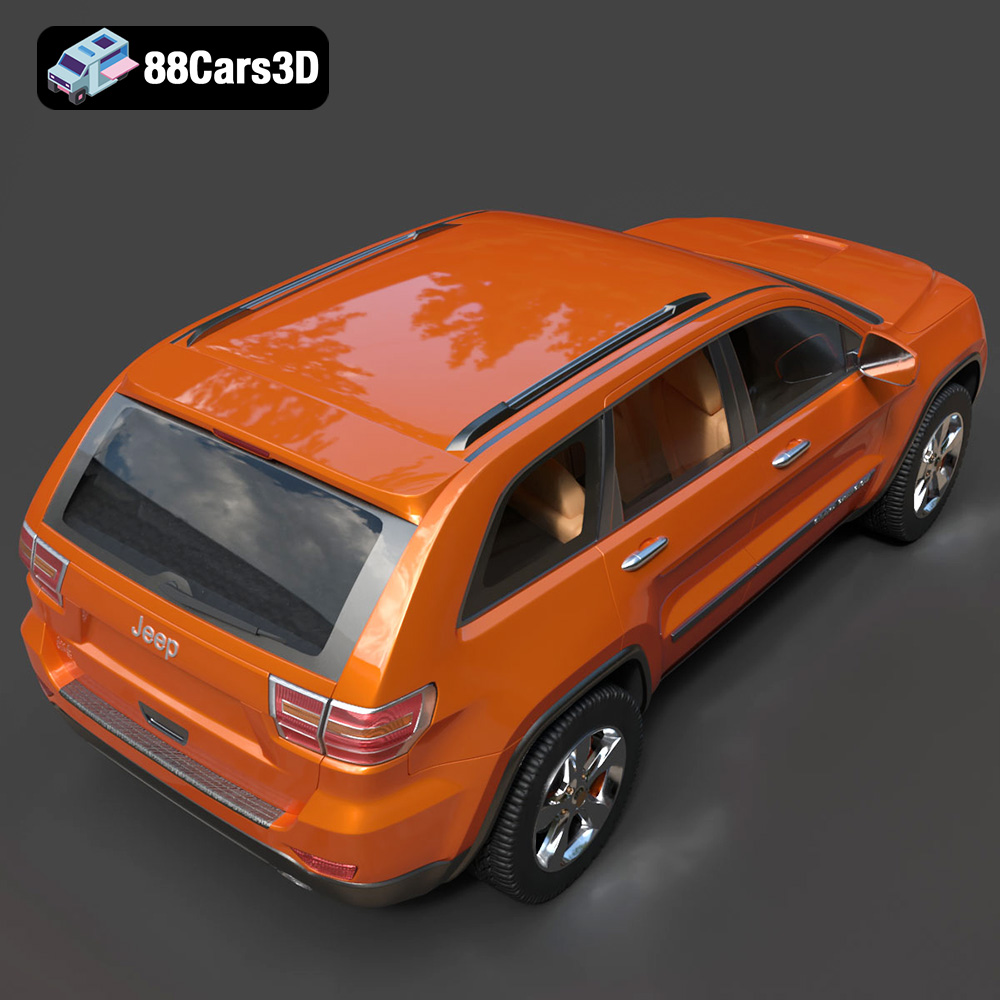
The Jeep Grand Cherokee 2010 3D Model is a highly detailed and accurately scaled digital recreation of the rugged midsize SUV from Jeep. The 2010 model represents the final production year of the WK generation, known for its muscular stance, strong off-road capability, and practical interior layout. This 3D model precisely captures the signature seven-slot grille, bold headlamp design, squared wheel arches, elevated ground clearance, and classic SUV proportions. Built with clean topology and real-world scaling, it is ideal for rendering, animation, visualization, simulation, AR/VR, and game development projects requiring a durable and recognizable SUV asset. It integrates naturally into urban streets, mountain trails, desert environments, cinematic productions, and real-time driving simulations.
$44
.4x4vehicle
.arvr
.blend
.car3dmodel
.fbx
.gameasset
.glb
.grandcherokee2010
.jeep
.max
.obj
.offroadsuv
.ply
.rendering
.simulation
.stl
.suv3dmodel
.unreal
.vehicle3D
.wkseries