⚡ FLASH SALE: Get 60% OFF All Premium 3D & STL Models! ⚡

“`html
The roar of a finely tuned engine, the sleek lines of a classic chassis, the sheer power encapsulated in metal and glass – for many, cars are more than just transportation; they’re passion projects, intricate pieces of engineering, and objects of artistic beauty. For 3D printing enthusiasts, hobbyists, and automotive collectors, this passion translates into a desire to hold these automotive marvels in their own hands. The world of printable car STL files has exploded, offering an incredible opportunity to recreate everything from iconic hypercars to legendary race machines right on your desktop. But navigating this digital landscape and achieving the perfect print requires more than just hitting the ‘slice’ button. This comprehensive guide will equip you with the knowledge to select the best STL files, understand critical 3D printing parameters, master slicing techniques, and transform digital models into stunning physical replicas. Whether you’re new to 3D printing or a seasoned maker, by the end of this article, you’ll be ready to tackle your next automotive printing project with confidence.
The journey to a successful 3D printed car begins with the digital foundation – the STL file. Not all STL files are created equal, and choosing a high-quality model is paramount to a frustration-free printing experience and a superior final result. For hobbyists and collectors, the appeal lies in detail, accuracy, and printability. This means looking beyond just the visual appeal of the render and delving into the technical specifications of the digital asset. Platforms like 88cars3d.com specialize in offering high-quality 3D printable car models, curated specifically for makers, ensuring a better starting point for your projects. Understanding what makes an STL file “good” will save you countless hours of troubleshooting and post-processing.
The underlying structure of an STL file, its mesh topology, significantly impacts its printability. A well-constructed mesh consists of well-formed triangles (quads are often converted to tris in STL), with consistent winding order and no overlapping faces or internal geometry. Clean geometry is essential for slicer software to accurately interpret the model’s surfaces. Look for models that are described as “manifold” or “watertight,” meaning they have no holes or non-manifold edges. Jagged edges, overly dense triangulations in flat areas, or inverted normals can lead to slicing errors, failed prints, or surfaces with visible artifacts. Software like Meshmixer, Blender, or Netfabb can be invaluable for inspecting and repairing mesh issues, but starting with a clean file from a reputable source is always preferable. For detailed automotive models, pay attention to how intricate parts like grilles, spoilers, and interior components are represented. Are they modeled as separate, printable pieces, or are they overly simplified and fused, making them impossible to print cleanly?
A critical factor for successful printing is ensuring that all parts of the model have adequate wall thickness. Thin walls, especially those representing delicate features like mirrors or antennas, are prone to breaking during printing or post-processing. Good printable car STL files are designed with 3D printing limitations in mind. A common guideline is to ensure a minimum wall thickness of 0.8mm to 1.5mm, depending on the printer’s capabilities and the specific feature. Resolution is another key aspect. While high-resolution models capture incredible detail, they can also result in massive STL files that are cumbersome to work with and may require extensive support structures. Conversely, low-resolution models might lack the fine details that make a car model exciting. The best models strike a balance, offering sufficient detail without an overwhelming polygon count, and often come with strategically designed features that enhance printability. For example, a model might include integrated keys for part assembly or pre-designed mounting points.
When selecting a model, consider what you want to achieve. Do you want a single, solid piece for a quick print, or a multi-part assembly that allows for different color printing, painting, or even functional elements like opening doors or rolling wheels? Many high-quality printable car STL files are provided as multi-part kits. This approach allows for:
When downloading models from marketplaces such as 88cars3d.com, pay close attention to the product descriptions. They often detail whether the model is a single piece or a multi-part assembly, and may even provide recommended printing strategies or assembly guides. Understanding this breakdown upfront will significantly streamline your printing workflow.
Once you’ve selected your ideal car STL file, the next crucial step is slicing. Slicer software, such as Cura, PrusaSlicer, or Simplify3D, interprets the 3D model and converts it into a series of layer-by-layer instructions (G-code) that your 3D printer can understand. This is where the magic of optimization happens. Proper slicing is not just about generating toolpaths; it’s about understanding the interplay between model geometry, printer capabilities, material properties, and desired print quality. For complex automotive models, achieving a balance between detail, print time, and structural integrity requires careful attention to a multitude of slicing parameters. Investing time in understanding these settings will elevate your prints from mediocre to museum-quality.
The layer height is one of the most fundamental slicing parameters, directly influencing both the vertical resolution of your print and the total print time.
For collectible car models, a common approach is to use a layer height of 0.1mm to 0.15mm. This offers a good compromise between detail and print duration. You might also consider printing individual, highly detailed components (like wheels or body panels) at lower layer heights while printing less critical parts (like chassis elements) at slightly higher ones to save time. Always consider the specific printer’s capabilities and nozzle size; smaller nozzles (e.g., 0.25mm or 0.4mm) are better suited for finer details at lower layer heights.
Infill refers to the internal support structure within your 3D print. It affects the model’s strength, weight, and the amount of material used. For display models like cars, extreme infill densities are rarely necessary.
For car models, Gyroid or Cubic patterns are often recommended as they provide good isotropic strength and are visually appealing if the infill is ever visible.
Experimentation is key here. If a specific part of the car model is particularly fragile or requires extra rigidity, you can often adjust infill density and pattern on a per-model or per-part basis within your slicer software.
Print speed, nozzle temperature, and part cooling are interconnected parameters that drastically affect print quality.
Fine-tuning these settings based on your printer and material is essential. A well-calibrated printer running at optimal speeds and temperatures will produce significantly cleaner and more accurate car models.
The way a 3D model is oriented on the print bed and the generation of support structures are arguably the most critical factors in achieving successful prints of complex objects like cars. Incorrect orientation can lead to excessive supports, poor surface finish on critical details, and even print failures. Similarly, poorly generated or difficult-to-remove supports can damage delicate parts of your model. Mastering these aspects is key to transforming a digital sculpt into a flawless replica.
Choosing the correct orientation involves considering several factors:
For multi-part car models, printing each component with its optimal orientation is often the best strategy. This allows you to orient body panels for the smoothest finish, print wheels upright for detail, and print chassis components for stability, all independently.
Support structures are temporary scaffolding printed to hold up overhanging parts of a model. Their generation and removal require careful consideration:
Tree supports are often the best choice for automotive models due to their efficiency and less invasive contact points.
Properly generated and removed supports are the difference between a clean print and a damaged one. Always preview your sliced model with supports enabled to ensure they are placed logically and will be removable.
A car model, especially its main body, can have a large footprint on the print bed, making it susceptible to warping and detachment. Ensuring excellent bed adhesion is vital.
A brim is often sufficient for PLA and PETG car models, providing good adhesion without significantly impacting the bottom surface finish.
A failed print due to poor adhesion is a common and frustrating experience. Don’t underestimate the importance of a solid connection between your car model and the build plate.
The choice between FDM (Fused Deposition Modeling) and Resin (SLA/DLP/MSLA) printing significantly impacts the final result, particularly for detailed collectible car models. Each technology has its strengths and weaknesses, and understanding these will help you select the right printer and materials for your automotive projects. While FDM printers are more common and versatile for larger objects, resin printers excel at capturing the intricate details that define high-quality car models.
FDM printers build objects by extruding melted plastic filament layer by layer. They are generally more affordable, have larger build volumes, and can print with a wider range of materials like PLA, PETG, and ABS.
For larger scale models (e.g., 1:12 or larger) or if budget is a primary concern, FDM is a viable option. Using smaller nozzle sizes (e.g., 0.25mm or 0.4mm) and printing at lower layer heights (0.1mm) can significantly improve detail. Post-processing, including sanding, filling, and priming, is often essential to achieve a smooth, paint-ready surface on FDM printed car models. Platforms offering pre-supported FDM files or models designed for FDM printing can greatly assist hobbyists using this technology.
Resin printers use UV light to cure liquid photopolymer resin layer by layer. They offer significantly higher resolution and smoother surface finishes, making them ideal for intricate models.
For detailed collectible car models, especially at scales like 1:43 or 1:64, resin printing is often the superior choice. The level of detail achievable is unparalleled, capturing fine panel gaps, emblems, and interior elements with stunning clarity. When choosing resin, look for “High Detail” or “Sculpting” resins. The slicing process for resin involves setting exposure times, lift speeds, and support structures optimized for the specific resin and printer. Supports are crucial and must be carefully placed, as removing them from a resin print requires precision to avoid damaging delicate features. Post-processing involves washing the print in isopropyl alcohol (IPA) or a specialized cleaner, followed by UV curing.
The material you choose impacts printability, durability, and aesthetics.
For many collectible car models, standard PLA on FDM or standard/high-detail resins on resin printers offer the best balance of detail, cost, and ease of use. Always perform test prints to dial in settings for your chosen material and printer combination.
The 3D print is just the raw material; the real artistry often comes in the post-processing stage. For collectible car models, meticulous finishing is what separates a good print from a truly exceptional display piece. This involves cleaning up the print, preparing the surface for paint, and assembling multi-part models. Patience and the right techniques are essential.
Once your car model is printed and supports are removed, the first step is cleaning and smoothing.
Achieving a glass-smooth finish on an FDM print can take significant time and effort but is often worth it for high-quality models.
Painting is where your 3D printed car model truly comes alive.
Referencing real-world photos of the car you are modeling is essential for accurate color choices and detailing.
If you’ve printed a multi-part car model, assembly is the final frontier.
Take your time during assembly. Rushing can lead to misaligned parts or unsightly glue marks. Patience here will result in a cohesive and professional-looking final model.
Even the highest quality printable car STL files and the most meticulous slicing and post-processing efforts can be undermined by an improperly calibrated or poorly maintained 3D printer. Regular calibration and preventative maintenance are not optional; they are fundamental to achieving consistent, high-quality prints, especially for detailed automotive models where precision is key. Think of it like tuning a classic engine – small adjustments make a world of difference.
Ensuring your FDM printer is running optimally involves several key calibration routines:
Performing these calibrations regularly, especially when changing filaments or noticing print quality degradation, will save you immense amounts of time and frustration.
Resin printers have their own set of critical calibration and maintenance procedures:
Maintaining a clean working environment and following safety protocols when handling resin is also part of essential maintenance.
Beyond specific calibrations, general upkeep ensures longevity and reliability:
A well-maintained printer is a reliable partner in your 3D printing endeavors, consistently producing the high-quality results needed for intricate automotive models.
The pursuit of creating a perfect 3D printed car model is a rewarding journey that blends digital design, intricate technology, and hands-on craftsmanship. From selecting the ideal, print-ready printable car STL files from reputable sources like 88cars3d.com to mastering the nuances of slicing software, understanding the critical balance of print settings, and executing precise post-processing techniques, every step plays a vital role. We’ve explored the essential considerations for choosing high-quality STL files, focusing on mesh integrity and design for printability. We’ve delved deep into the world of slicing, highlighting the tradeoffs between layer height and print time, optimizing infill for strength and efficiency, and fine-tuning speed, temperature, and cooling. Furthermore, we’ve emphasized the strategic importance of orientation and support generation, alongside robust bed adhesion techniques, and discussed the distinct advantages of FDM versus resin printing for automotive models. Finally, we’ve underscored the indispensable nature of post-processing and consistent printer calibration and maintenance in achieving flawless results.
As you embark on your next project, remember that practice and attention to detail are your greatest allies. Don’t be afraid to experiment with settings, perform test prints for critical components, and learn from every print, whether it’s a resounding success or a learning opportunity. By applying the knowledge gained in this guide, you are well-equipped to overcome common challenges and elevate your 3D printed car models from mere replicas to stunning works of art. So, fire up your slicer, choose your next dream car, and get ready to drive your creations to perfection. The road ahead is paved with potential!
“`

Texture: Yes | Material: Yes | 3D Printable: Yes. Download the Italian Thoroughbreds Bundle featuring 5 iconic 3D models: Lamborghini Huracán Performante, Ferrari 458 Italia, Lamborghini Urus, Diablo SV, and Maserati GT. Optimized for 4K rendering and 3D printing (STL included). Save 50% with this ultimate Italian vehicle collection.
Price: $199.99

Download the Elite Future Mobility Bundle featuring 4 highly optimized 3D models: Tesla Model S, Avatr 11, Li L9, and Zoox Robotaxi. Perfect for ArchViz, Smart City renders, and game dev. Optimized for Unreal Engine and Blender. Includes .fbx, .obj, and .max formats.
Price: $99

🚗 5 Iconic German Cars (BMW M4 G82, M5 CS, X3, 1 Series & Mercedes E-Class). ✅ Optimized for ArchViz: Ready for Corona & V-Ray. 💰 Save €71 with this limited-time collection! 🚀 Instant Download after purchase.
Price: $119
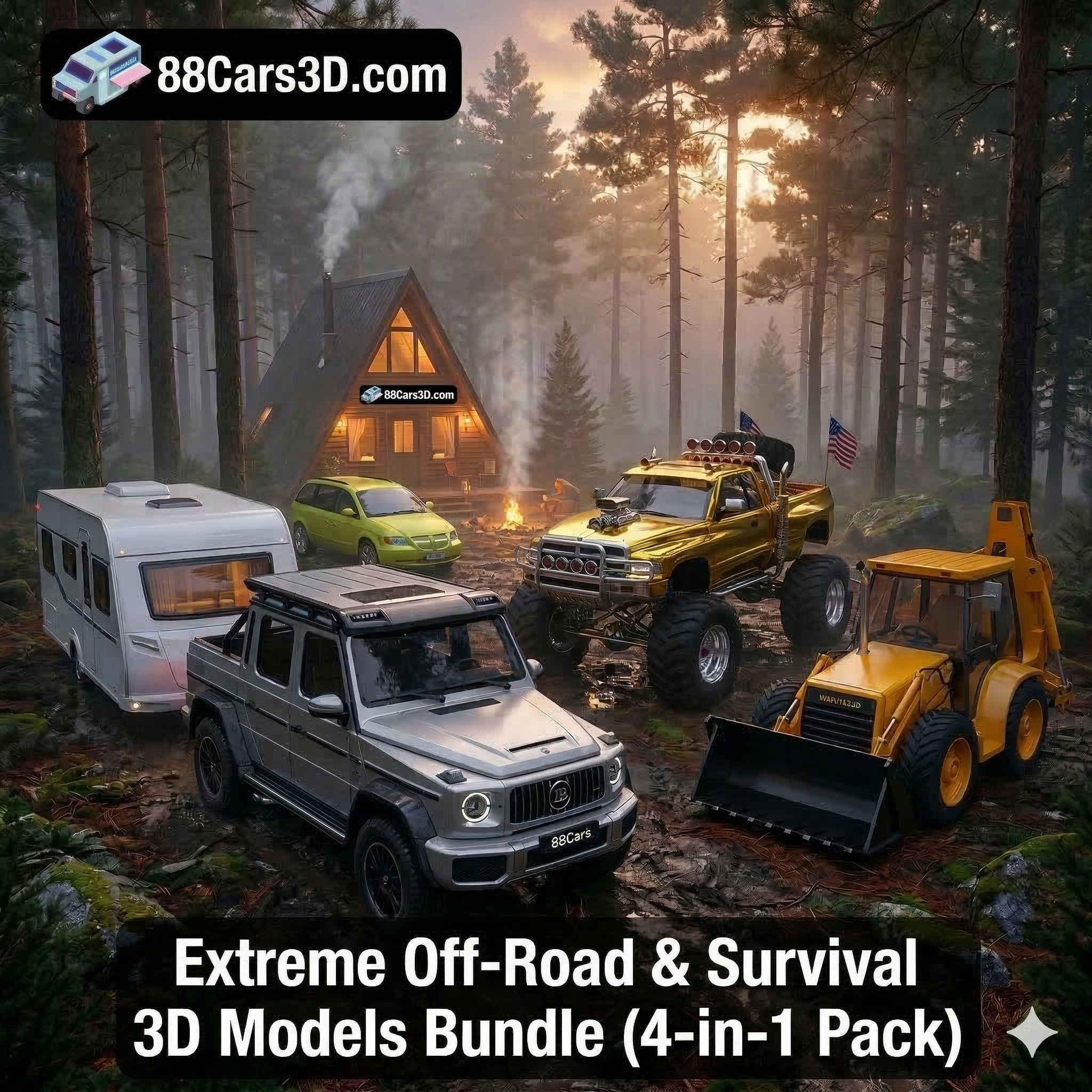
Download the Extreme Off-Road & Survival 3D Models Bundle! Includes the Brabus 800 Adventure, Dodge Ram Bigfoot, Spec Truck, and a Caravan. Save over €210 on this premium 4-in-1 off-grid vehicle pack for ArchViz and game development.
Price: $149.99
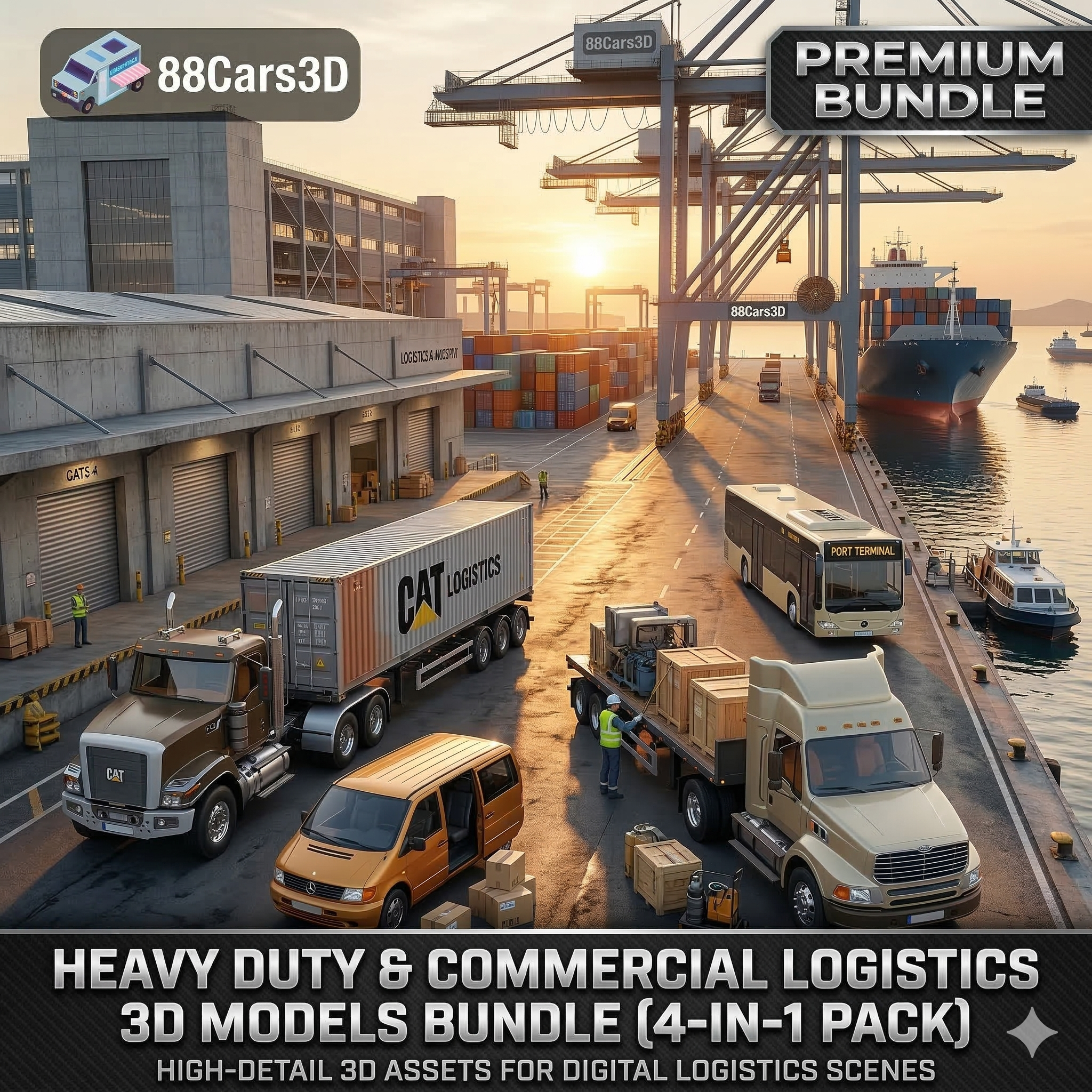
Download the Heavy Duty & Commercial Logistics 3D Models Bundle! Includes the Ford Sterling, Caterpillar CT680, Mercedes Citaro Bus, and Vito Van. Save over €130 on this massive, game-ready 4-in-1 industrial vehicle pack.
Price: $109.99

Download the Ultimate Custom Motorcycles 3D Models Bundle. Includes a Custom Chopper, Ducati 916 Café Fighter, Harley XR1200X, and BMW K100. Perfect premium props for luxury ArchViz garages. Save over €250 today!
Price: $159.99

Download the ultimate JDM Street Racing 3D Models Bundle! Includes the Nissan GT-R, Toyota Supra, Mazda RX-7, Lancer Evo IX, and Honda NSX. Save big on this highly optimized, game-ready 5-in-1 Japanese legend car pack.
Price: $129.99

Download the ultimate American Muscle & Cinematic Classics 3D Models Bundle! Includes the Dodge Charger ’68, Mustang Eleanor GT500, Camaro Z28 ’79, and a custom ’69 Mustang. Save over €240 on this game-ready, premium 4-in-1 pack.
Price: $149.99
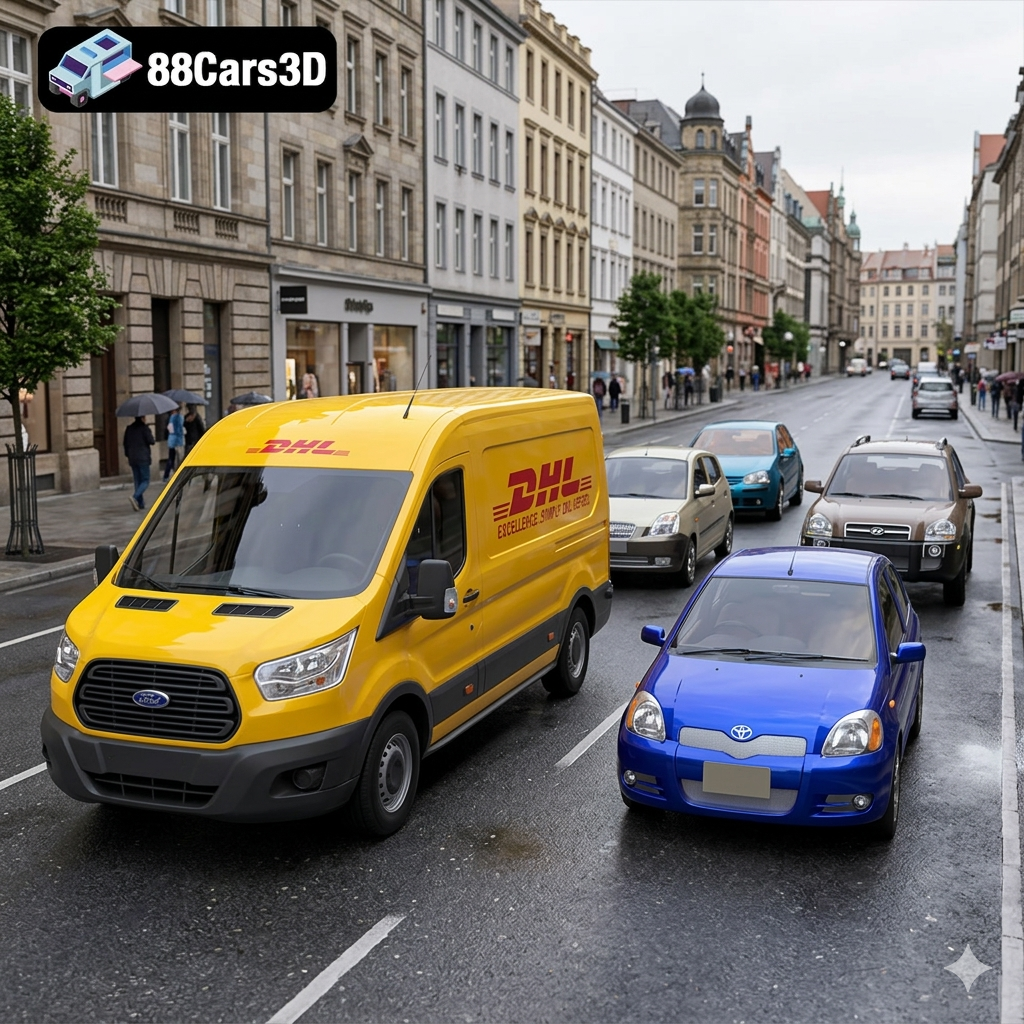
Download the Everyday City Traffic 3D Models Bundle. Includes the VW Golf, Kia Picanto, Hyundai Tucson, Toyota Yaris, and a DHL Ford Transit Van. Save big on this 5-in-1 pack, perfectly optimized for realistic ArchViz streets and game traffic.
Price: $99.99
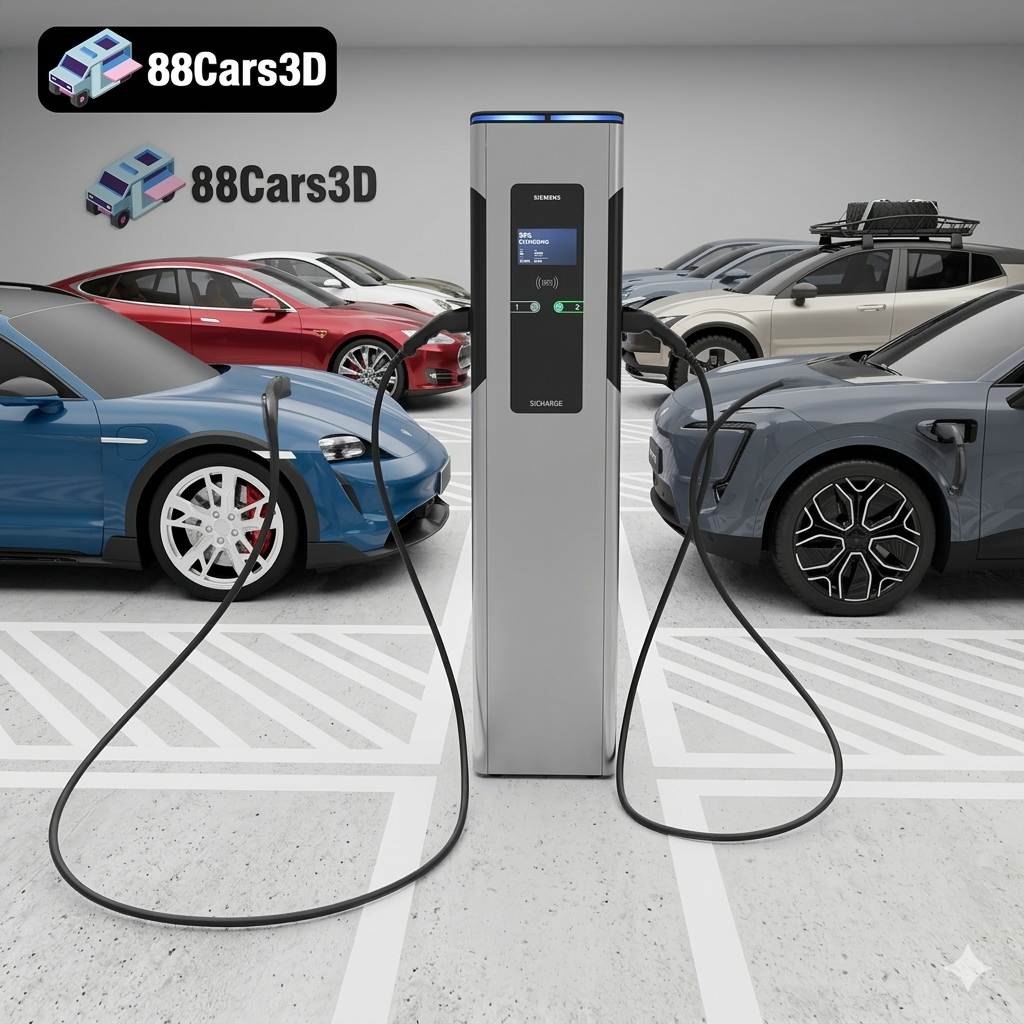
Download the Future of Mobility EV 3D Models Bundle. Includes the Volvo EX30, Tesla Model S, AVATR 11, Porsche Taycan, and a Siemens EV Charger. Save big on this highly optimized 5-in-1 pack for ArchViz and game development!
Price: $89.99

